
Beach Wedding Venues Long Island: A Coastal Planning Guide
Long Island gives you a wide range of beach wedding venues, from ceremonies on sandy shores to elegant waterfront wedding receptions with indoor comfort. For a classic beach wedding setting, start with a venue that combines direct shoreline access, ocean views, and a dependable indoor reception space, such as The Crescent Beach Club or The Pavilion at Sunken Meadow.
These options help you enjoy the coastal backdrop while giving your guests a practical place to dine and celebrate.
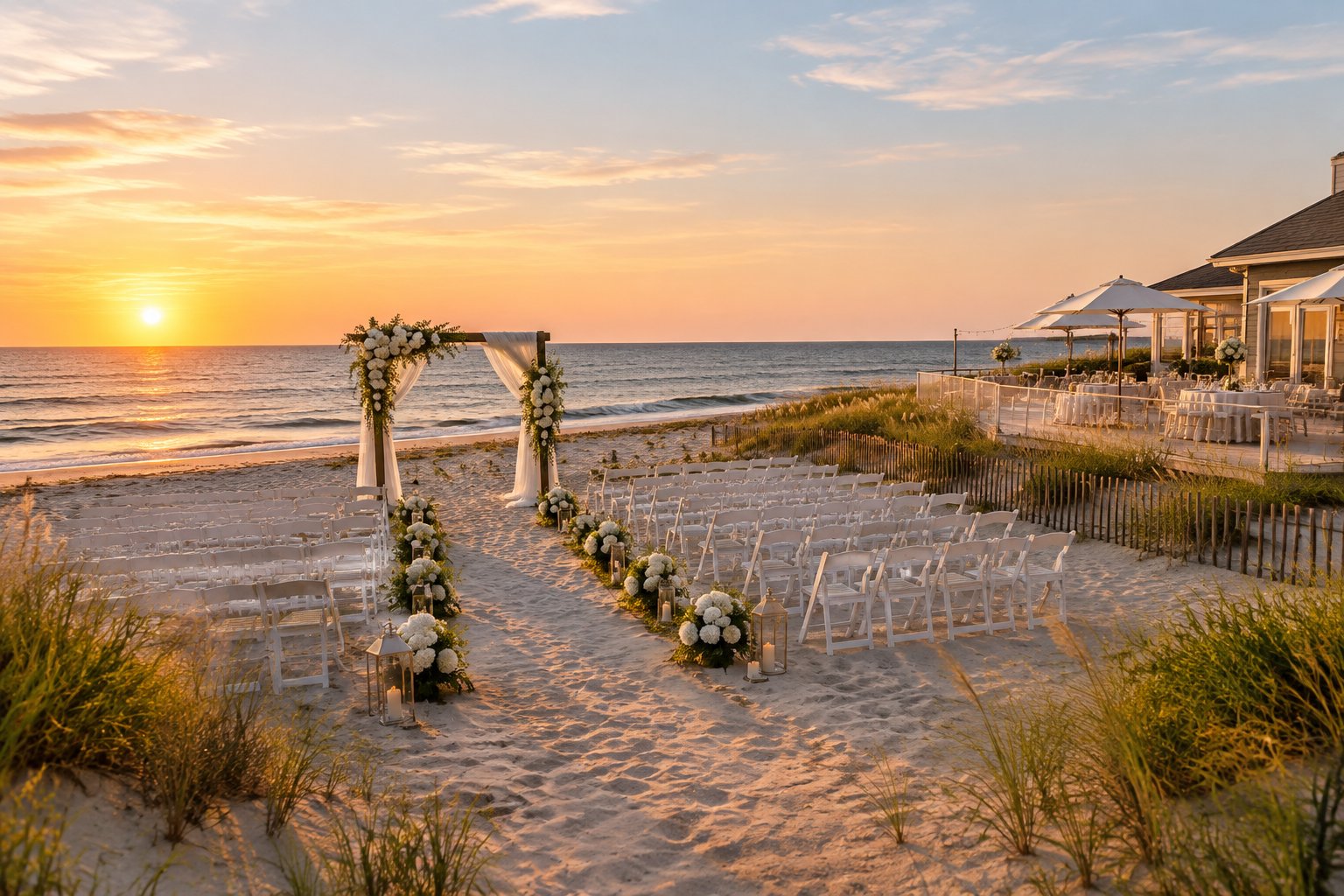
You can also find waterfront estates, harbor ballrooms, yacht clubs, historic mansions, and coastal resorts across Long Island, New York. The best fit comes from your guest count, preferred shoreline, wedding style, date, and weather plan.
Start with the coastal areas that match your vision, then request current packages and tour the spaces in person. For more inspiration, explore these beach wedding ideas before scheduling your first venue visit.
What Counts as a Beach Wedding Setting?
A beach wedding setting places your ceremony or reception beside sand, open water, or a shoreline with clear coastal views. Some properties host waterfront ceremonies directly on the beach, while others offer a waterfront wedding venue with terraces, lawns, patios, or ballroom windows facing the water.
True Beach Ceremonies vs. Waterfront Views
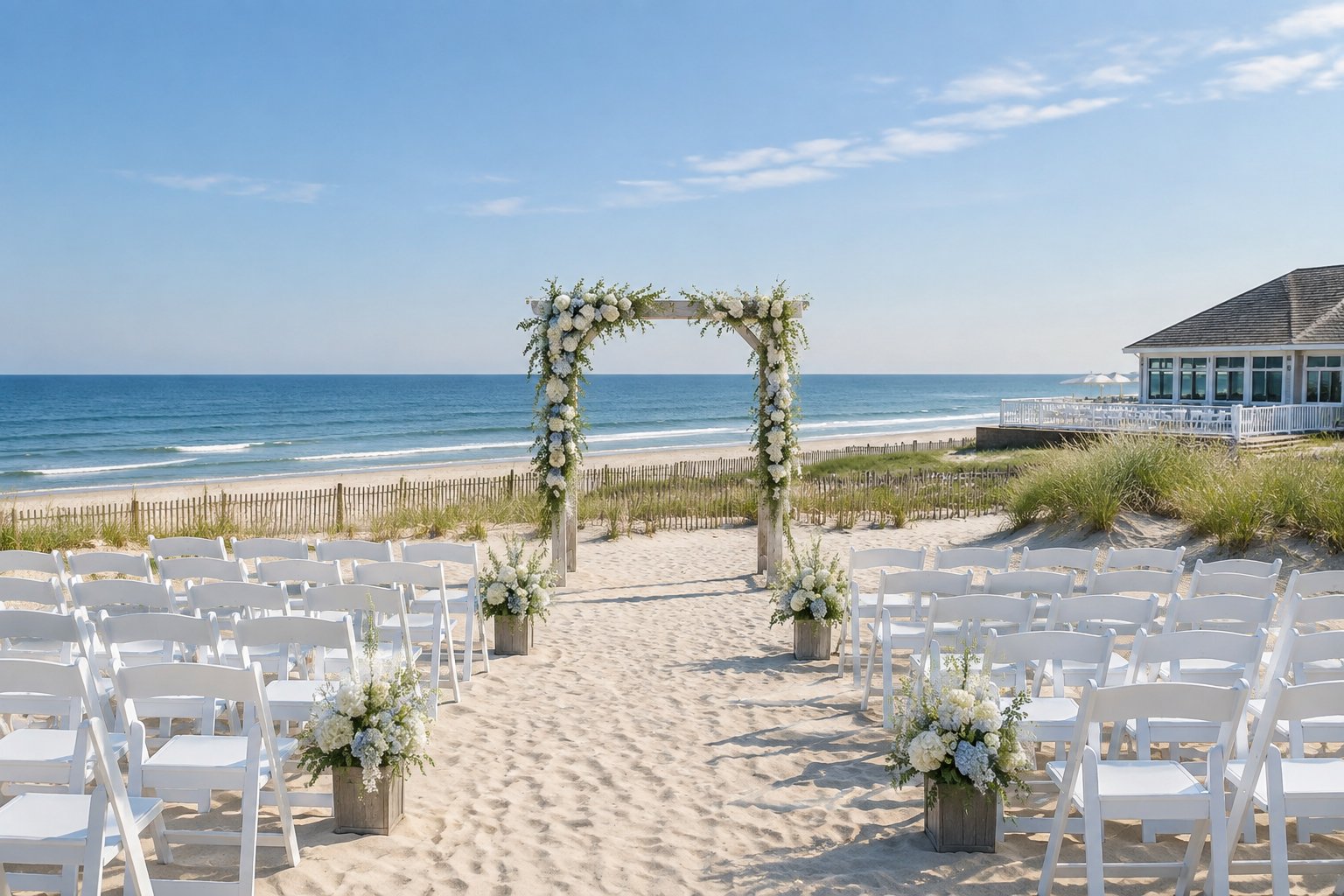
A true beach wedding takes place on sand near the waterline or on a private beach area managed by the venue. You should ask whether the ceremony site is private, whether guests need to walk over sand, and which permits or sound rules apply.
A waterfront wedding may use a lawn, deck, pier, patio, or indoor room with water views. This format gives you a coastal backdrop while providing firmer surfaces for guests, easier access for older relatives, and a smoother transition into the wedding reception.
Long Island properties may face the Long Island Sound, Atlantic Ocean, or Great South Bay. Each setting creates a different feel.
Sound-side venues often provide calmer views and sunset light, Atlantic-facing beaches bring open horizons and surf, and Great South Bay locations create a sheltered maritime atmosphere.
Coastal Wedding Backdrops Across Long Island
Long Island offers coastal wedding scenery in several forms:
- Sandy beaches for barefoot ceremonies and relaxed portraits
- Oceanfront decks for sunset vows
- Bayfront lawns for formal outdoor ceremonies
- Harbor patios for cocktail hour
- Ballrooms with wide windows and water views
- Waterfront estates with gardens, docks, and private grounds
Your ceremony plan should account for wind, sun direction, tides, public access, and guest comfort. A venue with a nearby indoor room gives you a practical setting for dinner, dancing, and weather changes.
Top Shoreline Areas for Your Celebration
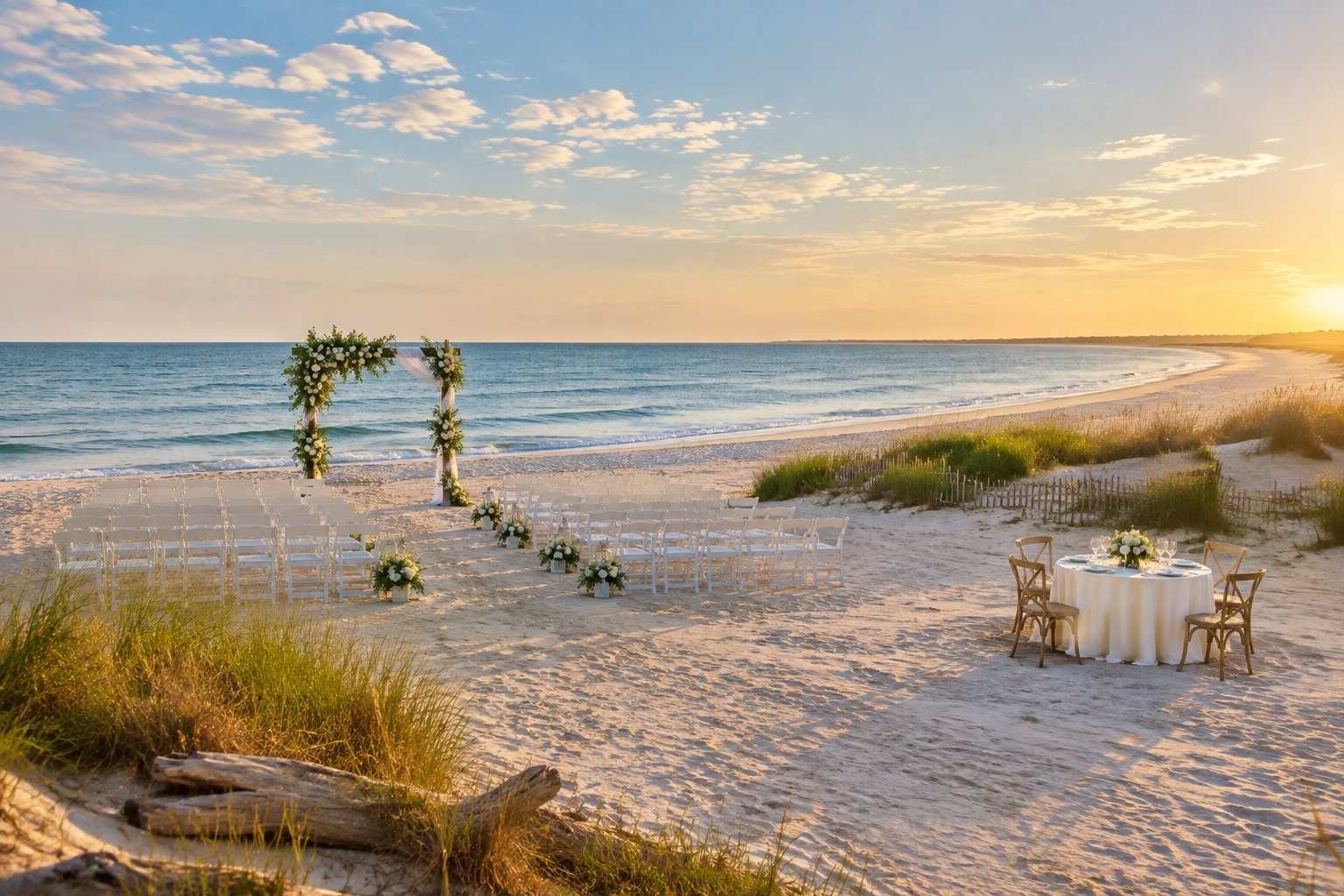
The best shoreline area depends on the view you want, how far guests will travel, and the kind of reception space you need. Nassau County offers convenient North Shore and South Shore choices, while Suffolk County and the East End provide larger destination-style settings.
North Shore and Long Island Sound
The North Shore gives you calmer water views, harbor scenery, historic estates, and formal wedding venues. Oyster Bay and Bayville work well for couples who want a polished coastal setting near Nassau County.
Huntington and Roslyn add waterfront lawns, elegant ballrooms, and estate-style properties. Long Island Sound venues often suit classic ceremonies with gardens, terraces, or private beach access.
Check the view at your ceremony time because the light changes quickly along the shore.
South Shore, Great South Bay, and Jones Beach
The South Shore brings wide beaches, boardwalk energy, and strong Atlantic Ocean views. Atlantic Beach and Jones Beach suit couples who want a more open coastal backdrop, while Great South Bay properties in Babylon, Sayville, and West Sayville provide calmer water and dockside scenery.
Ask whether the venue sits directly on the beach or near the water. A nearby shoreline can provide beautiful portraits even when the reception takes place in an indoor ballroom.
The Hamptons, North Fork, and East End
The Hamptons offer destination appeal, oceanfront scenery, and refined coastal estates. Montauk suits couples who want dramatic Atlantic views and a relaxed beach-town feel.
Bridgehampton and nearby communities provide upscale properties with outdoor event areas. The North Fork and East End bring vineyard landscapes, farm settings, bayside views, and quieter roads.
Shelter Island adds a more secluded atmosphere. Venues near the Peconic River, Mecox Bay, and Sam’s Creek can give you water views with a softer, sheltered feel.
Notable Venues by Coastal Style
Long Island’s coastal wedding venues range from direct beachfront properties to waterfront estates, ballrooms, yacht clubs, and historic destinations. Match the venue style to your preferred ceremony setting, reception size, guest travel needs, and level of included service.
Beachfront and Oceanfront Choices
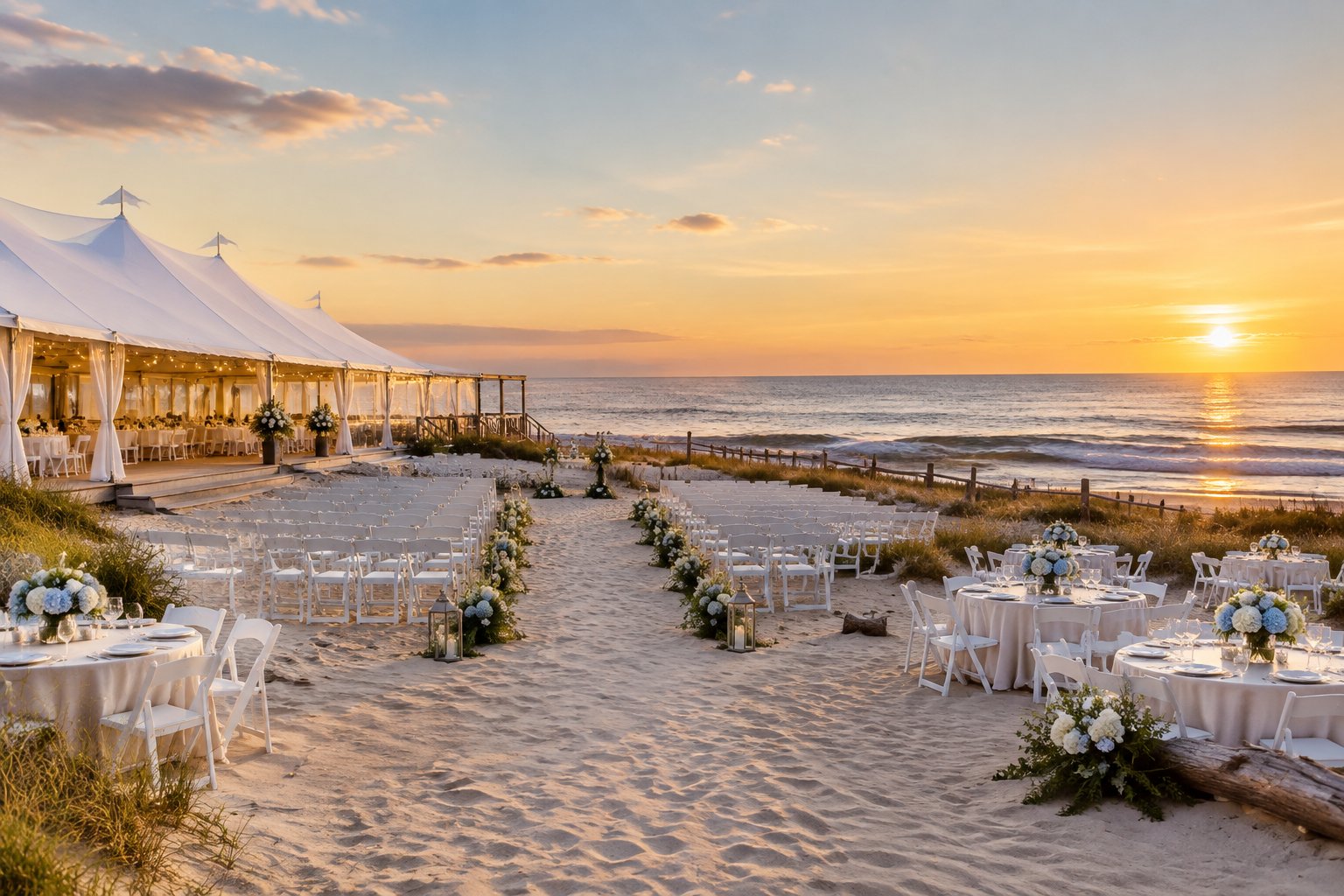
The Crescent Beach Club in Bayville offers a beach-focused setting along the Long Island Sound. The Pavilion at Sunken Meadow in Kings Park brings a sandy North Shore backdrop and broad Sound views.
Gatsby on the Ocean suits couples seeking a South Shore atmosphere with beach access and an ocean-facing celebration. For an East End wedding, the Bridgehampton Tennis and Surf Club offers a coastal destination setting.
Oceanbleu in Westhampton Beach provides an oceanfront direction for couples who want a polished venue near the Atlantic. Confirm each property’s ceremony rules, reception capacity, seasonal availability, and indoor backup plan before you compare quotes.
Bayfront Ballrooms and Harbor Estates
Bayfront venues give you water views with a structured reception setting. Soundview Caterers, The Piermont, and Land’s End offer spaces designed for waterfront celebrations.
Riviera Waterfront Mansion and The Bayview provide estate-style settings with room for formal dining and portraits. The Swan Club on the Harbor in Roslyn and Sea Cliff Manor bring North Shore harbor scenery.
The Old Field Club offers an established waterfront country club atmosphere. Ask how much private shoreline access comes with your booking and whether another event shares the property.
Yacht Clubs, Historic Properties, and Destination Escapes
Yacht clubs suit couples who like docks, boats, and a relaxed maritime setting. Peconic Bay Yacht Club offers an East End option with Peconic Bay scenery.
Atlantis Banquets & Events adds a distinctive waterfront event setting near the Peconic River. Historic properties bring architecture and landscaped grounds into the celebration.
Chateau at Coindre Hall, Bourne Mansion, and The Mansion at West Sayville combine preserved character with waterfront surroundings. The View and venues such as the Mansion at West Sayville work well when you want scenery paired with a formal ballroom.
For destination-style planning, compare guest rooms, nearby hotels, transportation, and weekend activities along with the venue itself.
How to Match the Venue to Your Wedding Vision
Your wedding vision should guide the venue search from the start. Decide whether you want sand underfoot, a garden near the water, a formal ballroom, or a destination property with guest accommodations.
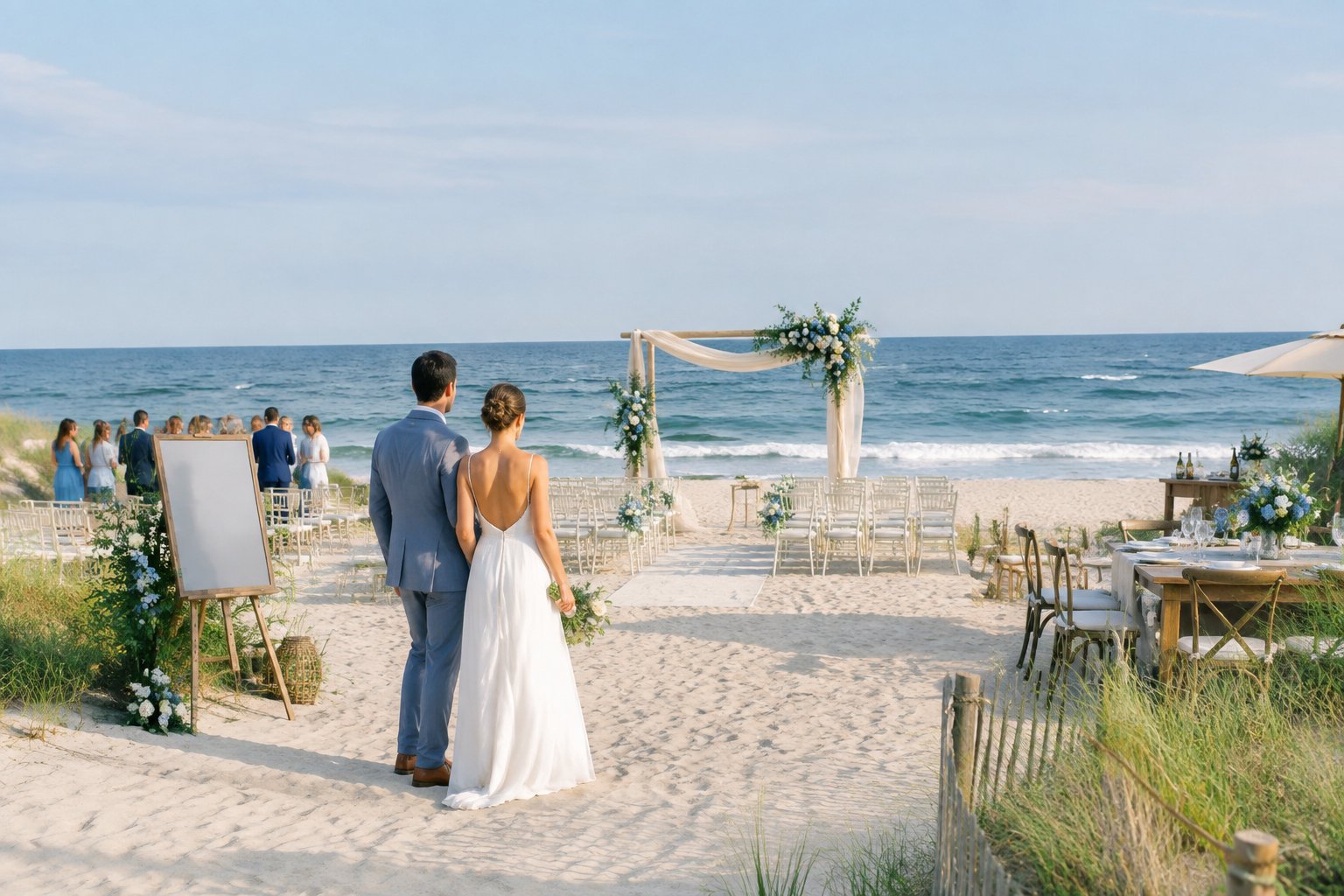
Intimate Gatherings vs. Large Guest Lists
Small weddings give you more freedom to consider private beaches, restaurants, garden properties, boat venues, and boutique waterfront rooms. For a smaller guest list, review these tips for choosing the perfect venue for a small wedding before touring.
Large celebrations need enough room for dining, dancing, guest flow, restrooms, parking, and a weather-safe ceremony. Banquet halls, hotels, country clubs, ballrooms, and resorts often provide the infrastructure for larger receptions.
Ask for the seated capacity, cocktail capacity, dance-floor layout, and minimum guest count. A room that fits your guest list on paper still needs comfortable space for tables and movement.
Choosing Indoor-Outdoor Flexibility
An outdoor wedding benefits from a nearby indoor room, covered patio, tent-ready lawn, or second ceremony space. Ask when the venue makes the weather decision, who manages the room change, and whether a backup setup costs extra.
Hotel weddings, country club weddings, mansion weddings, museum weddings, and historic weddings often combine outdoor photo areas with climate-controlled interiors. Garden weddings, park & outdoor weddings, barn & farm weddings, and winery weddings need closer review of restrooms, flooring, power, lighting, and guest access.
Finding the Right Reception Style
Choose a reception style that supports the experience you want your guests to have:
- Restaurant weddings suit food-centered gatherings with a more intimate layout.
- Rooftop weddings create elevated views and a modern atmosphere.
- Boat weddings bring movement and a strong maritime theme.
- Ballroom receptions support formal dining, dancing, and weather control.
- Mansion receptions add architectural detail and elegant photo locations.
A coastal venue does not require beach décor at every table. Let the shoreline provide part of the visual setting, then use seating, lighting, flowers, and menu choices to reinforce your style.
These wedding decor ideas can help you plan details that work with wind and salt air.
Questions to Ask Before You Book
Ask about the package, weather plan, and guest logistics before you sign a contract with a waterfront wedding venue. These answers reveal how smoothly your waterfront ceremonies and wedding reception will operate.
What Is Included in the Venue Package?
Request an itemized quote that lists the ceremony site, reception room, catering, bar service, tables, chairs, linens, staffing, setup, cleanup, and event hours. Ask about cake-cutting fees, overtime, ceremony charges, service fees, sales tax, and décor restrictions.
Confirm whether outside vendors are allowed and whether your vendors need insurance. Ask whether the package includes a getting-ready room, rehearsal access, parking, lighting, heaters, or transportation between the ceremony and reception areas.
If you are comparing a Bayville venue with a property in Bridgehampton, New York, ask each venue for the same details so the quotes use matching categories.
How Strong Is the Weather Backup Plan?
A coastal venue should explain its rain and wind plan in clear terms. Ask whether the backup room is fully set up, how quickly guests can be moved, and whether the alternative space changes your ceremony layout or guest capacity.
Confirm the plan for high heat, storms, strong wind, and cool evenings. Ask about tent flooring, fans, heaters, umbrellas, lighting, and restroom access if the outdoor plan remains active.
What Should Guests Know About Access and Travel?
Give guests clear details about parking, shuttles, rideshare access, hotel blocks, beach paths, stairs, and walking distances. Ask whether the venue has accessible routes for wheelchairs, mobility devices, and guests who cannot walk comfortably on sand.
Long Island traffic can affect travel time, especially for summer weekends and East End celebrations. Share the ceremony and reception addresses when they differ, and build extra time into the invitation schedule.
Budget and Timing Considerations
Waterfront weddings cost more when the setting, guest count, peak date, catering, and service package all increase the quote. You can control the total by comparing full package details and considering dates outside the busiest summer Saturdays.
What Drives the Cost of a Waterfront Wedding?
The largest cost factors include:
- Guest count and per-person catering
- Ceremony and reception spaces
- Saturday and peak-season demand
- Bar duration and liquor selection
- Rentals, lighting, tents, flooring, and heaters
- Staffing, service charges, taxes, and overtime
- Transportation and guest accommodations
A formal estate such as The Mansion at Oyster Bay, a large property such as Crest Hollow Country Club, or a landmark setting such as Oheka Castle may include different services and spaces in its quote. Compare those inclusions with waterfront venues such as The Old Field Club or The Pavilion at Sunken Meadow.
For ways to control site spending, review these affordable wedding venues on Long Island and beach wedding ideas on a budget.
When Should You Schedule a Coastal Date?
Late spring through early fall offers popular coastal weather, longer daylight, and strong demand. Summer dates provide beach warmth, while early fall often brings comfortable temperatures and softer light.
Book well ahead when you want a Saturday between June and October, especially in the Hamptons, Montauk, or other East End communities. Friday, Sunday, weekday, and off-season dates give you more scheduling choices and may provide different package rates.
Ask how sunset timing affects your ceremony, portraits, cocktail hour, and dinner service. A late ceremony can reduce beach light for photos, while an earlier start gives you more time near the water.
How to Compare Venue Quotes Fairly
Put every quote into the same worksheet. Record the site fee, food and beverage costs, ceremony fee, guest minimum, service charges, taxes, rentals, vendor fees, overtime, parking, and hotel costs.
Ask each venue for a sample final invoice based on your estimated guest count. Compare the full event total, not only the advertised rental fee. A venue with built-in tables, staffing, catering, and an indoor weather plan may reduce the number of separate vendors you need to hire.
Before you place a deposit, read the cancellation, postponement, payment, weather, and damage clauses. Have every promised inclusion written into the contract, including the ceremony location, backup room, event hours, and access to waterfront areas.