
Beach Wedding Venues SoCal: Top Coastal Picks for 2026
A beach wedding gives you the Pacific Ocean, warm light, and a relaxed California coastline setting in one memorable day. For 2026, the strongest beach wedding venues SoCal couples can consider range from public stretches of sand to polished resorts, bluff-top estates, and waterfront restaurants.
For an intimate ceremony with a straightforward setup, choose a permitted public beach or a coordinated beach-wedding package; for a full destination wedding with lodging and reception service, choose a coastal resort or private estate. Your guest count, privacy needs, reception plans, and comfort with permits will guide the best fit.
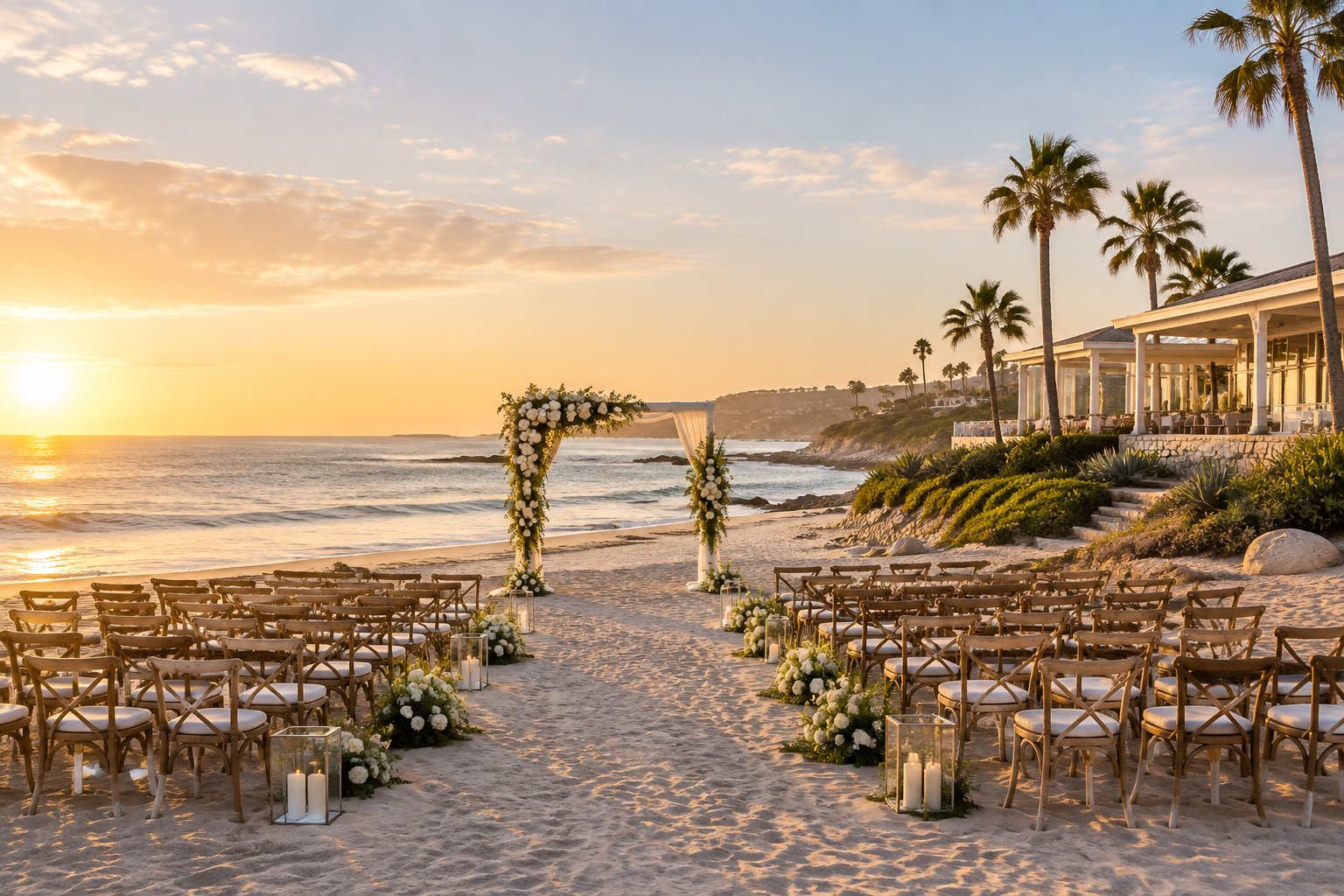
You can keep the ceremony barefoot and simple, or build an entire weekend around ocean views, sunset portraits, and a catered reception. Start by choosing the coastal experience you want, then confirm availability, permit rules, weather plans, and the full cost before booking.
Choose the Right Coastal Ceremony Setting
The right setting depends on whether you want sand beneath your feet, a protected event space, or a private property with built-in services. Public beaches offer a natural backdrop, while resorts, estates, and restaurants make the guest experience easier to manage.
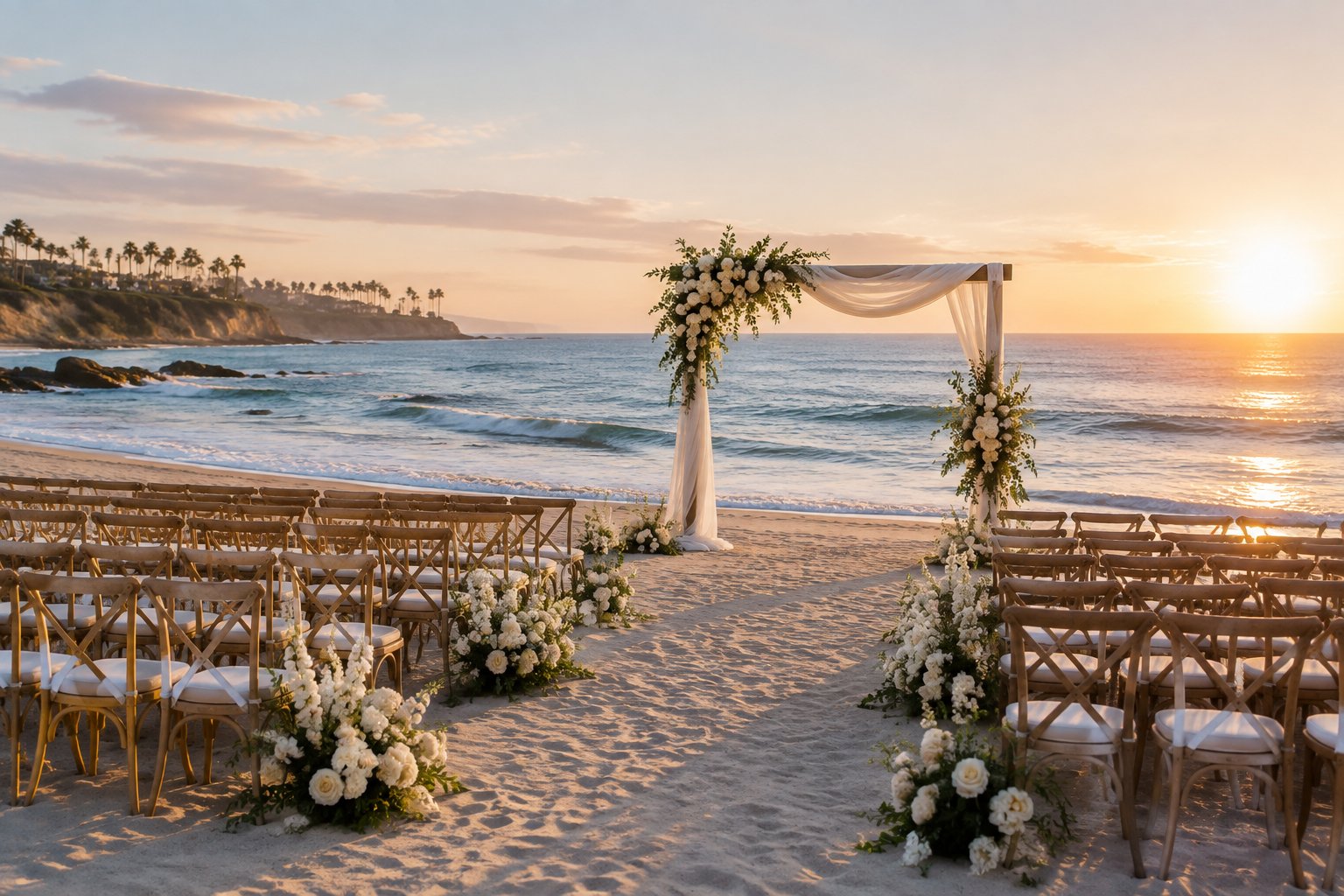
Toes-in-the-Sand Ceremonies vs. Ocean-View Venues
A toes-in-the-sand ceremony places you close to the water and creates a casual, scenic atmosphere. It also brings soft surfaces, public foot traffic, wind, tides, and limited access into your wedding planning.
An ocean-view venue gives you the coastal look from a lawn, terrace, patio, or bluff. Guests have firm ground, restrooms are nearby, and your ceremony can transition into cocktails or dinner with less movement.
Choose sand when the shoreline itself is central to your vision. Choose an elevated or paved setting when you want easier seating, formal attire, and a smoother reception transition.
Resort, Estate, Restaurant, or Public Beach?
A resort suits couples who want guest rooms, catering, event staff, and wedding packages in one location. An estate offers privacy, gardens, and a more personal setting, though rentals and outside vendors may add planning work.
A waterfront restaurant works well for smaller celebrations with a built-in kitchen, bar, dining room, and ocean-facing patio. A public beach supports a flexible ceremony budget, yet you must verify permits, decor rules, parking, sound limits, and cleanup requirements with the local authority.
Ask every venue whether the ceremony and reception share one site. A short walk can be charming for a small group, while a complicated transfer creates extra timing and transportation needs.
What Makes a Waterfront Reception Work?
A successful waterfront reception has a protected dining area, reliable power, restrooms, lighting, and a wind plan. Confirm whether the venue supplies tables, chairs, linens, sound equipment, heaters, and staff for setup and breakdown.
Your menu also needs coastal practicality. Choose dishes that hold their texture in cool air, secure paper goods, and place the bar away from direct sand and gusts. For an outdoor dance floor, ask about a level surface and a firm installation plan.
Where on the Coast Should You Get Married?
Southern California gives you distinct coastal personalities, from Laguna Beach coves and Orange County piers to Malibu bluffs, Santa Barbara beaches, and San Diego bays. Pick the region by balancing scenery, travel time, venue style, and guest access.
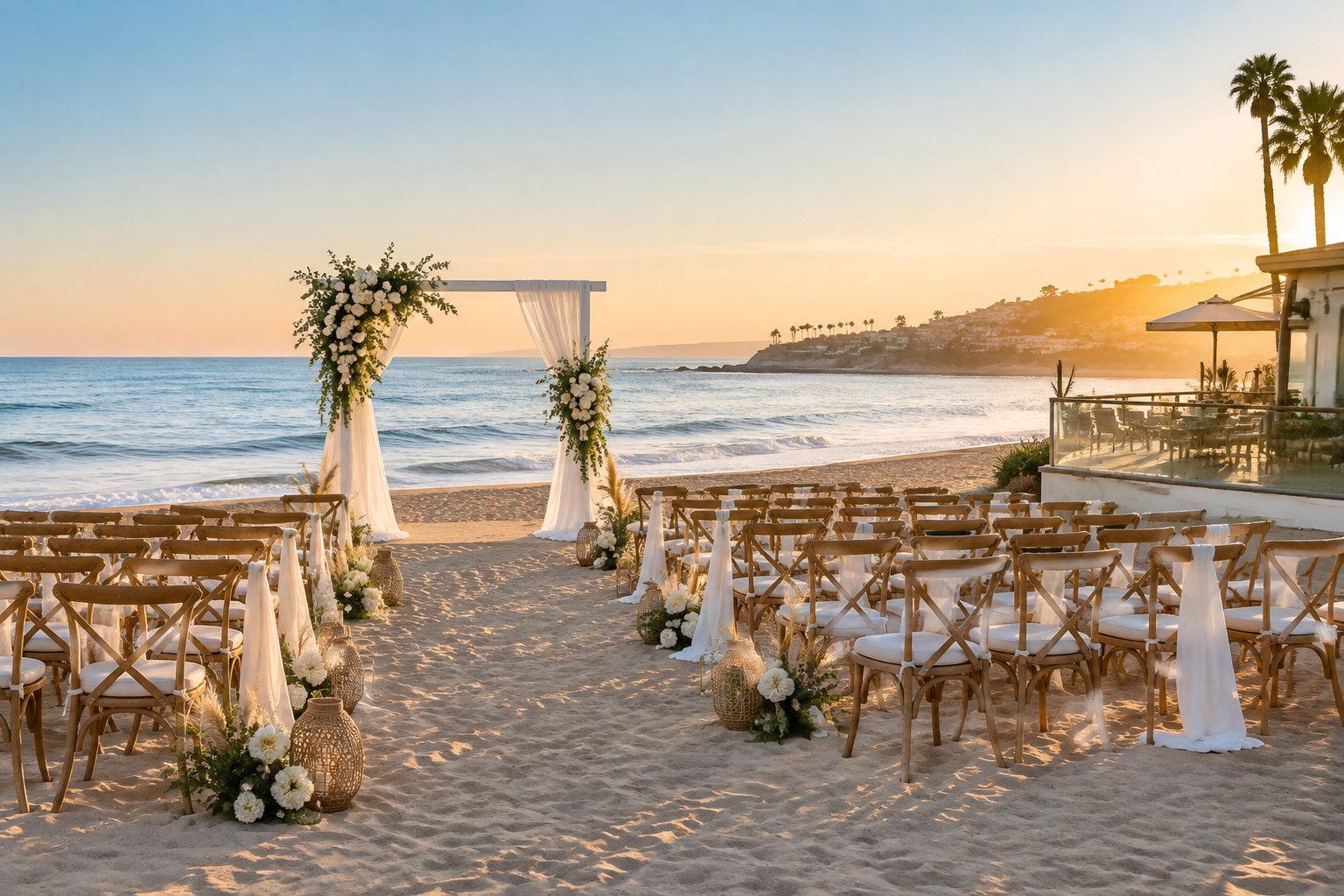
Orange County: Laguna Beach, Newport Beach, and San Clemente
Laguna Beach suits intimate weddings that favor coves, cliffs, art galleries, and dramatic ocean views. Venues near Crystal Cove and other protected coastal areas may offer bluff-top ceremony spaces with access rules that require early planning.
Newport Beach brings harbor scenery, yachts, waterfront dining, and a polished resort feel. It works well for couples who want a waterfront wedding with reception options close to the ceremony.
Huntington Beach offers broad sand and a lively surf-town setting. San Clemente adds Spanish-style architecture, a relaxed beach town, and the San Clemente Pier. Dana Point gives you harbor views, sheltered water, and event spaces near Dana Point Harbor.
Los Angeles and Malibu: Santa Monica to Zuma
Los Angeles County offers a wide range of guest experiences. Santa Monica works for couples who want a central location near hotels, restaurants, and the pier, while Malibu brings secluded-feeling coastlines, private clubs, and elevated ocean views.
Zuma State Beach and Broad Beach offer classic Malibu scenery, with long sand stretches and strong sunset appeal. Check the specific jurisdiction before planning decor, amplified music, chairs, or a larger gathering. Traffic between Los Angeles neighborhoods also deserves a place in your guest instructions.
Santa Barbara and the Central Coast
Santa Barbara combines Spanish-style architecture, walkable lodging areas, palms, and beaches such as East Beach. Calle Puerto Vallarta and nearby waterfront areas offer convenient access for guests who want a ceremony close to restaurants and hotels.
The Central Coast feels quieter and more spacious. Pismo Beach suits a relaxed seaside celebration, with broad coastal scenery and a casual town atmosphere. This region works well when you want a destination wedding that feels slower and less crowded.
San Diego County: Mission Bay, La Jolla, and Del Mar
Mission Bay offers calm-water views and venues designed for events, which makes it a strong option for families and larger groups. La Jolla provides cliffs, coves, and intimate portrait locations, while Del Mar blends a refined village feel with wide coastal views.
Carlsbad offers accessible beach-town venues and hotel options. Confirm city boundaries carefully because permit rules, parking, and event restrictions change from one community to the next.
Beyond SoCal: Pismo Beach, Monterey, Half Moon Bay, and San Francisco
Pismo Beach extends the relaxed Southern California style into the Central Coast. Monterey and Half Moon Bay bring cooler air, rugged shoreline, and a more dramatic landscape.
San Francisco offers iconic coastal views and urban lodging, though wind, fog, traffic, and cooler temperatures require stronger guest-comfort planning. These locations suit couples who value distinctive scenery and a destination feel over consistently warm beach weather.
Venue Matches by Wedding Style and Guest Experience
Your venue choice should match the way you want guests to spend the day. Resorts simplify lodging and service, estates create privacy, beach clubs keep the mood casual, and civic spaces can offer character near the shoreline.
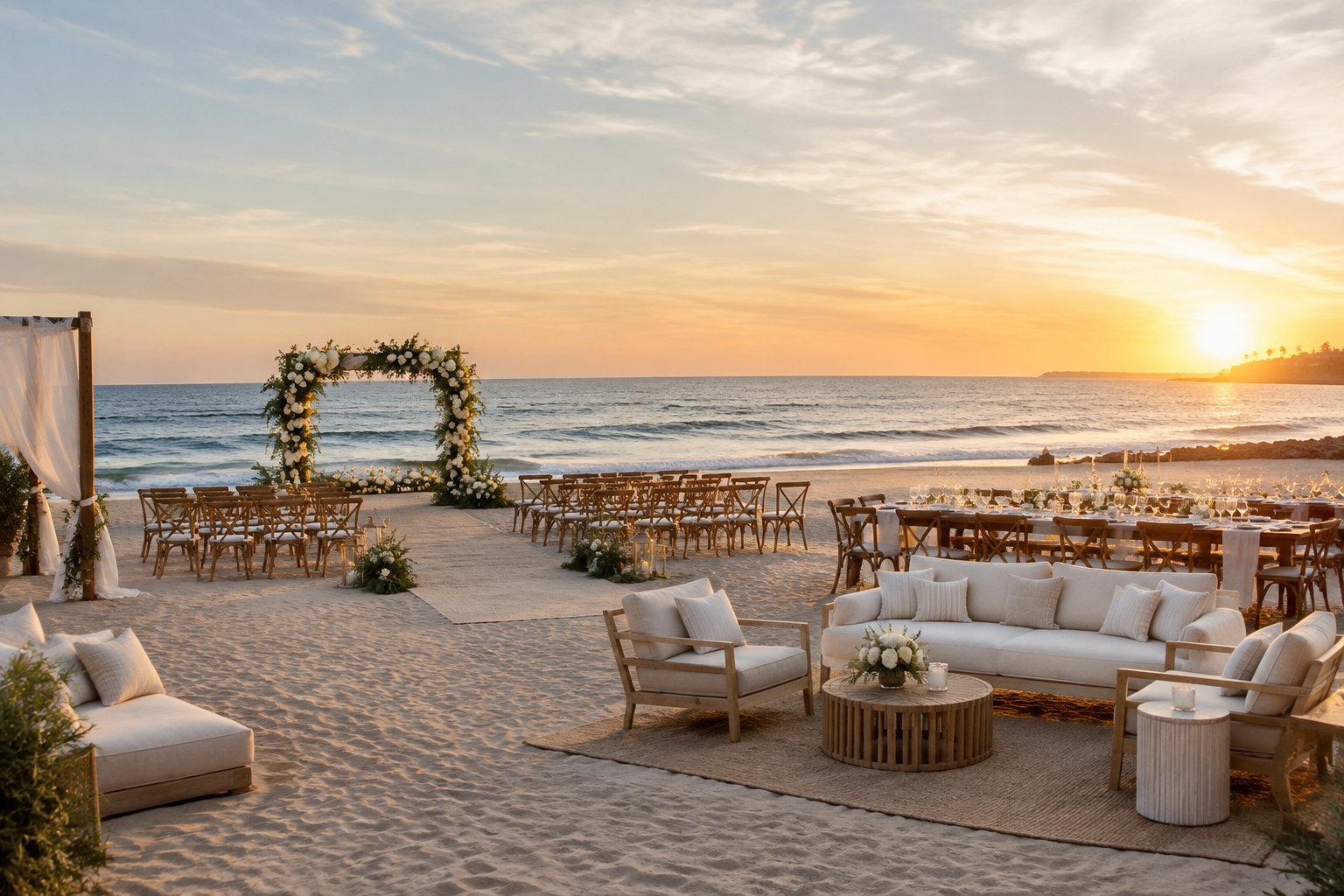
Luxury Resort Weekends With On-Site Amenities
Resorts work best when your wedding includes multiple events, out-of-town guests, or a full weekend schedule. Terranea Resort offers a resort setting on the Palos Verdes coast, while Surf & Sand Resort Laguna Beach, also known as Surf & Sand Laguna Beach, places celebrations close to the water in Laguna Beach.
For a San Diego stay, San Diego Mission Bay Resort and Catamaran Resort Hotel and Spa pair waterfront surroundings with guest accommodations and event services. Hotel Del Coronado adds historic architecture and a recognizable coastal setting.
Ask about room blocks, welcome events, rehearsal dinners, ceremony-to-reception distance, resort fees, and weather contingencies before comparing packages.
Bluff-Top and Garden Settings With Pacific Views
Bluff-top venues give you wide Pacific views without placing every guest on loose sand. Casa Romantica in San Clemente combines historic character with coastal scenery near the San Clemente Pier.
Cypress Sea Cove and similar coastal properties suit couples who want a private-feeling setting with gardens, terraces, or bluff views. A bluff-top estate can also create a strong ceremony backdrop while keeping dinner and dancing on stable ground.
Review guest access carefully. Cliffs, stairs, narrow paths, and limited parking affect older guests, wheelchair users, vendors, and anyone wearing formal shoes.
Relaxed Beach Clubs and Coastal Hotels
Beach clubs create a casual celebration with more event structure than a public beach. Malibu West Beach Club suits couples seeking a private coastal atmosphere, while Tower23 Hotel offers a modern San Diego setting near the sand.
Occasions At Laguna Village and Laguna Village work for couples who want a coastal location with a social dining experience. Ask whether the venue controls the beach access, what areas are private, and which services come through the venue’s preferred vendors.
Historic and Civic Spaces Near the Sand
Historic and civic venues bring architecture, community character, and practical event areas close to the coastline. Cabrillo Pavilion Arts Center in Santa Barbara offers a civic setting near the beach, with room for ceremonies, receptions, and cultural events.
These spaces often appeal to couples who want a memorable location with a defined indoor or covered backup. Confirm operating hours, sound limits, alcohol rules, rental periods, and the distance between parking and the ceremony site.
How Much Does a SoCal Beach Wedding Cost?
A SoCal beach wedding can range from a small, permit-based ceremony to a full resort celebration costing tens of thousands of dollars. Your venue type, guest count, rentals, food, photography, and planning support drive the final number.
The Costs That Change Most by Venue Type
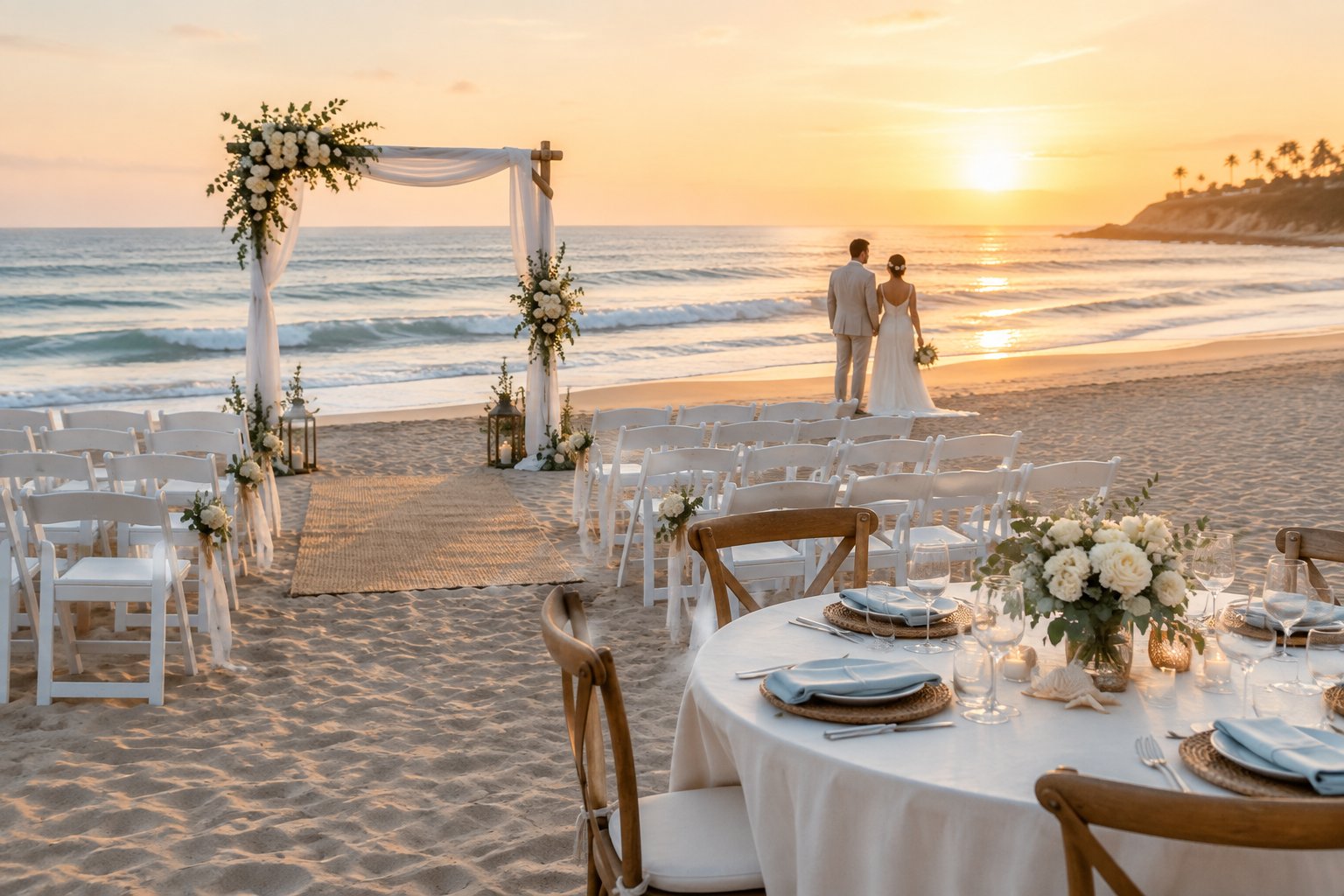
A public beach ceremony may require a permit, insurance, officiant, chairs, an arch, photography, and cleanup. Small wedding packages can keep those services organized, while a larger setup adds delivery, labor, sound, florals, and guest seating.
A resort or private venue includes property access and event management in its pricing. Catering minimums, service charges, taxes, bar packages, room blocks, and overtime can raise the total beyond the advertised starting rate.
For a broader planning benchmark, review how much does the average wedding cost in California. For a smaller budget, compare affordable wedding venues near the beach.
What Is Usually Included in Wedding Packages?
Package inclusions vary, so request an itemized proposal. A ceremony package might include an officiant, arch, basic florals, chairs, music, photography time, delivery, setup, teardown, or day-of coordination.
Reception packages may add catering, tables, linens, bar service, cake cutting, lighting, security, and venue staff. Ask whether permits, parking, gratuity, taxes, insurance, rehearsal time, and cleanup appear as separate charges.
A written package comparison helps you see whether a lower starting price still covers the services your guests need.
How Guest Count, Season, and Day of Week Affect Pricing
Guest count increases food, seating, rentals, staffing, transportation, and restroom needs. A ceremony for 12 guests has a different cost structure from a reception for 120.
Peak Saturdays in warm months attract strong demand. A weekday, morning celebration, or off-season date may open more choices and reduce some venue costs. Before paying a deposit, ask for pricing on at least two dates and confirm the cancellation and rescheduling terms.
Plan for Permits, Weather, and Guest Comfort
A smooth coastal wedding begins with local approval, a weather response, and practical guest support. Research the beach authority, reserve enough planning time, and build your ceremony around the conditions of the shoreline.
Do You Need a Permit for a Beach Ceremony?
Many public beaches require an event permit when you bring chairs, an arch, decor, amplified sound, or a larger group. The responsible agency may be a city, county, state park, or venue operator, so confirm the jurisdiction for your exact ceremony location.
Ask about application deadlines, guest limits, insurance, cleanup, alcohol, music, structures, and vendor rules. A small ceremony still needs written confirmation because regulations vary by beach.
Private venues often manage property permissions as part of their event process. That arrangement does not automatically cover a nearby public beach for portraits or guest activities.
When Is the Best Time of Year for Coastal Vows?
Southern California’s Mediterranean climate supports coastal weddings across much of the year. Late spring through early fall offers long daylight and a strong outdoor-wedding feel, while winter dates can provide softer demand and cooler conditions.
Your best date depends on the specific coastline. San Diego often offers mild conditions, while northern locations bring cooler air and more marine layer. Check historical weather patterns and your venue’s backup terms before selecting a date.
How to Handle Wind, Marine Layer, Tides, and Sunset
Check tide charts for a ceremony close to the water, then leave space between the scheduled start and the changing shoreline. Coastal wind can affect arches, florals, veils, menus, candles, and sound equipment, so secure every lightweight detail.
A marine layer can soften the light and cool the air, especially near sunrise or evening. Give guests a clear arrival time, bring wraps or heaters when permitted, and schedule portraits around the sunset you want. Your photographer and planner should confirm the exact sunset time for your date.
Accessibility, Parking, Noise Rules, and Backup Plans
Tell guests about sand, stairs, walking distances, parking limits, and rideshare drop-off points. Reserve accessible seating near firm ground, provide a shuttle when parking is distant, and give guests footwear guidance in advance.
Confirm quiet hours, amplified music limits, restroom access, alcohol rules, and cleanup duties. Your backup plan might use an indoor room, covered terrace, restaurant, or nearby hotel. Put the decision deadline in writing so your vendors and guests receive one clear instruction if wind, rain, or unsafe surf affects the ceremony.