
Beach Wedding Venues You Can Stay At: A Practical Guide
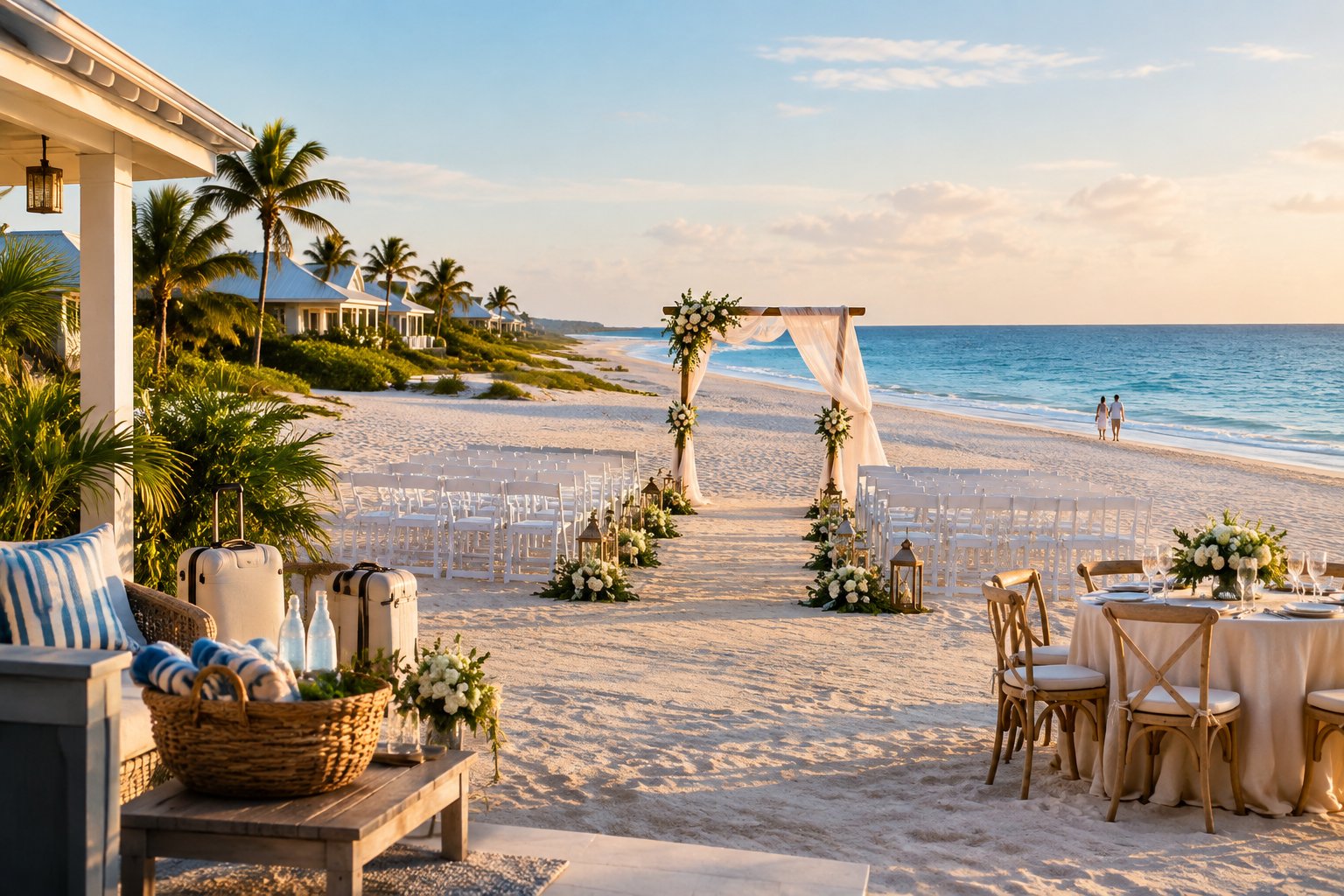
A beach wedding venue where you and your guests can stay on-site turns one memorable day into a relaxed coastal weekend. For couples who want easy guest logistics, a beachfront resort or private estate with on-site accommodations is the strongest choice because your ceremony, reception, and rooms share one property.
You can spend more time with loved ones, reduce travel between events, and create space for a welcome dinner or farewell brunch. Compare room capacity, ceremony access, weather plans, fees, and guest experience before you reserve a date. If you are ready to start browsing, explore beach wedding ideas for inspiration before contacting venues.
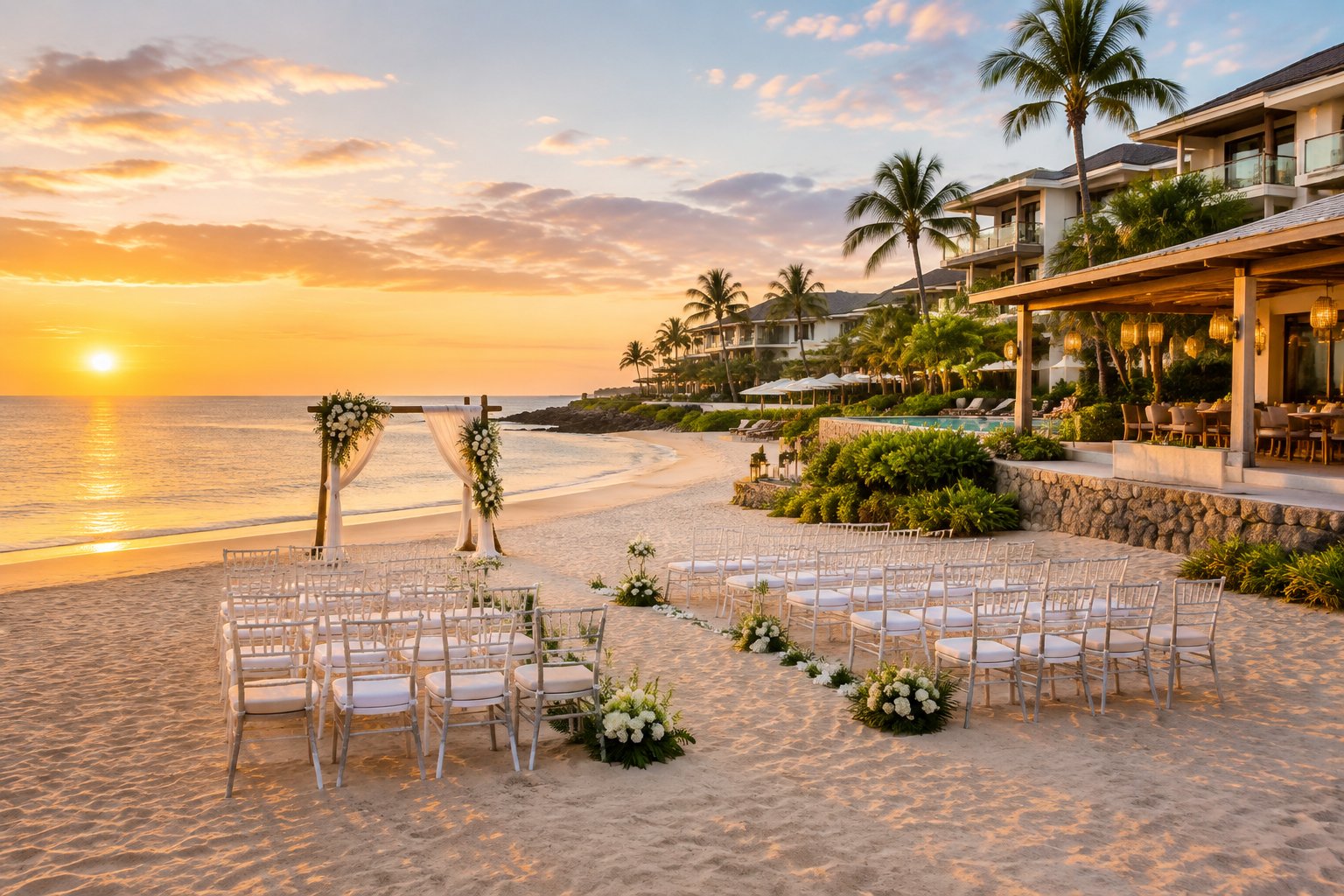
What Makes a Stay-On-Site Beach Venue Different?
A stay-on-site beach venue combines guest accommodations with the ceremony and reception location, giving you one home base for the celebration. Rooms might be in a beach resort, hotel, lodge, vacation home, or private estate.
You will want to confirm how many guests can sleep on the property, how rooms are assigned, and whether the venue requires a minimum stay. Ask about transportation, accessibility, quiet hours, shared spaces, and the distance from guest rooms to the beach wedding area.
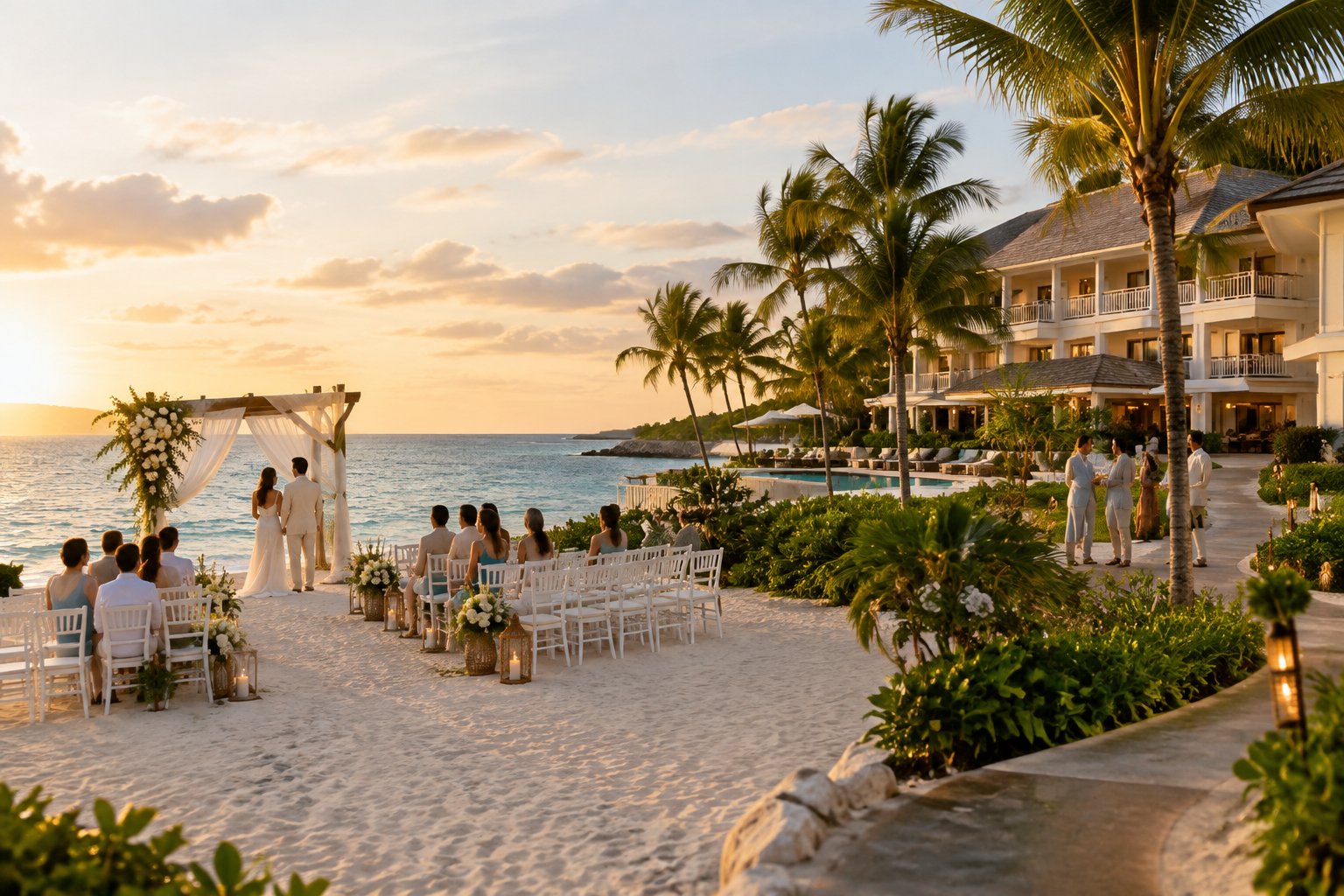
Why Overnight Lodging Changes the Wedding Experience
On-site accommodations keep your group close from arrival through departure. Guests can walk back to their rooms after the reception, attend early activities without arranging rides, and spend unhurried time together between events.
This setup works well for a destination wedding because guests coordinate fewer travel details. It also gives you more control over the wedding weekend schedule. A welcome gathering, rehearsal dinner, ceremony, reception, and farewell brunch can all happen within one property.
Look for useful amenities such as a bridal suite, private gathering rooms, pools, kitchens, elevators, and accessible bathrooms. Ask whether the property provides linens, housekeeping, parking, and a contact person during your stay.
Resorts, Hotels, Vacation Homes, and Private Estates Compared
Each lodging style supports a different type of beach wedding:
- Resorts: A beach resort often provides wedding staff, catering, spa services, room blocks, pools, and several event spaces. An all-inclusive wedding venue can simplify meal and beverage planning, though package rules require close review.
- Hotels: Hotels suit larger groups that need many rooms, front-desk service, and nearby restaurants. Check how private your ceremony area will feel and whether other hotel guests share the property.
- Lodges: Lodges create a quieter setting for smaller celebrations and may include outdoor gathering areas, cabins, or shared lounges.
- Vacation homes: Vacation homes offer kitchens, living rooms, balconies, and flexible group space. Confirm occupancy limits, event rules, parking, noise policies, and local permits.
- Private estates: Estates give you more privacy and design control. Ask about rental hours, vendor access, bathrooms, power, cleanup, and indoor space.
A small wedding venue guide can help you match the property style to your guest count and event plans.
When an Exclusive Buyout Is Worth It
An exclusive buyout makes sense when privacy, schedule control, and shared time rank high on your list. You reserve the property for your group, which can make it easier to host several events without working around other guests.
Review the buyout terms carefully. Confirm the number of nights, check-in and checkout times, event areas, staffing, cleaning, security deposit, cancellation policy, and rules for outside vendors. A property that sleeps 30 guests may still need a separate reception area, kitchen, or tent for your full group.
Choose the Right Setting for Your Celebration
The best beach wedding venue gives you a beautiful ceremony site, a comfortable reception space, a dependable rain plan, and enough beds for your guests. Walk through the property layout before booking so you know how people, vendors, and equipment will move throughout the day.
Sand creates a classic beach wedding ceremony, while lawns, decks, and waterfront terraces offer firmer footing and easier access. A wedding tent, ballroom, or banquet hall gives you more control over weather, sound, lighting, and dining.
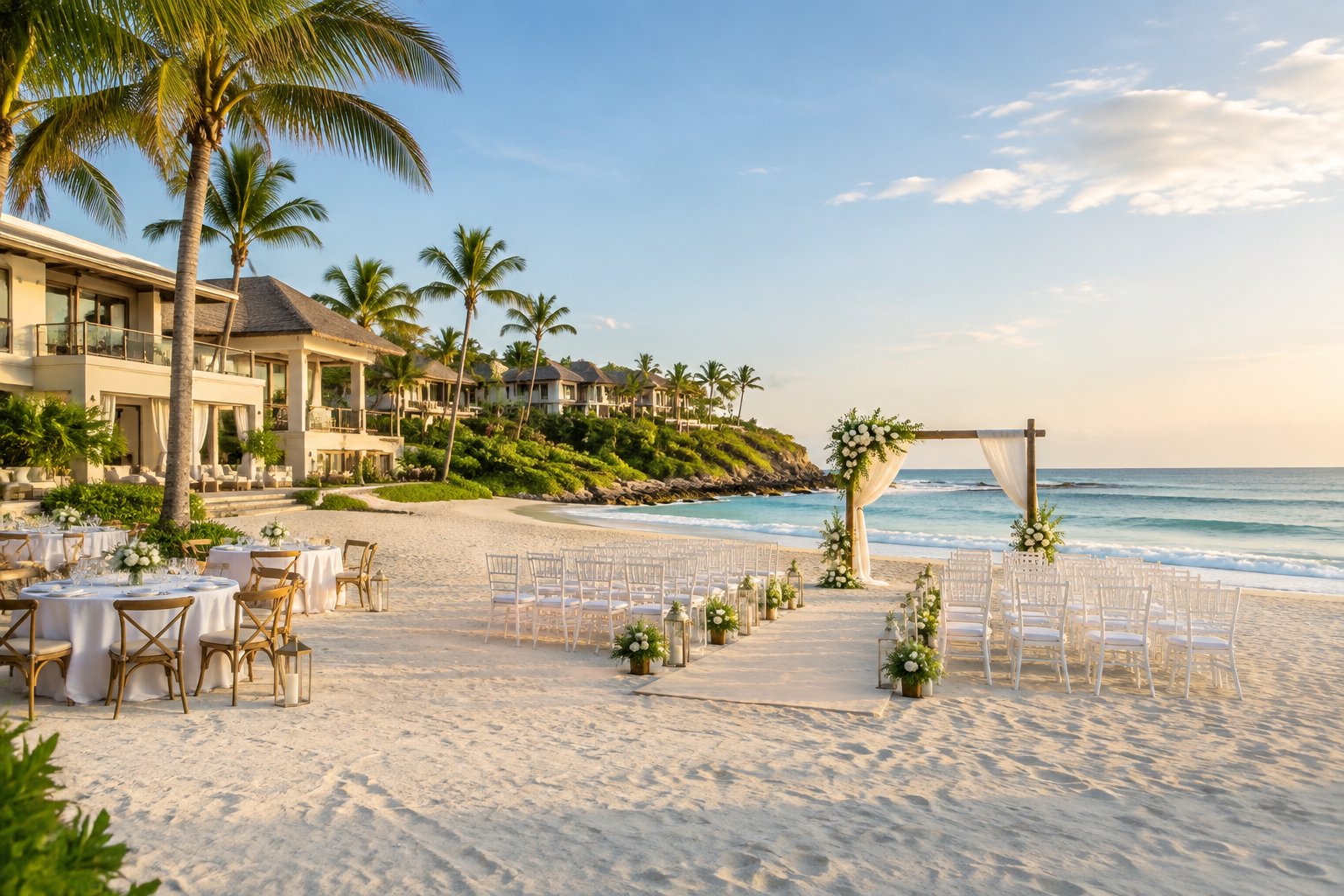
Ceremony Sites: Sand, Lawns, Decks, and Waterfront Terraces
Sand provides direct ocean views and a relaxed outdoor wedding feel. Ask about tide levels, beach access, chair placement, sound equipment, permits, and the distance to restrooms.
Lawns work well for guests who need stable walking surfaces. They also give you room for an aisle, arch, chairs, cocktail tables, and a clear path for service staff.
Decks and waterfront terraces create an oceanfront wedding setting with fewer footing concerns. Confirm railing safety, guest capacity, shade, wind protection, and whether amplified music is allowed.
A waterfront venue with several ceremony options gives you more flexibility if wind, rain, or heat affects the original plan.
Reception Spaces and Rain Backups
Choose a reception area that supports your guest count, dining layout, dance floor, bar, entertainment, and catering setup. A banquet hall or one of the property’s ballrooms offers climate control and built-in restrooms. An outdoor space may need flooring, lighting, power, fans, heaters, or a tent.
Your rain backup should be a complete plan with a confirmed room, setup time, furniture, lighting, sound, and guest communication process. Ask who makes the weather call and how quickly the team can move the celebration indoors.
Review photos of real layouts at your expected guest count. A room that looks spacious when empty can feel tight once tables, buffet stations, a bar, and a dance floor fill the floor.
How Many Guests Can Sleep on the Property?
Start with the number of guests who need beds, then separate that figure from the venue’s event capacity. A property might host 150 people for dinner while offering overnight lodging for 20.
Request a room list with bed types, bathrooms, accessibility details, check-in dates, and rates. Ask about nearby overflow hotels for guests who cannot stay on-site. Include children, vendors, the wedding party, and anyone who needs an early arrival in your lodging count.
A wedding venue ideas search can help you compare properties with different layouts, capacities, and guest experiences.
Where Are the Best U.S. Coastal Destinations?
The best U.S. coastal destination depends on the atmosphere, travel access, season, and type of lodging you want. The Florida Gulf Coast and Keys offer warm-water resort settings, the Carolinas bring wide Atlantic beaches, California offers dramatic Pacific scenery, and the Northeast suits refined seaside weekends.
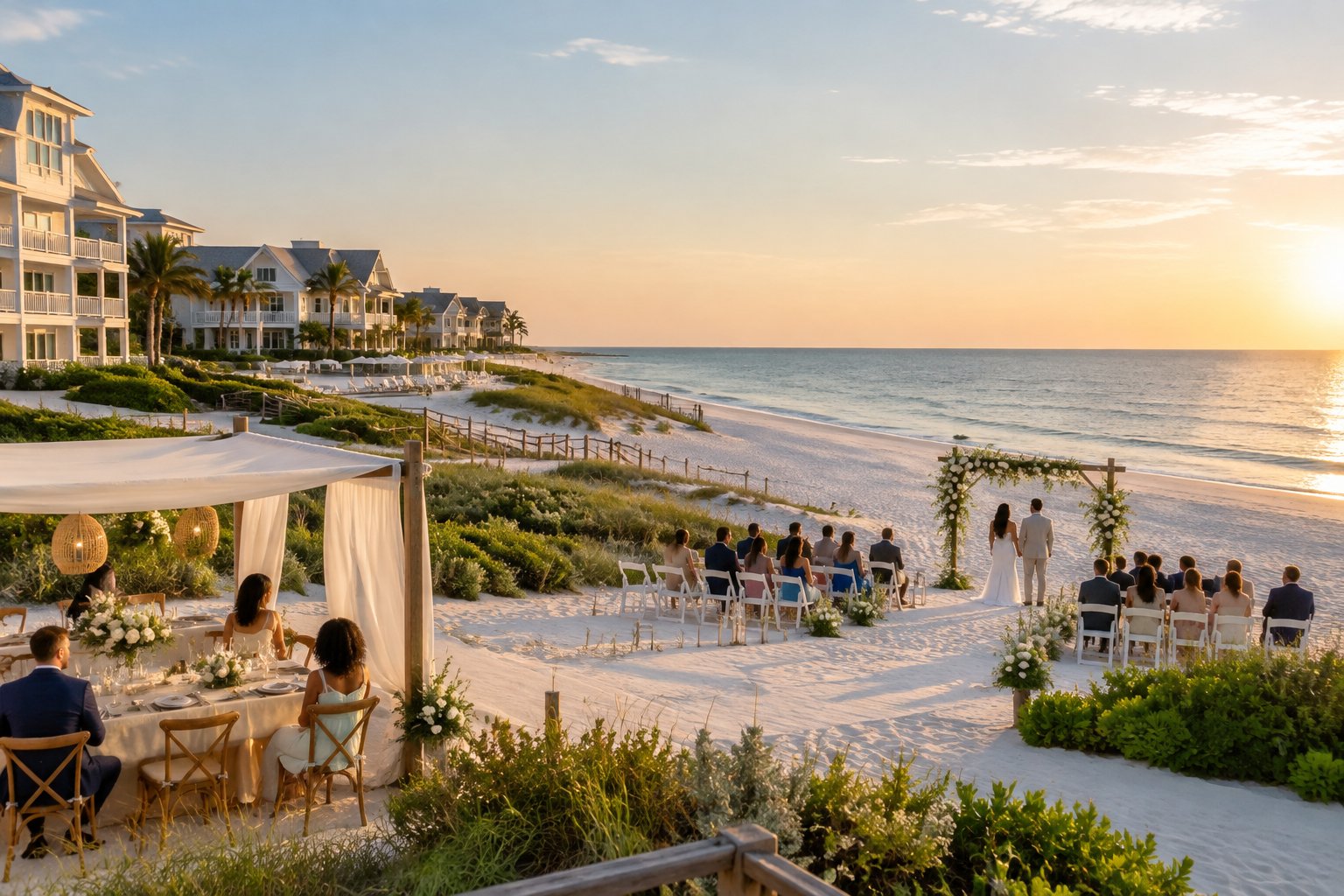
Florida and the Keys
Florida gives you a wide range of stay-on-site options, from large resorts to waterfront vacation homes. Destin and the Florida Gulf Coast are known for pale sand and calm-looking Gulf views that suit larger celebrations.
Key Largo and the Florida Keys work well for tropical destination weddings, intimate estates, and multi-day gatherings. St. Pete Beach offers resort access, dining, and a broad beach setting. Hammock Beach provides a resort-style environment with event spaces and guest amenities.
You can also look at Love Tree for a smaller, more personal setting if its lodging capacity and event rules match your plans. Confirm seasonal weather, beach access, permits, and hurricane policies before choosing a date.
The Carolinas and the Atlantic Coast
The Carolinas offer a mix of barrier-island beaches, resort communities, historic towns, and private coastal homes. Myrtle Beach suits groups seeking entertainment, restaurants, and a broad choice of hotels.
The Outer Banks and Nags Head provide a more residential beach-weekend feel, with vacation homes that can house families and wedding parties. Check local rules for beach ceremonies, amplified music, tents, alcohol, and commercial photography.
North Carolina’s Atlantic Ocean coastline also brings wind and changing weather conditions. Choose lodging with an indoor gathering area, especially if your plans include several events across multiple days.
California and the Pacific Coast
California works well when you want Pacific Ocean views, dramatic cliffs, or a polished resort experience. Huntington Beach offers a classic Southern California beach setting with hotels and event facilities nearby.
Monterey provides rocky coastline, cooler weather, and scenic venues such as Monterey Beach Station. Pacific Ocean conditions can bring fog, wind, and cool evenings, so include wraps, heaters, and an indoor reception plan.
Ask whether the ceremony takes place directly on the beach, on a terrace, or at a nearby waterfront property. The wording in a venue listing can describe ocean views without placing the ceremony on sand.
Northeast Beach Escapes
The Northeast suits couples who want a seasonal beach wedding with a more understated coastal style. Long Island Sound communities offer calm waterfront settings, while Bridgehampton brings estate-style celebrations and upscale lodging.
Rehoboth Beach and Atlantic Sands provide walkable beach-town options with hotels, restaurants, and guest activities. The Surf Club can suit couples who want a club-style waterfront setting, subject to its current event and lodging arrangements.
Plan around the local season and ask about heating, wind protection, parking, and indoor space. Northeast weather can shift quickly, so a firm backup plan protects your reception experience.
How Much Does a Beach Wedding Weekend Cost?
A beach wedding weekend can range from a modest local celebration to a high-cost destination event, with guest count, lodging, season, and venue exclusivity driving the largest changes. Request a complete proposal that separates venue rental, rooms, food, rentals, taxes, and service fees.
Understand Venue Fees, Lodging, and Minimum Stays
Venue pricing may cover the ceremony area, reception room, chairs, tables, staffing, cleanup, or only the property rental. Lodging may be charged per room, per night, or as part of a full-property buyout.
Check for two-night or three-night minimums, seasonal pricing, required room blocks, and deposits. Ask whether guests pay their own room charges and how unbooked rooms affect your contract.
Build a budget line for:
- Venue rental and ceremony fees
- Guest rooms and suites
- Transportation or parking
- Tables, chairs, linens, lighting, and tenting
- Catering, bar service, and cake
- Photography, music, flowers, and decor
- Permits, taxes, service charges, and gratuities
Use how much money do you need for a wedding as a starting point for setting a complete spending range.
Compare Wedding Packages With À La Carte Planning
Wedding packages can bundle the venue, food, drinks, ceremony chairs, basic decor, staffing, and coordination. They make initial comparisons easier when the included services match your plans.
À la carte planning gives you more control over the menu, florals, rentals, entertainment, and timeline. It also creates more individual decisions and separate costs.
Ask each venue for an itemized package. Check the number of guests covered, menu choices, cocktail hour duration, bar hours, cake service, boutonniere count, setup, cleanup, and planner support. An in-house wedding planner may coordinate the property team while you still need an independent planner for design or guest logistics.
For a resort setting, compare all-inclusive wedding venues near the beach with venues that price each service separately.
Plan for Taxes, Service Charges, and Vendor Fees
Your quoted package price may exclude local taxes, administrative fees, gratuities, delivery, setup, overtime, corkage, or outside-vendor charges. Request the final estimated total in writing.
Ask whether the venue requires preferred vendors and whether bringing your own caterer, planner, photographer, or rental company adds a fee. Confirm power access for music and lighting, insurance requirements, permit costs, and cleanup responsibilities.
Budget for guest comfort items such as water stations, shade, fans, blankets, bug control, and transportation. Coastal conditions can create rental needs that an indoor venue would not require.
Plan a Smooth Multi-Day Celebration
A smooth beach wedding weekend uses one clear schedule, one weather plan, and one contract review before you pay a deposit. Give guests downtime between events so the stay feels comfortable instead of packed.
Build a Wedding Weekend Timeline
A practical schedule might look like this:
- Thursday or Friday: Guest arrivals, check-in, welcome drinks, and a rehearsal dinner
- Wedding day morning: Breakfast, hair and makeup, quiet time, and vendor setup
- Wedding day afternoon: Beach wedding ceremony, cocktail hour, portraits, and reception
- Next morning: Farewell brunch, final activities, and checkout
You can pair an elopement with a larger reception later in the weekend if you want private vows and a bigger gathering. A stay such as a “wedstay” works best when the property offers enough common space for guests to connect and enough private space to rest.
Keep ceremony and sunset times in mind, along with tides, meal service, photography, and transportation. Share a digital itinerary with room assignments, dress guidance, weather updates, and contact details.
Prepare for Wind, Rain, Heat, and Hurricane Season
Coastal weather requires a written backup plan. Choose an indoor room, covered pavilion, or properly anchored tent, then confirm when the venue will make the move and who communicates the change.
For heat, provide shade, cold water, fans, sunscreen, and a shorter outdoor ceremony. For wind, secure floral designs, signage, programs, microphones, and table decor.
For rain, protect guest pathways and create a dry route between lodging and event spaces.
If you book during hurricane season, read cancellation, postponement, evacuation, and insurance terms before signing. Ask how the venue handles tropical storm warnings and whether your deposit transfers to a new date.
Review Rules Before You Sign the Contract
Read every rule affecting your ceremony, reception, lodging, and vendors. Confirm beach permits, alcohol service, amplified music, quiet hours, bonfires, pets, candles, fireworks, drones, photography, swimming areas, and guest parking.
Verify the property’s maximum overnight occupancy and event capacity separately. Ask who handles setup, cleanup, trash removal, security, and damage claims.
Get promises about rooms, spaces, equipment, and weather backups written into the contract. Before you reserve the date, request a site map, sample floor plan, room inventory, complete fee schedule, cancellation terms, and emergency contact process.