
Beach Wedding Venues: How to Find Your Perfect Shoreline Setting
A beach wedding gives you natural scenery, open air, and ocean views, with venue choices ranging from a simple public shoreline to a full-service resort. The best beach wedding venues for most couples are private or resort properties with a clear weather backup, guest accommodations, sound support, and help with permits.
Those features keep the ceremony beautiful while reducing the work you handle yourself. Your budget, guest count, travel plans, and preferred coastline will guide the final choice.
A public beach may suit an intimate ceremony, while an all-inclusive property works well for a destination wedding and a full wedding weekend. Start by comparing access, privacy, comfort, and services before you fall in love with a view.
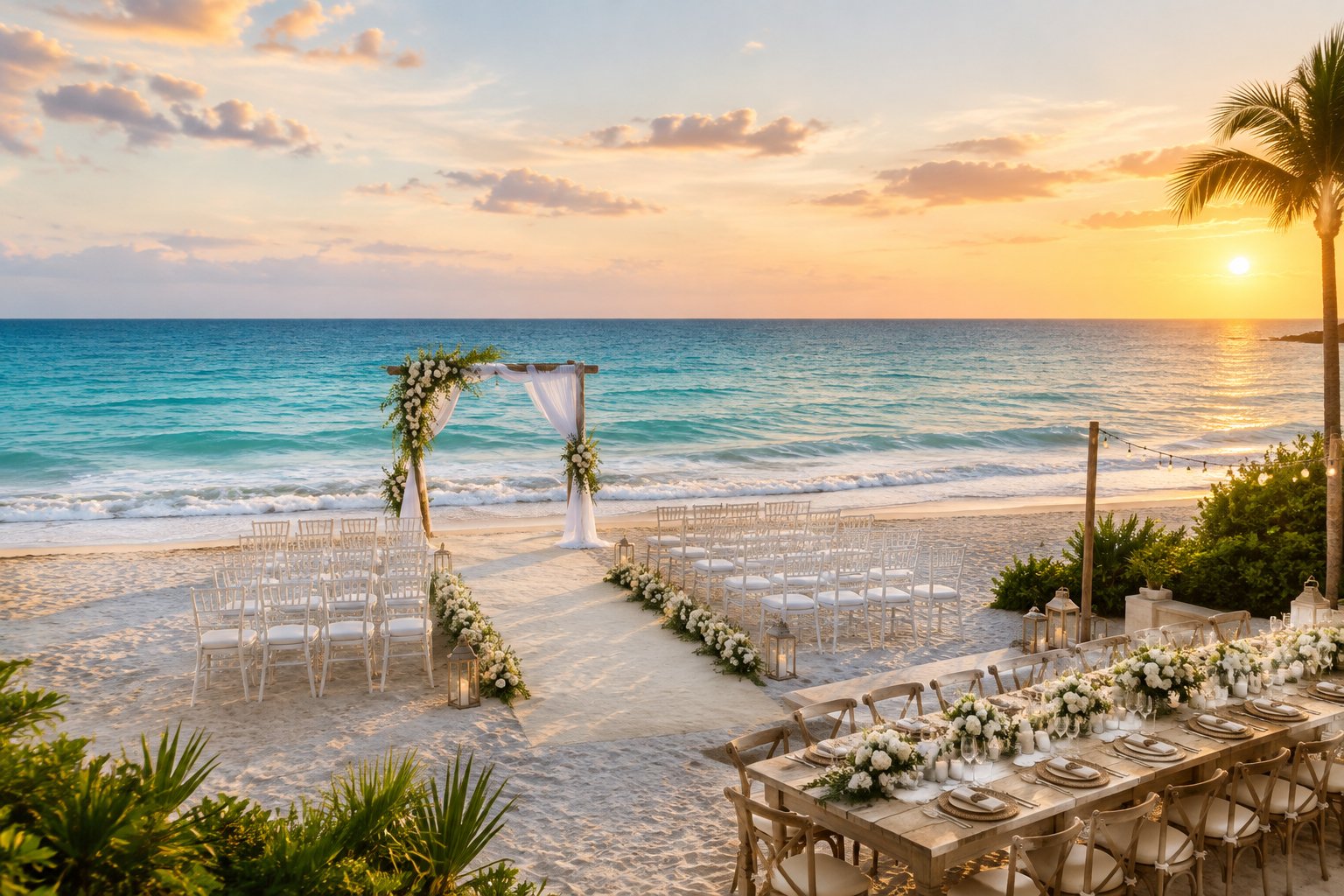
Use how to pick a wedding location to narrow your search, then request current pricing and availability from the venues that fit your priorities.
How to Choose the Right Setting for Your Celebration
Choose a setting that balances shoreline beauty with privacy, guest access, weather protection, and practical services. A private beach, waterfront property, or coastal wedding venue can offer a smoother outdoor wedding when it includes a firm setup plan and an indoor or covered backup.
Public beaches bring a relaxed atmosphere and lower entry costs, while resorts and private properties provide more control. Your venue choice should also reflect how much planning work you want to manage.
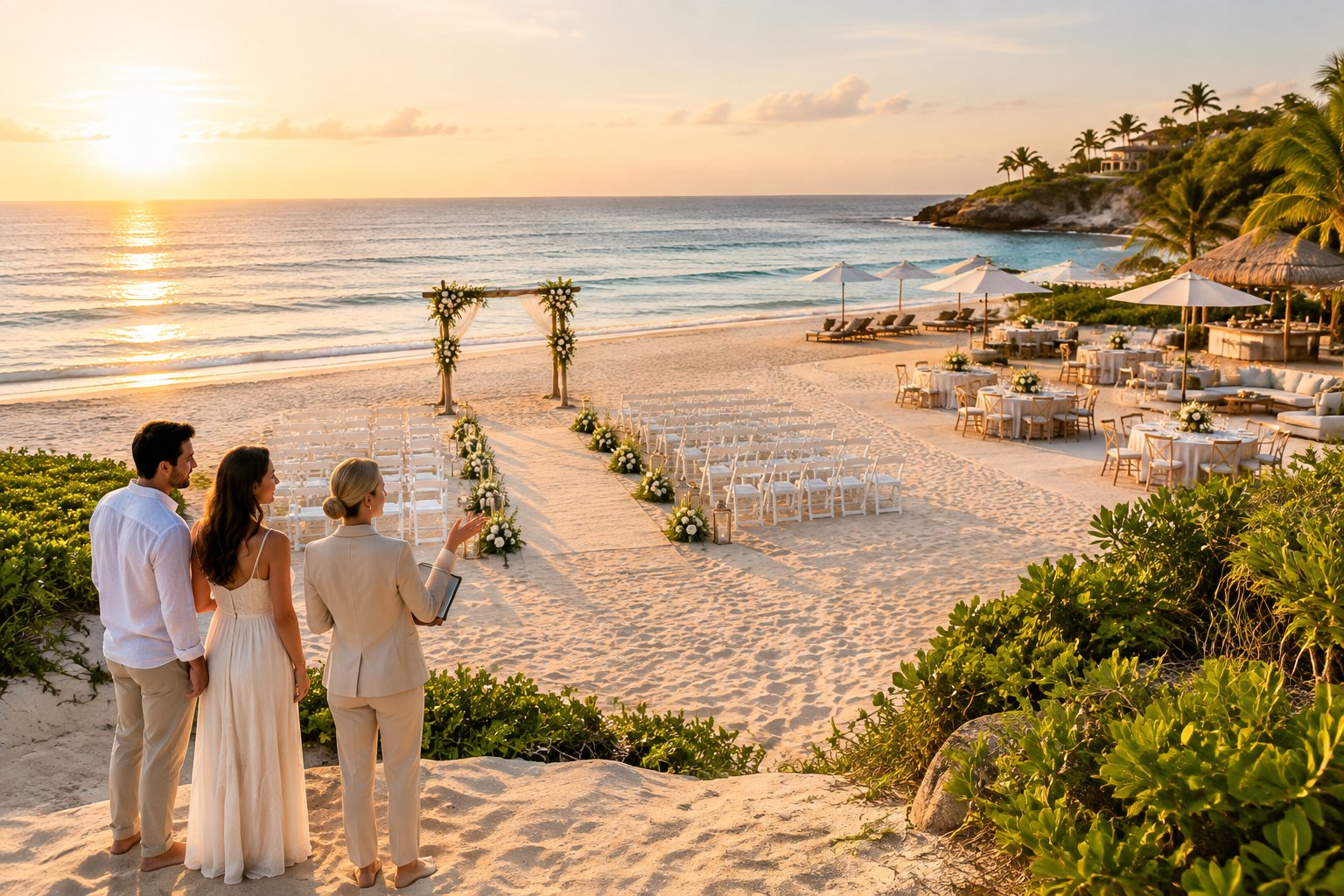
Private Beach, Public Shoreline, or Waterfront Property?
A private beach gives you more control over timing, guest movement, décor, and privacy. Resorts, private estates, and beach clubs may also provide lodging, catering, restrooms, power, and staff support.
A public shoreline can work well for a small ceremony with a separate reception nearby. Check the permit rules, group limits, noise restrictions, parking, restrooms, setup windows, and cleanup requirements before booking.
A waterfront property offers ocean views with more stable ground for dining and dancing. A restaurant, marina, inn, or private home may place the ceremony near the water while keeping the reception on a deck, lawn, or covered patio.
An all-inclusive wedding venue simplifies vendor coordination by combining services under one contract. Review the approved-vendor list, service fees, cancellation terms, and weather policy before you sign.
What Should a Coastal Wedding Venue Include?
Ask for these details in writing:
- A ceremony site with a clear view and defined guest area
- A rain and wind backup space
- Chairs, tables, shade, and lighting
- Restrooms close to the ceremony and reception
- Reliable power and professional sound equipment
- Vendor access for loading and teardown
- A plan for tides, sand conditions, and cleanup
- Accessible routes for guests with mobility needs
- Parking or organized transportation
- A day-of coordinator familiar with oceanfront ceremonies
Also confirm whether the venue handles permits or expects you to contact the local parks department.
How Many Guests Can a Beach Ceremony Comfortably Host?
A small beach ceremony of 20 to 40 guests gives you more flexibility with seating, sound, shade, and access. Larger celebrations need a wider usable beach area, a clear plan for public activity, stable seating, restrooms, and stronger audio.
Measure the space during your planned ceremony time. High tide, soft sand, dunes, rocks, and public foot traffic can reduce the usable area.
Ask the venue for a scaled layout showing the ceremony, aisle, guest seating, photographer position, sound equipment, and exit path.
Top U.S. Regions for a Seaside Celebration
The Atlantic, Gulf, Pacific, and tropical coasts each create a different wedding experience, from relaxed barrier-island ceremonies to dramatic cliffside vows. Compare climate, travel access, scenery, seasonal crowds, and permit rules before choosing your region.
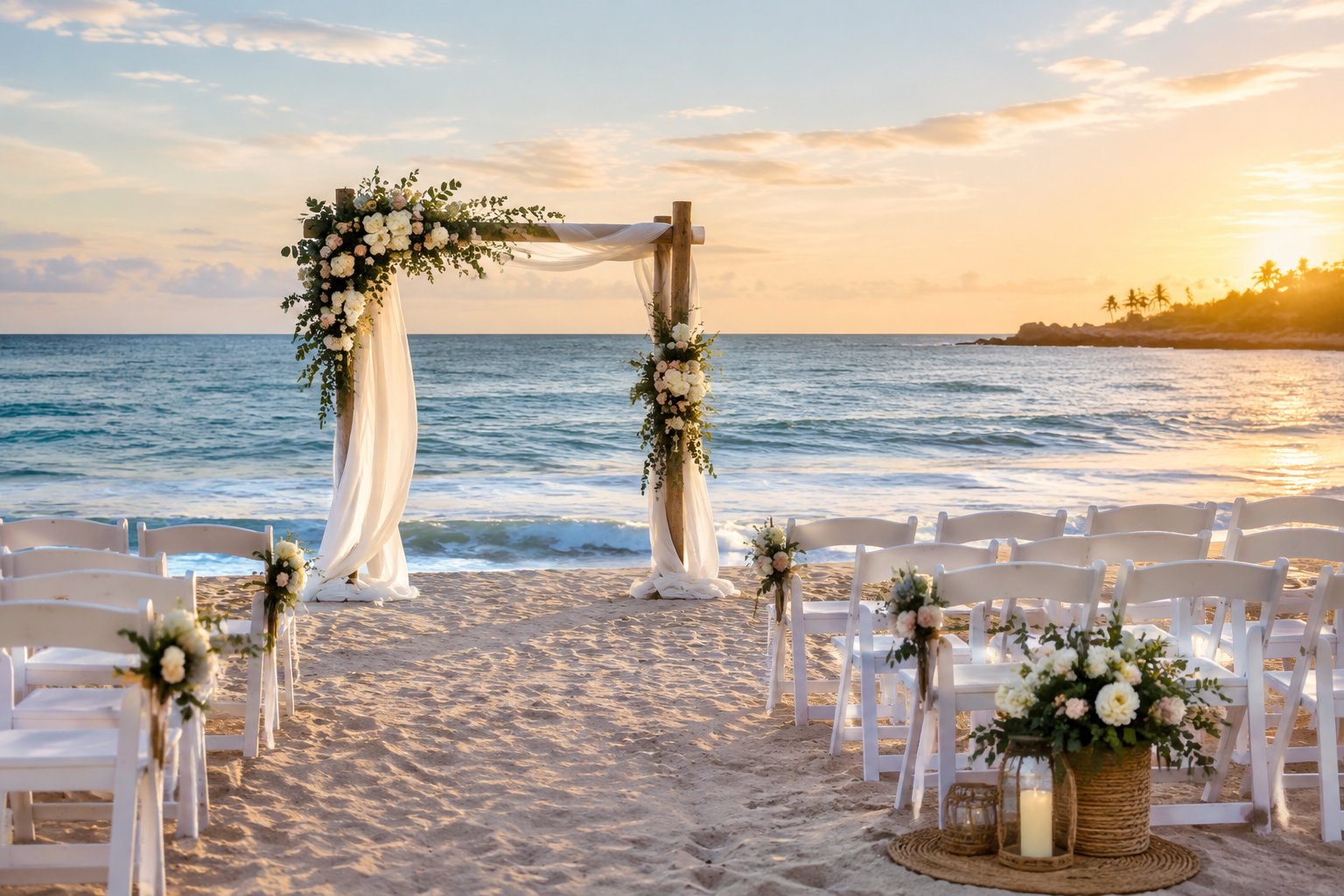
Atlantic Coast: The Outer Banks, Lowcountry, and New England
The Atlantic Ocean offers broad beaches, dunes, historic towns, and strong coastal character. The Outer Banks provide long stretches of sand and vacation homes that suit intimate gatherings or larger destination weddings.
Nags Head adds easy access to local lodging and reception services. The Lowcountry brings a softer Southern style.
Consider Folly Beach near Charleston, Tybee Island near Savannah, and Isle of Palms for warm-weather ceremonies with nearby restaurants and accommodations. Tidal changes and seasonal storms deserve close attention.
New England shores offer a cooler, polished setting with harbor towns, rocky edges, and classic inns. Look at Cape Cod, coastal Maine, Rhode Island, and Connecticut when you want a refined atmosphere and a shorter summer season.
Florida and the Gulf Coast: Warm Water and White Sand
The Gulf of Mexico is a strong choice for warm water, pale sand, and sunset receptions. The Florida Keys suit couples who want tropical scenery, private cottages, and a relaxed wedding weekend.
Resort areas around Clearwater, St. Pete Beach, and Sarasota provide lodging and vendor access. Gulf Shores and Panama City Beach offer wide beaches and family-friendly accommodations.
South Padre Island adds a casual Texas setting with space for smaller destination celebrations. Florida beach weddings need careful planning for heat, humidity, rain, and hurricane-season dates.
Select a venue with shade, indoor space, and a clear cancellation or rescheduling policy.
California and Oregon: Pacific Drama and Coastal Towns
The Pacific Ocean creates a more dramatic backdrop, with cliffs, rocky beaches, cool breezes, and bold sunsets. Malibu and Malibu Beach fit a stylish Southern California celebration, while Santa Barbara offers Spanish-inspired architecture and polished coastal venues.
Carmel-by-the-Sea brings a romantic small-town feel with rugged shoreline scenery. In Oregon, Cannon Beach is known for its striking rock formations and moody Pacific atmosphere.
Ask about marine layers, wind, parking, access paths, and evening temperatures. A nearby indoor reception space helps keep guests comfortable after the ceremony.
Hawaii and the Virgin Islands: Tropical Destination Escapes
Hawaii works well for a destination wedding when you want warm scenery, resort support, and a memorable guest trip. On Oahu, oceanfront resorts and beaches provide easy access to lodging and local services.
Hanalei Bay and the Na Pali Coast on Kauai offer lush mountain views, while Ka’anapali Beach on Maui pairs clear water with resort amenities. The Virgin Islands provide tropical views, warm weather, and a relaxed island pace.
Build extra time into the schedule for guest travel and vendor deliveries. Hawaiian public beaches require state permits, so confirm the rules early.
Check ceremony limits, setup restrictions, sound rules, and insurance requirements before you send invitations.
Standout Resorts and Coastal Properties to Consider
The strongest coastal properties combine direct shoreline access with guest rooms, food service, event staff, and a dependable backup location. Look for properties that support the full experience, from arrival and rehearsal plans to the reception and next-day gathering.
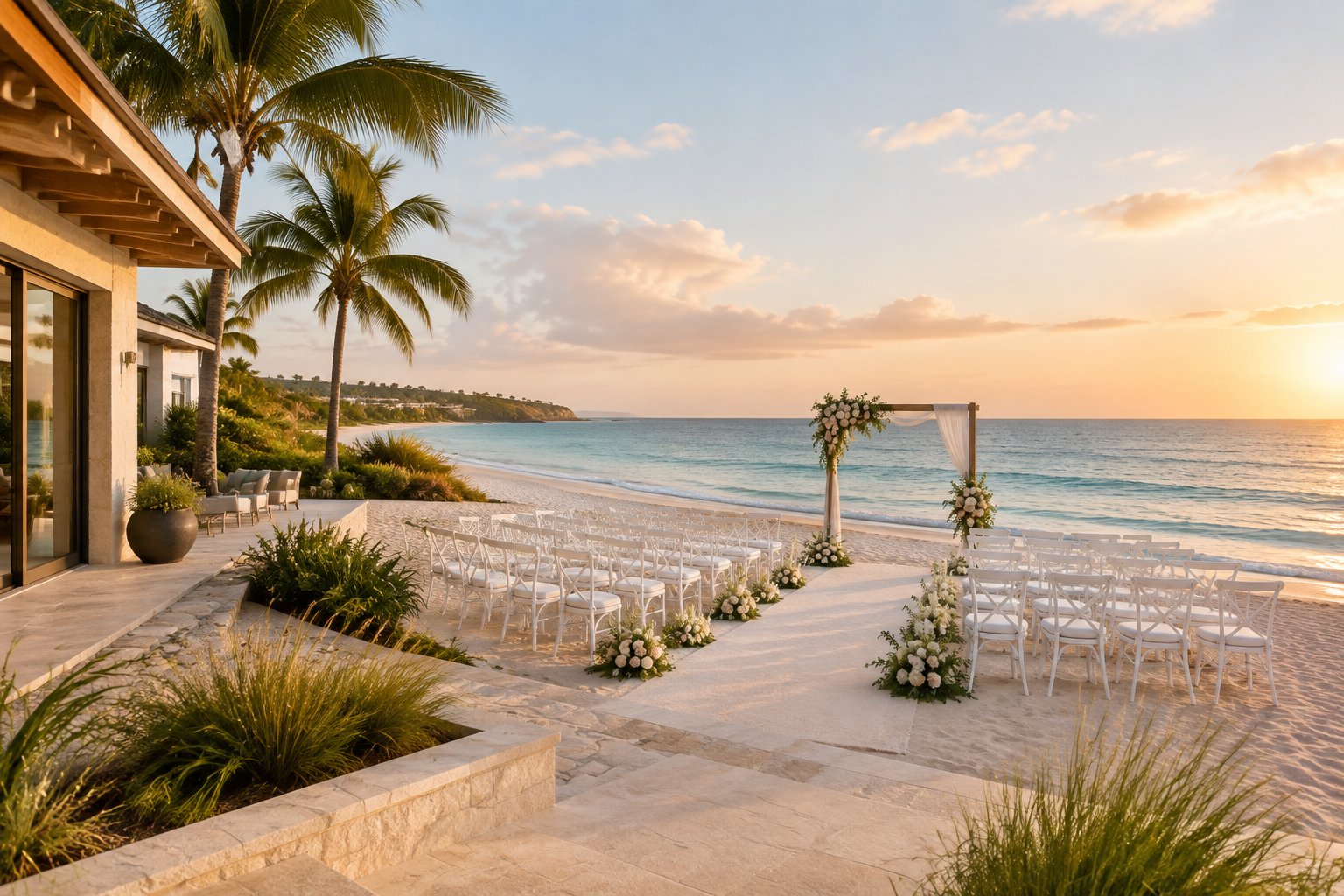
Florida Resorts for a Full Wedding Weekend
The Sandpearl Resort in Clearwater Beach offers a resort setting for couples who want lodging and wedding services in one location. Its Gulf Coast location supports a ceremony, reception, and guest stay within the Clearwater area.
The Don CeSar in St. Pete Beach brings a distinctive historic resort setting with beach access and on-site accommodations. Ask about ceremony locations, reception rooms, guest room blocks, vendor rules, and weather options.
For a quieter island feel, consider properties in Islamorada. Florida Keys venues often suit couples planning a smaller wedding weekend with sunset views, private lodging, and a relaxed schedule.
Request an itemized proposal that separates venue fees, food and beverage, rentals, service charges, taxes, guest rooms, and event insurance.
East Coast Stays With On-Site Guest Accommodations
Wild Dunes Resort in South Carolina offers a coastal setting with guest accommodations and event spaces suited to a multi-day celebration. Its resort format can help you coordinate lodging, welcome events, and wedding-day transportation.
The Surf Club in Bridgehampton, New York, fits couples seeking an upscale beach setting in the Hamptons. Confirm seasonal availability, guest capacity, parking, and reception timing.
Westbrook, Connecticut, offers a quieter New England coast with inns, waterfront properties, and nearby towns for guest activities. These settings work well when you want ocean access with a more intimate local feel.
For a full wedding weekend, ask about rehearsal dinner spaces, room blocks, breakfast options, shuttle service, and checkout timing.
California and Hawaii Properties With Distinctive Views
Monterey Beach Station in Monterey suits couples drawn to California’s rugged coastline and small-town atmosphere. Ask how close the ceremony area sits to the water and whether the reception has protection from wind and cool evening air.
Laguna Beach offers cliffside scenery, coves, and polished coastal venues. Confirm whether your ceremony takes place directly on sand, on a terrace, or at a beach-access property.
In Hawaii, Loulu Palm Weddings in Haleiwa, Hawaii, provides a tropical North Shore setting. Couples comparing Hawaii beach wedding venues should review permit handling, guest transportation, rain coverage, sound support, and nearby lodging.
What Do Beach Wedding Packages and Permits Cost?
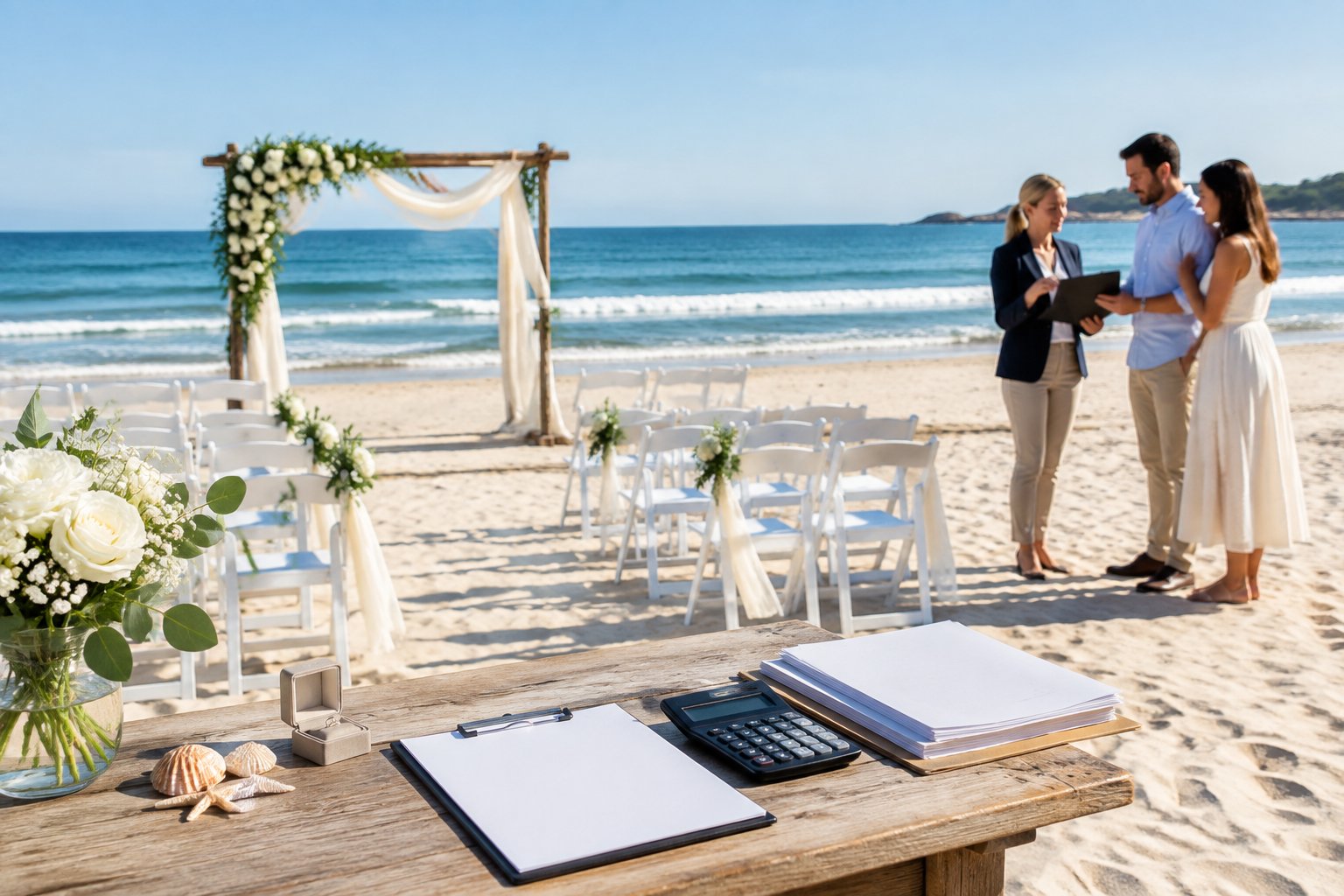
Beach wedding costs can range from about $2,000 for a small, simple ceremony to $25,000 or more for a luxury destination celebration. Guest count, location, season, reception style, rentals, and planning support create the largest price differences.
A public beach permit may cost roughly $50 to $500, while a full resort package can reach $8,000 to $20,000 or more. Request a detailed quote with every fee shown separately.
What Is Typically Included in a Venue Package?
Many wedding packages include some combination of:
- Ceremony setup and teardown
- Chairs and an arch
- Officiant services
- A wedding planner or coordinator
- Bouquet and basic floral décor
- Ceremony music or sound equipment
- Photography coverage
- Reception tables and linens
- Food, bar service, or a reception meal
- Guest room blocks or resort discounts
Read the package line by line. Confirm the number of setup hours, photography duration, floral size, menu choices, bar limits, taxes, service charges, and overtime rates.
A wedding planner can help compare package value and coordinate vendors. For a smaller event, a day-of coordinator may provide enough support without full-service planning.
When Do You Need a Permit for Sand and Shoreline Setups?
You need to check permit rules whenever your event uses a public beach, park, state shoreline, or reserved section of sand. Requirements may cover guest count, chairs, arches, amplified sound, photography, parking, signage, alcohol, and cleanup.
Contact the local parks department or beach authority six to twelve months before your date. Some locations limit ceremonies to certain hours or prohibit structures and commercial activity.
Private resorts often manage permits for their own property. Ask for written confirmation of who applies, who pays, and what the permit covers.
Keep the approved permit, site map, and restrictions with your wedding documents.
Which Extras Have the Biggest Effect on the Final Budget?
The largest additions often come from guest count and the reception. Catering, bar service, rentals, and lodging increase quickly as attendance grows.
Other budget drivers include:
- Tents, flooring, fans, or heaters
- Portable restrooms
- Professional microphones and speakers
- Transportation and vendor travel fees
- Photography and videography
- Floral installations
- Lighting and power
- Permit fees and event insurance
- Setup, teardown, and beach cleanup
A weekday or shoulder-season wedding may lower venue and lodging costs. Compare the complete wedding weekend price, including guest travel and room requirements, before choosing a lower venue fee.
Plan for Weather, Comfort, and a Polished Look
A successful beach wedding plan protects guests from wind, heat, rain, glare, and uneven sand while using décor that stays secure outdoors. Build these choices into the venue contract, timeline, rental order, and guest instructions.
How to Build a Reliable Rain, Wind, and Heat Backup Plan
Choose a venue with an indoor room, covered patio, pavilion, or properly permitted wedding tent. Set a decision deadline for moving the ceremony and name the person who makes the call.
Wind affects arches, aisle décor, microphones, veils, menus, candles, and loose florals. Use weighted bases, secured fabric, sturdy arrangements, and a professional sound system.
Confirm the venue’s wind limits for tents and temporary structures. For heat, schedule the ceremony later in the day and provide water, fans, parasols, and shaded seating.
For rain, protect the reception as well as the ceremony. Ask whether the backup space includes chairs, lighting, flooring, climate control, and access for caterers.
A Hawaii beach wedding, Florida beach wedding, or California beach wedding each needs a local forecast review close to the event date.
Beach Wedding Decor That Holds Up Outdoors
Choose designs made for salt air, sun, wind, and sand. Tropical greenery, protea, bird of paradise, sturdy dahlias, and other durable flowers work well in warm coastal settings.
Use weighted lanterns, anchored aisle markers, low floral arrangements, and secured table linens. Skip loose paper items, fragile glass, lightweight arches, and décor that blows into the water.
For reception tables, use a restrained palette that supports the shoreline. These beach wedding table decoration ideas can help you plan centerpieces, place settings, and coastal accents without blocking conversation or views.
When a Wedding Tent Makes Sense
A wedding tent makes sense when your reception needs shade, rain protection, lighting, power, or a defined dining area. It also gives you more control over furniture placement and the transition from dinner to dancing.
Ask about anchoring rules, flooring, sidewalls, fans, heaters, lighting, generator noise, delivery access, and teardown time. Sand affects installation, so use a rental company with coastal event experience.
A tent adds cost and setup work, yet it can protect catering, music, décor, and guest comfort during a long reception.
Guest Attire, Footwear, and Accessibility Considerations
Tell guests about sand, sun, wind, and temperature on the invitation or wedding website. Lightweight fabrics, flat sandals, dressy wedges, and polished barefoot looks suit the setting better than narrow heels.
Provide a shoe-check area, sunscreen, water, fans, wraps, and towels for guests who need them. Position the ceremony so guests do not stare into the sun, and offer shaded seating for older relatives and young children.
Plan an accessible route from parking to the ceremony. Temporary mats, boardwalk panels, or a firm walkway can help guests using wheelchairs, walkers, or canes. Confirm that restrooms, transportation, and the reception area follow the same access plan.