
Beginner Wedding Photography Packages: A Pricing Guide
Wedding photography packages for beginners work best when they offer clear coverage, edited digital images, a private gallery, and simple client communication at a price that covers every hour of work. A beginner wedding photographer should start with three fixed packages, price each one from total business costs, and state every deliverable in writing.

Your first package does not need every possible product. It needs a reliable process, a realistic editing schedule, and expectations your clients can easily follow. Use the guide below to shape an offer that feels professional while you build experience and your portfolio.
What Should a Beginner Package Include?
A beginner package should include a defined coverage window, professionally edited wedding photos, an online gallery, and clear client support. Your photography packages should make it easy for a couple to see what they receive, when they receive it, and what requires an added fee.
Choose Coverage Hours That Fit the Wedding Day
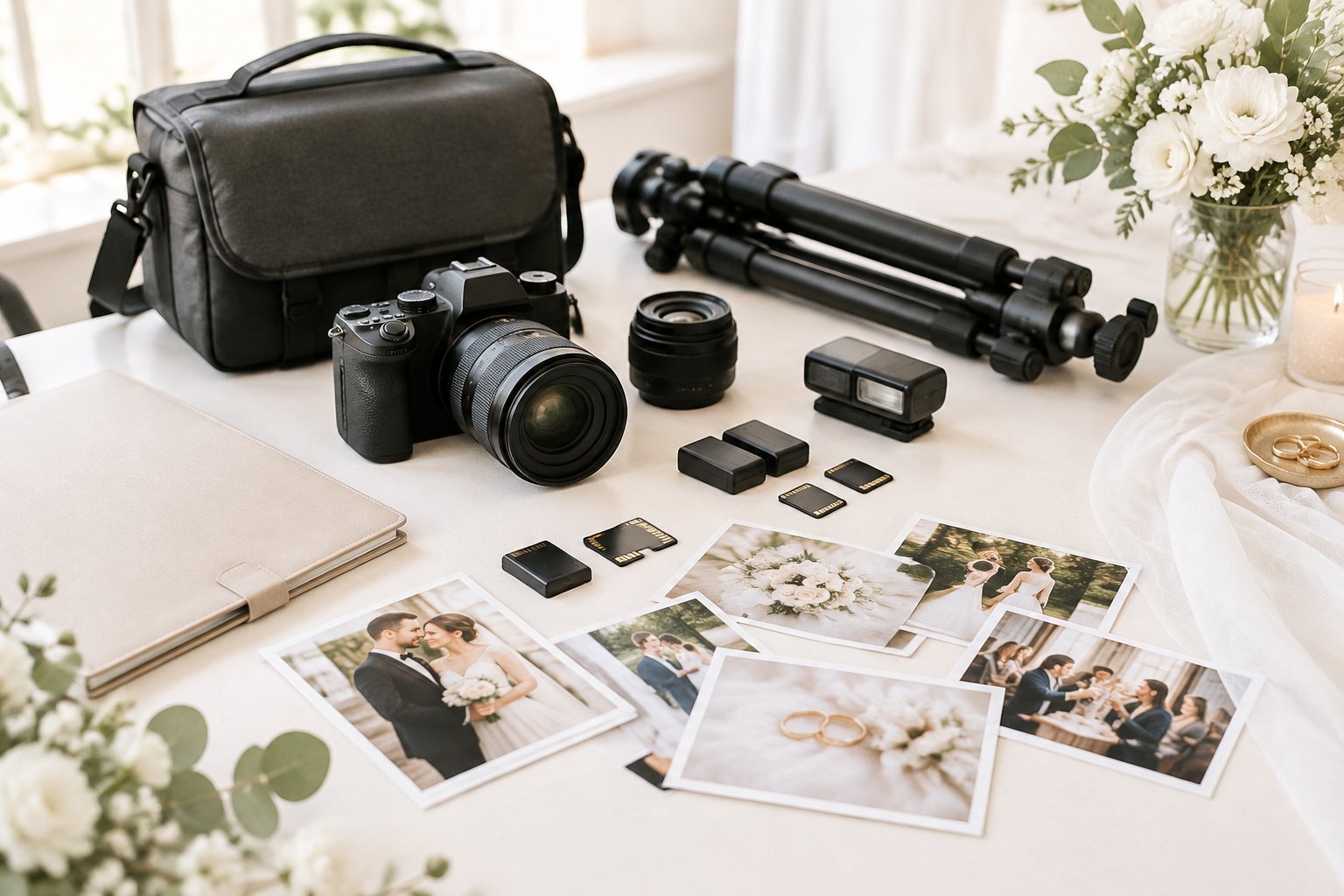
Coverage is continuous time, so choose hours that match the parts of the wedding you can document well. A small package might cover four hours for a courthouse ceremony, elopement, or micro wedding. A core option might include six to eight hours for preparations, the ceremony, portraits, and part of the reception.
Write the start and end times into your proposal. State whether travel between locations is included and list the price for each additional hour. This prevents confusion when a timeline changes.
Set Clear Deliverables for Wedding Photos
Describe the finished wedding photos with useful details:
- Professionally edited, high-resolution JPEG files
- A private online gallery
- An estimated image range or a clear statement that the final count varies
- A delivery deadline
- Download instructions
- Personal-use and printing permissions
Avoid promising an unlimited number of images before you know how long culling and editing take. A consistent gallery of strong images gives clients a better experience than a large set of unfinished files.
Build in Consultations and Timeline Planning
Include a planning call, an intake form, and a final timeline review in your wedding photography services. Ask about family groupings, cultural traditions, travel between venues, special guests, and moments the couple considers important.
Client communication also includes response times, meeting options, and the best way to contact you. These details turn photography services into a complete client experience and help you arrive prepared.
How Much Should a Beginner Wedding Photographer Charge?
A beginner wedding photographer should set a package price that pays for shooting, preparation, editing, business overhead, taxes, travel expenses, and profit. A low introductory price can help you gain bookings, yet it still needs to reflect the full workload behind each wedding.
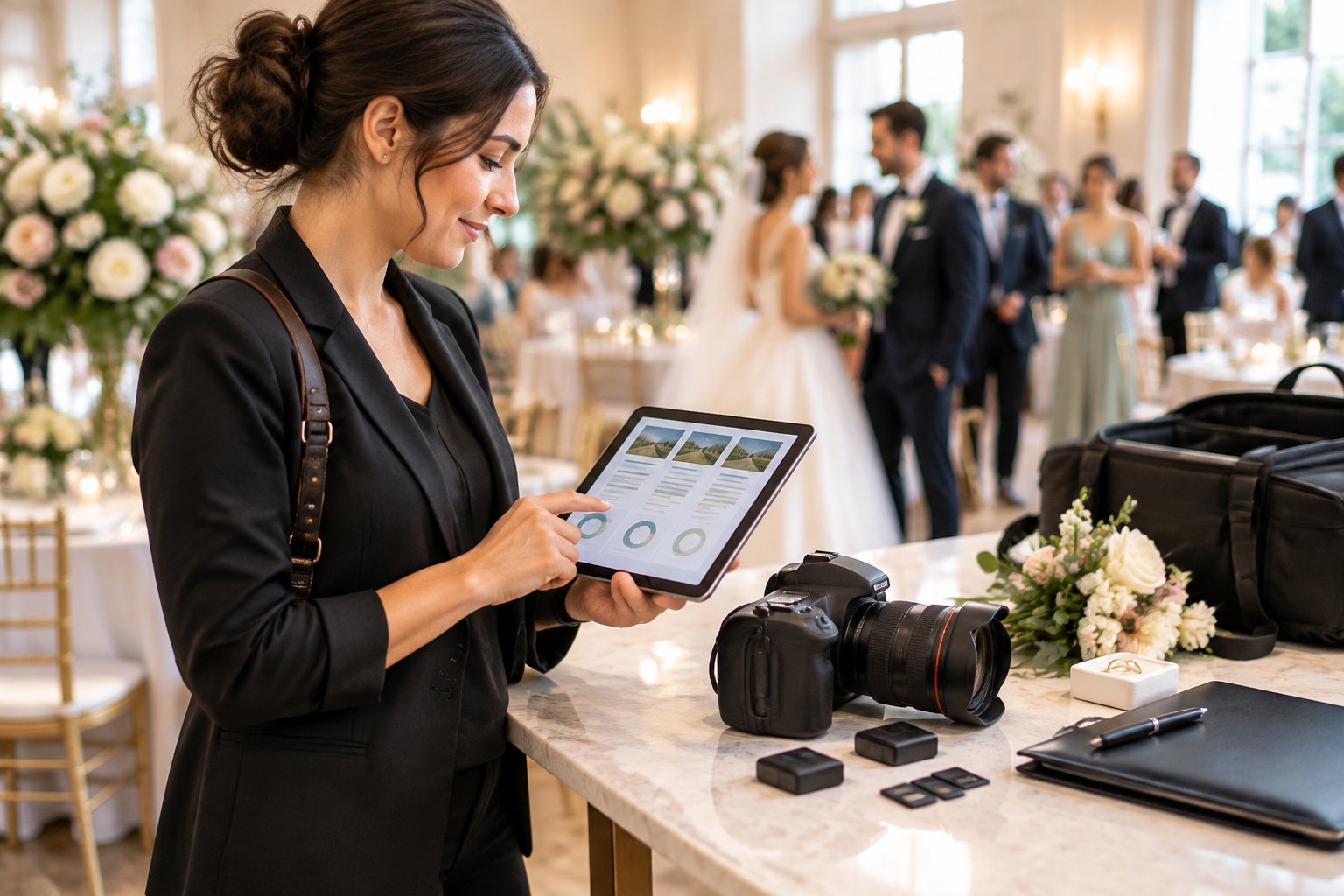
Your local market, portfolio, equipment, and level of support all affect wedding photography pricing. Use published local prices as a reference point, then calculate your own cost floor before setting a number.
Use Package Pricing Instead of a Simple Hourly Rate
Package pricing gives couples a clear choice and accounts for work outside the event. An eight-hour wedding might require several hours of emails, planning, travel, file backup, culling, photo editing, gallery preparation, and bookkeeping.
You can still use an hourly calculation internally. Add every work hour, multiply by your target rate, and add direct expenses. Present the result as a package with defined coverage and deliverables.
Calculate Costs Beyond the Wedding Day
Create a worksheet for each package with these lines:
- Consultation and planning time
- Wedding-day coverage
- Travel and parking
- Equipment maintenance and insurance
- Editing time and storage
- Gallery software and payment fees
- Taxes
- Marketing and other business overhead
For example, an eight-hour booking that requires four planning hours, two travel hours, and twelve editing hours represents 26 hours of labor before accounting for expenses. Use that total when setting your wedding photography prices.
Create a Simple Photography Rate Card
A clean photography rate card can show three packages, each additional hour, travel limits, and selected add-ons. Include the coverage hours, photographer count, image delivery, gallery access, turnaround time, and payment schedule.
Review your rate card after several weddings. Raise prices when your calendar fills, your workflow improves, or your service includes more value. Keep old proposals consistent with signed agreements.
Build Three Simple Coverage Tiers
Three coverage tiers give couples a clear starting point while keeping your photography business easy to manage. Each tier should change one meaningful factor, such as coverage time, photographer count, or included products.

Name each tier by its purpose and show the key differences in a short list. A middle package with the coverage most couples need can serve as your main offer.
Short Coverage for Elopements and Micro Weddings
Offer four to five hours for a small wedding with one location and a focused timeline. Include ceremony coverage, family portraits, couple portraits, and key details.
This option suits a courthouse ceremony, destination elopement, or reception with a limited guest list. Set a firm end time so the package stays profitable.
Core Coverage for Most Wedding Days
Build your main package around six to eight hours with one photographer. Include planning support, edited digital images, a private gallery, and personal-use rights.
This coverage can include getting ready, the ceremony, portraits, dinner, speeches, and part of the reception. Ask for the timeline before promising that every portion of the day fits within the selected hours.
Full-Day Coverage With a Second Shooter
Use a second photographer or second shooter when the wedding has multiple locations, a large guest list, or simultaneous preparations. An additional photographer can cover the partner getting ready while you photograph the other side of the wedding party.
Set expectations for vendor meals, parking, travel, equipment, and the second shooter’s role. State whether the second shooter edits images, contributes files for selection, or works under your direction throughout the day.
Decide What Is Included and What Costs Extra
Your base photography services should stay focused, while optional products let couples customize their collection. List every extra with a clear price and production timeline.

Choose add-ons you can deliver consistently. Price physical products after accounting for design time, ordering, shipping, revisions, and your desired margin.
Offer an Engagement Session and Extra Hours
An engagement session works well as a paid add-on or as a feature in your higher package. Define the session length, location limits, edited image delivery, rescheduling policy, and gallery access.
Additional wedding hours should have a written rate. Explain that extra coverage requires availability and a revised end time, especially when the request comes during the reception.
Price Albums, Prints, and Wall Art
Price a wedding album after confirming its size, cover, page count, design process, revision limit, and shipping. Tell clients how many design changes are included and when the order becomes final.
You can offer prints, framed pieces, canvas, or other wall art through a separate menu. Keep product prices current because lab costs and shipping fees change.
Add Video and Drone Coverage Carefully
Wedding videography requires its own workflow, equipment, audio plan, editing time, insurance, and contract terms. Partner with a qualified videographer when you do not provide video yourself.
Drone photography and drone footage also require a trained operator, location checks, weather planning, and compliance with applicable aviation rules. Treat aerial coverage as a separate service with its own cancellation and safety terms.
Set Delivery, Editing, and Rights Expectations
Your contract should define photo editing, delivery timing, gallery access, and image rights before the wedding date. Clear terms protect your schedule and help clients know how they can use their files.
Explain Photo Editing and Artistic Retouching
Describe your standard photo editing, such as exposure, color, cropping, contrast, and basic cleanup. Define artistic retouching separately for detailed skin work, background changes, object removal, or complex fixes.
State whether raw files are included. If they are excluded, say so directly and explain that clients receive your finished edited work.
Plan Gallery Delivery and Rush Delivery
Set a delivery window you can meet during your busiest season. A four-to-six-week window gives you time for backup, culling, editing, exports, and quality checks.
Use a private online gallery with download instructions and a stated access period. If you offer rush delivery, list the shorter deadline and fee in advance. Put the rush option in the contract so it does not disrupt other booked weddings.
Define Personal-Use, Printing, and Commercial Rights
Personal-use rights allow the couple and their family to download, share, and print the wedding photos for personal purposes. Printing rights can specify whether they may order prints from any lab or must use your selected lab.
Commercial usage covers business promotion, advertising, publications, vendor marketing, and resale. State who controls those uses, whether vendor sharing is allowed, and whether you retain permission to use images in your portfolio.
Present Packages and Book With Confidence
Present your photography packages in a one-page guide with prices, coverage, deliverables, add-ons, and booking steps. Couples should be able to compare options without decoding vague labels or hidden fees.
Make Pricing Easy to Compare
Use the same categories for every tier:
- Coverage hours
- Photographer count
- Planning support
- Edited image delivery
- Gallery access
- Turnaround time
- Included products
- Additional-hour rate
Highlight one recommended package, then explain who each option suits. Keep image counts, album terms, and travel rules specific enough for a couple to make a decision.
Use Contracts, Deposits, and Clear Communication
Book the date with a signed contract and a clearly stated deposit or retainer. Include the balance due date, cancellation terms, rescheduling rules, overtime rate, delivery schedule, image rights, and liability terms.
Send a written proposal after the consultation and confirm each change in writing. A short planning form can collect venue details, family photo requests, vendor contacts, and timeline updates before the wedding.
Know When to Refer Commercial or Product Work
Wedding clients may later ask for headshots, brand campaigns, or product photography. Explain that those assignments need a separate quote because commercial usage, licensing, production time, and deliverables differ from wedding work.
If a request involves commercial usage or product photography beyond your experience, refer it to a professional photographer who handles that type of assignment. Keep your wedding rate card focused, and create a separate proposal when the project fits your skills and business goals.