
Can I Get Married in a Hotel Room? What to Know
You can get married in a hotel room when the property approves the ceremony and your plans follow local marriage laws, occupancy rules, and hotel policies. A hotel room works best for a private elopement or a very small wedding, while a hotel suite or event space gives you more room for guests, vendors, and a reception.
Getting married at a hotel gives you a comfortable place to prepare, celebrate, and spend the night. You might also simplify travel for wedding guests by choosing a hotel wedding venue with dining, lodging, and ceremony spaces in one location.
Ask the hotel for written approval before sending invitations. If you want help comparing intimate wedding options, explore affordable wedding venues you can stay and start narrowing your dream wedding location.
Hotel Approval, Legal Requirements, and Guest Limits
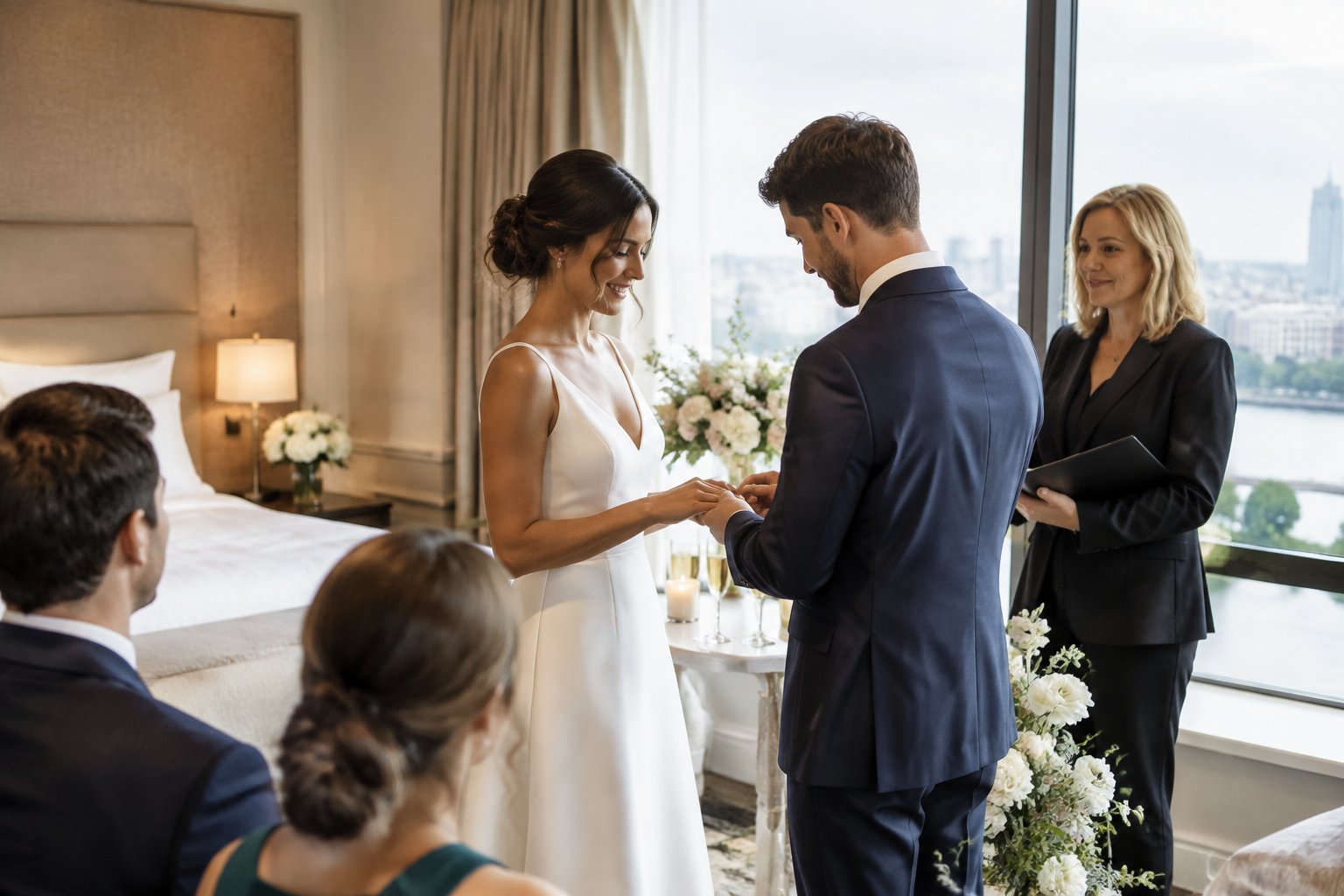
A hotel room wedding requires approval from the property, a valid marriage license, an authorized officiant, and a guest count that fits safety rules. Your hotel may also limit decorations, music, outside vendors, and photography.
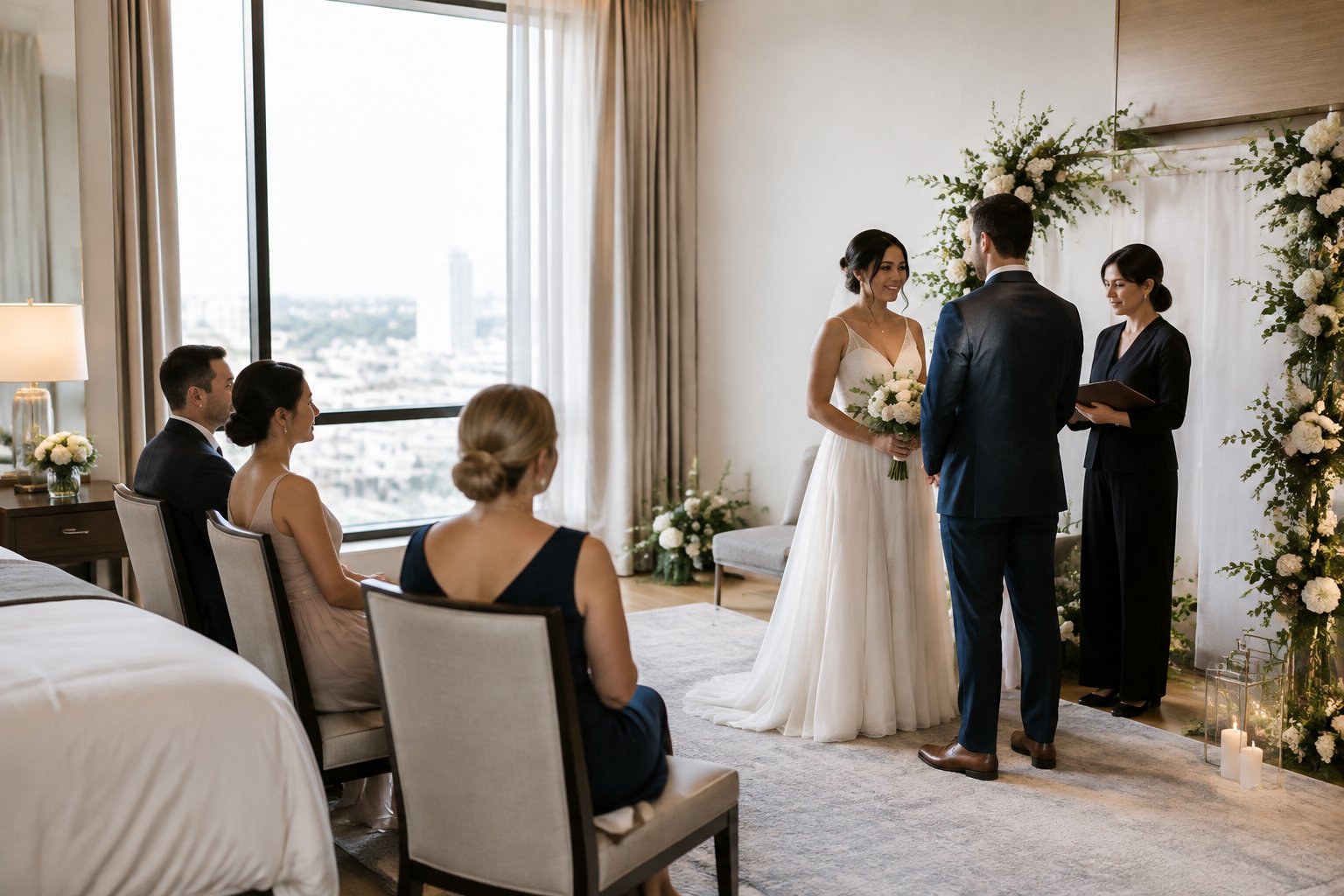
The room’s purpose affects your plans. A standard hotel room might suit you, your partner, an officiant, and a photographer. A suite provides more space for seating, getting ready, and a few wedding guests.

Does the Hotel Allow Ceremonies in Guest Rooms?
Some hotels allow small ceremonies in guest rooms or suites after reviewing your plans. Others reserve wedding ceremonies for a ballroom, private dining room, courtyard, or designated hotel wedding venue.
Ask these questions before booking:
- Does the hotel permit a wedding ceremony in the room?
- How many people may enter the room?
- Must every visitor register with the front desk?
- Are candles, flower petals, confetti, or balloons allowed?
- Can your officiant, photographer, florist, and musician enter?
- Does the hotel charge an event, cleaning, or security fee?
- Are amplified music and food service permitted?
Get the answers in writing and share your timeline with the coordinator.
What Makes a Hotel Ceremony Legally Valid?
The room does not determine whether your marriage is legal. Your ceremony must follow the rules of the state or county where you marry.
You will need a marriage license issued by the proper local authority, an officiant who meets local requirements, and the required witnesses if your jurisdiction requires them. You and your partner must complete and return the license by the stated deadline.
A hotel employee, wedding planner, or photographer does not make the ceremony legal. Check the marriage license rules for your location before booking travel or inviting wedding guests. A civil ceremony can help you keep the legal process clear and simple, especially for an elopement.
How Many People Can a Suite Safely Hold?
Your safe guest limit comes from the hotel’s occupancy policy, fire code, room layout, and insurance rules. The number listed for overnight guests does not always match the number permitted for a ceremony.
Ask the hotel for the approved capacity and explain how you will use the space. Seated guests, standing guests, a ceremony arch, photography equipment, and a buffet each take room. Keep hallways, doors, windows, and emergency exits clear.
If your guest list exceeds the suite’s limit, use the room for getting ready and hold the wedding ceremony in a permitted event space.
Choosing the Right Room and Hotel Setting
A suite with natural light, a practical layout, and a quiet location gives you the strongest setting for an intimate hotel wedding. Your choice of room also affects where you prepare, greet guests, and take wedding photos.
Look beyond the room rate. Ask about elevators, parking, private entrances, nearby restaurants, noise policies, and spaces where guests can gather before or after the ceremony.

Why a Suite Usually Works Better Than a Standard Room
A suite gives you separate areas for the ceremony, dressing, photography, and guest seating. A living room area can hold chairs while the bedroom remains available for hair, makeup, clothing, and personal items.
A standard room may work for a private exchange of vows with only an officiant and photographer. It becomes crowded when you add several guests, a floral arrangement, a ceremony backdrop, or a wheelchair.
Request the room’s floor plan or ask to tour it before reserving. Confirm the number of chairs that fit without blocking walkways.
How to Assess Views, Layout, Accessibility, and Noise
Visit the room at the time of day you plan to marry. Check the direction of sunlight, window glare, ceiling height, air-conditioning noise, and sounds from elevators or nearby traffic.
Accessibility deserves equal attention. Confirm step-free routes, elevator access, doorway width, bathroom access, and seating options for guests with mobility needs. Ask whether the hotel can provide a room close to the elevator without placing your ceremony beside a busy lobby.
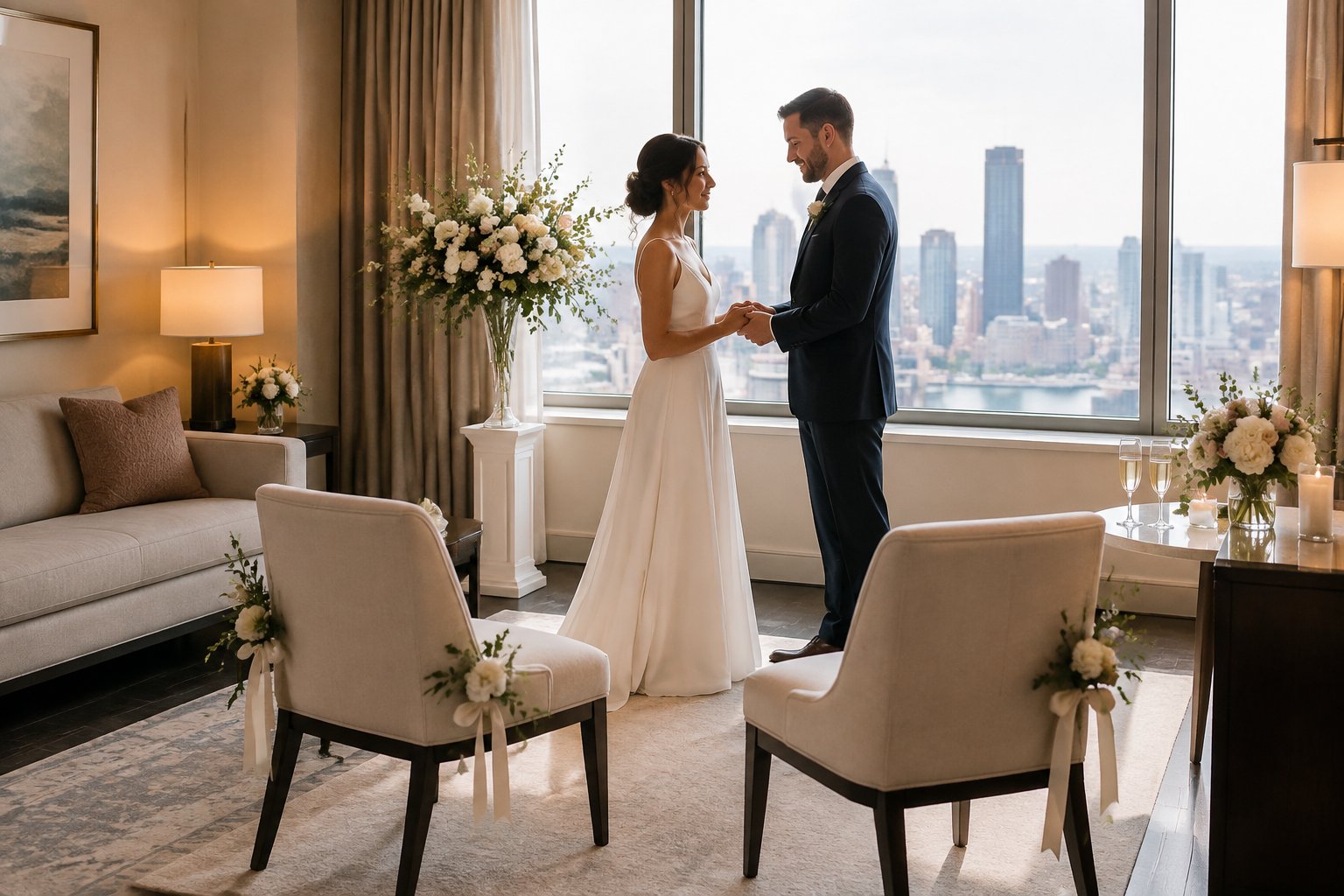
A room facing a courtyard or skyline might offer a beautiful wedding location, while a quiet interior room can provide better audio and privacy.
Where Can You Take Wedding Photos?
Ask the hotel which areas permit professional photography. Options might include your suite, a staircase, lobby, garden, rooftop, courtyard, restaurant, or nearby public street.
Confirm whether you need permission for tripods, lighting, flash, or group photos. Schedule portraits before guests arrive so you have access to the best areas and avoid disrupting hotel operations.
Rain, heat, and crowded public spaces can change your plan. Choose an indoor backup location and ask the photographer to identify clean backgrounds, flattering light, and enough space for your wedding party.
What Does a Hotel Room Wedding Cost?
A hotel room wedding can cost less than a large hotel reception, but your wedding budget still needs room for lodging, officiant fees, photography, flowers, food, service charges, taxes, and cleanup.
A small ceremony might use a room reservation plus a few vendors. A hotel wedding with catering, a reception, and guest accommodations may cost much more. Request an itemized quote before you compare properties.
Typical Costs to Ask About Before Booking
Ask about these charges:
- Guest room or suite rate
- Ceremony or event fee
- Cleaning and security fee
- Officiant, photography, floral, and décor costs
- Food, beverage, cake, and corkage fees
- Delivery, setup, and breakdown charges
- Parking, valet, and transportation
- Taxes and service charges
- Extra nights for the couple or wedding party
A wedding night room may cost a few hundred dollars, while a larger suite can cost much more in a popular city or during peak dates. Your quote should state whether the room is for lodging only or approved for an event.
For more planning guidance, use this wedding venue cost guide alongside the hotel’s written estimate.
How Packages, Food, and Service Fees Affect Your Wedding Budget
Hotel wedding packages may combine the room, chairs, linens, catering, cake, staffing, and coordination. A package can reduce the number of vendors you manage, though you still need to check its guest minimums and included services.
Food and drinks often create the largest added cost. Ask whether the hotel requires in-house catering, whether a plated meal or small reception menu is available, and whether outside cake or alcohol is allowed.
Read every service fee line. A percentage-based service charge can apply to food, beverages, rentals, or staffing. Request the final price with taxes and fees included so your budget reflects the amount you will pay.
When a Complimentary Room Is Available
Hotels sometimes offer a complimentary room, upgrade, champagne toast, anniversary stay, or spa discount when you book a wedding package or meet a room-block minimum. Each property sets its own terms.
Ask whether the complimentary room applies to the wedding night, the couple’s suite, or a guest room. Confirm the required number of booked rooms, food and beverage minimum, eligible dates, and upgrade conditions.
Put the perk in your contract. A verbal promise from a sales representative may not appear on your final reservation.
Planning a Seamless Ceremony and Celebration
A smooth hotel wedding needs one person to manage the timeline, one approved décor plan, and a clear location for food and post-ceremony activities. A hotel coordinator can connect you with property staff, while an independent wedding planner can manage details that fall outside the hotel’s services.
Keep your ceremony short enough for the room and give every vendor a delivery window. Share the schedule with the front desk, officiant, photographer, wedding party, and anyone responsible for setup.
Who Coordinates the Day?
The hotel wedding coordinator handles property logistics such as room access, catering, tables, linens, elevators, and hotel staff. Your wedding planner manages personal details such as attire, vendor timing, vows, bouquets, transportation, and the wedding party.
Ask who will be present on the ceremony day and who has authority to approve changes. If the hotel does not provide a coordinator, assign a planner or trusted person to answer vendor calls and protect your schedule.
Your officiant should know the ceremony order, license requirements, pronunciation of names, and any cultural or religious elements you want included.
How to Handle Décor, Catering, and Outside Vendors
Use lightweight décor that follows hotel rules. Battery-operated candles, removable hooks, small floral arrangements, textiles, and freestanding signs offer flexible options when the property approves them.
Ask where vendors may unload, store supplies, prepare food, and park. Confirm delivery windows and whether hotel staff handle setup or charge a separate fee.
A room designed for sleeping may not support a full meal service. Consider passed bites, a cake-and-champagne toast, boxed meals, or a private dining reservation. Keep food away from beds and delicate furnishings, and confirm the cleanup plan before the ceremony.
Where to Host a Small Reception or Dinner
A hotel restaurant, private dining room, lounge, rooftop, courtyard, or banquet room can host your reception after the ceremony. These spaces give guests room to eat and talk while preserving your suite for private use.
For a small group, reserve a private table or dining room and ask about a set menu. A cocktail reception can work in a lounge or terrace when the hotel approves the guest count and service plan.
If you plan a rehearsal dinner, welcome gathering, or post-ceremony meal, include each event in the hotel proposal. Your wedding ceremony checklist can help you track the license, vendors, timeline, and guest needs.
Accommodations and the Wedding Weekend
Hotel room blocks make guest lodging easier by reserving rooms at a negotiated rate for a set time. You can pair a room block with an intimate ceremony, a destination wedding, or a local celebration that brings in out-of-town guests.
Start early for popular dates and busy destinations. Compare nightly rates, parking, breakfast, cancellation terms, transportation, and distance from local attractions before choosing the host hotel.
How Hotel Room Blocks Work
You and the hotel agree on a number of rooms, a group rate, a booking deadline, and a release date. Guests reserve and pay for their own rooms through the hotel unless your contract says otherwise.
Estimate demand by counting out-of-town guests, the wedding party, close family, and the number of nights they need. A block can cover the wedding night plus nights for a rehearsal dinner, welcome event, or farewell brunch.
Some hotels provide a courtesy room, suite upgrade, late checkout, welcome bag delivery, or hospitality space when you meet certain booking goals. Request each perk in writing.
You can contact hotels directly or use a room-block engine to compare properties and organize booking details.
Courtesy Blocks vs. Attrition Contracts
A courtesy block releases unbooked rooms after the cutoff date without requiring you to pay for them. This structure suits a small wedding or a guest list with uncertain travel plans.
An attrition contract sets a minimum number or percentage of rooms your guests must book. You could owe money for rooms that remain unfilled, depending on the contract’s deposit, allowable shrinkage, cancellation, and mitigation terms.
Read the contract before signing. Mark the booking deadline, release date, minimum commitment, payment schedule, and the hotel’s responsibility to resell unused rooms.
How to Share Booking Details With Guests
Add room-block information to your wedding website and save-the-date materials once the rate is confirmed. Include the hotel name, address, nightly price, taxes, parking details, booking link or phone number, and reservation deadline.
Tell guests whether they must mention a group code and explain the number of nights held. Share nearby options at different price points when your hotel rate does not fit every budget.
Update the wedding website if the block sells out or the cutoff date changes. Send a reminder before rooms return to general inventory, and provide transportation details for guests staying at another property.