
Can I Get Married in a Hotel? Legalities, Costs and Planning
You can get married in a hotel in the United States, provided the property allows weddings and your ceremony follows the marriage laws of the state or local jurisdiction. A hotel can host your ceremony, reception, meals, photography, and guest accommodations in one location.
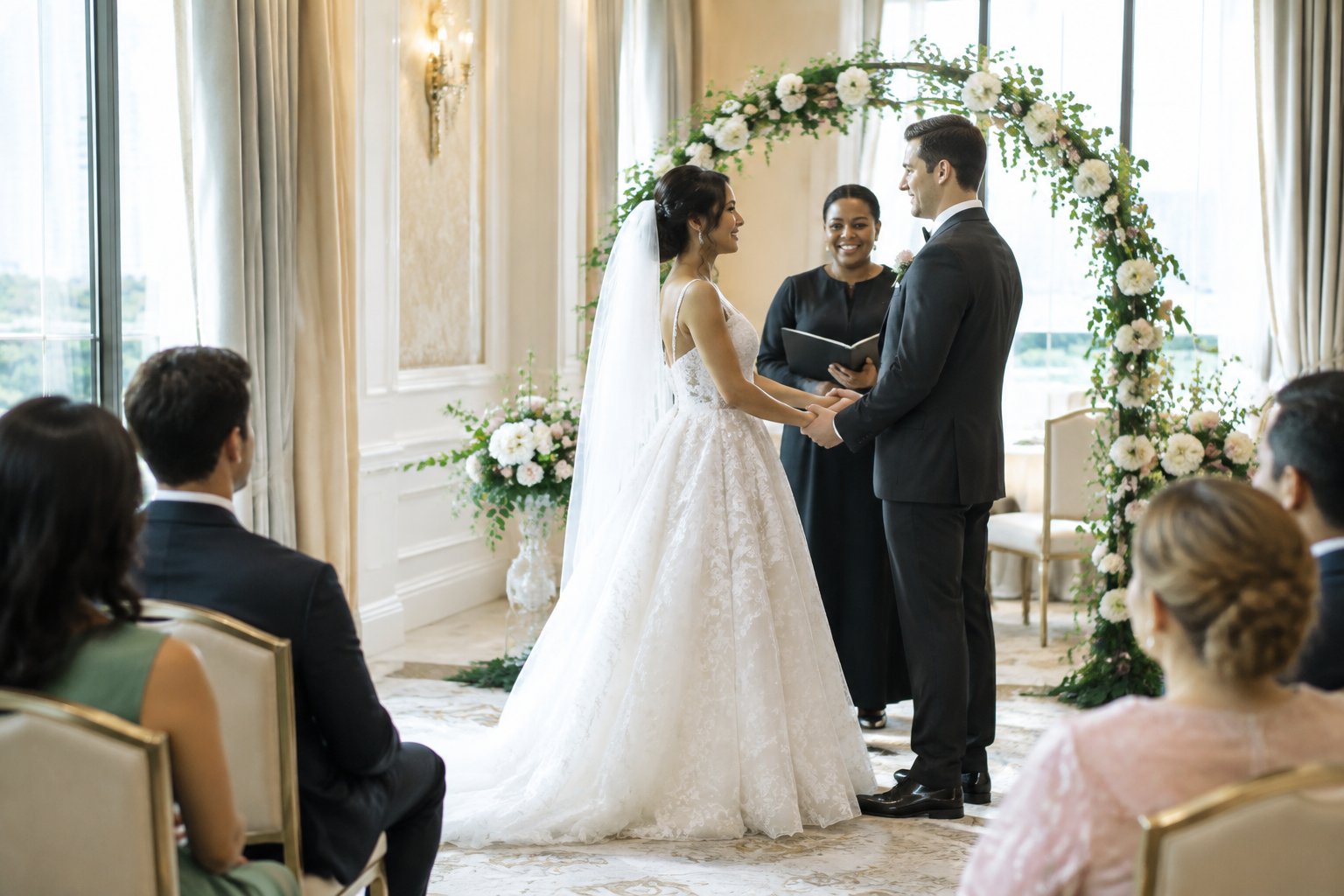
A hotel wedding venue suits you best when you want convenient planning, on-site lodging, and services such as catering, tables, linens, and event coordination bundled together. Your marriage license still comes from the appropriate government office, and the hotel must meet any local rules for hosting the ceremony.
Before signing a contract, ask whether the hotel is approved for civil ceremonies, which spaces you can use, what the package includes, and how room blocks work. If you are ready to compare venues, reviewing tips for choosing the perfect venue for a small wedding can help you match the property to your guest list and budget.
What a Hotel Can Host for Your Wedding Day
A hotel can host a wedding ceremony, wedding reception, overnight stays, and several related events on one property. Your choices will depend on the hotel’s event spaces, guest capacity, local rules, and contract terms.
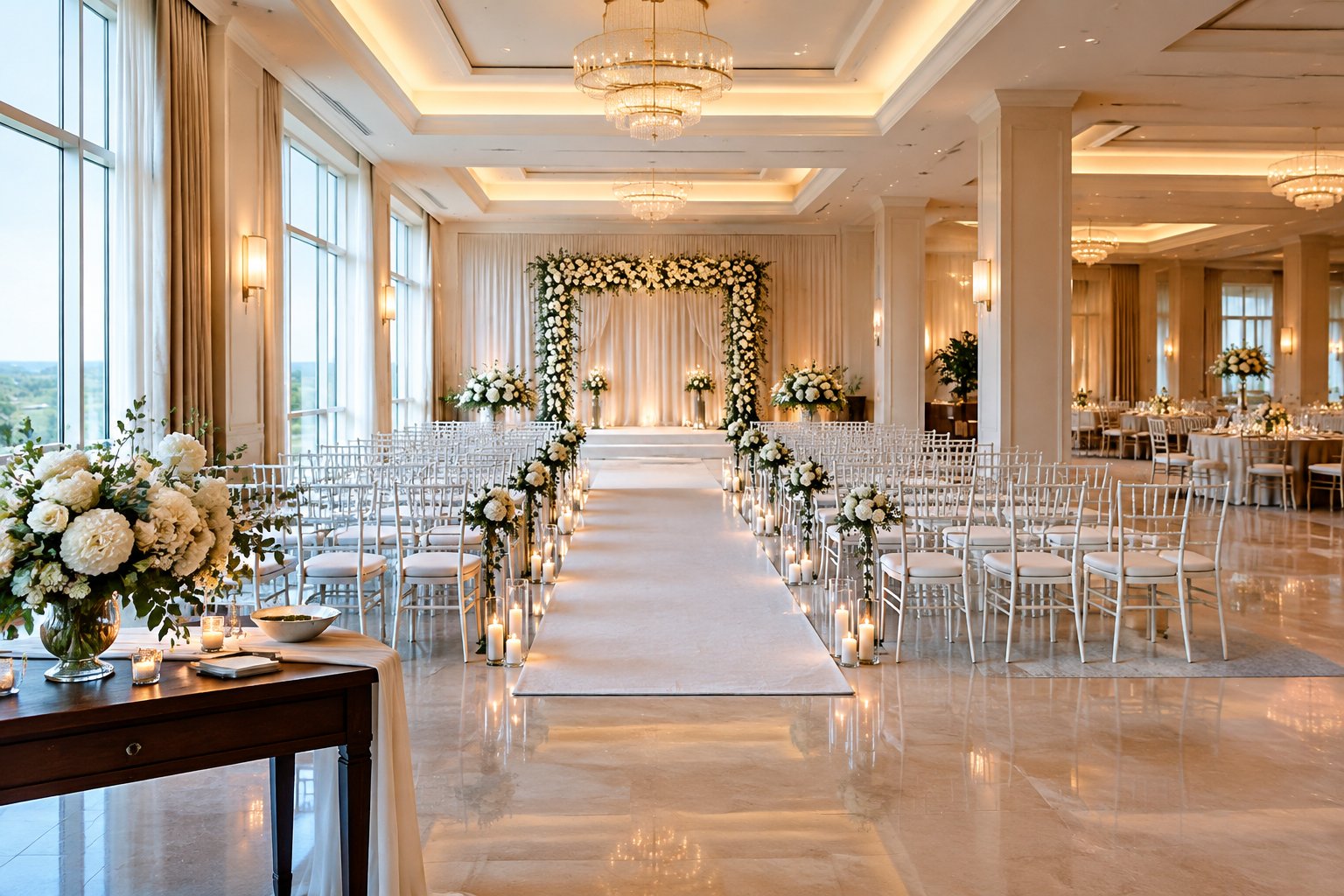
A hotel wedding venue may offer a ballroom, restaurant, terrace, courtyard, rooftop, garden, conference room, or private suite. Ask to see each space set up for an event so you can judge guest flow, lighting, sound, and privacy.
Ceremony, Reception, and Overnight Stays in One Place
Holding your wedding at the hotel lets guests move from the ceremony to cocktails and dinner without arranging a second venue. You can also reserve rooms for your wedding party and traveling guests, which reduces transportation needs after the reception.
Many hotels provide getting-ready rooms, in-house catering, bar service, tables, chairs, linens, basic setup, and cleanup. Some packages add a cake, champagne toast, room upgrade, breakfast, or spa discount. Confirm every inclusion in writing because packages differ by property.
A hotel can also host your rehearsal dinner, welcome party, next-day brunch, or farewell breakfast. These events might use a restaurant, private dining room, lounge, or smaller meeting space.
Which Hotel Spaces Work Best for Different Guest Counts
Choose the space after creating a preliminary guest list and floor plan. Your room must hold the ceremony seating, dining tables, dance floor, bar, buffet or food stations, entertainment, and accessible pathways.
- Up to about 20 guests: A private dining room, suite, courtyard, or small terrace can create an intimate setting.
- About 20 to 75 guests: A restaurant room, garden, rooftop, or smaller ballroom can allow comfortable dining and dancing.
- About 75 to 200 guests: A full ballroom or large event room gives you space for a ceremony, cocktail hour, reception, and dance floor.
- More than 200 guests: Look for a hotel with several large rooms, strong catering capacity, guest parking, and a separate area for cocktail hour.
Ask about room height, columns, sound quality, elevator access, restrooms, and a weather backup if any part of the event is outdoors.
When a Hotel Room Suits an Elopement or Micro-Wedding
A hotel room can suit an elopement or micro-wedding with a very small guest list, especially when you want a private ceremony and a short celebration. Confirm that the hotel permits ceremonies in guest rooms and ask about noise, photography, furniture movement, candles, food, and visitors.
A suite with a sitting area gives you more room for an officiant, witnesses, flowers, and a small meal. You still need a valid marriage license and an authorized officiant under the law where the ceremony takes place. A hotel room may work for the ceremony while a restaurant or private dining room handles the meal.
Legal Requirements for a Hotel Ceremony
A hotel ceremony is legal when the property permits weddings and you meet the marriage-license, officiant, witness, and location rules set by the state or local jurisdiction.
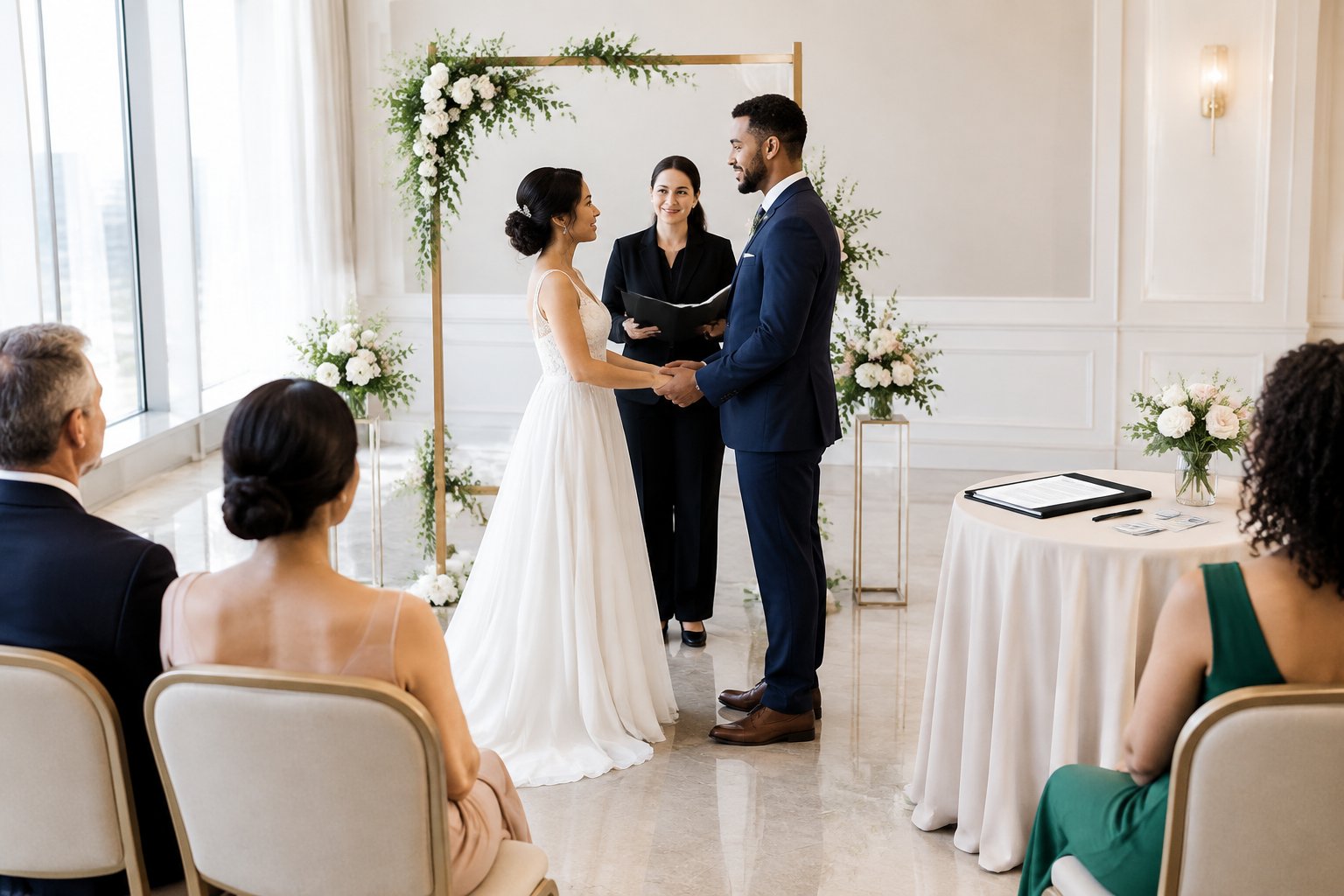
Rules differ across the United States. Some states let couples marry in many locations with an authorized officiant, while others impose specific requirements for officiants, witnesses, licenses, or ceremony wording. Contact the county clerk, city clerk, or other issuing office where the ceremony will occur before you book the date.
Is the Hotel an Approved Premises?
Ask the hotel whether its ceremony space is approved or permitted for weddings under local rules. In many U.S. jurisdictions, a hotel event room is a private venue where a legal ceremony can take place once the couple has the correct marriage license and officiant.
Approval may relate to the event license, alcohol service, occupancy, fire safety, or local zoning. A hotel’s ability to host receptions does not automatically confirm that it can host every type of legal ceremony.
Request the name of the relevant local authority and verify the requirements yourself. Put the approved room, event date, guest capacity, and permitted activities in your contract.
How Civil Ceremonies, Registrars, and Notice Work
A civil marriage uses a government-issued marriage license and an officiant authorized by the state. Depending on the jurisdiction, that officiant might be a judge, magistrate, clerk, ordained minister, or another approved person.
The U.S. system does not use one national register office or one nationwide notice process. You apply through the office designated by your state or county, follow its waiting-period rules, and return the signed license as instructed.
Before your appointment, check:
- Identification requirements
- Application fees
- Waiting period
- License expiration date
- Witness requirements
- Officiant rules
- Name-change options
- How and when the completed license must be filed
A hotel coordinator can recommend local officiants, but you remain responsible for confirming the legal steps.
Civil Marriage and Civil Partnership Ceremony Rules
Civil marriage rules come from the state or territory where the ceremony occurs. A civil partnership is a separate legal status in some countries, while U.S. states use their own marriage and domestic-partnership laws.
Ask the issuing office whether both partners must appear in person, whether a ceremony must occur within a set period, and whether the officiant must make specific declarations. Confirm whether your chosen hotel room qualifies under local location rules.
Your ceremony can include personal vows, readings, music, and cultural traditions when the legal elements are completed as required. Keep those legal words and signatures on the schedule you give your officiant and coordinator.
Religious Marriages and Ceremonies at a Place of Worship
A religious marriage may require approval from a faith leader, premarital counseling, membership, banns, or specific readings. Those requirements come from the religion and congregation, while the marriage license comes from civil authorities.
A hotel can host a religious ceremony when your officiant and faith community permit it. Some couples hold the religious ceremony at a place of worship and use the hotel for the reception. Ask your officiant whether the hotel room, décor, music, and food meet the traditions of your faith.
What to Check for an Outdoor Hotel Ceremony
Outdoor ceremonies require a written weather plan and confirmation that the hotel can legally and safely use the space. Ask about permits, noise limits, event curfews, lighting, electrical access, restrooms, guest routes, and accessibility.
Confirm when the decision to move indoors will be made and who has authority to make it. Review the indoor backup room before booking, including its capacity, layout, air conditioning, heating, and décor restrictions. Outdoor hotel areas may also limit amplified music, open flames, tents, confetti, and outside vendors.
How Much Does a Hotel Wedding Cost?
A hotel wedding cost is shaped by guest count, location, season, event spaces, menu, bar service, room rates, and package inclusions. A per-person quote can look attractive until taxes, service charges, rentals, upgrades, and lodging terms are added.
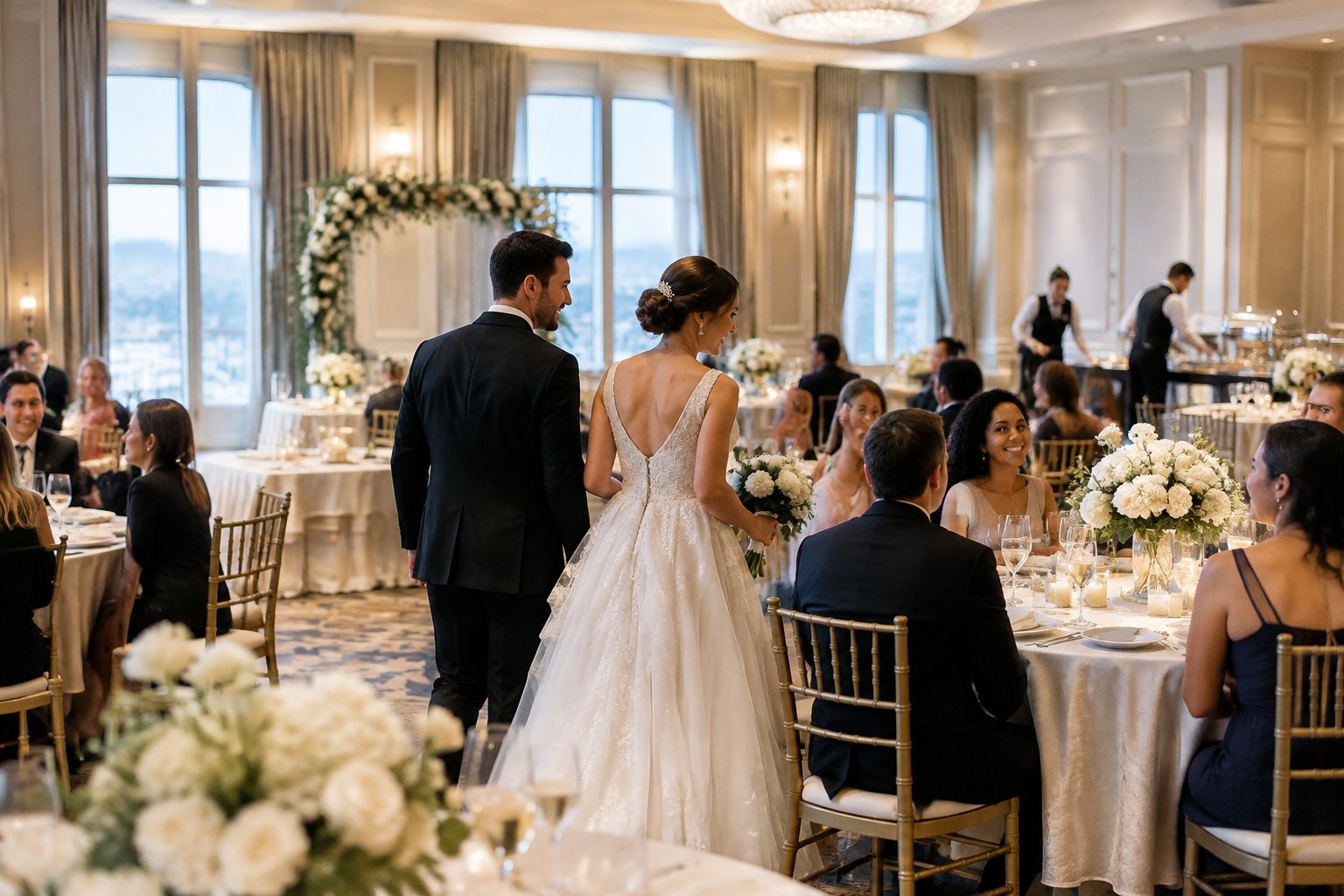
Published hotel pricing shows how wide the range can be. Fully catered weddings at some South Florida hotels have been quoted at about $120 to $160 per person, while smaller packages and luxury celebrations can sit far outside that range. Use the quote from your chosen property as the basis for your wedding budget.
What Is Usually Included in Wedding Packages?
Hotel wedding packages often include a venue room, meal service, tables, chairs, linens, staff, setup, and cleanup. Catering and cake are common inclusions, while bar packages, ceremony chairs, linens, lighting, and coordination may be separate tiers.
Ask whether the package includes:
- Ceremony room and reception room
- Cocktail-hour food
- Plated, buffet, or station-style dinner
- Cake cutting and dessert
- Beer, wine, spirits, and nonalcoholic drinks
- Tables, chairs, linens, china, glassware, and flatware
- Basic sound equipment
- Getting-ready rooms
- Parking or shuttle service
- Coordinator and day-of staffing
- A complimentary room or anniversary stay
An all-inclusive wedding package may reduce the number of vendors you manage. Read the menu, service levels, minimum spend, and upgrade prices before treating the package as a fixed total.
How Guest Numbers, Season, and Location Affect the Price
Guest count has a direct effect on food, drinks, seating, staffing, cake, and room size. A larger guest list raises the total even when the venue fee stays the same.
Peak wedding dates, weekends, holidays, major local events, and popular destinations bring higher demand. A weekday, off-season date, or lunch reception may reduce the rate. City-center hotels, beachfront resorts, and luxury properties also price their spaces and menus at different levels.
Ask for quotes at two or three dates so you can see which factor changes the price. Check whether the hotel requires a food-and-beverage minimum in addition to a room rental fee.
Costs That May Not Appear in the First Quote
The first quote may exclude service charges, taxes, gratuities, overtime, ceremony fees, upgraded meals, specialty linens, décor, lighting, audio-visual equipment, cake cutting, corkage, parking, and outside-vendor fees.
Review the contract for:
- Deposit and payment deadlines
- Cancellation and postponement terms
- Minimum guest count
- Food-and-beverage minimum
- Room rental
- Service charge and tax
- Overtime rate
- Vendor access and load-in rules
- Insurance requirements
- Damage or cleanup fees
- Room-block penalties
Ask for an itemized estimate that shows the projected total with every required charge. You can also compare the venue portion with guidance on how much you should budget per person for a wedding.
How to Compare Hotel Wedding Costs Against Other Venues
Compare the full event cost, not the room rental alone. A hotel may bundle catering, staffing, furniture, coordination, lodging, and cleanup, while another venue may quote a lower rental fee with more separate services.
Create the same checklist for each venue:
| Cost area | Hotel wedding | Other venue |
|---|---|---|
| Venue rental | Package or room fee | Rental fee |
| Catering | In-house menu | Caterer quote |
| Furniture | Often included | May be rented |
| Staffing | Hotel team | Separate staffing |
| Lodging | On-site rooms | Nearby hotels |
| Transportation | Shorter guest travel | May require shuttles |
Then compare taxes, service charges, minimums, room-block terms, and vendor restrictions. A lower starting quote does not always produce a lower final bill.
How to Choose the Right Hotel Venue
Choose a hotel that fits your guest count, wedding date, budget, ceremony plan, food preferences, accessibility needs, and desired level of privacy.

Tour the venue during an event if possible. Pay attention to guest arrival, elevators, restrooms, noise from other functions, service speed, room temperature, and the route between ceremony, reception, and guest rooms. Your how to pick a wedding location checklist can help you compare practical details before choosing a wedding date.
Questions to Ask Before You Book
Ask the hotel for clear answers about the contract, event operations, and guest experience:
- Which ceremony and reception spaces are available on my wedding date?
- What is the maximum seated capacity with a dance floor?
- Is another wedding or event scheduled nearby?
- What is included in the package?
- What are the food-and-beverage minimums?
- Which outside vendors are allowed?
- What deposit, cancellation, and postponement terms apply?
- When can vendors load in and begin setup?
- How long can the event run?
- What happens if the guest count changes?
- Is there an indoor backup for an outdoor ceremony?
- How are gifts, décor, and personal items secured?
Request answers in writing and attach the final menu, floor plan, payment schedule, and vendor rules to the contract.
How to Assess Food, Accessibility, and Backup Spaces
Schedule a tasting and ask how the kitchen handles allergies, religious diets, vegetarian meals, children’s meals, and late-night snacks. Ask whether the chef can prepare the same menu for a large group at the planned service time.
Walk through accessible entrances, elevators, restrooms, guest rooms, parking, and ceremony routes. Check the width of aisles, flooring, seating options, lighting, and quiet areas for guests who need a break.
Inspect the backup space in person. Confirm that it can hold your ceremony or reception layout, décor, musicians, food service, and guests without creating a crowded path.
Exclusive Use, Privacy, and Décor Restrictions
An event room reservation does not always give you exclusive use of the hotel. Ask whether hotel guests can enter the terrace, lobby, pool deck, garden, or nearby rooms during your event.
Find out whether you can reserve a private floor, suite, event wing, or full property buyout. A buyout offers more control but raises the financial commitment and may include minimum room bookings.
Review décor rules for candles, hanging installations, confetti, glitter, flower petals, signage, sparklers, amplified music, and furniture changes. Ask who installs and removes every decoration and whether a hotel employee must approve the setup.
What a Wedding Coordinator Can and Cannot Handle
A hotel wedding coordinator can manage the venue schedule, menu, floor plan, hotel staff, room setup, catering, and the property’s approved vendors. They can also explain loading areas, room blocks, guest check-in, and backup plans.
Your coordinator may not handle your invitations, attire, personal timeline, marriage license, transportation outside the hotel, vendor payments, or every detail of ceremony design. Clarify whether you receive planning support, event management, or day-of coordination.
Give the coordinator a detailed timeline with vendor contacts, ceremony cues, meal timing, speeches, music, room flips, accessibility needs, and emergency contacts.
Planning Rooms and Events Around the Big Day
Room blocks, rehearsal events, and post-wedding meals turn a hotel booking into a comfortable wedding weekend for you and your guests. Start these arrangements early because popular dates can fill rooms and event spaces at the same time.
How to Negotiate Room Blocks for Wedding Guests
A room block reserves a set number of rooms for your wedding guests at an agreed rate and booking deadline. Ask about room types, discounted rates, minimum stays, parking, breakfast, resort fees, Wi-Fi, accessible rooms, pet policies, and shuttle service.
Read the room-block contract for:
- Deposit requirements
- Cutoff date
- Minimum room pickup
- Attrition or unused-room charges
- Cancellation terms
- Resale or mitigation provisions
- Guest booking method
- Changes to the room rate
Start with a realistic number of rooms and review reservations as the cutoff date approaches. Ask for concessions such as a suite upgrade, welcome amenity, parking passes, breakfast, or reduced meeting-room fees.
Give guests a booking link or direct hotel phone number, plus the cutoff date and instructions for receiving the group rate.
Planning a Rehearsal Dinner and Post-Wedding Breakfast
A hotel restaurant, private dining room, lounge, or terrace can host your rehearsal dinner without extra transportation. Reserve the space early and ask whether the dinner has a separate food-and-beverage minimum.
Choose a menu that suits the guest list, including dietary needs and children’s meals. Confirm the start time, speeches, décor, bar service, cake or dessert, and payment method.
For the morning after, consider a breakfast buffet, brunch, boxed meal, or reserved restaurant area. Ask how the hotel handles late checkouts, luggage storage, room service, and guests leaving for the airport.
How to Turn the Stay Into a Wedding Weekend
Create a simple schedule that gives guests useful information without filling every hour. You might arrange welcome drinks, an informal meal, a local activity, the rehearsal dinner, the wedding, and a next-day breakfast.
Share the schedule through your wedding website, welcome note, or hotel information card. Include check-in details, parking, transportation, dress expectations, meal times, quiet hours, and contact information for questions.
Leave free time for rest, hotel amenities, local attractions, and private time with your partner. Confirm which events are hosted by you and which guests pay for themselves.
What Changes for a Destination Wedding
A destination wedding adds travel planning, local legal research, currency or payment concerns, and more guest support. Check the marriage requirements in the destination before committing to a date, including residency periods, document translations, authentication, witnesses, and local officiant rules.
Some couples complete the legal marriage in their home jurisdiction and hold a symbolic ceremony at the destination. Others complete the legal process abroad and hire a local planner who knows the venue and government offices.
Plan for airport transfers, arrival information, room blocks, weather, language needs, travel insurance, vendor access, and backup plans. Give guests plenty of notice and provide a clear estimate of their expected travel and lodging costs.