
Can Parents Be Witness for Marriage Registration in the UK? Understanding the Rules and Requirements
When planning your wedding, you might wonder who can serve as a witness during your marriage registration. In the UK, parents can be witnesses for your marriage, provided they meet certain criteria. This means you can have the emotional support of your family right by your side as you celebrate your special day.
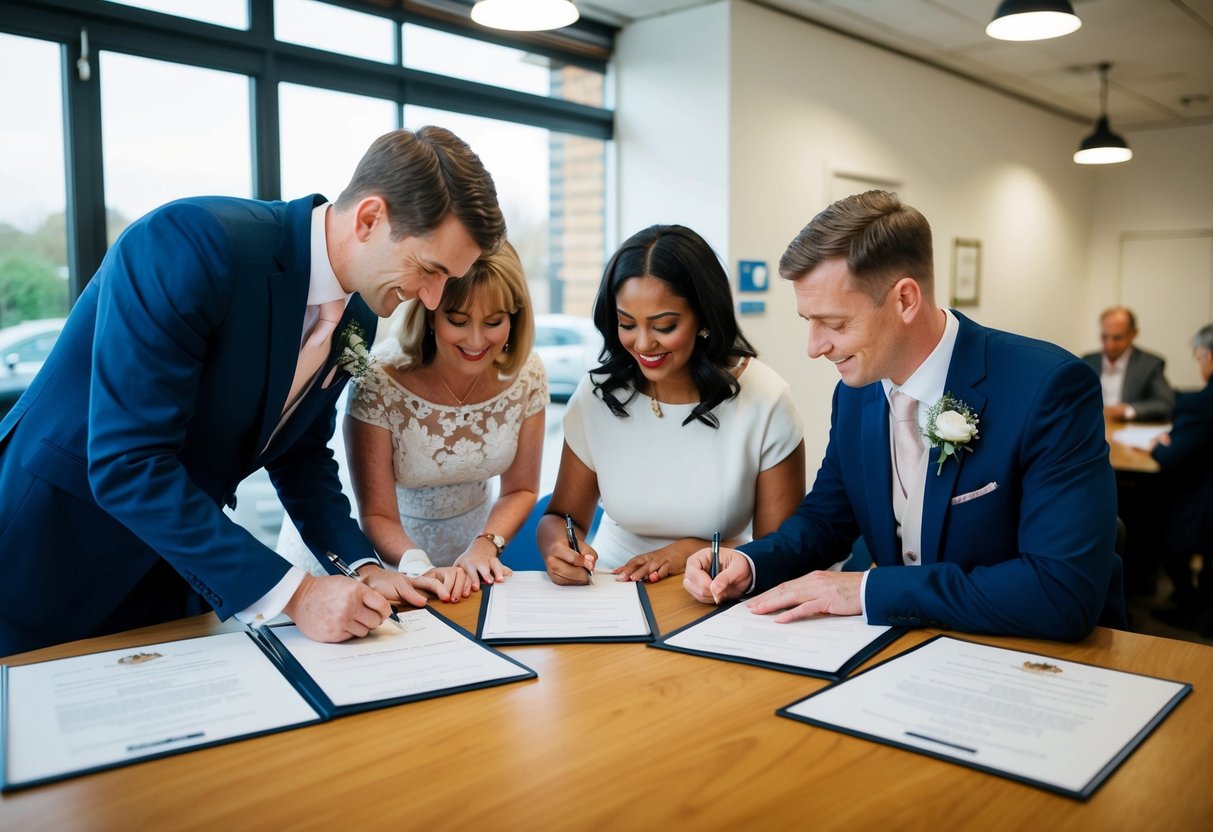
Having parents as witnesses can make your ceremony feel even more meaningful. They can witness your vows and share in the joy of the occasion. Just remember that at least two witnesses are required, and they must be over 18 years old and able to understand the ceremony.
If you’re considering having your parents as witnesses, it’s good to know that they must also be able to speak and understand English. This ensures they can engage fully in the experience. So, whether you want to keep it traditional or simply include those closest to you, your parents can play an important role in your wedding day.
Understanding Marriage Registration
When planning your marriage, it’s essential to know the registration process. This includes the legal framework, how to select your witnesses, and the necessary documents required for marriage registration in the UK.
The Legal Framework
Marriage registration in the UK follows specific legal requirements. You must declare your intention to marry at your local register office by signing a legal statement. This document confirms your eligibility to marry, including being over 16 years of age and having the consent of any guardians if required.
Once the declaration is made, you’ll receive a marriage schedule or document. This must be presented during your ceremony. The marriage registration occurs afterward, when the registrar records your details in the marriage register. You’ll receive a marriage certificate, which serves as your legal proof of marriage.
Selecting Your Witnesses
Choosing witnesses for your marriage is key. You need at least two witnesses present during the ceremony. These people should be able to understand the proceedings and speak English. It’s important to note that while children can be witnesses, at least two must be over 18 years of age.
Your witnesses can be friends, family members, or anyone you trust. Their role is to observe and sign the marriage document, confirming that the ceremony took place. This adds an important layer of support to your special day while fulfilling legal requirements.
Documents Required for Marriage Registration
You will need specific documents for marriage registration. First, you’ll present identification, like a passport or driver’s license, to your local registration service. Additionally, proof of residence such as a utility bill may be required.
Before the ceremony, both parties should have their completed marriage schedule, which lists up to four parents’ names—mothers, fathers, or step-parents. This inclusion modernizes the registration process. With the right documents in hand and your witnesses ready, you’ll be set for a smooth marriage registration.
The Role of the Registrar and Civil Ceremonies
When planning your marriage in the UK, understanding the role of the registrar is key. Their duties encompass officiating civil ceremonies, ensuring everything runs smoothly and legally. Here’s how you can book a registrar and what to expect during your civil ceremony.
Booking Your Registrar
To secure the registrar for your civil ceremony, you need to book early. This can often be done through your local council, either online or by phone. Ensure you have your dates in mind, as popular times may fill up quickly.
You’ll also need to provide identification and details about both partners. If either of you is from outside the UK, there may be additional steps, like giving notice.
It’s good to ask about the fees involved. Each council may charge differently, so knowing this upfront helps in budgeting your wedding costs.
Planning Your Civil Ceremony
Planning your civil ceremony involves setting up a few important details. You can choose the venue, which can be a registrar’s office or any registered religious building that allows civil ceremonies. Make sure the place meets the legal requirements.
Discuss your ceremony options with the registrar. You might want to incorporate special readings or music.
Don’t forget about the legal paperwork! The registrar will guide you through the necessary documents to ensure that your marriage is registered properly. This attention to detail helps make your day memorable and lawful.
Involvement of Friends and Family
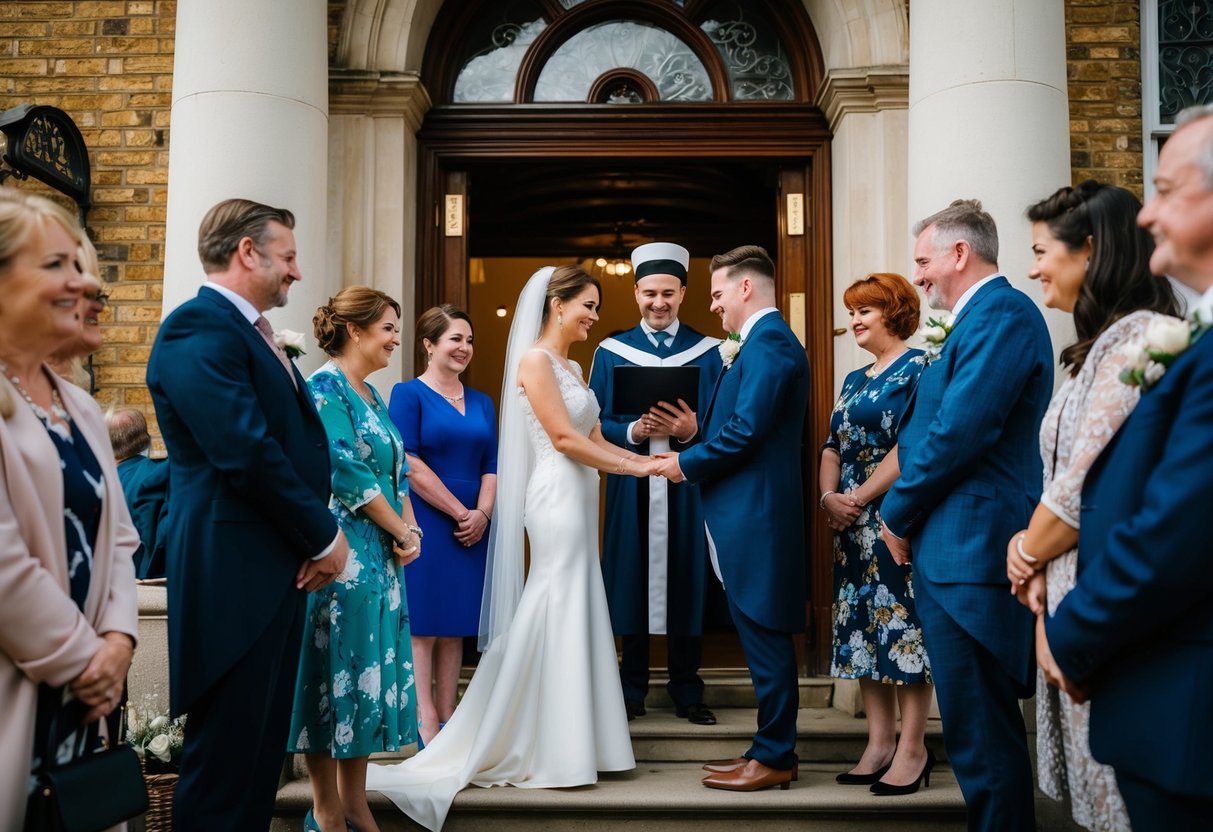
Your wedding is a special day where friends and family can play important roles. They can support you emotionally and legally. Involving loved ones can make the ceremony feel even more meaningful.
Who Can Be a Witness
In the UK, anyone can be a witness as long as they meet certain criteria. Witnesses must be at least 18 years old and able to understand the ceremony. This means they should be able to speak and understand English. Friends and family are common choices as witnesses. Many couples choose parents, siblings, or close friends to fulfill this role. If you have non-English speaking guests, you might need an additional witness who can communicate effectively during the ceremony.
When selecting a witness, think about who is most supportive of your marriage. They should be someone who can sign the legal documents and be present during the ceremony. It creates a special bond, knowing a loved one is there to support you.
Roles During the Ceremony
The roles of friends and family can extend beyond witnessing. They can participate in the ceremony in various ways. For instance, they might read a poem or scripture during the service. This can add a personal touch to the ceremony and engage your loved ones.
Your friends and family can also help with the vows. They might advise you on what to say or how to express your feelings. Including them in this part can make it more special. Additionally, some clergy may allow family members to take part in a religious ceremony, further deepening your connections.
Involving friends and family in your wedding adds joy to the celebration. Their presence and participation can enrich your experience, making your day even more memorable.
Special Considerations for Marriage in the UK
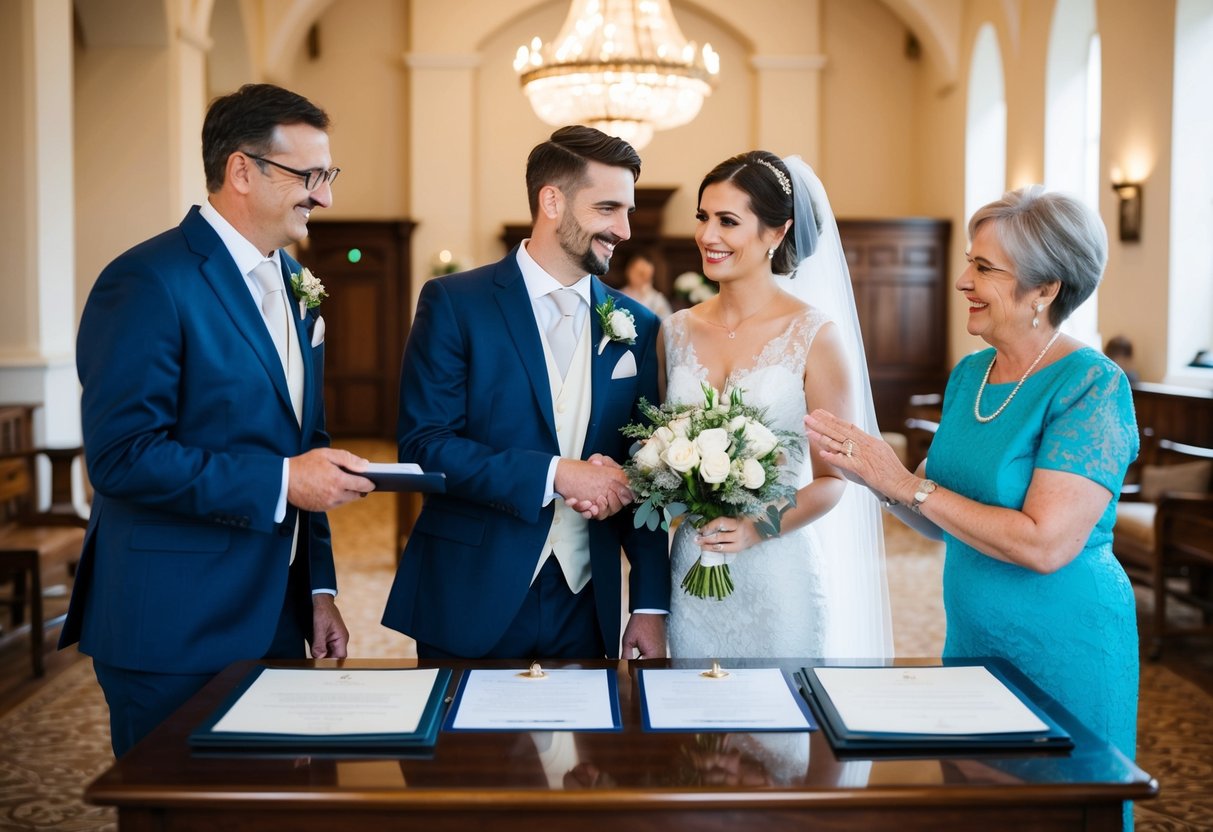
When planning a wedding in the UK, it’s essential to know about specific rules and requirements that may affect your ceremony. This includes details for international nationals, same-sex couples, and religious ceremonies. Being aware of these factors can help you prepare for a smooth marriage registration.
Marriages Involving International Nationals
If you or your partner are not from the UK, there are important steps to follow. You will need to give notice of marriage at your local authority. This notice must be done at least 28 days before the wedding.
In some cases, you may need a visa to ensure your stay is legal during the marriage. If one of you is from the EU, you might be impacted by the EU settlement scheme, which affects your rights and status in the UK. Be sure to check if you have settled or pre-settled status, as this can change your registration process.
Marriage and Civil Partnerships for Same-Sex Couples
Same-sex couples can marry or form a civil partnership in England and Wales. You have options for your ceremony choices, whether you prefer a marriage schedule or a civil partnership document. To register, you both must give notice to the local authority.
It’s essential to confirm how many witnesses you need. Usually, at least two adult witnesses are required, and these can be friends or family members. Keep in mind that while parents can be witnesses, they should be selected thoughtfully to ensure they support your union.
Religious Ceremonies and Blessings
If you plan to have a religious ceremony, make sure you know the specific guidelines for your faith. For example, the Society of Friends (Quakers) conducts marriages in meeting houses, which may have different traditions.
In most cases, you still need a marriage schedule or a document that is recognized legally. The person officiating must be an authorized person.
After the ceremony, make sure your marriage is registered correctly. This is important to avoid any future issues regarding divorce or legal status.
Ensure you check local requirements, as they can vary across England, Wales, and Scotland.