
Can You Get Married in a Church with a Celebrant? Exploring Your Options for a Meaningful Ceremony
If you’re considering getting married in a church, you might wonder about the role of a celebrant in that setting. You can absolutely have a celebrant officiate your marriage ceremony in a church, provided you have permission from the church authorities. This option allows you to incorporate personal touches while still enjoying the beauty and tradition of a religious space.
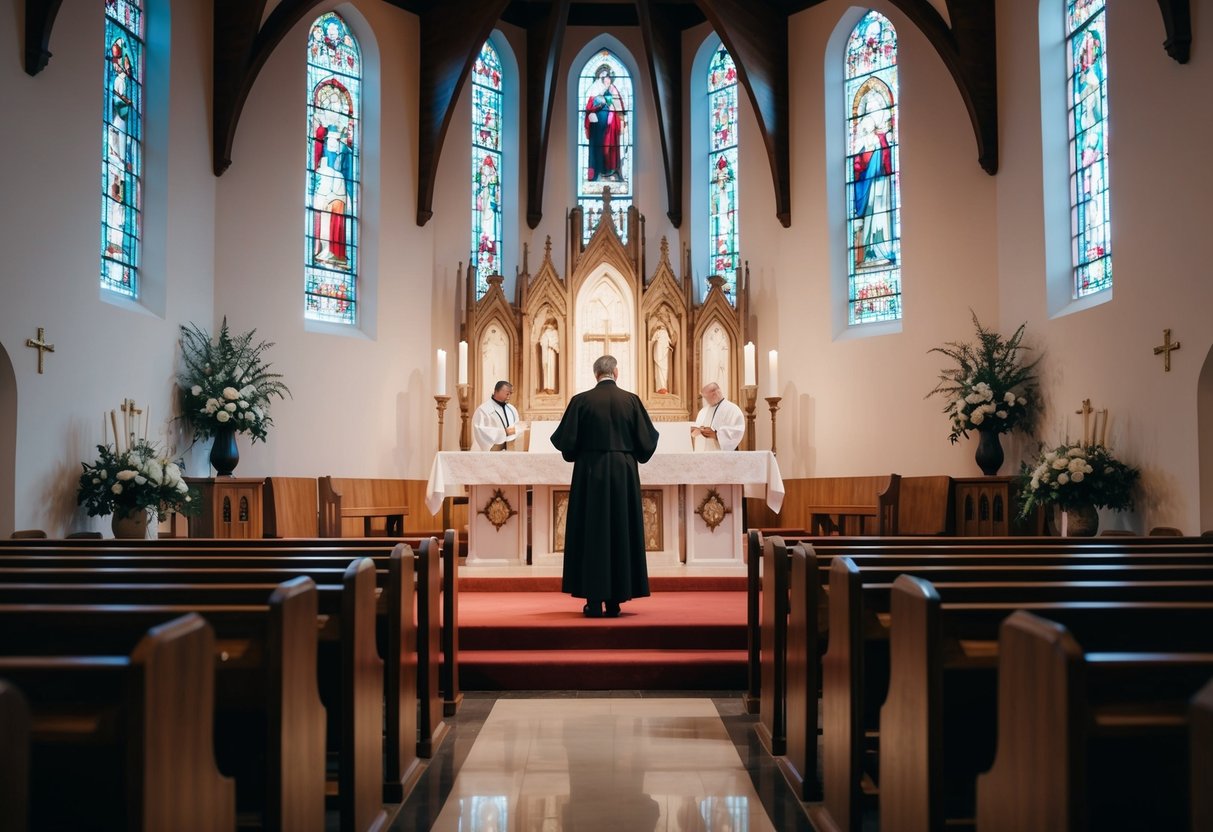
Celebrants offer a flexible approach to wedding ceremonies. They can tailor the script and rituals to reflect your beliefs and values, which can be particularly meaningful if you don’t identify with a specific religious tradition. Many couples appreciate the blend of a celebrant’s personal style and the sacred atmosphere of a church.
By choosing a celebrant for your wedding ceremony, you gain a unique and personalized experience. Not only can they help craft custom vows and elements, but they also ensure that the process goes smoothly, allowing you to focus on celebrating your love.
Understanding Marriage Ceremonies in Church
Marriage ceremonies in church can vary widely depending on the beliefs and traditions of the couple. Whether you’re having a religious ceremony or a more secular celebration, there are important elements to consider.
Understanding the roles of officiants and celebrants, the sacrament of matrimony, and the options for interfaith or secular ceremonies can help you plan the perfect wedding.
Roles of an Officiant and Celebrant
In a church ceremony, the officiant usually holds a significant role. This person is often a member of the clergy, such as a priest or pastor. They guide the ceremony, lead prayers, and reinforce the religious significance of the event.
A celebrant, on the other hand, may not necessarily belong to a specific faith. They can conduct ceremonies that reflect your personal beliefs. Some couples choose to have both a clergy member and a celebrant to honor their religious traditions while including personalized elements.
Church Ceremonies and Sacrament of Matrimony
The sacrament of matrimony is central to many religious wedding ceremonies. It emphasizes that marriage is not just a legal agreement but a spiritual union blessed by God.
In many Christian denominations, this sacrament involves rituals like exchanging vows, lighting unity candles, or taking communion.
During the ceremony, you’ll often hear scripture readings that highlight the significance of love and commitment. Couples may also be asked to participate in specific rituals that symbolize their bond. This makes the event not just a formality but a profound spiritual experience.
Interfaith and Secular Ceremonies in Church
If you and your partner come from different faiths, an interfaith ceremony can combine elements from both religions. This type of ceremony respects each partner’s beliefs while creating a unique experience.
For couples who may not identify with any religion, a secular ceremony in a church can still be meaningful. It allows you to enjoy the beautiful setting and structure of a church while focusing on your personal vows and commitments. You can work closely with a celebrant to design a ceremony that reflects your values and love story.
Legalities of Getting Married in a Church
Getting married in a church involves several legal steps. You need to understand how marriage licenses work, the relevant marriage laws, and the roles of both civil officiants and religious leaders in your ceremony.
Obtaining a Marriage License
Before your church wedding, you must obtain a marriage license. This license is a legal document that allows you to marry. You can usually get it from your local court clerk’s office, although the exact rules differ by state.
When applying, you may need to provide identification, complete an application, and pay a fee. Some states require a waiting period before the license becomes valid. Ensure you check the specific requirements in your state so you can plan accordingly.
Marriage Laws and Church Policies
Marriage laws vary by state and can affect where and how you can marry in a church. Each state has its requirements, including age limits and waiting periods.
Many churches also have their policies, which may include pre-marital counseling or membership requirements. For example, some churches might require you to attend services for a certain period. Understand and comply with both state laws and the church’s policies for a smooth process.
Role of Civil Officiants and Religious Leaders
In a church wedding, both civil officiants and religious leaders can play important roles. A religious leader typically conducts the ceremony, bringing spiritual significance to the event.
On the other hand, if you choose to marry legally without a traditional church ceremony, a civil officiant like a judge or notary public can solemnize your marriage. If you want both, discuss with your church to see if they allow this combination. Always consider what feels right for you and your relationship.
Choosing the Right Celebrant for Your Church Wedding
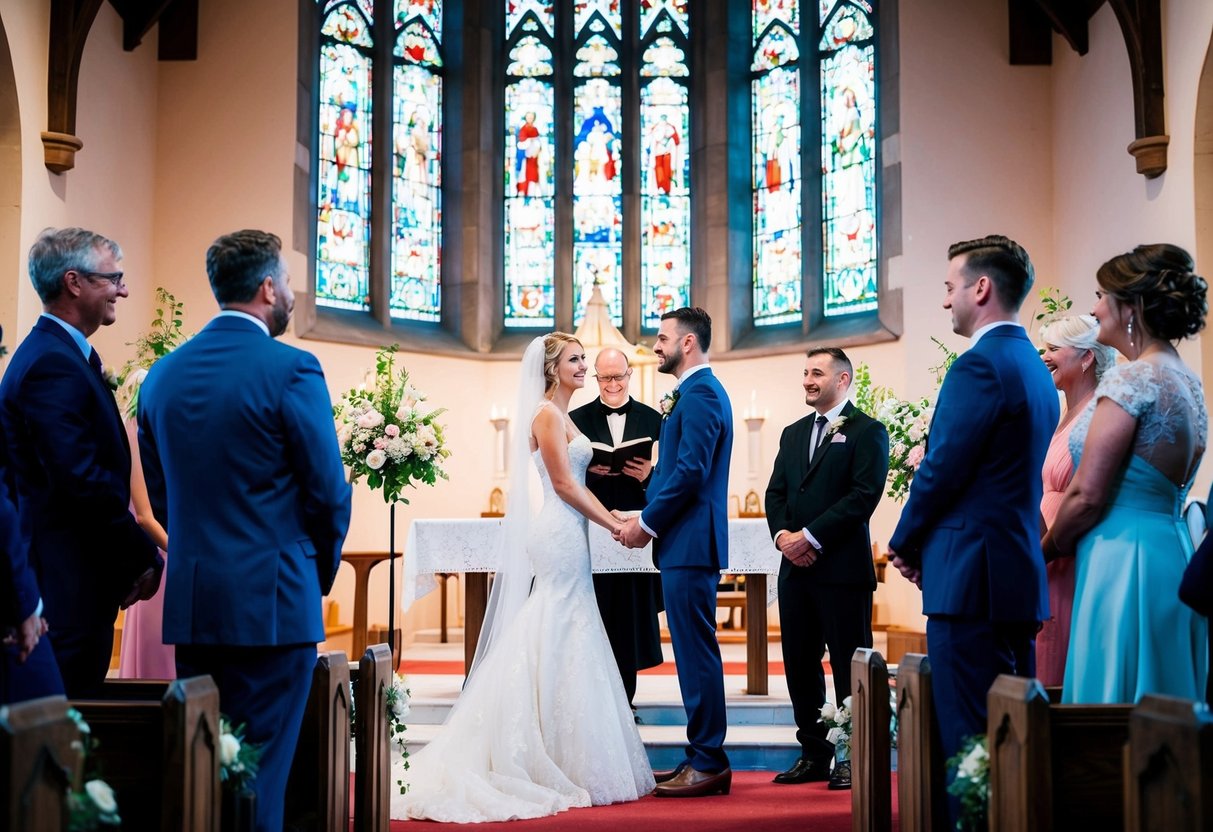
When planning your church wedding, picking the right celebrant is important. The type of celebrant can impact the ceremony’s tone and can affect your personal beliefs. Here are some key factors to consider.
Professional vs. Personal Celebrants
You can choose between a professional officiant or someone you know. Professional officiants often have experience and can manage different types of ceremonies smoothly. They might work with organizations like American Marriage Ministries, which can help ensure your ceremony meets local requirements.
Personal celebrants, such as a friend or family member, can add a personal touch. They can make the ceremony feel more intimate. However, they might lack the experience needed for tricky situations. Think about your priorities and what feels right for your special day.
Ordained Ministers and Laypersons as Officiants
Ordained ministers, like those from various religious denominations, can add a spiritual connection to your ceremony. They typically have the authority to perform weddings in a church setting. If your church has specific rules, check if they allow outside ordained clergy.
Laypersons, or non-ordained officiants, may also be available, especially through groups like Humanist Celebrants. They can conduct a meaningful ceremony that respects your personal beliefs. Just ensure that your church permits lay officiants to avoid any last-minute surprises.
Special Considerations for Catholic Church Weddings
Getting married in a Catholic church has its own rules. Typically, the officiant needs to be an ordained minister who follows the Catholic faith. This means that your celebrant should have the right credentials.
You may need to attend pre-marital counseling sessions led by your priest. Often, these sessions help prepare couples spiritually and emotionally. Be sure to consult your specific church about any unique requirements they may have for your ceremony.
Planning Your Church Wedding With a Celebrant
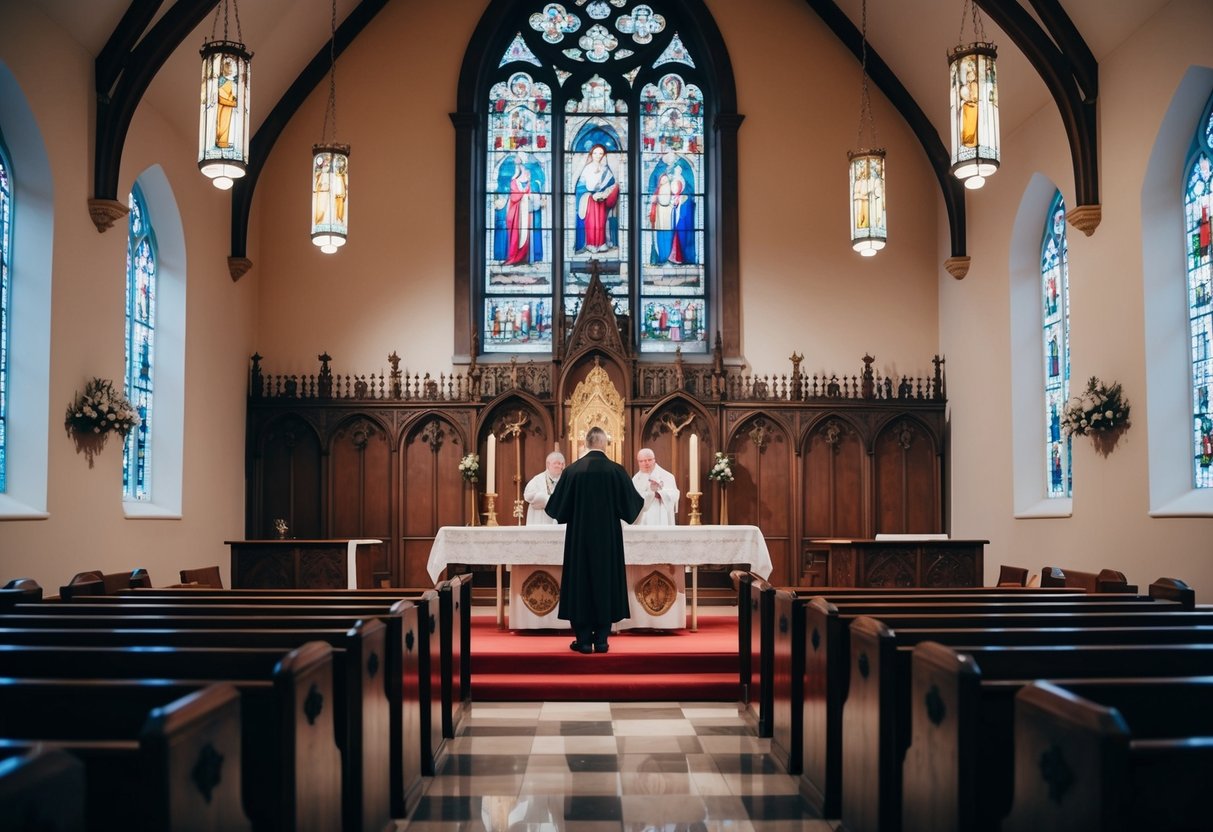
Planning your church wedding with a celebrant involves working closely with them to create a meaningful ceremony. This includes customizing the details to fit your personality and needs, followed by final preparations and a rehearsal to ensure everything goes smoothly.
Collaborating With Your Celebrant
Start by setting up a meeting with your chosen celebrant. Discuss your vision for the ceremony and any specific requests you have. This is your chance to share your story and values, which will help personalize the service.
Make sure to ask about their experience with religious weddings. A knowledgeable officiate can guide you through traditions that fit your beliefs. If needed, establish legal standing, ensuring your ceremony meets any local requirements. Be clear about the kind of service you want.
Customizing Your Ceremony
Your celebrant can help you personalize the ceremony to reflect your unique journey. This might include writing your vows, choosing readings, and selecting music that resonates with you.
Consider incorporating family traditions or cultural elements that are meaningful to you. You can also discuss options for any rituals that may signify your commitment, such as lighting a unity candle or including special prayers.
Ask your celebrant about their insights or suggestions. They often have a wealth of ideas and can help craft a ceremony that honors your story while following necessary guidelines.
Final Preparations and Rehearsal
As your wedding day approaches, finalize all the details with your celebrant. Confirm the schedule and ensure all necessary paperwork is in order. Also, check with your celebrant about any required legal documents to solemnize your marriage.
Plan a rehearsal to familiarize everyone with their roles. This is a great time to practice the processional and other key moments, so there are no surprises on the big day. Having everything in place helps ease any nerves and ensures your ceremony runs smoothly.
With careful planning and collaboration with your celebrant, your church wedding can be a heartfelt and memorable occasion.