
Castle for Wedding Venue: Planning Guide
A castle for wedding venue gives you more than a beautiful setting. It brings historic architecture, landscaped grounds, dramatic rooms, and the atmosphere of a fairytale wedding into one celebration. A castle wedding venue suits you best when you want a memorable setting with built-in character, strong photo opportunities, and spaces for both your ceremony and reception.
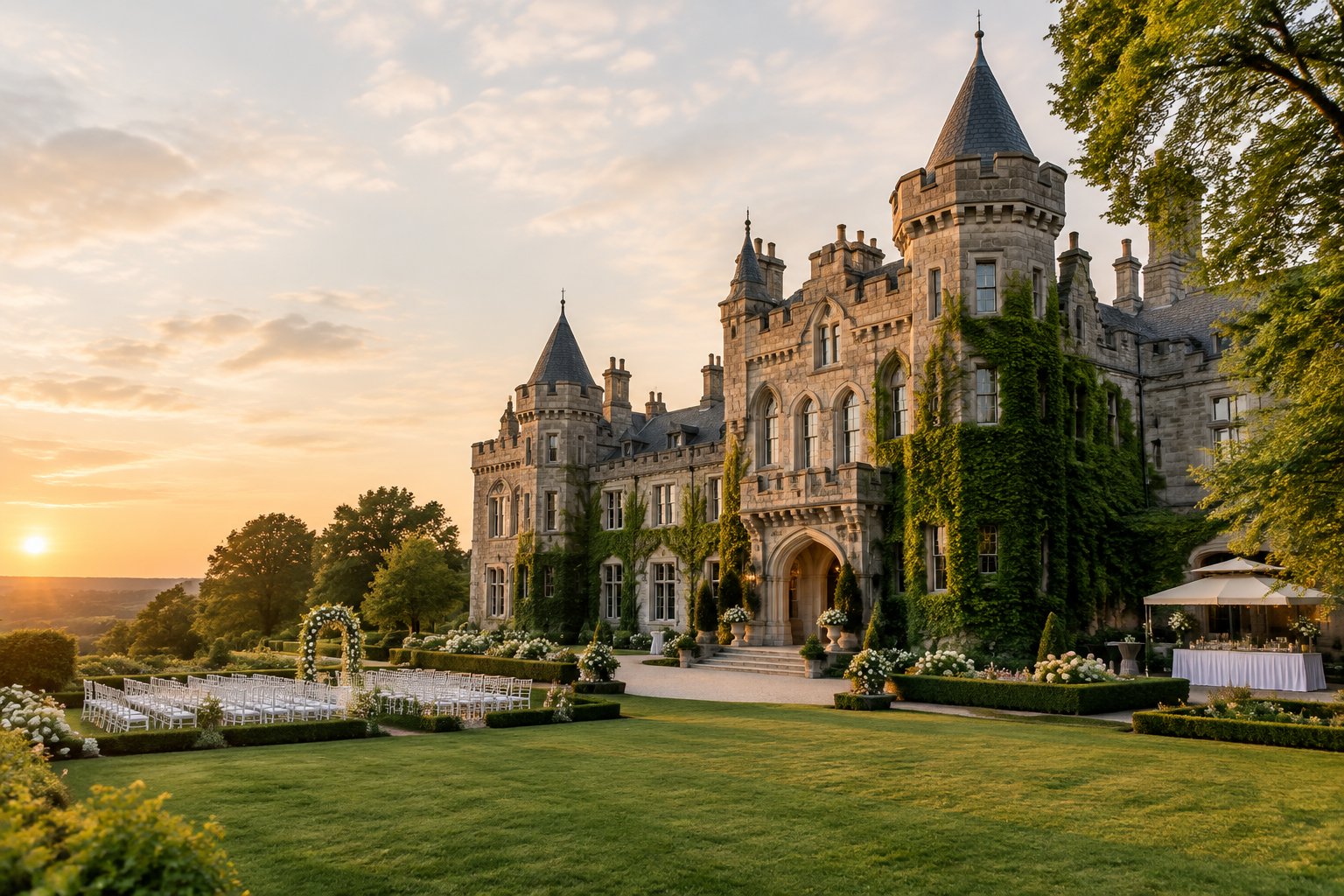
You can choose a restored medieval property, a grand manor, or a castle-inspired estate with modern event facilities. Start by matching the property’s guest capacity, location, style, and package details to your dream wedding.
Once you have a shortlist, schedule a tour and ask how the venue handles weather, catering, accessibility, and historic-building rules.
What Makes a Castle Setting Right for Your Celebration?
A castle setting works best when you want history, architectural drama, and flexible spaces that make the wedding ceremony and wedding reception feel connected.

Castle, Château, Manor, or Castle-Themed Estate?
A true medieval castle gives you towers, stone walls, courtyards, and centuries of history. Some properties draw from an English Tudor castle, while others use Gothic revival, Romanesque revival, or Renaissance details.
A château often has French-inspired architecture, formal gardens, and elegant interiors. A manor may offer a smaller scale with libraries, dining rooms, and private grounds.
A castle-themed estate can provide the look of a royal wedding with updated kitchens, climate control, parking, and reception facilities.
Review the property’s actual event spaces before you book. Historic rooms may have capacity limits, limited electrical access, or decoration rules that shape your plans.
Which Architectural Style Fits Your Vision?
Your preferred style should guide the search:
- A medieval castle suits stone walls, candlelight, heraldic details, and a storybook setting.
- An English Tudor castle fits wood paneling, fireplaces, gardens, and warm seasonal colors.
- Gothic revival creates pointed arches, rich shadows, and a dramatic mood.
- Romanesque revival brings rounded arches, heavy stonework, and a strong formal presence.
- A Scottish castle often pairs rugged exteriors with sweeping landscapes and intimate interiors.
- A French château or Renaissance-inspired estate works well for formal gardens, refined dining, and elegant floral design.
Neuschwanstein Castle in Germany shows how strongly architecture can shape a fairytale wedding vision. You do not need to copy its style. Use it as a reference for the mood, scale, and setting you want.
How a Historic Setting Shapes Wedding Photos
A historic venue gives your photographer many distinct backdrops within one property. Stone staircases, vaulted rooms, grand doors, courtyards, gardens, and formal lawns create variety without requiring long travel between locations.
Ask where wedding photos are permitted and whether certain rooms close during private events. Check the light at your ceremony time, then plan a short portrait route that includes indoor and outdoor locations.
A wet-weather route keeps your photo schedule calm when garden portraits are not possible.
How to Choose the Right Spaces and Guest Experience
The right castle venue gives your guests an easy path from arrival to ceremony, cocktails, dinner, and dancing, with comfortable spaces for each stage.
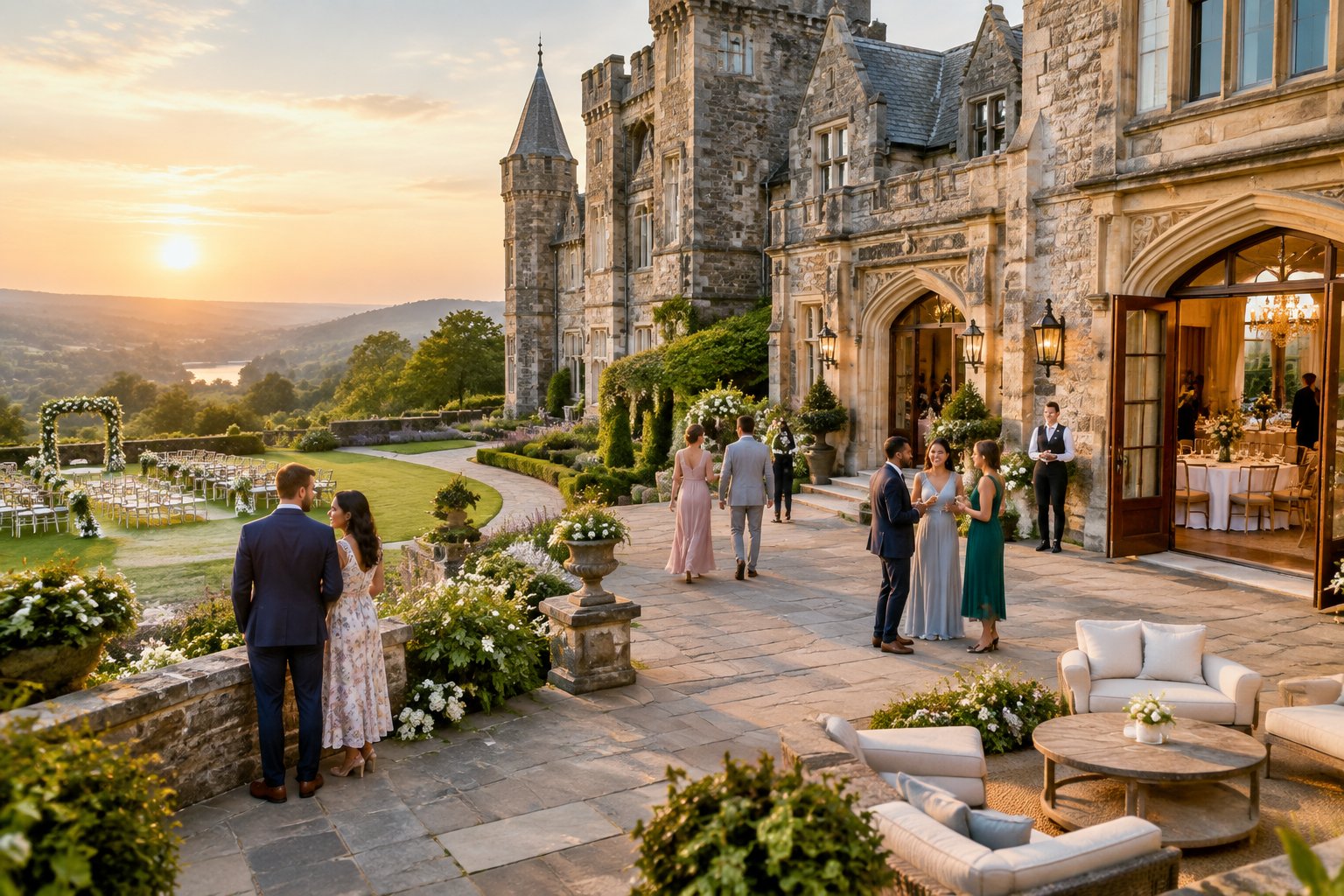
Your guest count should guide every choice. A grand room may look impressive during a tour yet feel empty with a small group, while a compact hall can become crowded once you add dining tables, a bar, and a dance floor.
Ask for a floor plan at your expected headcount.
Gardens, Chapels, and Outdoor Ceremony Options
Manicured gardens and manicured grounds create a natural ceremony setting with built-in scenery. Ask about seating surfaces, shade, restrooms, sound equipment, power access, and a covered rain plan.
A chapel offers a clear ceremony location with weather protection and a strong sense of place. Some properties also provide courtyards, terraces, lawns, or waterfront areas.
Confirm whether you can move the ceremony indoors on the same day and who makes the weather call.
Your décor plan should respect the property. Historic trees, stone walls, fountains, and formal planting beds may already provide enough visual interest for a restrained ceremony design.
Ballrooms and Reception Layouts
A ballroom suits a large dinner, live band, and open dance floor. Check the seated capacity with your chosen table style, buffet or plated service, bar, cake table, and entertainment setup.
Chandeliers and high ceilings create a grand mood, while smaller dining rooms support conversation during an intimate wedding. Ask how guests will move from cocktails to dinner and whether staff must flip one room between ceremony and reception.
A venue coordinator should show you the placement of:
- Guest tables and the head table
- Dance floor and music equipment
- Bar and food-service stations
- Cake, gifts, and guest book
- Wheelchair routes and nearby restrooms
Overnight Stays, Privacy, and Accessibility
On-site lodging keeps guests close to the celebration and makes a multi-day event easier to manage. Ask how many rooms are available, whether couples receive a private suite, and where overflow guests can stay.
Confirm exclusive-use terms and privacy rules. Some properties operate as hotels, museums, or public attractions, so other visitors may share parts of the grounds.
Ask about guest arrival, parking, shuttle service, lighting, and security.
Accessibility deserves a detailed review. Walk the route from parking to ceremony, reception, restrooms, and lodging. Ask about ramps, elevators, accessible bathrooms, stable outdoor paths, and seating options for guests who need breaks.
Is It Better for an Intimate Wedding or a Large Event?
A castle can suit an intimate wedding or a large celebration when the property has spaces scaled to your guest list. Smaller weddings work well in libraries, chapels, drawing rooms, private gardens, and tucked-away dining rooms.
Large events need a tested plan for parking, catering, restrooms, power, guest flow, and weather backup. Ask for examples of weddings close to your size and review the room layout with the venue team before signing.
For a smaller guest list, you can also compare tips for choosing the perfect venue for a small wedding with the castle’s available spaces.
Standout U.S. Properties by Region
The strongest U.S. castle wedding venues range from Long Island estates and New England stone landmarks to Western properties with mountain, desert, or Pacific settings.
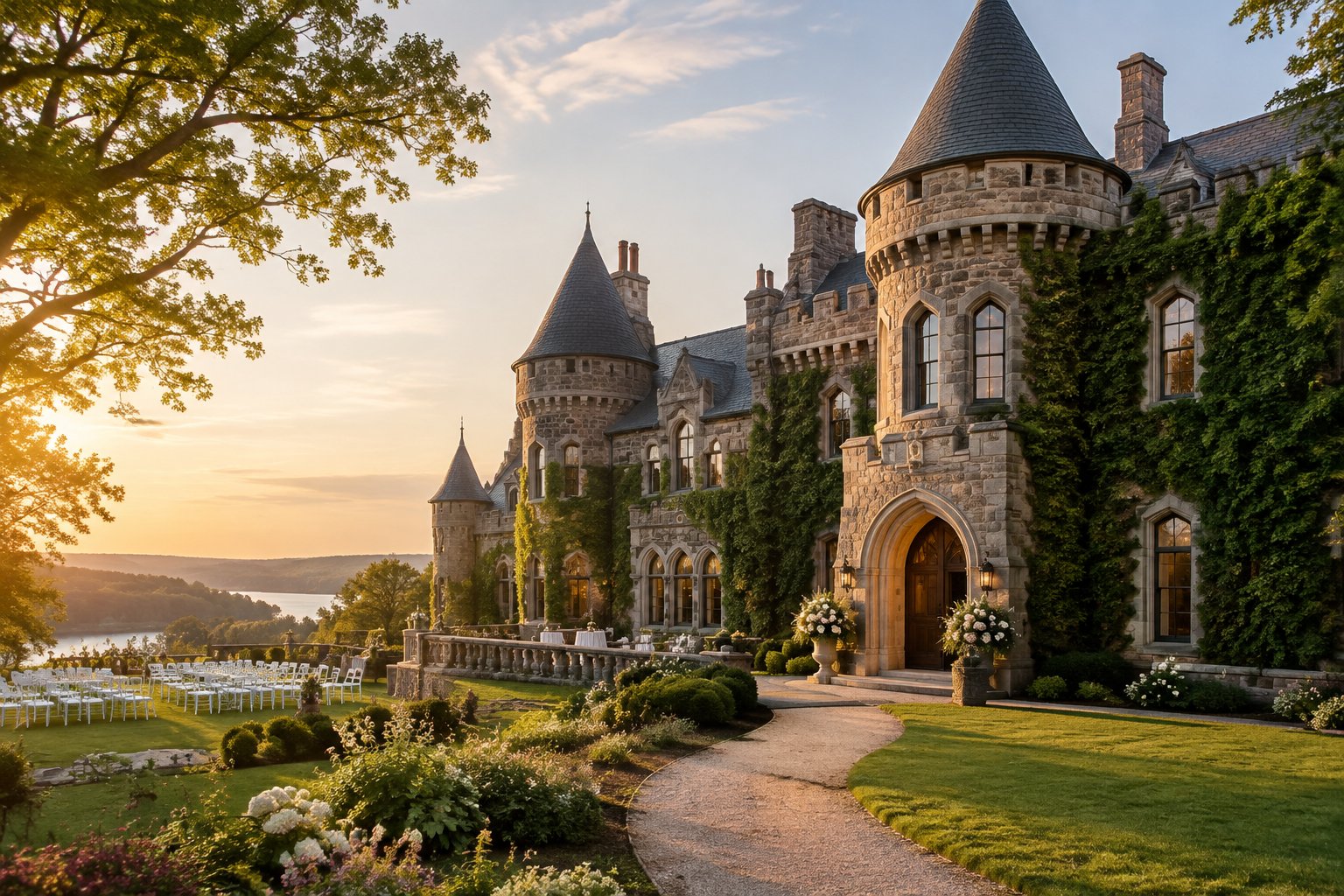
Treat this list as a starting point. Each property has its own capacity, event rules, lodging, catering model, and seasonal schedule, so confirm current details directly with the venue.
Northeast Estates From Long Island to New England
- Oheka Castle, Huntington, New York: A grand Long Island estate with formal architecture and landscaped grounds.
- Sands Point Preserve, Long Island: A historic setting near Long Island Sound with multiple buildings and outdoor areas.
- Whitby Castle, Rye: A dramatic Westchester property with stone architecture and sweeping grounds.
- Hammond Castle and Hammond Castle Museum, Gloucester, Massachusetts: A coastal Massachusetts landmark with medieval-inspired interiors.
- Skylands Manor, Ringwood, New Jersey: A formal estate surrounded by extensive gardens and woodland.
- The Legacy Castle, Pompton Plains, New Jersey: A large, polished event property designed for formal celebrations, with Frungillo Caterers associated with its catering services.
- Saint Clements Castle & Marina, Branford, Connecticut: A waterfront Connecticut venue with castle-style architecture and marina views.
- Alden Castle: A Boston-area venue with a grand historic feel and event-ready interior spaces.
- Rosecliff, Newport, Rhode Island: A famous Newport mansion that offers the scale and elegance many couples seek from a castle wedding venue.
- Searles Castle, Windham, New Hampshire: A detailed historic property with gardens and a strong European influence.
Southern and Midwestern Landmarks
- The Ashley Castle, Chandler: An Arizona property built around a formal castle theme and large event spaces.
- Rhodes Hall, Atlanta, Georgia: A historic Atlanta mansion with ornate interiors and a romantic setting.
- The Sterling Castle, Atlanta: A castle-inspired Georgia venue with formal architecture and event facilities.
- Joslyn Castle & Gardens, also called Joslyn Castle, Omaha, Nebraska: A historic Omaha estate with distinctive architecture and landscaped grounds.
- Castle Farms, Charlevoix, Michigan: A restored Michigan property with stone buildings, courtyards, gardens, and multiple event areas.
- Biltmore Estate, also called The Biltmore, Asheville, North Carolina: A large historic estate near the Blue Ridge Mountains with formal grounds and grand architecture.
- Castle in the Clouds, Lake Winnipesaukee: A New Hampshire property with mountain and lake scenery.
- The Castle at Rockwall: A North Texas venue with a castle-inspired design and large celebration spaces.
- Cherokee Ranch & Castle, also called Cherokee Ranch and Castle, Sedalia, Colorado: A Colorado property south of Denver with dramatic views and historic character.
Mountain, Southwest, and West Coast Escapes
- Mission Inn Hotel and Spa, Riverside, California: A Southern California landmark with elaborate architecture, hotel lodging, and event services.
- Wadley Farms, Lindon: A Utah property with landscaped grounds, historic-style architecture, and reception spaces.
- Castle Green, Lakewood, Washington: A Pacific Northwest venue with historic character and event-friendly interiors.
- The Biltmore: Its Asheville location gives you access to formal gardens, estate architecture, and Blue Ridge Mountains scenery.
- Cherokee Ranch & Castle: Its Sedalia location works well when you want a Colorado setting within reach of Denver.
Compare travel time, guest lodging, weather, and vendor access before choosing a distant property. If cost is a concern, review affordable castle wedding venues for ways to narrow the search.
When Does a Destination Castle Wedding Make Sense?
A destination castle wedding makes sense when the location offers a setting your guests value enough to justify travel, lodging, and a longer celebration.
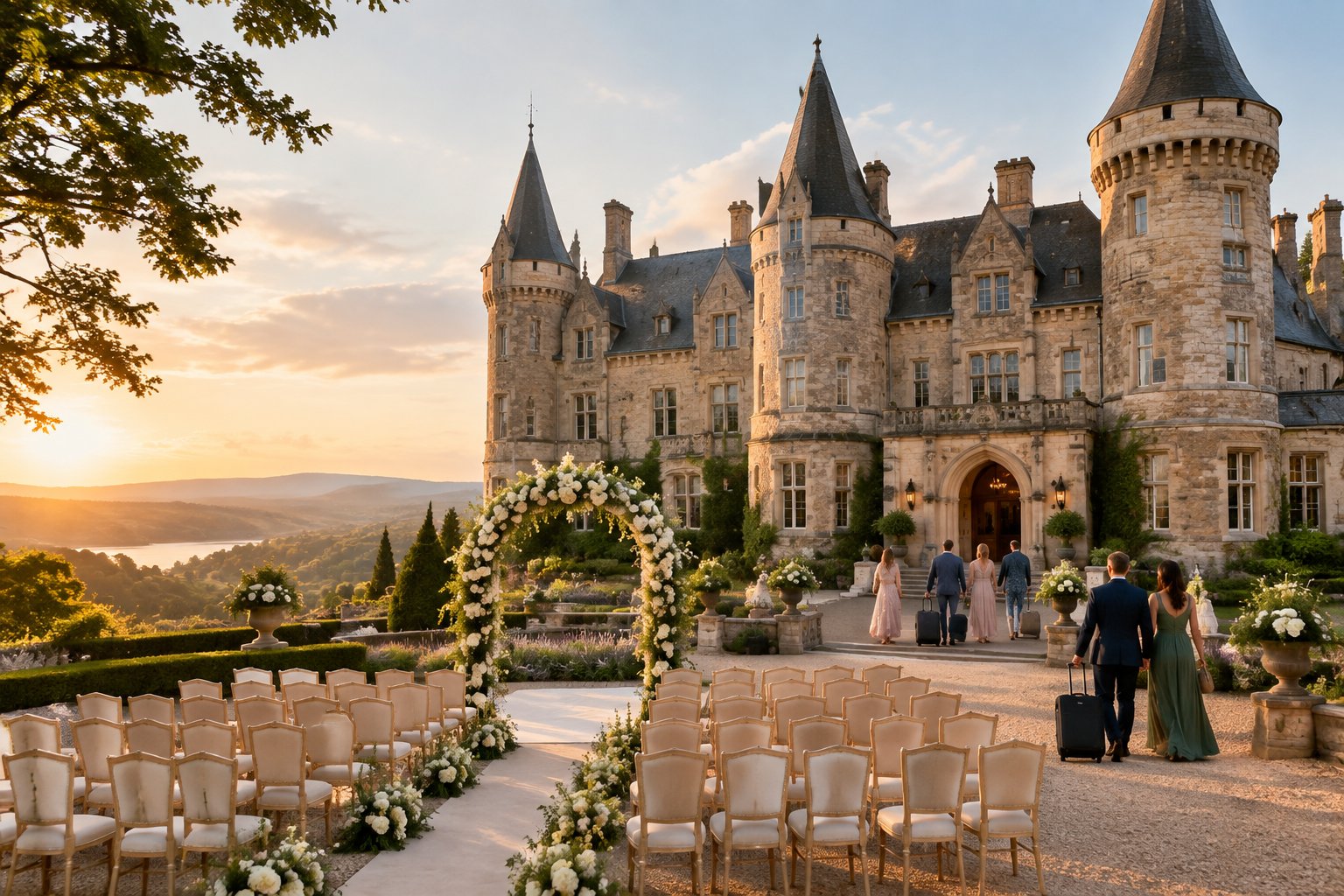
A U.S. property in New York, Colorado, Connecticut, or North Carolina can create a destination feel without an international trip. You can also choose a European property when architecture, heritage, and a multi-day experience are central to your plans.
Comparing U.S. Getaways With Europe
U.S. venues simplify travel for domestic guests and keep legal planning within familiar systems. A New York estate, Colorado castle, Connecticut waterfront property, or North Carolina landmark can still provide a strong sense of escape.
Europe offers historic settings such as Ashford Castle in Ireland and many Scottish castles. International travel adds passport planning, currency concerns, language needs, and local marriage rules.
A legal ceremony at home paired with a symbolic castle celebration can reduce paperwork while preserving the destination experience.
Planning Around Travel, Lodging, and Local Rules
Set your date after reviewing flight access, driving time, seasonal weather, and lodging supply. Send save-the-dates early when guests need airfare or several nights away.
Ask the venue about room blocks, nearby hotels, shuttles, welcome events, and accessibility. Confirm local rules for marriage licenses, officiants, alcohol service, music, fire effects, and outdoor installations.
A local planner can help you coordinate vendors who know the property and its regulations.
You can use a destination wedding checklist to track travel details alongside ceremony and reception tasks.
How to Keep a Multi-Day Celebration Personal
Build a simple rhythm around the wedding day. A welcome meal, a relaxed activity, and a farewell breakfast give guests time together without requiring a packed schedule.
Use local food, music, flowers, or guided visits to connect the celebration with its setting. Keep the wedding day focused on your relationship, with private time for portraits, a quiet meal, or a short walk through the grounds.
Share a clear itinerary with transport times, dress guidance, weather notes, and emergency contact details. Guests enjoy a destination celebration more when they know where to go and what to expect.
Budget, Packages, and Questions to Ask Before Booking
A castle wedding budget becomes easier to control when you compare complete proposals that include venue fees, catering, rentals, staffing, taxes, service charges, and required add-ons.
Your first quote should show the cost for your guest count, preferred date, ceremony plan, reception layout, and bar service. Review the contract before paying a deposit, and ask which costs change with the season or final headcount.
What Is Included in Castle Wedding Packages?
Wedding packages vary widely. Ask whether your proposal includes:
- Ceremony and reception space
- Tables, chairs, linens, china, glassware, and flatware
- Catering, cake, bar service, and a tasting
- Setup, cleanup, security, and event staffing
- Ceremony sound, reception lighting, and a dance floor
- Getting-ready rooms and overnight lodging
- A venue coordinator or required planner
- Rain backup space and weather-related setup changes
Ask for an itemized proposal from properties such as Oheka Castle, The Legacy Castle, Mission Inn Hotel and Spa, or Sands Point Preserve. Their names may signal a certain style, yet their pricing structures and included services can differ.
How to Compare Catering, Rentals, and Service Fees
Compare menus at the same service level. A plated dinner, buffet, stations, cocktail reception, and late-night snack each require different staffing and rental needs.
Ask whether catering is in-house, required, preferred, or flexible. Confirm food and beverage minimums, bar packages, corkage, cake-cutting fees, gratuity, overtime, delivery charges, and sales tax.
Rental details deserve equal attention. Check whether the quote includes specialty chairs, upgraded linens, glassware, lighting, heaters, tenting, power, and restroom facilities.
You can also review how to choose the right wedding caterer before your tasting.
What Historic-Venue Restrictions Should You Confirm?
Historic properties protect their buildings and grounds through clear rules. Ask about:
- Open flames, candles, sparklers, confetti, and hanging décor
- Nails, adhesives, draping, floral installations, and furniture moves
- Music volume, sound checks, and end times
- Ceremony or reception access to protected rooms
- Photography areas and drone restrictions
- Outside vendors, load-in windows, and delivery access
- Heating, cooling, restrooms, generators, and power limits
- Parking, shuttles, security, and guest capacity
- Rain plans for gardens, terraces, and courtyards
Request these rules in writing and share them with your planner and vendors.
How to Schedule a Productive Site Visit
Bring your estimated guest count, preferred dates, budget range, and must-have spaces. Walk the entire guest route from parking and arrival through the ceremony, cocktail hour, dinner, dancing, restrooms, and departure.
Take notes on room dimensions, stairs, sound, temperature, lighting, restroom access, and vendor entry points. Ask to see the rain plan, getting-ready rooms, storage areas, kitchen access, and overnight accommodations.
Before leaving, request a sample proposal, floor plan, package list, payment schedule, cancellation terms, vendor policy, and full event timeline. Compare those documents with your priorities before placing a deposit.