
Castle Wedding Venues in Ireland: 2026 Planning Guide
Ireland gives you a rare mix of ancient stone, green landscapes, and warm hospitality, making castle wedding venues in ireland a strong choice for a fairytale wedding. You can choose a full-service luxury hotel, a private estate for a weekend celebration, or a smaller castle for an intimate wedding ceremony.
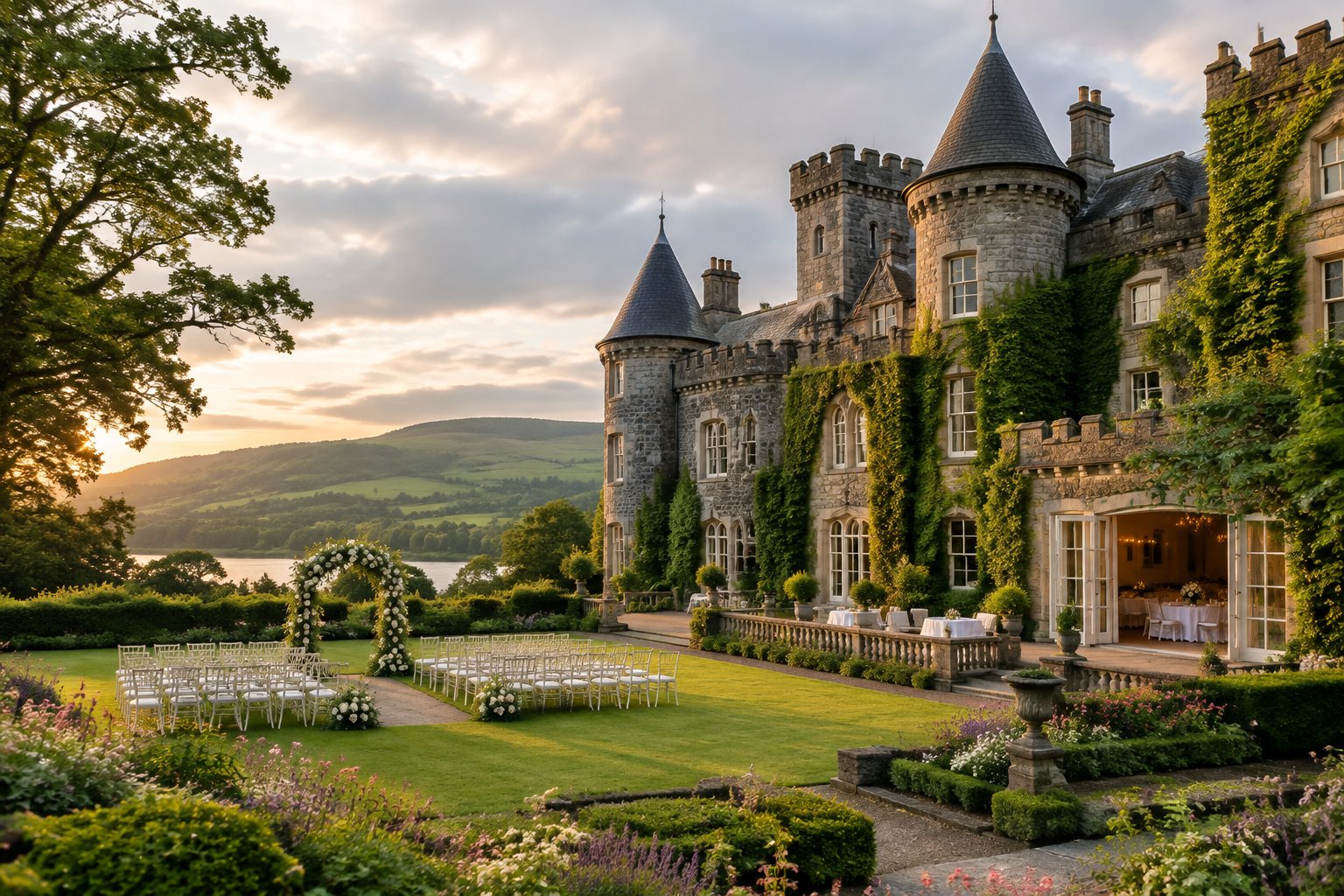
For most couples planning a destination celebration, a full-service castle hotel such as Ashford Castle, Dromoland Castle, or Lough Eske Castle offers the easiest experience because guest rooms, dining, ceremony spaces, and event support are available in one place. Private estates such as Castle Leslie or Slane Castle suit couples who want a more personal wedding weekend, while smaller Irish castles work well for intimate groups.
Your choice will shape guest travel, ceremony logistics, food, accommodation, and your total budget. Start by matching the venue style to your guest count and the kind of celebration you want, then request current 2026 availability and wedding packages directly from each property.
Choose a Castle That Fits Your Wedding Vision
The right castle wedding venue gives you the setting, service level, and privacy that fit your celebration. Compare the feel of the property, its event spaces, accommodation, access, and package structure before you fall in love with the photographs.
Luxury Castle Hotels for a Full-Service Celebration
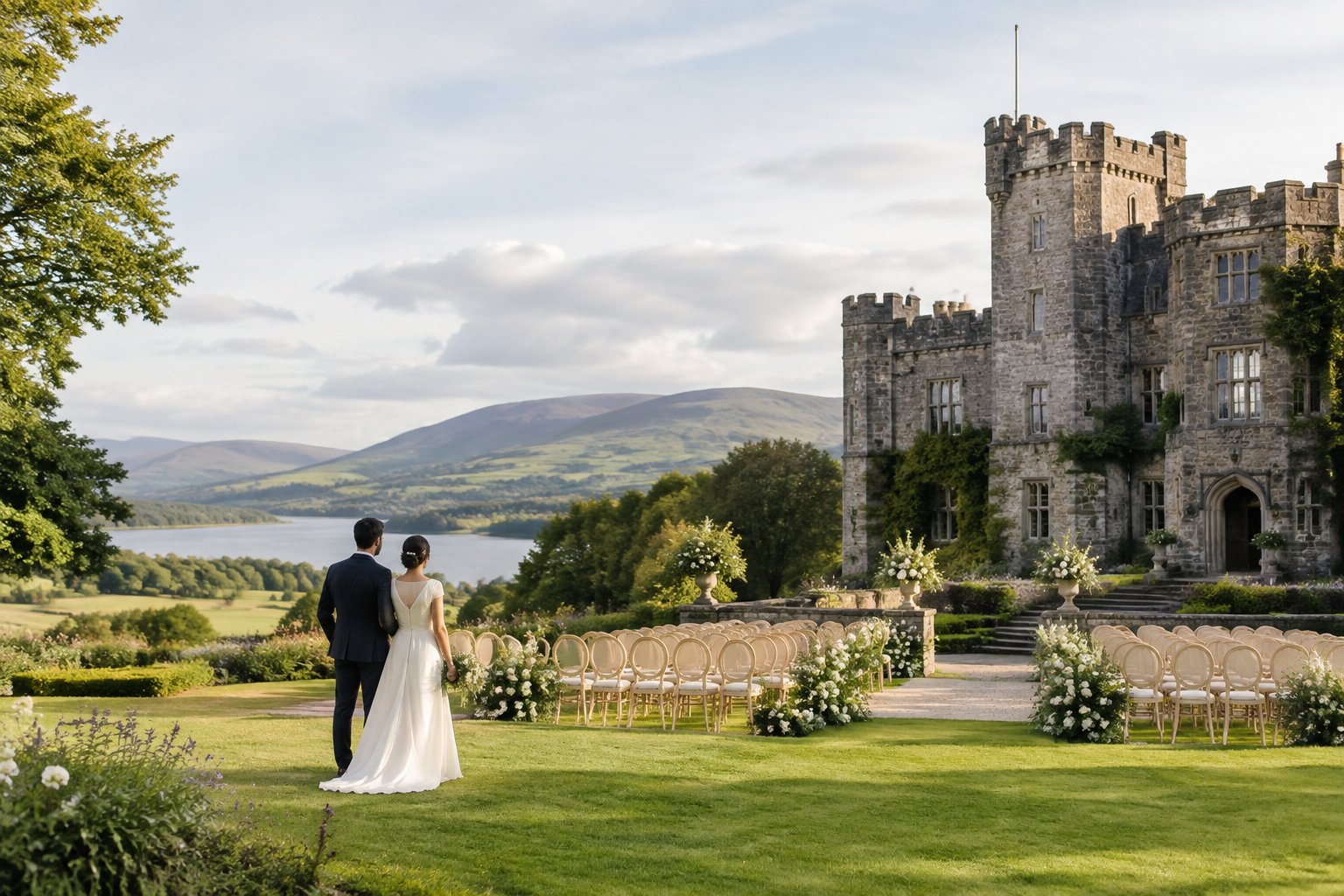
Luxury castle hotels provide a polished experience with coordinated catering, guest rooms, reception areas, and staff support. Ashford Castle, Dromoland Castle, and Waterford Castle appeal to couples who want a high-end stay built around the wedding.
These properties often offer several dining rooms and ceremony locations, so you can move from vows to drinks and dinner without a long transfer. Ask whether the wedding packages include room blocks, menu tastings, late-night service, and a dedicated coordinator.
Exclusive-Use Estates for a Private Wedding Weekend
Exclusive-use estates give you more control over the guest experience. Castle Leslie Estate, Belle Isle Castle, and Slane Castle suit couples who want guests to arrive, stay, celebrate, and spend time together on the property.
Slane Castle publishes options for celebrations from 60 to 200 guests, with a ballroom for smaller receptions and a marquee for larger events. Its castle collection accommodates a limited number of overnight guests, with additional lodging available nearby, so you should review the full accommodation plan before booking.
Intimate Castles and Elopement-Friendly Venues
Smaller properties create a close setting for a private ceremony and dinner. A 12th-century castle or 13th-century castle with a few bedrooms may suit you if your guest list centers on immediate family and close friends.
Ask about minimum stays, ceremony limits, dining room capacity, and whether outside suppliers are permitted. A small venue may offer a more relaxed schedule, though your guests might need nearby hotels if on-site rooms are limited.
Historic Ruins and Character-Filled Settings
Historic ruins and character-filled estates offer striking stonework, gardens, towers, and period rooms for your photographs. Wilton Castle and Kinnitty Castle show how a distinctive setting can shape the atmosphere of the day.
Check the practical details carefully. Original buildings may have uneven floors, limited heating, restricted access, or ceremony spaces that need a weather backup. Your planner and venue coordinator can help you balance historic character with guest comfort.
Leading Venues by Region and Setting
Ireland’s castle wedding venues range from coastal hotels near Dublin to lakefront estates in the west and private country properties along the border counties. Choose your region by weighing airport access, scenery, guest travel time, and the venue’s accommodation plan.
Near Dublin: Grand Estates and Dublin Bay Views
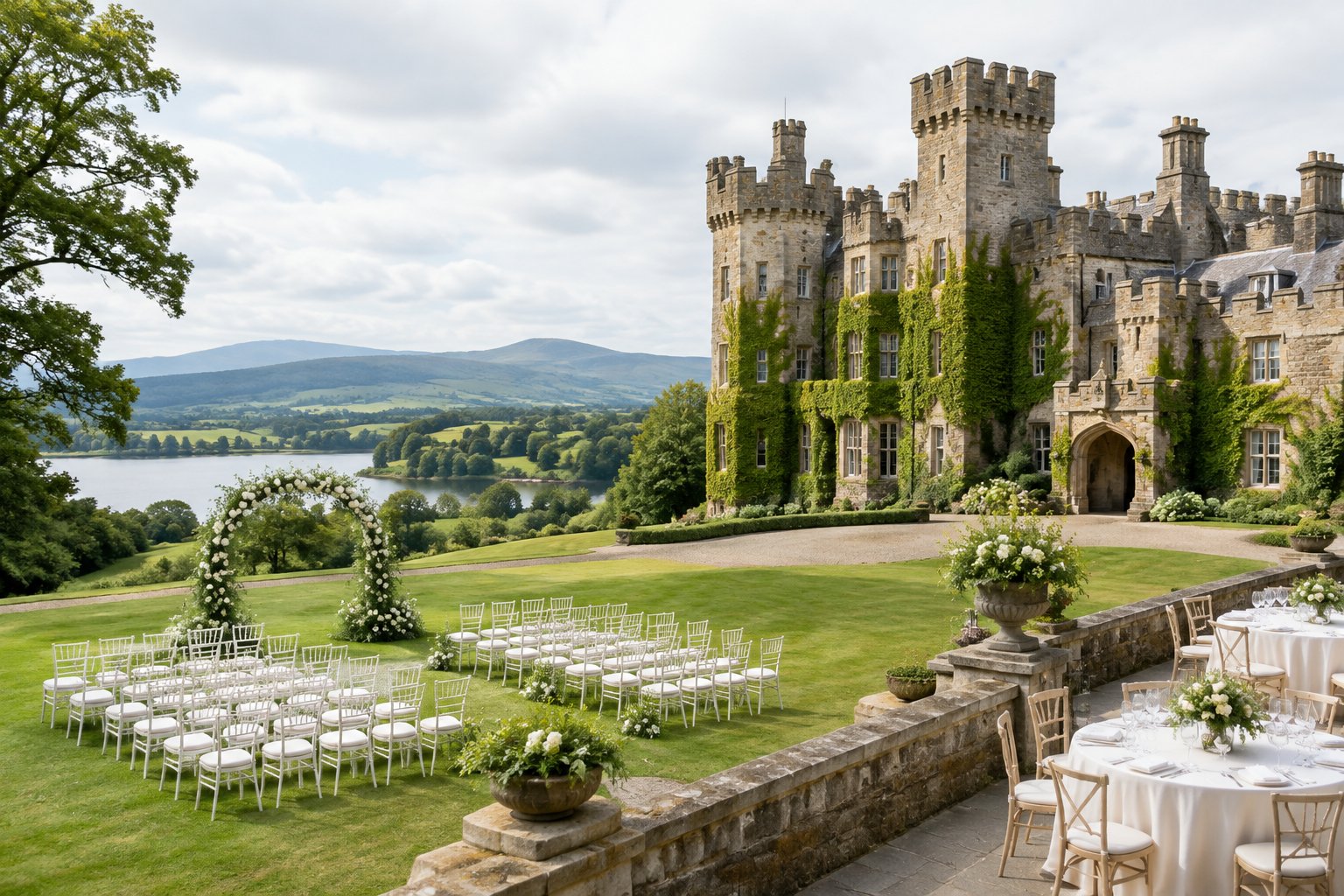
Dublin gives international guests easy access through Dublin Airport and a wide choice of hotels, restaurants, and transport. Luttrellstown Castle offers a grand private-estate setting west of the city, while Clontarf Castle brings historic character close to Dublin Bay.
Fitzpatrick Castle in Killiney suits couples who want coastal views and city access. Check driving times at your ceremony hour, since airport routes and city traffic affect transfers.
The Ancient East: Meath, Kildare, Louth, and Wexford
The Ancient East places you near historic landscapes and large country estates. In County Kildare, Kilkea Castle and Barberstown Castle offer distinct settings for couples who want a country wedding within reach of Dublin.
County Meath options include Slane Castle near Trim and Durhamstown Castle. County Louth gives you Bellingham Castle and Darver Castle, with Dundalk nearby for services and additional lodging. In County Wexford, consider a venue with coastal access and enough on-site support for guests traveling from Dublin or the southeast.
The West and Northwest: Lakes, Coast, and Highland Scenery
The west and northwest deliver dramatic scenery, lake views, and a stronger destination feel. Ashford Castle sits near Lough Corrib in County Mayo, while Belleek Castle and Ballynahinch Castle offer historic settings surrounded by woodland and water.
County Donegal’s Lough Eske Castle places your wedding near the mountains and Lough Eske. County Sligo’s Markree Castle combines period rooms, gardens, and river landscapes. Ask each property about rain plans, driving times, and the number of rooms available for your group.
The Midlands and South: Woodland, River, and Country Estates
The Midlands and south offer peaceful grounds with forests, rivers, and broad parkland. Kilronan Castle in County Roscommon overlooks Lough Meelagh, while Lough Rynn Castle in County Leitrim provides an estate setting with gardens and woodland.
In County Kerry, Ballyseede Castle offers a historic country-house atmosphere. County Cork gives you access to southern landscapes, while County Clare is home to Dromoland Castle. Castle Durrow in County Laois suits couples seeking formal gardens and an elegant country estate.
Northern Border Counties: Convenient Escapes for Guests
The border counties work well when your guests arrive through Dublin or Belfast and want a private countryside stay. Cabra Castle in County Cavan offers a historic estate setting, while Castle Leslie in County Monaghan sits beside Glaslough Lake.
Plan transport across the border with care. Ask about pickup points, coach parking, transfer times, and currency arrangements if guests are staying on both sides of the border.
How Many Guests Can Your Castle Host?
Your castle’s capacity depends on the ceremony room, dining layout, dance floor, marquee plan, and bedrooms available on the property. Treat the published maximum as a starting point, then confirm the capacity for your exact reception format.
Small Weddings and Private Dining Celebrations
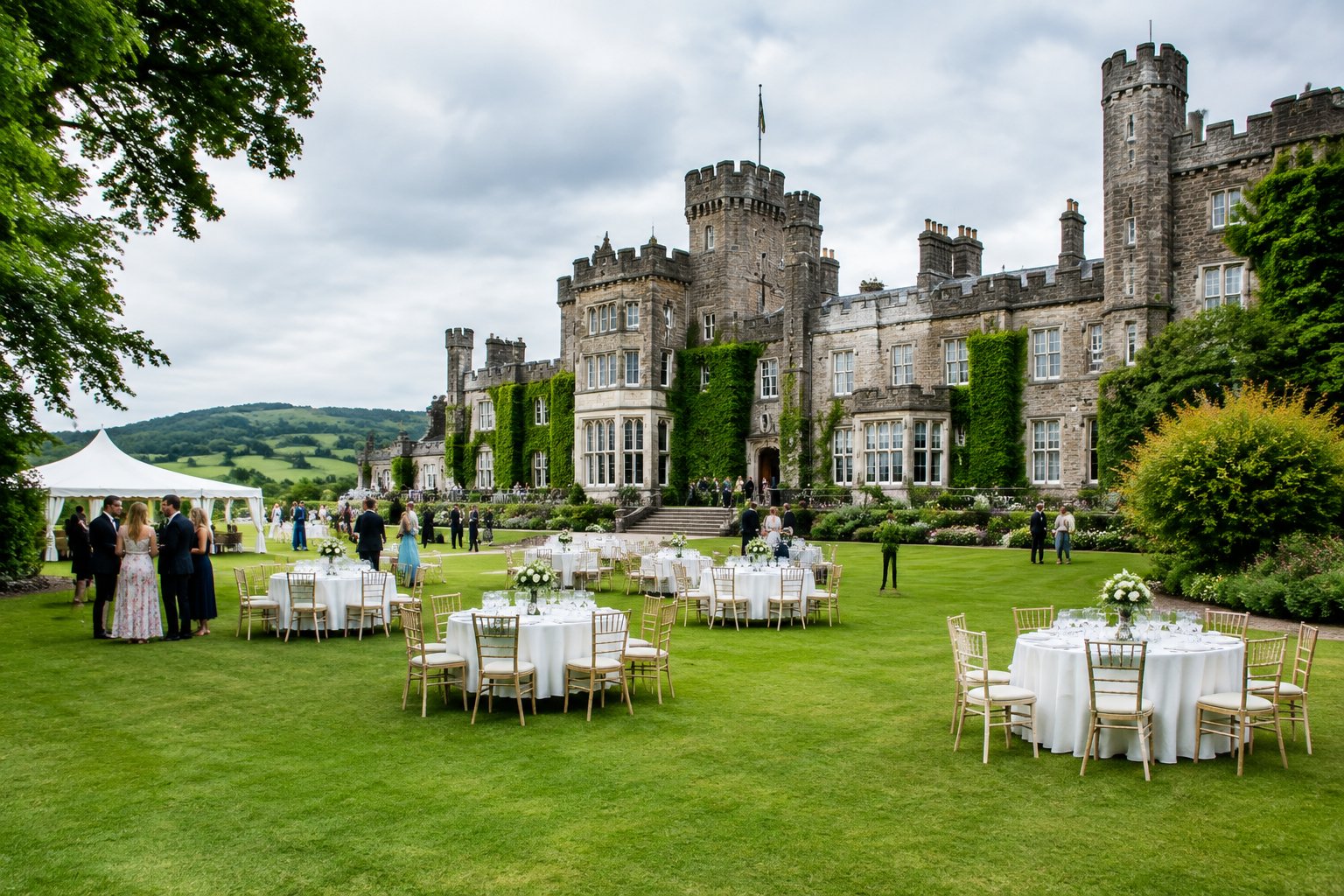
Small castle weddings suit couples who want a private meal, relaxed conversation, and time with each guest. Properties such as Darver Castle or smaller rooms within Castle Leslie Estate can create a warm setting for a compact celebration.
Ask whether the venue has a minimum spend or minimum guest count. A small wedding package might include private dining, a ceremony room, selected drinks, and a smaller bedroom block.
If you are still setting your guest list, use this guide to choose the right number of wedding guests before requesting detailed quotes.
Mid-Sized Receptions With On-Site Accommodation
Mid-sized weddings often benefit from a castle with enough rooms for the wedding party and close family. Kilkea Castle, Cabra Castle, and Markree Castle provide examples of properties where accommodation forms part of the guest experience.
Confirm the number of rooms, room types, check-in times, breakfast arrangements, and any required room block. Markree Castle publishes accommodation for about 62 to 70 guests and a function room for up to 210 wedding guests, showing why reception capacity and bedroom capacity need separate review.
Large Banquets, Ballrooms, and Marquee Options
Large celebrations need a suitable ballroom, dining hall, or marquee footprint. Slane Castle lists a ballroom option for up to 110 guests and a courtyard marquee for 111 to 200 guests. Ashford Castle and Dromoland Castle also offer grand spaces suited to larger receptions, subject to the current event plan.
Ask for a floor plan showing guest tables, buffet or service stations, bar placement, band or DJ space, dance floor, and exits. A room that holds a large seated meal may feel crowded once entertainment and service areas are added.
How to Assess Bedrooms, Nearby Stays, and Guest Transport
Count bedrooms separately from total reception capacity. Castle Leslie, Kilkea Castle, and Cabra Castle may host more wedding guests than they can sleep on-site, so you need a clear plan for nearby hotels, shuttles, taxis, and next-day departures.
Request a rooming list template and a map of nearby accommodation. Confirm whether coaches can reach the property, how long transfers take after dinner, and whether guests can return safely after late-night celebrations.
What Do Castle Wedding Packages Usually Include?
Castle wedding packages commonly combine venue hire, a meal, drinks, service, and selected accommodation, though each property defines inclusions differently. Compare the full cost and the guest experience instead of comparing the headline price alone.
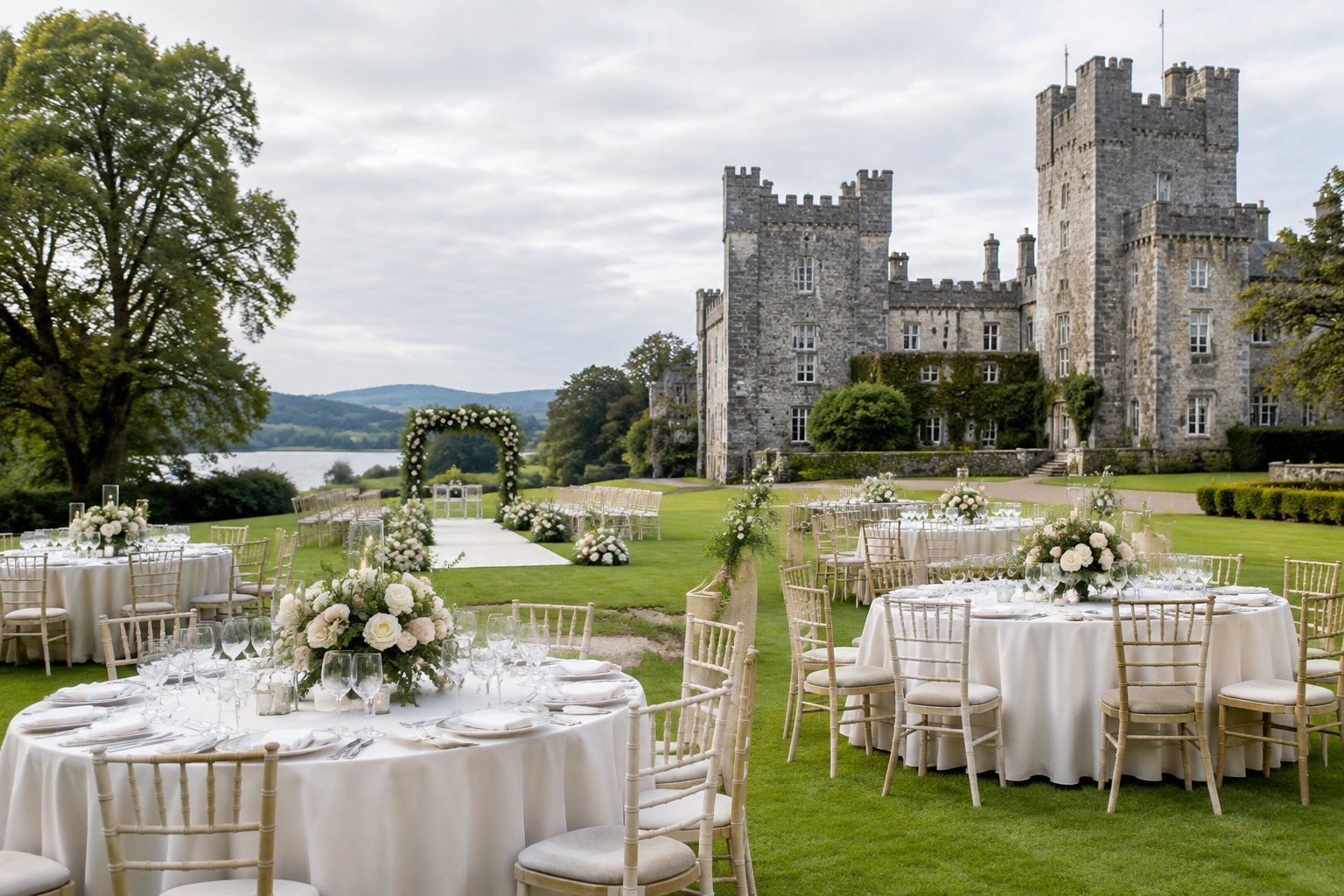
Venue Hire, Exclusivity, and Minimum Guest Numbers
Venue hire may cover a ceremony room, reception space, grounds, furniture, staff, and private use of selected areas. Some Irish castle wedding venues offer exclusive use, while others reserve specific rooms or operate as hotels during the event.
Ask whether exclusivity covers the full castle, the grounds, guest lounges, and breakfast areas. Confirm the minimum number of guests, minimum food and beverage spend, hire hours, setup access, and overtime charges.
Food, Drinks, Accommodation, and Added Extras
Packages often include a drinks reception, a multi-course banquet, wine with dinner, evening food, and bar service. Ballyseede Castle, Markree Castle, Lough Rynn Castle, and Waterford Castle each have their own menus, service rules, and accommodation structures.
Request a written list of included extras, such as:
- Canapés and welcome drinks
- Wine, beer, and soft drinks
- Cake cutting and table service
- Linen, chairs, tables, and place settings
- Bridal suite or couple’s room
- Breakfast for overnight guests
- Late-night food and bar hours
- Ceremony chairs and indoor backup space
Questions to Ask Before Comparing Quotes
Use the same questions with every venue so the quotes are easy to compare:
- What is the total venue fee, and what does it cover?
- Are ceremony fees, corkage, service charges, and taxes included?
- What menu choices and dietary accommodations are available?
- How many bedrooms are included or reserved?
- Which suppliers can you bring in?
- What are the payment dates and cancellation terms?
- What happens if your guest count changes?
- What is the rain plan for an outdoor ceremony or reception?
How to Build a Realistic Budget
Build your budget from the complete guest cost, then add travel, lodging, attire, photography, music, flowers, stationery, transportation, and legal fees. Include currency conversion costs if you are paying from the United States.
Keep a separate allowance for upgrades. Menu changes, premium drinks, extra candles, late-night food, welcome events, and additional accommodation can change the final total. Ask the venue to mark every optional item clearly in the proposal.
Plan the Day Around Weather, Travel, and Ceremony Details
Your ceremony plan should include an indoor location, a realistic travel schedule, and the legal steps required for your chosen ceremony type. Ireland’s landscapes look beautiful in every season, while its weather calls for flexible plans.
Indoor and Outdoor Ceremony Contingency Plans
Choose a venue with a strong indoor ceremony option if you want outdoor vows near landscaped gardens, Lough Corrib, Dublin Bay, Glaslough Lake, or Lough Eske. Ask when the final weather decision is made, who makes it, and how quickly chairs and decor can move indoors.
Request floor plans for both options. Check whether indoor spaces provide enough seating, photography room, access for mobility needs, and a comfortable transition to the drinks reception.
The Best Seasons for Grounds and Portraits
Spring and summer provide long daylight hours for portraits and garden ceremonies. Early autumn brings rich color and softer light, while winter creates a candlelit atmosphere inside historic rooms.
Your photographer should help plan portraits around daylight, rain cover, walking distances, and the time required to move between gardens and reception spaces. Build short portrait windows into the schedule so guests are not waiting for long periods.
Travel Timing for International and Local Guests
Dublin Airport serves many international arrivals and connects well with Dublin, County Wexford, County Clare, and other regions by road. Remote venues in the west, northwest, and County Kerry need more transfer time, especially for guests arriving on the wedding day.
Encourage international guests to arrive at least one day before the ceremony. Arrange a welcome event, share driving guidance, and provide a coach schedule with pickup points, luggage instructions, and emergency contact details.
Civil, Religious, and Humanist Ceremony Considerations
Your ceremony type affects the venue, paperwork, celebrant, timing, and location. Civil ceremonies require an approved setting and advance contact with the relevant registrar.
Religious ceremonies bring their own church and clergy requirements, while humanist ceremonies involve a celebrant and a format agreed with you. Contact the appropriate Irish authorities early and ask the venue which ceremony spaces and permissions are available.
Keep legal paperwork separate from the celebration design so your ceremony plan stays clear.
Create a Confident Venue Shortlist
A strong shortlist contains two to four castle wedding venues that fit your guest count, travel plan, budget, and preferred level of privacy. Compare each venue against the same checklist before you schedule viewings.
Match Your Priorities Before Booking a Viewing
Write down your five highest priorities, such as:
- Exclusive use
- Easy access from Dublin
- On-site bedrooms
- Outdoor ceremony space
- Historic character
- Large reception capacity
- Luxury hotel service
- A private wedding weekend
Use those priorities to compare Luttrellstown Castle, Castle Leslie, Kilkea Castle, Ashford Castle, and similar properties. A venue with the perfect architecture may require more transport planning, while a hotel castle may make guest logistics easier.
What to Check During a Venue Visit or Virtual Tour
Review the ceremony room, reception layout, bridal suite, guest bedrooms, gardens, kitchens, bathrooms, accessibility, and parking. Ask to see the route guests will take from the ceremony to drinks and dinner.
During a virtual tour, request current videos, floor plans, sample menus, room lists, and photographs from the same season as your planned wedding. Ask where suppliers load in, where the band sets up, and where guests wait if the weather changes.
How Far Ahead Should You Book?
Popular castles and peak Saturdays may require booking well ahead of 2026, especially for destination weddings with large room blocks. Midweek dates, winter dates, and shoulder-season celebrations can provide more choice, subject to each venue’s calendar.
Contact venues as soon as you know your approximate guest count and preferred months. Ask for available dates, the date-hold period, the deposit schedule, and the deadline for confirming your menu and room block.
Read Contracts, Deposits, and Cancellation Terms Carefully
Read every contract clause covering deposits, payment dates, guest-count changes, cancellation, postponement, force majeure, supplier access, accommodation, and damage. Mark questions before you sign and request written answers from the venue.
Check whether deposits are refundable, whether date changes carry a fee, and how the venue handles a reduced guest count. Keep the signed agreement, payment receipts, package version, floor plans, and email approvals in one planning folder.