
Castle Wedding Venues Ireland: Top Picks for 2026
Ireland gives you a remarkable choice of castle wedding venues, from grand luxury estates to private manor houses and intimate historic escapes. For a destination celebration with refined service, guest accommodation, and a strong sense of place, Ashford Castle is a leading choice for couples seeking a fairytale wedding venue.
Dromoland Castle, Castle Leslie, and Luttrellstown Castle offer compelling alternatives for different guest counts, settings, and wedding styles.
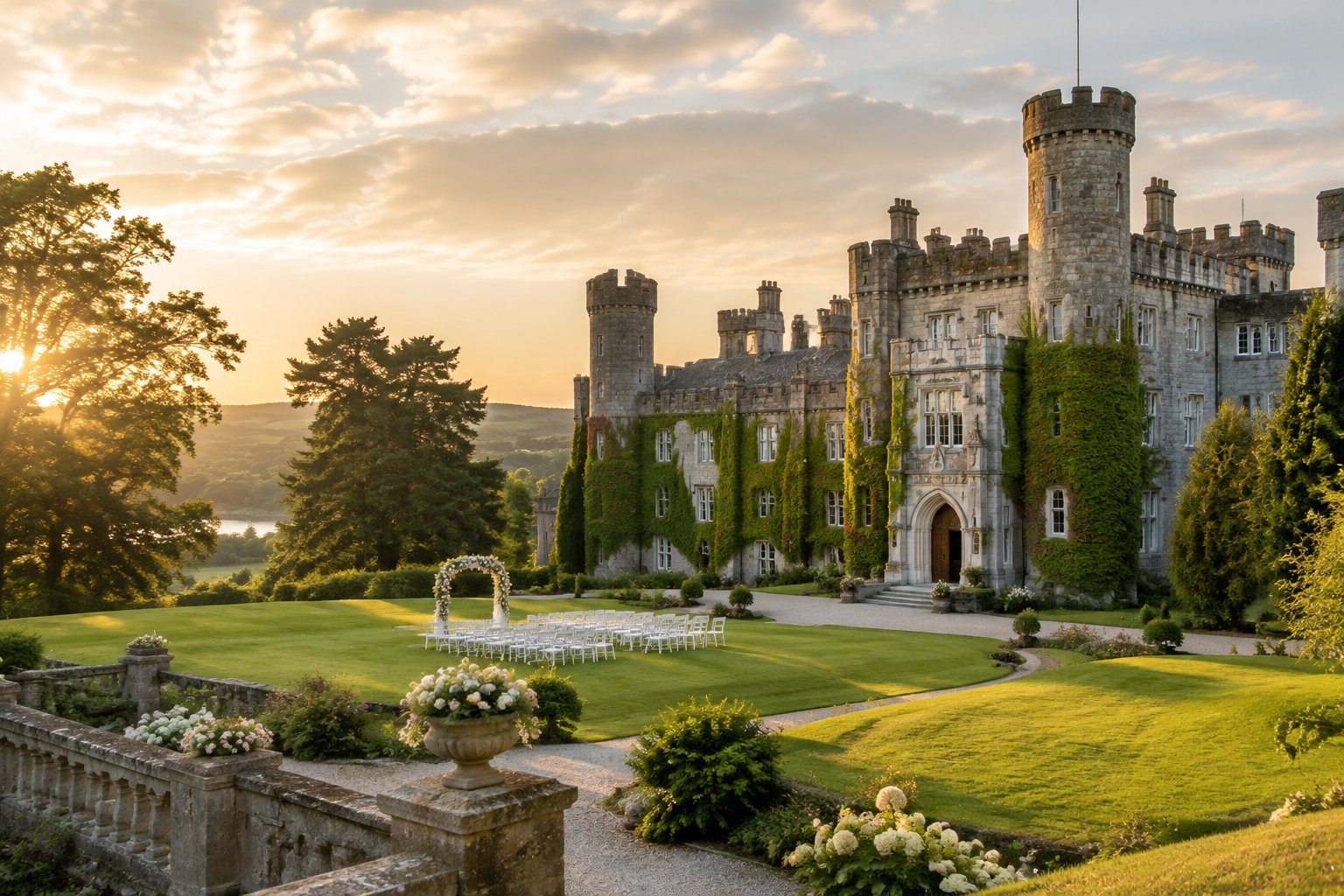
Your ideal Irish castle wedding should fit your guest list, travel plans, ceremony preferences, and budget. You can choose a full castle hotel experience, an exclusive-use country estate, or a smaller setting for an intimate Irish castle wedding.
Start by shortlisting venues that match your preferred region and celebration size, then request current 2026 dates, packages, and accommodation details directly from each property.
Top Castle Settings for Every Wedding Style
The best castle weddings in Ireland pair historic architecture with a practical plan for dining, accommodation, ceremonies, and wet-weather changes. Your choice becomes easier when you match the venue style to the atmosphere you want, from polished luxury to private country-house charm.
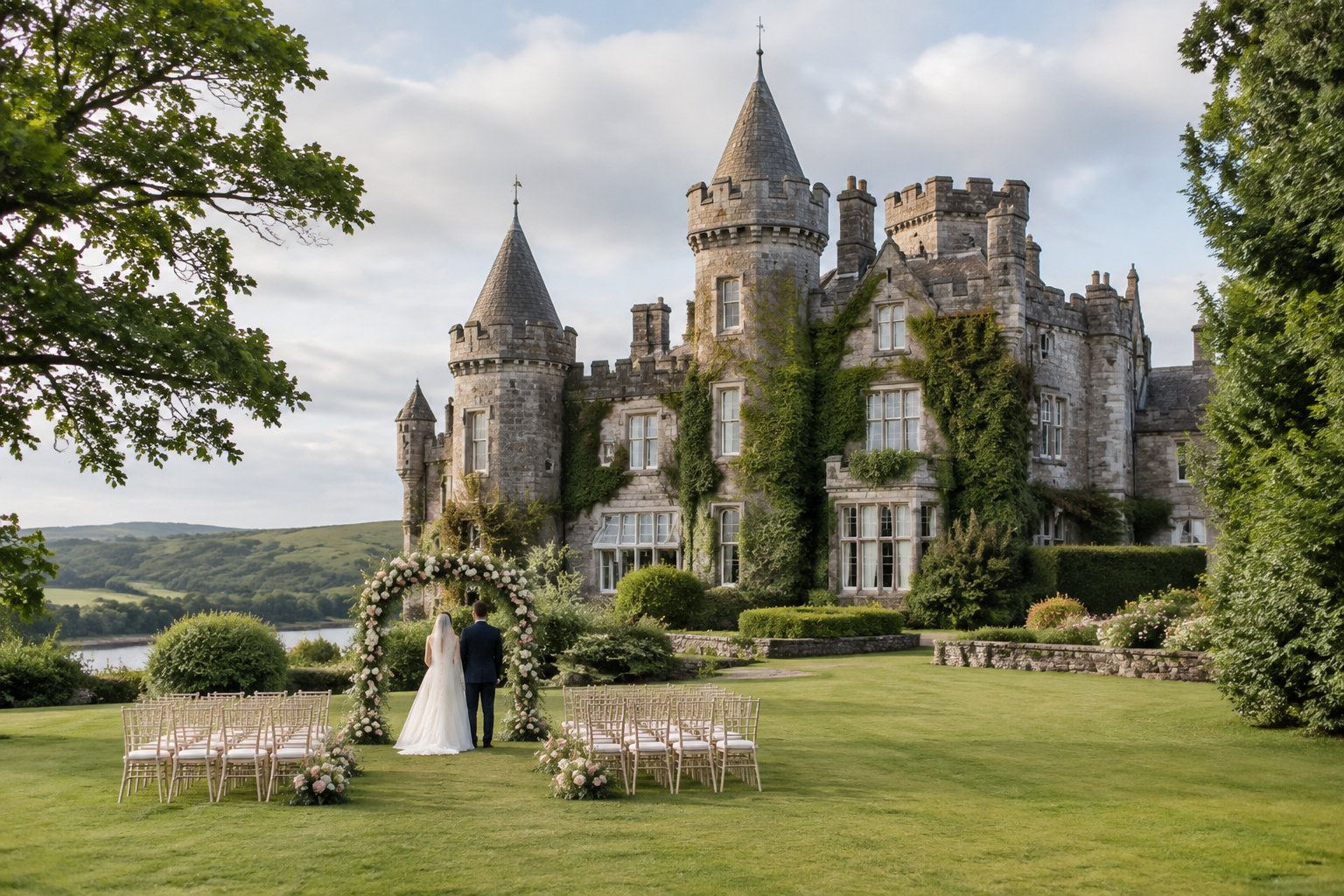
Iconic Luxury Estates
Ashford Castle delivers a grand lakefront experience on a large estate, with elegant interiors, formal grounds, and extensive guest services. It suits couples planning a high-end destination wedding with several days of activities.
Dromoland Castle places your celebration in a luxury resort setting across a 500-acre estate in County Clare. Its ceremony choices include indoor rooms, walled gardens, lakeside areas, and estate features such as the Temple of Mercury.
The venue’s published calendar is fully booked for 2026 and 2027, with a 2028 waitlist available.
Lough Eske Castle offers a dramatic Donegal setting near the Bluestack Mountains. Ballynahinch Castle brings a more private country-house mood beside the waters of Connemara. Lismore Castle and Glin Castle suit couples drawn to historic architecture and distinctive interiors.
Exclusive-Use Country Castles
Castle Leslie Estate in County Monaghan is known for private celebrations, estate grounds, and a relaxed house-party feel. Luttrellstown Castle Resort near Dublin gives you grand architecture, landscaped grounds, and convenient access to the capital.
Slane Castle works well for a large-scale celebration with sweeping grounds and a strong historic identity. Bellingham Castle, Darver Castle, and Kilkea Castle provide estate settings across the eastern side of Ireland.
Cabra Castle Hotel combines castle character with hotel accommodation, while Wilton Castle offers a more private riverside atmosphere.
Intimate and Elopement-Friendly Escapes
Smaller castle properties create a focused setting for elopements and weddings with close family. Huntington Castle offers historic rooms and atmospheric grounds in County Carlow. Belle Isle Castle provides a private island setting in County Fermanagh, with accommodation suited to a wedding weekend.
Waterford Castle gives you a secluded island location near the southeast coast. Kinnitty Castle offers a historic house setting in County Offaly, while Ballynahinch Castle supports intimate celebrations surrounded by woodland and mountain scenery.
Ask each venue about minimum guest numbers, ceremony permissions, dining options, and whether you can reserve bedrooms for your group. A smaller wedding still needs a clear rain plan and a comfortable space for dinner.
Historic Ruins and Characterful Homes
A 12th-century castle or 13th-century castle can give your ceremony a stronger sense of history, especially when original stonework, towers, and old halls remain part of the guest experience. These settings suit couples who value atmosphere and character over a uniform hotel layout.
Some historic properties combine preserved ruins with modern event rooms, while others operate as private homes with limited wedding dates. Check accessibility, heating, restroom access, catering rules, and photography permissions before you commit.
The most atmospheric venue still needs a smooth guest experience from arrival through the final dance.
Where Should You Marry in Ireland?
Choose your Irish wedding region by balancing airport access, guest travel time, scenery, and venue style. Dublin offers convenience, the Ancient East brings heritage estates, and western counties deliver lakes, mountains, and rugged coastal landscapes.
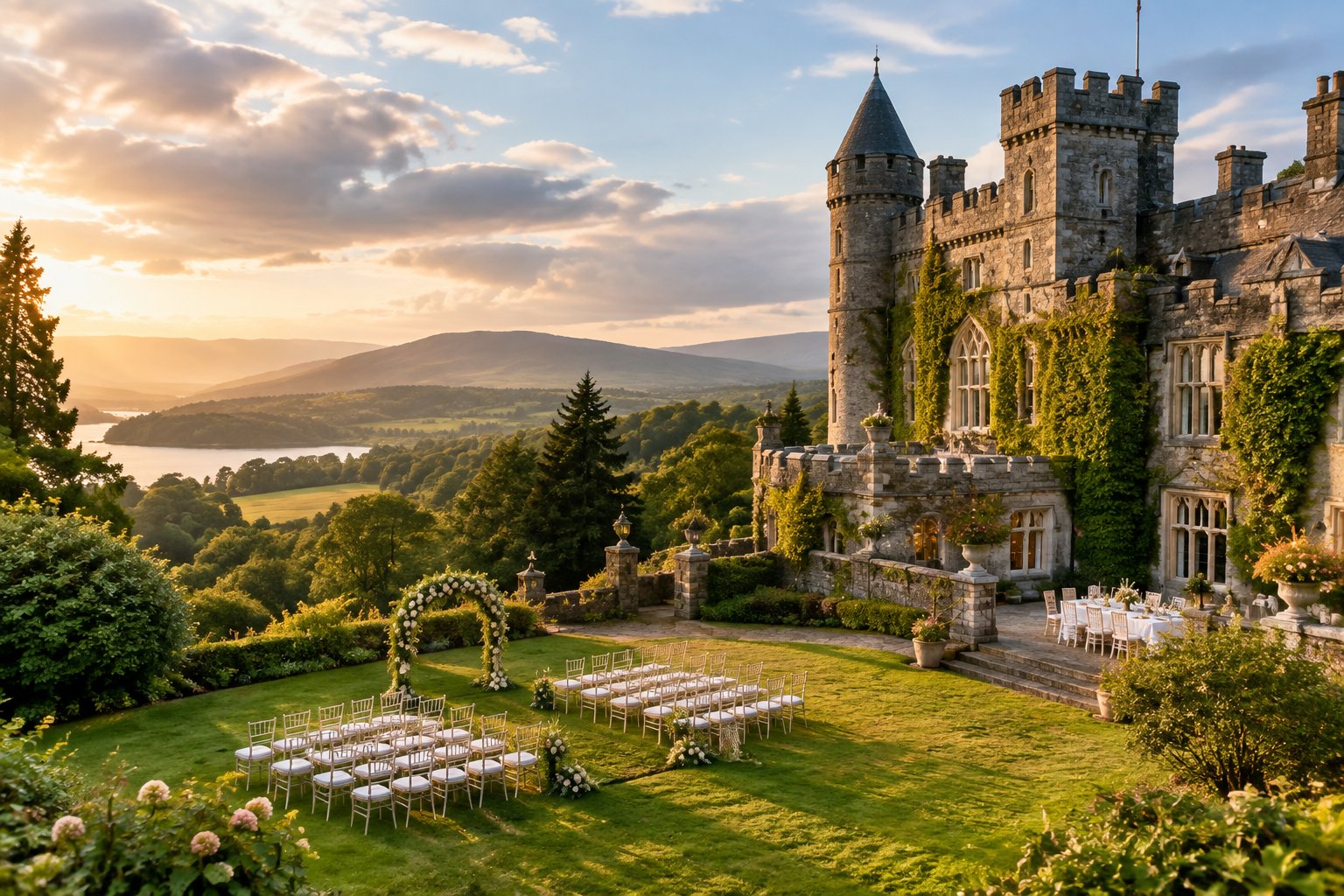
Near Dublin and Dublin Airport
Dublin and Co. Dublin suit guests arriving from the United States, especially when you want a short transfer after landing at Dublin Airport. Clontarf Castle places your celebration within the city, with historic interiors and easy access to Dublin Bay.
Fitzpatrick Castle Hotel in Killiney offers coastal views and hotel facilities south of the city. Luttrellstown Castle gives you a private estate feel while keeping Dublin Airport and central Dublin within practical reach.
These venues work well when guests want to add city sightseeing before or after the wedding.
The Ancient East and Midlands
County Kildare offers country estates close to Dublin, including Barberstown Castle. Its historic setting and grounds suit couples who want a classic castle atmosphere without a long cross-country transfer.
Trim in Co. Meath brings medieval heritage and access to venues such as Durhamstown Castle. Kilkea Castle extends the choice into County Kildare with estate grounds and accommodation.
Kilkenny and the Midlands add historic towns, manor houses, and routes toward the River Shannon.
Lakes, Mountains, and the West
Mayo and Co. Mayo give you open landscapes, rugged coastlines, and quiet country roads. Belleek Castle near Ballina provides a historic setting close to the coast.
Cavan and Co. Cavan offer lake country, while Monaghan surrounds you with rolling farmland and settings near Glaslough Lake. Co. Leitrim brings peaceful inland scenery, with Lough Rynn Castle offering a country-estate experience.
In Co. Roscommon, Kilronan Castle sits near Lough Meelagh and Ballyfarnon, creating a strong backdrop for a relaxed wedding weekend.
The Wild Atlantic Way and Southern Counties
Co. Sligo and Co. Donegal suit couples who want mountains, lakes, and dramatic western scenery. Lough Eske Castle places you near Donegal’s landscape, while County Clare combines Atlantic views with historic estates and easy access from Shannon Airport.
Co. Kerry offers rugged scenery and romantic country houses, including Ballyseede Castle. Co. Cork provides river and woodland settings such as Blackwater Castle. County Wexford gives you a gentler southeast landscape with historic homes and coastal access.
Northern Ireland Castle Escapes
Northern Ireland gives you a separate legal and travel setting from the Republic of Ireland, with excellent options near Belfast and across the northern counties. Belfast works well for guests who prefer city hotels, direct transport, and cultural activities.
Fermanagh offers lake scenery and secluded estates. Co. Armagh adds historic gardens and country-house settings. Check ceremony rules, paperwork, currency, and transport plans when your celebration crosses the border or uses Belfast as the arrival point.
How to Choose the Right Venue for Your Guest List
Your guest count should determine the venue layout, accommodation plan, dining format, and level of privacy you need. A castle hotel suits groups that want rooms and services on site, while an exclusive-use estate gives your party more control over the full weekend.
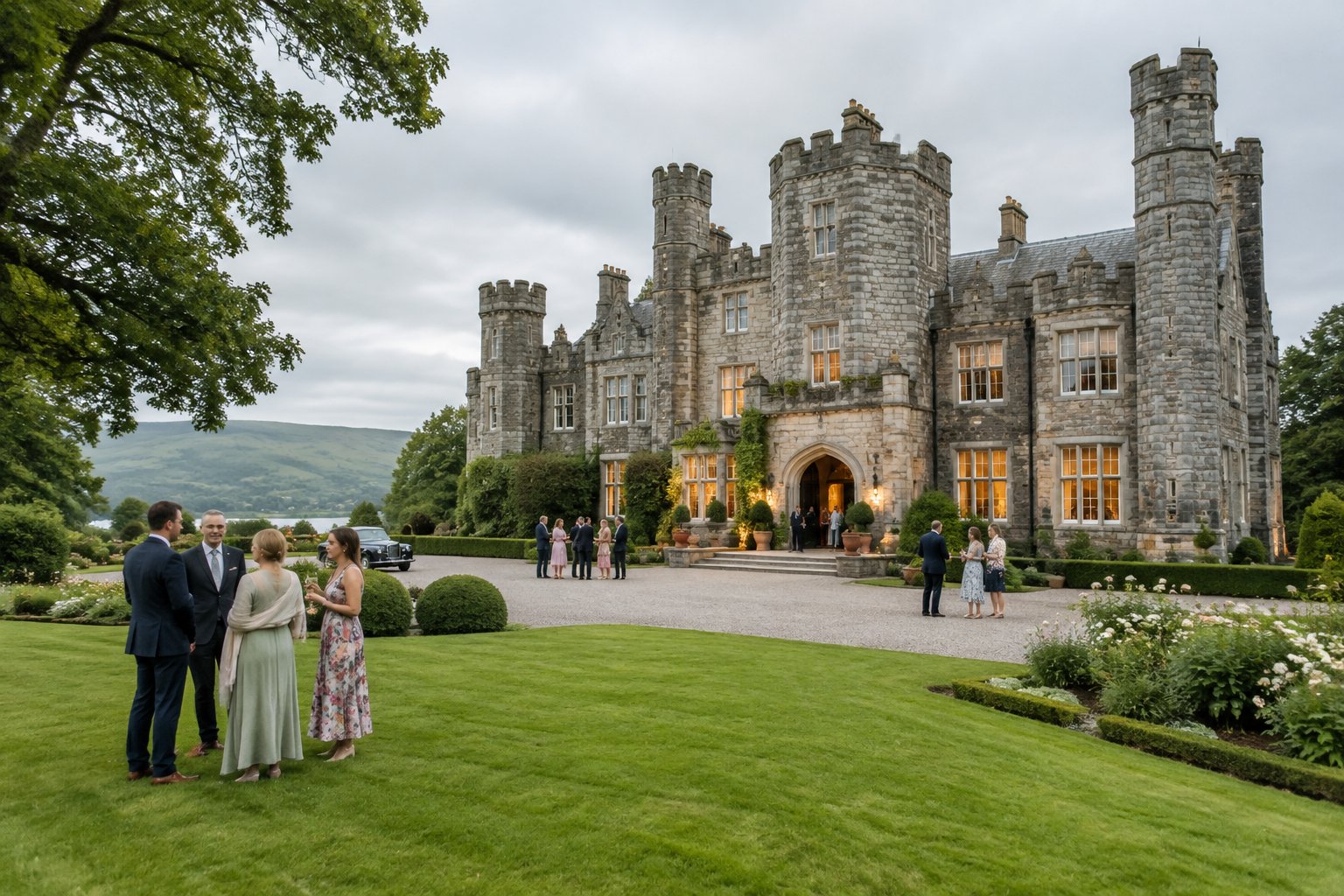
Small Celebrations and Private Buyouts
For fewer than 20 guests, look for private dining rooms, flexible ceremony spaces, and a venue that feels welcoming at a smaller scale. Small celebrations work well at characterful properties such as Markree Castle, Huntington Castle, or selected rooms at Castle Durrow.
Ask whether the property offers exclusive use for a small group, how many bedrooms you must reserve, and whether a private chef or outside caterer is allowed. You can also review these tips for choosing the perfect venue for a small wedding before sending enquiries.
Mid-Sized Weddings With Overnight Guests
A group of 20 to 60 guests needs enough bedrooms, dining space, parking, and quiet areas for guests between events. Ballyseede Castle, Bellingham Castle, and Lough Rynn Castle offer the type of country-house setting that supports a full wedding weekend.
Check whether rooms sit in the main castle, nearby lodges, or separate buildings. Ask about breakfast timing, guest transfers, accessibility, and the honeymoon suite so your accommodation plan feels complete.
Large Receptions, Ballrooms, and Marquees
Large celebrations need a clear guest-flow plan from ceremony to drinks, dinner, speeches, and dancing. Confirm the seated capacity, dance-floor size, bar location, band access, and late-night noise rules.
Some castle hotels use ballrooms or purpose-built event rooms. Country estates may place larger receptions in marquees on the grounds. Request a floor plan and ask how the venue handles catering, power, restrooms, heating, and lighting for outdoor structures.
Ceremony Spaces, Gardens, and Wet-Weather Plans
Choose a venue with at least one attractive indoor ceremony option and a covered route between key spaces. Castle gardens create beautiful ceremony and reception settings, yet Irish weather requires a firm indoor plan.
Ask whether civil ceremonies and humanist ceremonies are permitted in your preferred room or garden. Confirm the backup space’s capacity, décor limits, music rules, and turnaround time. A wedding planner can coordinate the transition when the forecast changes during the day.
What Do Castle Weddings Cost in Ireland?
Castle wedding costs range from about $5,900 for a small destination elopement to $50,000 to $60,000 for a multi-day celebration with 60 or more guests. Your guest count, accommodation needs, exclusivity, entertainment, and travel plans create the largest differences between budgets.

What Venue Packages Commonly Include
A castle wedding package may include the ceremony room, reception space, meal, drinks package, staff, tables, chairs, linens, and a wedding coordinator. Some packages also include a tasting, menu consultation, cake service, room upgrades, or a honeymoon suite.
Read each inclusion carefully. Ask about ceremony fees, corkage, service charges, taxes, late-night food, lighting, furniture, and vendor access. Request a current 2026 price sheet from every venue you are considering because packages change by season and date.
Exclusive Hire vs. Per-Person Pricing
Exclusive hire charges you for private use of the property or selected rooms, while per-person pricing connects the reception cost to your guest count. Castle Leslie Estate and Kilkea Castle are examples of properties where privacy, accommodation, and estate access can shape the quote.
A per-person package may be easier to compare across venues. Exclusive hire can provide stronger privacy and a full weekend atmosphere. Ask what the quote includes in both models, including bedrooms, ceremony access, welcome events, and taxes.
Accommodation, Minimum Numbers, and Hidden Extras
Accommodation often becomes a major part of the budget at Irish castle wedding venues. Cabra Castle Hotel and Lough Eske Castle combine weddings with on-site rooms, while Ballyseede Castle offers a country-house experience with guest lodging.
Check minimum numbers for the wedding meal, bedroom requirements, and room-release dates. Add transport, welcome drinks, rehearsal meals, vendor meals, hair and makeup, entertainment, décor, photography, and gratuities to your working budget.
Ways to Keep a Castle Celebration Affordable
An intimate guest list gives you the strongest budget control. Destination wedding packages for 10 to 20 guests often fall around $12,000 to $15,000, while celebrations for 30 to 50 guests may reach $20,000 to $25,000 depending on the venue and inclusions.
Choose a weekday or shoulder-season date if the venue offers seasonal pricing. Limit the number of hosted events, use the venue’s included furniture, select local flowers, and reserve only the bedrooms your guests need.
You can also compare affordable castle wedding venues while keeping your preferred region in mind.
Booking and Planning Your Castle Celebration
Start contacting castle wedding venues in Ireland 12 to 18 months ahead for popular dates, and begin earlier when you need exclusive use or a large room block. A clear guest plan, travel outline, and ceremony preference will help each venue give you a useful quote.
When to Enquire and What to Ask
Send your preferred dates, guest count, ceremony type, accommodation needs, and reception style in your first enquiry. Ask about availability, minimum numbers, exclusive use, package pricing, bedroom blocks, supplier rules, and wet-weather spaces.
Confirm whether the venue has an on-site wedding planner or a preferred planning team. Request a sample timeline, current brochure, floor plan, menu options, and payment schedule.
If you are comparing several castle hotels, keep the replies in one document so you can review inclusions side by side.
Making a Destination Wedding Easy for Guests
Dublin Airport provides the simplest arrival point for many American guests, while Belfast works well for Northern Ireland venues. Give guests the nearest airport, estimated transfer time, hotel options, and transport plan before they book flights.
Build in time for jet lag and travel delays. A welcome dinner, casual pub gathering, or local excursion helps guests settle in without adding pressure to the wedding day. Share dress guidance for changing weather and provide clear information about currency, transportation, and local driving.
Legal, Civil, and Humanist Ceremony Arrangements
Civil ceremonies require advance planning and approval through the relevant authority. The process differs between the Republic of Ireland and Northern Ireland, so your venue and celebrant should confirm the correct steps for your location.
Humanist ceremonies offer more flexibility in wording and setting, while legal ceremonies must meet the rules that apply to your chosen jurisdiction. Ask about notice periods, required documents, approved ceremony spaces, witnesses, and translation needs. Keep copies of passports, certificates, and any paperwork requested by the registrar.
Building a Weather-Resilient Wedding Weekend
Plan every outdoor moment with an indoor alternative, including the ceremony, drinks reception, portraits, and evening gathering. Confirm covered walkways, heating, umbrellas, coat storage, and a room where guests can stay comfortable during a shower.
Schedule portraits around flexible time blocks so your photographer can use breaks in the weather. A wedding planner can coordinate room changes, supplier access, guest movement, and timing updates with the castle staff.
Book your venue only after you know how the full day will work in both sunshine and rain.