
Castle Wedding Venues Spain: Top Locations and Planning Tips
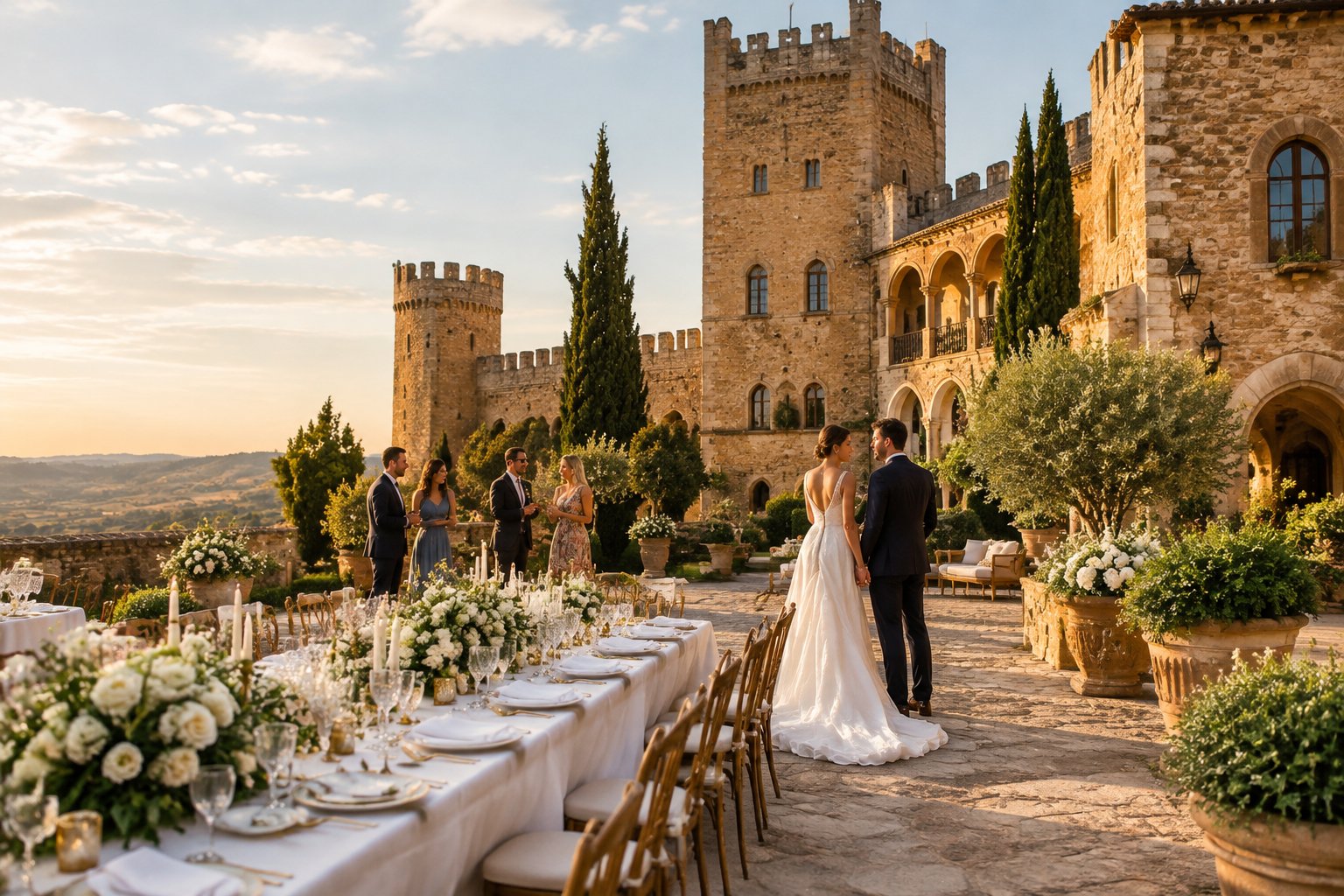
Spain gives you castle wedding venues with Mediterranean views, medieval stonework, grand gardens, and easy access to vibrant cities. For most couples planning a Spain destination wedding, Castell de Sant Marçal near Barcelona is a strong starting point because it offers historic character, flexible indoor and outdoor spaces, gardens, parking, and a location about 20 minutes from the city center.
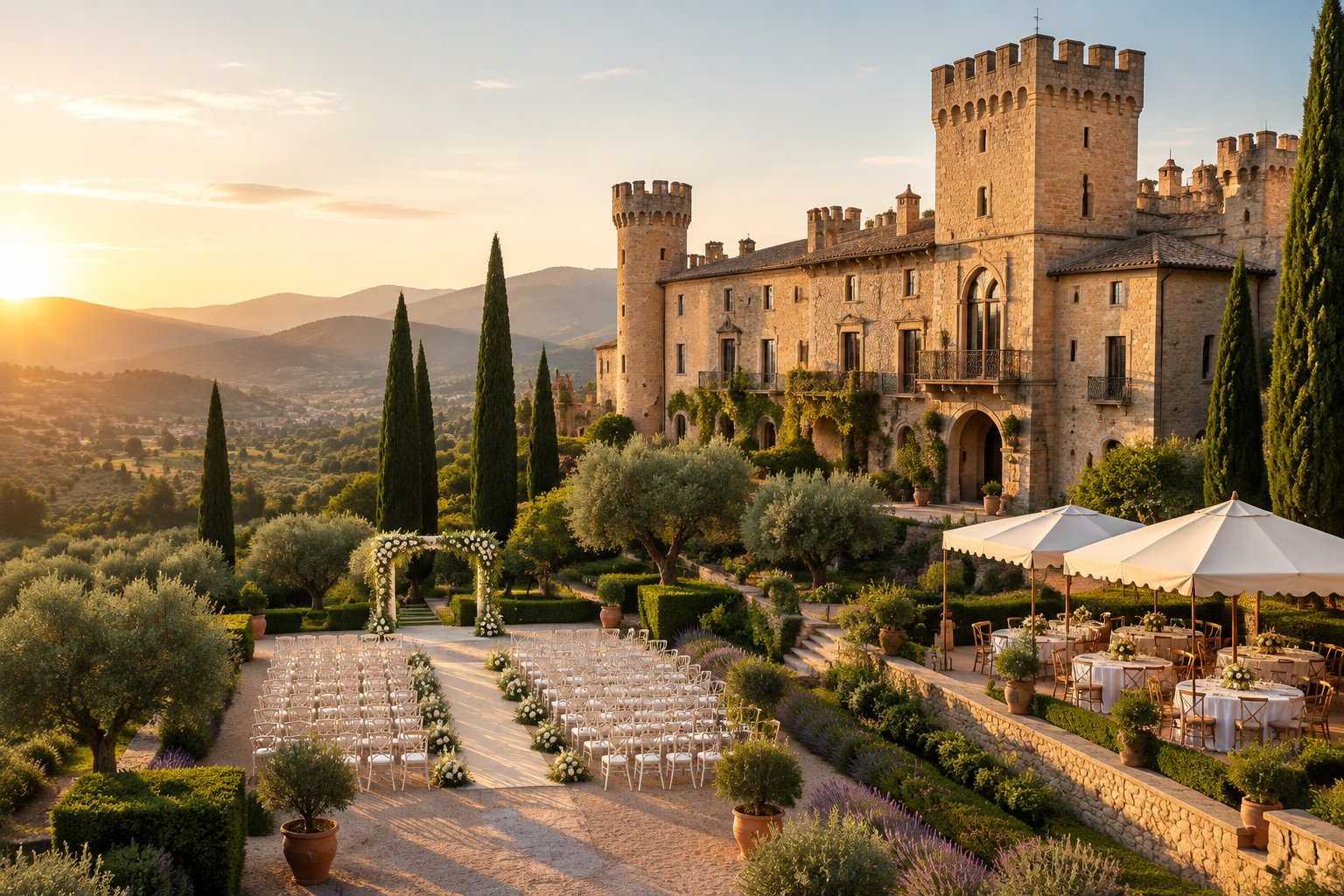
You can also choose a coastal castle near Tarragona, a boutique historic property in the Empordà, a clifftop estate in Mallorca, or a Moorish-inspired setting near Malaga. Your guest count, ceremony type, travel plans, and desired level of privacy will shape the best fit.
Start by listing your must-haves, then request a full quote that includes venue hire, catering, taxes, staffing, and accommodation. If you want help comparing wedding venues in Spain, a local planner can arrange venue visits and coordinate suppliers for your date.
How to Choose a Bookable Spanish Castle
Choose a Spanish castle that combines the historic setting you want with a confirmed event license, practical guest capacity, weather backup, and a clear supplier policy. A beautiful façade matters, yet your celebration also needs usable ceremony spaces, reception facilities, access roads, restrooms, power, and a reliable plan for late-night transport.
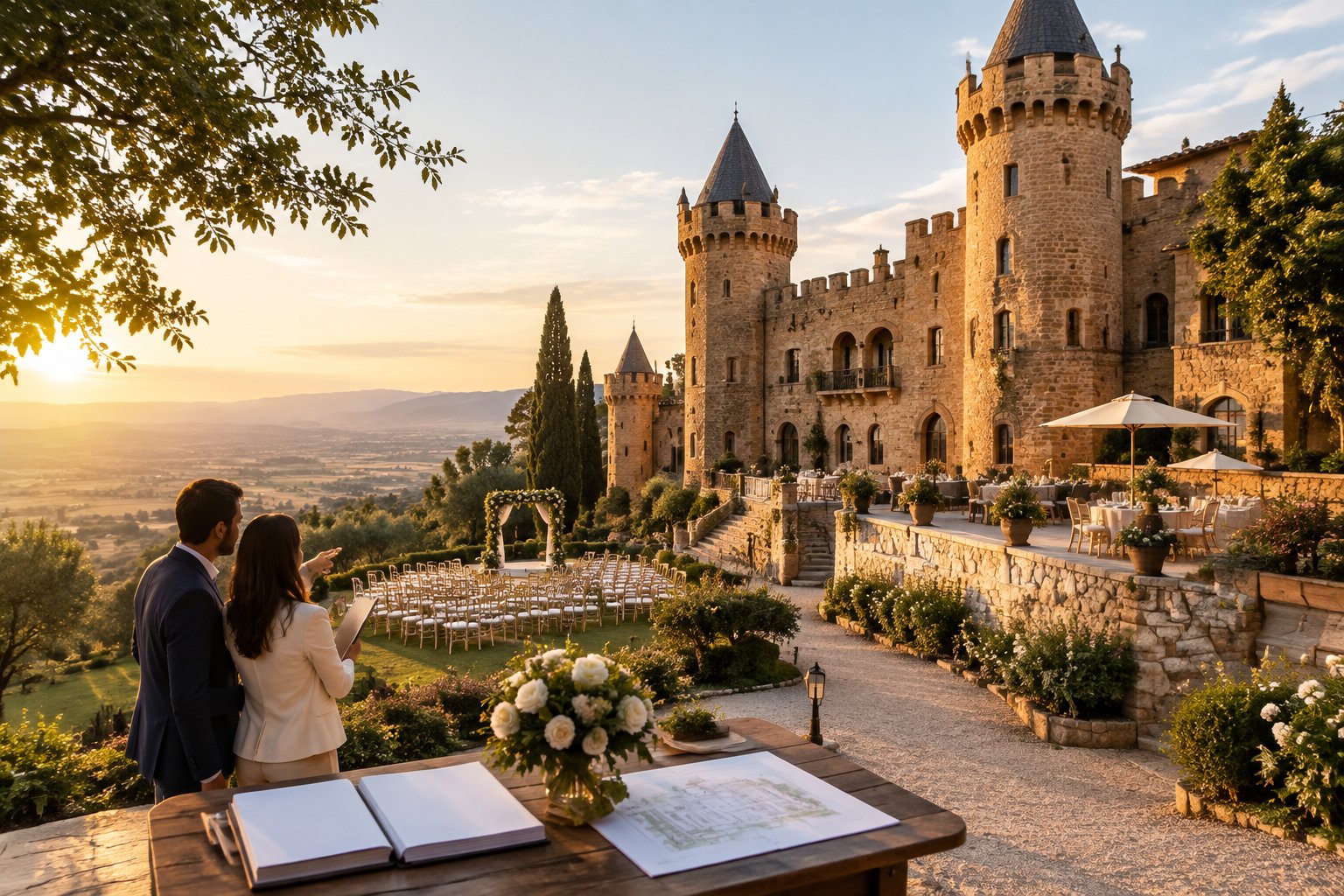
Ask each venue for a current brochure, floor plan, sample menu, noise rules, payment schedule, and cancellation terms. If you are arranging the day from the United States, request a virtual tour and a written list of what the venue team manages.
What Makes a Venue a True Castle Wedding Setting?
A true castle wedding setting has visible historic architecture, a strong connection to the surrounding landscape, and event spaces that preserve the character of the property. Look for towers, courtyards, stone walls, formal gardens, old cellars, terraces, or grand interiors.
Check whether the property operates as a wedding venue or only hosts occasional private events. Ask about heritage restrictions, decoration rules, candle use, music limits, and access for vendors.
A wedding photographer also needs permission to use key areas, especially private rooms, staircases, rooftops, and gardens.
How Many Guests Can Historic Properties Accommodate?
Historic properties range from intimate estates for small gatherings to large castles that host more than 100 guests. Confirm separate capacities for the ceremony, cocktail hour, seated meal, dancing, and rain plan.
Your layout affects comfort. A venue that seats 130 guests for dinner may have less room for a dance floor, band, lounge furniture, or buffet stations.
Ask for a floor plan with your expected guest count and check restroom numbers, accessibility, parking, and coach access.
Should You Prioritise Exclusive Use or On-Site Rooms?
Exclusive use gives you control over the grounds, schedule, music, décor, and guest experience. On-site rooms make a multi-day celebration easier because your closest guests can stay near the ceremony and reception.
Some castles operate as boutique hotels, while others provide event spaces without accommodation. Compare the total travel time, nearby hotel options, room-block terms, and transportation cost.
A property with fewer rooms can still work well when a hotel cluster sits within a short drive.
Top Castle Settings in Catalonia and the Costa Brava
Catalonia gives you the widest mix of castle wedding venues in Spain, from coastal fortresses near Tarragona to historic estates around Girona, the Empordà, and Barcelona. You can pair a formal castle celebration with beach time, wine tasting, city sightseeing, or a relaxed welcome dinner.
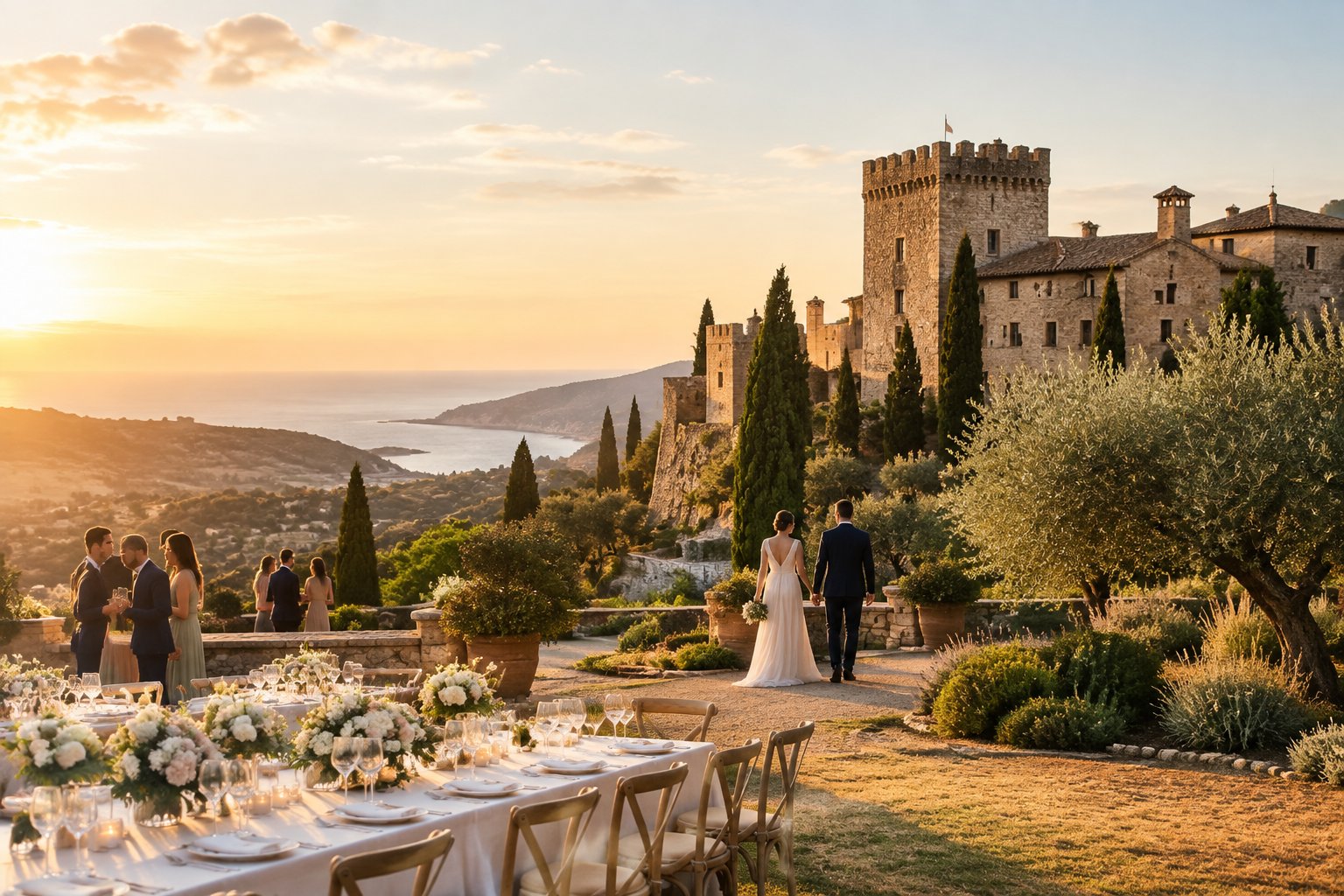
Travel time deserves close attention. Barcelona offers strong international connections, while Girona and the Costa Brava create a quieter setting with countryside and sea views.
Ask whether the venue welcomes outside suppliers and whether a planner must coordinate local transport.
Castell de Tamarit on the Tarragona Coast
Castell de Tamarit gives you a dramatic coastal setting near Tarragona, with historic stone architecture and views toward the Mediterranean. Its location works well for couples who want a castle atmosphere with beach access and a destination feel.
Plan your ceremony around the coastline and confirm where guests will dine, dance, and gather if wind or rain arrives. Ask about access for older guests, coach drop-off points, sound limits, and the time allowed for evening entertainment.
The Tarragona coast also makes a good base for a wedding weekend. Guests can explore Roman history, local beaches, and nearby towns before or after the celebration.
Castell d’Empordà and Alt Empordà Escapes
Castell d’Empordà combines historic character with a boutique-hotel atmosphere in the Empordà. The setting suits an intimate wedding weekend, especially when you want guests to stay close to the celebration and enjoy the countryside.
The Alt Empordà offers vineyards, medieval villages, and wide rural views. Ask how many rooms are available for your dates, whether the property requires a minimum stay, and which parts of the venue are reserved for your event.
A bespoke package may be the best route because inclusions vary by date and guest count. Request separate pricing for venue hire, food, drinks, ceremony setup, accommodation, music, and transportation.
El Convent de Blanes for Coastal History
El Convent de Blanes offers historic architecture near the Costa Brava and works well for couples drawn to a coastal celebration with a refined, old-world feel. Blanes also gives guests access to beaches, gardens, and restaurants.
Confirm the ceremony location, reception layout, rain option, and distance between guest accommodation and the venue. Coastal venues need a clear plan for wind, heat, shade, and sound.
The nearby Costa Brava makes it easy to build a multi-day itinerary with a welcome meal, beach outing, or farewell brunch.
Castell de Sant Marçal Near Barcelona
Castell de Sant Marçal sits about 20 minutes from Barcelona city center, between Sant Cugat del Vallès and Cerdanyola del Vallès. Its gardens, interiors, cellar, greenhouse, and lime-tree area give you several ways to design the day.
The property offers easy car and bus access plus private parking. Its flexible spaces suit celebrations that move from an outdoor ceremony to cocktails and an indoor dinner.
Ask about exclusive use, catering options, guest capacity, music rules, and the wet-weather layout before signing. Its proximity to Barcelona also reduces the travel burden for international guests who want to add city sightseeing.
Island, Madrid, and Southern Spain Options
Mallorca, Madrid, and Andalusia give you strong alternatives when you want island views, a central urban base, or Moorish-influenced architecture. Each region creates a different guest experience, so compare flight access, accommodation, seasonality, and transfer time with the venue style.
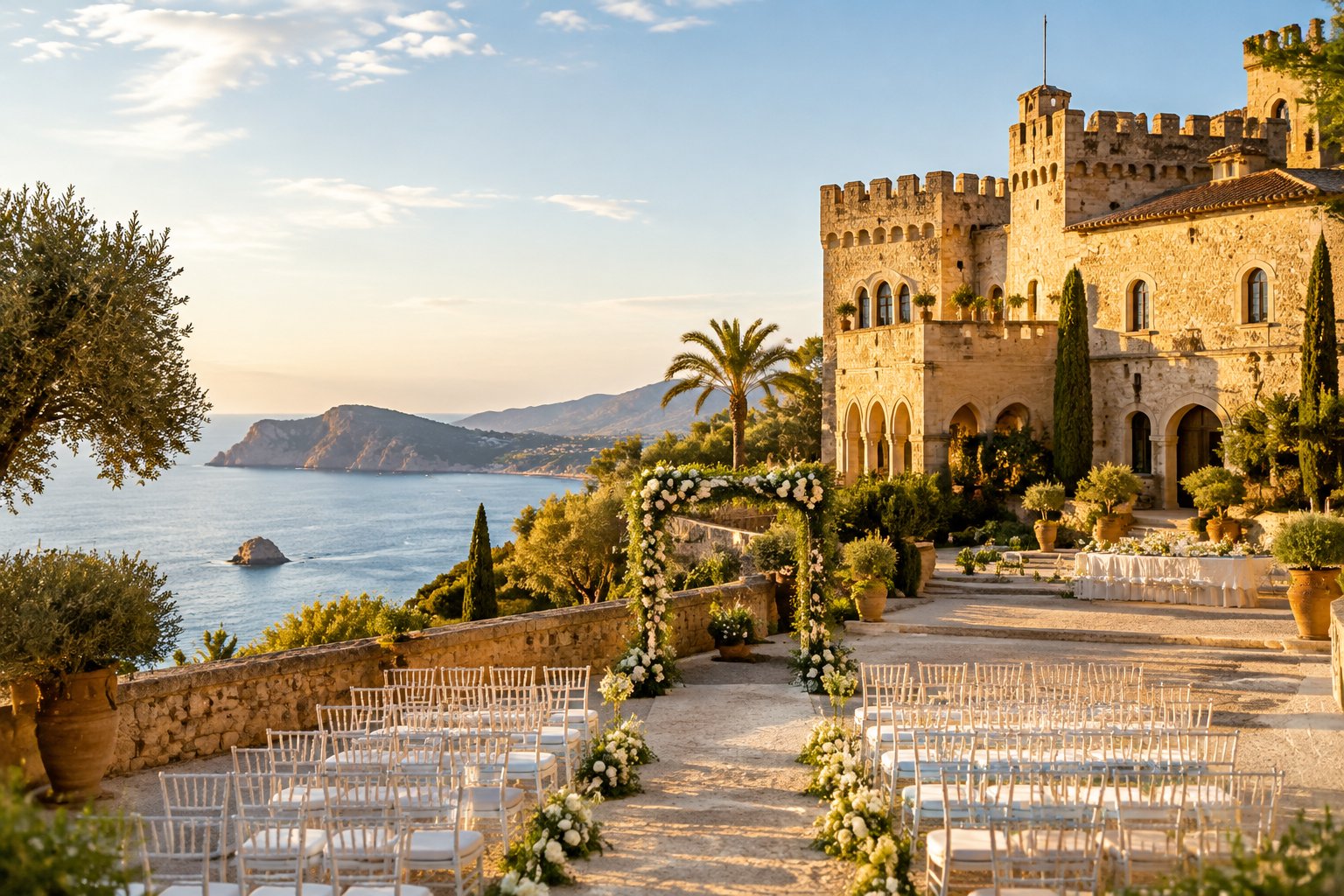
Island venues suit couples who want a full destination escape, while Madrid makes guest travel and cultural activities straightforward. Andalusia brings warm landscapes, historic courtyards, and easy connections through Malaga.
La Fortaleza and Cap Rocat in Mallorca
La Fortaleza gives you a private, dramatic setting on Mallorca with sea views and a strong fortress character. It suits couples planning a luxury celebration with a carefully managed guest list and a distinctive coastal backdrop.
Cap Rocat offers a historic military setting adapted for high-end hospitality. Its cliffside position creates memorable ceremony and reception spaces, while the island provides beaches, boat trips, and boutique hotels for the rest of the weekend.
Ask about guest limits, accommodation blocks, weather protection, supplier access, and transfer routes. Mallorca dates fill quickly during popular summer periods, so secure availability before booking flights for your guests.
Castillo de Batres for a Madrid Celebration
Castillo de Batres gives you a historic estate south of Madrid, surrounded by gardens and countryside. Its location works well when you want castle architecture without placing guests in a remote coastal region.
Madrid provides international transport, broad hotel choice, museums, restaurants, and nightlife. You can host the ceremony at the castle and arrange a city-based welcome dinner or farewell activity.
Check the driving time from central hotels, coach access, event hours, catering rules, and the approved plan for rain or high heat. A transport schedule with named pickup points will help guests move between Madrid and Batres with less confusion.
Moorish-Influenced Castles in Andalusia and Malaga
Andalusia offers castles and historic estates with courtyards, arches, tiled details, gardens, and views across dry hills or the Mediterranean. Malaga is a practical base for international guests and gives you access to the Costa del Sol.
Look at properties near Malaga, Granada, Seville, and Cordoba according to the experience you want. A city-edge venue makes transfers easier, while a rural estate provides more privacy and space for a full weekend.
Ask about heat management, shaded seating, air conditioning, evening noise rules, and transport after the reception. Ibiza and Menorca also offer island settings, though flight schedules and seasonal accommodation prices require early planning.
How Much Does a Castle Celebration Cost?
A castle wedding in Spain can range from a smaller celebration with limited venue services to a luxury weekend costing well above €100,000, with guest count, date, catering, rooms, and exclusivity driving the largest changes. A reference package for 80 guests at a Barcelona-area castle is priced at €36,600 for dates from March through October and includes planning, catering, photography, videography, beauty services, music, flowers, cake, and a symbolic celebrant.
Request a quote in euros and ask whether each line includes tax. If you are converting from U.S. dollars or comparing costs with the United Kingdom, allow room for exchange-rate changes and international payment fees.
What Is Included in the Venue Quote?
A venue quote may include the property, ceremony setup, reception furniture, staffing, basic lighting, cleaning, and parking. Another venue may price those items separately.
Ask for written details on:
- Venue hire and access hours
- Ceremony chairs and reception furniture
- Catering, drinks, cake, and service staff
- Planning or coordination
- Tables, linens, glassware, and dinnerware
- Sound, lighting, and dance-floor requirements
- Guest rooms and breakfast
- Transport, security, cleaning, and overtime
A low starting price can rise when you add setup hours, furniture, open bar, late-night staffing, flowers, and accommodation. Compare complete quotes with the same guest count and service level.
How IVA, Catering, and Minimum Spends Affect the Total
IVA is Spain’s value-added tax, and the applicable rate should appear clearly on your contract or invoice. Ask whether the advertised venue fee and catering price include IVA.
Catering often forms the largest part of the reception cost. Menus may be priced per guest, while drinks, cocktail hours, open bars, late-night food, cake, and children’s meals create separate charges.
Minimum spends can apply to food, drinks, rooms, or the full event. Ask whether the minimum is based on your guest count, a fixed amount, or a date-specific requirement.
Confirm payment stages, deposits, cancellation terms, and the currency used for each payment.
Which Months Offer the Best Balance of Weather and Value?
May, June, September, and October offer appealing conditions for many regions, though temperatures vary between the coast, islands, Madrid, and Andalusia. Spring and fall dates can provide comfortable outdoor ceremonies with more moderate demand than the height of summer.
July and August bring long days and strong holiday demand, especially in Mallorca, Ibiza, Menorca, and the Costa Brava. A winter wedding can reduce venue and catering prices, while requiring a stronger indoor plan and earlier sunsets.
Ask each property for date-specific pricing. Compare a weekday, Friday, and Saturday across two seasons before you decide.
Legal Ceremony, Symbolic Ceremony, and Guest Logistics
For many international couples, a symbolic ceremony in Spain paired with the legal marriage in the United States or another home country offers the clearest planning route. A legal wedding in Spain remains possible for some couples, yet eligibility, paperwork, translations, and the responsible authority depend on nationality, residence, and personal circumstances.
Confirm the legal path with the relevant Spanish authority and your home-country authority before setting the ceremony format. Your planner can coordinate timing and documents, while the authority confirms legal validity.
Can Non-Residents Marry Legally in Spain?
Non-residents can face different requirements based on nationality, residence, previous marital status, and the region handling the application. You may need original civil documents, sworn translations, apostilles or legalisation, proof of capacity to marry, and an approved administrative process.
Ask which authority handles your case, where the ceremony may take place, who can conduct it, and how long the process may take. Couples from the United Kingdom and the United States should check current rules with the relevant Spanish and home-country authorities because document requirements can change.
Do not assume that a venue booking confirms legal eligibility. Obtain written confirmation before paying a non-refundable deposit.
Why a Symbolic Ceremony Is Often the Simplest Choice
A symbolic ceremony lets you exchange vows at the castle with your preferred celebrant, language, readings, music, and personal rituals. You can complete the legal marriage before traveling, then make the Spanish ceremony the emotional centerpiece of the celebration.
Tell your guests what the ceremony represents so the wording stays clear. You can also include bilingual vows, family readings, a ring exchange, or a private signing at home.
This option gives you more control over timing and venue design. Confirm the legal marriage separately so your paperwork, certificates, and registration needs are complete.
How to Plan Transport, Accommodation, and a Multi-Day Weekend
Build your guest plan around the venue’s distance from the nearest airport, city, and hotel cluster. Reserve room blocks early, publish pickup locations, and provide transport for the welcome event, wedding day, and farewell gathering.
Your guest information should include:
- Airport and transfer guidance
- Hotel addresses and check-in details
- Coach pickup times and return trips
- Dress guidance for stone paths, heat, or uneven ground
- Emergency contact information
- A simple schedule for each event
Add buffer time for rural roads and group boarding. For a castle outside Barcelona, Madrid, Malaga, or Palma, a dedicated coach can keep the wedding party together and reduce late arrivals.
A welcome dinner and farewell brunch also give guests time to settle in and enjoy the destination beyond the ceremony.