
Catering Cost for Wedding: What to Budget Per Guest
You should budget about $80 per guest for food and basic service, with a full wedding catering budget often reaching $110 to $140 per guest after bar service, rentals, service charges, and tax. For 100 guests, that means roughly $8,000 for the food-and-service starting point and about $11,000 to $14,000 for a broader all-in estimate.
Your wedding catering cost will shift with your location, menu, guest count, service style, and venue rules. A plated steak dinner at a city venue sits in a different price range from a casual buffet with seasonal ingredients at a local reception hall.
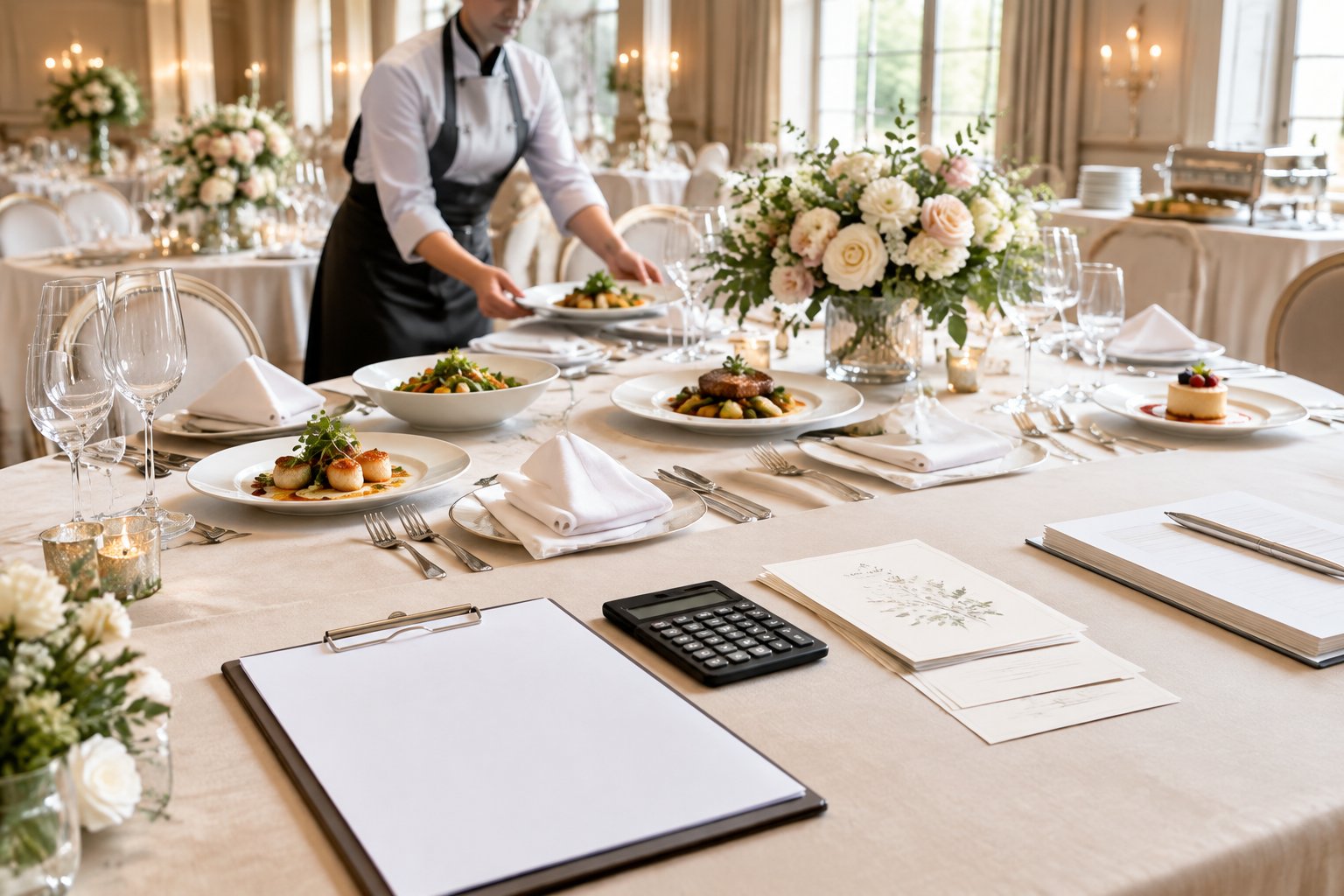
Start by setting a per-person target, then ask each wedding caterer for an itemized quote that shows food, staff, rentals, drinks, fees, and tax. Add those numbers to your total wedding budget or a wedding budget calculator so your estimate reflects the final bill, not only the menu price.
What Should You Budget Per Guest?
A practical starting point for wedding catering cost per person is $80 for food and basic service, while a more complete reception estimate often lands between $110 and $140 per guest. Your catering cost per person rises with premium menus, full bar service, additional rentals, and higher labor needs.

The National Average vs. Your All-In Price
National averages give you a useful starting point. Recent wedding spending data places the average wedding catering cost at about $80 per guest, with regional averages ranging from roughly $62 to $123 per person.
That figure may cover food and core service. Your all-in price can also include:
- Service staff and bartenders
- Dinnerware, glassware, and flatware
- Setup and breakdown
- Bar drinks, mixers, and ice
- Service charges
- Sales tax and gratuity
- Vendor meals
- Cake cutting or corkage
For a clearer estimate, separate your quote into four groups:
- Food: entrees, sides, appetizers, dessert, and late-night snacks
- Labor: chefs, servers, bartenders, captains, and cleanup staff
- Rentals: plates, glasses, cutlery, linens, serving pieces, and kitchen equipment
- Extras: drinks, fees, tax, gratuity, and vendor meals
You can also compare your estimate with guidance on how much a wedding meal should cost per person.
Sample Totals for 50, 100, 150, and 200 Guests
Using $80 per person for food and basic service, your starting totals look like this:
| Guest count | Food and basic service | Broad all-in planning range |
|---|---|---|
| 50 guests | $4,000 | $5,500 to $7,000 |
| 100 guests | $8,000 | $11,000 to $14,000 |
| 150 guests | $12,000 | $16,500 to $21,000 |
| 200 guests | $16,000 | $22,000 to $28,000 |
A catering for 200 guests cost estimate can rise quickly when you add a full open bar, multiple courses, premium entrees, or extensive rentals. Smaller weddings can also carry higher per-person prices when a caterer applies a minimum order.
Treat these figures as planning ranges. Your venue, city, date, menu, and contract terms determine the final amount.
How to Use a Wedding Catering Cost Calculator
A wedding catering cost calculator works best when you enter the details that drive the invoice. Include:
- Expected guest count
- Meal type and service style
- Food price per person
- Bar format and drink duration
- Vendor meal count
- Rental fees
- Service charge percentage
- Sales tax rate
- Gratuity estimate
- Delivery, setup, and cleanup fees
Use this basic formula:
Guest count × food price per person + fixed fees + bar costs + rentals + service charge + tax + gratuity = estimated catering total
A catering cost calculator can help you compare a buffet with plated service or test what happens when your guest list changes. Update the estimate after you receive a real quote, since each caterer defines package inclusions differently.
What Changes the Final Invoice?
Your menu, event logistics, caterer, and guest count create the largest changes in wedding catering prices. A clear guest count and an itemized wedding catering package help you see which choices raise the bill.
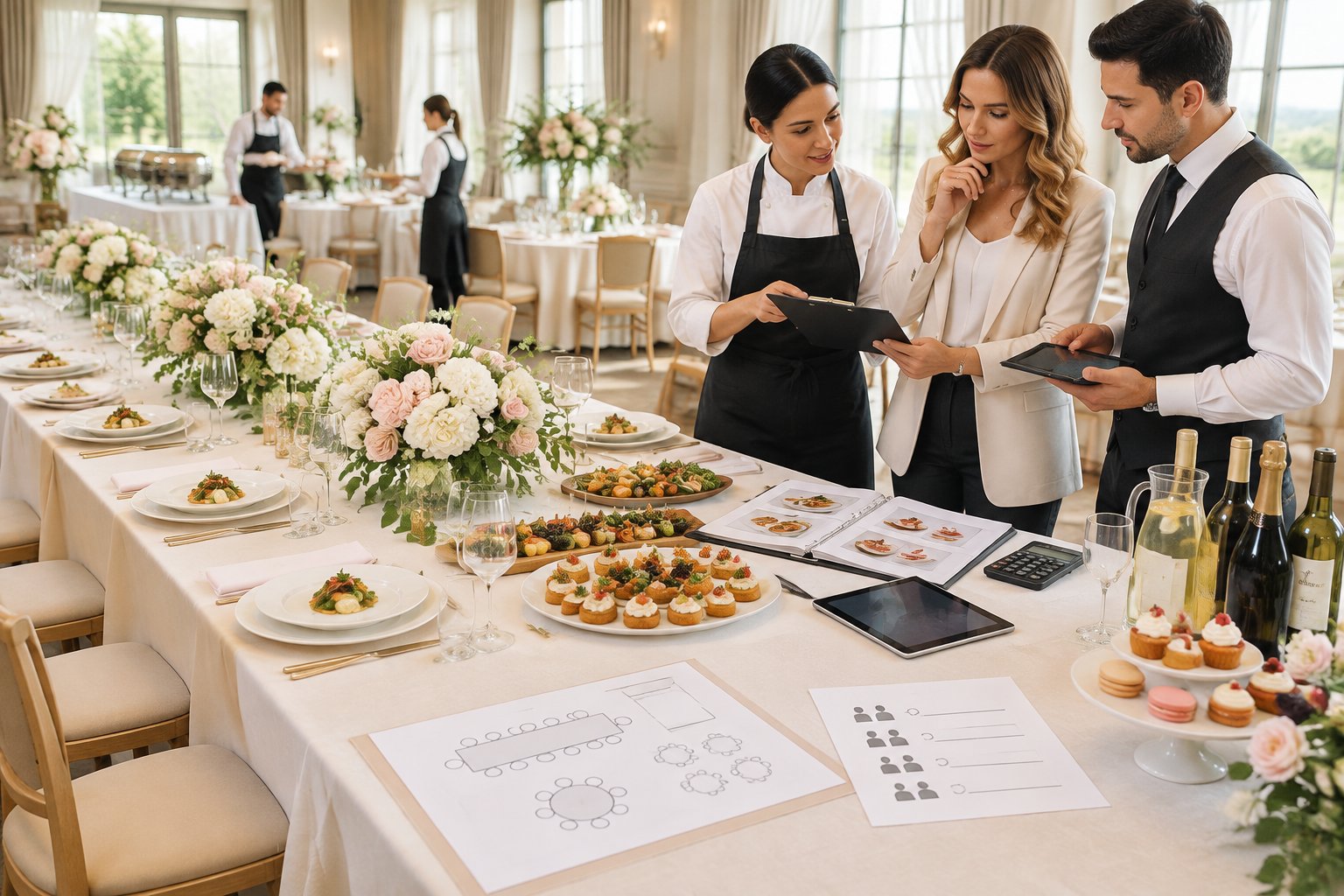
Menu Choices, Seasonal Ingredients, and Dietary Restrictions
Menu complexity affects both ingredients and kitchen labor. A two-course chicken dinner uses fewer costly ingredients than a multi-course meal with premium seafood, steak, custom sauces, and several passed appetizers.
Ask your wedding caterer about seasonal ingredients and local ingredients. Produce that is abundant in your region can reduce food costs and give the menu a stronger connection to the wedding location.
Dietary restrictions require careful planning. A caterer might include a few vegetarian, vegan, gluten-free, or allergen-aware meals within the package. A fully separate menu, specialty ingredients, or dedicated preparation area can add labor and equipment costs.
Dessert also affects the quote. A cake plus cookies, pies, or a dessert station adds food, display, and service needs. Late-night snacks such as sliders or fries create another food service period.
Location, Date, and Professional Caterers
Your venue affects labor, transport, equipment, and setup time. A fully equipped kitchen makes service easier. A remote property may require mobile cooking equipment, longer travel, extra refrigeration, or additional load-in staff.
Saturday evening dates during peak wedding months command strong demand. Friday, Sunday, weekday, and off-season dates give you more room to ask about flexible packages and lower minimums.
Professional caterers also price their experience into the proposal. A seasoned team handles timing, food safety, dietary requests, rentals, and guest flow with a planned staffing model. Ask how many servers, chefs, bartenders, and setup workers your event requires.
Your venue may require an approved caterer list or charge a fee for an outside team. Confirm that policy before comparing wedding catering packages.
How Guest Count Affects Fixed and Per-Person Costs
Each added guest increases food, drink, staffing, and rental costs. Fixed expenses such as delivery, kitchen equipment, setup, and event management spread across more guests, so small weddings can show a higher per-person price.
Ask whether your caterer has:
- A minimum food-and-beverage spend
- A minimum guest count
- A separate small-event fee
- Different pricing for children
- Reduced vendor meal rates
- A final headcount deadline
Give your confirmed count by the contract deadline, often two to three weeks before the wedding. Include vendors who need meals so your caterer has enough food and seating information.
How Service Style Affects Your Spend
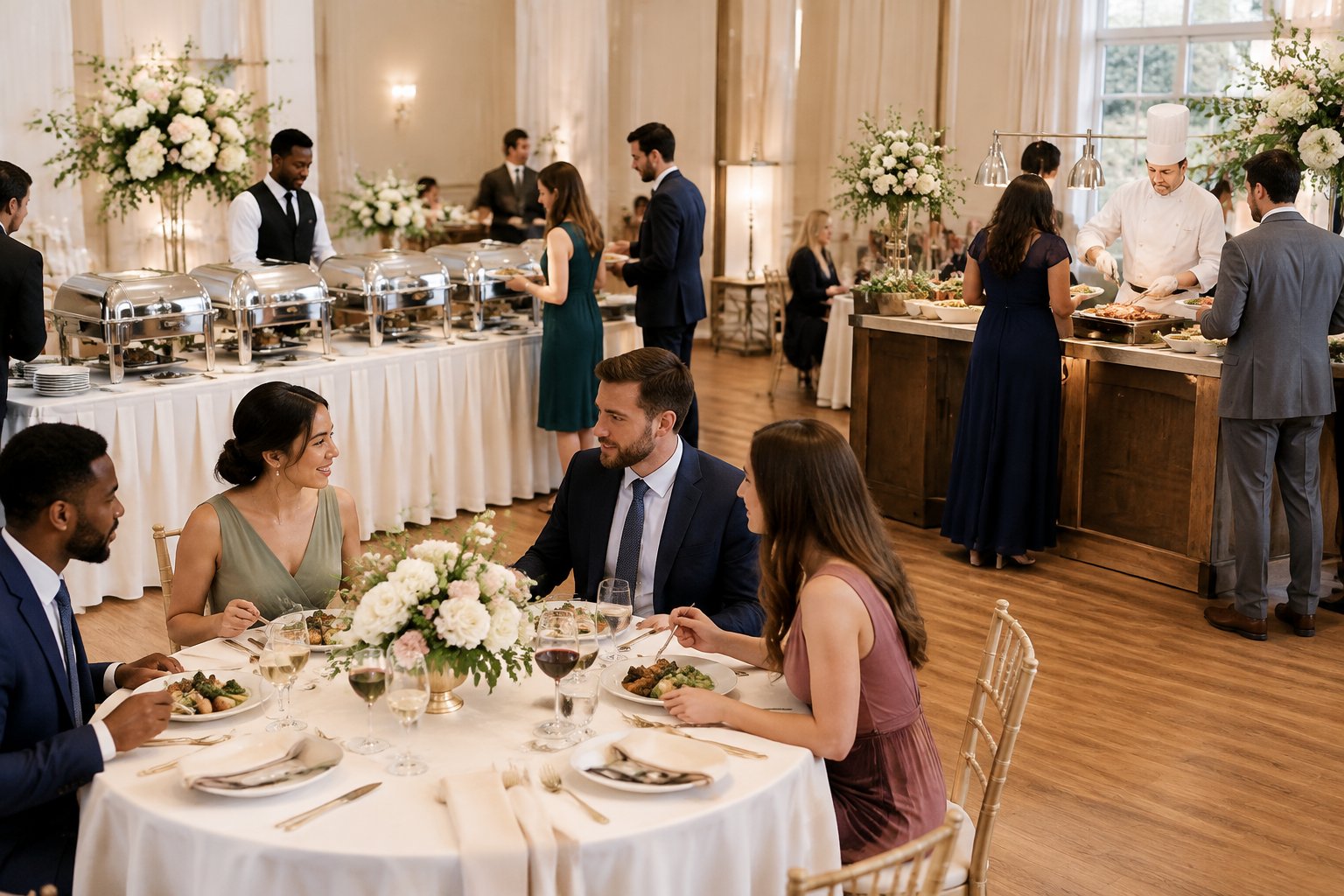
Plated dinner is usually the highest-cost service style, while buffet and cocktail formats often reduce labor and food costs. Your choice also affects guest flow, seating, kitchen space, and the pace of the reception.
Plated Dinner and Plated Service
Plated service brings each course directly to the guest’s table. It creates a formal experience and gives you strong control over timing and portions.
The added labor increases the price. Servers deliver multiple courses, clear plates, manage entree selections, and coordinate with the kitchen. A plated dinner also needs accurate meal counts and clear seating information.
You can control costs by limiting entree choices, selecting a seasonal protein, and keeping the menu to two or three courses. Include a vegetarian or vegan entree and mark allergies clearly on the seating chart or meal list.
Buffet Service and Portion Control
Buffet service lets guests choose their portions and select from several dishes. It often costs less than plated service because the team prepares a central display and reduces table-by-table delivery.
Buffet pricing still includes attendants, serving equipment, replenishment, and food quantities. Your caterer needs enough food to keep the line full through the meal period.
Ask how many buffet lines your guest count requires. A single line for 150 or 200 guests creates long waits. Two-sided displays, duplicate stations, or table-by-table release plans improve portion control and guest flow.
Family-Style Dining and Interactive Food Stations
Family-style dining places shared platters at each table. It offers a relaxed dinner-party feel while keeping guests seated for speeches and formal moments.
The format needs larger tables, extra serving space, and enough food at each table for every guest. Dietary meals require careful labeling and separate portions.
Interactive food stations add energy to the reception. Taco bars, pasta stations, carving boards, pizza ovens, and dessert displays can make food part of the entertainment. Each station needs equipment, attendants, power, space, and enough capacity for your guest count.
Cocktail-Style Reception With Passed Appetizers
A cocktail-style reception relies on passed appetizers, stationary displays, and small bites served throughout the event. It can suit an afternoon reception or a shorter celebration.
Plan enough food for a full meal if the event overlaps dinner. Hors d’oeuvres such as sliders, skewers, tartlets, and substantial appetizers create a more filling menu than light snacks.
Tell guests what to expect through the invitation wording and event timing. A cocktail hour followed by a meal has different food needs from a reception built entirely around roaming appetizers.
Which Costs Are Included and Which Are Extra?
Your base catering quote may include food and core staffing, while bar service, rentals, service charges, tax, vendor meals, and specialty fees often appear as separate lines. Ask for a sample invoice that shows the complete food and beverage total.
Service Staff, Setup, and Basic Rentals
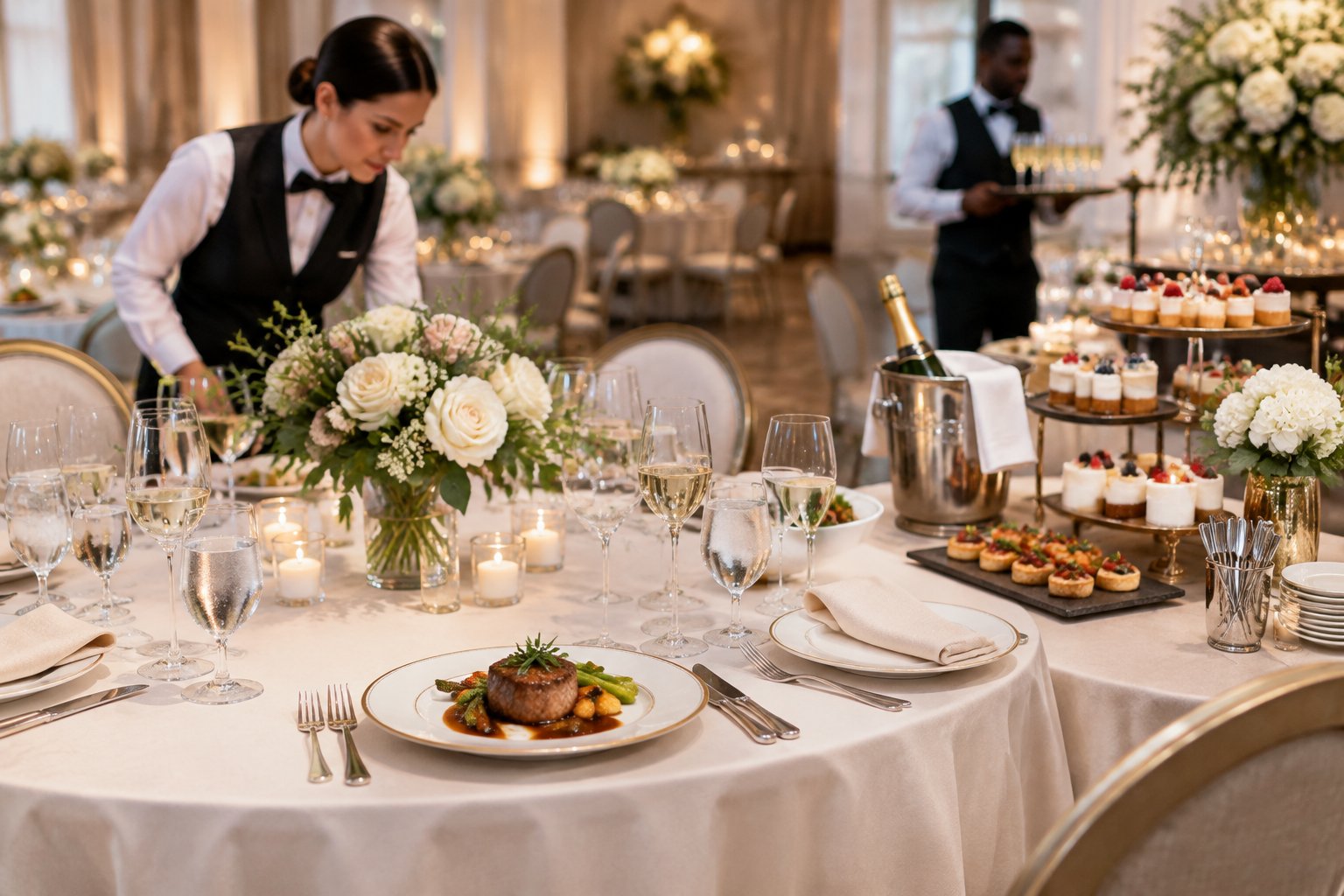
Ask whether the quote includes chefs, servers, bartenders, captains, setup workers, and cleanup staff. Confirm the number of staff members and their service hours.
Setup and breakdown may cover arranging tables, preparing buffet displays, placing dinnerware, clearing dishes, packing equipment, and removing trash. A venue with limited access, stairs, or a short load-in window can require extra labor.
Basic rentals may include standard dinnerware, flatware, glassware, serving pieces, tables, or linens. Specialty chargers, upgraded china, colored glassware, and premium linens cost more.
Bar Service: Open Bar, Full Open Bar, or Cash Bar
Bar service can add a large amount to your food and beverage budget. Ask what each package includes:
- Beer and wine: A lower-cost package with limited drink choices
- Signature cocktail service: One or two featured drinks with beer and wine
- Open bar: Guests receive drinks without paying at the event
- Full open bar: Spirits, mixers, beer, wine, and cocktails are available
- Cash bar: Guests pay for their own drinks
Compare alcohol brands, service hours, bartenders, mixers, ice, glassware, permits, and last-call policies. A limited bar with a signature drink can control costs while giving guests a complete beverage experience.
Service Charges, Sales Tax, and Gratuity
A service charge is a fee from the caterer for administration, coordination, staffing management, and event operations. It may be calculated as a percentage of food and beverage charges.
Sales tax rules vary by state and by the services included. Ask whether tax applies to food, rentals, alcohol, service charges, or delivery.
Gratuity may be separate from the service charge. Read the contract language and ask whether the quoted amount includes a tip for servers and bartenders. Put your expected gratuity into your budget before signing.
Vendor Meals, Dinnerware, and Specialty Fees
Photographers, videographers, DJs, bands, coordinators, and other vendors who work through dinner need meals. Caterers may offer a reduced vendor meal rate, so ask for that price before applying the guest meal rate.
Specialty fees often include:
- Cake cutting fee or cake-cutting fee
- Corkage fee for alcohol you supply
- Tasting fees
- Delivery and fuel charges
- Overtime labor
- Kitchen use fees
- Extra refrigeration
- Specialty dinnerware
- Late-night food service
List each fee beside the food price when comparing proposals. A quote with a higher menu rate can cost less after rentals, labor, and service charges are added.
How to Compare Catering Quotes and Lower Costs
Compare catering quotes by their complete, all-in totals, then reduce costs through the guest count, menu design, service style, bar plan, and event timing. A lower headline price is useful only when the proposals include the same services.
How to Compare Like-for-Like Catering Quotes
Send each caterer the same information:
- Wedding date and venue
- Guest count
- Meal timing
- Preferred service style
- Menu ideas
- Bar plan
- Dietary needs
- Dessert plans
- Vendor meal count
- Rental requirements
Ask every caterer to itemize food, labor, rentals, bar service, delivery, setup, breakdown, service charges, sales tax, gratuity, and specialty fees.
Create a comparison sheet with the headline price and the all-in estimate. Check whether each proposal includes the same number of courses, drink hours, staff members, rental pieces, and service time.
A wedding caterer selection guide can help you organize questions about menus, staffing, tastings, and contracts.
Smart Savings That Do Not Shortchange Guests
Choose one memorable food feature and keep the rest of the menu focused. A seasonal entree, well-planned buffet, or late-night snack can have more impact than several expensive add-ons.
Other savings options include:
- Reduce the guest list before cutting food quality
- Choose seasonal and local ingredients
- Use buffet or family-style dining
- Limit the bar to beer, wine, and a signature cocktail
- Select standard dinnerware and linens
- Serve cake as the main dessert
- Host the reception on a Friday, Sunday, or off-season date
- Remove one course while keeping generous portions
- Ask about lower-cost vendor meals
- Choose a lunch or brunch reception
Keep allergen-safe meals and enough food for the scheduled service period. Your caterer can suggest menu changes that preserve variety and portion size while lowering ingredient and labor costs.
When a Lunch Reception Can Reduce the Food Bill
A lunch reception often lowers food and beverage spending because daytime menus use lighter dishes and shorter bar service. Salads, sandwiches, pasta, seasonal vegetables, and brunch stations can cost less than a formal evening dinner with premium entrees.
A daytime event also gives you the option of a limited bar, mimosas, beer and wine, or no alcohol. Ask your caterer for a complete lunch proposal that includes staffing, rentals, drinks, service charges, and tax.
Compare the full invoice with an evening option before deciding. The lunch format saves money when the menu, service hours, and beverage plan all match the daytime schedule.