
Catering for Weddings Average Cost: Per-Guest Guide
Wedding catering often sets the tone for your reception, yet the price can shift quickly with guest count, meal style, bar service, and venue rules. In the U.S., a practical starting range for wedding catering is $70 to $150 per guest, with many couples budgeting around $80 to $125 per guest for food and standard service. A 100-person wedding may therefore land near $7,000 to $12,500 before premium alcohol, taxes, gratuity, and special rentals.
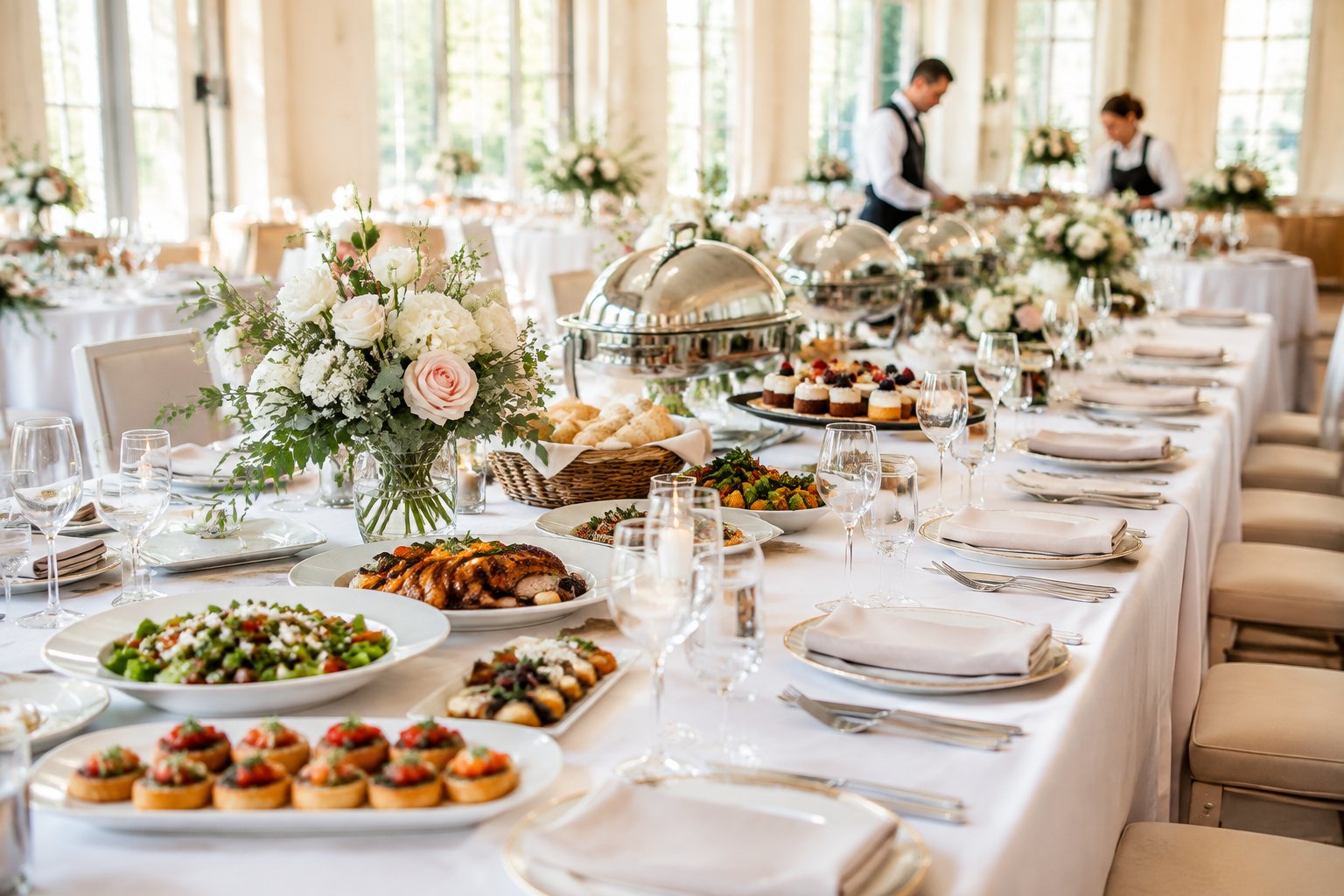
Your final wedding catering cost depends on what each quote includes. Food-only pricing may look affordable until you add servers, setup, dinnerware, linens, beverages, and service charges. Use the per-person figures below to shape your wedding budget, then request itemized proposals from local caterers before choosing your wedding reception menu. You can also compare your meal plan with this guide to how much a wedding meal should cost per person.
What Is a Realistic Per-Guest Starting Budget?
A realistic wedding catering budget is $70 to $150 per guest in the U.S., with about $80 to $125 per guest covering many full-service receptions before tax and gratuity. Lower prices suit a simple buffet or limited menu, while premium plated meals, elaborate stations, and full bar service push the catering cost per person higher.
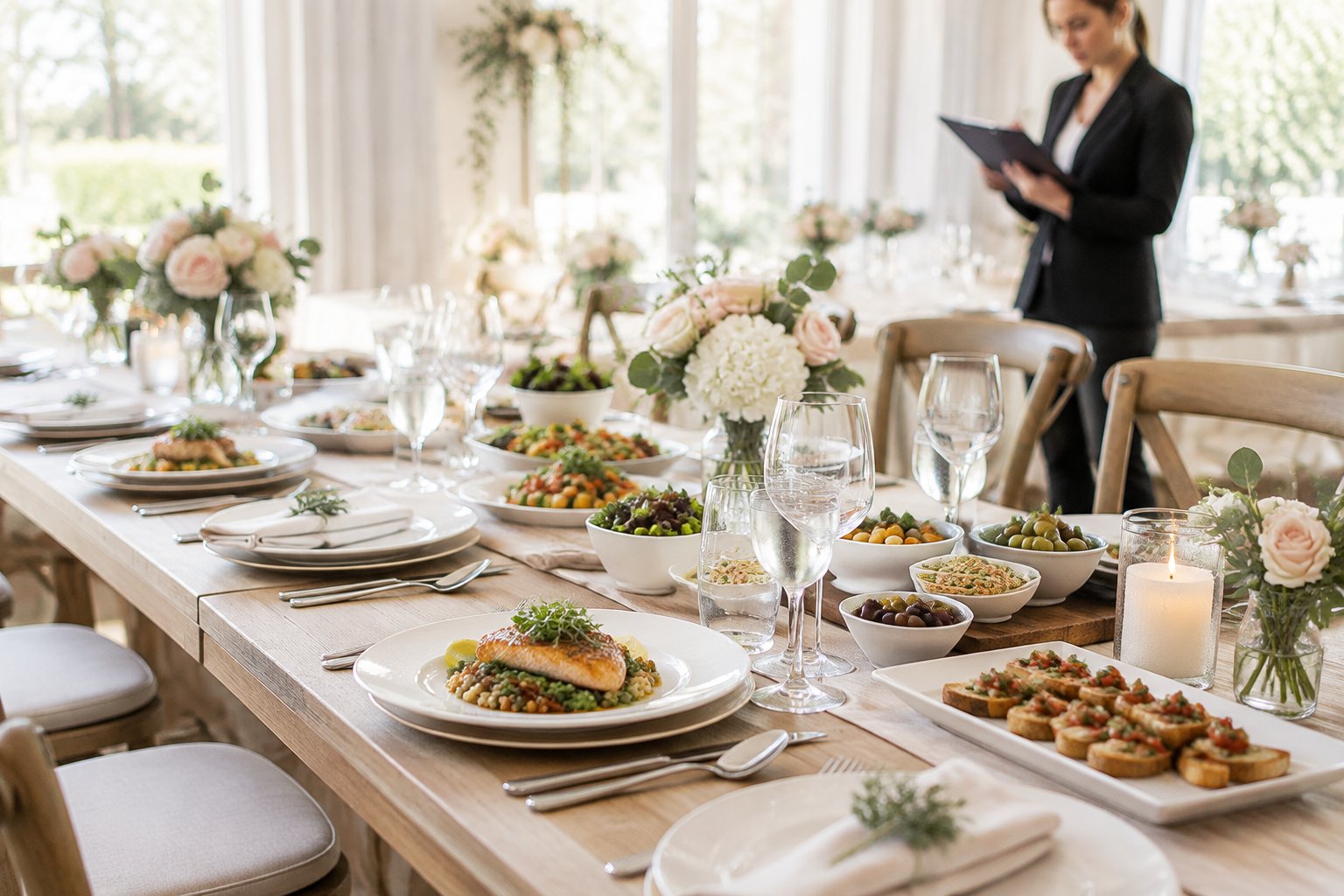
Your guest count sets the base, while food and beverage choices shape the per-person rate. A quote that lists only the meal price may exclude service staff, rentals, delivery, and venue fees, so compare the complete wedding catering budget before signing.
What Is the Average Wedding Catering Cost in the U.S.?
A broad planning estimate for the average wedding catering cost is about $80 per guest. Many couples spend $70 to $100 per guest for a standard meal, while upscale menus and full-service packages reach $125 to $150 or more.
The wedding catering cost in the U.S. changes by city, venue type, season, and menu. Major metropolitan areas often carry higher labor and rental prices. A venue with an in-house caterer may bundle kitchen access and service into its package, while an outside wedding caterer may list those costs separately.
For a quick estimate, multiply your guest count by the catering cost per person:
- 50 guests at $80 per person: $4,000
- 100 guests at $80 per person: $8,000
- 150 guests at $100 per person: $15,000
- 200 guests at $125 per person: $25,000
These figures describe planning ranges, not guaranteed wedding catering prices.
Why Food-Only and All-In Estimates Differ
Food-only pricing covers the menu. An all-in estimate may also include servers, chefs, setup and breakdown, cocktail hour appetizers, nonalcoholic drinks, rentals, and cleanup.
Service charges frequently add 18% to 24% of the food and beverage subtotal. Sales tax applies according to state and local rules, and gratuity may be separate. A $8,000 food subtotal could therefore become more than $11,000 after a 20% service charge, tax, and a planned tip.
Ask each caterer these questions:
- Does the price include service staff?
- Are plates, china, flatware, glassware, and linens included?
- Is setup and breakdown included?
- Are vendor meals priced separately?
- Does the service charge include gratuity?
- Does the venue charge a kitchen or outside-vendor fee?
How Much Does Catering Cost for 50, 100, 150, and 200 Guests?
Your guest count gives you a useful first estimate, though fixed fees become more noticeable at smaller weddings.
| Guest count | $70 per guest | $100 per guest | $150 per guest |
|---|---|---|---|
| 50 guests | $3,500 | $5,000 | $7,500 |
| 100 guests | $7,000 | $10,000 | $15,000 |
| 150 guests | $10,500 | $15,000 | $22,500 |
| 200 guests | $14,000 | $20,000 | $30,000 |
For catering cost for 100 guests, set aside at least $7,000 to $15,000 for the base meal across these tiers. Add a separate cushion for beverages, service charges, tax, rentals, and gratuity.
How Does Meal Style Change the Price?
Meal style changes wedding catering prices through labor, kitchen preparation, serving time, and equipment needs. A staffed buffet often costs less than a formal plated dinner, while food stations and food trucks bring special logistics that can raise the total.
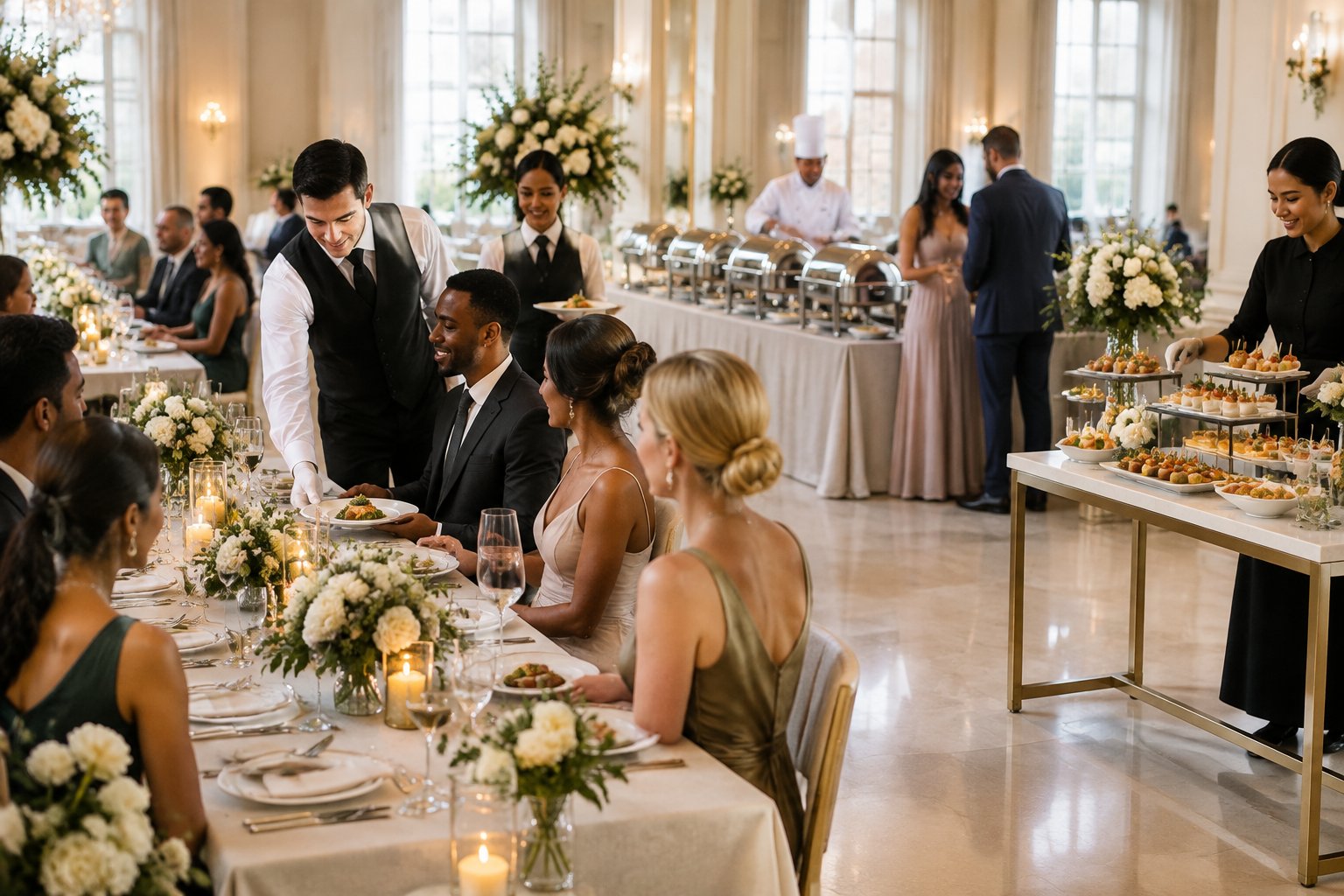
Your choice also affects the reception timeline and guest flow. Plated service creates a structured meal, while buffet catering and family-style dining give guests more control over portions. A cocktail reception or brunch wedding can lower food costs when the menu matches the shorter event format.
Plated Dinner vs. Buffet Service
A plated dinner service often costs about $80 to $150 per guest because the kitchen prepares individual plates and servers deliver them to each table. You also need accurate meal selections, place cards, and enough staff to keep courses moving.
Buffet service often falls near $50 to $100 per guest before fees, depending on the menu and staffing. Guests serve themselves from shared displays, which reduces table service labor. A staffed buffet still needs attendants, replenishment, cleanup, and safe food holding equipment.
| Factor | Plated dinner | Buffet service |
|---|---|---|
| Typical base range | $80 to $150 | $50 to $100 |
| Guest service | Individual plates | Self-service or assisted |
| Staffing need | Higher | Moderate |
| Portion control | Caterer-controlled | Guest-controlled |
| Reception feel | Formal | Relaxed |
A buffet does not guarantee a lower invoice. Premium dishes, several serving stations, rentals, and a large menu can erase the labor savings.
When Does Family-Style Dining Make Sense?
Family-style service works well when you want a shared, social meal with seated guests. Caterers place platters and bowls on each table, then guests pass food and choose their portions.
This format can fit between plated and buffet pricing. It requires table space, serving dishes, and staff to replenish food, yet it reduces the need to plate every entrée individually. Family-style dining suits menus that share well, such as roasted chicken, seasonal vegetables, salads, pasta, and rice dishes.
Ask about portion planning because larger platters may increase food quantities and rental needs. Confirm who clears the serving pieces and whether the caterer includes that labor.
Are Food Stations and Food Trucks Worth the Added Logistics?
Food stations create variety and encourage guests to move around the reception. Interactive food stations such as a carving counter, pasta bar, sushi display, or taco bar can cost more because each station needs equipment, ingredients, and staff.
Food trucks offer a casual experience and work best at outdoor venues with easy vehicle access. You need enough service windows to prevent long lines, plus a backup plan for rain, power, parking, and local permits.
Use stations or food trucks when the format supports your reception style. Limit the number of choices so each station receives enough guests to justify its setup and staffing costs.
Can a Cocktail-Style or Brunch Reception Cost Less?
A cocktail-style reception can lower the meal cost when you serve substantial passed hors d’oeuvres, small plates, and a focused beverage menu. Guests need enough food to feel satisfied, so plan more than light snacks for an event that replaces dinner.
A brunch wedding or lunch reception may use lower-cost proteins, seasonal produce, pastries, and lighter beverages. Morning and midday events also pair well with a limited bar, sparkling wine, coffee, and signature cocktails.
Set a clear service window and menu plan. A long cocktail reception that requires constant replenishment may cost as much as a seated meal.
What Should a Catering Quote Include?
A useful catering quote shows the complete menu, labor, rentals, fees, and payment terms in separate line items. Review the full wedding catering package so you know whether the per-person price covers the reception experience or only the food.

Ask for the same details from every wedding caterer. A lower menu price may come with extra staffing, rental, delivery, or venue charges, so compare final totals using the same guest count and service hours.
Food, Staffing, and Setup Basics
The food portion should name every course and serving period. Look for the main entrée, side dishes, salads, bread, appetizers, dessert, nonalcoholic drinks, and any late-night snacks.
The labor portion should list:
- Chefs and kitchen staff
- Servers and bartenders
- Event captain or manager
- Setup and breakdown crew
- Cleanup and trash removal
- Service hours and overtime rates
Confirm whether the caterer includes a menu tasting and how many people may attend. Ask whether the proposal changes if your final guest count falls below a minimum.
Dinnerware, Linens, and Equipment Rentals
Your quote should identify basic rentals such as plates, china, flatware, glassware, water goblets, serving pieces, and table linens. Specialty rentals, upgraded china, charger plates, colored napkins, and glassware may carry separate prices.
Ask who delivers, sets, collects, and washes the equipment. Some caterers use a rental company, which may create separate delivery and pickup windows. Confirm whether the venue has tables, prep space, refrigeration, ovens, ice, and power available.
Kitchen fees deserve special attention when you hire an outside caterer. The venue may charge for kitchen access, utilities, or required equipment.
Cocktail Hour, Dessert, and Vendor Meals
Cocktail hour appetizers may include passed appetizers, stationary displays, a grazing table, or both. Clarify how many pieces each guest receives and how long the service lasts.
Dessert may include a dessert station, cake plating, coffee, tea, and late-night snacks. If you bring an outside cake, ask about cake-cutting fees before booking the bakery.
Vendor meals should appear as a separate line. Photographers, DJs, coordinators, musicians, and other vendors working through dinner may need meals at a reduced rate. Confirm the number of meals and whether drinks are included.
Which Extras Can Raise the Final Invoice?
Bar service, service charges, taxes, gratuity, travel, and venue-required fees can add 20% to 35% or more to the quoted food price. Treat every listed extra as part of your wedding catering cost until the contract confirms that it is included.
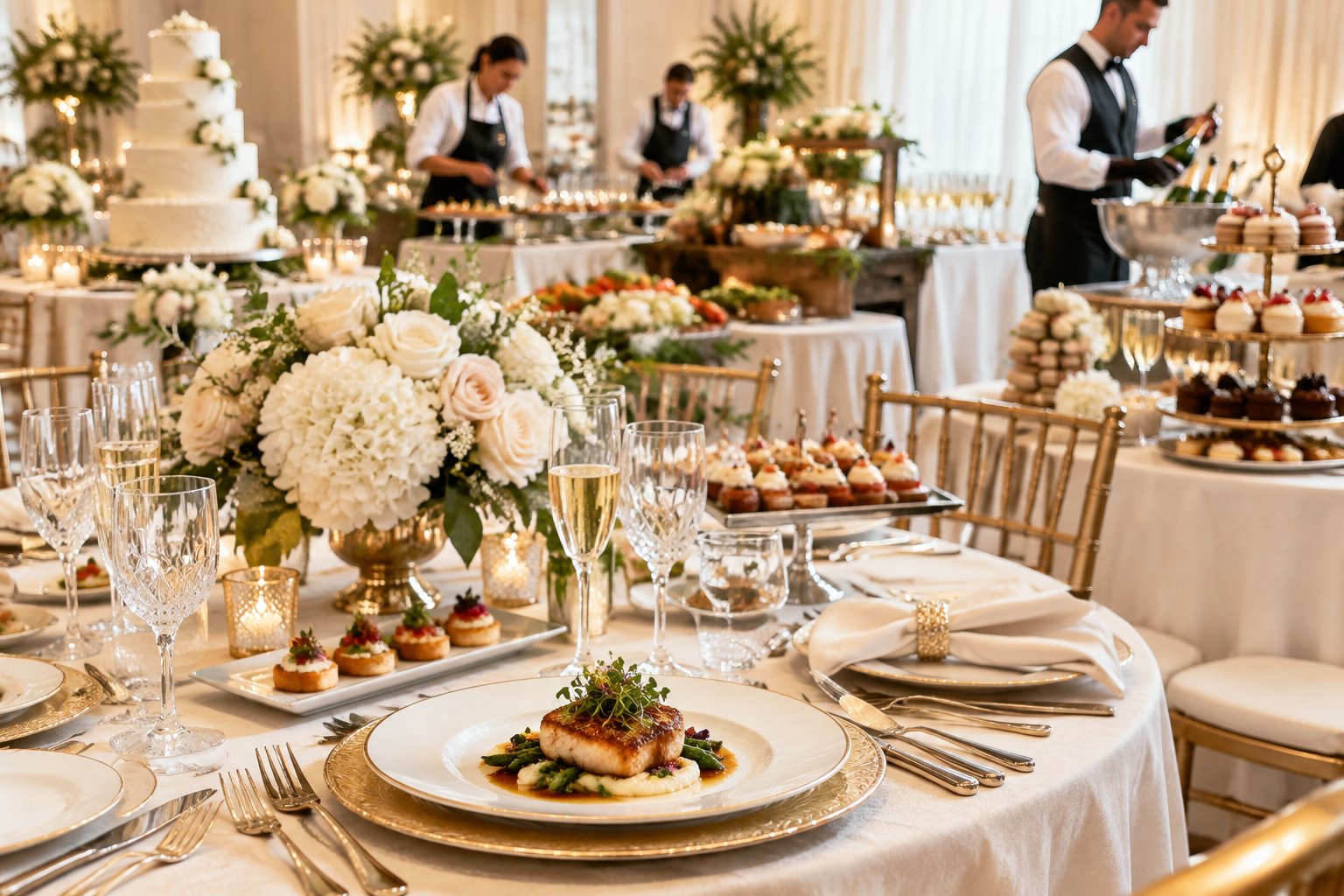
Request an all-in estimate that uses your expected guest count, service hours, venue address, bar plan, and final menu. Keep a separate reserve for overtime and guest-count changes.
How Much Does Bar Service Add?
Bar service may add $15 to $60 or more per guest, depending on the package. Beer and wine service sits at the lower end, while a full open bar with spirits, mixers, premium brands, bartenders, glassware, and ice costs more.
Common choices include:
- Limited bar: Beer, wine, and nonalcoholic drinks
- Signature cocktail: One or two featured drinks with beer and wine
- Full open bar: Beer, wine, spirits, mixers, and cocktails
- Cash bar: Guests pay for their own drinks
Ask whether the package is charged per guest, by consumption, or by a minimum spend. Confirm the number of bartenders, service hours, mixers, ice, glassware, and last-call timing.
A signature cocktail can give guests a memorable option while keeping the spirit selection focused. Check whether the venue permits outside alcohol and whether a corkage fee applies.
Service Charges, Tax, and Gratuity Explained
A service charge is an administrative fee paid under the contract. It may cover coordination, staffing management, equipment handling, insurance, and operational costs. Gratuity is a tip for service staff, and the contract may list it separately.
Service charges commonly range from 18% to 24% of food and beverage. Sales tax depends on state and local rules and may apply to food, service charges, rentals, or other taxable items.
Ask for these figures in writing:
- Service charge percentage and taxable base
- Sales tax rate and taxable items
- Gratuity percentage or suggested flat amounts
- Payment schedule and deposit terms
- Cancellation and refund policy
Calculate the full amount before comparing proposals. A $100 per-person menu price does not show the final cost when these charges sit outside the headline rate.
Delivery, Travel, and Venue-Required Fees
Delivery fees cover transportation of food, equipment, rentals, and staff. Travel fees may apply when the venue sits outside the caterer’s service area. Ask whether the quote includes return pickup and mileage.
A venue may require:
- Kitchen or facility fees
- Outside-vendor fees
- Liability insurance certificates
- Exclusive bartending staff
- Approved rental companies
- Cleanup or trash removal
- Minimum food and beverage spending
Overtime charges begin when staff remain beyond the contracted service window. Cake-cutting fees and corkage fees apply when the caterer handles outside desserts or alcohol.
Request a sample final invoice for a similar event and ask the caterer to mark every possible extra. That step gives you a clearer wedding catering cost breakdown before you sign.
What Drives Costs Up or Down?
Menu complexity, premium ingredients, location, season, timing, and dietary accommodations create the largest swings in wedding catering costs. You control many of these choices by setting the menu tier and event format before requesting quotes.
Your reception date and venue affect labor and travel, while guest needs affect menu planning and service time. Build each driver into your first estimate so the proposal reflects the event you plan to host.
Menu Complexity and Premium Ingredients
A focused menu with seasonal ingredients costs less to prepare than a large menu with several proteins, custom courses, and specialty stations. Filet mignon, seafood, imported items, and premium ingredients raise food costs and may require skilled preparation.
Labor increases when your menu includes:
- Multiple entrée choices
- Made-to-order stations
- Passed hors d’oeuvres for a long cocktail hour
- Plated courses with special timing
- Late-night food
- Custom desserts
Choose one strong entrée with complementary sides when you need control over the food budget. Seasonal and local ingredients may also reduce transportation costs while giving your menu a clear sense of place.
Location, Season, and Reception Timing
Catering costs rise in markets with higher labor, rent, insurance, and transportation expenses. A remote venue may add travel time, delivery charges, lodging, or equipment transport.
Peak wedding season brings strong demand for caterers and venues. A Sunday wedding, weekday celebration, or off-season date may open more package choices and lower minimums.
Reception timing affects the menu and bar. A daytime lunch or brunch wedding needs fewer service hours and may use a lighter beverage plan. A long evening reception requires more staff time, replenishment, alcohol, and late-night food.
Dietary Accommodations and Guest Experience
Dietary restrictions should be planned during the menu stage. Vegetarian, vegan, gluten-free, kosher, halal, allergy-sensitive, and other dietary accommodations require clear preparation and service procedures.
A few specialized meals may fit into the package. Larger numbers may require separate ingredients, prep areas, labels, utensils, and staff training. Tell your caterer about dietary needs before the proposal so the quote reflects the work.
Guest experience also affects cost through line length, seating, food temperature, accessibility, and service speed. A lower-priced format loses value when guests wait too long for food or cannot find a suitable meal.
How Can You Reduce Costs Without Shortchanging Guests?
You can lower the catering cost per person by simplifying the menu, choosing a practical service style, limiting alcohol, and comparing complete proposals. These changes protect the guest experience when you apply them to low-visibility extras instead of food quality and basic service.
Set your wedding catering budget before tastings, then give every caterer the same guest count, menu direction, bar plan, venue details, and service hours. That process makes the final numbers easier to compare.
Prioritize the Choices Guests Notice Most
Guests notice food flavor, temperature, portion size, service speed, and drink availability. Spend your budget on those elements before adding a large number of menu choices or premium decorative upgrades.
Useful savings choices include:
- Buffet service or family-style service for a relaxed reception
- Seasonal ingredients and local ingredients
- One well-planned entrée
- A limited bar with beer, wine, and one signature cocktail
- Brunch or lunch service
- A dessert station with a focused selection
- Food trucks when the venue supports quick service
Keep enough staff for safe food handling, prompt replenishment, and clean tables. A small menu with reliable service feels more generous than a large menu that creates delays.
Compare Like-for-Like Proposals Before Booking
Send each caterer the same request. Include guest count, children and vendor meals, cocktail hour, dinner service, dessert, bar details, rentals, venue address, and service window.
Place these figures side by side:
- Food subtotal
- Beverage subtotal
- Service charge
- Sales tax
- Gratuity
- Rentals
- Delivery and travel
- Kitchen or venue fees
- Overtime rate
- Deposit and cancellation terms
Ask each caterer for the estimated all-in total. A proposal with a higher menu price may cost less after fees, while a low headline price may leave key services outside the package.
Use a Simple All-In Budget Formula
Use this formula for an early estimate:
All-in catering budget = guest count × food and beverage price per guest + rentals + fixed fees + service charge + tax + gratuity.
For example, 100 guests at $100 per person creates a $10,000 food and beverage base. Add $1,000 for rentals and fixed fees, then reserve 20% to 30% for service charges, tax, and gratuity. That produces a planning range of about $13,200 to $14,300 before changes to the guest count or menu.
Keep a reserve for overtime, vendor meals, delivery, cake cutting, corkage, and dietary accommodations. Update the formula whenever your guest count, reception hours, or bar package changes.