
Cheap Castle Wedding Venues That Feel Grand
A castle wedding gives you grand architecture, memorable photos, and a built-in sense of occasion. The most affordable castle wedding venues are smaller historic properties, castle-inspired estates, and public landmarks booked for an off-peak date, especially when you keep your guest list compact. This approach lets you spend on the parts guests experience most, such as the wedding reception, food, and photography.
You can also create a castle wedding atmosphere through an intimate celebration or one of the many elegant venues that borrow castle details. Compare the full event cost, including rentals, catering, travel, and lodging, before choosing a property. Explore the venue options below, then request pricing from the locations that match your guest count and style.
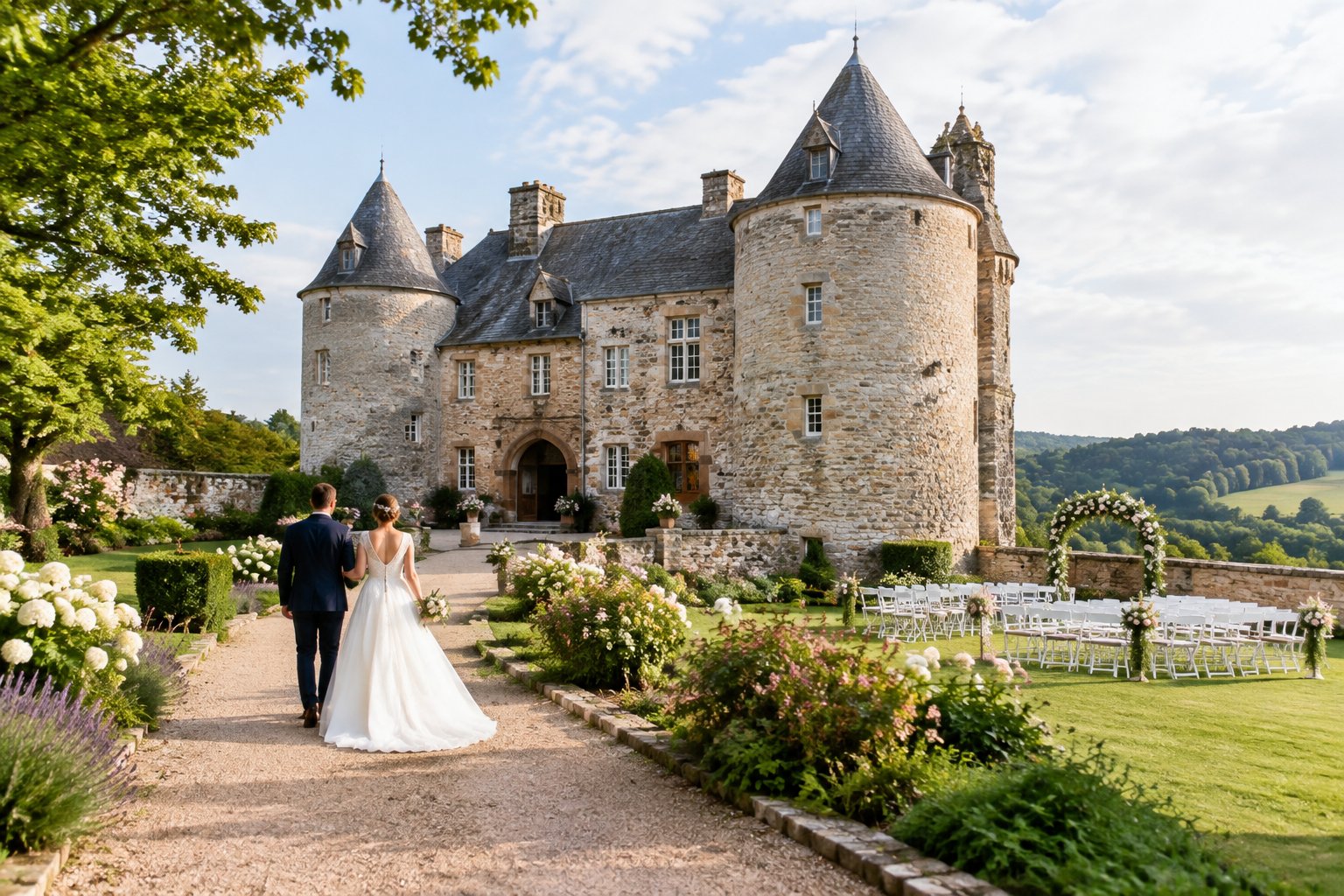
What Makes a Castle Venue Affordable?
An affordable castle venue gives you historic character while limiting the space, date, services, or guest count included in the rental. A smaller great hall, weekday outdoor ceremony, or package with tables and chairs can lower the amount you spend.
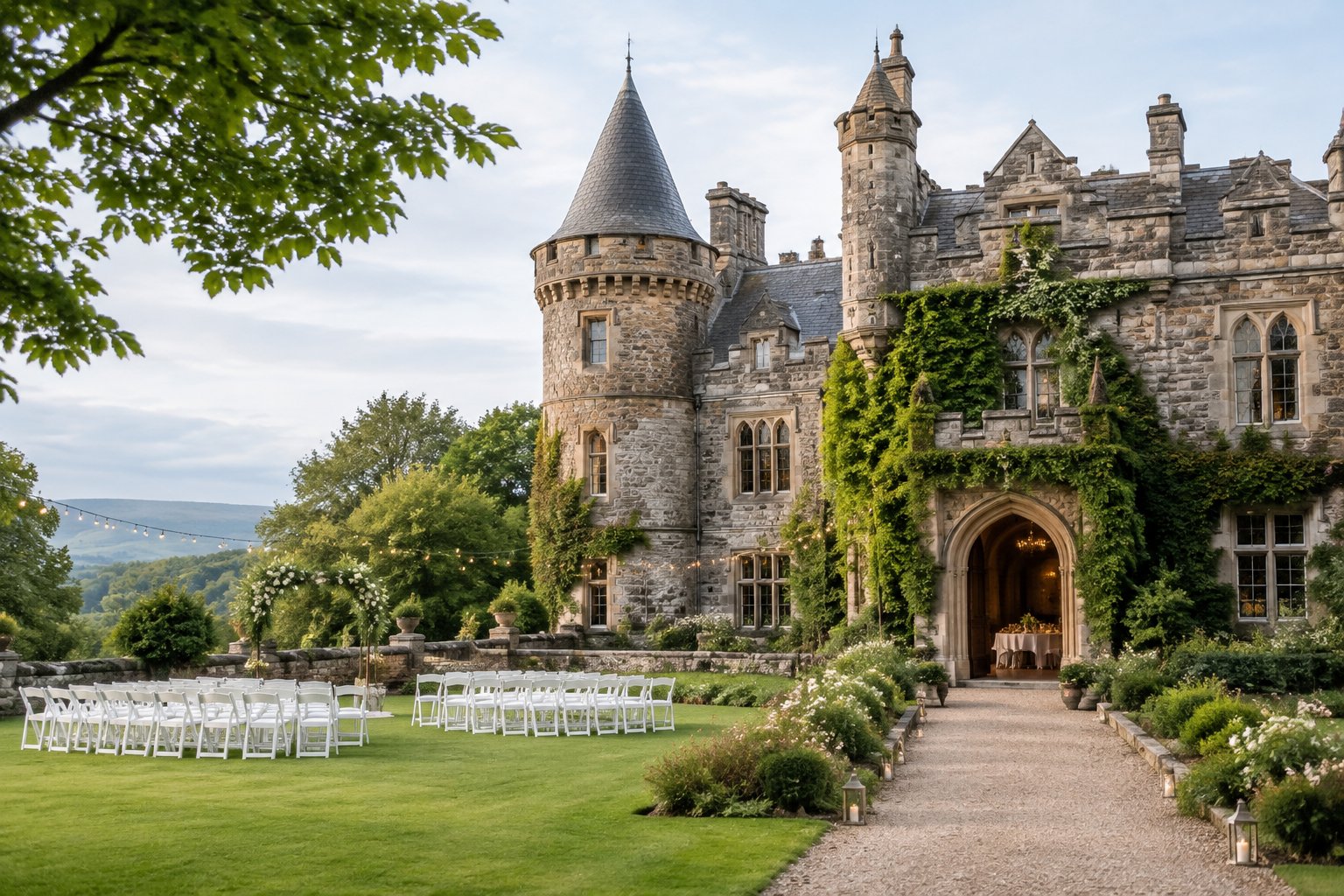
Properties with manicured gardens, an English garden, crystal chandeliers, and stained glass windows already provide decoration. That built-in detail helps you reduce floral installations and rental upgrades while keeping the setting grand.
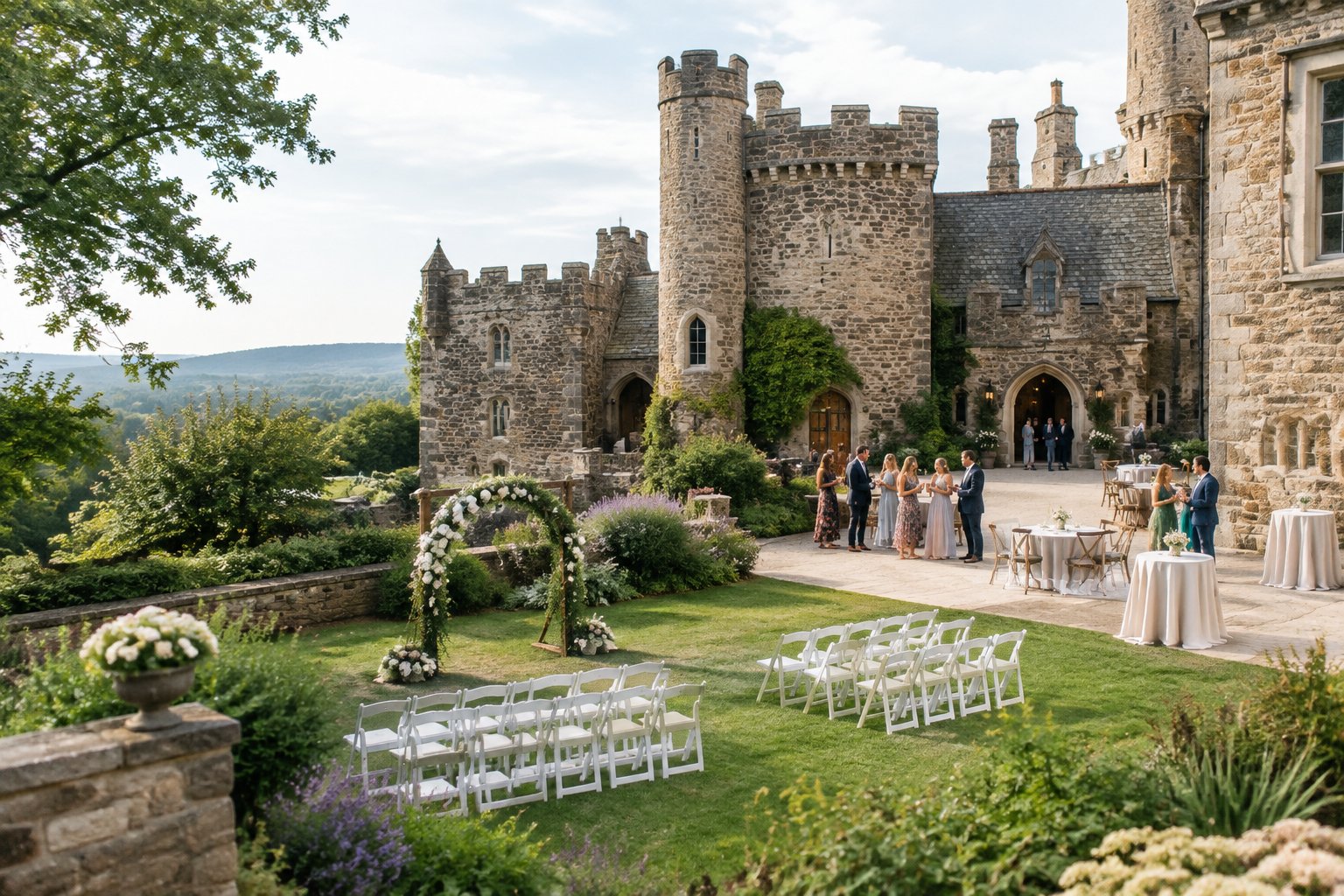
How Much Does a Castle Wedding Really Cost?
Castle wedding costs range from a modest site rental to a full luxury estate buyout. A smaller château-style hall may start near $6,000, while a famous historic estate can exceed $40,000 before food, drinks, service fees, and taxes.
Your guest count drives much of the final bill. A 40-person wedding needs fewer meals, chairs, linens, bathrooms, and parking spaces than a 180-person reception. Friday, Sunday, winter, and early-spring dates also give you more room to compare rates.
Ask each venue for a sample estimate based on your guest count. Request separate prices for:
- Venue rental
- Ceremony space
- Catering and bar service
- Tables, chairs, linens, and dinnerware
- Staffing, setup, and cleanup
- Taxes, service charges, and gratuity
- Insurance, security, and overtime
You can compare options more accurately through affordable castle wedding venues, especially when each listing uses a different pricing format.
The Costs a Low Venue Fee May Not Include
A low rental fee often covers the property only. Your contract may add charges for ceremony access, event staffing, cleaning, security, parking attendants, restrooms, heating, or a tent for an outdoor plan.
Catering rules deserve close attention. A required in-house caterer or food-and-beverage minimum can raise your bill quickly. Ask whether outside vendors are allowed, whether a preferred list is required, and whether bringing your own wine creates a corkage fee.
Historic properties also have preservation rules. You may pay for extra insurance, approved decorations, limited setup windows, or special protection for floors and walls. Get an itemized proposal that shows taxes and service charges before you pay a deposit.
Best Ways to Save on a Castle Setting
Start with the date. A weekday, Sunday, winter, or shoulder-season wedding can open lower rates and better availability. Ask whether the property offers shorter rental periods for ceremonies, elopements, or small receptions.
Keep the architecture visible by using restrained décor. Candles where permitted, seasonal flowers, and a simple ceremony arch can complement stone walls and stained glass without covering them. Choose a venue that includes furniture, basic lighting, setup, and cleanup.
You can also save by:
- Holding the ceremony and reception in one area
- Limiting the guest list
- Choosing a brunch or afternoon reception
- Using a venue-approved caterer with a set menu
- Booking lodging nearby instead of buying an estate package
- Selecting a castle-style mansion with flexible vendor rules
For more ways to reduce venue spending, compare how to get a wedding venue discount.
Choose the Right Type of Storybook Property
The most budget-friendly storybook property is the one that delivers the look you want with a manageable guest count and clear event rules. A true historic castle offers unmatched atmosphere, while a castle-inspired venue can provide easier logistics and more flexible pricing.
Your choice may include a restored landmark, a private estate, a Gothic Revival mansion, or an all-inclusive property designed for small celebrations. Look at the building, grounds, reception layout, vendor policy, and travel costs together.
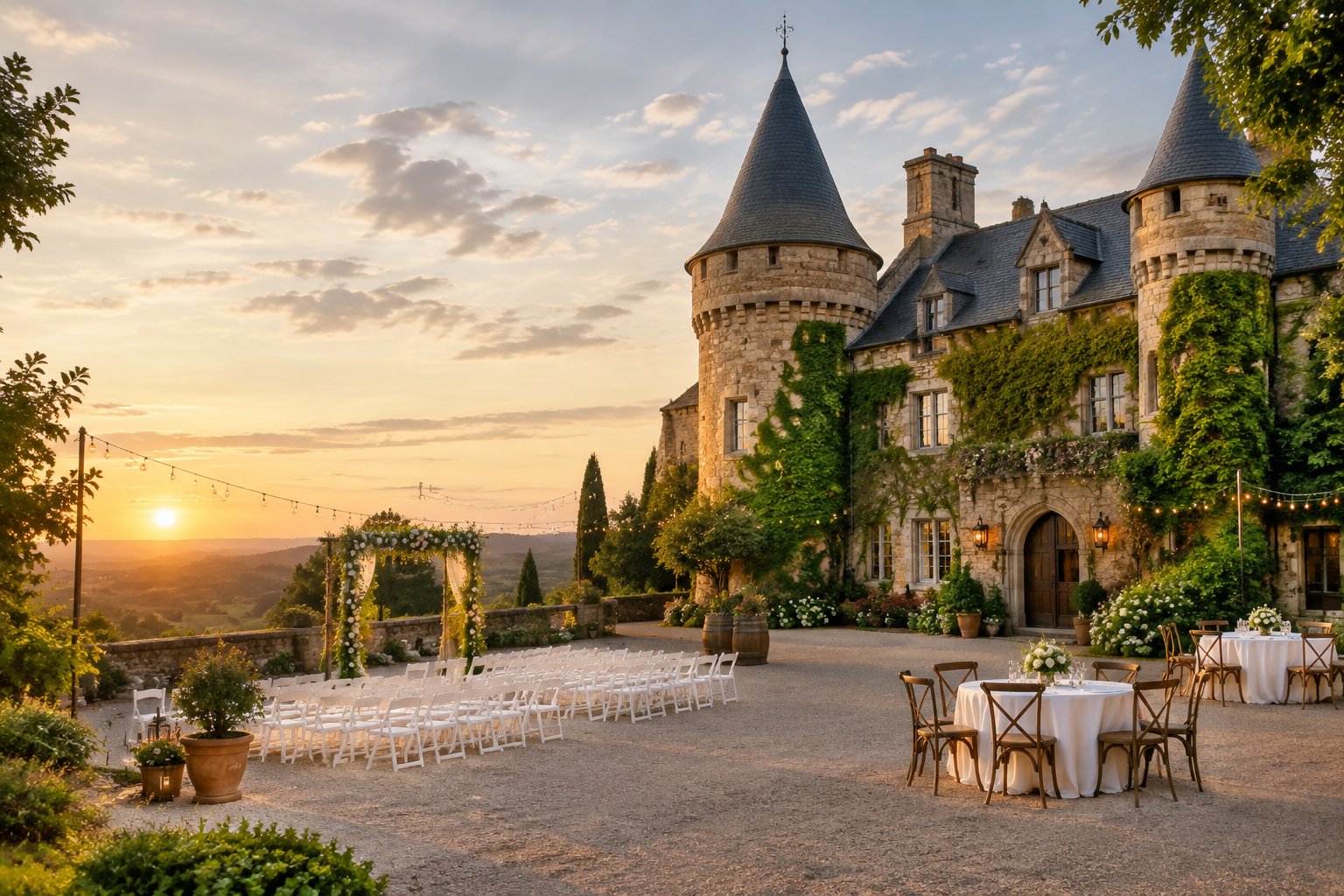
Historic Castles and Public Landmarks
Historic castles and public landmarks provide authentic masonry, towers, grand rooms, and period details. Their rental fees may be attractive for ceremonies, photography, or small receptions, especially when the property does not operate as a full-service wedding venue.
You will need to confirm event permits, insurance, catering access, parking, restrooms, and the approved event hours. Some landmarks reserve only a single room or outdoor area, which works well for a short ceremony followed by a nearby reception.
Ask whether your date shares the property with tours, festivals, or other private events. Public access can affect privacy and guest movement.
Castle-Inspired Event Venues
Castle-inspired venues use turrets, stone façades, dramatic staircases, courtyards, or formal gardens to create a storybook mood. These properties often provide more modern kitchens, restrooms, parking, climate control, and event staffing.
A château-style banquet hall or private event estate can give you the visual setting without the preservation limits of a centuries-old building. Review the package carefully because included furniture, catering, and coordination vary widely.
This category suits you when the castle look matters most and you want a smoother reception setup. It also gives you more flexibility when you need a large dance floor or a late music end time.
Mansions, Estates, and Gothic Revival Alternatives
Mansions and estates offer castle-like scale through towers, dramatic entries, stonework, formal staircases, and expansive grounds. A Gothic Revival property may include the pointed arches and dark romantic details you want while offering more practical event rooms.
Compare the property’s usable spaces instead of judging by the exterior alone. A beautiful mansion may have a small dining room, limited restrooms, or a steep path between the ceremony and reception.
Estate venues often work well for a ceremony in the gardens and dinner indoors. Ask whether the property includes chairs, tables, lighting, a rain plan, and a getting-ready suite.
Micro Weddings and All-Inclusive Elopements
Micro weddings and all-inclusive elopements give you the clearest path to a castle setting on a controlled budget. A small guest list reduces catering, rental, staffing, and transportation costs while giving you access to rooms that cannot support a large reception.
Packages may combine the ceremony space, officiant, flowers, photography, cake, meals, and a short stay. Read every inclusion and ask about guest upgrades, taxes, service fees, and extra hours.
A two-person elopement or celebration with immediate family can also let you book a weekday date. See these tips for choosing the perfect venue for a small wedding before you set your guest count.
Affordable Venues by U.S. Region
Regional searches reveal value in historic properties outside the biggest wedding markets. Compare the rental structure, travel costs, guest capacity, and included services for each location before you decide that a famous name fits your budget.
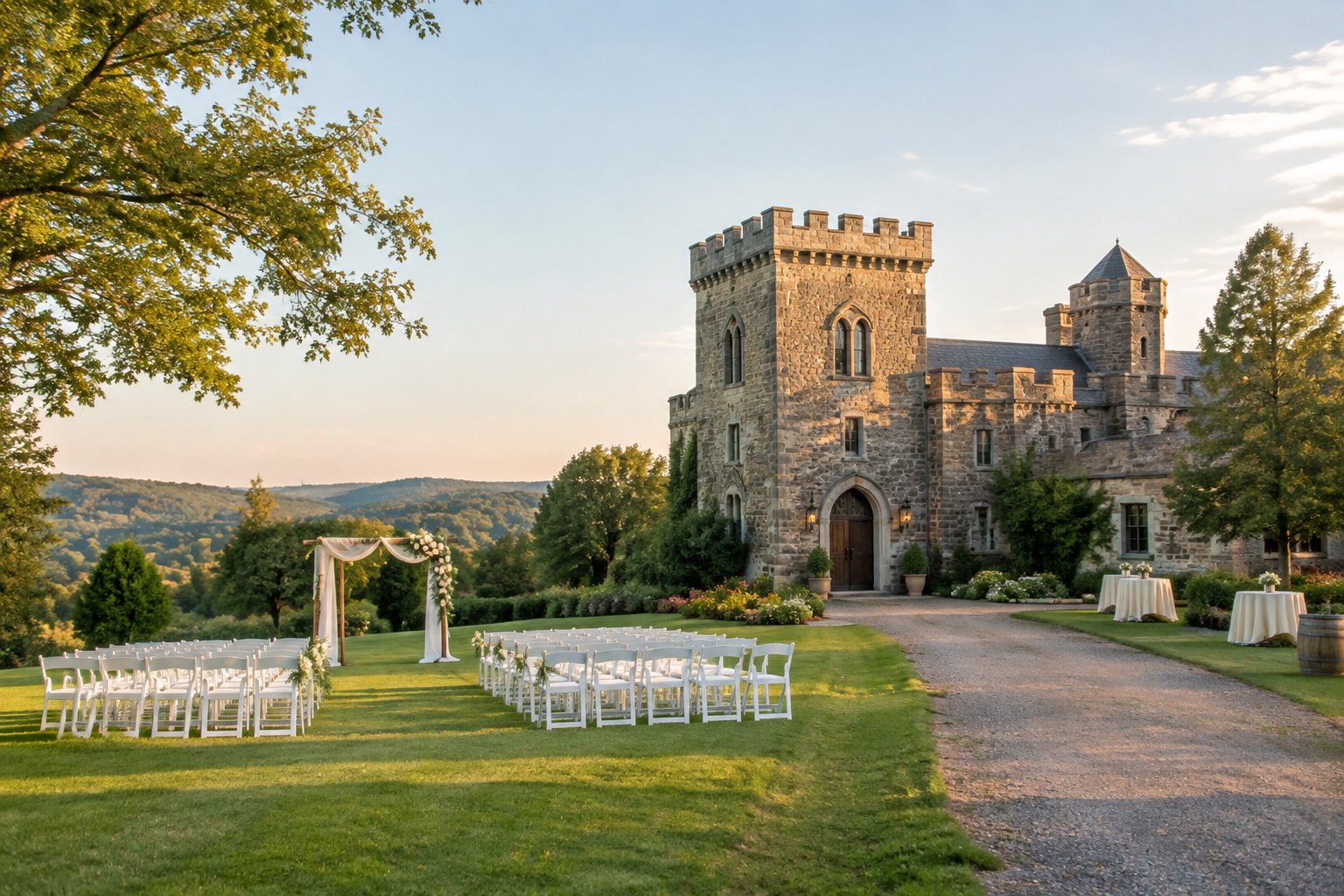
Northeast Options for Historic Architecture
The Northeast has a strong selection of stone castles, grand estates, and landmark properties. Gillette Castle in East Haddam, Connecticut, and Bill Miller’s Castle in Branford, Connecticut, offer distinct castle settings for couples comparing shoreline and inland locations.
Searles Castle provides ornate historic interiors in Massachusetts. Boldt Castle in New York’s Thousand Islands creates a dramatic destination setting, while Rosecliff and Oheka Castle bring formal estate architecture in Rhode Island and Huntington, New York.
These properties vary widely in event access. Ask whether a venue hosts full receptions, ceremony-only events, photography sessions, or seasonal programs. Travel and lodging prices can change the value of a lower site fee, especially for guests coming from outside the region.
Southeast and Mid-Atlantic Venue Ideas
Skylands Manor in Ringwood, New Jersey, combines a manor setting with landscaped grounds and event spaces. Rhodes Hall in Atlanta offers historic architecture in a city location, which can help guests reach hotels and transportation.
The Biltmore and Biltmore House in Asheville, North Carolina, provide an expansive estate experience with several event settings. Their scale and reputation call for detailed package comparisons, particularly when you are planning a smaller celebration.
Lutherville, Maryland, adds Mid-Atlantic options with historic estates and mansion-style properties. Compare city access, parking, guest lodging, and vendor policies with the beauty of the building.
Midwest and Mountain-West Castles
Joslyn Castle in Omaha, Nebraska, gives you a historic urban property with ornate interiors and strong photo opportunities. Pythian Castle in Sedalia, Missouri, offers a distinctive fortress-like setting for couples who want character with a smaller-scale feel.
Cherokee Ranch and Castle in Sedalia, Colorado, brings a dramatic mountain-region atmosphere. Its travel needs make guest lodging, transportation, and event length important parts of your budget.
Ask each property for its comfortable seated capacity. A space that works for a ceremony may have a different limit for dinner, dancing, buffet service, and band equipment.
Southwest and Southern California Choices
The Ashley Castle in Chandler, Arizona, offers a purpose-built castle atmosphere in the Southwest. The region’s warm weather supports outdoor ceremonies, though you should budget for shade, cooling, lighting, and a strong indoor backup plan.
Mission Inn Hotel and Spa in Riverside, California, provides historic Spanish architecture and full-service hotel support. Its location can help with guest lodging and reception logistics, while its package structure needs close review.
Southern California couples can also compare castle-inspired estates and affordable venues in nearby cities. A shorter drive may reduce shuttle and hotel costs enough to balance a higher rental fee. Explore affordable wedding venues Los Angeles if your guest list is based in the region.
Notable Castle Venues to Compare
The best venue comparison starts with the type of celebration you want. Small properties suit intimate guest lists, grand halls support formal receptions, and destination castles create a travel experience that requires a larger guest budget.
Small Guest Lists and Intimate Celebrations
Hammond Castle in Gloucester, Massachusetts, gives you a coastal New England setting with medieval-inspired architecture. Its scale and historic character make it worth exploring for a smaller ceremony or intimate reception.
Bolton Castle in Rye, England, and Lumley Castle in England suit couples considering an international celebration with strong historic atmosphere. Travel, legal requirements, lodging, and guest attendance shape the real cost, so request a full destination estimate.
Small guest lists let you choose a distinctive room, reduce meal costs, and keep décor focused. Ask about exclusive use, private dining areas, ceremony timing, and guest access.
Grand Reception Spaces With Built-In Character
Large reception rooms create impact through high ceilings, stone walls, carved details, staircases, and formal gardens. These features reduce the need for a heavy décor budget and give your photographer several locations in one property.
Thornewood Castle in Washington offers a historic estate experience with striking architectural details. Iolani Palace in Honolulu provides a landmark setting with major destination considerations, including travel and guest lodging.
Check the reception layout carefully. Confirm the seated dinner capacity with a dance floor, band or DJ, buffet, bar, sweetheart table, and guest circulation included.
Destination-Worthy Historic Properties
Ashford Castle in Ireland represents the luxury end of the castle market, with a destination experience built around historic surroundings and on-site hospitality. Its setting may suit a smaller guest list with a larger travel budget.
Lumley Castle and Bolton Castle offer different historic moods and regional experiences for couples considering the United Kingdom. International venues require planning for passports, legal ceremony rules, currency, transportation, and additional nights.
You can control costs by holding the legal ceremony at home and using the castle event as the celebratory gathering, where permitted. Share lodging details early so guests can make informed travel decisions.
How to Vet a Venue Before You Book
A venue earns a place on your shortlist when its capacity, cost, rules, access, and weather plan work together in writing. A beautiful castle in Gloucester, Riverside, Lutherville, or Omaha, Nebraska, still needs to support your guest experience from arrival through departure.
Use the same questions for every property. Request a sample contract, an itemized estimate, a floor plan, and the name of the person managing your event.
Ask About Guest Capacity and Rain Plans
Ask for separate capacities for the ceremony, cocktail hour, seated dinner, and dancing. A fire-code maximum does not show how comfortably tables, a bar, a dance floor, and service stations will fit.
For an outdoor ceremony, ask where guests go if rain, heat, wind, or cold changes the plan. Confirm whether the indoor backup is included, how quickly the room can be reset, and who makes the weather call.
Review the walking route between spaces. Gravel, steep lawns, stairs, and long distances can affect older guests, children, guests in formal shoes, and anyone using a mobility aid.
Compare Catering, Bar, and Vendor Rules
Ask whether catering and bar service are in-house, preferred, or open to outside vendors. Request menu pricing, food-and-beverage minimums, service charges, gratuity, corkage fees, cake-cutting fees, and overtime rates.
Confirm whether the venue requires its own florist, DJ, photographer, planner, rental company, or security team. A flexible vendor policy can help you compare lower-cost suppliers, while an all-inclusive package may save planning time.
For catering decisions, use a separate checklist such as how to choose the right wedding caterer.
Check Accessibility, Lodging, and Transportation
Walk the full guest route from parking to the ceremony, reception, restrooms, and exit. Check ramps, elevators, accessible restrooms, lighting, seating areas, and paths with uneven ground.
Ask about parking capacity, valet service, rideshare pickup, shuttle access, and nearby hotels. A remote castle can require guest transportation that changes the cost of a lower venue fee.
Properties in Riverside, Lutherville, or Omaha, Nebraska, may offer different lodging and transit options than rural estates. Get hotel distances and shuttle estimates before you set the final guest budget.
Understand Photography and Historic-Site Restrictions
Ask where photography is permitted and whether portraits require a separate fee. Confirm access to staircases, gardens, balconies, private rooms, courtyards, and architectural details before you build your timeline around them.
Historic sites may restrict tripods, flash, drones, candles, confetti, hanging décor, wall attachments, and furniture movement. Request the rules in writing and give them to your photographer, planner, florist, and rental team.
Also confirm vendor arrival times, event end times, music limits, cleanup duties, insurance requirements, and overtime charges. These details should appear in the contract before you place a deposit.