
Cheap Wedding Venues Queens: Costs, Types, and Booking Tips
Queens gives you several ways to host a beautiful wedding on a controlled budget, from private dining rooms and community halls to banquet spaces with flat-rate pricing. The most affordable choice for many couples is a venue that combines a modest room fee with clear inclusions, flexible dates, and a guest count that fits the space comfortably.
You can also compare affordable wedding venues in Queens while you set your budget and shortlist neighborhoods.
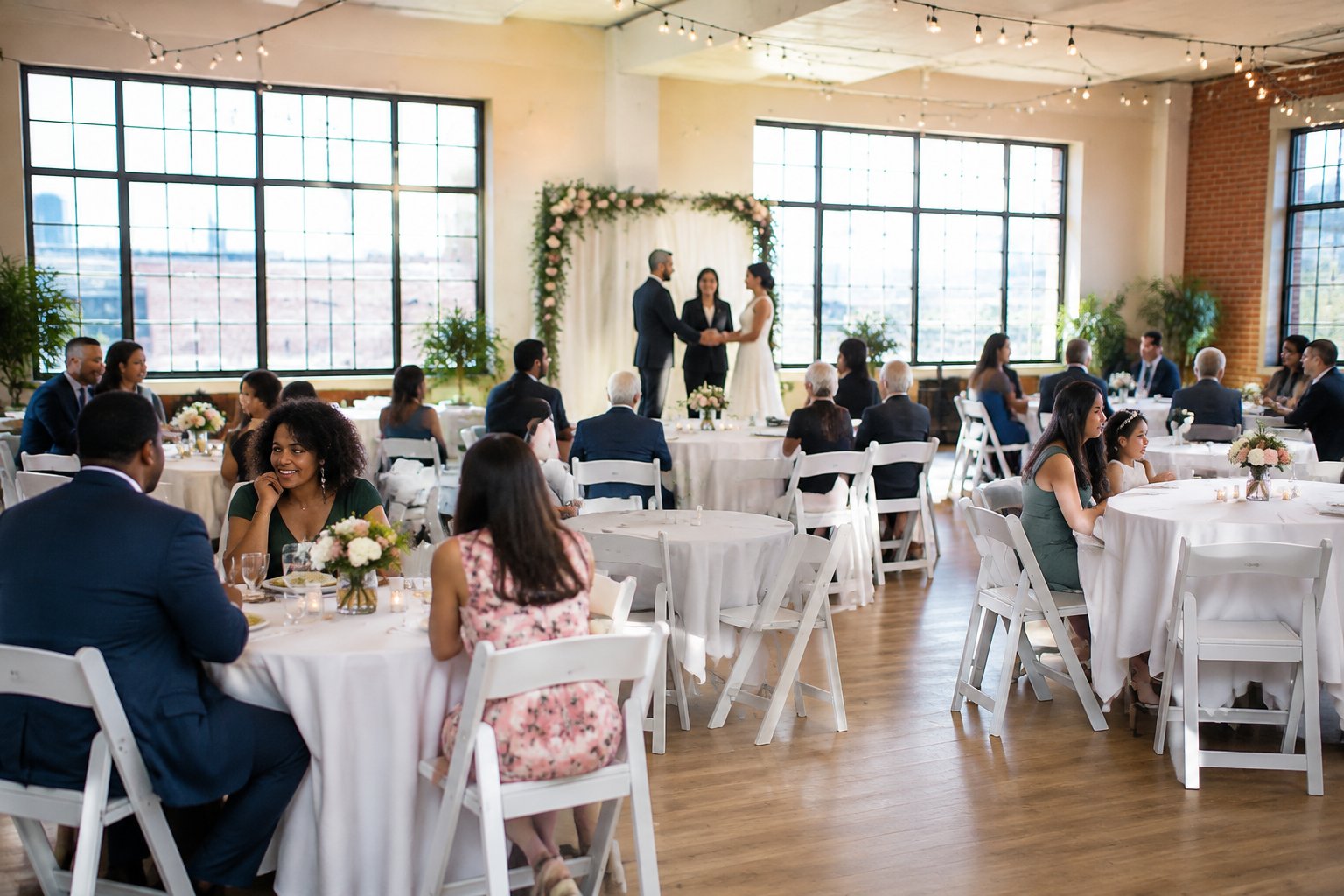
A low rental price does not always mean a low final bill. Catering, staffing, bar service, cleaning, taxes, overtime, and required minimums can change the total quickly.
Ask for a written quote that shows every charge, then compare the full event cost across venues. Once you have a guest count and preferred dates, contact Queens venues for availability and a detailed estimate.
How Much Do Affordable Queens Wedding Spaces Cost?
Affordable Queens wedding spaces range from hourly rentals for small gatherings to flat-rate halls and per-person packages for larger receptions. Published examples from Queens party halls show room rates from about $595 to $2,595, depending on the day, capacity, and event type, before taxes, cleaning, and add-ons.

Your final price depends on how the venue charges, what the quote includes, and whether the room has a food or beverage minimum. Use the full package total for comparisons, not the room rate alone.
Per-Person Packages and What They May Include
A per-person package charges according to your confirmed guest count. The rate may cover the room, catering, tables, chairs, linens, servers, basic setup, and bar service.
Some packages also include a cocktail hour, cake cutting, lighting, or a day-of coordinator. Ask whether the price applies to children, vendors, and guests who do not drink.
Confirm taxes, gratuity, service fees, and upgrades in writing. A package priced at $100 per guest has a different value when it includes dinner and an open bar than when those services cost extra.
Hourly Rentals vs. Flat Event Fees
An hourly rental suits a short ceremony, micro-wedding, or reception with outside vendors. You pay for the time you reserve, so request the venue’s minimum rental period and ask whether setup and cleanup hours count toward that time.
A flat event fee gives you a fixed room price for a stated block of hours. For example, Queens halls list different rates for Monday through Thursday, Friday or Sunday, and Saturday.
A flat rate can work well when you need a full reception timeline and want to bring approved vendors. Tagvenue listings may show both a minimum spend per event and a hire fee per hour, so check which pricing model applies to each space.
Compare the required hours, guest limit, taxes, cleaning fee, and vendor rules before choosing.
How Minimum Spend Requirements Work
A minimum spend is the amount you must commit to on food, drinks, or other venue services. If your selected services fall below that amount, the venue may still charge the minimum.
Ask whether the minimum is calculated before or after tax and gratuity. Confirm which purchases count, whether unused amounts carry over, and how the venue handles a guest-count change.
A smaller wedding can face a high per-person cost if the space requires a minimum designed for a larger event.
Which Venue Types Deliver the Best Value?
Restaurants, banquet halls, flexible event spaces, and boutique hotels offer the strongest value when their layout and included services match your celebration. Your best fit depends on guest count, food plans, dancing needs, and how much coordination you want to handle.
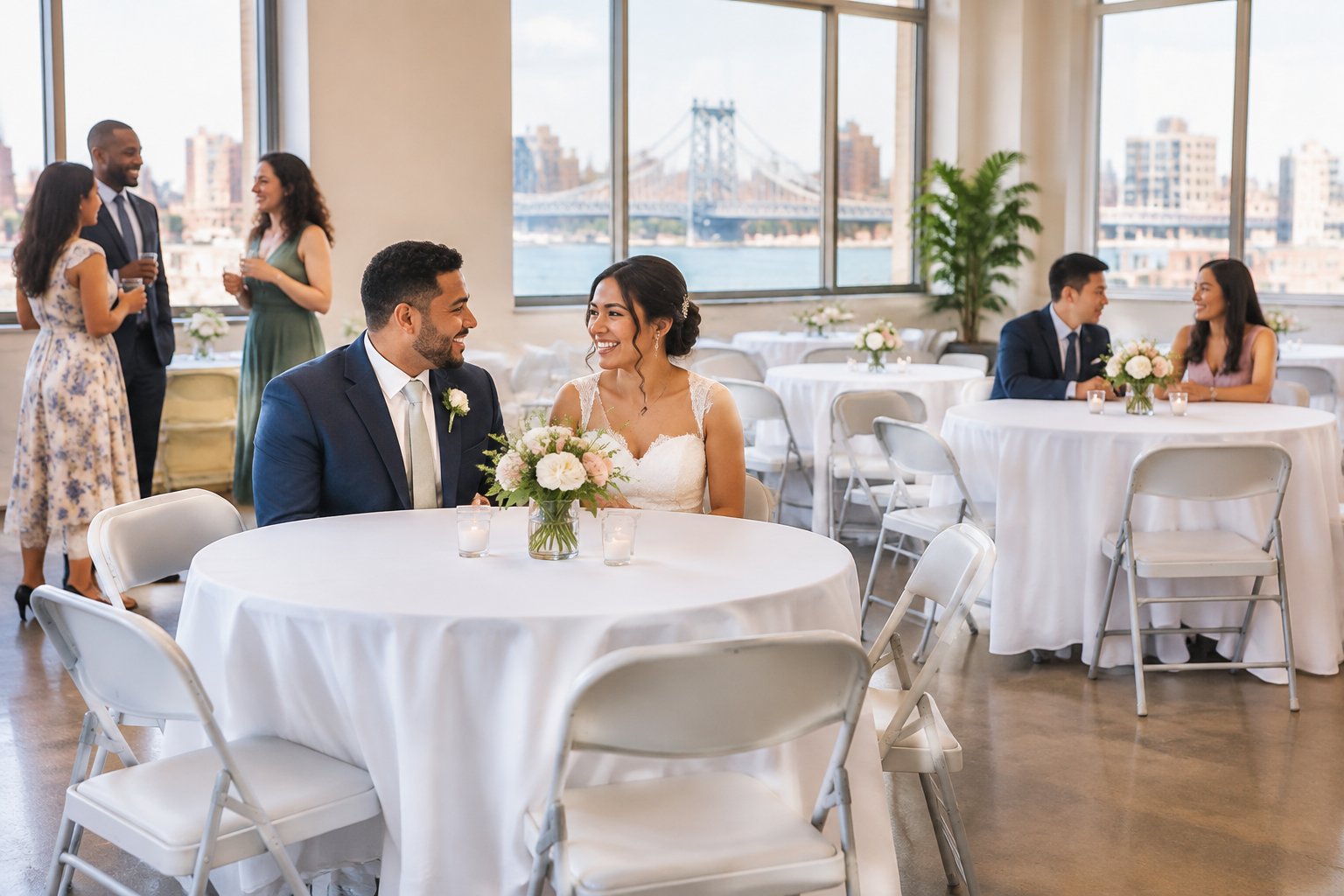
Look beyond the room’s appearance. A lower-cost venue can require rentals, delivery fees, staffing, and extra setup time, while a higher room rate may include equipment and service.
Restaurants and Private Dining Rooms
Restaurants with private dining rooms give you a food-centered setting with existing kitchens, restrooms, tables, and service staff. They work well for intimate weddings and receptions where dinner is the main event.
Ask about private-room fees, food and beverage minimums, menu flexibility, cake service, music volume, and dance-floor space. A restaurant can provide strong value when its tables and staff are included, though limited capacity or fixed dining layouts may affect your reception plans.
Banquet Halls and Ballrooms
Banquet halls and ballrooms suit large guest lists, formal receptions, and weddings with cultural traditions that require dinner service, entrances, dancing, or entertainment. Many halls provide tables, chairs, linens, staffing, climate control, and catering coordination.
Ask about the room’s seated capacity with a dance floor and DJ area included. A hall that seats 160 at full dining capacity may hold fewer guests once you add a band, buffet, photo booth, or ceremony seating.
Lofts, Rooftops, and Flexible Event Spaces
Lofts and rooftops give you control over the floor plan and décor. They suit couples who want a modern setting and have time to manage vendors, rentals, delivery schedules, lighting, and cleanup.
Request details about elevators, power, restrooms, sound limits, weather backup, insurance, and loading access. Rooftops need a clear rain and wind plan, while lofts may require rental orders for nearly every event item.
Boutique Hotels and All-Inclusive Packages
Boutique hotels can offer rooms, catering, bar service, staffing, guest accommodations, and a coordinated event timeline. Their packages simplify planning when you want several services handled through one venue team.
Compare the package line by line. Check room blocks, breakfast, parking, service charges, minimum guest counts, and menu upgrades.
You can also review all-inclusive wedding venues in Queens when fewer vendor contracts appeal to you.
How to Choose a Space for Your Guest Count
Choose a venue by measuring usable event space, not by reading the maximum capacity alone. Your layout must leave room for dining, dancing, catering, entertainment, guest movement, and any ceremony elements.
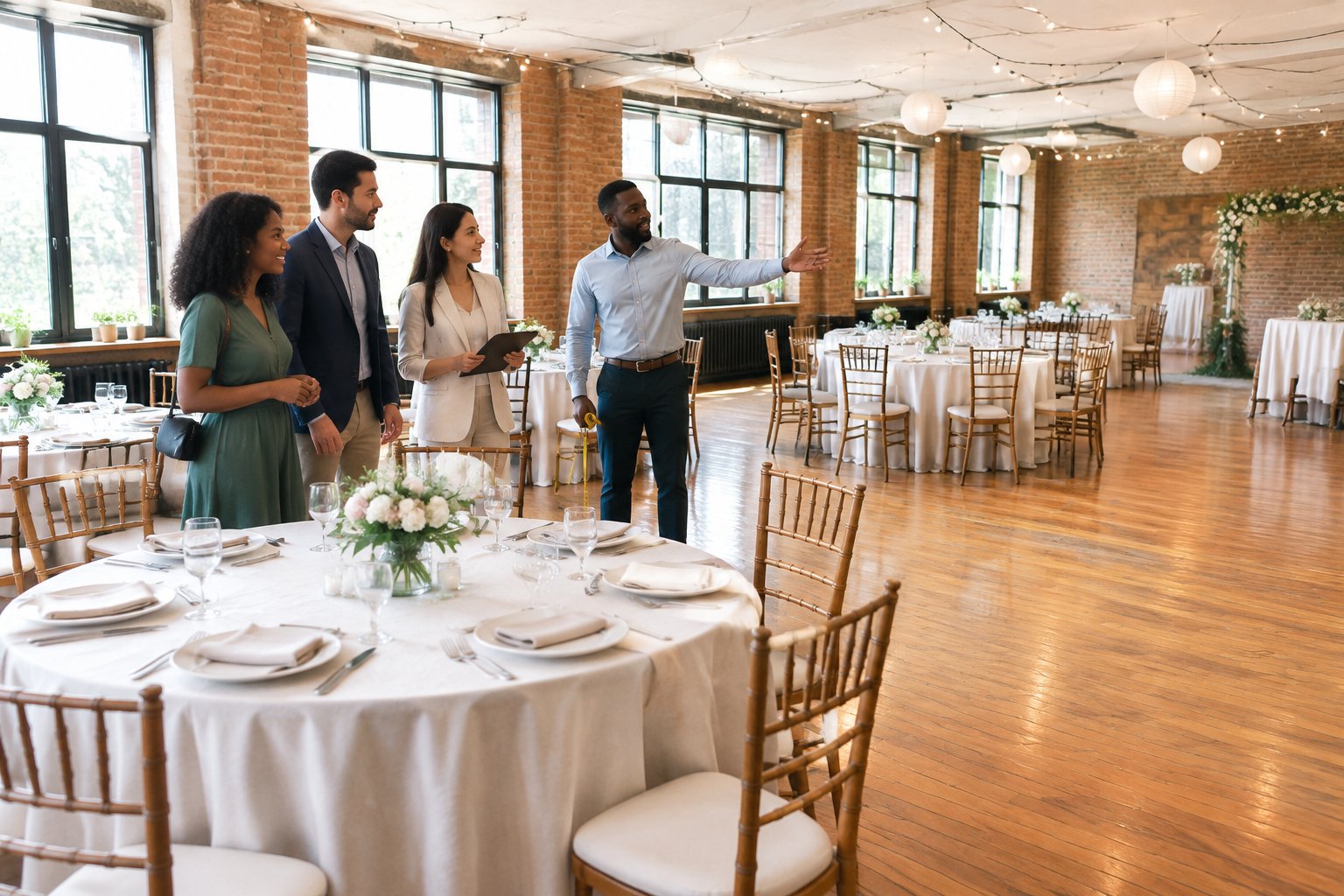
Before you tour, estimate your guest list and mark the activities you need. A room that feels generous during an empty tour can feel crowded once tables, chairs, a bar, and a dance floor are installed.
Small Weddings and Micro-Receptions
For 20 to 60 guests, consider a private dining room, small hall, loft, or restaurant buyout. A compact room keeps guests connected and reduces décor, staffing, and rental needs.
Ask for a floor plan with your table style and ceremony setup. Confirm whether the venue requires a minimum spend that makes sense for your guest count.
For planning help, review these tips for choosing the perfect venue for a small wedding.
Medium-Size Celebrations With Room to Dance
A guest list of roughly 60 to 150 people needs enough space for dining and an active dance floor. Ask the venue to place your estimated tables, DJ or band, buffet, bar, cake table, and photo area on the floor plan.
Check the distance between dining tables and the dance floor. Also ask whether guests must pass through the dance area to reach restrooms, exits, or the bar.
Large Receptions Without Overspending
For 150 guests or more, banquet halls and ballrooms often deliver better value because they are designed for large service teams and organized guest flow. Compare each room’s capacity after adding a stage, dance floor, ceremony seating, and cultural or entertainment needs.
Ask about parking, accessibility, elevator access, coat check, restroom capacity, and the venue’s event turnover schedule. A venue that handles large groups smoothly can reduce the need for extra rentals and outside labor.
What Should Be Included in the Venue Quote?
A complete venue quote should list the room, food, staffing, bar terms, setup, cleanup, taxes, service charges, and overtime rules. Request the quote for your exact guest count, date, event hours, and planned services.

Ask the coordinator to label every included item and every optional upgrade. This makes quotes easier to compare and helps you spot costs that appear after you sign.
Catering, Tables, Chairs, and Staffing
Confirm whether catering is in-house, required through an approved vendor, or fully open to outside providers. Ask for sample menus, dietary options, tasting fees, service style, staffing levels, and cake-cutting charges.
The quote should also identify tables, chairs, linens, china, glassware, flatware, setup, bussing, and cleanup. If rentals come from a third party, ask who pays delivery, pickup, damage, and replacement fees.
Bar Packages, BYOB Rules, and Corkage Fees
Bar pricing may use a per-person package, consumption charges, a cash bar, or a limited selection. Confirm service hours, beer and wine options, spirits, mixers, bartenders, and nonalcoholic drinks.
If you plan to bring alcohol, ask about BYOB rules, required insurance, licensed bartenders, storage, and permitted brands. Corkage fees can apply per bottle, per guest, or as a flat event charge, so get the exact formula before booking.
Setup Time, Cleanup, and Overtime Charges
Your rental period should state when vendors may enter, when guests may arrive, and when the room must be empty. Ask whether decorating, photography, ceremony setup, and vendor breakdown use the paid hours.
Confirm cleanup responsibilities and the overtime rate for the room, staff, music, and bar. A Saturday daytime event ending by 5:00 p.m. can qualify for a room discount at some Queens halls, so ask about time-specific offers when your schedule is flexible.
When Should You Book to Save Money?
Book as soon as you know your guest count and date range, then ask for Monday through Thursday, Sunday, daytime, and off-peak pricing. Flexible timing can lower the room fee and help you access more available spaces.
Why Weekday Weddings Can Cost Less
Weekday weddings can cost less because venues face lower demand from Monday through Thursday. You may also find better availability for preferred rooms and vendors.
Check guest travel, work schedules, and school calendars before choosing a weekday. A lower venue rate loses value if important guests cannot attend or if you need extra transportation and lodging support.
Off-Peak Dates and Flexible Time Slots
Winter dates, early spring dates, and daytime celebrations may receive lower rates than peak Saturday evenings. Ask about brunch packages, shorter receptions, Friday events, Sunday celebrations, and Saturday daytime discounts.
Keep two or three date options ready when you request quotes. A venue can then show you its best available rate instead of pricing only one high-demand date.
Comparing Queens With Nearby Brooklyn
Queens often gives you access to larger halls and practical event layouts, while Brooklyn offers a wide mix of restaurants, lofts, and design-focused spaces. Compare the complete guest experience, including room fee, catering, rentals, transportation, parking, and guest accommodations.
If you are considering both boroughs, compare affordable wedding venues near the city with Queens options using the same guest count and event hours. Request written quotes from each venue and place taxes, staffing, bar service, and overtime on the same comparison sheet.