
Christian Church Wedding Venues: How to Choose Yours
A church wedding gives you a meaningful setting, built-in symbolism, and a ceremony shaped by Christian faith. The best Christian church wedding venues for you will match your denomination or ceremony style, fit your guest list, and clearly explain their rules and total fees before you book.
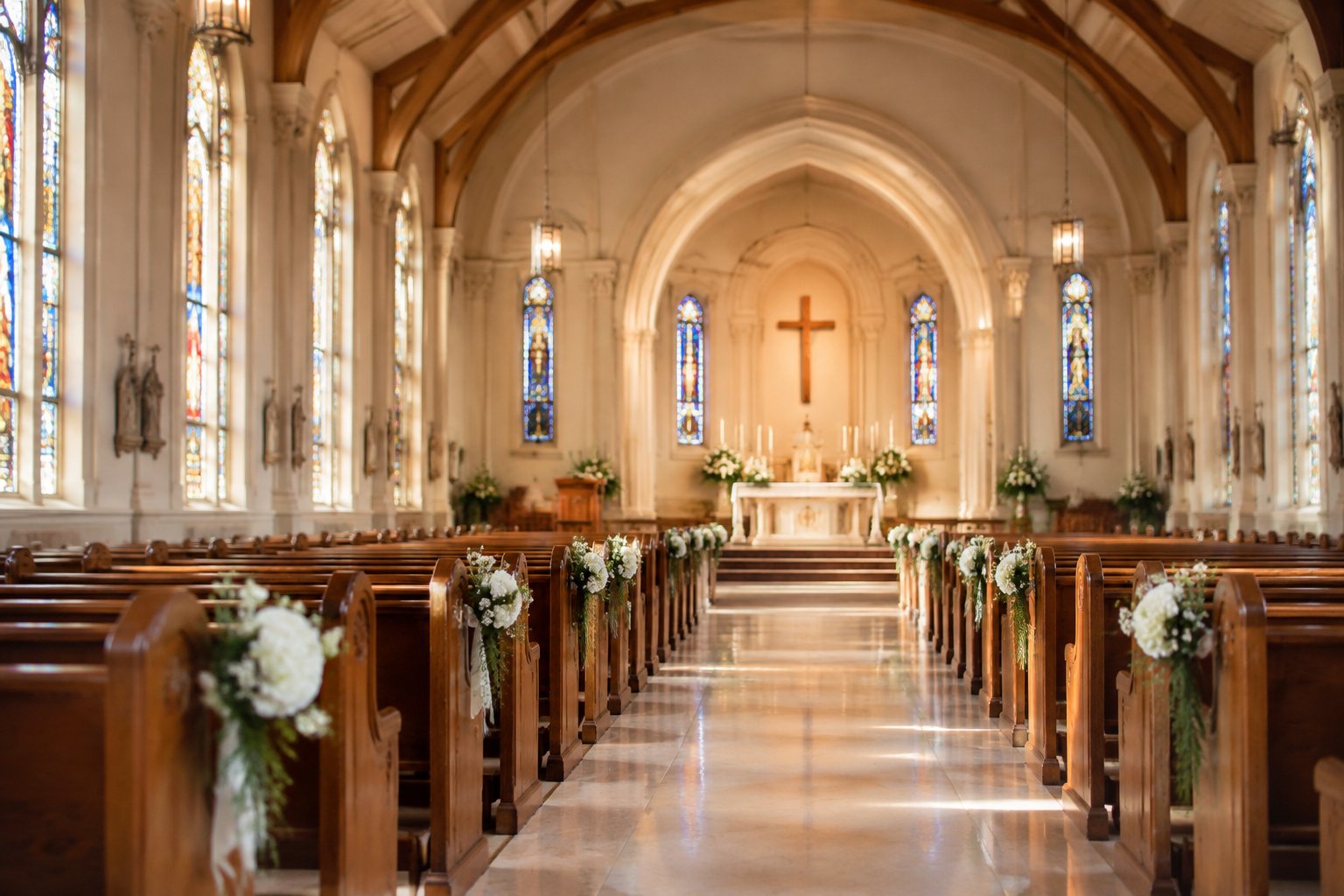
Start by deciding what you want your wedding day to feel like. An active congregation may offer pastoral support and premarital counseling, while a historic chapel may give you more flexibility with outside vendors and ceremony design.
Your choice also affects music, photography, décor, clergy, and reception plans. As you compare locations, ask about availability, membership rules, accessibility, parking, and every required payment. A thoughtful conversation with each church will help you choose a space that honors your faith and works smoothly for your guests.
What Makes a Church Setting Right for Your Ceremony?
A church setting is right for your ceremony when its faith practices, space, and wedding policies fit your relationship and plans. Look closely at the congregation, ceremony requirements, architecture, music options, and pastoral support.
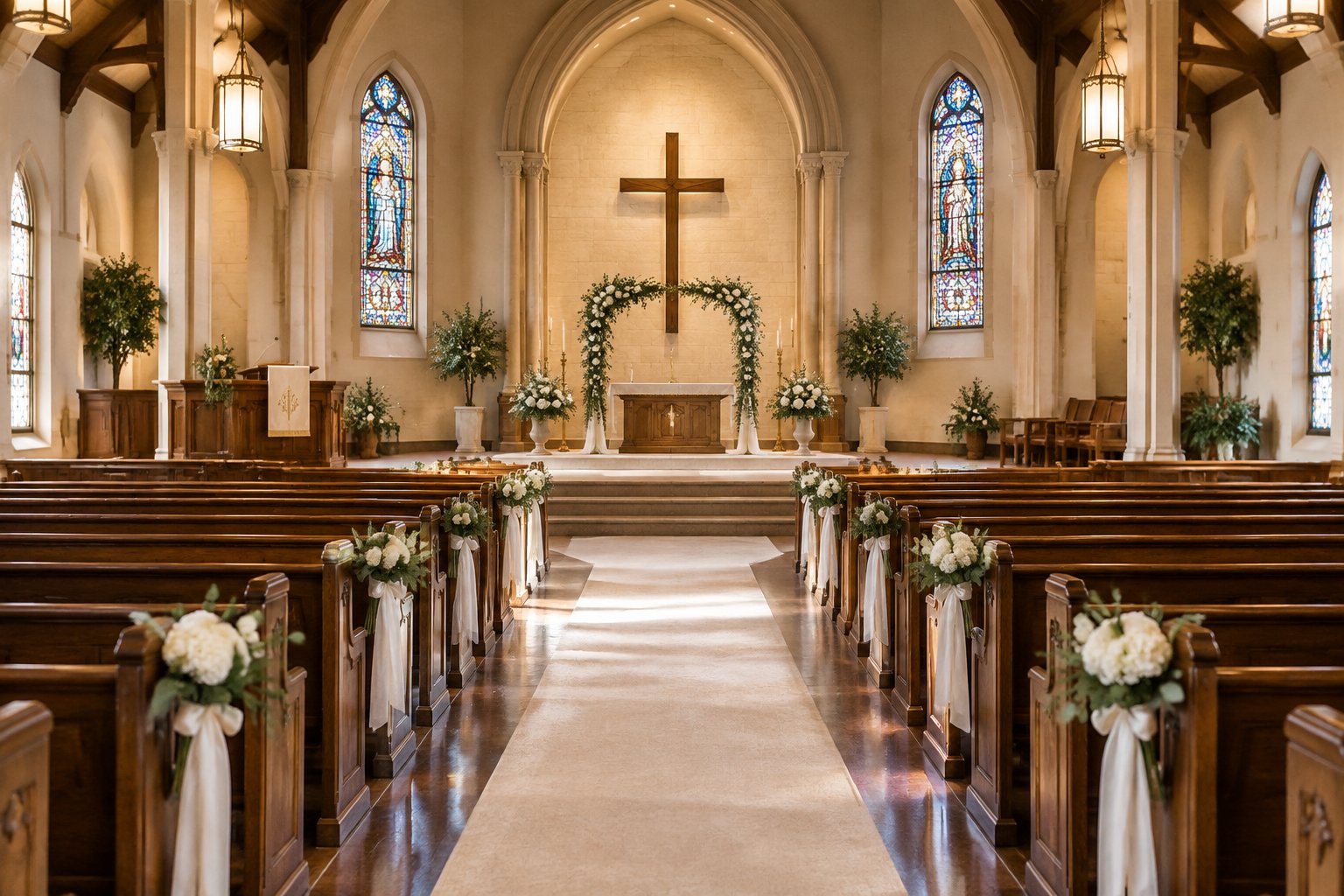
Active Congregations vs. Historic Event Chapels
An active congregation connects your wedding to a living worship community. You may receive guidance from a pastor, access to premarital counseling, and a ceremony that follows the church’s established order of service. Ask whether you must be a member, attend services for a set period, or use the church’s officiant.
A historic church or event chapel may focus on the venue experience. These spaces often appeal to couples who want distinctive architecture, flexible ceremony design, or a location with a strong sense of place. Confirm who conducts the service, whether religious language is required, and which parts of the ceremony you may personalize.
Denominational, Interfaith, and Inclusive Ceremony Policies
Policies vary across denominations and individual congregations. Ask whether the church welcomes couples from different Christian traditions, interfaith couples, divorced partners, LGBTQ+ couples, and guests of other faiths.
Discuss required readings, prayers, vows, Communion, and the officiant’s role before paying a deposit. Church & temple weddings and temple wedding venues follow their own religious rules. If you are comparing a Christian church with a temple, ask each location about eligibility, guest participation, clothing, ceremony access, and whether a separate civil ceremony is needed.
Architecture, Stained Glass Windows, and Pipe Organ Music
The building itself shapes the mood and photographs of your wedding. Stained glass windows, vaulted ceilings, carved wood, stonework, and a pipe organ create a strong visual and musical setting with less added décor.
Tour the space at the hour of your ceremony. Check how daylight reaches the altar, where your photographer may stand, and whether the organist can play your chosen processional. Ask about floral attachment points, candle rules, aisle runners, sound equipment, and protection for historic surfaces.
How to Find a Venue That Fits Your Wedding Day?
Choose a church venue by matching the ceremony space to your guest count, reception plan, travel needs, and vendor preferences. A practical tour should answer those questions before you compare deposits.
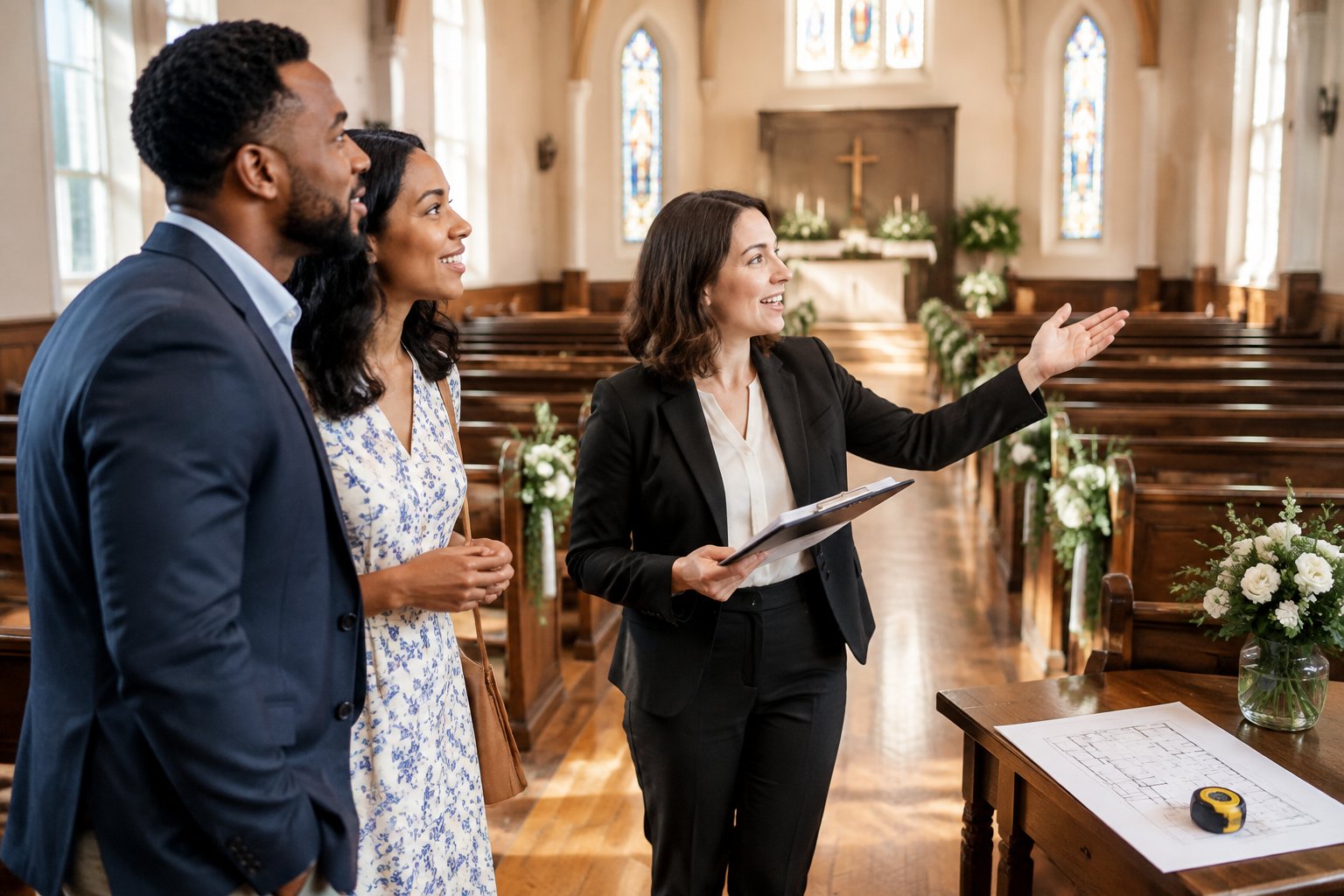
Ceremony-Only Churches vs. Ceremony-and-Reception Spaces
Many churches host the ceremony and send guests to a separate reception. This setup gives you a wider choice of banquet halls, restaurants, outdoor wedding venues, garden wedding venues, and other reception locations. Build travel time, transportation, and a room-flip schedule into your plan.
A church with fellowship rooms or a dedicated event hall keeps more of the day at one address. Ask about catering kitchens, seating layouts, bar service, cleanup, dancing, sound limits, and the time available for setup. You can also compare resort wedding venues, mansion wedding venues, barn wedding venues, and vintage wedding venues if you want a full-day venue with both ceremony and reception services.
Guest Capacity, Accessibility, and Parking
Request the seated capacity for your exact ceremony layout. A sanctuary’s posted maximum may change when you add a center aisle, wheelchairs, musicians, cameras, or reserved family seating.
Walk the route from parking to the entrance and sanctuary. Look for accessible parking, ramps, elevators, restrooms, clear aisle space, and seating for guests who cannot use pews. Ask about lighting after sunset and whether a shuttle is needed between the church and reception.
Rules for Officiants, Music, Décor, and Photography
Get the rules in writing before you sign. Confirm who may officiate, whether outside clergy need approval, and whether a civil officiant may participate.
Ask whether you may choose secular or contemporary music, bring your own musicians, or use recorded tracks. Clarify floral limits, aisle décor, candles, pew attachments, photography positions, flash use, video equipment, and ceremony length. Share your wedding day timeline with the church coordinator so setup and guest arrival times are realistic.
How Much Do Church Wedding Venues Cost?
Church wedding venue costs come from the space, required staff, clergy, music, counseling, cleaning, and optional services, so compare the full package instead of the headline rental fee.
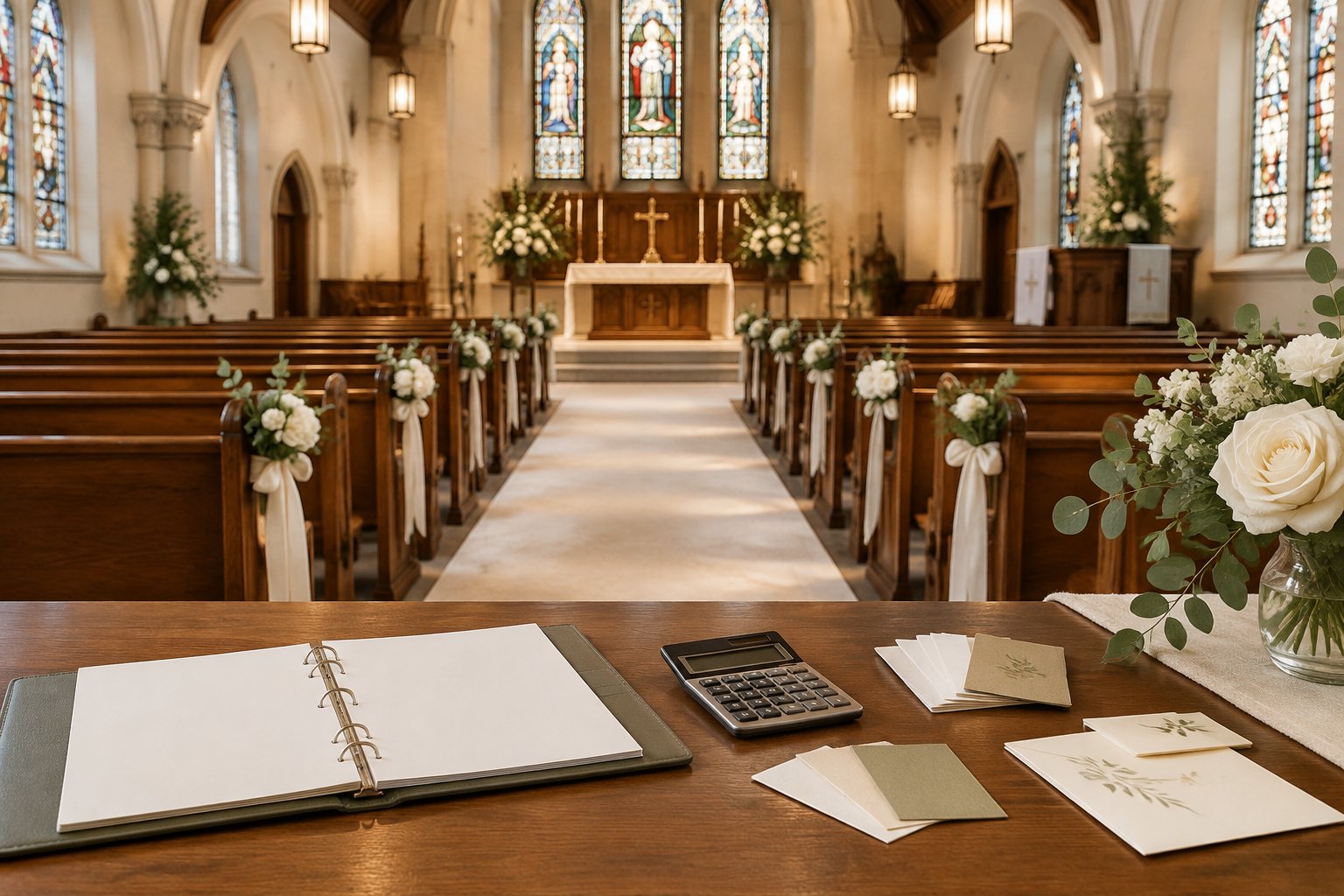
What Venue Rental Costs Usually Include
The rental fee may cover the sanctuary, a rehearsal window, dressing rooms, basic seating, and a church coordinator. Some churches set a fixed fee, while others use a member rate, nonmember rate, or suggested donation.
Ask whether the quote includes:
- Ceremony time and rehearsal access
- Dressing rooms for each partner
- Custodial service and cleanup
- Sound system or technician
- Wedding coordinator
- Parking and security
- Reception or fellowship hall access
- Insurance or damage deposits
Request an itemized contract with tax, overtime, cancellation terms, payment dates, and extra-hour charges.
Fees for Clergy, Musicians, and Required Counseling
Clergy, organists, pianists, soloists, custodians, and sound technicians may have separate fees. Premarital counseling may be required, included in a package, or arranged through another provider.
Ask who sets each fee and when payment is due. Confirm whether gratuities are expected, whether the church requires its own musician, and whether rehearsal attendance creates an additional charge.
How to Compare Quotes With a Spot Estimate
Use a spot estimate as an early planning figure, then replace it with a written quote from each church. A quick estimate helps you compare locations, while an itemized proposal shows what you will pay for your exact date and guest count.
Create a side-by-side list with the base fee, staffing, music, counseling, cleaning, deposits, taxes, and reception costs. Compare matching services across venues so a lower starting price does not hide important add-ons. For broader planning, review what do most wedding venues cost and affordable wedding venues.
Notable Church and Chapel Venues Across the U.S.
Notable church and chapel venues range from historic sanctuaries in major cities to welcoming congregations and countryside chapels in Texas Hill Country. Treat these names as starting points, then verify current policies, pricing, and availability directly with each venue.
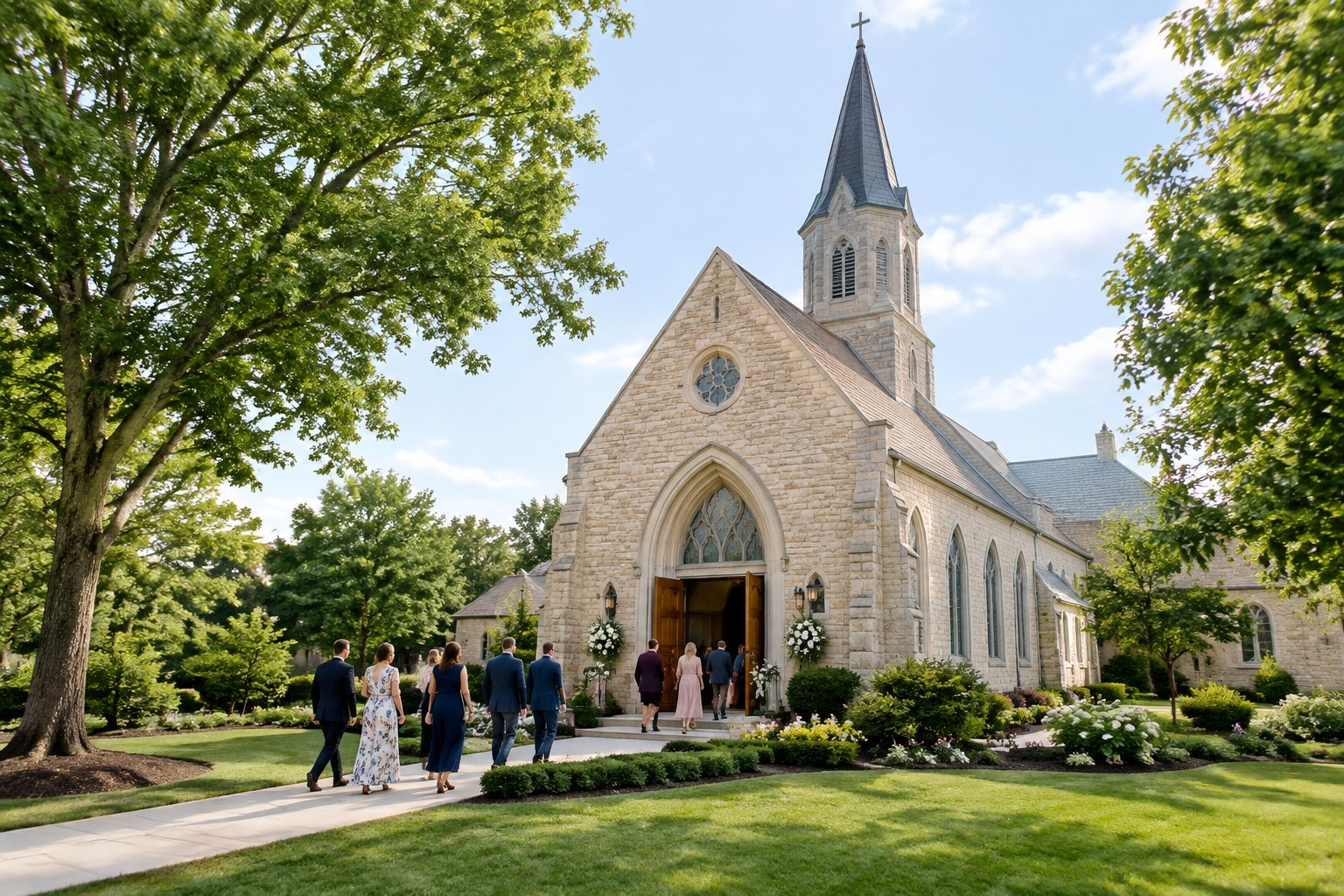
Historic and Flexible Venues in New Orleans and Philadelphia
Felicity in New Orleans, Louisiana, offers a historic setting for couples drawn to the city’s architecture and cultural character. Ask about ceremony layouts, reception access, vendor rules, parking, and weather plans before you build your timeline.
In Philadelphia, Pennsylvania, St. Stephen’s Episcopal Church provides a traditional Christian setting with formal worship surroundings. Discuss denomination requirements, clergy approval, music, photography positions, and rehearsal scheduling early in the process.
Inclusive Church Venues in South Florida
Coral Gables Congregational United Church of Christ is a South Florida option for couples seeking a Christian ceremony within an inclusive church community. Ask about interfaith services, LGBTQ+ ceremonies, outside officiants, required counseling, and the language permitted in your vows.
South Florida travel also brings guest concerns such as heat, rain, mobility, and parking. Confirm air conditioning, covered walkways, restroom access, and a weather plan for any outdoor portion of the day.
Chapel and Church Options in Texas Hill Country
Gruene Estate and Old Glory Ranch offer Texas Hill Country settings with a chapel or church-style ceremony experience alongside broader wedding-day spaces. Their appeal may suit couples who want a ceremony and reception connected to a scenic property.
First Christian Church offers a more traditional congregational setting. Ask whether the church hosts nonmembers, which officiants are approved, and how its ceremony schedule fits with your reception plans. Compare travel time, guest capacity, required vendors, and indoor backup space across these options.
Questions to Ask Before You Book
Ask every church for written answers about dates, logistics, costs, officiants, membership, and marriage preparation before you sign a contract. Names such as Schram Memorial Chapel, First Congregational Church, and Hidden Acres can help you build a comparison list, though each venue sets its own policies.
Is Your Date Available for a Rehearsal and Ceremony?
Ask whether your preferred date has time for the ceremony, rehearsal, setup, photography, and guest arrival. Confirm the exact access window and what happens if another service, event, or funeral affects the schedule.
Request the cancellation policy, rescheduling terms, deposit deadline, and overtime rate. Put the ceremony start time and rehearsal appointment in the contract.
Can You Hold the Reception On-Site or Nearby?
Ask whether the church has a fellowship hall, kitchen, dining room, or outdoor area for your reception. Confirm catering rules, alcohol policies, cleanup duties, dance and music limits, tables, chairs, linens, and end time.
If the reception is elsewhere, measure the travel route at the expected time of day. Give guests clear directions and check whether accessible transportation or a shuttle is needed.
What Are the Membership and Marriage Preparation Requirements?
Ask whether membership is required and whether nonmembers pay a different fee. Confirm the approved officiant list, premarital counseling schedule, ceremony script rules, required readings, and paperwork deadline.
Discuss interfaith or inclusive ceremony needs in your first meeting. Before booking Schram Memorial Chapel, First Congregational Church, Hidden Acres, or any other venue, request its current wedding packet and read every policy with your partner.