
Cost of Catering for a Wedding: What to Budget
A reasonable cost of catering for a wedding is about $70 to $100 per guest, with an average near $80 for a full reception meal. For 100 guests, that puts food and service near $8,000 before you add items such as bar service, taxes, gratuity, rentals, and venue fees.
Your final wedding catering cost depends on your guest count, menu, service style, location, and package details. A buffet may cost less than a plated dinner, while premium proteins, full bar service, and extra staffing can push the wedding catering budget much higher.
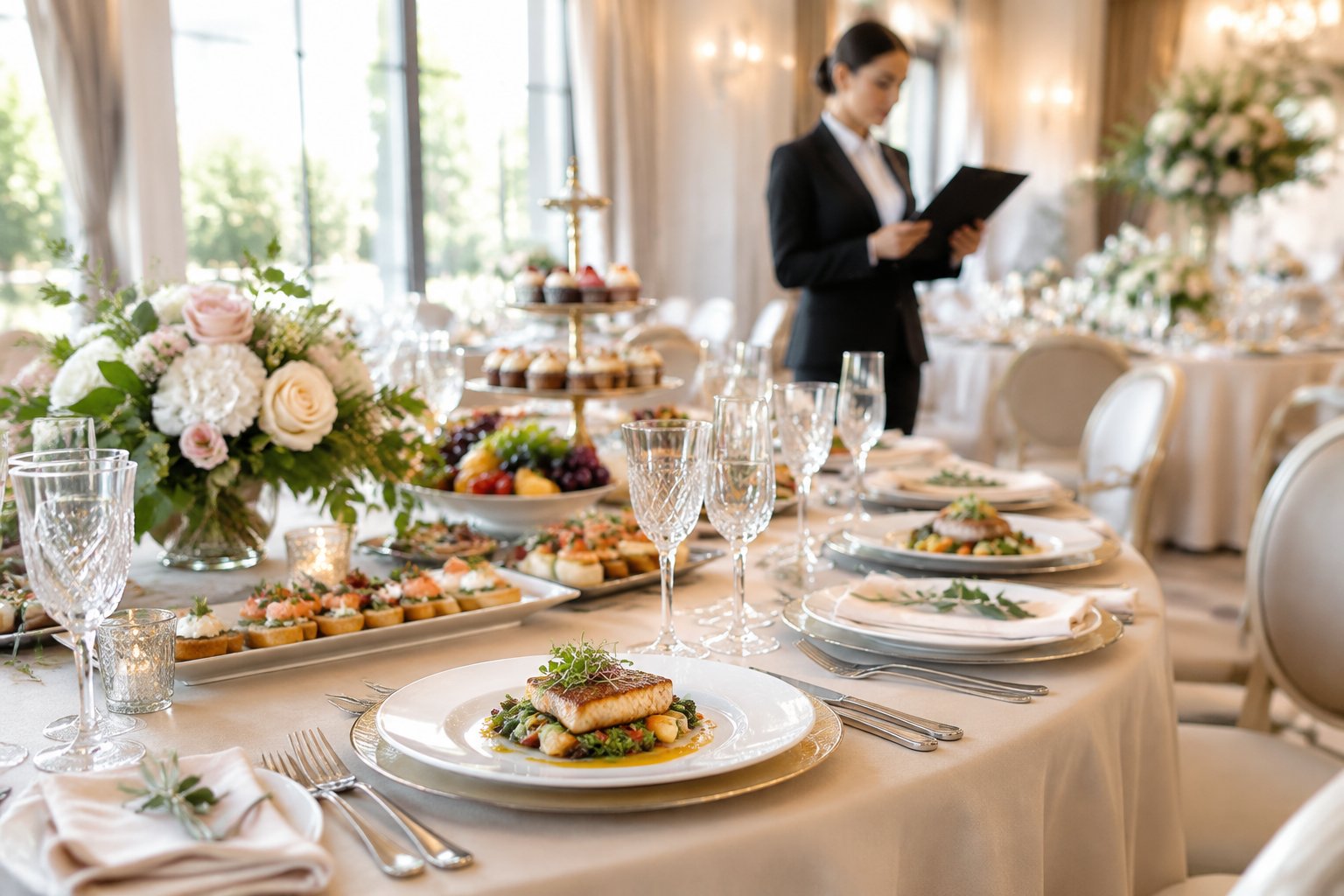
Start by setting a per-person target, then request itemized catering quotes that show food, labor, rentals, fees, and taxes separately. You can also compare your estimate with guidance on how much a wedding meal should cost per person before booking a caterer.
What Is the Average Cost Per Wedding Guest?
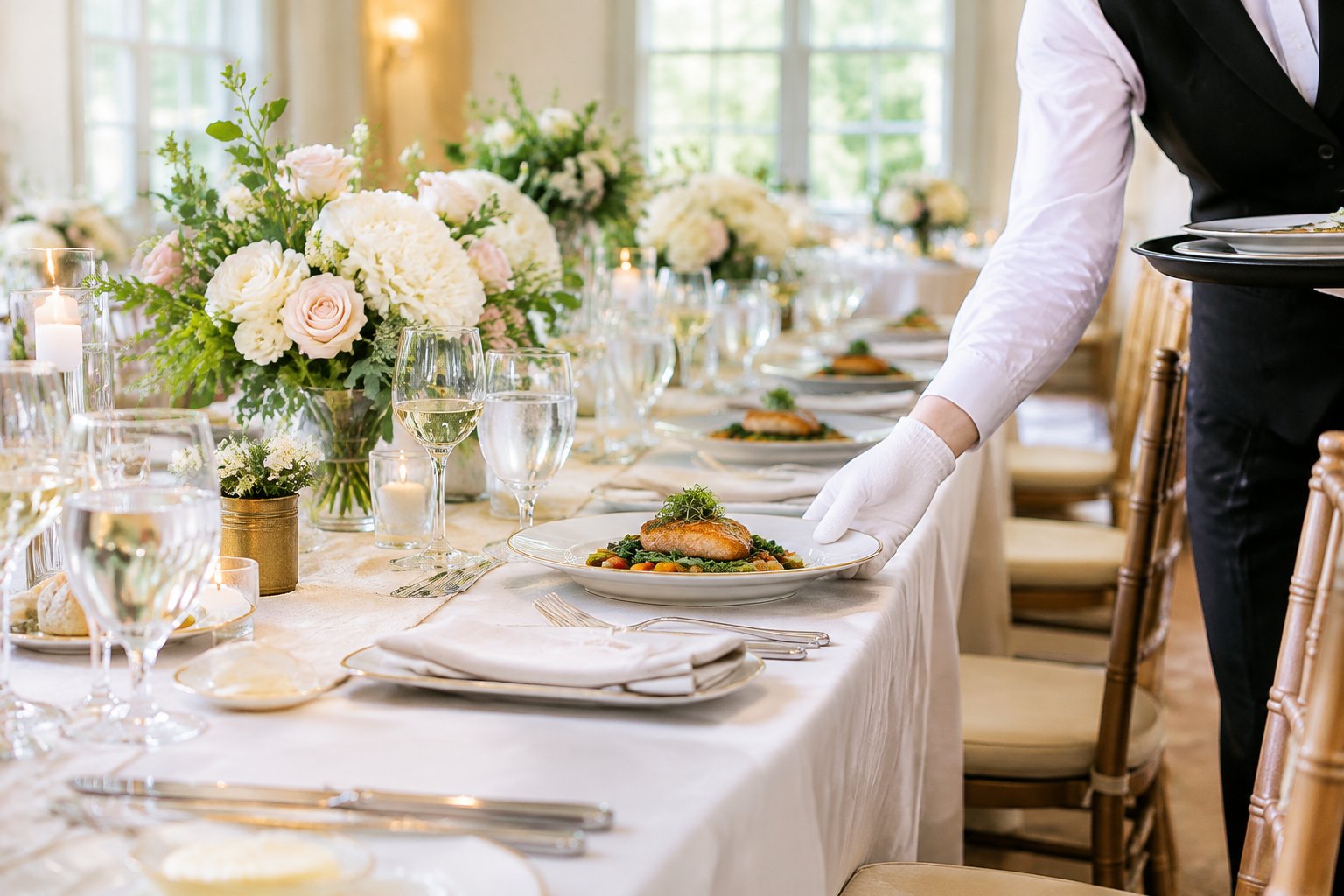
The average wedding catering cost is about $80 per guest for a full reception meal, with many U.S. celebrations landing between $40 and $150 per person. Your guest count gives you a starting total, while service style, location, menu, and extras determine the final wedding food cost.
Typical National Price Ranges
A practical planning range for wedding catering prices looks like this:
- Cocktail reception with heavy appetizers: $35 to $55 per person
- Buffet catering: $40 to $65 per person
- Family-style dining: $50 to $70 per person
- Plated dinner: $65 to $85 per person
- Premium or multi-course service: $100 to $150 or more per person
These figures describe food and basic service in many markets. Beverages, bar staff, rentals, service fees, gratuity, and sales tax might sit outside the quoted rate.
Sample Totals for 50, 100, 150, and 200 Guests
Using an $80 catering cost per person gives you a simple starting estimate:
| Guest count | Estimated food and service |
|---|---|
| 50 guests | $4,000 |
| 100 guests | $8,000 |
| 150 guests | $12,000 |
| 200 guests | $16,000 |
The catering for 150 guests cost can land below or above $12,000 depending on the menu and location. Catering for 200 guests cost also reflects staffing, kitchen capacity, buffet length, bar stations, and equipment needs.
Smaller weddings can face minimum charges, which raises the catering cost per person.
Why Location Changes the Final Price
Location affects wages, food costs, transportation, rentals, and local demand. A 150-person reception in Manhattan can cost several times more than a comparable celebration in Salt Lake City. Remote venues also add driving time, delivery charges, lodging, or mobile kitchen costs.
Ask each wedding caterer whether the quote includes travel, parking, loading access, kitchen use, and venue-required staff. Give the caterer your exact address and reception schedule so the estimate reflects the real setup.
How Meal Service Style Affects Your Bill
Your meal service style can change the bill by tens of dollars per guest because each format requires a different level of labor, equipment, and portion control. Plated dinner service offers a formal experience, while buffet catering and family-style dining provide menu flexibility at different price points.
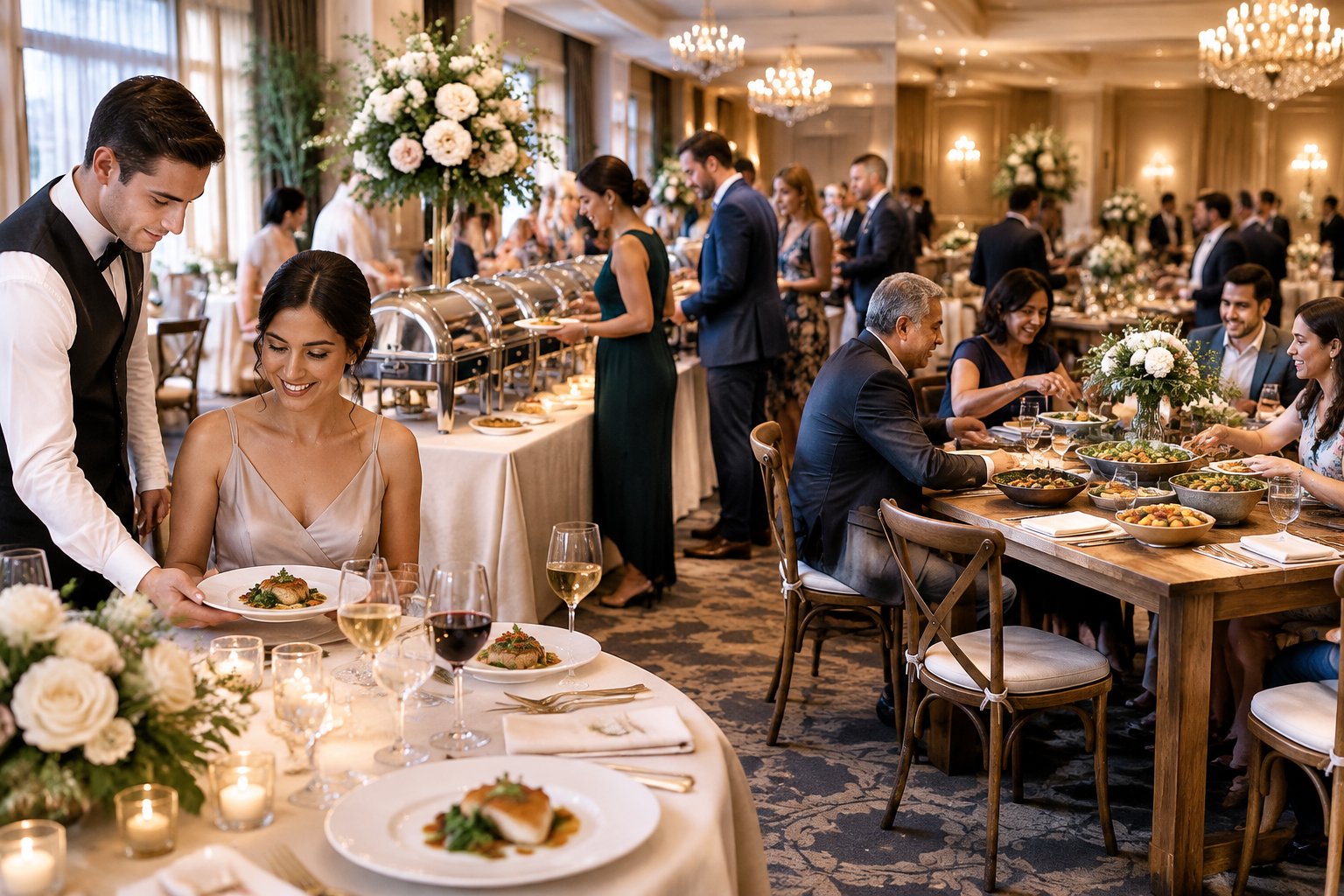
Your venue layout and reception timeline should guide the choice. A crowded room may need more serving points, while a formal schedule may benefit from meals served at each table.
Plated Dinner Service
A plated dinner usually costs $65 to $85 per person before additional fees. The kitchen prepares measured portions, and servers deliver each course to assigned seats. This format supports a polished timeline and clear portion control.
Costs rise with multiple courses, separate entrée selections, steak or seafood, and a large server team. You also need an accurate RSVP count and a system for tracking meal choices and dietary accommodations.
Buffet Catering
Buffet catering often costs $40 to $65 per person. Guests select their portions from shared service tables, which reduces some table-service labor and allows you to offer several entrées or sides.
A buffet still needs attendants, serving equipment, replenishment, and enough space for lines. Two buffet lines or duplicate stations help a large guest count move through dinner faster.
Family-Style Dining
Family-style dining falls near $50 to $70 per person. Large platters arrive at each table, creating a relaxed meal with shared dishes and conversation.
Your caterer must plan enough food for every table, including vegetarian, vegan, gluten-free, or allergy-safe choices. Large platters also require table space and staff to refresh dishes during the meal.
Food Stations and Interactive Food Stations
Food stations often cost $45 to $75 per person, depending on the number and complexity of stations. A pasta bar, taco station, carving table, or made-to-order dessert counter gives guests variety and movement.
Interactive food stations require chefs, attendants, cooking equipment, power, and floor space. Limit the number of stations and choose one memorable feature if you want the experience without a large labor increase.
Cocktail-Style Receptions and Brunch Weddings
A cocktail-style reception with substantial appetizers can cost $35 to $55 per person. Plan enough servings and communicate the format clearly so guests know whether to expect a full meal.
A brunch wedding can lower food costs through eggs, pastries, fruit, potatoes, and lighter proteins. Add coffee service, juices, and a breakfast cocktail option to match the event time.
What Is Included in a Catering Quote?
A catering quote should list food, service staff, beverages, rentals, setup, cleanup, and every extra charge in writing. Catering packages vary widely, so the per-person price alone does not show your complete wedding catering cost.

Compare quotes line by line. Ask whether each item is included, optional, charged per guest, or subject to a minimum.
Food, Beverages, and Staffing
Food coverage may include appetizers, the main meal, sides, bread, nonalcoholic beverages, and kitchen labor. Check whether the quote includes cocktail hour appetizers, tastings, children’s meals, and dietary accommodations.
Staffing can include cooks, servers, bartenders, captains, setup crew, and cleanup workers. Ask how many staff members will be present, how long they will work, and what overtime costs.
Catering Packages and Rentals
Wedding catering packages might include plates, flatware, glassware, serving pieces, chafing dishes, linens, and basic setup. Specialty rentals such as chargers, upgraded china, colored glassware, lounge furniture, or premium linens may cost extra.
Confirm who supplies tables, chairs, bar equipment, ice, trash removal, refrigeration, and power. Your venue may require specific rental companies or equipment standards.
Bar Options and Bartenders
Bar service can include beer and wine, a limited bar, an open bar, or a cash bar. Open bar packages cost more because you pay for a broader selection and higher drink volume.
Ask about bartenders, mixers, ice, glassware, alcohol quantities, permits, and service hours. A limited bar with beer, wine, and one signature cocktail can control spending while giving guests a complete drink option.
Desserts, Cake Service, and Vendor Meals
A wedding cake, dessert table, cupcakes, or late-night sweets may be included in the package or priced separately. Ask whether the caterer plates and serves an outside cake and whether a cake-cutting fee applies.
Vendor meals cover your photographer, DJ, planner, band, and other working vendors who remain through dinner. These meals may have a lower price than guest meals, so include the correct vendor count when you request the quote.
Fees That Can Raise the Final Catering Total
Service fees, gratuity, sales tax, delivery, setup, and venue charges can add a substantial amount to the menu price. Review the fee section before comparing two catering quotes because a lower base rate may exclude costs listed in another caterer’s package.
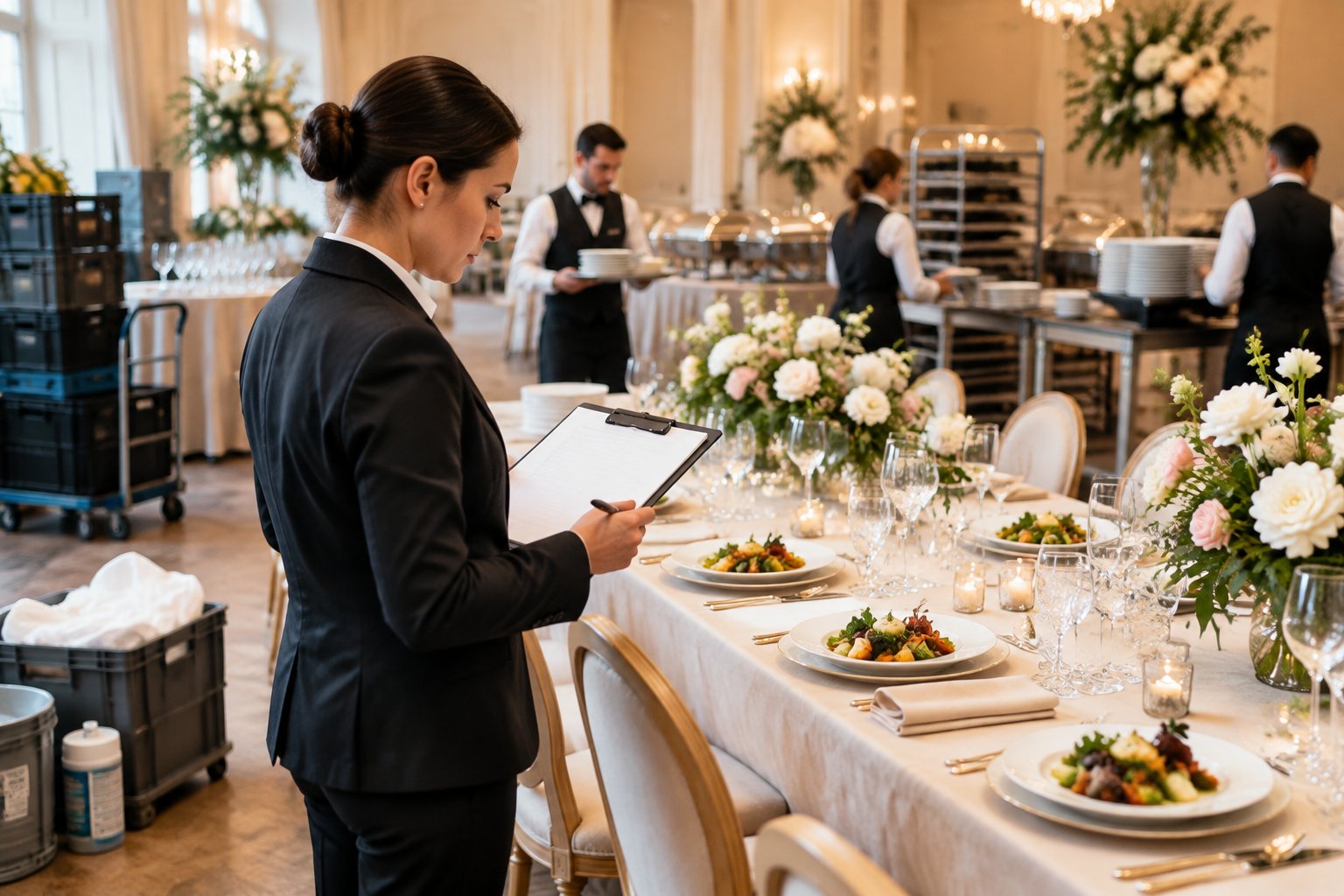
Request a sample invoice or full estimate showing the subtotal, percentage fees, flat charges, taxes, deposits, payment schedule, and final-count deadline.
Service Fees, Gratuity, and Sales Tax
A service fee often runs around 18% to 22% of food and beverage charges. It pays the catering company for administration and event operations, so ask whether it includes staff gratuity.
Gratuity may be added separately at 15% to 20%, depending on the contract and service level. Sales tax applies according to state and local rules. Ask whether the tax is calculated before or after the service fee.
Cake Cutting and Corkage Charges
A cake cutting fee often ranges from $1 to $3 per slice when the caterer serves a cake supplied by another vendor. Corkage fees may apply when you provide your own wine, beer, or liquor, with charges often set per bottle or by event.
Ask about these policies before choosing an outside bakery or bringing alcohol from another source. The contract should state the fee, unit, and estimated quantity.
Delivery, Setup, and Venue-Related Costs
Delivery fees reflect travel distance, vehicle needs, parking, and loading conditions. Setup and breakdown charges cover arranging tables, warming food, clearing service areas, and removing equipment.
Venue requirements can add kitchen fees, outside-caterer fees, insurance costs, permits, power needs, or mandatory staffing. Schedule a venue walk-through with the caterer so the team can identify access limits and equipment needs.
What Drives Prices Up or Down?
Menu ingredients, wedding date, local demand, and food quantity shape the biggest price changes after guest count. You can lower food costs through seasonal choices and a focused menu, while premium ingredients and peak dates raise the estimate.
Menu Choices and Premium Ingredients
Filet mignon, lobster, specialty seafood, imported cheese, and premium ingredients cost more than chicken, pork, pasta, or seasonal vegetables. A menu with several expensive proteins increases purchasing and preparation costs.
Seasonal ingredients often offer better value and fresher flavor. Local ingredients can also reduce transportation costs, though specialty local products such as regional oysters or craft beverages may carry a premium.
Ask your caterer to price two menu tiers. You might keep one premium entrée for a plated meal while using seasonal sides and a simpler appetizer selection.
Season, Date, and Local Market Demand
Peak wedding season and Saturday evening dates carry strong demand in many markets. Friday, Sunday, winter, and daytime receptions may offer more favorable pricing, depending on local availability.
Your date also affects staffing and rental supply. Ask about off-peak packages before signing a venue contract, especially if your schedule has flexibility.
Guest Count Minimums and Food Quantities
Caterers may set a minimum food and beverage spend, often around $2,500 to $4,000 for smaller events. That minimum can make a 50-person reception cost more per guest than a 100-person wedding.
Use a guest list calculator to estimate adults, children, vendors, and expected attendance. Give the caterer your best count early, then confirm the final number by the contract deadline. Adding guests late can require more food, rentals, staff, and bar inventory.
How to Save on Wedding Catering Without Shortchanging Guests
You can save on wedding catering by setting an all-in budget, comparing complete quotes, choosing targeted food and bar upgrades, and testing guest-count scenarios before booking. These choices protect the guest experience while directing money toward the parts of the meal you value most.
Build an All-In Budget Before Booking
Set a ceiling that includes food, beverages, rentals, staffing, service fees, gratuity, tax, delivery, setup, desserts, and vendor meals. A wedding budget calculator helps you reserve money for catering without overlooking photography, attire, music, or the venue.
Keep a separate line for optional additions such as late-night snacks, specialty rentals, and premium cocktails. This makes it easier to add one favorite feature without losing control of the full bill.
Compare Menu Tastings and Quotes Fairly
Schedule a menu tasting with each finalist and ask for the same guest count, service style, meal timing, bar hours, and dietary needs. Compare the complete total, not only the advertised per-person rate.
Ask each caterer to identify included rentals, staffing hours, setup tasks, cleanup, cake service, and vendor meals. A clear quote also gives you stronger information for your wedding planner and venue team.
Choose Smart Food and Bar Trade-Offs
A buffet or family-style meal can reduce labor compared with plated dinner service. Seasonal sides, one featured entrée, and a focused appetizer menu help control food costs while keeping the meal satisfying.
For drinks, choose beer and wine with a signature cocktail, or offer an open bar for a shorter period. You can place the savings toward cocktail hour appetizers, a dessert table, or late-night snacks that guests will notice.
Use a Catering Calculator to Test Scenarios
A wedding catering calculator lets you compare guest counts, service styles, menu tiers, bar plans, fees, and gratuity. Test your expected count alongside a higher and lower attendance estimate.
Pair the results with your wedding budget calculator, then request updated catering quotes using the scenario that fits your venue and guest experience. This process shows whether reducing the guest list, changing service style, or limiting the bar creates the largest savings.