
Cost of Wedding Cake: Prices, Portions, and Savings
Wedding cake costs in the United States commonly fall between $500 and $1,200 for a custom cake, with many couples paying about $4 to $12 per serving before delivery, setup, rentals, or venue cutting fees. A standard cake for 100 guests often lands near $600 to $900, while a simple grocery bakery cake may cost less and a luxury custom design may exceed $1,500.
Your guest count sets the starting point, while tiers, frosting, decorations, flavors, delivery, and labor shape the final quote. A buttercream cake with clean piping costs less than a fondant design with handmade sugar flowers, painted details, or edible gold leaf.
Start by choosing the parts of your wedding cake that deserve the most attention. If you want a personalized estimate, compare quotes using your serving count and ask each wedding cake baker for an all-in price before you reserve your date.
How Much Should You Expect to Pay?
You should budget about $500 to $1,200 for a professionally made wedding cake, with $4 to $12 per serving covering many custom designs.

Your average wedding cake cost rises when you add servings, tiers, premium ingredients, detailed decoration, delivery, or venue services. A standard wedding cake from a local bakery may fit near the lower end, while a custom designer cake with complex structural or decorative work can move well above the average.
The National Average and Why It Varies
Many couples set aside $500 to $900 for a standard wedding cake. Custom designer cakes often range from $500 to $1,500 for 100 guests, with luxury work reaching $2,000 or more.
Your location affects wedding cake pricing because labor, rent, ingredient costs, and demand differ by market. Popular spring and summer weekends may also have higher order minimums. A weekday or off-season date can give you more bakery choices.
A simple buttercream design may cost $4 to $7 per serving. Detailed fondant work often falls near $7 to $12 per serving, while luxury designs with sugar flowers or hand painting can reach $12 to $25 or more.
Wedding Cake Cost per Slice
Per-slice pricing gives you a useful way to compare quotes. Multiply the quoted rate by the number of servings:
- $4 per slice for 100 servings equals $400.
- $7 per slice for 100 servings equals $700.
- $12 per slice for 100 servings equals $1,200.
Ask what your baker calls one serving. A wedding portion is often about 1 by 2 inches, while a larger party portion produces fewer slices from the same tier. Confirm whether the quote includes fillings, frosting, fondant, flowers, topper, tasting, tax, delivery, and setup.
What a Wedding Cake for 100 Guests Usually Costs
A wedding cake for 100 guests commonly costs $500 to $1,200, with many standard custom designs landing between $600 and $900. A grocery bakery cake may cost less, while a sought-after specialty baker may charge $1,500 or more.
An 8-inch, 10-inch, and 12-inch round combination provides about 118 wedding servings. That arrangement gives you room for uneven cuts, saved portions, or second servings. A smaller display cake paired with a kitchen cake can reduce the cost while keeping the reception table polished.
Size the Cake Around Your Guest Count
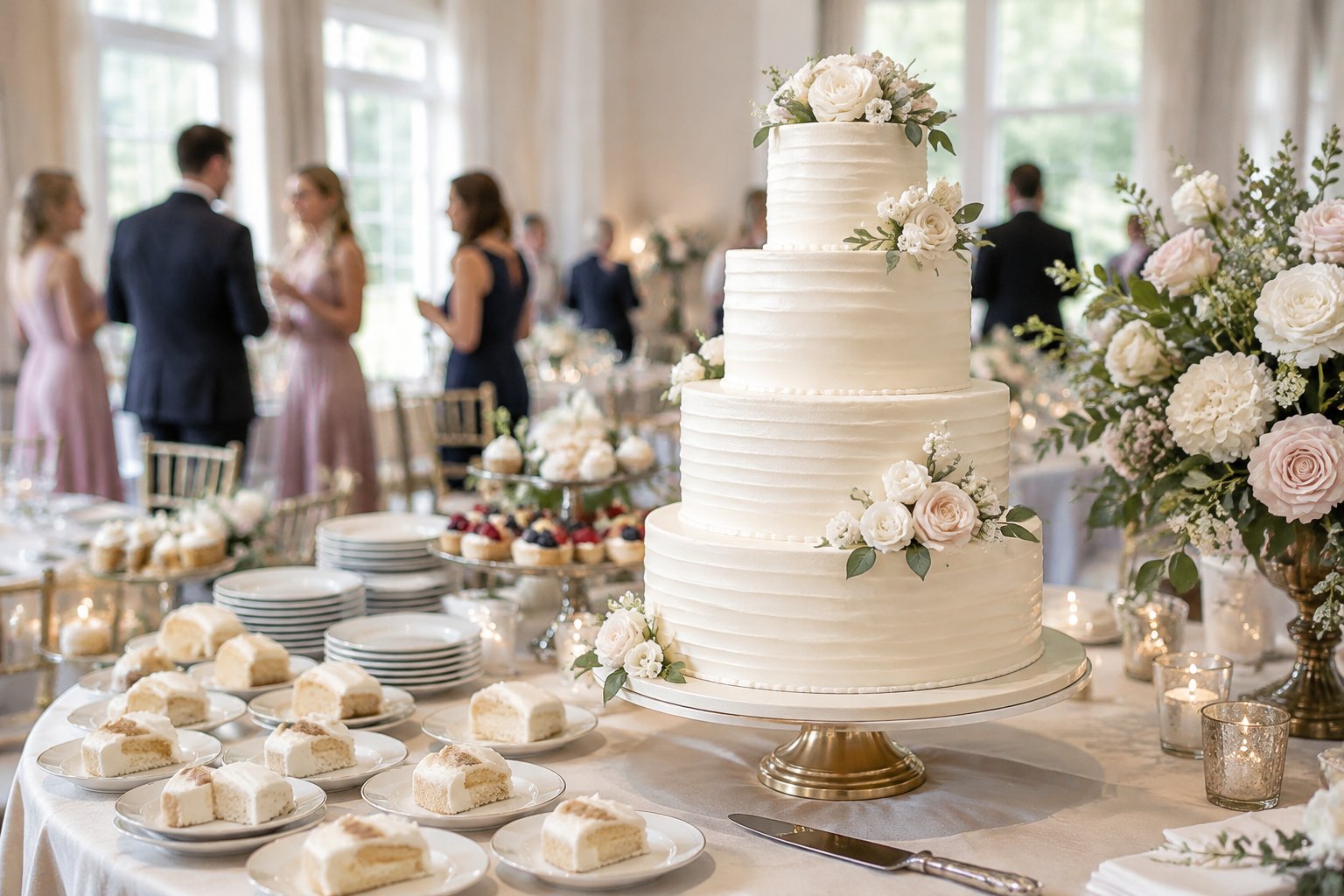
Your guest count determines how many servings you need, while the cake’s shape and tier arrangement determine how those servings appear on the table. A display cake, cutting cake, or kitchen cake can help you match the look you want to the number of portions required.
How Many Servings Do You Really Need?
Start with the number of guests who will receive cake. One standard wedding serving per guest gives you a clear starting point, then you can adjust for your dessert menu, meal timing, and plans to save the top tier.
If cake is served with several other sweets, your baker can help you assess whether a smaller serving count fits. If cake is the only dessert or your guests are enthusiastic cake eaters, plan for a modest cushion.
Tell your baker whether you want wedding-size portions or larger party slices. The same tier can serve fewer people when each slice is more generous.
Typical Tier Sizes and Serving Counts
The following estimates use round tiers about 4 inches tall and standard wedding portions:
| Round tier | Approximate wedding servings |
|---|---|
| 6 inches | 12 |
| 8 inches | 24 |
| 10 inches | 38 |
| 12 inches | 56 |
| 14 inches | 78 |
| 16 inches | 100 |
A 6-inch, 8-inch, and 10-inch cake serves about 74 people. An 8-inch, 10-inch, and 12-inch cake serves about 118 people. Square tiers provide more servings at the same width because they use more surface area.
Your baker’s cutting chart takes priority because height, shape, filling, and cutting style affect the final yield.
When to Order a Tiered Wedding Cake
Choose a tiered wedding cake when you want height, a traditional reception centerpiece, or multiple flavors across the tiers. More tiers also require extra supports, stacking time, transport care, and setup.
A cutting cake gives you a smaller decorated cake for the cake-cutting moment. A kitchen cake provides additional servings from the back of the venue. This pairing works well when you want a large guest count without paying for elaborate decoration across every serving.
Ask for two quotes: one cake sized for all guests and one display cake with supplemental kitchen cake. Compare the full totals, including delivery, setup, and venue service charges.
What Raises or Lowers the Baker’s Quote?
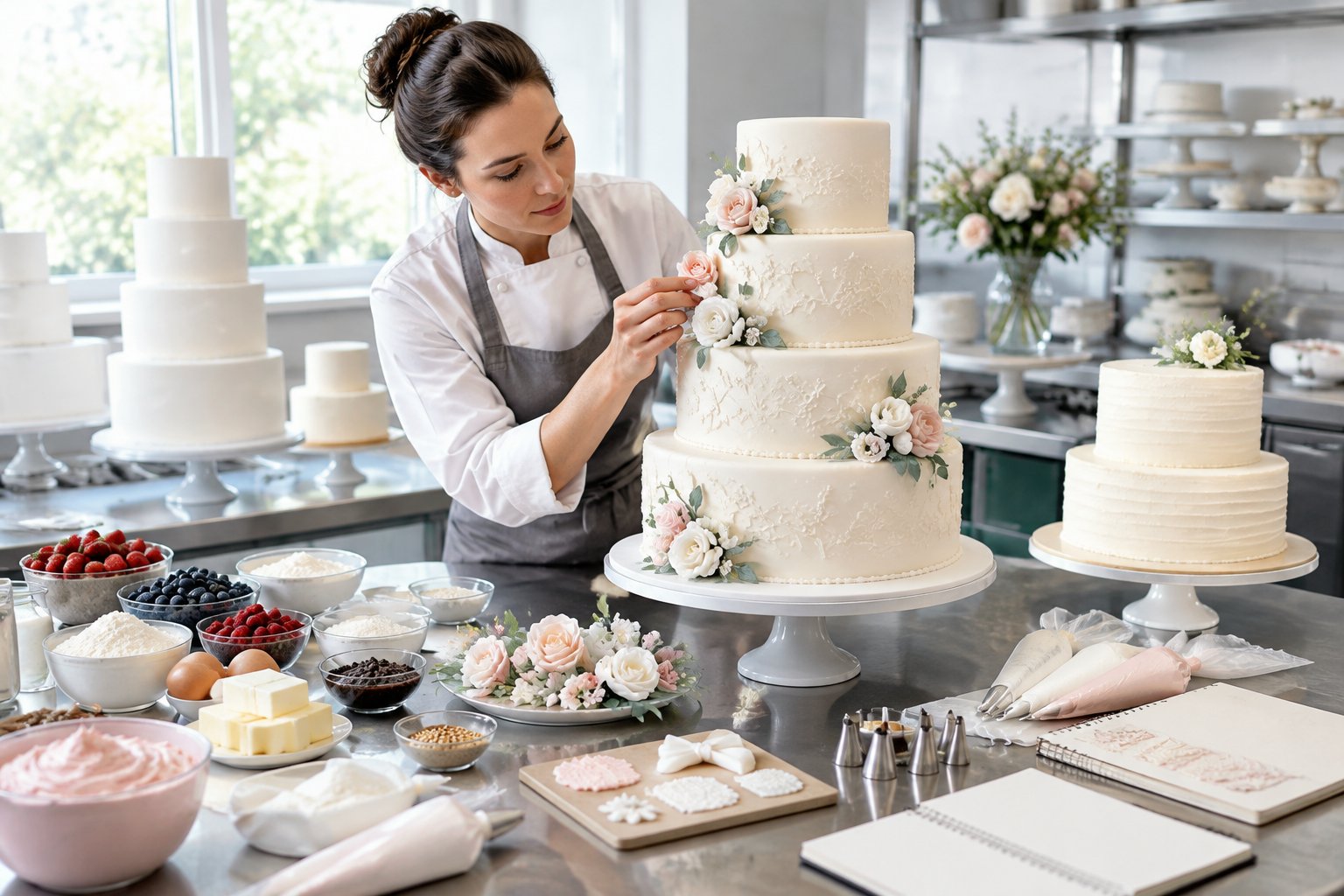
Your baker’s quote reflects servings plus the time required for baking, filling, decorating, transporting, and assembling the cake. Frosting style, decorative elements, flavor choices, dietary restrictions, and venue access can shift the price by hundreds of dollars.
Buttercream vs. Fondant
A buttercream cake often costs less because the frosting is applied directly and supports smooth, textured, ridged, and piped finishes. Buttercream frosting also offers a soft texture and familiar flavor.
A fondant cake adds a smooth sugar covering that works well for sharp edges, geometric patterns, painted details, and sculpted decoration. The added preparation and handling increase labor and material costs.
Ask for a buttercream version of your preferred design. This comparison helps you see whether the look you want depends on fondant or whether a lower-cost finish can create a similar effect.
Decorations That Add Labor Costs
Handmade sugar flowers require shaping, drying, coloring, wiring, and placement. Intricate piping, lace patterns, edible gold leaf, metallic accents, and hand-painted details also take significant time.
Fresh flowers can create a refined finish with less custom sugar work. Your florist should confirm that flowers are safe for food contact, and your baker should explain how they will be placed.
You can control the quote by concentrating detail on one tier or one focal area. Clean buttercream texture with a single decorative accent keeps the design polished and labor easier to estimate.
Flavors, Fillings, and Dietary Needs
Classic wedding cake flavors such as vanilla, chocolate, and lemon often fit standard pricing. Premium fillings, fruit curds, specialty creams, nuts, and unusual flavor combinations add ingredients and preparation time.
Dietary restrictions may require separate recipes, equipment, or packaging. Ask whether gluten-free, dairy-free, vegan, nut-free, or allergen-conscious servings carry an extra charge.
Choose one main flavor for the larger tiers and reserve a special flavor for a smaller tier if you want variety without ordering several full recipes.
Delivery, Setup, and Venue Fees
Delivery and setup may appear as separate charges. Distance, stairs, difficult parking, venue access, refrigeration, and on-site assembly all affect the service cost.
Your venue may also charge a cake-cutting or plating fee. Some venues charge per slice, while others include cake service in the catering package. Ask for the fee before booking your baker.
Request an itemized quote that lists the cake, delivery, setup, rentals, taxes, and any venue charges. An all-in total gives you a more accurate wedding budget.
Build a Cake Budget That Matches Your Priorities
A practical wedding cake budget starts with servings, then gives extra room for the design features you value most. You can set a per-serving target, compare display-cake options, and ask clear questions before paying a deposit.
Use a Wedding Cake Cost Calculator as a Starting Point
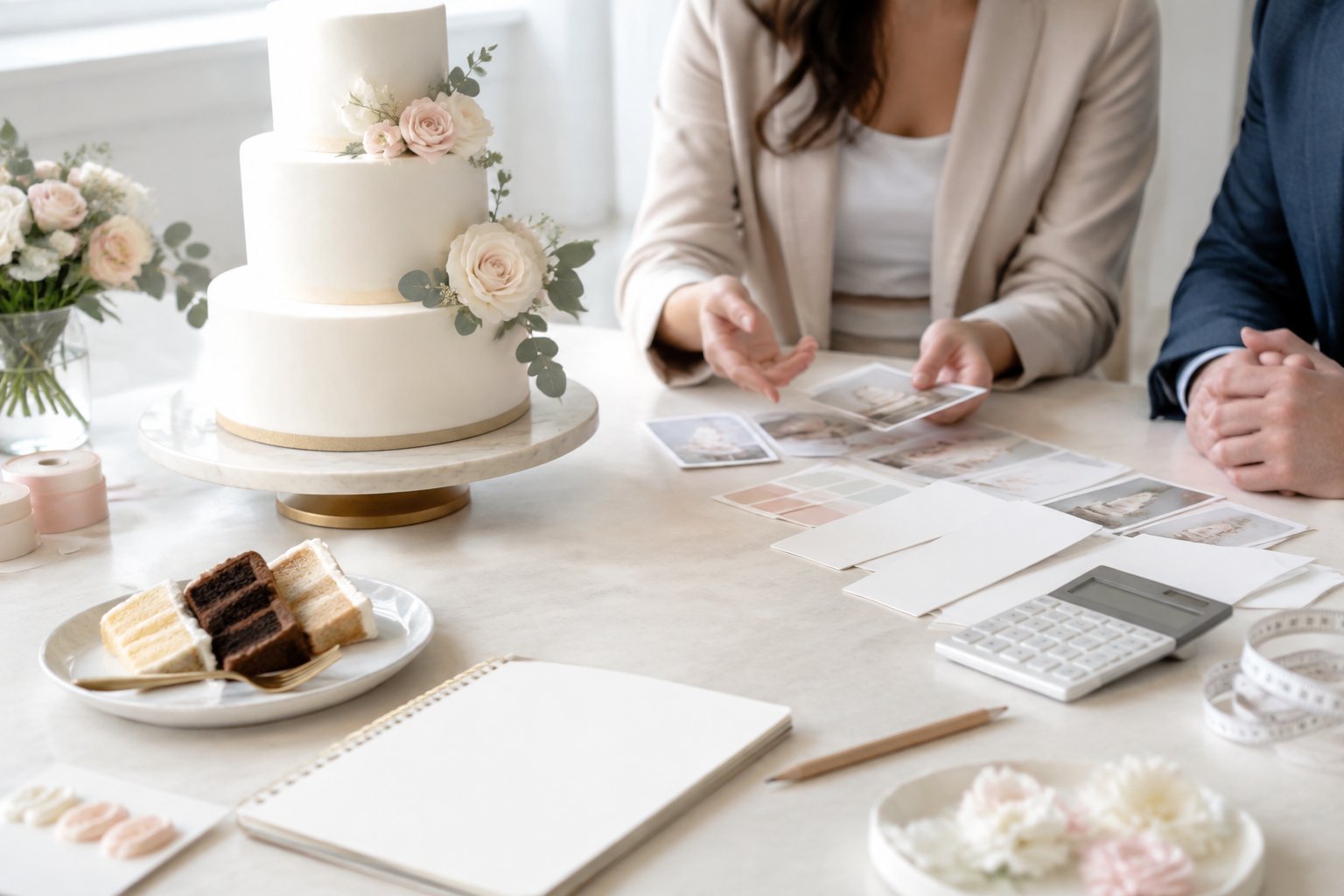
A wedding cake cost calculator helps you estimate servings and compare tier combinations before requesting quotes. Enter your guest count, serving style, cake shape, design level, and estimated per-serving price.
Use the result as a planning range, not a guaranteed quote. Your baker still needs to confirm tier sizes, cutting yields, fillings, decorations, delivery distance, and setup requirements.
Run two estimates:
- A tiered cake that serves every guest.
- A smaller display cake paired with kitchen cake or another dessert.
This comparison shows whether visual height or full-cake servings takes more of your budget.
Set a Realistic Per-Serving Target
Choose a starting target based on the design you want:
- $4 to $7 per serving: Simple buttercream and standard flavors.
- $7 to $12 per serving: Detailed buttercream, fondant, or premium fillings.
- $12 or more per serving: Luxury decoration, sugar flowers, hand painting, or complex structures.
Multiply your target by the number of servings, then add delivery, setup, rentals, tax, and venue fees. If your guest count is 100 and your target is $7 per serving, reserve about $700 for the cake before separate service charges.
Questions to Ask Before You Book
Ask your wedding cake baker:
- How many servings does each tier provide?
- Does the quote include fillings, frosting, fondant, flowers, and the topper?
- Are tasting fees credited toward the order?
- What are the delivery and setup charges?
- Does the venue charge a cutting or plating fee?
- How much is the deposit, and when is the balance due?
- What happens if your guest count or design changes?
- Does the baker provide a cake stand or require a rental?
- How will dietary restrictions and allergen concerns be handled?
Get the answers in writing with the final design, flavor, serving count, delivery time, and payment terms.
Ways to Serve a Beautiful Cake for Less
You can lower your wedding cake costs by reducing decorative labor and using efficient serving formats. A small display cake, sheet cakes, cupcakes, fresh flowers, or a grocery bakery order can preserve the celebration without requiring every serving to carry a custom-design price.
Pair a Small Display Cake With Sheet Cakes
A small display cake creates the centerpiece and provides slices for the cake-cutting moment. Sheet cakes stay in the kitchen and supply the remaining portions after the formal cutting.
Ask your baker to match the sheet cakes to the display cake’s flavor and frosting. Confirm how the venue will store, cut, plate, and serve them.
This format works best when the cake table is viewed from the front and guests do not need to see the entire cake being sliced. It gives you room to spend on the visible tiers while keeping the serving count practical.
Consider Cupcakes and Other Dessert Alternatives
Cupcakes can simplify portioning and reduce cutting labor. A cupcake tower gives you height and a wedding-cake shape, while guests can select their own serving.
A dessert table lets you combine cake with cookies, pies, brownies, or seasonal treats. A donut wall offers a playful presentation and works well for brunch or casual receptions.
Count one regular cupcake or dessert portion per guest, then ask your venue whether plating or display fees apply. Some venues price outside desserts differently from a traditional cake.
Use Fresh Florals and Simple Finishes
Fresh flowers add color and texture without requiring hours of handmade sugar work. Choose blooms that match your arrangements and have your florist or baker confirm safe placement.
Smooth buttercream, textured frosting, a narrow border, or a small cluster of flowers can create an elegant finish. Concentrating decoration on the front-facing tier also helps control labor.
Limit the number of colors and decorative techniques. A focused design is easier for your baker to execute and easier for you to price.
Compare Grocery Store Options
A grocery bakery can provide a lower-cost cake with standard flavors, fillings, and decorations. Costco wedding cake orders may offer economical sheet-style servings, depending on local availability and ordering rules.
Confirm serving counts, pickup times, design choices, storage needs, and whether delivery is available. You may need to supply the display cake, cake stand, topper, flowers, and transport.
A grocery option fits best when serving quantity and price lead your decision. A custom baker offers more control over flavor, structure, and design details.
Plan the Presentation and Final Details
Your cake plan should include the display setup, venue service, delivery timing, and payment terms. These details protect the cake’s appearance and prevent last-minute charges.
Choose a Cake Stand and Topper
A cake stand gives your tiered wedding cake extra height and defines the display area. Check the stand’s width, weight limit, surface grip, and return requirements before the wedding day.
A cake topper adds a personal focal point. Confirm its weight and attachment method with the baker, especially if the topper includes metal, acrylic, wood, or several pieces.
Ask whether the baker supplies a stand, charges a rental fee, or requires you to provide one. Keep the stand and topper together with the final order paperwork.
Coordinate Cake Service With Your Venue
Give the venue your baker’s delivery window, contact details, storage instructions, and setup needs. Confirm where the cake will be placed, whether refrigeration is available, and who will move it after setup.
Ask who cuts and plates the cake, when it will be served, and whether the venue charges a cake-cutting fee. Share the planned serving count so the caterer can prepare the correct number of plates and utensils.
Protect the cake table from direct sun, heat sources, crowded walkways, and unstable surfaces. A level table makes assembly safer for a tall cake.
Review the Final Order and Payment Terms
Before you pay the deposit, review the written order for cake size, serving count, flavors, fillings, frosting, colors, decorations, topper, stand, delivery address, setup time, and total price.
Check the deposit amount, balance due date, cancellation policy, change deadline, refund terms, and payment method. Ask how additional servings or design changes will be priced.
Save the signed agreement, final sketch, invoice, and venue contact information in one place. Send the baker a final guest count by the date listed in your contract.