
Cost to Have a Wedding Band Made: Pricing Guide
A made-to-order wedding band costs about $800 to $4,500 or more, with many plain-to-moderately detailed gold bands landing between $1,200 and $3,000. A simple band may start near $700, while platinum, gemstones, wide profiles, and detailed handwork raise the price.
The cost to have a wedding band made reflects the metal, ring size, design work, labor, finishing, and delivery charges.
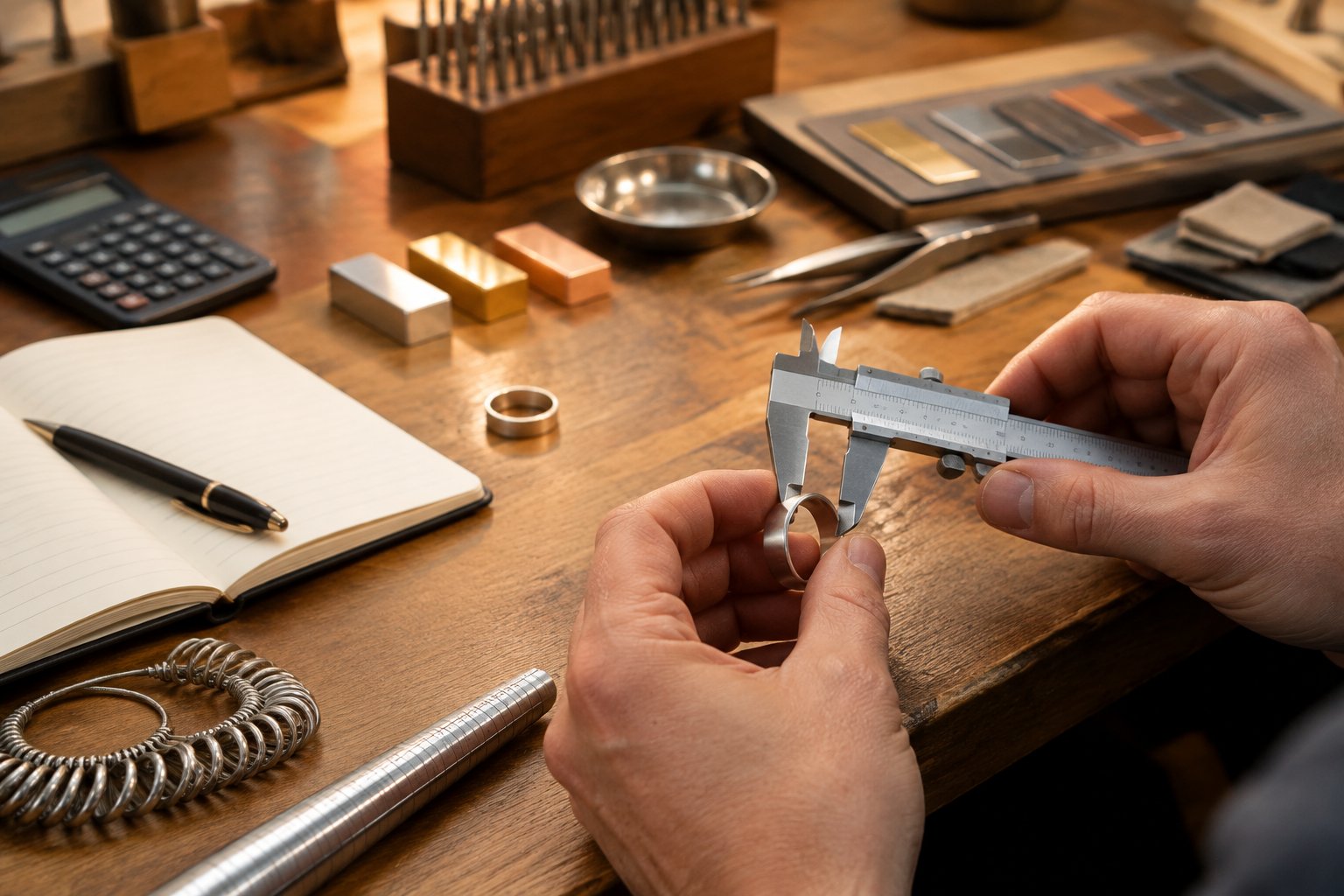
You can keep the project within reach by deciding which details deserve your budget. A 14k gold band with a clean profile costs much less than a platinum band with diamonds and hand-applied milgrain, while both can provide years of daily wear.
If you want help shaping your ideas into a finished ring, connect with a professional jeweler before setting a firm spending limit.
What Is a Realistic Budget for a Made-to-Order Band?
A realistic budget for a made-to-order wedding band is $1,200 to $4,500 for most custom designs, with simpler rings starting around $700 to $1,000. Bands with premium metals, extensive stone setting, or highly detailed bespoke work can exceed $5,000.

Your custom wedding band cost becomes easier to estimate when you separate a basic made-to-order ring from a fully bespoke project. Metal weight, design labor, surface details, and stones create most of the price difference.
Typical Price Ranges for Simple, Custom, and Bespoke Bands
A plain 14k gold band with a polished or brushed finish can fall near $700 to $1,500. The exact price rises with width, thickness, ring size, and the jeweler’s labor rate.
A moderately custom band with a special profile, comfort-fit interior, engraving, or mixed-metal detail may cost $1,200 to $3,000. This range suits many couples who want a personal design without extensive stone work.
A bespoke band built from a new concept often starts around $2,000 and reaches $4,500 or more. Platinum, intricate handwork, full-circle diamonds, and unusual construction push the wedding band cost higher.
| Band type | Common price range | Typical features |
|---|---|---|
| Simple made-to-order | $700–$1,500 | Plain gold, standard finish |
| Moderately custom | $1,200–$3,000 | Special profile, engraving, custom fit |
| Bespoke or stone-set | $2,000–$4,500+ | CAD design, handwork, premium metals, gemstones |
Why Custom Quotes Vary So Widely
Two rings with the same width can have very different prices. A light 14k gold band uses less material and may need fewer finishing hours than a heavy 18k gold or platinum design.
Customization options also affect the quote. A jeweler must account for design revisions, special tooling, stone setting, matching an engagement ring, and quality checks.
Location, studio overhead, experience, and the amount of hand-finishing add further differences between quotes.
Ask whether the estimate includes the finished ring, design work, taxes, shipping, insurance, and future adjustments. That detail lets you compare quotes without overlooking charges that appear later.
What Goes Into a Jeweler’s Quote?
A jeweler’s quote combines material weight, labor costs, design work, finishing, taxes, shipping, and any deadline-related charges. An itemized estimate shows how each part contributes to the cost to make a ring.
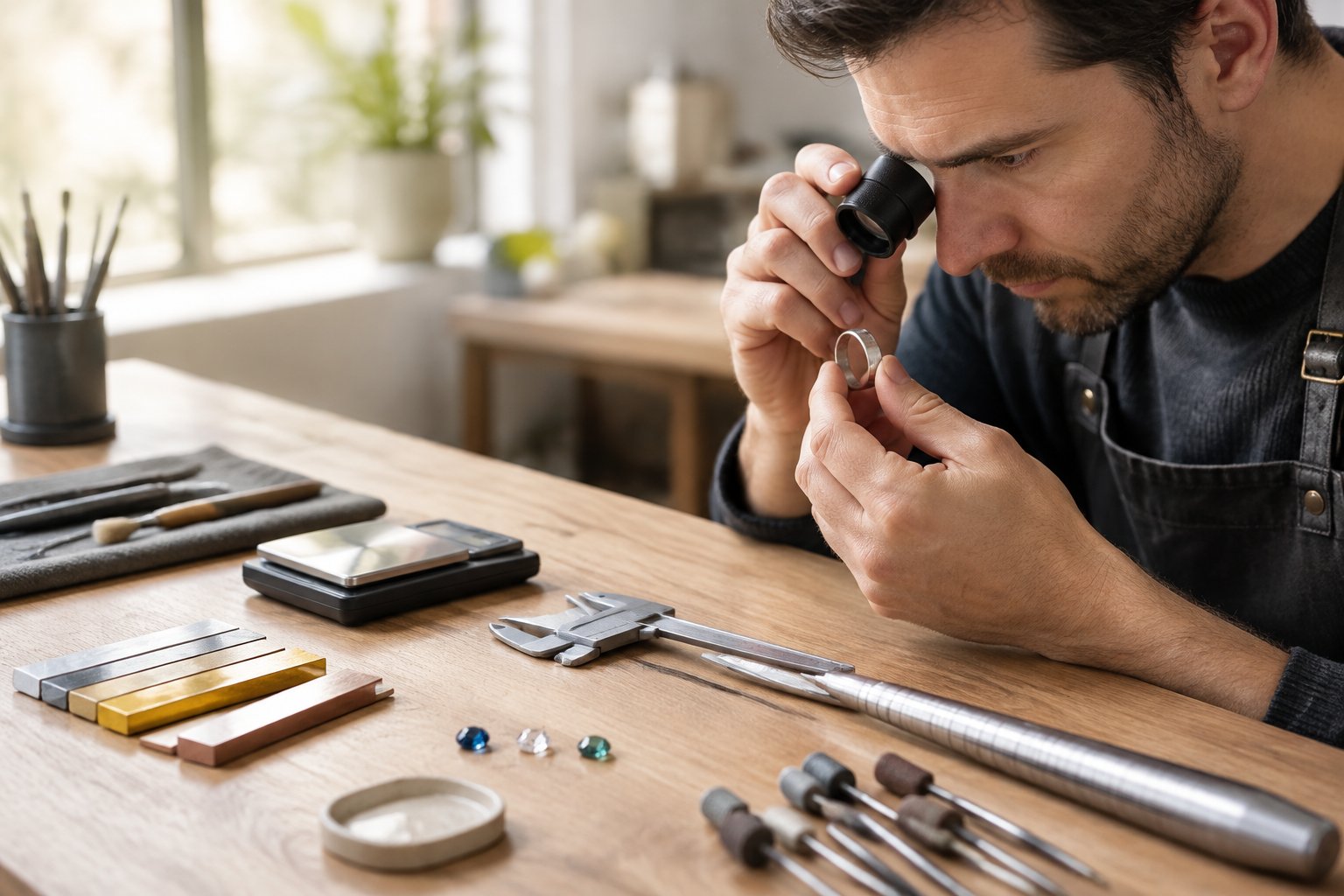
The quote should describe the ring in measurable terms, including metal type, karat or fineness, width, thickness, ring size, finish, and stone details. It should also state what happens if you request design changes after approval.
Metal Weight, Ring Size, and Band Dimensions
A wider or thicker band requires more metal, so it costs more even when the design stays plain. Larger ring sizes also add material, while a slim band uses less.
Ask for the estimated finished weight and confirm whether the quote uses a live metal price or a fixed price. Gold and platinum prices move with the market, and a quote may change if you wait before approving production.
Band dimensions affect comfort and durability as well. A low-profile ring may fit beside an engagement ring, while a heavier profile creates a more substantial feel on your finger.
Labor Costs and Hand-Finishing
Labor costs cover tasks such as forming, soldering, casting, filing, polishing, stone setting, and inspection. Hand-finished rings require more bench time than standard production bands.
A professional jeweler may charge by the hour, by the project, or through a blended price. Ask which steps receive hand attention and whether finishing includes your selected polish, brushed texture, hammered surface, or satin effect.
Design Fees, CAD Modeling, and a Wax Prototype
A custom project may include a design fee for sketches, consultations, revisions, CAD modeling, or a wax prototype. CAD lets you review a digital model before production, while wax gives you a physical version to examine for size and shape.
Some studios credit the design deposit toward the ring when you approve the project. Ask how many revisions the fee includes and what happens to the deposit if you change direction or stop the project.
Taxes, VAT, Shipping, Insurance, and Rush Fees
In the United States, sales tax can add a noticeable amount to the final invoice. A quote from an international studio may also mention VAT, customs charges, or import costs.
Shipping and insurance protect the ring while it travels. A rush fee applies when the jeweler must move your project ahead of scheduled work, pay for faster materials, or compress design approvals.
Confirm the delivery date and every extra charge before paying a deposit.
How Do Metal Choices Affect the Final Price?
14k gold gives you one of the strongest balances of price, durability, and everyday wear, while platinum 950 carries a premium for its purity, density, and natural white color. Silver and alternative metals can lower the price, while 18k gold, palladium, and mixed-metal work occupy different points based on material and labor.
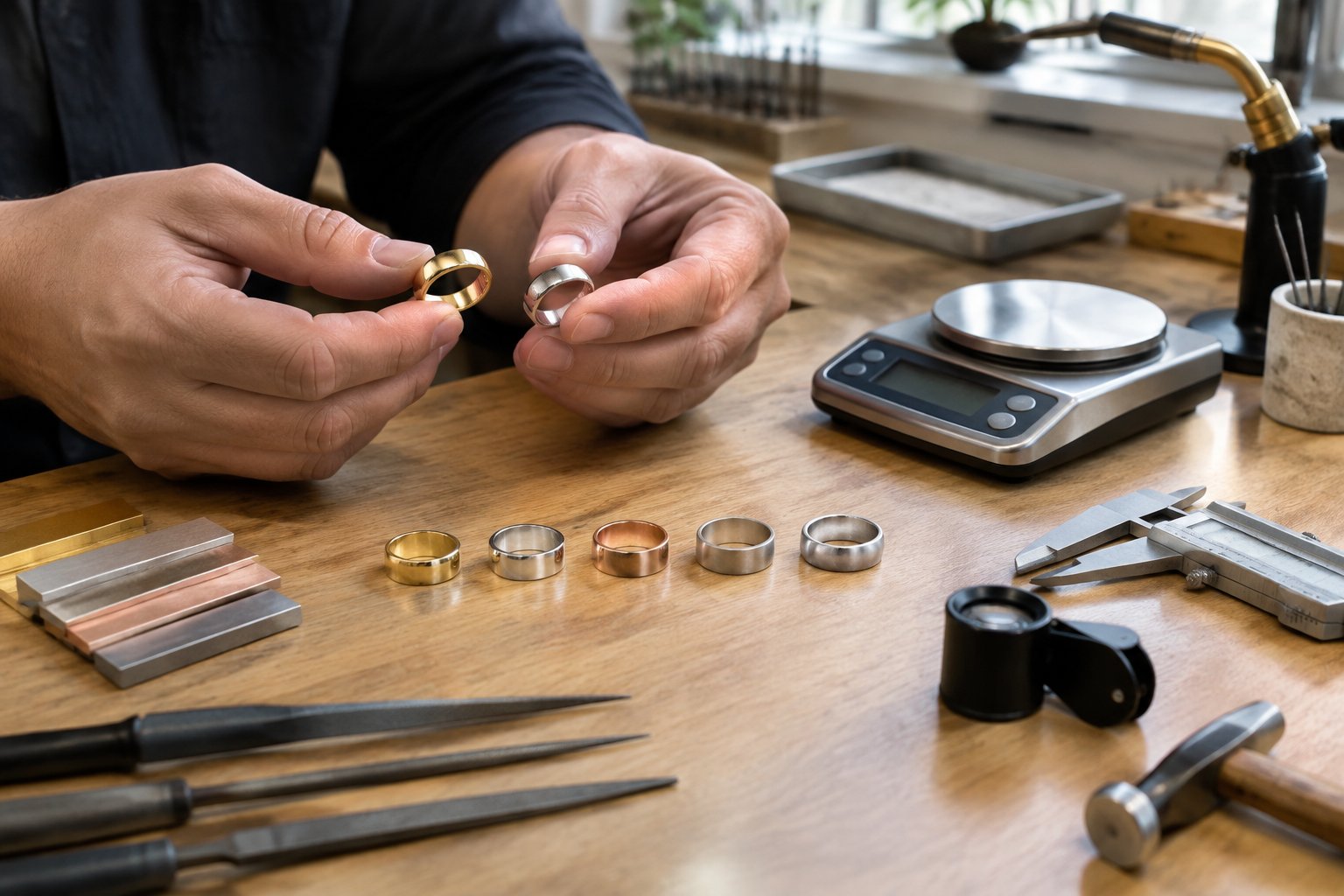
Metal affects more than the invoice. Your choice changes the ring’s weight, color, care needs, repair options, and ability to be resized.
Pure gold is too soft for a daily wedding band, so jewelers combine it with other metals to create stronger alloys.
14K Gold vs. 18K Gold
14k gold contains about 58.3% pure gold, while 18k gold contains 75%. The higher gold content gives 18k gold a richer color and a higher material cost.
14k gold works well for daily wear because its alloy content adds strength. 18k gold offers a warmer, richer look, with a softer surface that develops wear more readily.
Yellow gold, white gold, and rose gold can all be made in either karat.
Platinum 950, Palladium, and Alternative Metals
Platinum 950 contains about 95% platinum and has a dense, substantial feel. It is naturally white, durable, and suited to sensitive skin, though its weight and purity make it cost more than a comparable gold band.
Palladium is a lighter white precious metal with a lower density than platinum. Titanium offers a light, modern feel and a lower price.
Silver is affordable and easy to shape, though it scratches and tarnishes more easily during daily wear.
White Gold, Rose Gold, and Mixed-Metal Inlays
White gold uses alloys that create a pale color and is commonly finished with rhodium plating for a bright white surface. That plating wears over time and requires periodic renewal.
Rose gold gets its pink tone from copper in the alloy. Mixed-metal designs combine colors for contrast, such as a yellow gold band with a white gold stripe.
Metal inlay adds design labor because each section must fit cleanly and remain secure.
Using Recycled Metals or Repurposed Jewelry
Recycled metals can support your material preferences while preserving the look and properties of gold or platinum. Ask how the studio sources and tracks the recycled content.
Repurposing an old ring or family jewelry requires testing, refining, and alloy assessment before the material enters a new band. Your jeweler may charge for that preparation, and the existing metal may not provide enough usable material for the entire design.
Which Design Details Add the Most Cost?
Stone setting, complex construction, and extensive hand-finishing add more cost than a basic engraving or a standard polished surface. The price rises with the number of operations, the precision required, and the time needed to complete each detail.
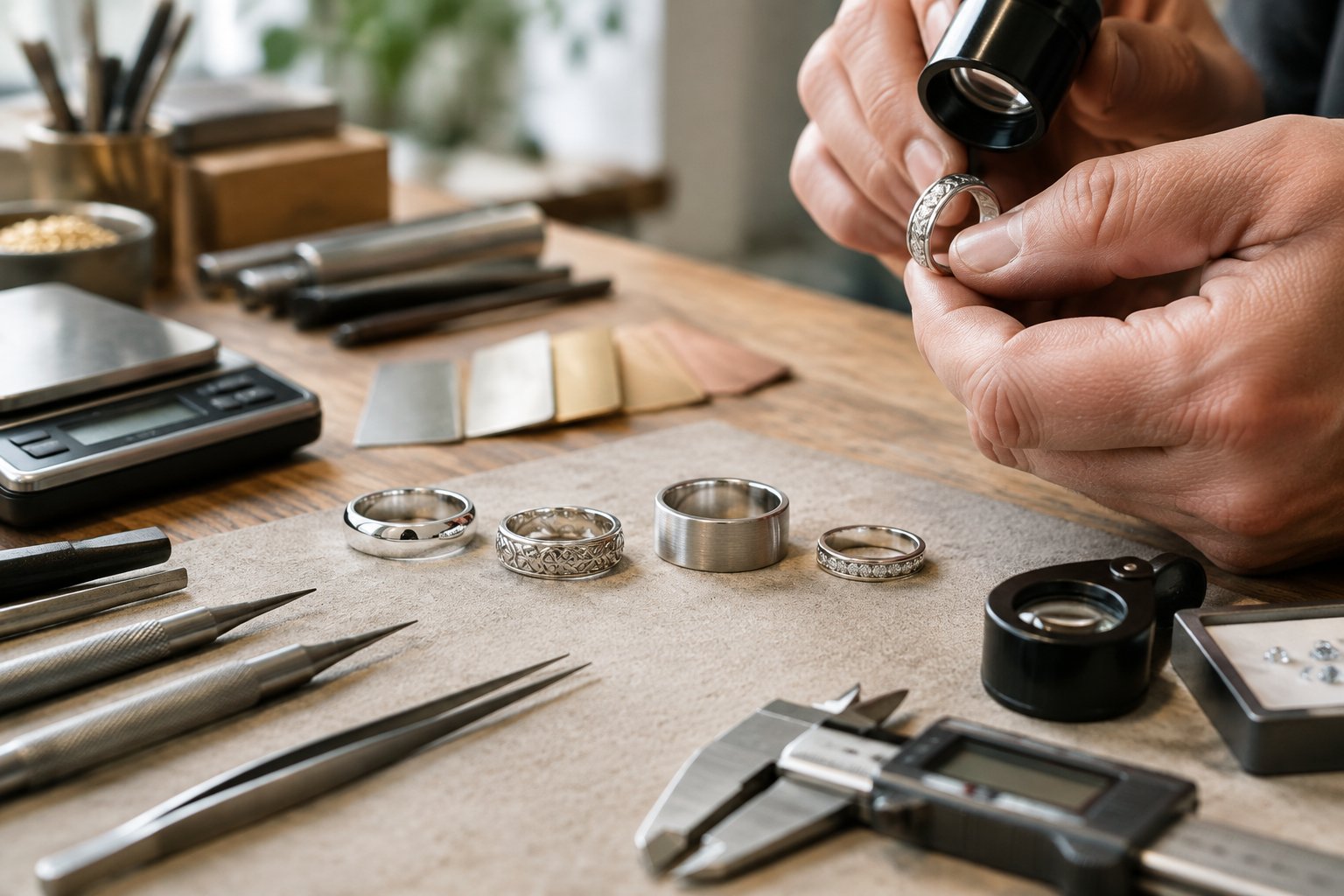
You can control the budget by choosing one or two details that carry the most meaning. A custom profile or distinctive finish may create a strong personal look without the expense of covering the ring in stones.
Engraving, Milgrain, and a Hammered Finish
Interior engraving is often one of the more affordable ways to personalize a band. Price depends on the character count, lettering style, placement, and whether the jeweler engraves by hand or machine.
Milgrain adds tiny bead-like edges to borders and vintage-inspired designs. A hammered finish requires repeated controlled strikes and careful polishing, so the labor rises with the surface area and pattern.
Comfort-Fit Profiles and Custom Dimensions
A comfort-fit band has a rounded interior that helps it slide over your knuckle and sit smoothly during daily wear. Creating that interior shape adds design and finishing work.
Custom dimensions also affect the quote. A wide flat band, curved contour, domed exterior, or unusual thickness changes the amount of metal and the steps required to form and finish the ring.
Diamonds, Gemstones, and Stone Setting
Diamonds increase the price through both the stones and the setting labor. Natural diamonds vary by carat weight, color, clarity, and cut, while lab-grown diamonds offer another price point with similar visual properties.
Sapphire and ruby can add color and durability, while other gemstones require careful selection for everyday wear. Prong, channel, bezel, and pavé settings each demand different tools and levels of precision.
An eternity design with stones around the full band requires more setting work than a single accent stone.
Matching an Engagement Ring Without Overcomplicating the Design
A band designed to sit flush with an engagement ring may need a contour, a raised profile, or a small amount of negative space. Your jeweler should measure the engagement ring and test the proposed pairing before production.
You can reduce cost by matching one key feature, such as the metal color or surface finish. Repeating every detail from the engagement ring may require extra CAD work, tighter tolerances, and more hand-finishing.
How to Get an Accurate Quote From a Reputable Jeweler
You get the most accurate quote when you give a reputable jeweler clear dimensions, metal preferences, stone requirements, timing, and a firm spending range. A detailed consultation helps the jeweler recommend realistic customization options without designing beyond your budget.
Bring your engagement ring if the new band must fit beside it. Photos, sketches, measurements, family jewelry, and examples of finishes also help the jewelry designer or master goldsmith understand your preferences.
What to Bring to the First Design Consultation
Bring your current ring size, your engagement ring, inspiration images, and a list of features you consider essential. Note whether you prefer a polished, brushed, satin, or hammered finish.
Share your daily activities and any metal sensitivities. Your lifestyle helps the jeweler suggest a profile and metal that suit regular wear.
Tell the studio your target budget and wedding date before design work begins.
Questions to Ask a Jewelry Designer or Master Goldsmith
Ask these questions during the consultation:
- What metal weight, karat, or fineness does the quote use?
- How many design revisions are included?
- Is CAD modeling or a wax prototype included?
- Which parts receive hand-finishing?
- Are stones natural, lab-grown, or another gemstone type?
- Does the price include sizing, engraving, tax, shipping, and insurance?
- What deposit is required, and when is the balance due?
- What warranty, inspection, resizing, or maintenance service comes with the ring?
The answers show whether two quotes describe comparable work.
How to Compare Quotes on an Equal Basis
Compare the same metal, karat, dimensions, ring size, finish, stone coverage, and delivery date. Check whether each quote lists design fees, labor, taxes, shipping, insurance, and revisions.
A lower price may reflect lighter dimensions, fewer included services, different stone quality, or a production method with less handwork. Request a written specification sheet so you can review the details without relying on memory.
Ways to Keep a Custom Design Within Budget
Start with 14k gold, a moderate width, and a clean profile. Choose one focal detail, such as an engraved message, mixed-metal stripe, or small gemstone accent.
You can also reduce stone costs by selecting lab-grown diamonds, using a half-eternity layout, or choosing sapphire for color. Keep the design easy to resize if future fit changes are important, and approve the final dimensions before production begins.