
Do Bridesmaids Go Before or After Bride in the UK? Understanding the Traditional Order
As you plan your wedding ceremony, one of the key questions you might be pondering is the order in which the wedding party walks down the aisle. Traditionally in the UK, the bride walks last, usually escorted by her father or another close family member, while the bridesmaids follow behind her. However, modern weddings are bringing in fresh ideas where bridesmaids may take the lead, allowing all eyes to be on you when you make your grand entrance.
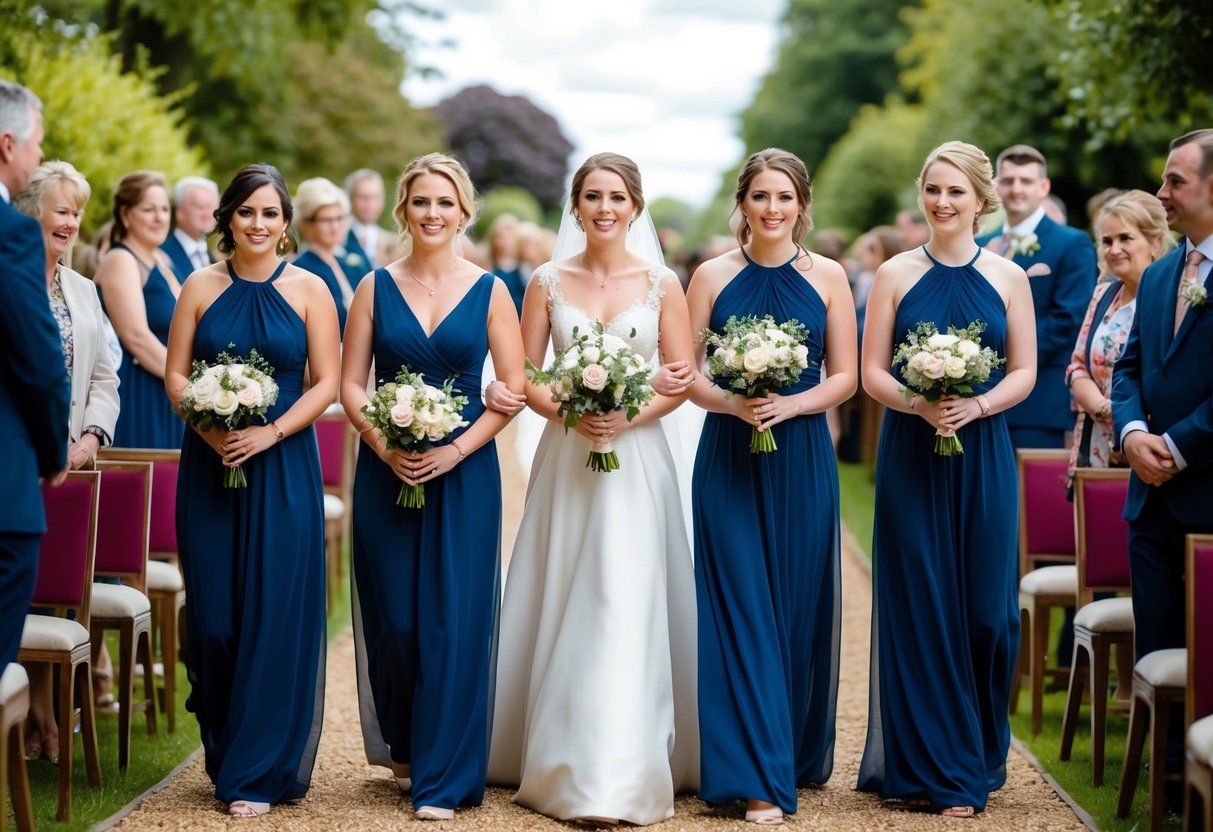
This shift reflects changing traditions in wedding ceremonies, where personal preferences often take precedence over established customs. You may find that many couples today choose to have the bridesmaids walk down the aisle first, followed by the bride, which can add a unique touch to your special day.
Understanding these options helps you decide what feels right for your celebration. Whether you want to stick to traditional roles or embrace modern choices, the order of your wedding party can set the tone for your memorable event.
The Traditional UK Wedding Procession

In a traditional UK wedding procession, the roles and order of the wedding party play an important part in the ceremony. Each member of the party has a specific role, contributing to that special moment when the bride walks down the aisle.
Roles and Order of the Wedding Party
The wedding procession typically starts with the groom and best man. They enter from the side and take their places at the altar.
Following them are the bridesmaids, who generally walk down the aisle one by one.
Next, we have the maid of honour, who walks alone or with a page boy or flower girl. The flower girls often scatter petals along the aisle to enhance the atmosphere. Page boys may walk alongside the flower girls or follow them.
It’s common for the mother of the bride to be seated right before the bride enters. This order signifies the connection and support offered to the couple on their big day.
The Entrance of the Bride
Finally, the moment everyone waits for arrives: the bride’s entrance. Traditionally, the bride walks last, symbolizing her important role in the marriage. She is usually escorted by her father or another close family member, indicating family support.
The music often changes as the bride approaches, creating an emotional atmosphere. Guests stand to honor her arrival, focusing their attention on the beautiful moment.
This sequence is essential in a UK wedding, as it highlights the relationships and traditions that make the day special for everyone involved.
Variations in Contemporary Wedding Ceremonies
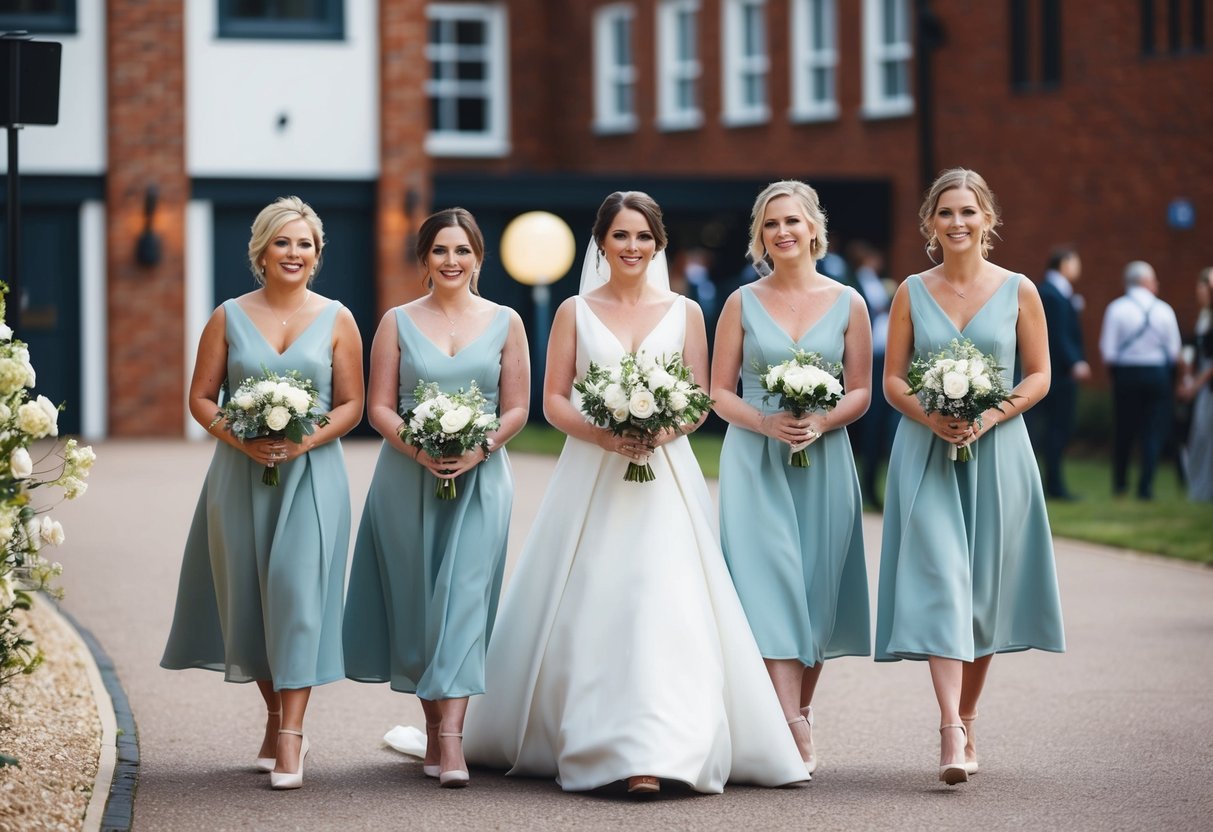
Today’s weddings often blend tradition with personal preferences. This gives couples more freedom to create a unique experience. The order of the wedding processional and the choice of music are key areas where you can express your individuality.
Mixing Up the Processional Order
In contemporary weddings, there is no strict rule about who walks down the aisle first. Many couples now choose to mix up the traditional order.
For example, bridesmaids might walk together or in pairs, followed by flower girls and page boys.
Some couples even walk down the aisle side by side. This can be especially meaningful for same-sex couples. In Jewish weddings, the processional often features both partners entering together, emphasizing unity.
You can choose the order that feels right for you. Keep in mind that a more modern approach can add a fresh twist to your grand entrance.
Choosing the Right Music
Selecting the right wedding processional music is essential. Music sets the tone of your ceremony and enhances your special moment.
You might opt for a traditional piece, such as “Here Comes the Bride,” or choose something more contemporary that reflects your personality.
Consider incorporating live musicians or a special song that holds meaning for both of you. This allows you to create a memorable atmosphere as you walk down the aisle.
Whether you prefer classical, pop, or a unique blend, the music should feel personal. It’s this thoughtful choice that can make your wedding ceremony truly unforgettable.
Key Participants in the Procession
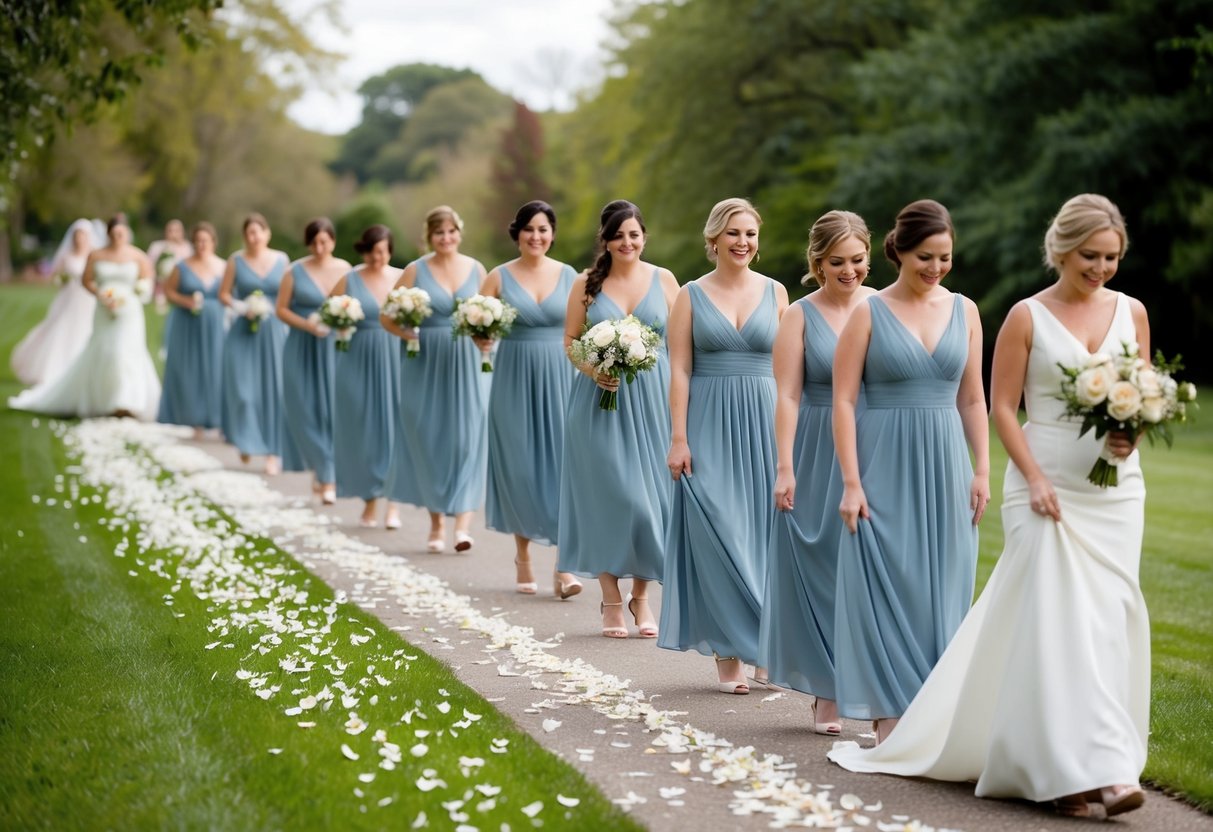
The wedding procession includes several important roles. Understanding these participants can help clarify the order in which they walk down the aisle. Each person adds a special touch to the ceremony.
Significance of Bridesmaids and Groomsmen
Bridesmaids hold an important role in supporting the bride. They often walk in pairs or individually, usually after the flower girls. This can vary based on personal choice, as many couples choose to have bridesmaids walk in first.
Groomsmen, typically walking with the bridesmaids, stand close to the groom.
The best man is the groom’s right hand, playing a key part in the wedding. This role involves holding the rings and offering support, making his presence essential. Together, the bridal party creates a beautiful visual impact, enhancing the ceremony as you all come together.
Special Roles for Children
Children often have special roles in the wedding procession, adding charm and whimsy. The flower girl walks ahead of the bride, scattering petals along the way. This tradition symbolizes beauty and new beginnings.
The page boy typically follows, carrying the rings or a sign. He may also walk in front of the bride. This can add a playful touch to the ceremony.
If present, a ring bearer often has a big responsibility and is a beloved part of the day, making the ceremony feel even more personal. Together, these roles contribute to the joy of the occasion.