
Do Groom’s Parents Pay for Flowers? Understanding Their Role in Wedding Expenses
When planning a wedding, you might wonder about the financial responsibilities that come with it. Many people know that different families traditionally cover different expenses, but one question often comes up: do the groom’s parents pay for flowers?
In many cases, the groom’s family does take on the cost of the wedding flowers. This includes the bride’s bouquet and boutonnieres for the groomsmen.

Understanding these roles can help you navigate wedding planning with ease. You want to respect wedding etiquette while also ensuring that everyone involved is clear on their responsibilities.
By knowing what expenses the groom’s parents typically handle, you can better prepare for your big day without any surprises along the way.
If you’re part of the planning process, it helps to discuss these details early on. This way, you can avoid any miscommunication and make informed choices.
Whether you’re a groom or someone helping with the arrangements, knowing who pays for what can simplify things and make the day even more special.
Understanding Wedding Financial Traditions

Navigating wedding financial responsibilities can be tricky. Knowing who traditionally pays for what can help you and your families plan better.
The Role of the Groom’s Family
In traditional weddings, the groom’s family usually takes on specific expenses. One of these is the personal flowers for the bridal party. This includes the bride’s bouquet, groom’s boutonnière, and corsages for the mothers and grandmothers.
Additionally, the groom’s family may also contribute to the rehearsal dinner. This social event sets the tone for the wedding and allows both families to mingle.
Understanding these roles can help you clarify your family’s responsibilities.
Here’s a quick list of what the groom’s family typically covers:
- Personal Flowers
- Rehearsal Dinner
- Gifts for Groomsmen
Knowing these details can make planning smoother and more organized.
Societal Shifts in Wedding Practices
Over time, there have been changes in who pays for what in weddings. Many modern couples now share responsibilities with both families contributing to costs. The bride’s family traditionally handled most expenses, but this trend is shifting.
You might find that your families are willing to split costs more evenly. This can lead to open conversations about financial expectations. Some couples even choose to cover all expenses themselves, allowing for more personal control over the wedding.
As societal norms change, it’s helpful to discuss these shifts with your families. This can help everyone stay on the same page regarding who pays for what and reduce any potential misunderstandings.
Details of Floral Expenses

When planning for your wedding, understanding floral expenses is crucial. You want to ensure all the important floral elements are covered without overspending.
The groom’s family typically plays a significant role in these costs, especially regarding specific floral arrangements.
Breaking Down Floral Costs
Wedding flowers can vary greatly in price depending on the type and arrangement. Generally, the groom’s family is responsible for several key items. These often include the bride’s bouquet, which is a focal point in photos, and the groom’s boutonniere, which adds a touch of class to his attire.
Other costs may include floral arrangements for the wedding party and the reception venue. Corsages for mothers and grandmothers are also included in this budget.
It’s common to set aside around 10-15% of your total wedding budget for flowers. Planning early and discussing preferences can help manage this cost effectively.
Corsages and Boutonnieres
Corsages and boutonnieres are special floral items that add elegance to your wedding. The groom’s family usually pays for these.
Boutonnieres are typically worn by the groom, groomsmen, and other key family members, like fathers and grandfathers. They are often made from flowers that match the wedding theme.
Corsages are usually worn by the mothers and sometimes grandmothers of the couple. These floral pieces celebrate their roles in the wedding.
Costs for these items can range between $15 to $40 each, depending on flowers used and design complexity. Choosing simple yet beautiful options can keep expenses manageable while adding charm to your event.
Other Wedding Responsibilities of the Groom’s Parents
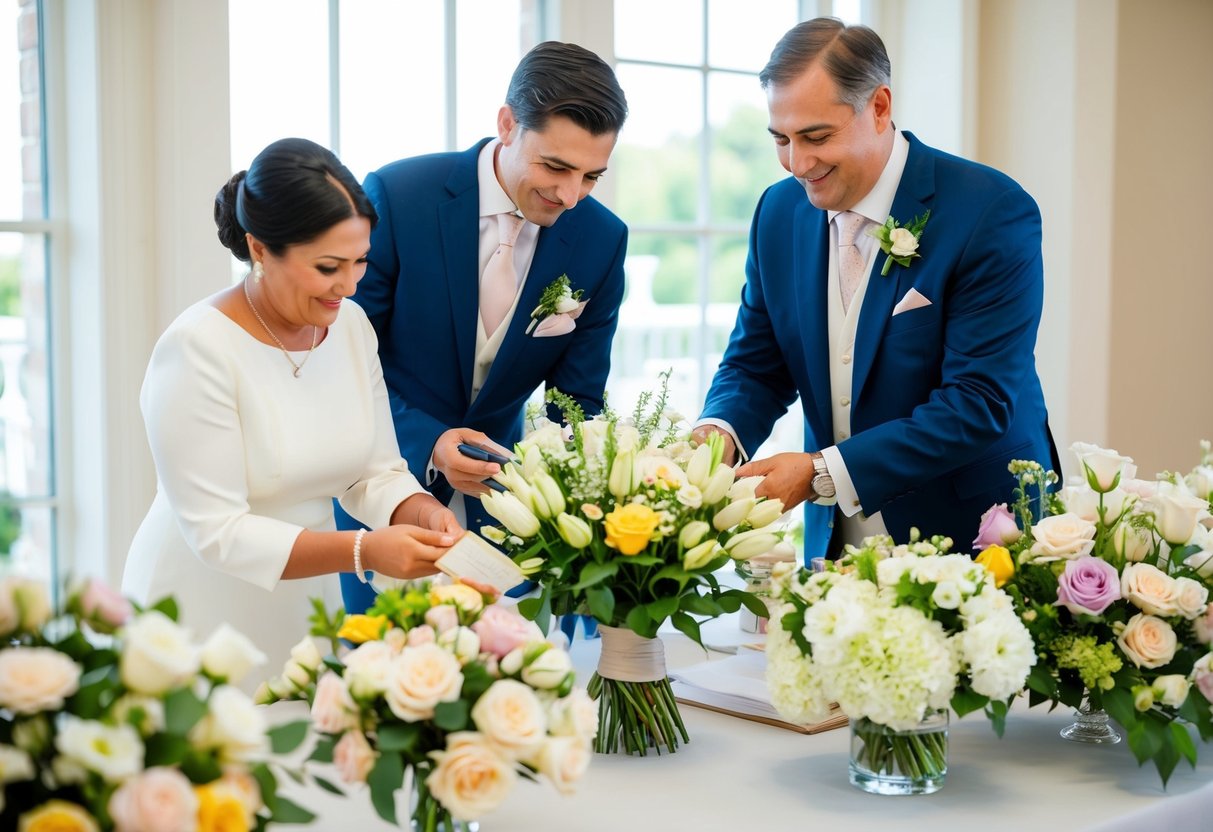
The groom’s parents have various important roles in helping plan the wedding. Their contributions extend beyond just financial support. Here are some key responsibilities they typically handle.
Hosting the Rehearsal Dinner
One of the main tasks for the groom’s parents is hosting the rehearsal dinner. This event is a great way to bring families together before the big day.
You can choose a restaurant, banquet hall, or even host it at home. The dinner often includes close family, the wedding party, and those helping with the wedding.
It’s also common for the groom’s father to give a toast during this event. This can help set a warm, celebratory tone for the wedding. Remember to plan your menu ahead of time to accommodate guests’ dietary needs.
Additional Contributions
In addition to the rehearsal dinner, the groom’s parents may offer other support. This can include helping to pay for the groom’s attire, which often covers his suit and accessories.
They might also take care of selecting and purchasing the wedding rings. Some couples appreciate assistance with the honeymoon planning too. The groom’s family can contribute by covering costs or helping research destinations.
Often, the parents also gift the couple something special. This can be a monetary contribution or a sentimental gift to start their new life together.
Navigating Wedding Planning and Budgeting

Planning a wedding involves many financial decisions. You need to focus on setting a realistic budget and effectively allocating costs. This will help you manage expenses and keep your wedding plans on track.
Setting a Budget for the Wedding
Start by determining your total wedding budget. Consider all major expenses including venue rental, catering, and decor. Don’t forget smaller costs like a wedding cake, flowers, and wedding attire.
Here’s a simple breakdown:
- Venue Rental: This is often the biggest expense.
- Reception Alcohol: Include costs for drinks based on your guest list.
- Wedding Dress: Set aside a portion for bridal attire, which can vary widely.
- Engagement Ring: Consider this as part of your overall financial plan.
Make sure to leave some room for unexpected costs.
Planning and Allocating Costs
After you set a budget, it’s time to allocate costs to each part of your wedding. Start with the major expenses, then break these down further.
Prioritize your spending by listing your must-haves, like:
- Venue Rental
- Catering
- Photography
Then manage funds for items that are nice to have, like elaborate decor or a live band.
Create a detailed spreadsheet to track each expense. This will keep your wedding planning organized and prevent overspending on items like the honeymoon costs.
Staying on top of your budget will help ensure you enjoy the planning process and your special day.