
Do I Need to Change My Surname with HMRC When I Get Married? Essential Guidance for Newlyweds
One important question you might have when you get married is about changing your surname with HMRC. Yes, you do need to inform HMRC about your name change to ensure your tax records are accurate and you don’t face any issues later.

Updating HMRC is a crucial step as it helps avoid any tax-related problems that might arise from your previous name. This change is also essential for any tax credits or benefits you may receive.
Remember, keeping your details up to date with HMRC is not just about your name—it’s about making sure everything is in order as you start this exciting new chapter in your life.
Understanding the Impact of Marriage on Your Legal Name
When you get married, your legal name might change, and it’s important to understand what that means for your identity and obligations. This section explores the implications of marriage on your name and the role of HM Revenue and Customs.
Legal Name Change Considerations
Getting married often leads to a change in your surname. Many people choose to adopt their partner’s surname, but some may prefer to keep their original name or hyphenate.
To make this change official, you typically need to use your marital status as evidence of your name change. Your marriage certificate will serve as the primary document for this purpose.
In some cases, you might consider a Deed Poll or a Statutory Declaration if your new name isn’t reflected on your marriage certificate. These legal documents can help formalize your name change if needed.
Changing your name also affects various aspects of your life—such as bank accounts, insurance policies, and social media profiles. So, keeping track of all your personal details post-marriage is crucial.
The Role of HM Revenue and Customs
When you change your surname, notifying HMRC is essential. They need to keep your records accurate for tax purposes.
To update your name with HMRC, send them your marriage certificate along with your previous personal details. This helps them link your new name to your tax records. You may also need to update your information in other official documents linked to HMRC, such as your National Insurance record.
Failure to notify HMRC can lead to complications, like tax miscalculations or issues with benefits. Your identity checks with HMRC must match your current name to avoid any confusion.
Stay proactive about these updates, as it will ensure that your personal information is consistent across all government agencies.
Updating Your Details with HMRC

When you get married and change your surname, it’s important to update your details with HMRC. This process helps ensure that all your tax records and personal information remain accurate. Here’s how to inform them about your name change and what to consider regarding your tax records.
How to Tell HMRC About Your Name Change
To update your name with HMRC, you can use several methods. If you have an online account, you can easily update your details there. Just log in to your Personal Tax Account and follow the steps for changing your name.
If you prefer using the HMRC app, you can also make changes directly from your phone. Make sure to have a certified copy of your marriage certificate handy as you may need this to confirm your new name.
For those who do not have an online account, you can write to HMRC to notify them. Be sure to include your National Insurance Number and any relevant personal details to help them process your request quickly.
Changes to Tax Records and Identifiers
Updating your name is crucial for maintaining accurate tax records. If you receive Tax Credits or have a Self Assessment Tax Return, you must inform HMRC so that they can issue documents correctly under your new name.
When you change your name, it’s also a good idea to confirm that your PAYE records are updated. This ensures your employer uses the correct information when processing your salary and deductions.
Remember, name changes can impact your financial records, so keep everything aligned. If you face any issues, don’t hesitate to seek support from HMRC.
The Broader Implications of a Name Change
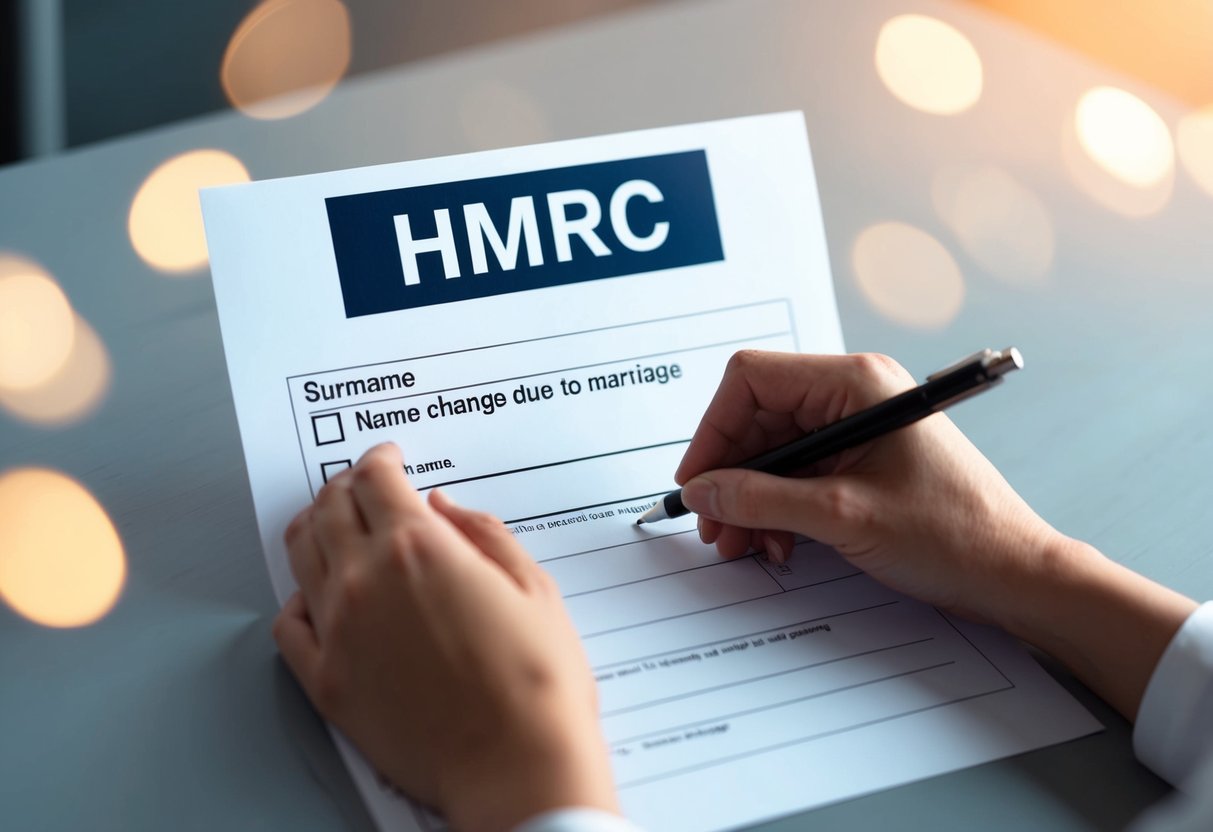
Changing your surname after marriage can affect various aspects of your life. It’s important to recognize how this change impacts your personal, financial, and legal records. You’ll need to update several important documents and notify relevant agencies to ensure everything is consistent and up-to-date.
Adjusting Personal and Business Records
When you decide to change your surname, start by updating your personal records. For individuals, this includes informing HMRC to ensure your Income Tax information is accurate. Your name should match your official identification, such as your driving licence and passport.
If you own a business, consider updating your business records as well. Change your business name if you operate under your personal name. Notify HM Land Registry and update your records for any properties you own. This is crucial to avoid potential legal issues in the future.
Updating Your Information Elsewhere
Don’t overlook updating your information elsewhere. Notify your bank and credit card companies of your name change to keep your financial records aligned.
Change your name on your Council Tax Bill to ensure accurate billing and service provision.
You should also update your correspondence records with friends, family, and any subscriptions. If you receive Child Benefit, ensure your details with the government are current.
It’s easy to skip these steps, but staying on top of them saves confusion later.