
Do I Really Need a Wedding Coordinator? A Practical Guide
You usually do not need a full-service planner, but you should hire a wedding coordinator if you want someone else to manage vendor arrivals, timing, setup, and problems on your wedding day. A coordinator protects your peace of mind while you enjoy your dream wedding with your guests.

You can plan many details yourself and bring in help for the final weeks. This approach gives you control over your choices while placing wedding-day logistics with a professional.
It becomes especially useful when your guest list is large, your venue needs extensive setup, or several vendors must work on one schedule.
If you are planning a celebration in North Georgia, Metro Atlanta, Northwest Georgia, or Southeast Tennessee, Ever Weddings offers coordination support throughout those areas. You can contact the team to discuss your date and needs before choosing the right level of help.
The Short Answer: When Coordination Is Worth the Investment
A wedding coordinator is worth the investment when your wedding includes several vendors, a detailed timeline, complex family dynamics, or setup work that someone must manage while you celebrate.
Your wedding budget should guide the decision, yet the lowest quote does not always create the lowest total cost. If coordination falls to you, your partner, or your family, the unpaid work still takes time and attention.
Think about who will answer vendor messages, direct deliveries, check the floor plan, cue the ceremony, and solve delays.

Signs Your Wedding Has Too Many Moving Parts to Self-Manage
Your wedding likely needs professional wedding coordination when:
- You have several vendors arriving in different time windows.
- Your ceremony and reception use separate spaces.
- Rentals, florals, signage, favors, or personal items need placement.
- Your guest list includes many family groups or special seating needs.
- You expect strong family dynamics or several people requesting decisions.
- You want a detailed reception schedule with speeches, dances, dinner, and a grand exit.
- Your venue requires setup, room flips, or end-of-night cleanup.
- You have an outdoor ceremony and need a weather backup plan.
- You want your friends and family to attend as guests.
A coordinator also gives you one clear contact for vendor questions. That keeps your phone quiet while you get ready and spend time with the people you love.
When You Can Confidently Go Without Professional Support
You can manage without a coordinator when your celebration is small, your venue handles the key logistics, and each vendor has a clear role. A simple ceremony with limited decor and a short reception creates fewer handoffs.
Assign every task to a named person before the wedding. Include vendor check-in, setup, ceremony cues, guest questions, timeline checks, and breakdown. Choose people who can focus on these duties for the entire event.
Your plan should also name someone who can make quick decisions. If nobody owns the schedule, the work returns to you during the moments you hoped to enjoy.
What a Wedding Coordinator Actually Does
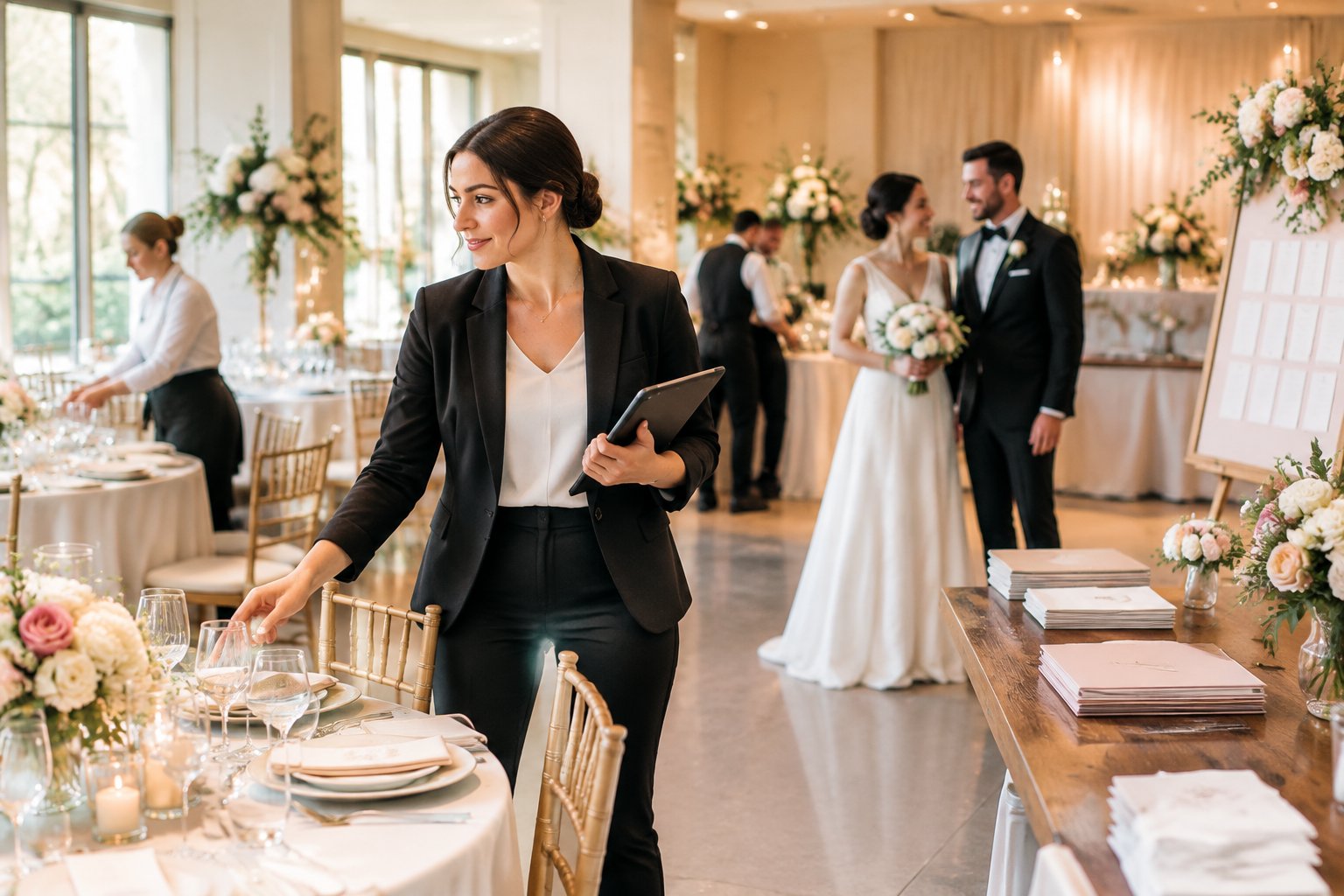
A wedding coordinator turns your plans into a working event by managing the timeline, vendor communication, setup, ceremony cues, and reception flow.
Their work begins before the wedding day. Depending on the package, they review contracts, collect vendor details, build the timeline, confirm arrival windows, and learn how you want the celebration to feel.
On the day, they direct the moving parts and solve issues away from you.
Managing the Master Timeline and Event Flow
Your coordinator builds a schedule that connects preparation, portraits, the ceremony, cocktail hour, dinner, dancing, and the exit. The schedule includes travel time, setup windows, meal service, and breathing room for delays.
During the wedding, the coordinator watches the clock and adjusts the plan when needed. They cue the wedding party, guide family photos, communicate with the photographer, and tell the DJ when to prepare each reception moment.
A strong timeline includes details such as:
- Hair and makeup completion
- Photographer arrival
- Florals and rental delivery
- Guest seating
- Processional order
- Cocktail hour transition
- Dinner service
- Toasts and special dances
- Cake cutting
- Final send-off
Coordinating Vendor Arrivals, Setup, and Communication
Your coordinator confirms where and when each vendor should arrive. They greet the florist, DJ, photographer, caterer, rental team, and bakery, then direct them to the correct spaces.
They also check that the floor plan matches the approved layout and that florals, tables, chairs, signage, favors, and personal details are placed correctly. If a delivery runs late or a setup question comes up, the vendor contacts the coordinator.
This single point of contact keeps you, your partner, and your family out of the message chain.
Handling the Rehearsal, Ceremony Cues, and Reception Moments
Your coordinator leads the rehearsal by explaining where the wedding party stands, how each person enters, and when the processional begins. Clear direction helps everyone feel prepared.
On the wedding day, they line up the wedding party, cue the ceremony music, guide the recessional, and move guests toward the next part of the event. They also coordinate moments such as the first dance, speeches, dinner service, cake cutting, and bouquet toss.
At the end of the night, the coordinator checks personal items, rental returns, vendor breakdown, and transportation details when those services are included in the contract.
Wedding Planner vs. Day-of Coordinator vs. Venue Coordinator
A wedding planner guides the full planning process, a day-of coordinator manages final execution, and a venue coordinator focuses on the property’s operations.
The names overlap across companies, so compare the actual scope of work. Ask when the professional begins, which vendors they contact, and what happens during setup and breakdown.

| Role | Starts | Main focus | Best fit |
|---|---|---|---|
| Wedding planner | Early planning | Budget, design, vendor selection, logistics | You want support from the first decisions |
| Day-of coordinator | Final weeks or wedding week | Timeline, vendor communication, event execution | You planned the wedding and need help running it |
| Venue coordinator | Venue booking or event date | Property, venue staff, catering operations | You need venue-related support |
When a Wedding Planner Is the Better Fit
A wedding planner is the better fit when you want help choosing vendors, setting priorities, creating a budget, planning design, and managing decisions from the start.
You may also benefit from a planner when your schedule is full, your event includes multiple celebrations, or you feel unsure where to begin. A planner can guide site visits, contract reviews, vendor selection, floor plan decisions, and design details across the full planning period.
If you are planning most details yourself and only need execution support, a coordinator may fit your needs better. You can also hire a planner for early guidance and add coordination for the wedding day.
What a Day-of Coordinator Usually Handles
A day-of coordinator manages the final handoff and event execution. Many professionals begin several weeks before the wedding so they have time to review your plans and contact your vendors.
The package may include:
- Timeline creation or revision
- Vendor confirmations
- Rehearsal direction
- Setup oversight
- Wedding party cues
- Reception transitions
- Problem solving
- Breakdown supervision
Ask when the coordinator starts work. A professional who arrives for the first time on the morning of the wedding has less time to learn your plans than someone who begins a month or more ahead.
Why a Venue Coordinator Cannot Replace Your Coordinator
A venue coordinator works for the venue. Their duties may include room access, venue staff, catering timing, property rules, and building procedures.
Your wedding coordinator works for you and manages the complete event experience. That includes your photographer’s timeline, DJ cues, florist delivery, wedding party, family photo groups, personal decor, and guest transitions.
During a site visit, ask the venue coordinator for a written list of included services. Then compare it with the responsibilities you still need covered. This reveals whether you need a separate professional.
What Happens When No One Owns the Wedding Day Logistics?
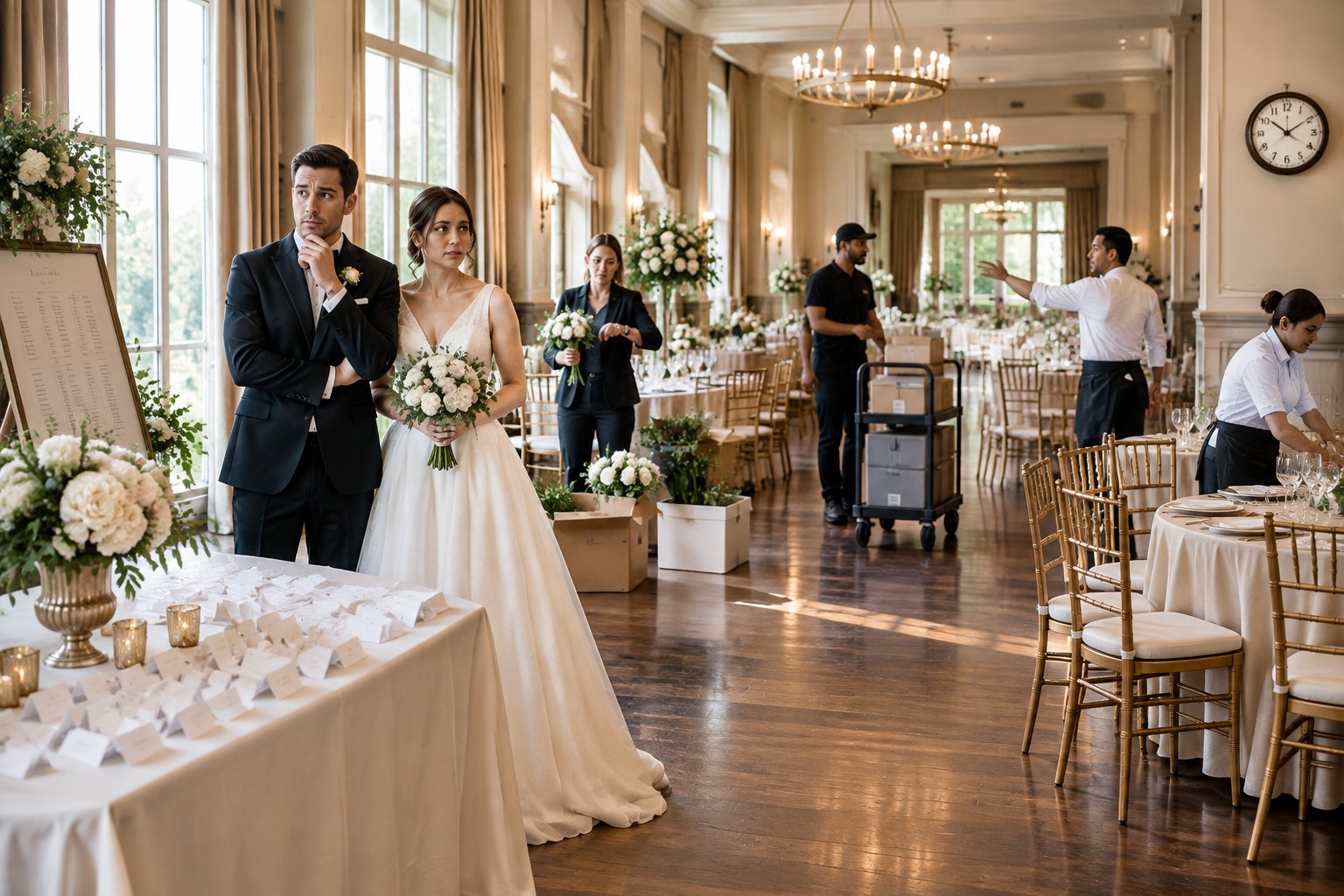
When no one owns the logistics, wedding-day tasks move to you, your friends and family, or whichever vendor answers first.
A timeline still needs someone to enforce it. Vendors still need arrival instructions. Guests still need direction. Setup still needs supervision.
Each loose task creates another interruption during a day when your attention should be elsewhere.
Why Friends and Family Should Not Have to Work the Event
Your parents, siblings, attendants, and close friends came to celebrate with you. Assigning them repeated logistics tasks can pull them away from the ceremony, portraits, dinner, and reception.
A friend might agree to place favors, answer vendor calls, or direct guests. Once the event begins, that person still needs to locate missing items, make decisions, and watch the clock. Their guest experience changes along with yours.
Family dynamics can add pressure. Relatives may have different opinions about seating, traditions, timing, or special requests. A professional gives everyone one clear contact and keeps those decisions aligned with your plans.
What Your Vendors Can and Cannot Coordinate
Vendors coordinate the work tied to their own services. Your photographer manages photography, your DJ manages music and announcements, and your florist manages floral delivery and installation.
The full event connects those services. Someone must tell the photographer when portraits need to end, alert the DJ when the first dance is ready, confirm the cake arrived, and keep dinner service aligned with the timeline.
Without a dedicated coordinator, those connections may fall between vendors. A coordinator gives the full team one schedule and one point of contact.
Common Problems a Dedicated Coordinator Prevents
A coordinator helps prevent:
- Vendors arriving at the wrong entrance
- Personal decor remaining in boxes
- Ceremony cues being missed
- Family members missing portraits
- Dinner or speeches falling behind schedule
- Weather changes disrupting outdoor plans
- The DJ, photographer, and caterer working from different timelines
- Guests asking you for directions while you prepare
Problems still happen at well-planned weddings. Coordination places an experienced person between the problem and you, allowing quick decisions without pulling you into every detail.
How Much Does a Wedding Coordinator Cost?
Wedding coordinator cost varies by location, guest count, event complexity, preparation time, and the services included in the package.
In the United States, day-of and month-of coordination often falls near $800 to $3,000, while larger cities, complex celebrations, and broader scopes can cost more. Treat these figures as planning ranges, then request quotes from coordinators who work in your area.
What Changes the Price of Wedding Coordination
The price rises when your coordinator takes on more time, people, travel, or responsibility. Key factors include:
- Guest count and size of the wedding party
- Number of vendors
- Multiple ceremony or reception locations
- Rehearsal attendance
- Setup and breakdown labor
- Design or decor placement
- Transportation management
- Additional events, such as a welcome party
- Travel outside the coordinator’s service area
- A second coordinator for a large event
- A venue with limited staff support
A small wedding can still require detailed coordination if it includes a remote venue, extensive DIY decor, or several cultural traditions.
How to Compare Packages and Scope of Service
Compare the work included, not only the listed price. Ask each coordinator:
- When does active planning support begin?
- How many preparation hours are included?
- How many vendor contacts are included?
- Who creates the timeline?
- Is rehearsal direction included?
- How many wedding-day hours are covered?
- Does setup include personal decor?
- Is breakdown included?
- Is travel charged separately?
- Will an assistant attend?
Put the answers beside each quote. A lower price may cover fewer hours, less vendor communication, or no setup support. A higher price may include the final weeks of preparation and a broader handoff.
How to Decide Whether It Fits Your Wedding Budget
Start by listing every wedding-day task and assigning each one to a person. Include setup, vendor arrivals, timeline control, guest questions, ceremony cues, reception transitions, and breakdown.
Then consider the cost of removing those duties from you and your guests. If the coordinator fee protects your time, keeps family present, and supports the plans you paid for, it deserves a place in your budget.
You can also reduce the scope. Choose month-of coordination, limit setup assistance, or ask for a package focused on timeline management and vendor communication. Keep the responsibilities that would be hardest for you to manage during the event.
How to Hire the Right Coordinator for Your Wedding
The right wedding coordinator has a clear process, enough availability for your date, and experience with the size, style, and logistics of your dream wedding.
Look for someone who listens to your priorities and explains the handoff in plain language. Reviews can help you assess communication, calm problem solving, setup quality, and timeline control.
Questions to Ask Before You Book
Ask these questions during your consultation:
- How many weddings do you take on the same weekend?
- When do you begin active coordination?
- Will you personally attend the wedding?
- How many vendors will you contact?
- Do you create the timeline or review one you provide?
- Do you lead the rehearsal?
- How many hours are included on the wedding day?
- Do you oversee setup and breakdown?
- How do you handle weather changes?
- What happens if you have an emergency?
- Can you share reviews from weddings similar to yours?
- Have you worked with a guest list and floor plan like ours?
Ask for examples that match your event. A coordinator who knows your venue type, cultural traditions, or event format may anticipate details that need special planning.
Details to Confirm in the Contract
Your contract should state the service scope, dates, hours, payment schedule, cancellation terms, overtime rate, travel fees, assistant coverage, and backup plan.
Confirm whether the package includes:
- Vendor communication
- Timeline creation
- Rehearsal direction
- Ceremony management
- Personal decor setup
- Rental coordination
- Guest transportation
- End-of-night breakdown
- Emergency supplies
- Additional event coverage
Read the wording around “day-of.” Some packages begin during the final week, while others include several weeks of preparation. The contract should show who handles each major task.
How to Prepare Your Coordinator for a Smooth Handoff
Give your coordinator the information needed to lead without chasing details. Send vendor contracts, contact information, invoices, floor plans, seating assignments, ceremony details, special traditions, transportation plans, and venue rules.
Create one shared folder with your latest documents. Mark decisions that require approval and identify people authorized to answer questions on your behalf.
Tell your coordinator about family dynamics, accessibility needs, important guests, private moments, and details you want protected. Share the guest list and floor plan once they are stable, then update the coordinator when changes affect timing or placement.
Schedule a final handoff meeting to review the timeline line by line. Confirm arrival times, setup responsibilities, ceremony cues, reception announcements, meal plans, and the end-of-night plan before your wedding week begins.