
Do the Groom’s Parents Pay for Alcohol? Wedding Etiquette
Your future in-laws do not automatically pay for alcohol at your wedding. The groom’s parents may cover reception alcohol when your families agree to that contribution, while many couples now pay for the bar themselves or divide wedding costs by budget and ability.
Traditional etiquette often assigned the bar to the groom’s family because the bride’s family carried much of the reception expense. Modern wedding planning gives you more flexibility. Family dynamics, cultural customs, and each household’s finances all shape the decision.
Talk about the bar before you sign venue or catering contracts. If you want help planning the full list of traditional contributions, review what the groom’s parents pay for at the wedding and bring a clear budget to the conversation.

The Short Answer: It Depends on the Family Agreement
The groom’s family pays for alcohol only when that expense is part of a clear family agreement. Your wedding budget might assign the bar to the groom’s parents, the bride’s family, both families, the couple, or a shared wedding fund.
Traditional customs offer a starting point, yet they do not create a required financial responsibility. Put the contribution in writing, including the amount, the type of bar, and any spending limit.

What Traditional Wedding Customs Say
Older American etiquette often placed reception alcohol with the groom’s family. The bride’s family was expected to handle much of the wedding reception, including the venue, meal, decorations, and other wedding expenses.
The groom’s family handled the rehearsal dinner and selected costs tied to the groom’s side. Alcohol at a wedding sometimes appeared on that traditional list because the bar supported the reception hosted by the bride’s family.
Some families still follow this pattern, especially when it fits their cultural or religious customs.
Why Modern Couples Divide Costs Differently
Modern couples use financial responsibilities that fit their income, savings, and family contributions. You might choose equal thirds, a flat gift from each family, or a shared wedding account.
Another option assigns specific costs, such as the rehearsal dinner to the groom’s family and reception alcohol to the couple. Ask each family what they can comfortably offer.
A contribution should remain a gift unless everyone clearly agrees to a loan. Linking money to control over the guest list or vendors can create tension, so discuss those expectations at the same time.
When the Couple Pays for Reception Alcohol
The couple pays for the bar when you want full control of the wedding budget or when family members cannot contribute. Paying yourselves also lets you choose a bar package that fits your guest list and priorities.
You can reduce wedding costs with a beer-and-wine bar, a shorter service period, or one signature cocktail. Include taxes, service charges, bartender fees, gratuities, mixers, glassware, and ice in your estimate.
What the Groom’s Family Traditionally Covers
Traditional groom’s family expenses include the rehearsal dinner, marriage license, officiant’s fee, groom’s attire, some flowers, wedding-party gifts, and honeymoon costs. Alcohol might join that list, though families can select a different contribution that fits their budget.
These customs describe a starting point for discussion. Your families can follow them closely, exchange responsibilities, or use a flat contribution.

The Rehearsal Dinner and Its Costs
The groom’s family traditionally hosts the rehearsal dinner. The cost can include the venue, meal, beverages, invitations, transportation, and decorations.
You can keep the event formal or choose a casual welcome gathering. Whoever hosts sets the guest list and style, so agree on those details before booking the restaurant or caterer.
Marriage License and Officiant Fees
Traditional etiquette assigns the marriage license and officiant fee to the groom or his family. The license price varies by state, while an officiant might charge a set fee or accept a donation.
Ask whether travel, lodging, ceremony materials, or rehearsal attendance add to the officiant fee. Record those expenses in the wedding budget so they do not appear as last-minute costs.
Attire, Rings, Flowers, and Wedding-Party Gifts
The groom’s family has traditionally helped pay for the groom’s wedding attire and sometimes the groomsmen’s attire. The groom’s wedding band, the bride’s wedding ring, personal flowers, corsages, boutonnières, and groomsmen gifts can also fall under traditional expectations.
Modern couples and wedding-party members frequently share these costs. Confirm who pays before ordering suits, selecting flowers, or purchasing gifts.
Honeymoon and Other Optional Contributions
The honeymoon was once a major groom’s family responsibility. Today, many couples pay honeymoon costs together or receive a honeymoon fund as a wedding gift.
An engagement party, wedding-day transportation, lodging, entertainment, or a portion of the reception can serve as an alternate contribution. Choosing one defined expense gives the groom’s family a clear role without creating an open-ended obligation.
What a Bar Contribution Can Actually Include
A bar contribution should name the exact service you are funding, such as an open bar, limited bar, beer and wine, or signature cocktails. The phrase “we’ll cover the alcohol” can leave major costs unclear.
A reception alcohol package may include drinks only, or it may include bar service, glassware, mixers, ice, setup, cleanup, and staffing. Ask the venue for an itemized quote.
Full Bar Service and an Open Bar
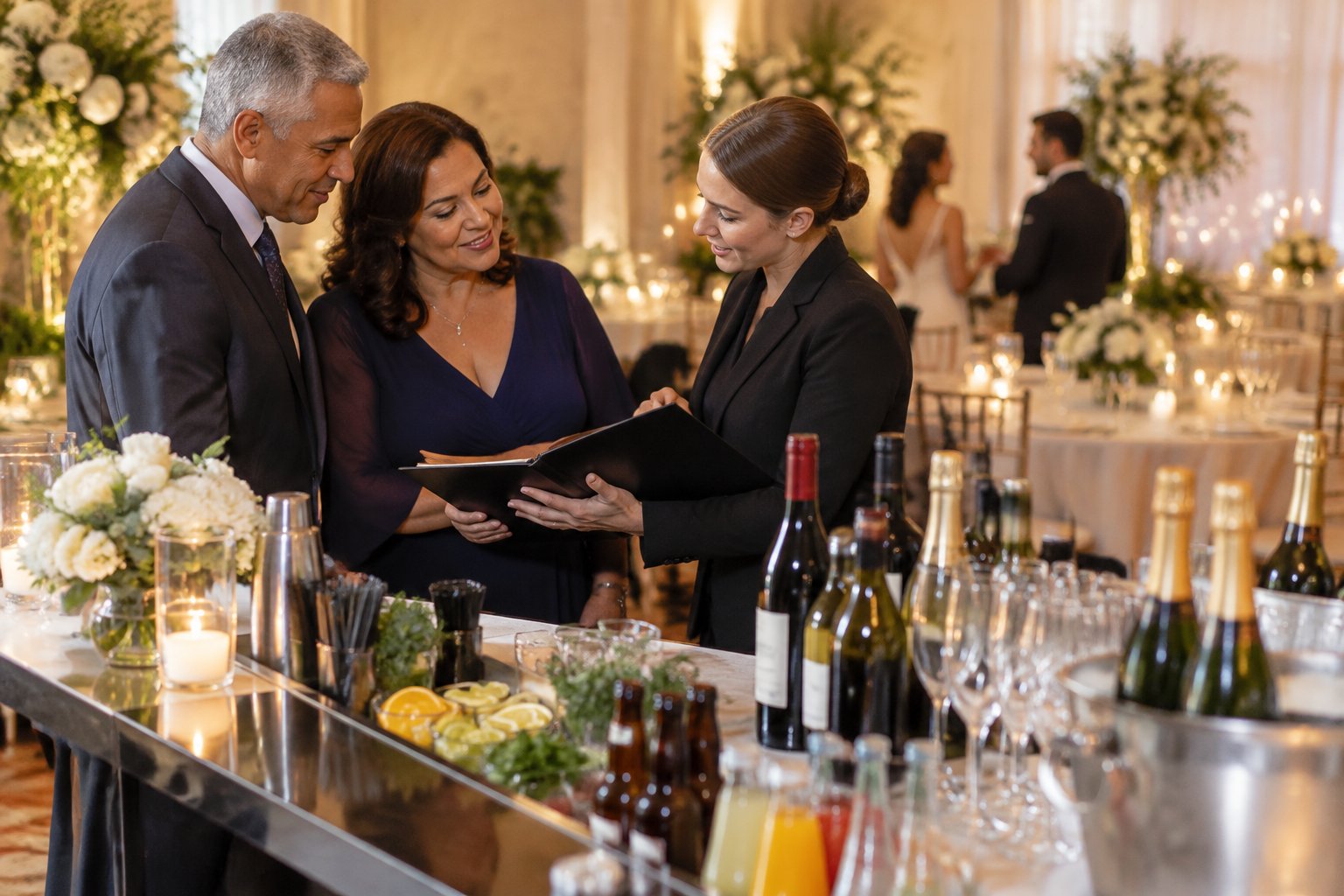
An open bar lets guests order beer, wine, spirits, and mixed drinks without paying at the reception. A full bar service package might include the alcohol, bartenders, mixers, glassware, ice, and a fixed number of service hours.
Premium spirits and specialty drinks raise the price. Ask whether cocktail hour is included and whether the venue charges a beverage minimum or overtime fee.
Beer, Wine, and a Limited Bar
A beer-and-wine bar gives guests hosted choices while controlling the alcohol budget. A limited bar can add one or two signature cocktails, champagne for the toast, or selected spirits.
This format works well when your guest list includes many light drinkers or non-drinkers. Pair the alcohol with appealing nonalcoholic options so every guest has a thoughtful choice.
Cash Bar Etiquette and Guest Expectations
A cash bar asks guests to purchase their own drinks. Some couples use a hosted beer-and-wine bar with a cash option for spirits, yet tell guests in advance through the wedding website or invitation details.
A fully cash bar can feel unexpected at a formal reception because guests already pay for travel, attire, and a gift. If your budget cannot support an open bar, a limited hosted bar gives guests a clear, welcoming option.
For more guidance, compare the etiquette behind whether guests should pay for drinks at a wedding.
Signature Cocktails, Toasts, and Specialty Drinks
A signature cocktail adds personality while limiting the number of spirits and mixers you need. Choose a recipe that can be prepared in batches and display its ingredients and alcohol content.
Decide whether the bar contribution covers the champagne toast, welcome drinks, specialty drinks, nonalcoholic cocktails, and late-night service. List each item on the venue proposal.
How to Set a Realistic Reception Drink Budget
Build the drink budget from your guest list, service hours, venue rules, and complete invoice, including taxes and fees. A per-person quote rarely represents the final amount by itself.
Your estimate should account for guests who do not drink, the reception schedule, and the service style. Use the final number when discussing a groom’s family contribution.

Guest Count, RSVPs, and Service Hours
Start with the guest list, then update the estimate as RSVPs arrive. Count children, designated drivers, pregnant guests, and other non-drinkers separately from guests who plan to drink.
Ask the reception venue how many hours the bar runs. A cocktail hour plus a five-hour reception creates a different cost from a two-hour dinner bar. Include welcome drinks and the champagne toast in the service plan.
Venue Rules, Rental Fees, and Corkage
Your wedding venue may require its own alcohol, bartenders, or licensed bar provider. Other venues allow you to bring alcohol but charge a corkage fee for each bottle opened.
Check rules for outside liquor, wine, beer, glassware, ice, storage, delivery, and cleanup before comparing packages. A lower retail alcohol price may lose its savings after corkage and rental fees.
Use a written realistic wedding budget that places venue costs and bar expenses in separate lines.
Bartenders, Taxes, Gratuities, and Other Add-Ons
Add bartender wages, service charges, sales tax, gratuities, mixers, garnishes, glassware, ice, delivery, setup, cleanup, and overtime. Ask who receives the service charge and whether gratuity is included.
Request a final estimate based on your expected guest count and service hours. Give the groom’s parents that complete figure if they are considering paying for the bar, then agree on a spending cap.
How Families Can Agree on a Fair Contribution
Families reach a fair contribution when they discuss money early, define a fixed amount, and keep planning input separate from financial support. A clear agreement protects family relationships and keeps the wedding ceremony and reception within reach.
The parents of the groom can contribute toward alcohol, the rehearsal dinner, the DJ, flowers, or another meaningful expense. The best choice depends on what they value and what your budget can support.
Start the Conversation Before Booking Vendors
The groom should begin the conversation with his parents before you book the wedding venue or bar service. Share your wedding vision, guest count, estimated budget, and the choices that need funding.
A wedding planner can join the discussion when family dynamics feel difficult. You can also schedule a private meeting with the mother of the groom and other contributing relatives so everyone hears the same information.
Define the Contribution Amount and Spending Cap
Ask whether the groom’s parents prefer a fixed wedding gift, a percentage of the budget, or one assigned expense. If they offer to cover alcohol, specify the bar type, guest count, service hours, and maximum amount.
Write down who pays the vendor, when payment is due, and what happens if the invoice exceeds the cap. A fixed contribution lets you adjust the menu or bar package without reopening the family discussion.
Separate Financial Help From Planning Input
A wedding gift does not give a family control over every decision. Thank the groom’s parents for their help, invite their ideas about the expense they fund, and preserve the couple’s authority over the wedding ceremony and reception.
If they pay for the rehearsal dinner, they can help choose its menu and setting. If they fund the bar, you can discuss drink choices while keeping the guest experience and safety in view.
Adjust Plans When Budgets Do Not Match Expectations
Scale the bar package when the proposed contribution does not cover the original plan. You might shorten service hours, serve beer and wine, choose a signature cocktail, or move money from another budget line.
If the groom’s family cannot contribute, the couple can absorb the cost, ask the bride’s family about a shared plan, or choose a lower-cost reception. Their help can also take nonfinancial forms, such as organizing transportation, preserving a family heirloom, assembling favors, or assisting the wedding planner.