
Does the Bride Buy the Groom’s Suit? Exploring Wedding Traditions and Responsibilities
Planning a wedding comes with many questions, especially when it comes to attire. The bride does not necessarily buy the groom’s suit; it can often be a joint decision or the groom’s responsibility.
Understanding how wedding expenses are divided can help you make informed choices that fit your style and budget.
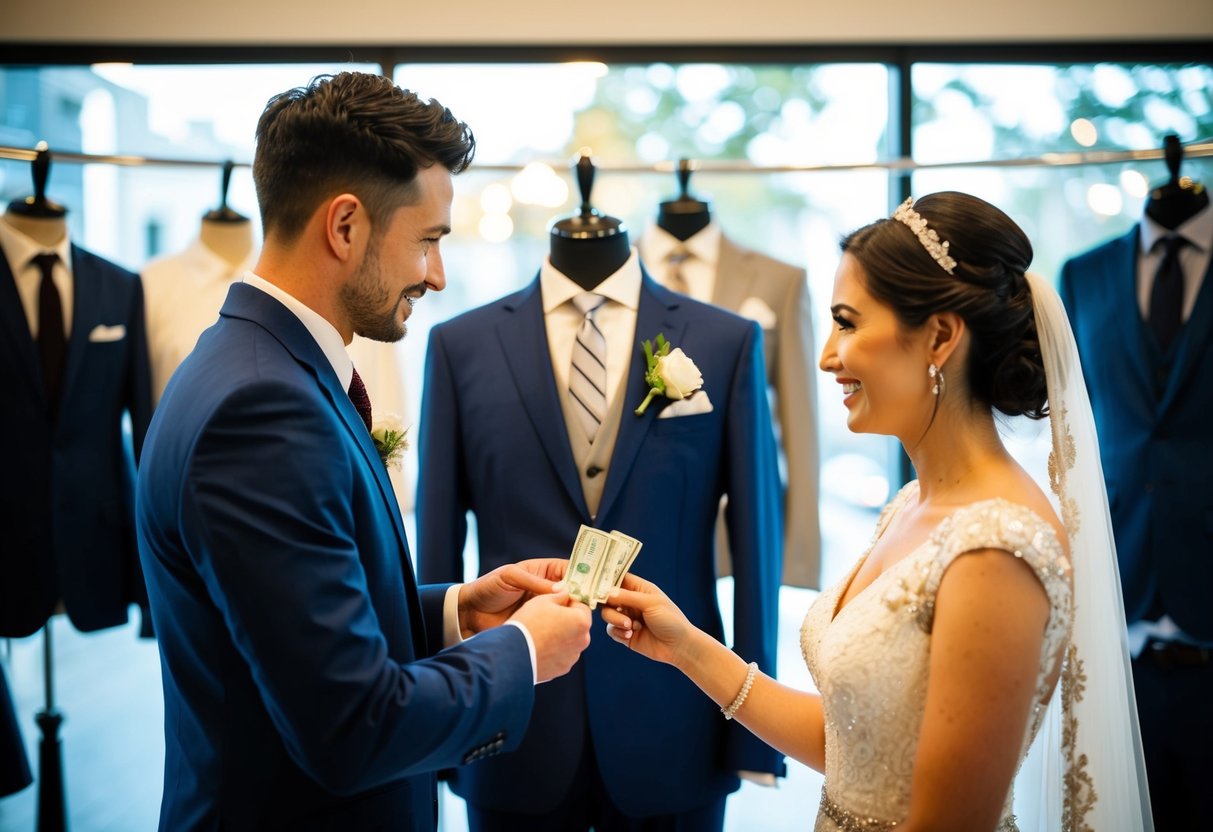
It’s important for you and your groom to discuss preferences and finances openly. This conversation can ease any stress and ensure that both of you feel good about your choices.
Whether it’s about the style of the suit or who pays for it, clear communication will make the planning process smoother.
If you’re wondering about traditions and modern expectations, you’re not alone. Many couples are navigating these questions together, and there’s no one right answer. You’ll discover that each couple has their own unique approach to choosing wedding attire.
Understanding Wedding Attire Traditions
When planning your wedding, understanding attire traditions is important. These traditions shape how you and your partner will choose your outfits for the big day. Different cultures and modern expectations influence decisions around what the bride and groom will wear.
Historical Perspective on Wedding Attire
Historically, wedding attire has deep roots in tradition. The bride traditionally wears a wedding dress, often white, symbolizing purity. This practice started in the 19th century with Queen Victoria.
The groom typically wore formal wear, such as a tuxedo. This choice often mirrored the bride’s dress, with colors and styles matching the wedding theme. In many cultures, it was common for families to have input on attire, emphasizing family values and heritage.
Modern Expectations for Bride and Groom
Today, expectations for wedding attire can vary greatly. Many couples seek outfits that express their individual styles while also complementing each other.
You may choose to shop together, blending tastes for a cohesive look. Couples often consider their wedding theme and color scheme when selecting suits and dresses. This personal touch adds to the significance of the day, making the outfits uniquely yours.
Whether you decide on traditional or modern styles, the key is to feel comfortable and reflect who you are as a couple.
Navigating Financial Responsibilities
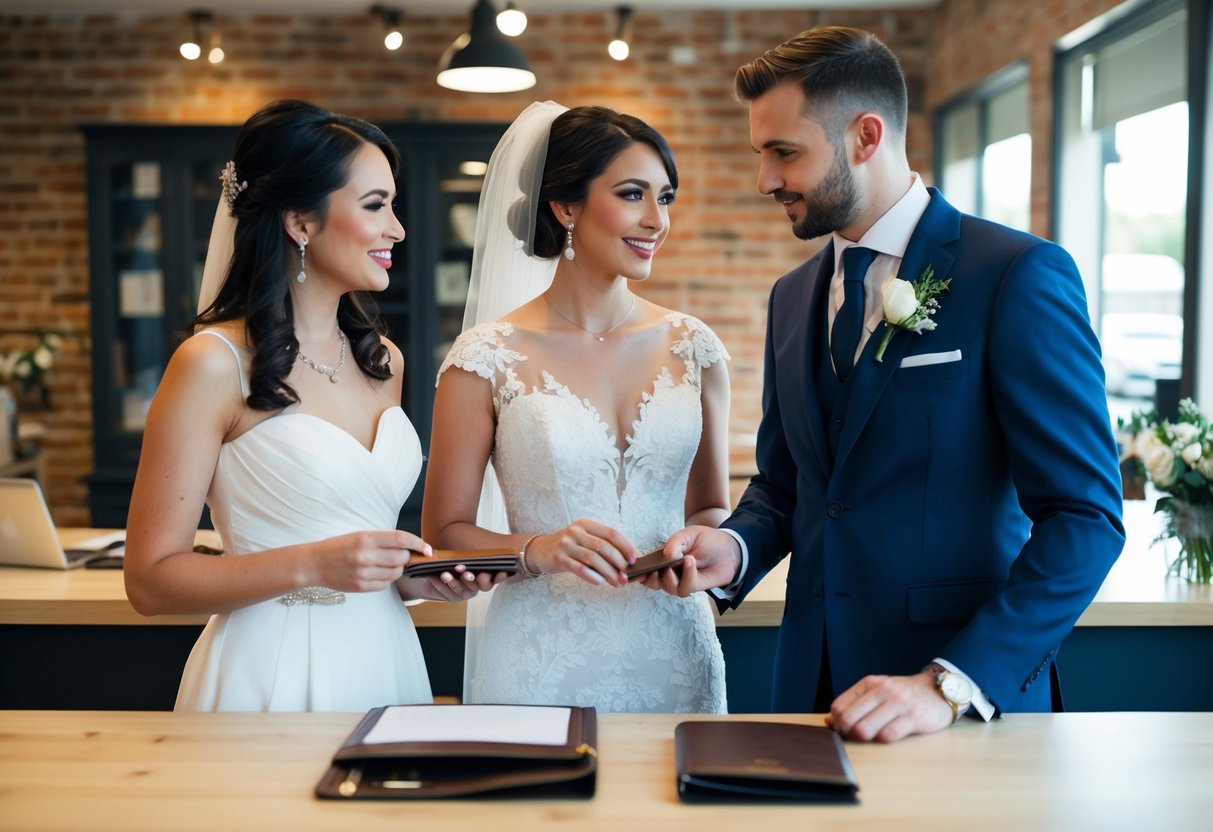
Figuring out who pays for what in wedding planning can be tricky. Understanding financial responsibilities can help you and your partner make decisions that will keep both parties happy.
Who Pays for What?
Traditionally, the groom pays for his own suit. This can be from your personal funds or through a shared account. The costs can vary widely depending on the style and brand you choose.
Additionally, the groom’s family often contributes to the wedding expenses, like the rehearsal dinner. The bride’s family usually covers other significant costs, such as the venue and catering.
Discussing these traditional roles can help clarify expectations and prevent misunderstandings.
Budgeting for the Groom’s Attire
Setting a budget for the groom’s attire is key. Talk to your partner to decide on a reasonable amount to spend.
Consider all components: the suit, shirt, tie, and accessories like cufflinks and socks.
You may want to look for rentals or sales to save money. Some couples find it helpful to allocate specific percentages of their overall wedding budget to different categories. This ensures you don’t overspend on attire while sticking to your wedding budget.
Potential for Cost-Sharing
Cost-sharing can be a smart way to handle wedding expenses. You and your partner can agree to split costs, which may include the groom’s suit or even the bridal party’s attire.
This can create a sense of teamwork and compromise. If the groom’s family offers support, consider how that could fit into the overall budget. Discuss any financial contributions openly, keeping communication clear to avoid confusion and ensure both families feel involved in the wedding planning process.
Selection and Coordination of the Groom’s Suit
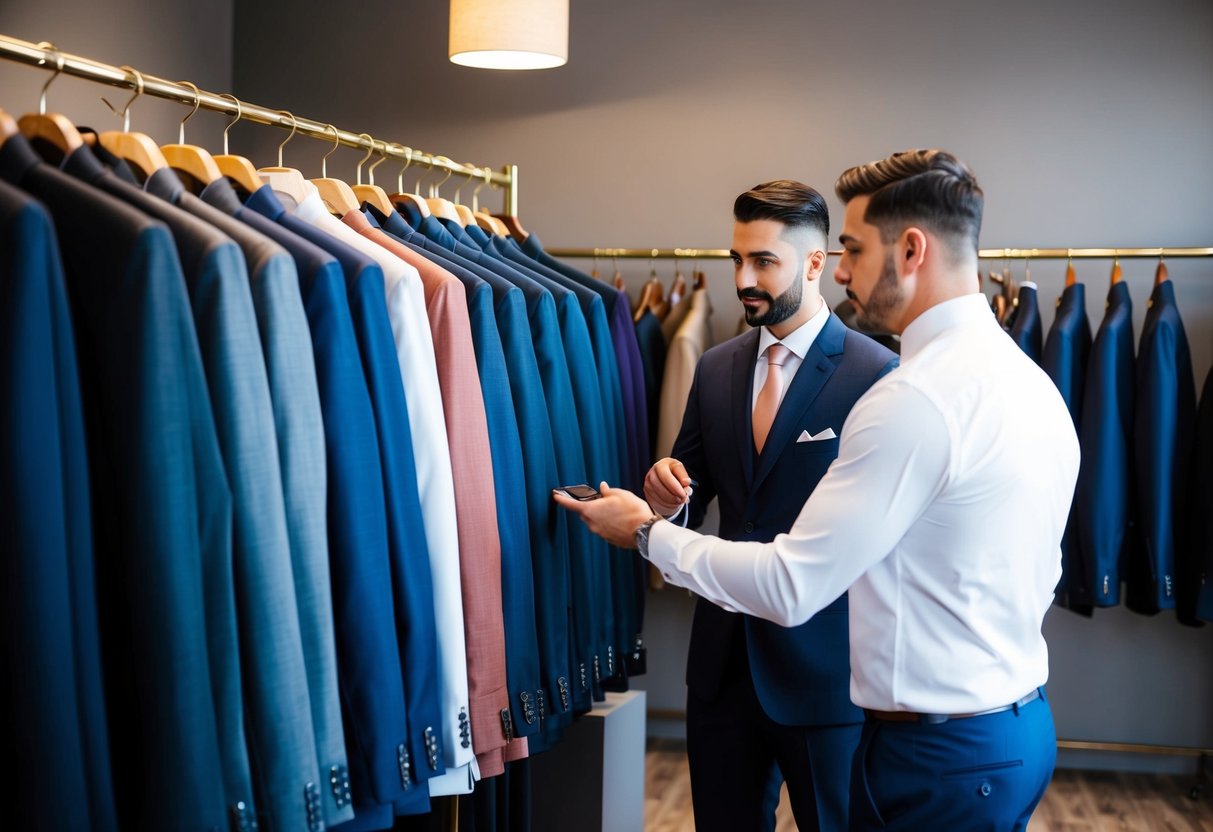
Choosing the groom’s suit is a key part of wedding planning. You need to consider personal style, how the suit fits into the wedding theme, and how it will coordinate with groomsmen suits and accessories.
Suit Selection Process
When it comes to suit shopping, start by identifying your personal style. Think about what cuts and colors you feel most comfortable in.
Consider options like classic tuxedos or modern slim-fit suits.
Set a budget before shopping, which can help narrow down your choices. Try on different styles to find the perfect fit.
It’s wise to schedule fittings at least a few months before the wedding to allow time for tailoring.
Don’t forget to choose accessories like ties or pocket squares that complement the suit.
Matching with the Wedding Theme
Your suit should align with the overall wedding theme. For example, if you’re planning a fall wedding, rich colors like burgundy or navy might work well.
Consider the color scheme of the wedding. A cohesive look can enhance the overall atmosphere. You might want to match your suit with the bridesmaids’ dresses or the decor.
Think about the venue, too. A formal venue might call for a classic tux, while a more casual setting could allow for lighter fabrics and colors.
Coordinating with Groomsmen and Bridal Party
Coordinating with your groomsmen is crucial. Decide if the groomsmen will wear the same suit as you or if they’ll go for a different look that still complements yours.
Establish a clear dress code for the groomsmen. This could mean matching colors or styles, or letting them choose from a specific palette.
Ensure everyone has enough time for fittings and alterations. Clear communication will help avoid any last-minute surprises.
Plan for accessories that unite everyone’s look. Ties, boutonnieres, and shoes can help create a cohesive appearance for both the groomsmen and the bridal party.
Final Preparations for the Big Day
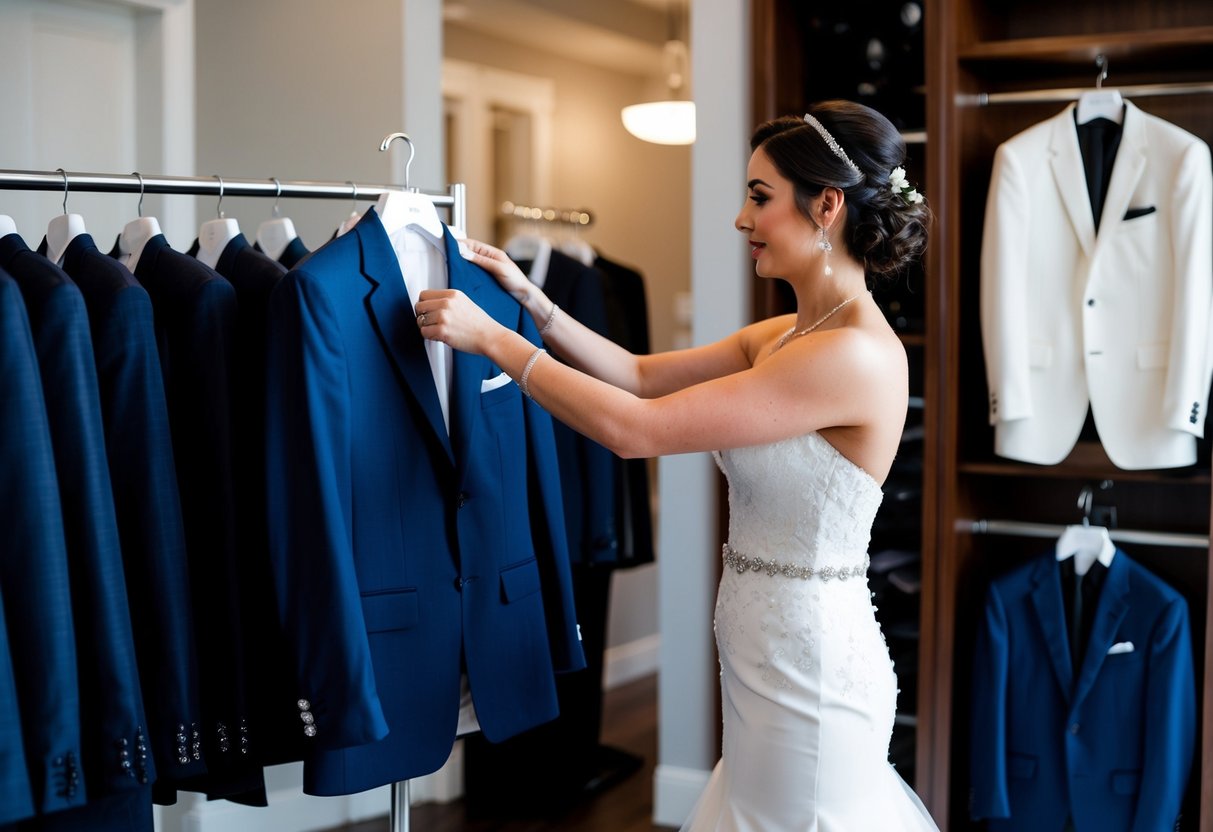
As the wedding day approaches, it’s essential to focus on the final touches that will make everything perfect. You want to ensure that your groom’s suit fits well, that he has all his accessories ready, and that the day is captured beautifully.
Last-Minute Adjustments and Alterations
It’s normal to need some last-minute adjustments to the groom’s suit. You should schedule fittings with a tailor at least two months before the wedding. This allows ample time for any necessary alterations.
On the day before the wedding, double-check that the fit is just right. Make sure the suit feels comfortable and looks sharp. Pay attention to details, like any loose threads or buttons.
Open communication with your groom is key. Discuss any concerns he may have about the fit or style. This will help ease any last-minute worries. A confident groom will shine on the big day.
Essential Accessories for the Groom
Along with the suit, accessories play a significant role in the groom’s overall look.
Consider items like ties, cufflinks, and pocket squares. These little details can add a personal touch.
Plan to pick out accessories that fit the wedding’s theme and colors. If you’re unsure, consider coordinating with the bride’s dress to keep everything in harmony.
Have a checklist for your groom’s accessories to avoid any last-minute scrambles. Include necessities like shoes, belts, and any special items that reflect his personality. Everything should be lined up the night before for a smooth wedding morning.
Capturing the Moment with Photographs
Hiring a skilled wedding photographer is vital to capturing all the joyful moments of the day. Discuss your vision and preferences beforehand to ensure nothing important is missed.
Think about specific moments you want photographed, like the first look or the exchange of rings. Share these with the photographer and your groom so everyone is on the same page.
It’s also great to set aside a little time for couple portraits during the day. This ensures you have beautiful pictures to look back on. Enjoy the process, and trust your photographer to get amazing shots that reflect your special day.