
Does the Groom Walk Down the Aisle? Understanding Modern Wedding Traditions
When planning your wedding ceremony, you might wonder about the traditions surrounding who walks down the aisle. Yes, the groom does walk down the aisle, and how he does it can vary based on personal preferences and cultural traditions. This moment can be just as meaningful as the bride’s entrance, setting the tone for the entire event.
You may choose to have the groom walk down the aisle solo, or he might be accompanied by his parents or other loved ones. This choice is an opportunity to highlight family connections and create a memorable entrance.
Understanding these options can help you decide what feels right for your ceremony.
As you explore the details of your wedding, remember that every couple has their unique story, and your decisions should reflect that. Whether you keep it traditional or add your own twist, knowing the possibilities for the groom’s walk will guide you in crafting a meaningful experience for everyone involved.
Wedding Ceremony Overview
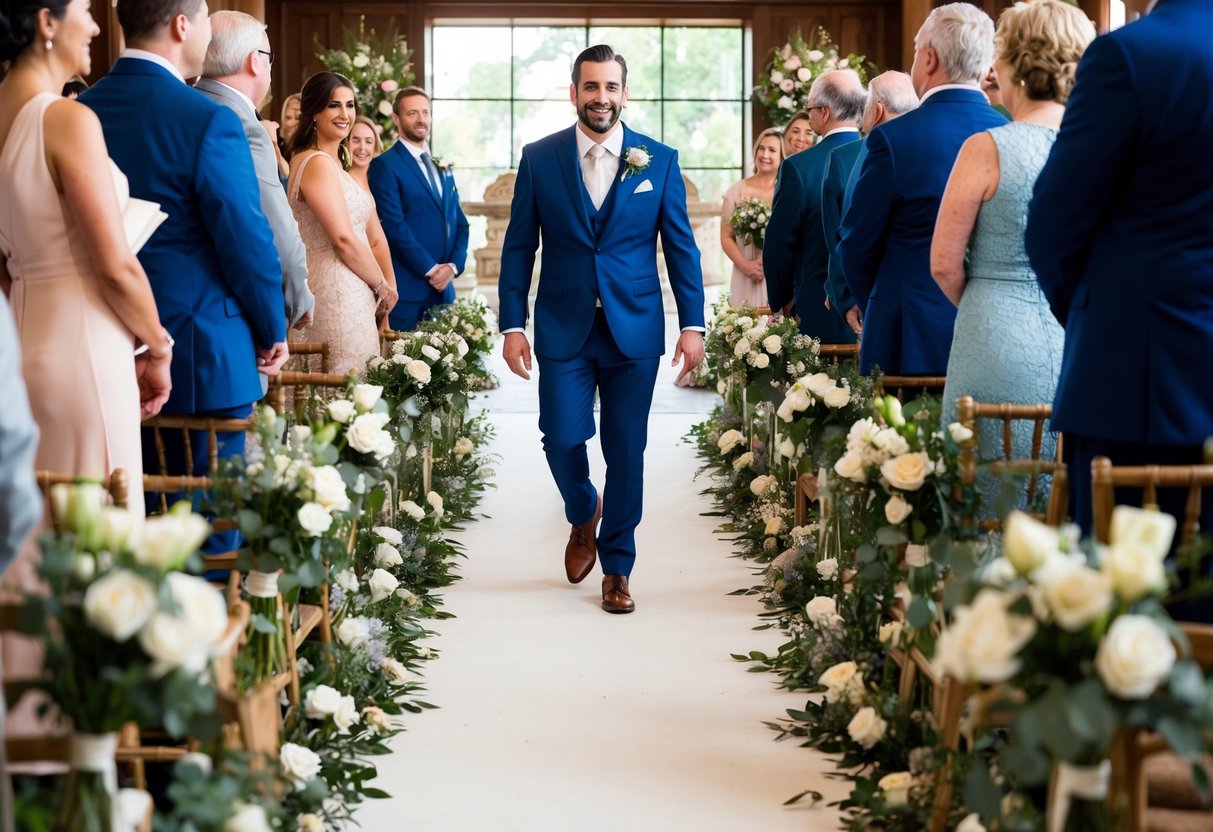
In a wedding ceremony, the processional is a key moment that sets the stage for the events to come. Each participant plays a specific role, whether it’s the groom, bride, or officiant. Understanding these roles can help you plan your ceremony more effectively.
The Significance of the Processional
The processional marks the formal beginning of the ceremony. It is a special moment where the focus shifts to the groom and the wedding party as they make their way down the aisle.
Often, the groom may walk solo, accompanied by parents, or even escort someone special, like his mother. This moment symbolizes commitment and anticipation. As the groom reaches the altar, he prepares to meet the bride, making it an emotional milestone for many couples.
The officiant often leads the ceremony, setting the tone for what follows.
Roles and Responsibilities of the Wedding Party
Each member of the wedding party has specific responsibilities during the ceremony. The groom typically stands on the right, with his groomsmen beside him. They support him throughout the day, ensuring everything runs smoothly.
The bride walks down the aisle last, often escorted by her father or another meaningful figure. The maid of honor stands by the bride, holding her bouquet and offering support. The officiant manages the ceremony and guides everyone through the process.
Having a well-organized wedding party makes the processional more meaningful and memorable for all involved. Your wedding planner can help coordinate these roles and ensure everyone knows what to do.
Order of Entrance
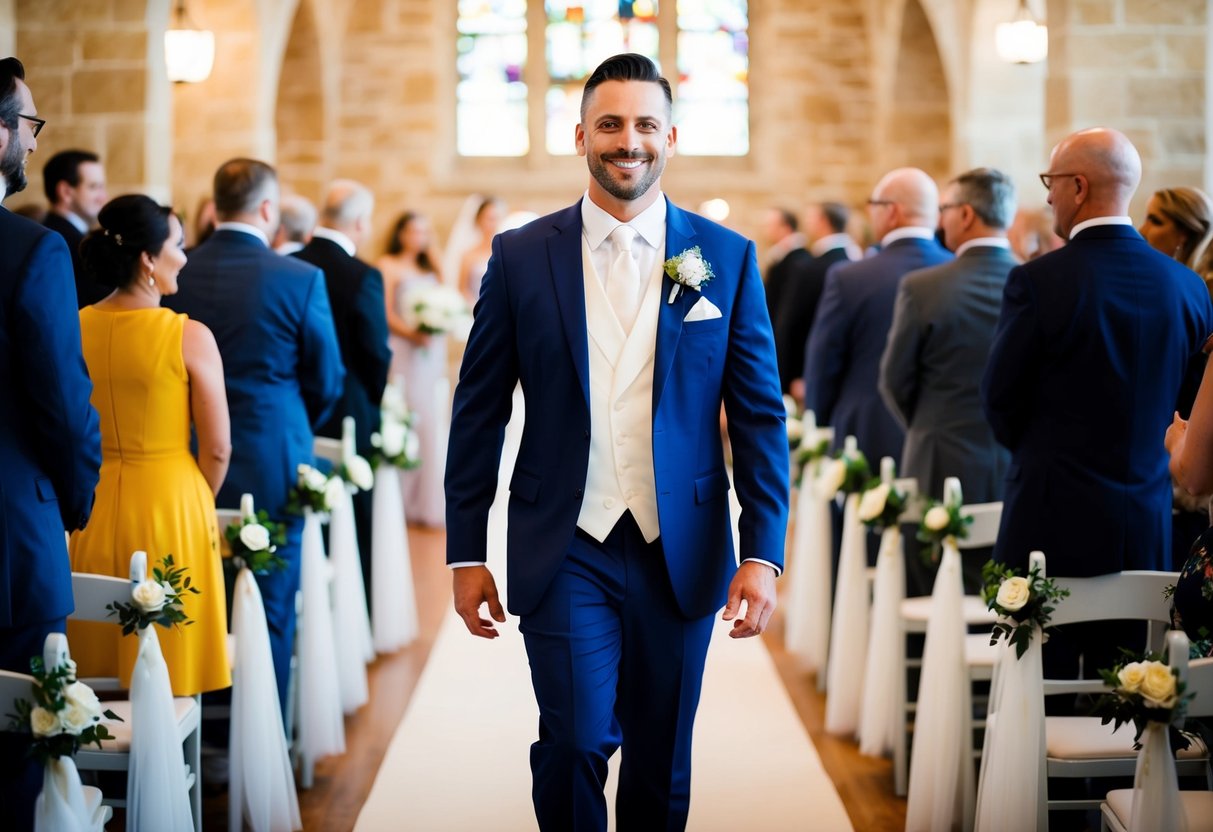
The order in which everyone walks down the aisle is an important part of the wedding ceremony. It sets the tone for the event and builds anticipation. Different traditions and modern spins influence how this moment unfolds.
Traditional Processional Order
In traditional ceremonies, the processional order usually starts with family members. First, the groom may walk down the aisle with his parents, often with his father on the left and his mother on the right.
Next, the groomsmen follow, either alone or paired up. After the groomsmen, the bridesmaids make their entrance, typically walking two by two. The maid of honor walks last among the bridesmaids.
The flower girl and ring bearer usually come next, adding a sweet touch. Lastly, the bride makes her grand entrance, often escorted by her father. This classic setup emphasizes connections with family and friends.
Modern Variations
Modern weddings often tweak the traditional order to fit the couple’s style. For instance, some grooms choose to walk down the aisle solo or with their parents. This shows a personal touch and may highlight independence.
Brides may have different variations as well. Sometimes, the best man walks in right before the groom. Couples may also decide on an alternative entry for the flower girl or ring bearer, allowing them to shine uniquely.
There’s also an option for brides to walk in with both parents or another family member. The key is to create a vibe that resonates with you and your loved ones.
Cultural Influence on Processional Structure
Cultural backgrounds greatly shape the processional order. In some cultures, family roles are more defined, affecting who walks in and when. For instance, in certain traditions, the mother of the bride may hold a special place and enter before the bridal party.
In other cultures, the groom’s parents may also play a significant role during the processional. This personalization reflects your heritage and honors family bonds.
Ceremony Traditions and Customs
Understanding the various customs surrounding a wedding ceremony can enhance your special day. Different cultures have unique ways of celebrating love. Here are some specific examples.
Christian Wedding Rituals
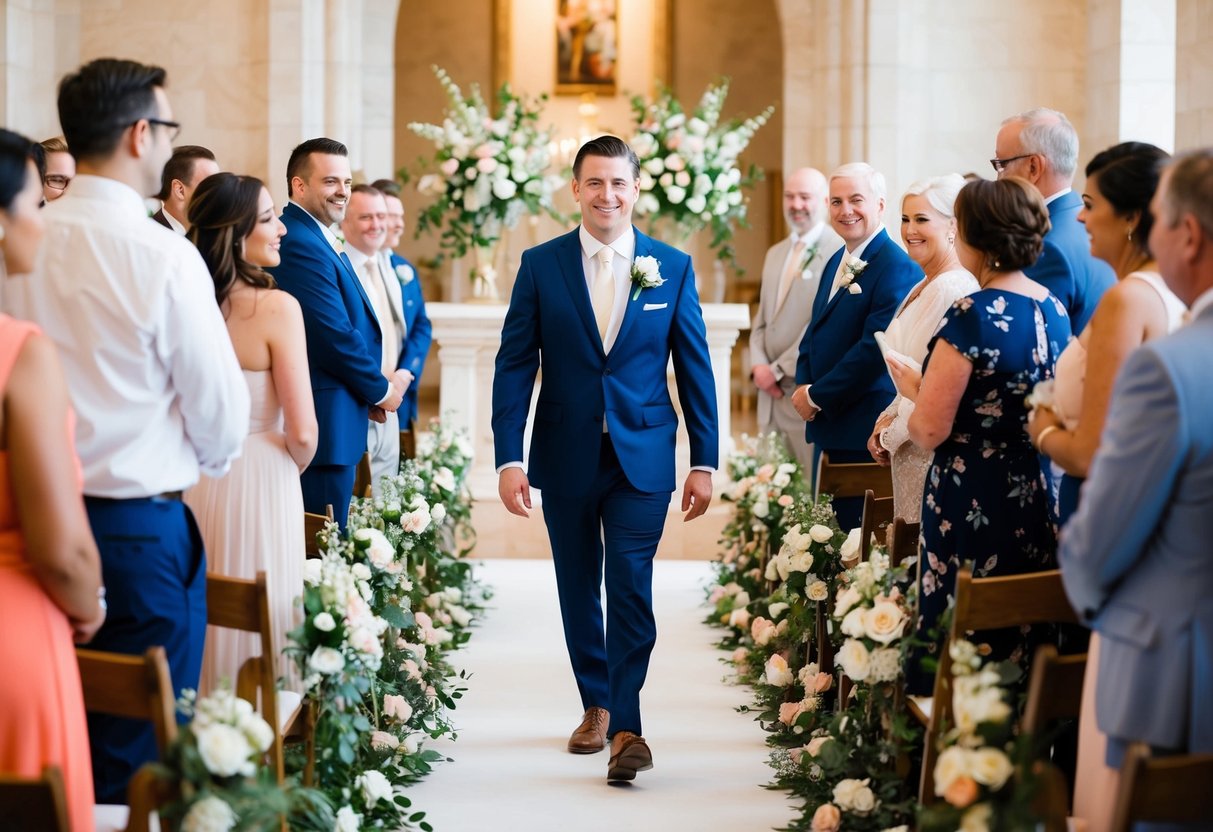
In Christian weddings, the groom’s walk down the aisle is a significant moment. Often, he walks solo or is accompanied by his parents. This symbolizes his transition from single life into marriage.
During the Christian wedding processional, the bride typically walks down the aisle last, creating a memorable visual. This highlights her importance in the ceremony.
Couples may choose specific scripture readings or hymns that hold personal meaning. The wedding vows exchanged often emphasize love, commitment, and faithfulness. Each detail contributes to the spiritual significance of this important event.
Jewish Wedding Customs
In Jewish weddings, the ceremony is rich in tradition. Couples often stand under a chuppah, which is a canopy symbolizing their new home together.
The Jewish wedding processional typically begins with family members escorting the groom. He may walk down with both parents, emphasizing family unity.
Many Jewish weddings also include the breaking of the glass, which symbolizes the destruction of the Temple in Jerusalem and serves as a reminder that joy and sorrow coexist. The couple often shares traditions, such as getting blessings from their families, highlighting their cultural heritage.
Hindu Wedding Practices
Hindu weddings incorporate vibrant customs. At the start of the ceremony, the groom often leads a joyful procession called the baraat. He may ride a horse or arrive in a decorated car, surrounded by family and friends who celebrate with music and dancing.
Once he arrives at the mandap, or sacred altar, the ceremony begins. In this setting, the bride and groom exchange vows. This often includes a ritual known as saptapadi, where they take seven steps together.
This signifies their commitment to one another and their new life together. It’s a beautiful blend of family, love, and culture that makes each Hindu wedding unique.