
Does the Mother of the Bride Have Any Duties? A Friendly Guide
Weddings are filled with excitement, and there’s a special role reserved for the mother of the bride. The mother of the bride has important duties that range from wedding planning to offering emotional support. This helps ensure everything goes smoothly on the big day. Her involvement can make a huge difference, from helping choose the wedding dress to coordinating details with vendors.

The mother of the bride often plays a key part in planning pre-wedding events. This might include organizing or attending bridal showers and other gatherings. Her support is invaluable during these celebrations, as she helps the bride feel loved and supported while navigating through wedding plans.
On the day of the wedding, the mother of the bride can take on tasks like guest management and offering last-minute assistance to her daughter. Her presence is comforting, especially during the ceremony and reception. Being involved in these special moments helps create memories that she and the bride will cherish for years to come.
Mother of the Bride’s Role in Wedding Planning

The mother of the bride often plays a key role in wedding planning. She assists with many tasks, from coordinating with the wedding planner to choosing the perfect venue. Her involvement ensures that the bride is supported and the wedding goes smoothly.
Coordinating with the Wedding Planner
One important duty is working alongside the wedding planner. A mother can help bridge communication between the planner and the couple. This might involve clarifying decisions or relaying updates. It’s essential she maintains open lines of communication. Her role can be like a second set of eyes, ensuring nothing falls through the cracks. She might attend some planning meetings, providing her insights and helping ensure the bride’s vision is realized.
Assisting with Venue Selection
Choosing a wedding venue is a big decision. Mothers of the bride can offer valuable input during this process. They might accompany the couple on tours of various wedding venues. Their experience can help weigh the pros and cons of each option. Her input can be crucial when considering logistics like accessibility and guest capacity. This assistance can make the venue selection a more informed and thoughtful choice, aligning with the couple’s desires and budget.
Overseeing Planning Tasks
The mother of the bride often takes on numerous planning tasks, easing the couple’s workload. This could involve organizing guest lists, managing RSVP responses, or coordinating catering options. She might also help the bride with dress fittings or be involved in minor details like table settings or flower arrangements. Her active involvement ensures that many small yet important details are not overlooked, helping make the wedding a memorable occasion.
Pre-Wedding Preparations and Events

The mother of the bride often plays a vital role in the events leading up to the wedding. From planning parties to assisting with dress choices, her guidance and support can make the journey to the big day more memorable and less stressful.
Organizing the Bridal Shower
A bridal shower is a heartfelt way to celebrate the bride-to-be. The mother of the bride often helps organize this event by selecting a date, securing a venue, and crafting a guest list. Working closely with the maid of honor and bridesmaids ensures all details are covered, from catering to decorations. Fun games and memorable activities are a nice touch, creating joyous moments and cherished memories for everyone.
Coordinating with friends and family for gift ideas or a registry can also make shopping easier for guests. The focus should remain on creating a loving and joyful environment that reflects the bride’s personality and preferences.
Engagement Party Contributions
The engagement party is a chance to announce the couple officially. The mother of the bride may contribute by offering ideas and helping with planning logistics. She might assist in choosing a venue and arranging food and drinks. Her role may also involve sending invitations and welcoming guests.
In some families, the mother of the bride might co-host with another family member or friend. Ensuring there is a blend of both families and friends will make the event warm and inclusive. While the couple should have the final say, the mother can provide valuable insights and experience to aid in planning.
Supporting Dress Shopping
Dress shopping is a major pre-wedding event, and having the mother of the bride’s support is often invaluable. Her opinions can help the bride decide on styles and fit. Accompanying her to bridal boutiques allows the mother to offer encouragement and ensure everything suits the bride’s taste and comfort.
Keeping track of appointments and shop options can streamline the process. It’s also important to help the bride feel special during this time, respecting her choices and offering honest but gentle feedback. Building moments of fun and laughter during dress shopping turns it into an enjoyable experience to remember fondly.
Ceremonial Duties on the Wedding Day
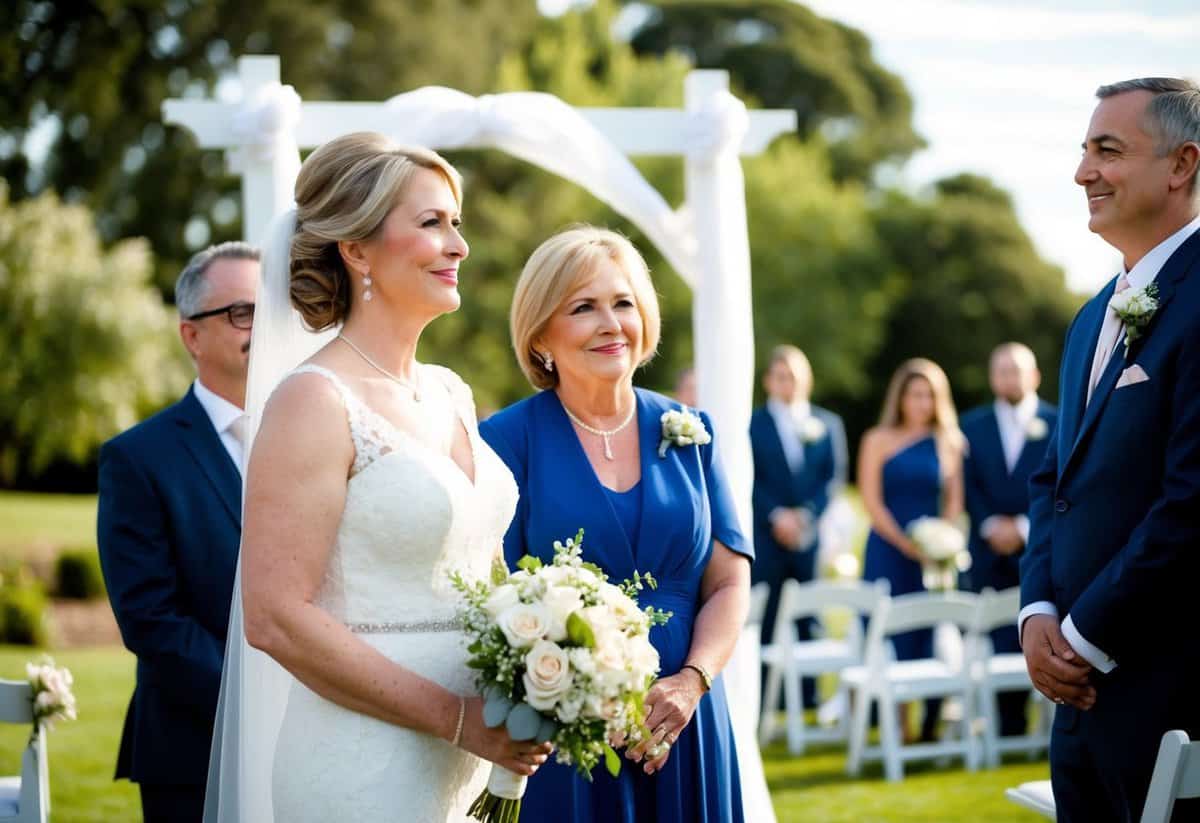
On the wedding day, the mother of the bride plays an important role in ensuring that everything runs smoothly. She has several ceremonial duties that help guide the event, make guests feel welcome, and assist with logistical aspects of the ceremony.
Guiding the Seating Chart
Managing the seating chart is one of the first ceremonial tasks for the mother of the bride. She may help direct ushers on where to seat guests, ensuring family members and close friends are placed in designated areas. Knowing the relationships and preferences of various guests can help her make seating arrangements that keep everyone happy and comfortable.
Her familiarity with both families is valuable here. She ensures that traditional seating arrangements are followed, such as placing the bride’s family on one side and the groom’s on the other.
A well-organized seating plan sets the tone for the ceremony, helping everyone feel that their presence is valued and appreciated. Her role in coordinating this aspect is crucial to a smooth start to the celebration.
Fulfilling the Processional Role
The mother of the bride often has a key role in the processional. She may walk down the aisle with a significant family member, such as the groom’s father, or even escort the bride, depending on custom and family preferences.
This moment is special and symbolizes the family’s support for the couple. It’s essential that she moves at a steady pace, often leading the way before the bride makes her entrance.
By participating in the procession, she adds to the ceremony’s emotional significance. It allows her to fully take part in the tradition while honoring the landmark event in her daughter’s life.
Welcoming the Guests
As guests arrive, the mother of the bride acts as a welcoming presence. Her duty is to greet friends and family, offering warm smiles and friendly conversations. This personal touch helps make guests feel appreciated and acknowledged.
Mingling with guests also allows her to solve any issues that may arise. She can direct them to seats, restrooms, or refreshment areas as needed. Her approachable demeanor ensures that guests feel at ease and ready to enjoy the wedding.
By creating a welcoming environment, she sets a positive tone that lasts throughout the day and leaves a lasting impression on all who attend.
Budget Management and Cost Contributions

The mother of the bride often plays a key role in managing the wedding budget and helping with costs.
Contributing to the Budget
The mother of the bride may help by contributing financially to the wedding budget. This contribution can range from covering specific expenses like the bridal gown or catering to offering a general sum to help with various costs.
Her role is to alleviate the financial burden on the couple. It’s important for her to discuss her contribution openly with the bride and groom to ensure everyone aligns on expectations.
Some families choose to split costs among different parties, such as the groom’s family covering certain expenses. The mother of the bride should communicate clearly with all involved to avoid misunderstandings.
Advising on Cost-Saving Options
With her experience, the mother of the bride can support the bride by advising on cost-saving options. She might suggest alternatives like choosing a venue with catering included or selecting flowers that are in season for lower prices.
Sometimes, sharing contacts for trustworthy vendors can lead to discounted rates. Her knowledge of wedding expenses can guide the couple to make smart financial decisions.
Also, she might help analyze the wedding budget to identify areas where costs could be reduced. Her involvement in this capacity can be invaluable in keeping the wedding within the planned budget.
The Mother of the Bride’s Etiquette and Attire

The mother of the bride plays a special role in the wedding, which includes choosing appropriate attire and respecting wedding traditions. Her choices should align with family values and the couple’s preferences.
Selecting the Right Dress
Choosing a dress for the mother of the bride involves several considerations. She should aim for an outfit that complements the wedding’s style, whether it’s a casual beach event or a formal cathedral ceremony. It’s crucial for her to consult with the bride on color and style, ensuring her attire neither clashes nor overshadows the bridal party. If the wedding has a specific color scheme, selecting a hue that aligns can create a harmonious look.
Texture and design should be tasteful, reflecting her personality while respecting tradition. Avoiding colors like white or any shade that matches the bride’s gown is considered respectful. Additionally, comfort is key—she will likely be on her feet, moving between guests and responsibilities. A good tip is to choose comfortable yet elegant shoes that can be worn throughout the day.
Incorporating Family Traditions
Family traditions can play a meaningful role in what the mother of the bride wears. Some families have heirlooms, such as a piece of jewelry, that are passed down through generations. The mother of the bride might wear or carry a family heirloom as her something borrowed, adding sentimental value to her attire. This helps blend the past with the present, honoring family connections.
She should communicate with family members to determine if there are expected customs or sentimental items that she should include. Whether it’s a pin, a handkerchief, or a locket, these items can be a heartfelt nod to family history. This respect for tradition helps maintain family bonds and reflects the couple’s roots on their special day.
Post-Ceremony Activities and Responsibilities
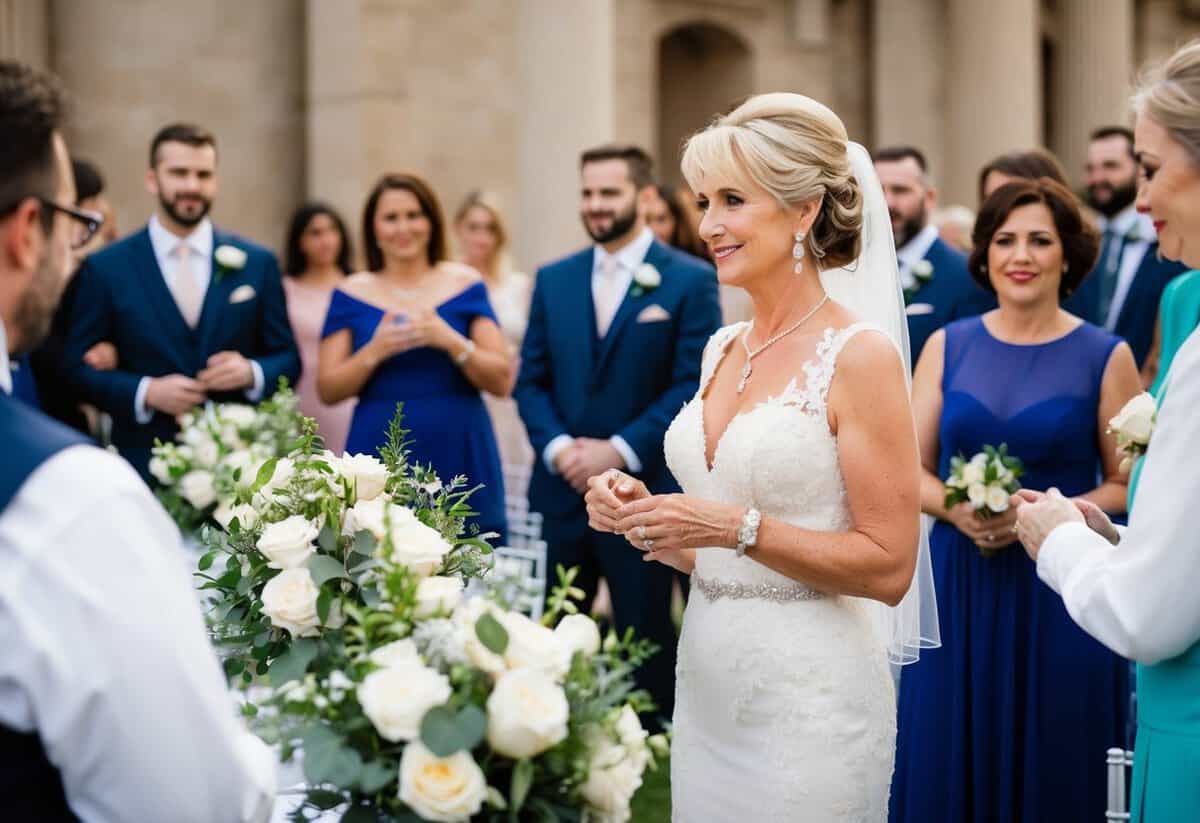
After the wedding ceremony, the mother of the bride plays an important role in ensuring the celebration continues smoothly. She is often involved in both managing the reception activities and communicating effectively with vendors.
Coordinating Reception Activities
The mother of the bride often acts as a friendly hostess during the wedding reception. She helps set the tone and makes guests feel welcome.
One of her responsibilities may be to circulate around the room, chatting with guests and checking that everyone is comfortable.
In addition to mingling, she might encourage guests to participate in activities like signing the guestbook or joining the dance floor. Her presence can help ease any nervousness and bring people together, making the event enjoyable for everyone.
She may also ensure that all scheduled events, such as toasts or cake-cutting, happen on time. This helps keep the reception flowing smoothly and maintains a lively atmosphere throughout.
Being the Point Person for Vendors
The mother of the bride also needs to be the point person for vendors. She might handle questions or concerns from the caterers, photographers, or the band.
Ensuring that vendors understand the schedule and any last-minute changes can greatly affect how smoothly the reception goes.
Clear communication is key here. As the go-between, she ensures vendors have what they need, whether it’s access to a power outlet for the band or ensuring meals are served on time.
Her role can greatly reduce stress for the couple, allowing them to enjoy their special day without worrying about the little details.
Strong coordination in this area ensures the vendors’ efforts contribute to a successful and joyous celebration.