
Does the Mother of the Groom Give a Speech? Etiquette Guide
If you are asking, “Does the mother of the groom give speech?” the answer is yes, she may give one, but wedding etiquette does not require it. Her words can honor her son, welcome his partner, and celebrate the joining of two families.
Traditionally, the groom’s parents often speak at the rehearsal dinner, especially when they host it. Modern wedding traditions give the mother of the groom more choices. She can offer a full wedding speech at the reception, share a short wedding toast, or say a few words at a private family gathering.
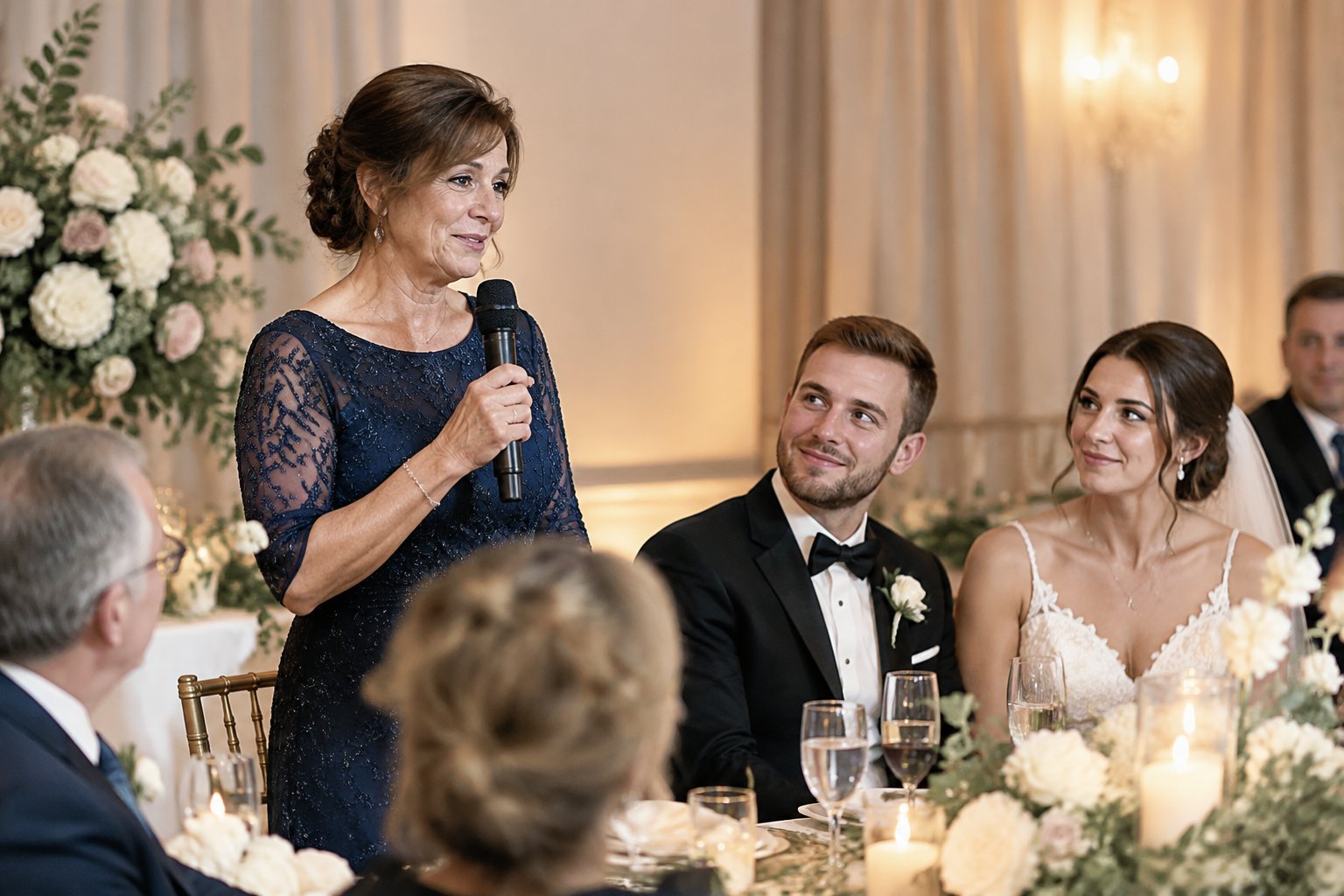
The best choice fits the couple’s plans and your comfort level. Ask the groom and his partner what they want, choose the setting together, and then prepare words that feel warm and personal.
The Simple Etiquette Answer
The mother of the groom may give a speech, but her role is optional and should be planned with the couple. A short, thoughtful message works at a rehearsal dinner or wedding reception, depending on the wedding schedule and the family’s wishes.
Is a Speech Expected or Optional?
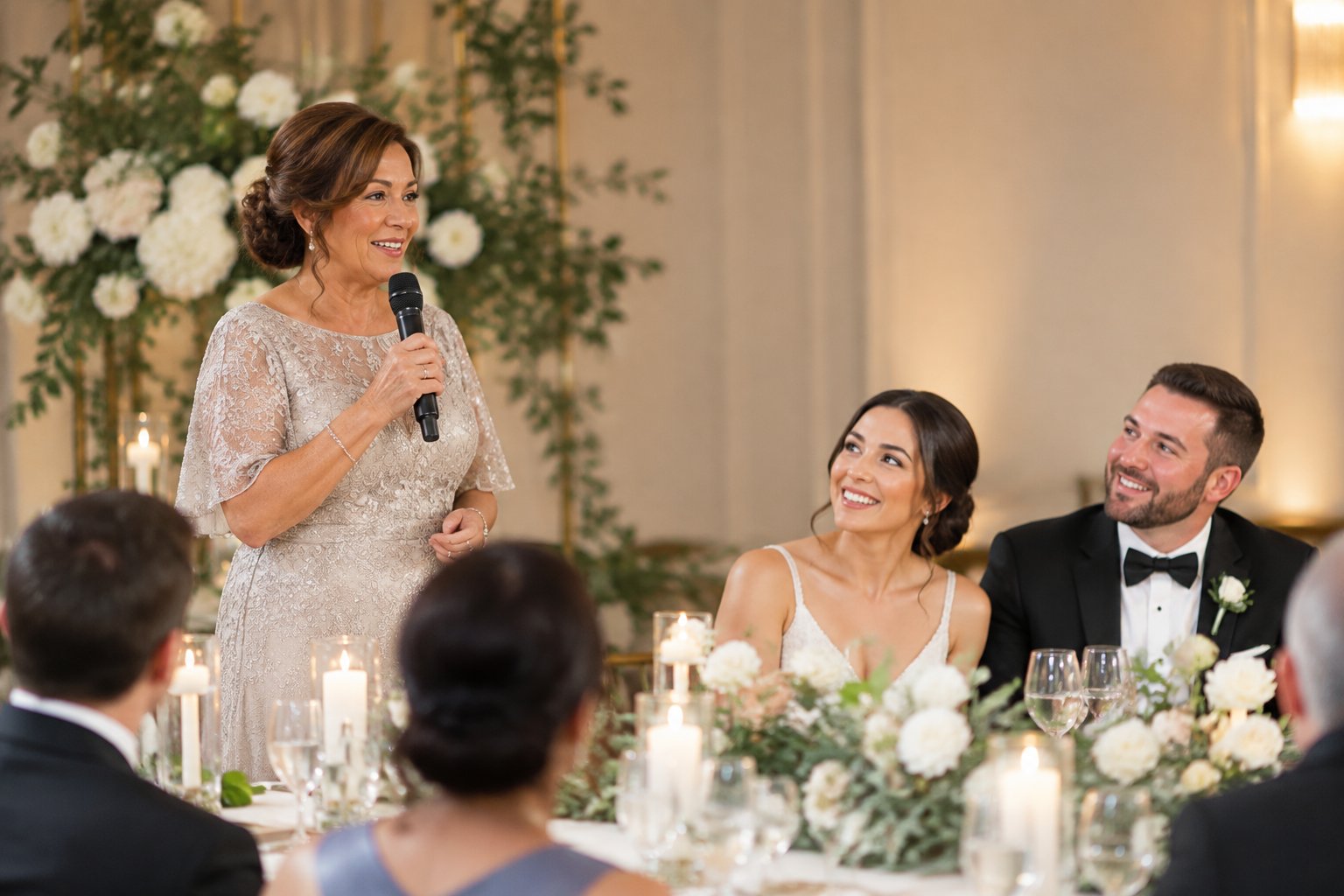
A speech from the groom’s mother is optional. Traditional wedding speeches often feature the father of the bride, the groom, the best man, and the maid of honor. Many families also include both parents of the groom, especially during the rehearsal dinner.
Your role as the mother of the groom can include hosting, greeting guests, helping with family details, or offering emotional support. Speaking is one possible part of that role. You can accept the microphone with confidence, or contribute in another meaningful way.
A toast of two minutes is enough for most celebrations. A longer speech works when the couple has reserved plenty of time for family remarks.
Who Decides Whether the Groom’s Mother Speaks?
The bride and groom should make the final decision about wedding speeches. Talk with them early, then ask whether they prefer a rehearsal dinner speech, a reception toast, or no formal remarks from you.
The person managing the event should also know your plan. Share your expected length, preferred time, and any audio needs with the wedding coordinator, emcee, or venue team.
If the couple has a tight reception schedule, they might invite you to speak at the rehearsal dinner. If they want more family voices during the reception, they can place you within the planned toast order.
How Modern Weddings Are Changing Traditional Speech Roles
Modern wedding celebrations give couples more freedom to choose who speaks. A mother of the groom, mother of the bride, sibling, close friend, or both newlyweds can take part.
Many couples also use a shared speech format. You and the groom’s father might speak together, or each parent might offer a brief toast. The key is to match the format to the couple’s personality, family relationships, and guest list.
When Should She Speak?
The mother of the groom most often speaks at the rehearsal dinner or during the planned reception toasts. The right moment depends on who is hosting each event, how many people are speaking, and whether the couple wants formal remarks.
Giving a Toast at the Rehearsal Dinner
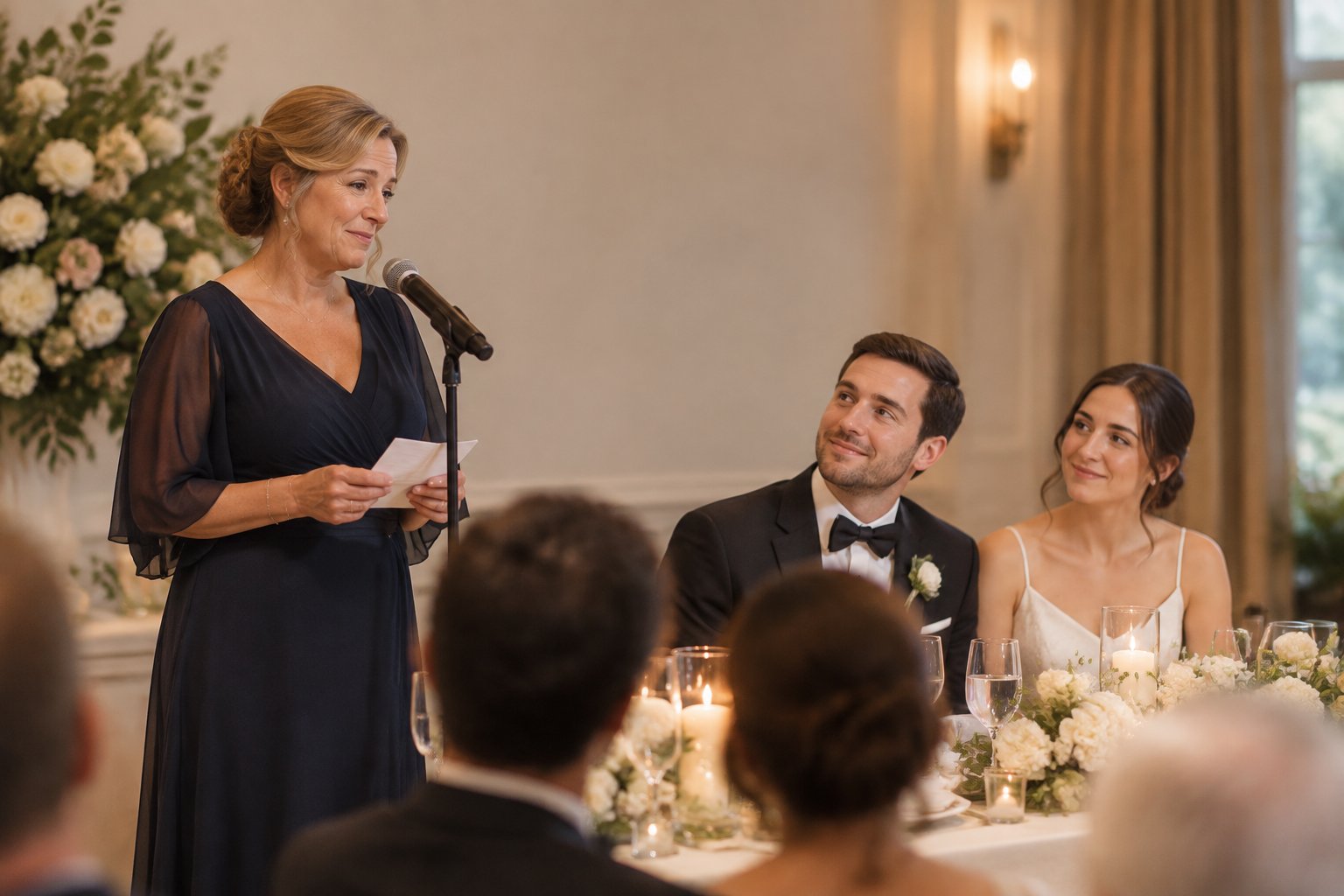
The rehearsal dinner is a natural setting for a mother of the groom rehearsal dinner speech. It has a smaller group, a relaxed mood, and a close connection to the groom’s family.
You can welcome relatives and friends, thank guests who traveled, and share a memory about the groom. A brief story about the couple also helps bring both families into the moment. End with a toast to their marriage.
A rehearsal dinner speech often lasts two to four minutes. Keep the tone warm and personal so the dinner stays enjoyable for everyone.
Speaking During Reception Toasts
A wedding reception gives you a larger audience and a more formal setting. Your toast might follow the father of the bride speech or appear near remarks from the best man and maid of honor.
Ask the couple where your speech fits within the reception timeline. Dinner service, dancing, photographs, and venue rules all affect the schedule.
Reception remarks should stay focused. Celebrate the bride and groom, share one useful memory, and offer good wishes for their future.
How to Coordinate the Wedding Speech Order
The couple or wedding coordinator should create the speech order before the wedding day. A common order includes:
- Welcome remarks from the host or emcee
- A parent speech
- The best man’s speech
- The maid of honor speech
- Additional family toasts
- A closing thank-you from the newlyweds
This order can change to suit the wedding party. Send your speech title, length, and music or microphone needs to the person managing the reception.
When a Short Toast Is the Better Choice
A short toast works well when the reception already includes several speakers. It also suits you if public speaking feels uncomfortable or you want to keep the focus on the couple.
Aim for 60 to 90 seconds. State your connection to the groom, name one quality you admire in the couple, and raise your glass with a clear wish for their marriage.
What Should a Mother of the Groom Say?
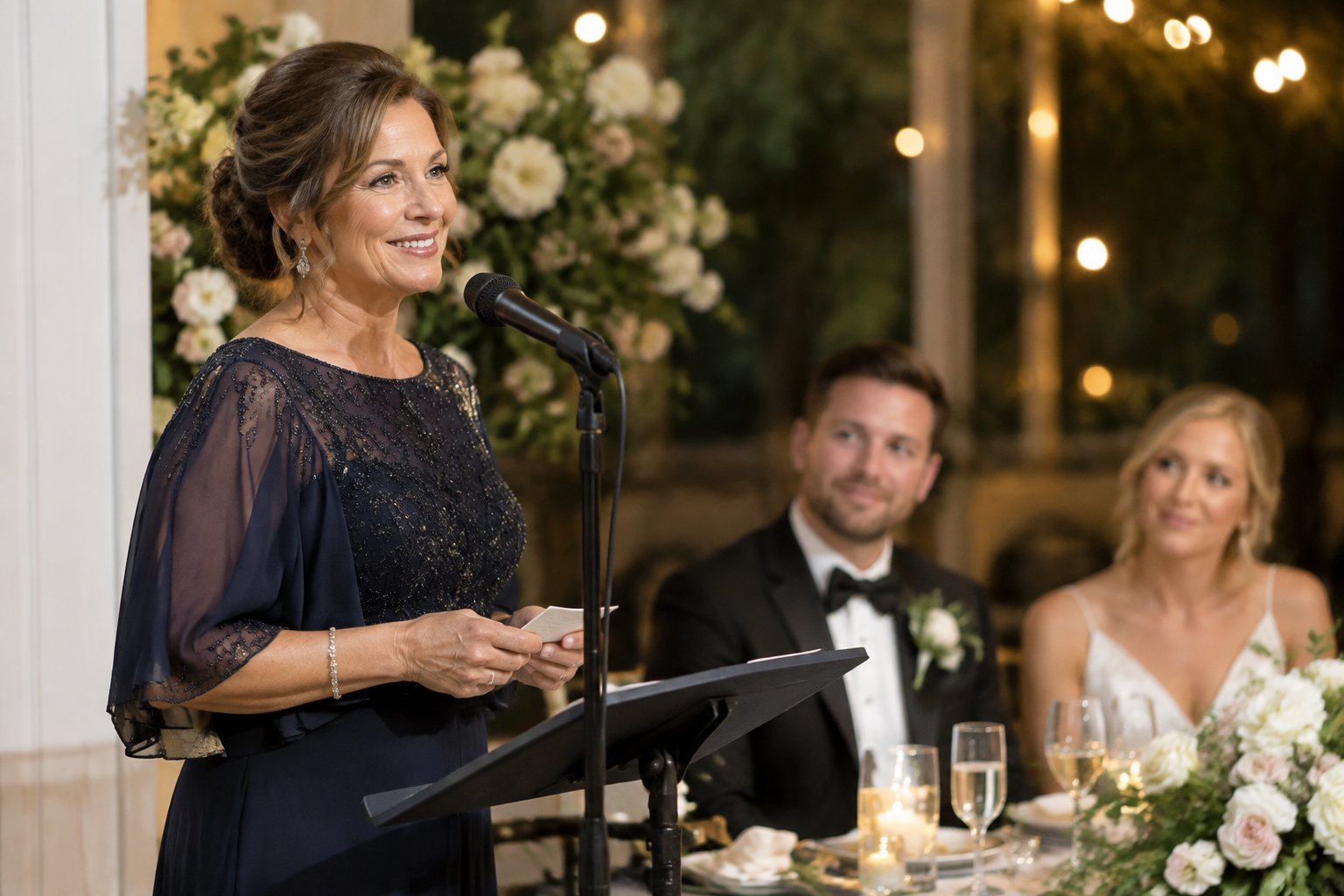
A mother of the groom speech should celebrate the groom, welcome his partner, and offer sincere hopes for their married life. Your message works best when it gives equal respect to the bride and groom and keeps private family details out of the spotlight.
How to Balance Stories About the Groom and His Partner
Begin with one memory that shows the groom’s character. Then connect that quality to his relationship with the bride or partner.
You might describe his patience, curiosity, kindness, or sense of humor. Follow the story with a specific observation about how his partner supports or complements him.
Keep the couple at the center of the speech. Your son deserves loving recognition, while his partner deserves a warm welcome and direct acknowledgment.
How to Welcome a Daughter-in-Law or Child-in-Law
Use the name and relationship terms that the couple prefers. Tell the bride or partner what you appreciate about them and express your happiness about gaining a new family member.
You could say:
“We are so happy to welcome you into our family. Your kindness, strength, and laughter have brought so much joy to our son and to all of us.”
A welcome should feel inclusive. Avoid language that suggests the partner is joining a family with strict rules or expectations.
Which Personal Anecdotes Work Best
Choose personal stories that are short, easy for guests to follow, and connected to the couple’s future. A childhood moment, a proud achievement, or a first impression of the partner can work well.
Good stories reveal character without embarrassing anyone. Skip dating history, family arguments, past relationships, drinking stories, or jokes about private habits.
One strong anecdote gives your speech shape. Add a second only if it moves the message toward the couple’s relationship.
Words of Wisdom for Married Life
Offer advice that feels generous and practical. Encourage patience, honest conversation, shared laughter, and time together.
For example:
“Keep making room for each other’s dreams, and remember to celebrate the small victories along the way.”
Personal advice from your own marriage can add meaning when you keep it brief. Let the couple’s values guide the message.
How to Use Family Traditions Thoughtfully
A family tradition can connect your son’s past with the new family he is building. Explain why the tradition matters, then leave room for the couple to adapt it.
You might mention a holiday gathering, a favorite recipe, or a phrase passed through generations. Avoid presenting tradition as an obligation. Invite the couple to create customs that belong to them, too.
A Simple Speech Formula and Sample Lines
A strong mother of the groom speech follows five steps: welcome guests, introduce yourself, honor the groom, welcome his partner, and end with a toast. This speech template keeps your message organized while leaving room for your own voice.
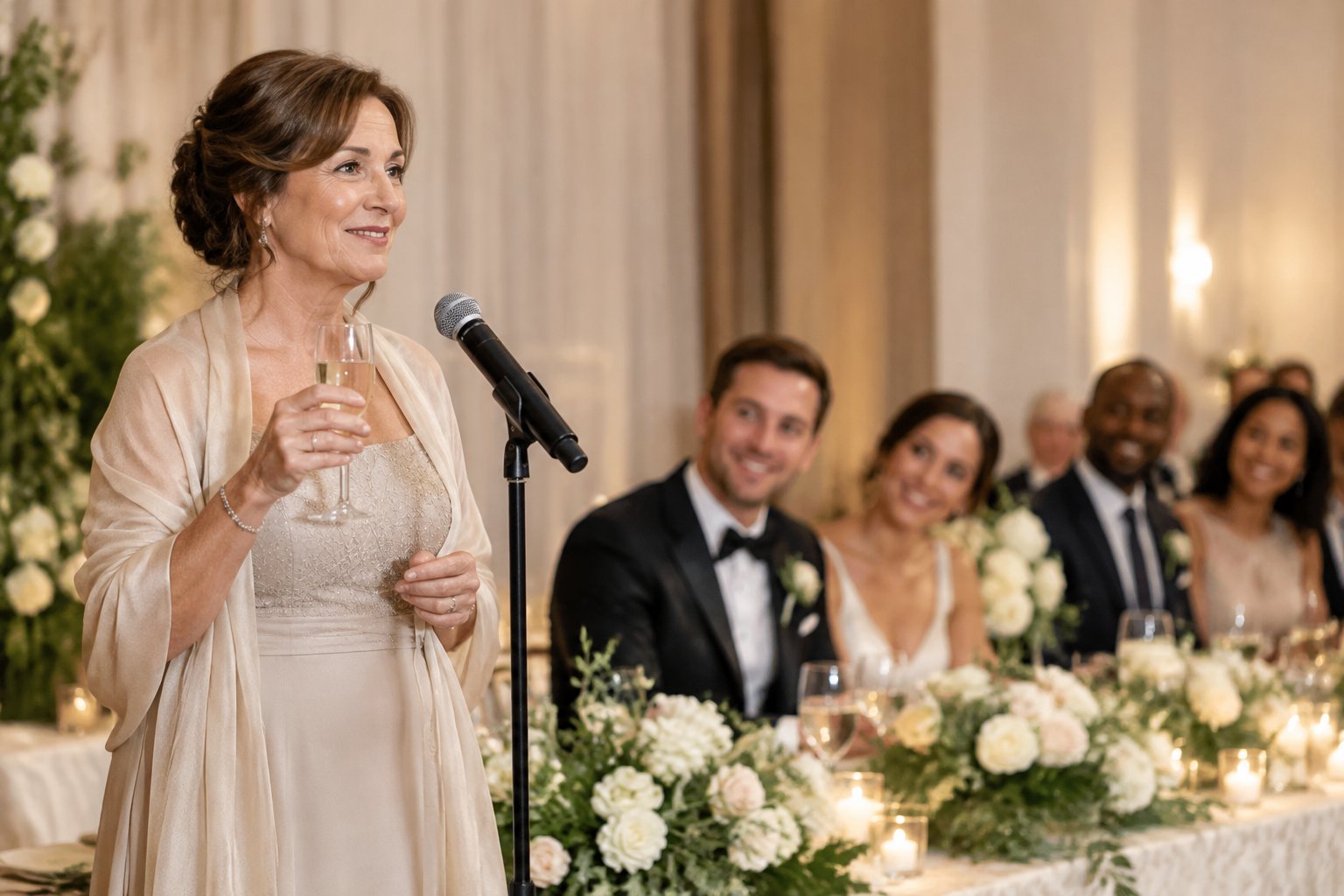
A Mother of the Groom Speech Template
Use this structure to draft your speech:
- Thank the wedding guests for joining the celebration.
- Introduce yourself and explain your connection to the groom.
- Share one personal story that shows his character.
- Describe what you value about his relationship with his partner.
- Welcome the bride or partner into the family.
- Offer one thought about their married life.
- Raise a glass and toast the happy couple.
Write each point as a few sentences. Remove any line that does not support your main message.
Short Mother of the Groom Speech Example
“Good evening, everyone. I’m [name], the proud mother of [groom]. Watching him grow into the thoughtful man he is today has been one of my greatest joys.
“When he met [partner], we saw how happy and confident he became. [Partner], thank you for loving him so well, and welcome to our family. May your marriage be filled with patience, laughter, and many wonderful memories. Please raise your glass to the happy couple.”
This short mother of the groom speech takes about one minute when read at a calm pace.
Emotional Mother of the Groom Speech Example
“From the first days of [groom]’s life, I have hoped he would find a relationship built on kindness and trust. Seeing him with [partner] has shown me that hope has come true.
“[Partner], you bring warmth and joy to his life, and we are grateful to call you family. [Groom], I am proud of the man you have become and the love you have chosen. May you face every season together with courage, humor, and open hearts. To the newlyweds, may your love keep growing.”
Add one personal detail to make this emotional mother of the groom speech sound like your own.
How to Add Gentle, Appropriate Humor
Use humor that reveals affection. A playful comment about the groom’s childhood hobby, a harmless habit, or his growth into adulthood can make guests smile.
Avoid jokes about the couple’s private life, former partners, money, appearance, family conflict, or wedding expenses. Never make the bride or partner earn acceptance through a punchline.
Test every joke with someone who knows the couple well. If the line creates uncertainty, choose a warm observation instead.
How to End With a Memorable Toast
End with a direct wish for the couple. Keep the final line easy for wedding guests to repeat.
Try:
“Please raise your glasses to a lifetime of love, laughter, and shared adventures. To [groom] and [partner].”
Pause after the toast so guests have time to raise their glasses. Smile, take a sip, and return the microphone as planned.
How to Deliver It With Confidence
You will deliver the speech with confidence when you keep it short, practice aloud, and speak to the couple as well as the guests. Preparation helps you manage emotion during the wedding celebration.
How Long Should the Speech Be?
Aim for two to four minutes at the rehearsal dinner or reception. This gives you space for a personal story and a toast without taking too much time from the wedding program.
Read your draft aloud and time it. Cut repeated ideas, long explanations, and extra examples. A short mother of the groom speech can feel complete when every sentence supports the couple.
How to Practice Without Sounding Rehearsed
Practice enough to know the order of your ideas. Read the speech aloud several times, then rehearse from brief notes.
Record one practice session to check your pace and volume. Mark places where you want to pause or look up. Leave room for natural emotion, laughter, and applause.
Using Notes and Making Eye Contact
Use a large-print page or index cards with clear spacing. Mark the names of the bride, groom, or partner so you pronounce them with ease.
Look at the wedding guests during the welcome, then make eye contact with the groom and his partner during the personal parts. Glance down for the next line and return your attention to the room.
What to Avoid in a Wedding Speech
Avoid stories that embarrass the groom, criticize the partner, or expose family tension. Skip complaints about wedding planning, comparisons between families, and advice that sounds like a warning.
Do not improvise sensitive topics after drinking. Keep your notes nearby, use the microphone as directed, and respect the time limit set by the wedding coordinator.
Meaningful Alternatives to Giving a Speech
You can support the wedding without taking the microphone. Write a private letter for the groom, give the couple a keepsake, help host the rehearsal dinner, or offer a quiet family toast.
You might also share a reading during the wedding ceremony or prepare a short message for the engagement party. Ask the couple which gesture would feel most meaningful to them, then choose one you can deliver with comfort and care.