
What Is a Wedding Schedule? Your Essential Guide to Planning the Perfect Day
A wedding schedule is a detailed plan that outlines all the events and activities that will take place on your big day. A well-organized wedding day schedule helps ensure that everything runs smoothly, allowing you to enjoy every moment without unnecessary stress. From the time you start getting ready to the last dance at the reception, having a timeline keeps you on track and informed.
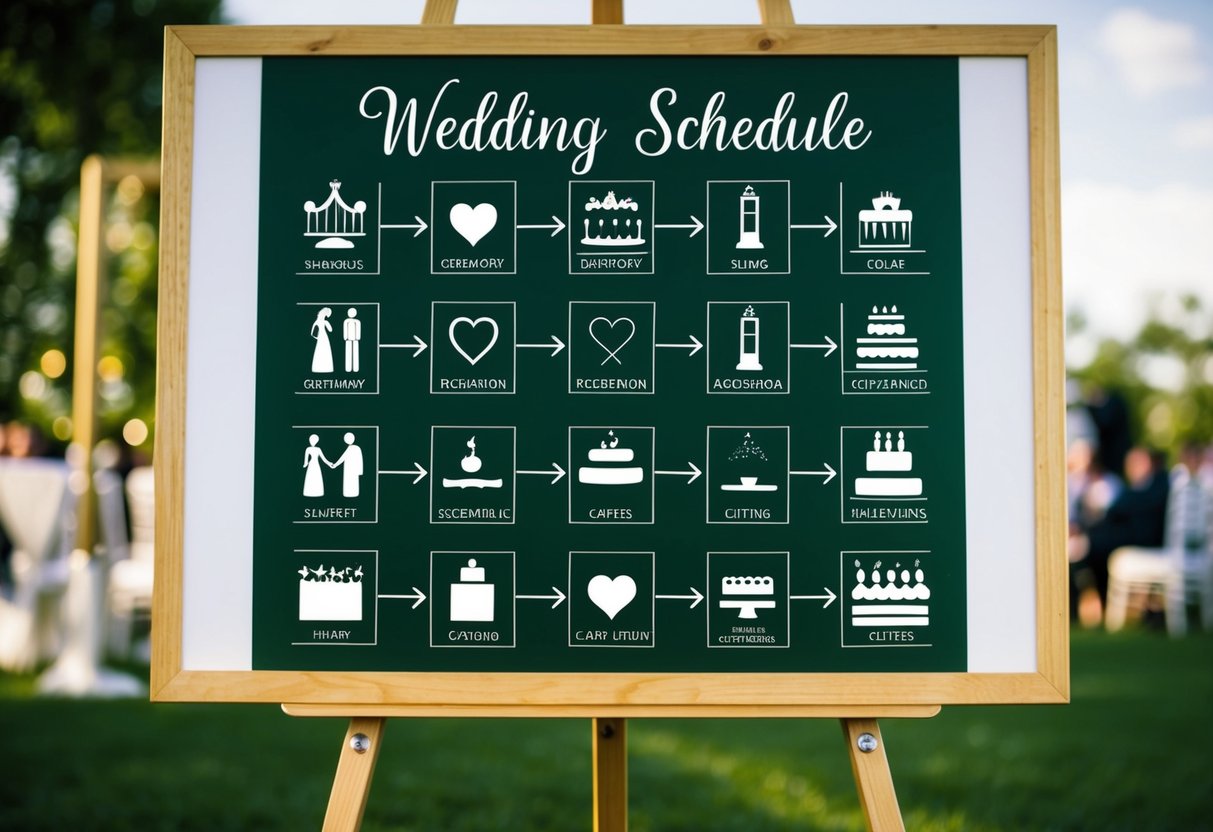
Your wedding day schedule typically includes key moments like the ceremony, cocktail hour, dinner, and dancing. It can also outline when vendors arrive, when photos will be taken, and even if there will be special performances. Thinking through your wedding timeline now can save you from last-minute panic later, making your day more enjoyable.
Creating a wedding day timeline doesn’t have to be daunting. With the right approach and some careful planning, you can build a schedule that fits your needs and keeps everyone on the same page. This guide will help you design a wedding schedule that works best for you and your celebration.
Getting Ready
The getting ready phase of your wedding is a special time that sets the mood for the day. It includes your morning preparations with your wedding party and can be a fun way to bond before the ceremony. The photography session during this time captures important memories, including first looks and group photos.
Morning Preparations
Start your wedding day with a wedding party breakfast. Choose foods that are high in protein, like eggs or yogurt, to keep your energy up. This isn’t only about food; gathering with your wedding party can ease any pre-wedding jitters.
As you move through your hair and makeup, keep the atmosphere light and enjoyable. Hiring professionals can ensure you look your best without stress. Set aside plenty of time for this, ideally starting early to avoid feeling rushed.
Once you’re dressed, take a moment for final prep to check everything looks perfect before the next steps.
Photography Sessions
During this crucial time, your wedding planner can help coordinate the flow. A planned schedule for wedding photography will include a mix of couple portraits, wedding party photos, and family photos.
Start with the first look, allowing for intimate moments before the ceremony. Capture the emotions and reactions. Then, gather your wedding party for fun, candid shots.
Plan around 30 minutes for couple portraits and 20 minutes for group shots to keep things organized. These photos will hold memories you’ll cherish forever, so enjoy every moment in front of the camera!
Ceremony Details
Planning your wedding ceremony involves careful attention to venue, timing, and the order of events. These details help ensure a smooth and memorable experience for you, your family, and guests.
Venue and Timing
Choosing the right wedding venue is key to your ceremony’s success. Consider locations that reflect your style, such as gardens, beaches, or churches. Visit each venue to assess the ambiance and make sure it fits your vision.
Timing is equally important. You need to determine the ceremony start time based on factors like travel time for guests and the sunset time if you’re planning an outdoor event. This allows for beautiful photos and a comfortable atmosphere.
Make sure to include any time needed for family portraits after the ceremony in your wedding itinerary. Planning ahead helps keep everything on schedule, so you can enjoy your special day without feeling rushed.
Order of Events
The order of events at your wedding ceremony sets the stage for everything that follows. Start with the processional, where bridal party members and family walk down the aisle.
Next, include readings or personal vows. This can be a lovely way to express your feelings. Then, proceed to the exchange of rings and the pronouncement of marriage.
Consider a small pause for applause or even a special song right after the vows. It adds a nice touch! Once the ceremony concludes, move on to the reception or family portraits as planned in your itinerary.
Reception Highlights
Your wedding reception is a time to celebrate love and joy with friends and family. It’s filled with special moments and activities that create lasting memories. From the first dance to the grand exit, every part of the evening is designed to delight you and your guests.
Celebratory Events
At your wedding reception, several key events stand out. The grand entrance sets the tone, allowing you to enjoy your first moments as a couple in front of your loved ones. This is often followed by the first dance, a romantic moment that highlights your journey together.
Parent dances are also significant, giving you a chance to honor your parents. These heartfelt moments create a warm atmosphere, bringing everyone closer. Other fun events include cake cutting, where you can share a slice of your cake together, and the festive garter toss that adds excitement for your guests.
Timeline and Activities
Planning your reception timeline is crucial for a smooth flow. Typically, the evening starts with a cocktail hour, allowing guests to mingle and enjoy light refreshments.
Following this, you can arrange for your grand entrance, followed by the first dance and parent dances.
After dinner, think about adding fun activities like a photo booth or games. This can keep your guests entertained.
Schedule the cake cutting after dinner to make it a highlight.
End the night with a grand exit, complete with sparkles or bubbles, leaving a joyful impression as you depart.