
Garden Theme Wedding Venues: How to Choose Yours
A garden wedding gives you a naturally romantic setting, so the best garden theme wedding venues are botanical gardens, conservatories, historic estates, and private garden spaces that match your guest count and provide a clear weather plan. Their plants, paths, trees, and natural light create a strong design foundation for your ceremony and reception.
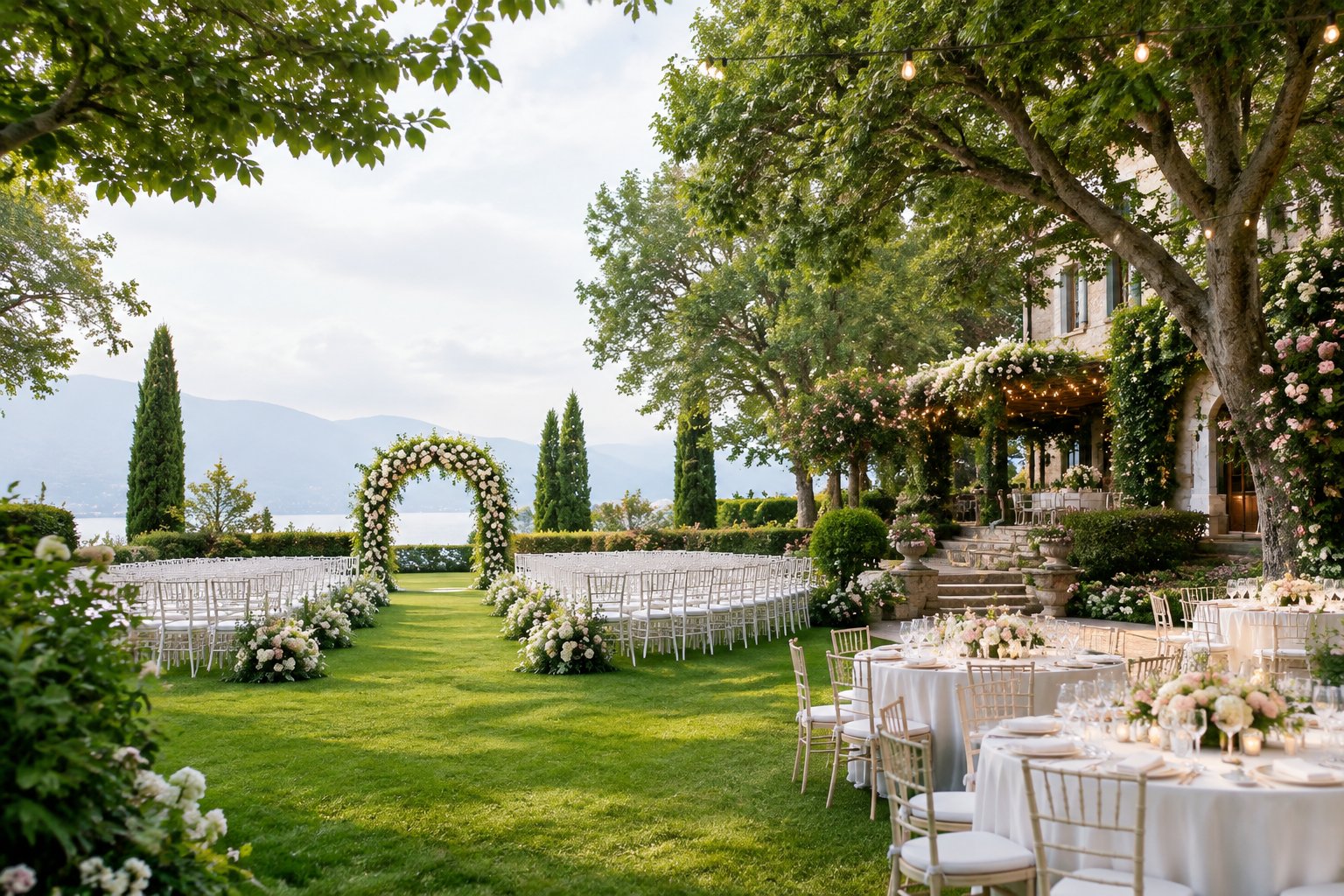
Start by choosing the feeling you want your garden wedding to create. Formal hedges suit a classic celebration, wildflowers fit a relaxed gathering, and a glass conservatory gives you the garden look with more protection from rain and heat. Visit venues during the season of your wedding so you can see the actual blooms, shade, walkways, and indoor options. Then contact the venues that fit your vision and ask about available dates, guest capacity, and event policies.
What Makes a Venue Feel Like a Garden Wedding Setting?
A venue feels like a garden wedding setting when its existing landscape provides the ceremony backdrop, guest experience, and visual character. Look for mature plants, clear paths, shaded areas, flowering beds, and spaces that connect naturally to dining and dancing.
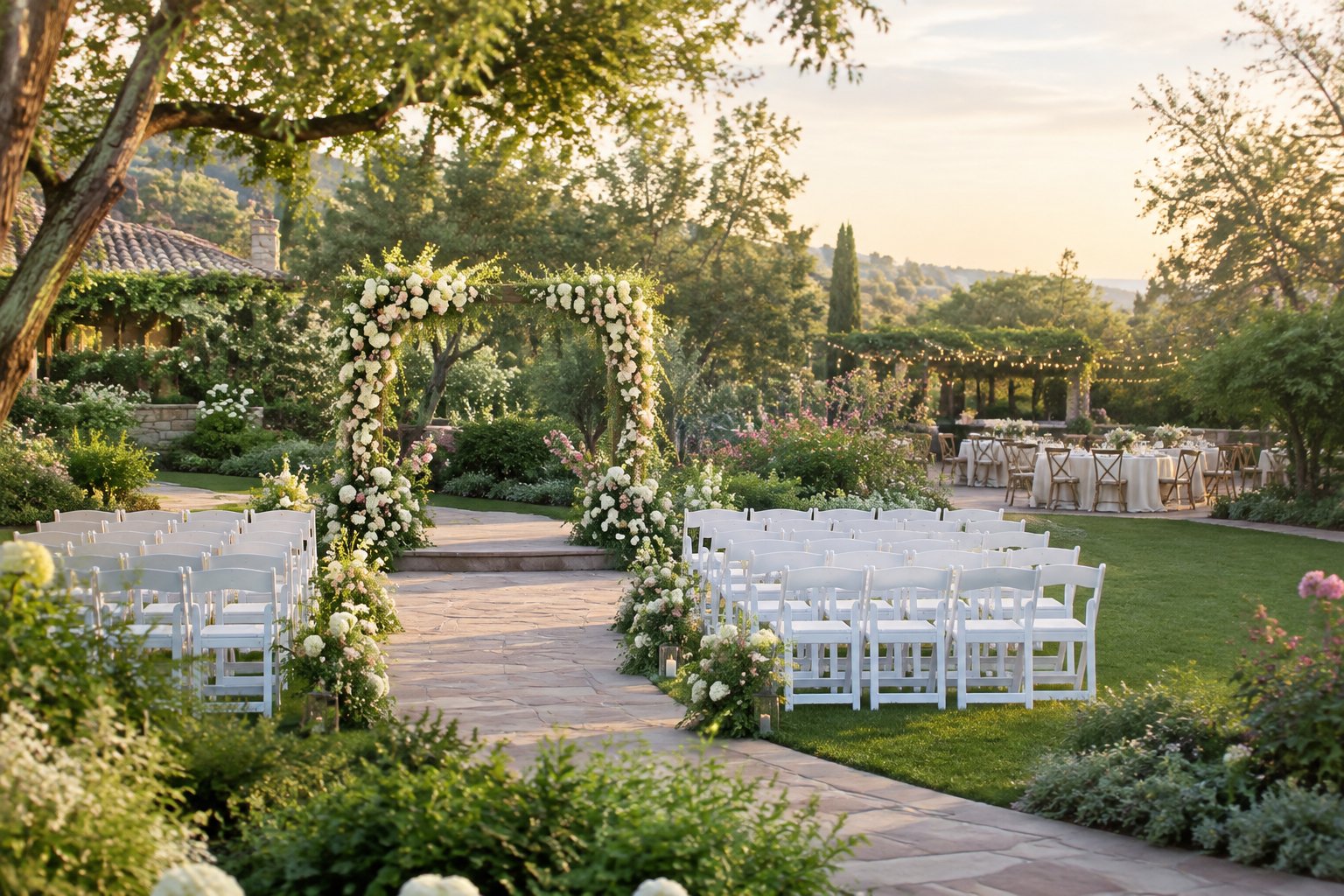
The strongest garden wedding venues support your garden-themed wedding ideas without requiring heavy decoration. Pay attention to the season, the amount of privacy, and the way guests move between outdoor and indoor spaces.
Botanical Gardens and Historic Landscapes
Botanical gardens offer curated plant collections, winding paths, ponds, and changing seasonal color. They suit couples who want a polished outdoor wedding with built-in beauty and strong wedding photo locations.
Historic landscapes add architecture to the setting. Formal lawns, stone walls, fountains, and old trees can give your ceremony a fairytale wedding feel. A venue near Golden Gate Park in San Francisco, California, for example, may pair city access with large garden spaces and mature greenery.
Ask whether the grounds stay open to the public during your event. Confirm where guests may sit, which areas are available for photos, and whether the venue limits décor near fragile plants.
Conservatories and Greenhouse Backdrops
A conservatory gives you glass walls, filtered light, and plants surrounding the celebration. It creates a greenhouse backdrop for vows, dinner, or dancing while offering more shelter from changing weather.
This setting works well for an intimate garden wedding or a larger reception with a strong botanical theme. Check the venue’s temperature controls, ventilation, power access, and rules for candles or hanging décor. Glass spaces also need careful planning for glare during daytime ceremonies and reflections in wedding photos.
Estates, Courtyards, and Parks
Private estates combine landscaped grounds with rooms for getting ready, dining, or rain coverage. Courtyards create an enclosed atmosphere with walls, trees, and overhead lighting. Parks provide open lawns and natural scenery, though permits, public access, restrooms, and noise rules require close attention.
Compare each venue by its full guest experience. A beautiful lawn loses value if guests must cross uneven ground for dinner or walk a long distance to restrooms. Ask for a site map before you book.
How to Choose the Right Setting for Your Guest List and Vision?
Choose a setting that fits your guest count, supports each part of the day, and keeps travel between spaces easy. Your ceremony, cocktail hour, reception, getting-ready areas, and photo locations should work together on one practical floor plan.
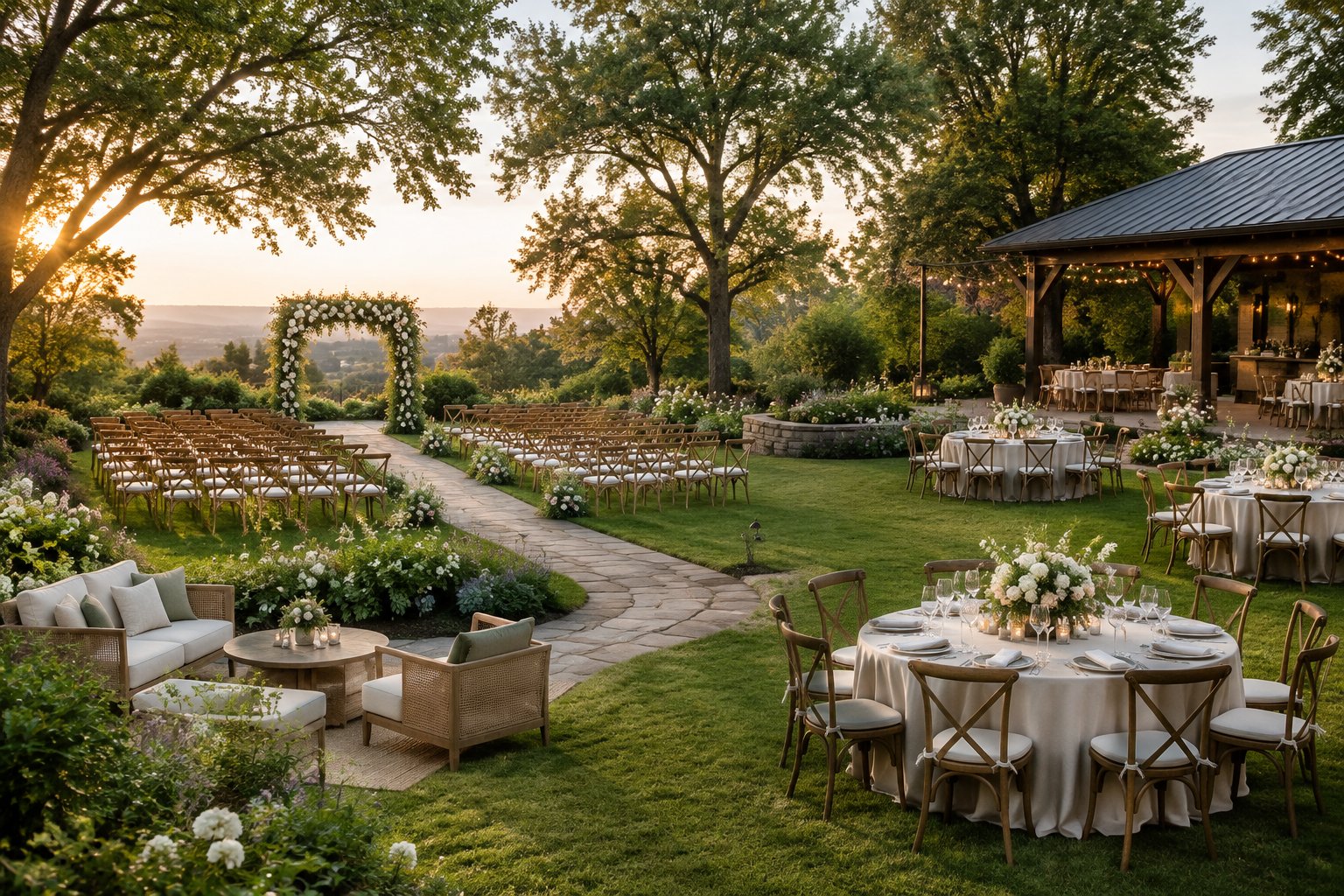
A venue tour should include a walk from guest arrival through departure. Bring your estimated guest count, preferred table layout, accessibility needs, and a list of must-have amenities.
Match Ceremony and Reception Spaces
Decide whether you want the ceremony and reception in one area or in separate garden spaces. A separate ceremony lawn creates a change of scenery, while one flexible space simplifies guest movement and setup.
Measure more than seating capacity. Check aisle width, sightlines, sound coverage, table spacing, dance-floor room, and service paths. Ask how much time vendors receive to change the layout if the ceremony and reception share a space.
Plan the cocktail hour near both areas so guests can move easily while staff prepares dinner. A nearby bridal suite also gives you a private place for touch-ups and a quiet break.
Assess Accessibility, Privacy, and Guest Comfort
Review every route your guests will use. Look for ramps, firm walkways, accessible restrooms, nearby parking, shade, seating for older guests, and lighting for evening travel.
Privacy affects the mood and your wedding photos. Ask about public visitors, nearby events, traffic noise, and venue boundaries. Check whether the ceremony lawn has enough shade for your chosen time and whether the reception area remains comfortable after sunset.
Ask About Vendor Rules and On-Site Amenities
Before signing, request the venue’s rules in writing. Ask about preferred caterers, alcohol service, rentals, candles, amplified music, hanging décor, photography access, setup windows, and cleanup.
Confirm the location of restrooms, power outlets, catering prep areas, storage, parking, and loading access. Ask whether tables, chairs, lighting, heaters, tents, and sound equipment are included. These details shape your wedding planning budget and timeline.
Standout U.S. Locations to Consider
Several U.S. venues show how different garden wedding styles can work, from formal New York landscapes to glass conservatories in Illinois and Ohio. Use them as planning references while you compare local spaces with similar features.

Look at each venue’s landscape, indoor spaces, guest capacity, and event flow. The right model for you may be a botanical garden, conservatory, estate, or courtyard close to home.
The New York Botanical Garden in Bronx, New York
The New York Botanical Garden offers a wide range of plant collections and formal landscapes in the Bronx, New York. Its Stone Mill, located near the Bronx River, brings historic character and water views to a garden celebration.
The Garden Terrace Room provides an indoor option with a connection to the surrounding grounds. This type of venue suits couples who want botanical scenery, multiple photo locations, and a polished setting for guests traveling through the New York area.
Ask about the exact event spaces available for your date, guest capacity, public access, and the route between ceremony, cocktails, and dinner.
Chicago Botanic Garden in Glencoe, Illinois
Chicago Botanic Garden in Glencoe, Illinois, combines landscaped gardens, seasonal plantings, paths, and water features. Its range of settings supports formal ceremonies, garden portraits, and receptions with a strong connection to nature.
The location works well if you want a refined garden atmosphere near a major city. During your tour, ask which gardens will be in bloom, how much time you receive for photos, and which indoor spaces support your guest count.
Weather planning deserves special attention in Illinois. Confirm the indoor backup, temperature control, and timing for any move between outdoor areas and reception rooms.
Planterra Conservatory and Franklin Park Conservatory
Planterra Conservatory offers a glass-enclosed setting in Michigan with plants, natural light, and protection from many outdoor weather concerns. Its structure creates a complete backdrop, so your décor can focus on tables, ceremony details, and lighting.
Franklin Park Conservatory and Botanical Gardens in Columbus, Ohio, blends indoor plant displays with outdoor gardens. The venue gives you ways to carry a garden theme through different parts of the celebration while keeping guest movement manageable.
For either style, ask about humidity, temperature, sound, lighting, catering access, and restrictions on décor. A conservatory’s plants and glass architecture shape the event, so your layout must leave comfortable space for guests and vendors.
Design Ideas That Complement the Landscape
The best garden wedding decor supports the venue’s existing colors, textures, and sightlines. Use seasonal flowers, low arrangements, natural materials, and warm lighting to add personality while keeping the landscape visible.
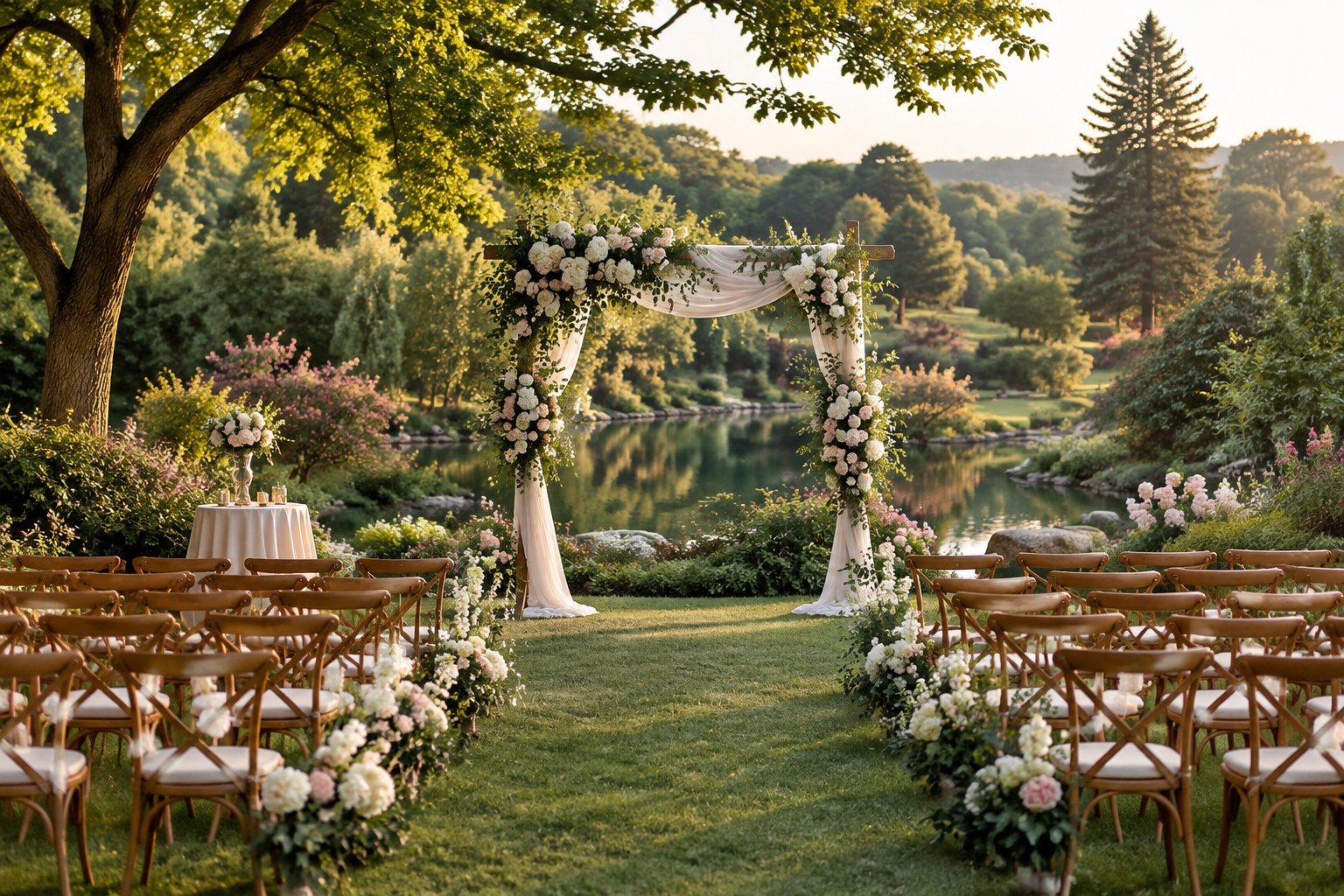
Choose designs that suit the venue’s scale. A small courtyard needs restrained arrangements, while a large lawn may need a stronger ceremony focal point and signs that guide guests.
Choose Seasonal Flowers and a Cohesive Palette
Ask your florist which flowers will be available and durable during your wedding month. Garden roses, peonies, sweet peas, wisteria, and lilac each create a different look, and some have short seasonal windows.
Build your palette from the landscape. Soft blush, cream, and green suit a romantic garden, while coral, yellow, and blue bring energy to a summer setting. Repeat two or three key colors through bouquets, linens, menus, and stationery.
Use potted plants, herbs, branches, or locally grown blooms when they fit the venue rules. Your florist should also plan for heat, wind, water access, and transport.
Create an Enchanting Ceremony and Aisle
Frame the ceremony with an arch, pergola, mature tree, or floral installation that already belongs in the landscape. Keep arrangements low along the front row so guests can see the couple and officiant.
For wedding aisle decor, use petals, small arrangements, ribbons, or potted plants that stay secure on the ground. Choose aisle details that will not block wheelchairs, create trip hazards, or harm the lawn.
A small welcome sign and clear directional signs help guests find the ceremony, restrooms, cocktail hour, and reception without covering the garden with extra décor.
Style Tables, Escort Cards, and Evening Lighting
Use low centerpieces when the garden itself provides the height. Garden roses, herbs, bud vases, textured linens, and natural wood details create depth without hiding conversation across the table.
Place escort cards on a wall, vintage cabinet, garden gate, or planted display that fits the setting. Protect paper goods from moisture and wind with sturdy holders.
String lights and fairy lights add warmth after sunset. Hang them from approved structures, wrap them around safe posts, or use overhead café lighting where permitted. Confirm power needs, installation times, weather ratings, and removal rules with the venue.
Weather, Timing, and Backup Plans for an Outdoor Celebration
A successful outdoor wedding needs a written weather plan, guest comfort supplies, and a timeline that follows temperature and daylight. Decide in advance when you will move indoors, add a tent, adjust the ceremony time, or change the reception layout.
Plan for more than rain. Heat, wind, cold, humidity, insects, and wet ground can affect the ceremony, cocktail hour, wedding reception, clothing, flowers, and equipment.
Pick a Season Around Blooms and Temperatures
Choose your date after checking the venue’s bloom calendar and local climate. Spring may bring fresh flowers and cool air, while summer offers long daylight with a greater need for shade and hydration. Fall brings rich foliage and cooler evenings.
Visit at the time of day you plan to marry. Note direct sun, shaded seating, sunset direction, evening temperatures, and how quickly the garden becomes dark. If the venue has waterfalls or other water features, check whether their sound affects your ceremony audio.
Build a Rain and Wind Contingency Plan
Your backup plan should name the alternate space, decision time, responsible person, vendor steps, guest message, and layout. Confirm that the indoor option fits your full guest count and that staff can move chairs, décor, food, and sound equipment quickly.
For a tent plan, ask about flooring, sidewalls, heating, cooling, anchoring, lighting, power, and delivery access. Secure arches, signs, menus, and floral pieces with weights designed for outdoor use.
Give guests useful details before the event. Recommend shoes suited to garden paths, provide umbrellas or wraps when needed, and keep accessible routes clear.
Plan the Transition From Daylight to Dancing
Schedule the ceremony while guests can see the garden comfortably, then place portraits near the best natural light. Let cocktail hour bridge the change from daylight to dinner while staff checks lighting and reception details.
Test every light source after dark. String lights and fairy lights should illuminate paths, entrances, stairs, restrooms, and dining areas without shining into guests’ eyes. Confirm that the dance floor, DJ or band, catering stations, and bar have safe power and weather protection.