
How Big Is the Average Wedding Invite? Size Guide
The average wedding invite measures 5 × 7 inches, or about 127 × 178 millimeters. This standard wedding invitation size gives you room for the key event details and fits a widely available A7 envelope.
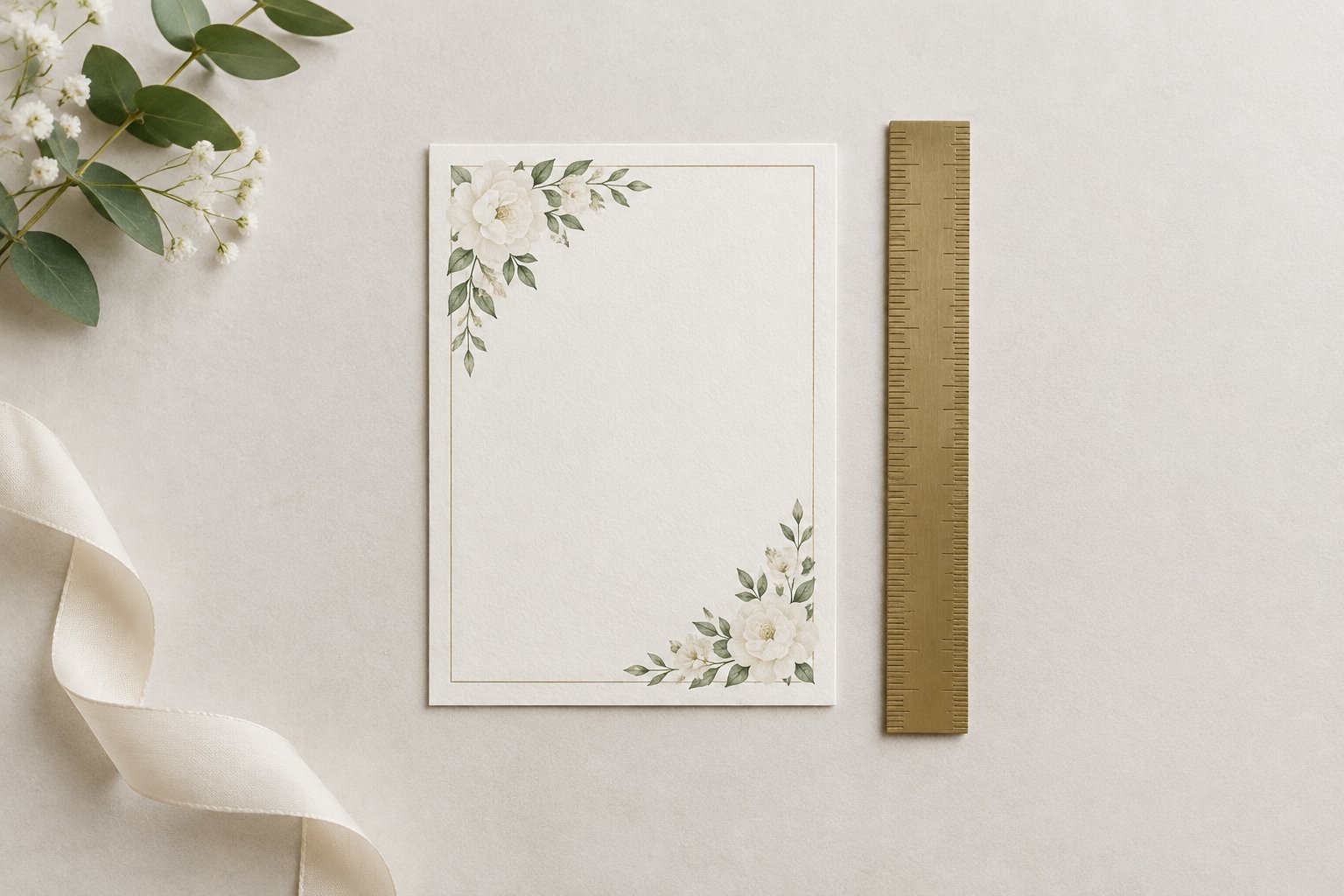
You can choose a smaller, square, or tall format if it suits your design. Before you approve a full print run, check your finished card against its envelope and ask your printer to confirm the dimensions.
What Is the Standard Wedding Invitation Size?
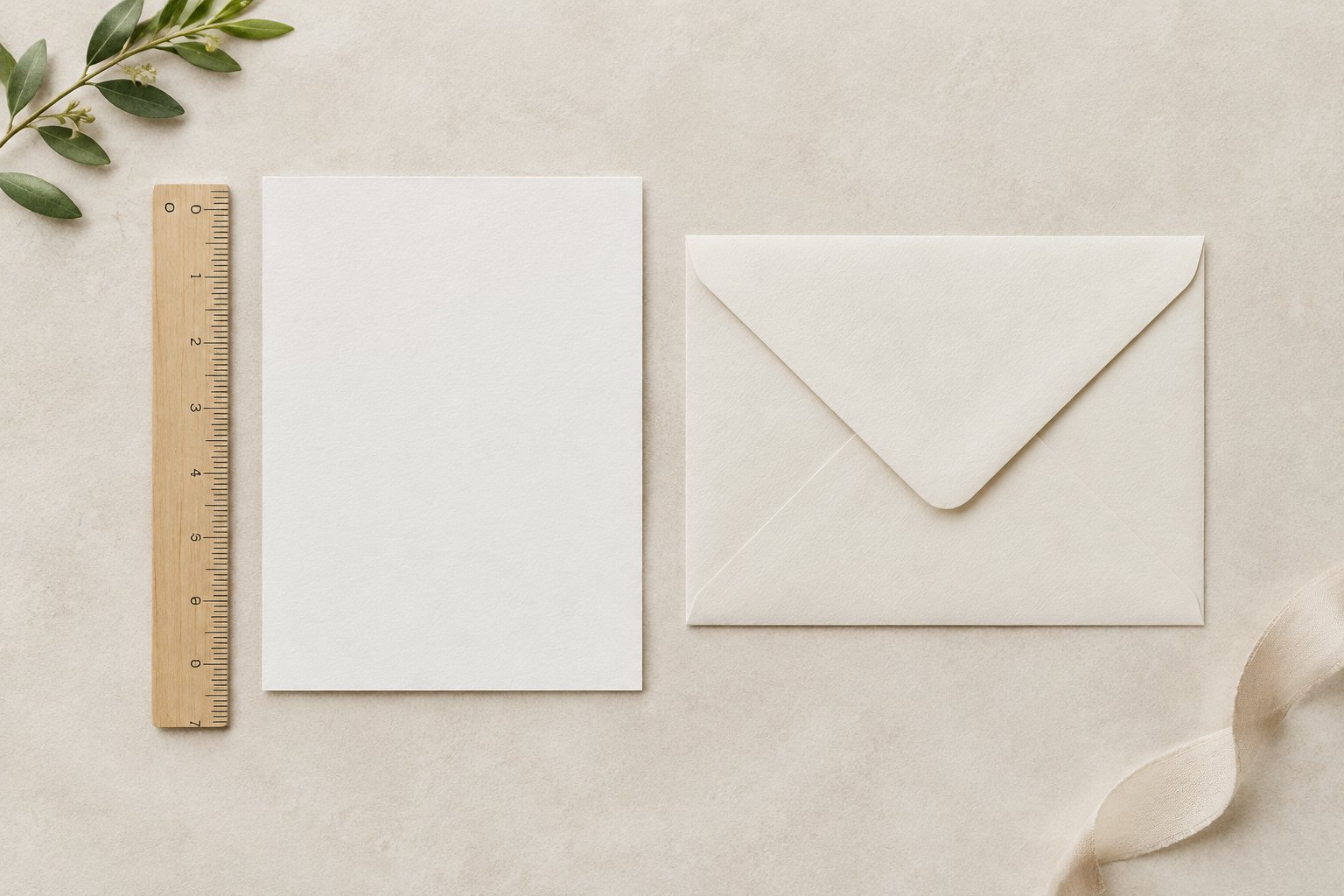
A 5 × 7-inch card is the standard wedding invitation size in the United States. It gives you room for the essential wording, and its familiar dimensions make it easy to pair with a common A7 envelope.
Why 5 × 7 Inches Is the Most Common Choice
A 5 × 7-inch card offers a balanced shape that works in portrait or landscape orientation. You have space for names, the date, time, and venue without squeezing the text into a small area.
The size also suits many classic and modern wedding invitations, so you can find plenty of print and envelope options. The matching A7 envelope measures 5.25 × 7.25 inches, leaving a little room around the card. That makes inserting and removing the invitation easier, even when you use thick cardstock.
How Much Room Does a 5 × 7 Invitation Provide?
A standard card has enough room for your ceremony details and concise wording. If your design includes large illustrations, long text, or decorative borders, the available writing area gets smaller.
You can keep the main card readable by moving travel notes or extra event details to an enclosure card or your wedding website.
How Do Other Wedding Invitation Sizes Compare?
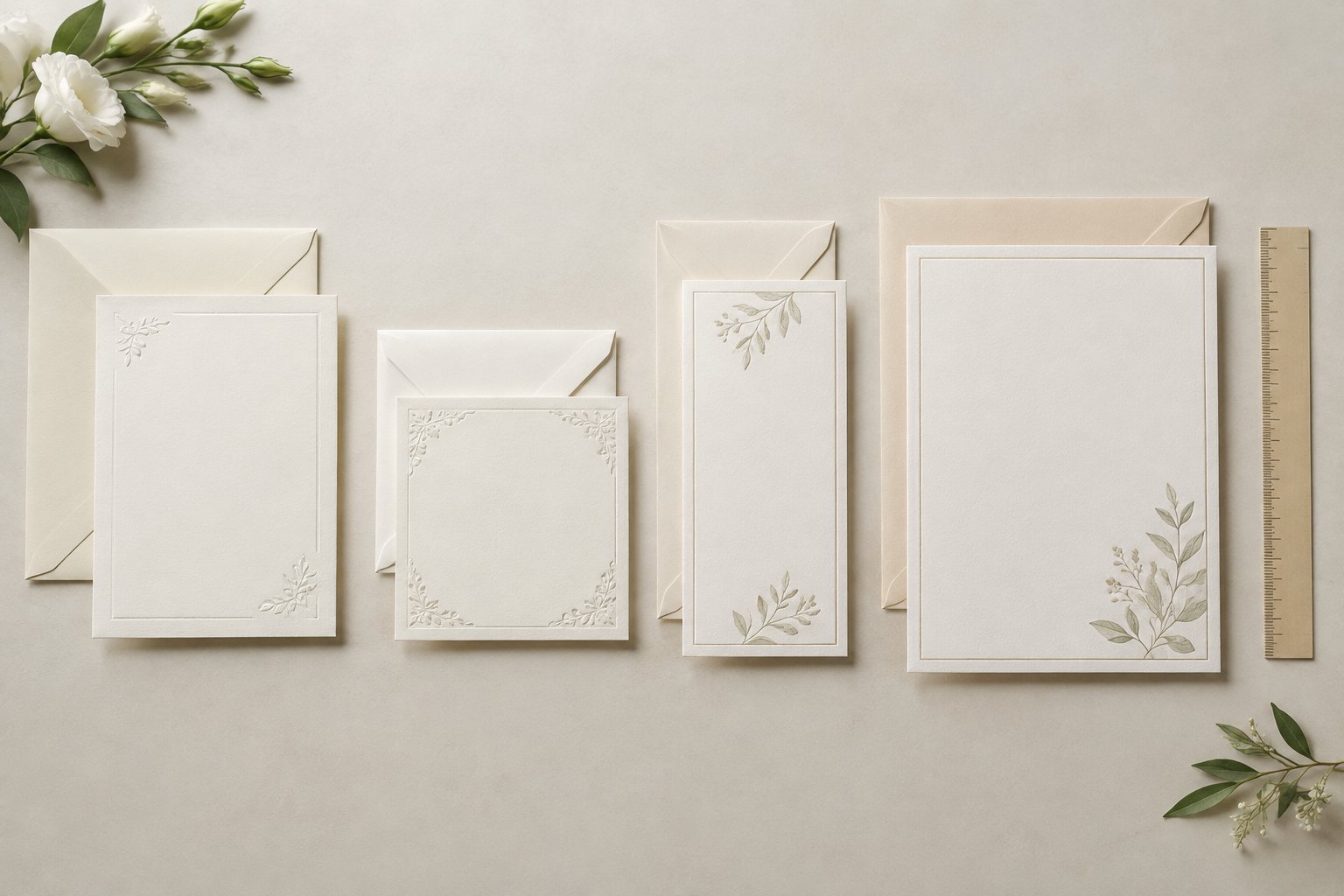
Wedding invitation sizes range from compact 4.25 × 5.5-inch cards to large 7 × 9-inch designs. Slim and square formats offer a distinct look, with envelope and postage needs that differ from a standard rectangle.
Compact and Large Card Dimensions
A 4.25 × 5.5-inch invitation is a compact choice for a short message or a casual celebration. It fits an A2 envelope measuring 4.375 × 5.75 inches. The smaller canvas calls for concise wording and a simple layout.
For more room, 6 × 8-inch and 7 × 9-inch cards give you extra space for text and artwork. A 4 × 9-inch slim card creates a tall, editorial look and can hold a long line of details. Check envelope availability before choosing an unusual dimension.
Your invitation’s size also affects its first impression. A carefully chosen format, paper, and layout can help make your wedding invitation stand out.
Square and Slim Invitation Formats
Square invitations commonly measure about 5 × 5 inches, though some designs are larger. Their symmetrical shape works well with centered wording and graphic designs. Square envelopes count as non-machinable mail, so budget for the applicable surcharge.
A slim 4 × 9-inch invitation gives your wording a narrow, vertical layout. It suits a clean design and fits a long format envelope. Check the printer’s available sizes and the envelope’s finished dimensions before you order.
What Size Should Each Piece of Wedding Stationery Be?
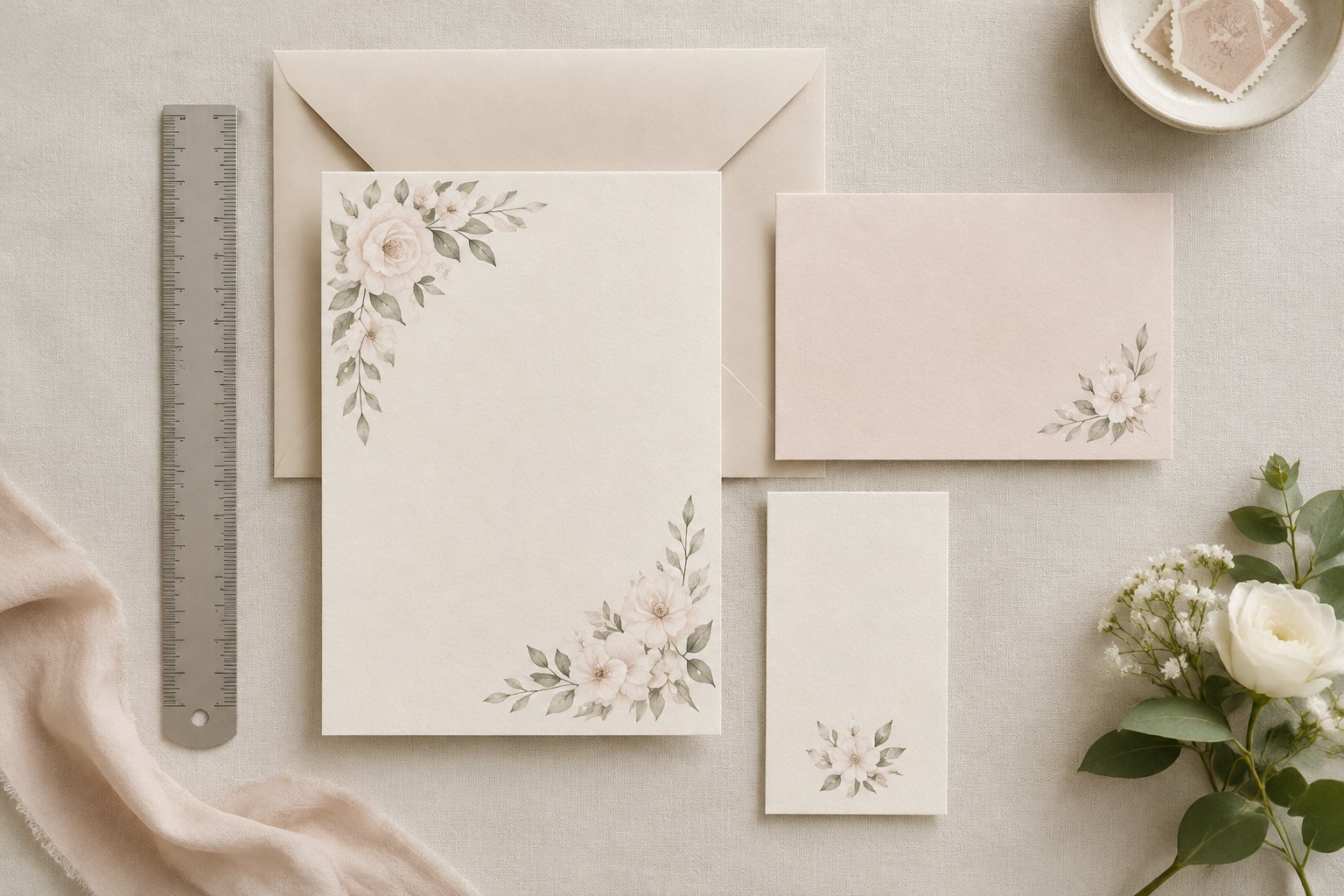
Your wedding stationery looks orderly when the smaller cards fit neatly with the main invitation. Save the dates are commonly 4 × 6 or 5 × 7 inches, while RSVP and details cards can be sized to match your chosen envelope plan.
Save-the-Date Dimensions
A 4 × 6-inch save-the-date card is compact and works well as a postcard or a card inside an envelope. A 5 × 7-inch format gives you more room for a photo or extra wording. Choose a size that fits your mailing style and matches the visual tone of your invitation suite.
If you are comparing dimensions for this early mailing, review save-the-date sizes before settling on a card.
RSVP and Details Card Sizes
RSVP cards commonly measure 3.5 × 5 or 4 × 6 inches. A 3.5 × 5-inch card fits an A1 envelope, while a 4 × 6-inch card pairs with an A6 envelope.
Include a return envelope that fits the card, and leave enough space for guests to write their response. Details cards also commonly use a 3.5 × 5 or 4 × 6-inch format. You can use one to share hotel information, directions, or your wedding website. Keep the text brief so guests can find the information quickly.
How Do Envelopes and Postage Affect Your Choice?
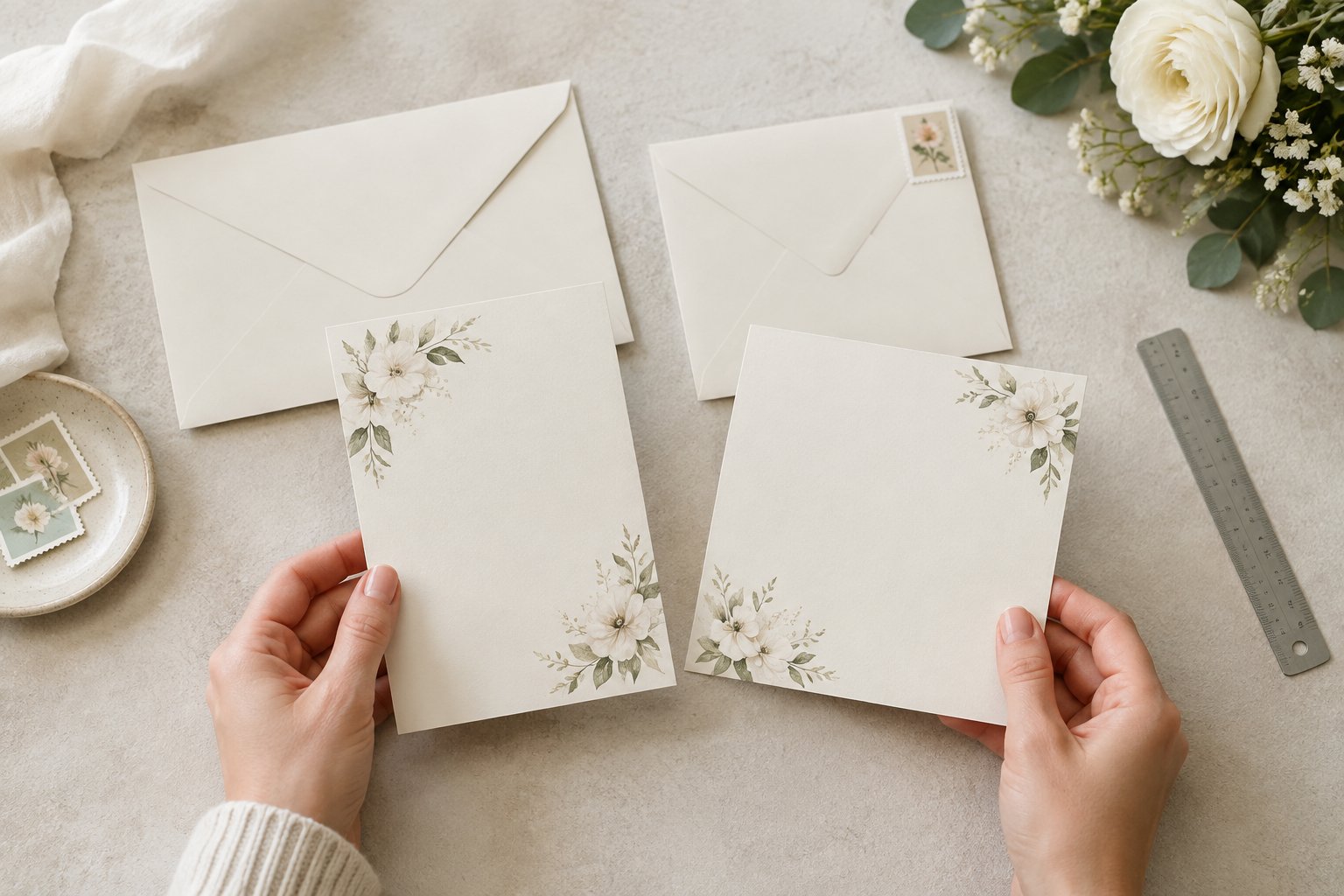
Your envelope must fit the card and leave room for any inserts, while the complete mailing’s weight, shape, and thickness affect postage. A standard rectangular suite may mail at a different rate from a square or bulky envelope.
Matching Invitations With A7 and A2 Envelopes
A 5 × 7-inch invitation fits an A7 envelope measuring 5.25 × 7.25 inches. A 4.25 × 5.5-inch invitation fits an A2 envelope measuring 4.375 × 5.75 inches. These envelope sizes give the cards a small margin for easy insertion.
Measure the full suite, including any backing card or ribbon, before choosing your envelope. A tight fit can bend corners or make the envelope difficult to seal.
When a Non-Machinable Surcharge May Apply
A non-machinable surcharge applies to mail that does not meet USPS letter-processing standards. Square envelopes require this surcharge because their shape cannot move through standard sorting machines in the same way as a rectangular letter. Rigid or unevenly thick envelopes can also require extra postage.
Weight adds another cost factor. Weigh a fully assembled invitation, including the RSVP card and its return envelope, before buying stamps. You can ask your post office to check the finished mailpiece, or estimate what it costs to mail a wedding invitation using its size and weight.
How Should You Choose the Right Invitation Size?
Choose a size that gives your wording enough room, fits your budget, and supports your wedding style. Confirm the finished dimensions with your printer and postal service before ordering the full quantity.
Balance Your Wording, Budget, and Wedding Style
Start with the information you need to share on the main card. A 5 × 7-inch invitation suits most essential wording, while a larger card gives artwork or longer text more breathing room.
If you want a compact suite, move extra logistics to a details card or your wedding website. Your format also sets a visual tone. A square card feels graphic and modern, while a slim card gives your suite a tall profile.
Compare printing and mailing costs for your guest list before choosing a specialty shape or adding several inserts. If you plan to design and print your own wedding invitations, check the printer’s paper and file requirements first.
Check Printer and Mailing Requirements Before Ordering
Ask your printer for the exact finished size, envelope pairing, bleed area, and safe text margins. Those details help prevent clipped wording and sizing errors.
If you are using a custom shape or folded card, request a sample or proof before approving the full order.
Assemble one complete invitation suite and take it to the post office for a postage check. That lets you confirm the rate for the exact envelope, card stock, inserts, and seals you plan to mail.