
How Early Should a Bride Be Ready Before a Ceremony? Timeline
Your ceremony start time gives you a useful anchor for planning the morning, but you also need room for photos, travel, and small delays. You should be fully dressed and photo-ready about 60 to 90 minutes before your ceremony begins; aim for two hours if you need to travel or take several pre-ceremony portraits.
That buffer gives you time to enjoy a quiet moment, handle final adjustments, and arrive without rushing. Set your ready-by time first, then build your wedding day schedule backward from it.
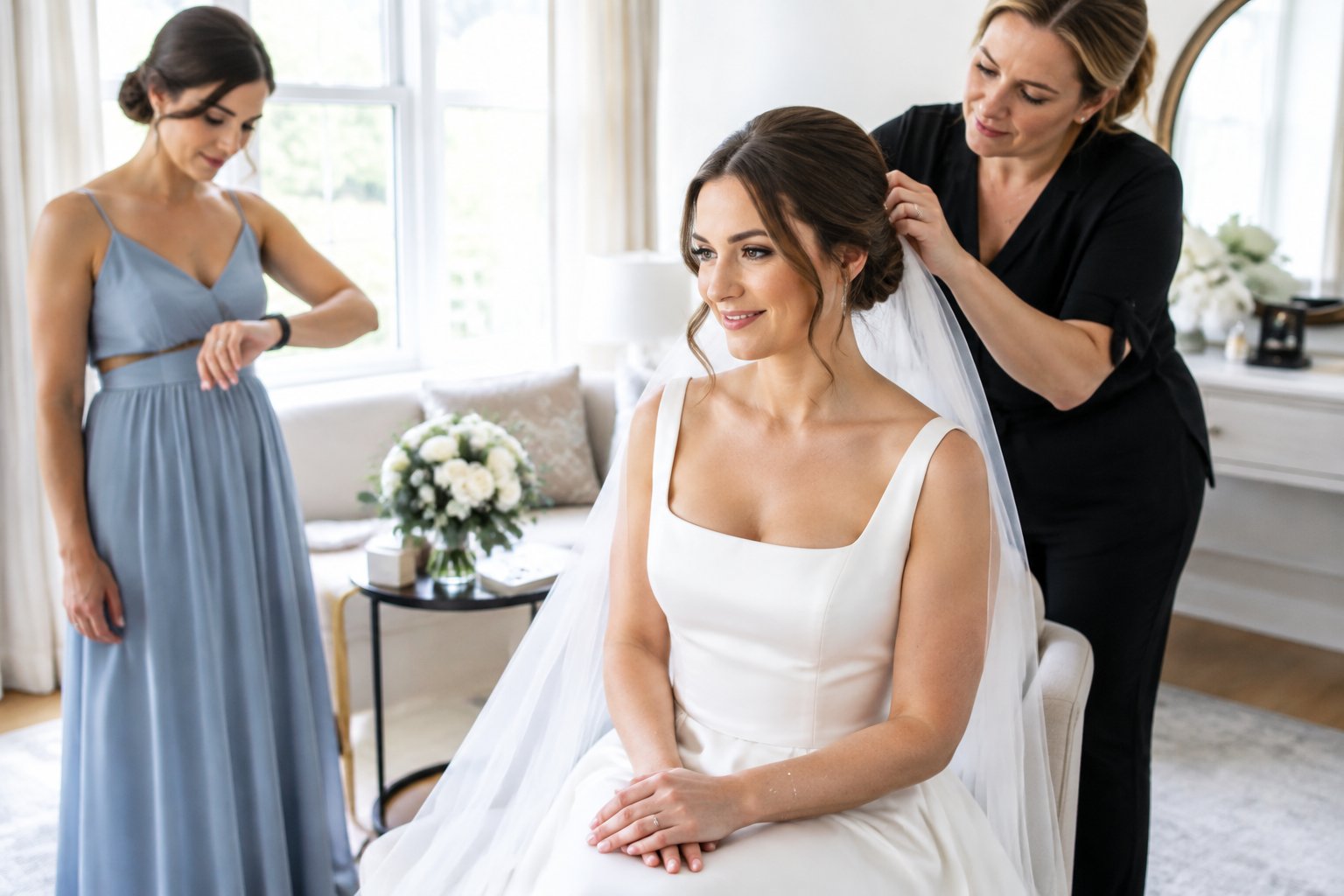
Work Backward From the Ceremony Start
Plan to be ready 60 to 90 minutes before the ceremony, then work backward to place dressing, photos, and beauty services. Your ready-by time should leave space for the parts of the day that happen after your hair and makeup are complete.
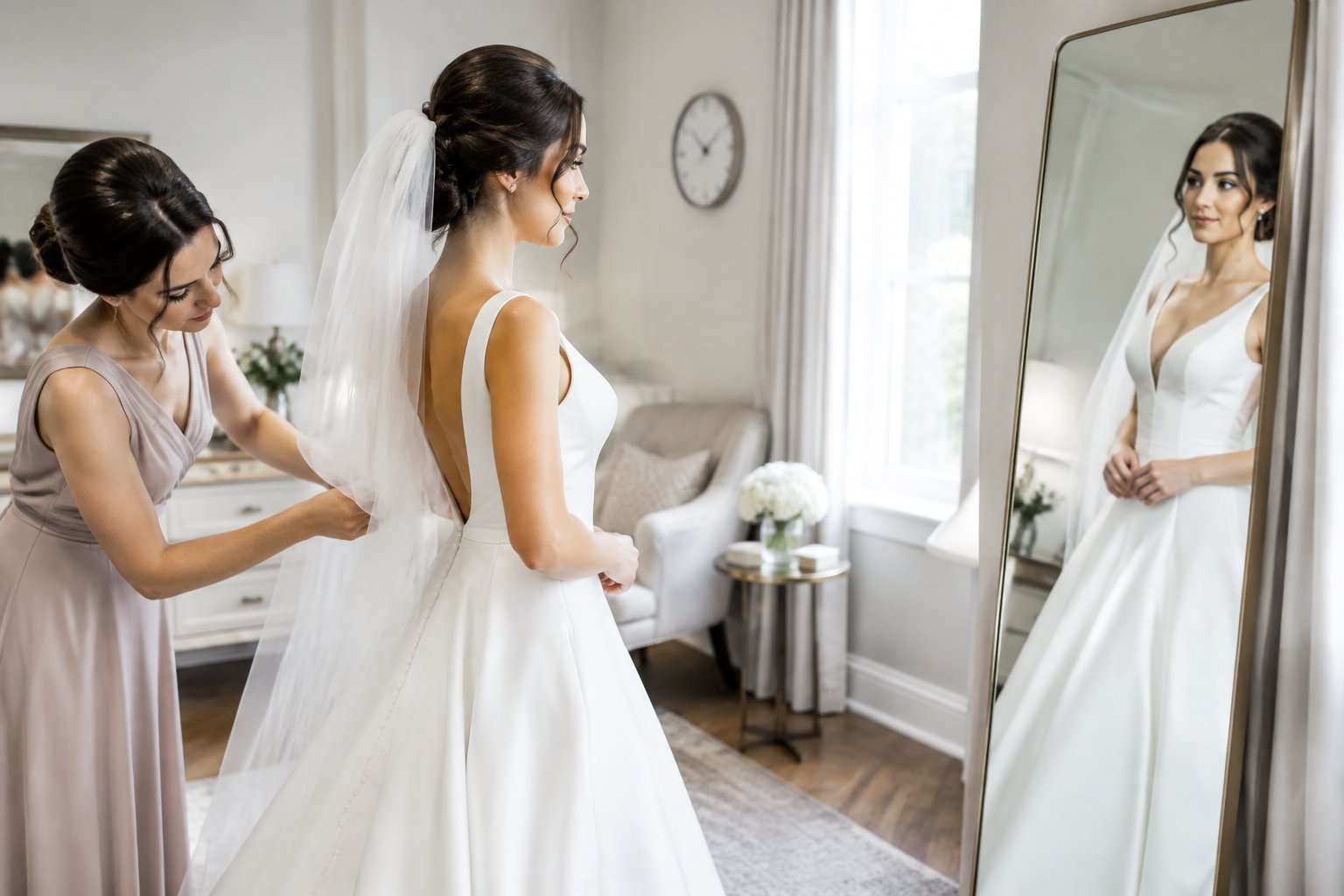
What Readiness Buffer Should You Aim For?
A 60-minute buffer works when you are getting ready at the venue and have a simple photo plan. Give yourself closer to 90 minutes if you have several portraits, family moments, or a drive to the ceremony site. If you are getting ready off-site, add travel time and a cushion for traffic.
Define “ready” clearly in your schedule: hair and makeup are finished, your dress and accessories are on, and you are available for photos or departure. If your ceremony begins at 4:00 p.m., a 2:30 p.m. ready time leaves 90 minutes for portraits, touch-ups, and moving to the ceremony space. A wedding day schedule makes these handoffs easier to see.
How Does a Sample Wedding-Day Schedule Work?
For a 4:00 p.m. ceremony, you could use a schedule like this:
- 9:00 a.m. Hair and makeup team begins services.
- 12:00 p.m. Your hair and makeup are complete.
- 12:30 p.m. You get dressed with help from your attendant.
- 1:00 p.m. The photographer takes bridal portraits and getting-ready photos.
- 2:00 p.m. You take a first look or other planned portraits.
- 2:30 p.m. You are ready for touch-ups and travel.
- 4:00 p.m. The ceremony begins.
Adjust the start of beauty services for your group size and the number of artists. A 4 p.m. wedding itinerary can help you compare the sample with your own plans.
Coordinate Hair, Makeup, and Dressing
Set your beauty schedule around the time you need to be dressed and available for photos. Your artist team can estimate service lengths, while you reserve a clear block for getting into your gown.
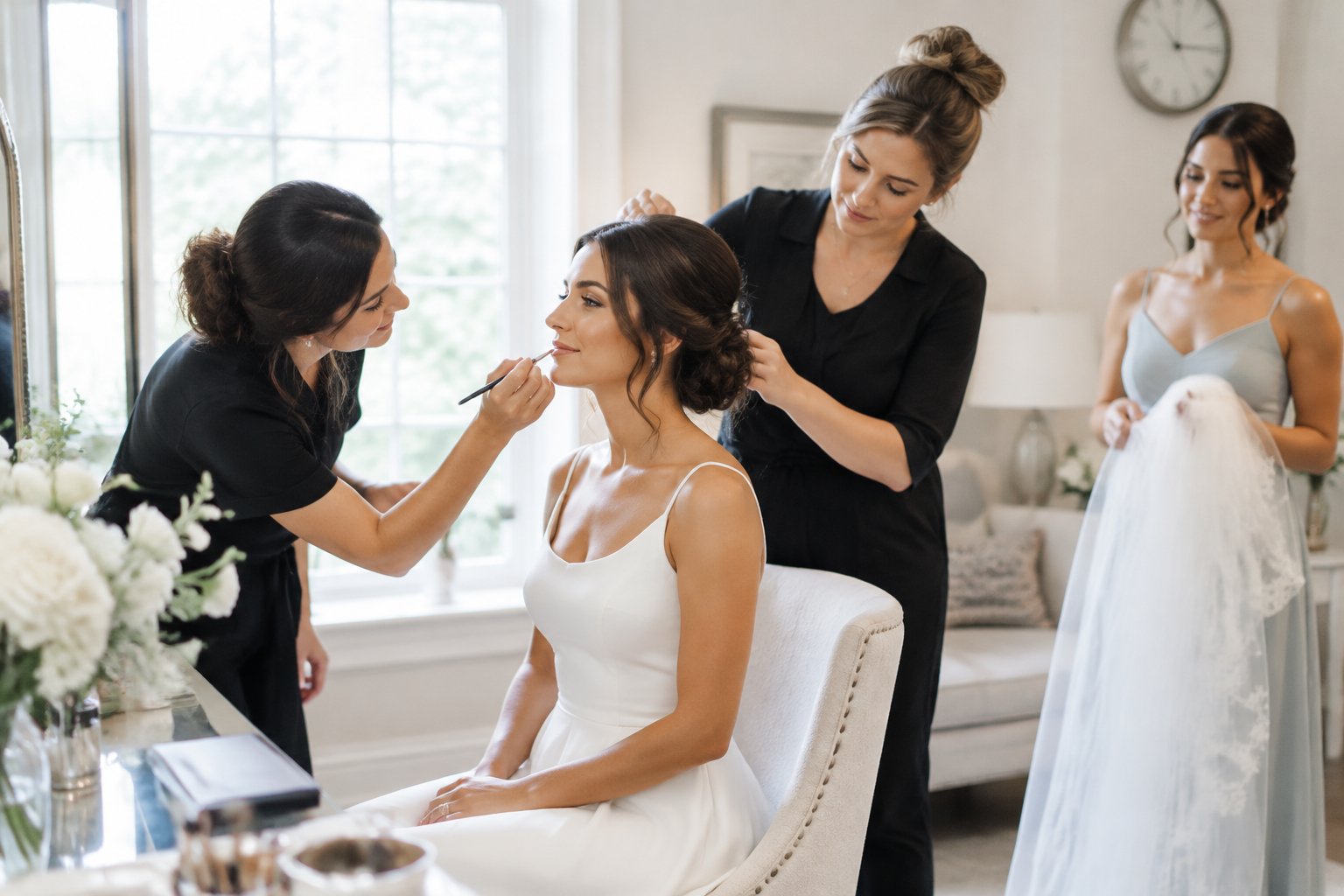
How Much Time Should Beauty Services Take?
Reserve about 60 to 90 minutes each for your hair and makeup, then confirm the timing with your artists. The style you choose, any changes after the trial, and the number of people receiving services all affect the start time. Ask your team to build the schedule around your ready-by time, not just the number of appointments.
For a larger bridal party, ask how many artists will work at once and how long each service needs. A clear service order helps everyone know when to be available. Your bridal hair and makeup timing should also account for touch-ups before you put on your dress.
When Should the Bride Put on Her Dress?
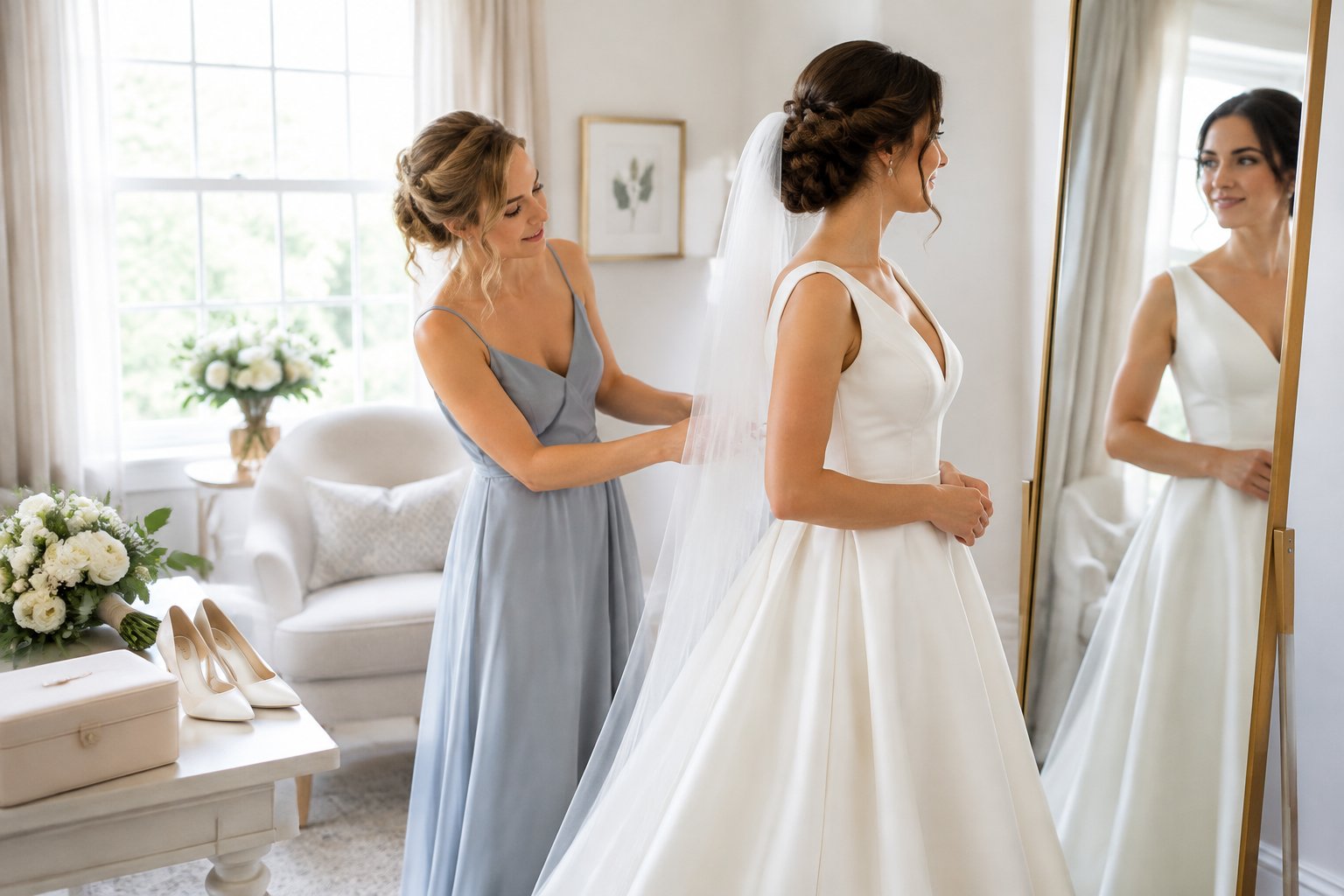
Put on your dress after hair and makeup are complete, with enough time for photos and any help you need with buttons, lacing, or a train. Set aside at least 20 to 30 minutes for dressing, then add time for a detailed gown or several accessories.
Ask your attendant to wash and dry their hands before helping, and keep a clean, open space ready for the dress. If your gown goes over your head, your stylist can help protect your hairstyle and makeup during the change. Include this step in your dress-ready timing, especially if the photographer will capture the moment.
Fit Photos and a First Look Into the Schedule
Your photo plan sets the time you need to finish getting dressed and choose a ceremony-ready location. Tell your wedding photographer which moments you want before the ceremony so the schedule gives each one enough space.
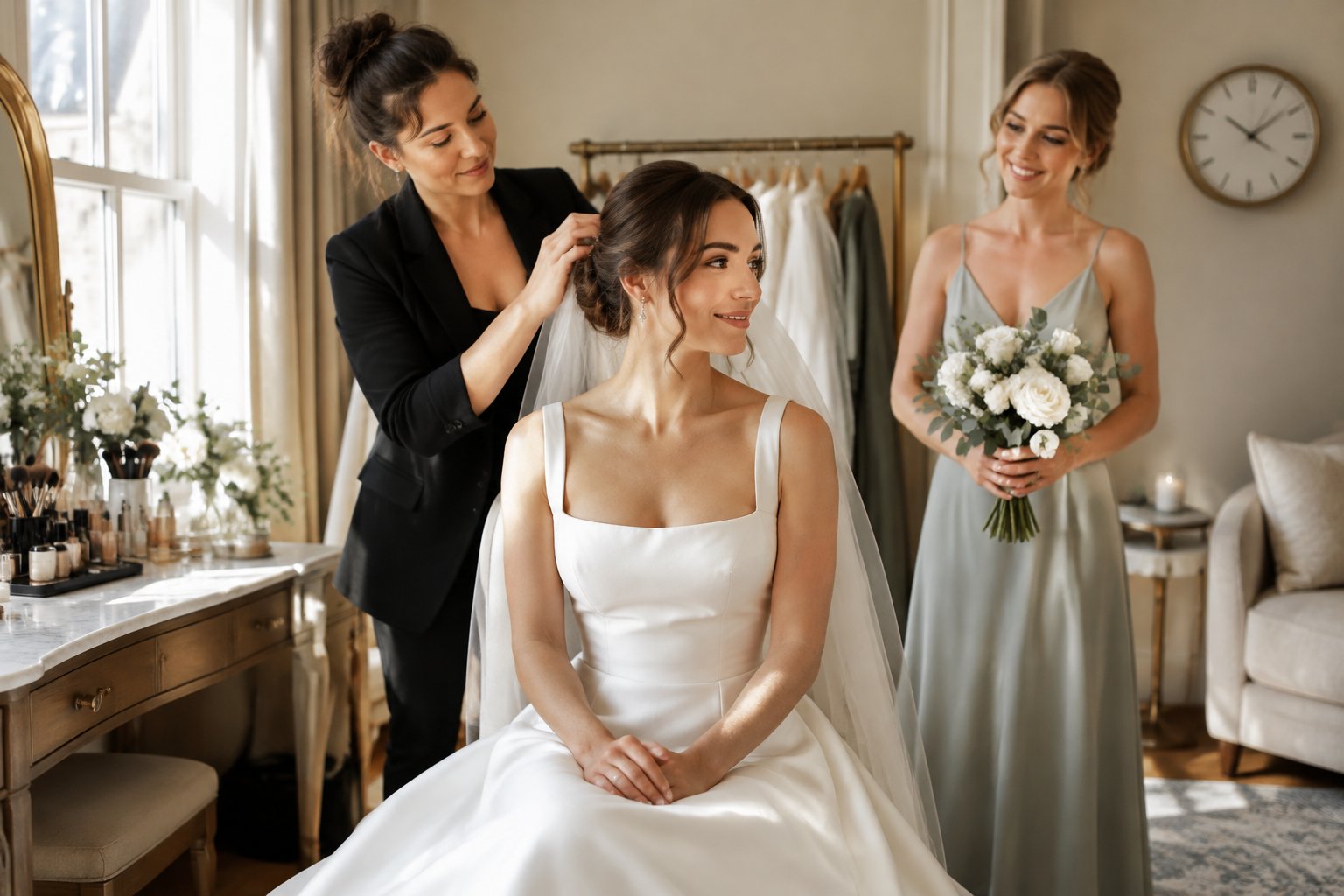
How Much Time Should You Set Aside for Pre-Ceremony Photos?
Set aside 30 to 60 minutes for pre-ceremony photos, based on how many groupings and locations you want. Bridal portraits may take 15 to 20 minutes, while wedding party photos or family portraits need additional time. Build in a few minutes to gather people and walk between spots.
Share a short photo list with your photographer and choose a helper who can bring people to the right place. Keep details such as rings, invitation cards, and flowers together for the photographer. Ask the florist to deliver bouquets and boutonnieres before the photo session begins.
When Should You Schedule a First Look?
Schedule your first look after you are dressed and before the ceremony, leaving enough time for couple portraits and travel afterward. A first look often leads into wedding party photos, so agree on the order and location with your photographer in advance.
If you want a private moment before portraits, reserve a few minutes for the first look itself. Your first-look timing should also reflect whether the ceremony and photo locations are on the same property. Without a first look, keep your portraits separate and confirm which family or wedding party photos fit before the ceremony.
Plan for People, Places, and Travel
The getting-ready location and travel plan shape your ready-by time as much as beauty services do. Check the bridal suite setup, estimate travel between locations, and share the schedule with everyone who needs to be on time.
How Can a Wedding Planner Keep the Morning on Track?
A wedding planner can keep the timeline moving, answer vendor questions, and help the wedding party know where to be. Give your planner the final schedule, contact details for key vendors, and the name of a trusted person who can make small decisions on your behalf.
Your morning stays calmer when you are not tracking every arrival or checking the clock between appointments. If you do not have a planner, assign those tasks to a reliable attendant or family member. Tell them when you need to leave and who is responsible for gathering your belongings.
What Should You Check at the Getting-Ready Location?
Check that the bridal suite has enough space, mirrors, outlets, and good light for your group and beauty team. Confirm where the dress will hang, where artists can set up, and how you will move from the room to the ceremony.
For an outdoor wedding, include the walk from the suite to the ceremony area and allow time for weather-related adjustments. Check the route for stairs, uneven ground, and distance, especially if your gown has a long train. If you are arriving at the venue shortly before the ceremony, confirm the arrival plan and where you can wait privately.
Build in Breathing Room for Delays
Add at least 30 minutes of flexible time to the morning so a late service, wardrobe fix, or traffic slowdown does not erase your calm before the ceremony. Keep that cushion near the end of the schedule, where it can absorb small delays.
Which Last-Minute Tasks Need a Time Buffer?
Allow extra minutes for steaming a dress, fastening jewelry, pinning a veil, and making final hair or makeup touch-ups. You may also need time to eat, use the restroom, or collect personal items before leaving the bridal suite.
Choose someone to check that the dress, shoes, bouquet, phone, and essentials are ready to go. Keep your emergency kit in one known place, and set a firm departure time if you are traveling. The time it takes to get ready is easier to estimate when you include dressing and these final tasks.
How Can You Keep the Morning Calm?
Protect a short pause after you are dressed and before you leave or line up for the ceremony. Put one trusted person in charge of schedule questions, keep water and a light snack nearby, and ask your group to stay close to the suite when their appointments are finished.
Share the ready-by and departure times with your wedding party in advance. A 10-minute check-in before leaving gives you time to gather your belongings and confirm that everyone is where they need to be.