
How Many People Fit on a Wedding Bus? Capacity Guide
A wedding bus can seat about 10 to 56 passengers, depending on the vehicle. How many people fit on a wedding bus? Most party buses seat about 18 to 40 passengers, while minibuses and full-size coaches can carry roughly 20 to 56. Your vehicle’s listed passenger capacity gives you the maximum number of riders, so check the exact seat count before booking.
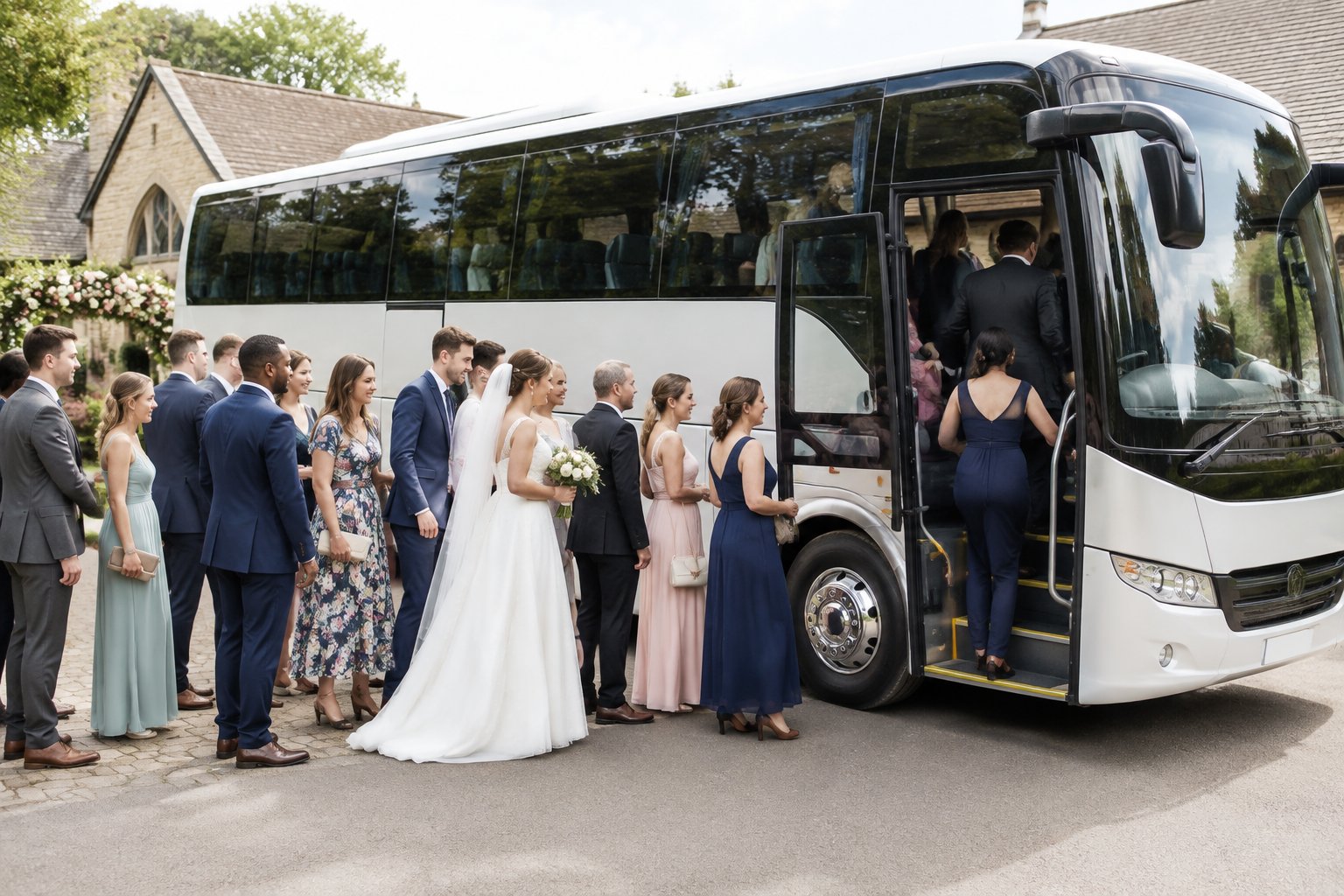
Your headcount is only one part of the decision. The trip length, passengers’ comfort, and any bags or formalwear you need to bring can all affect which size works well. Before you reserve, ask the rental provider to confirm the capacity and layout of the specific vehicle.
Typical Seating by Vehicle Type
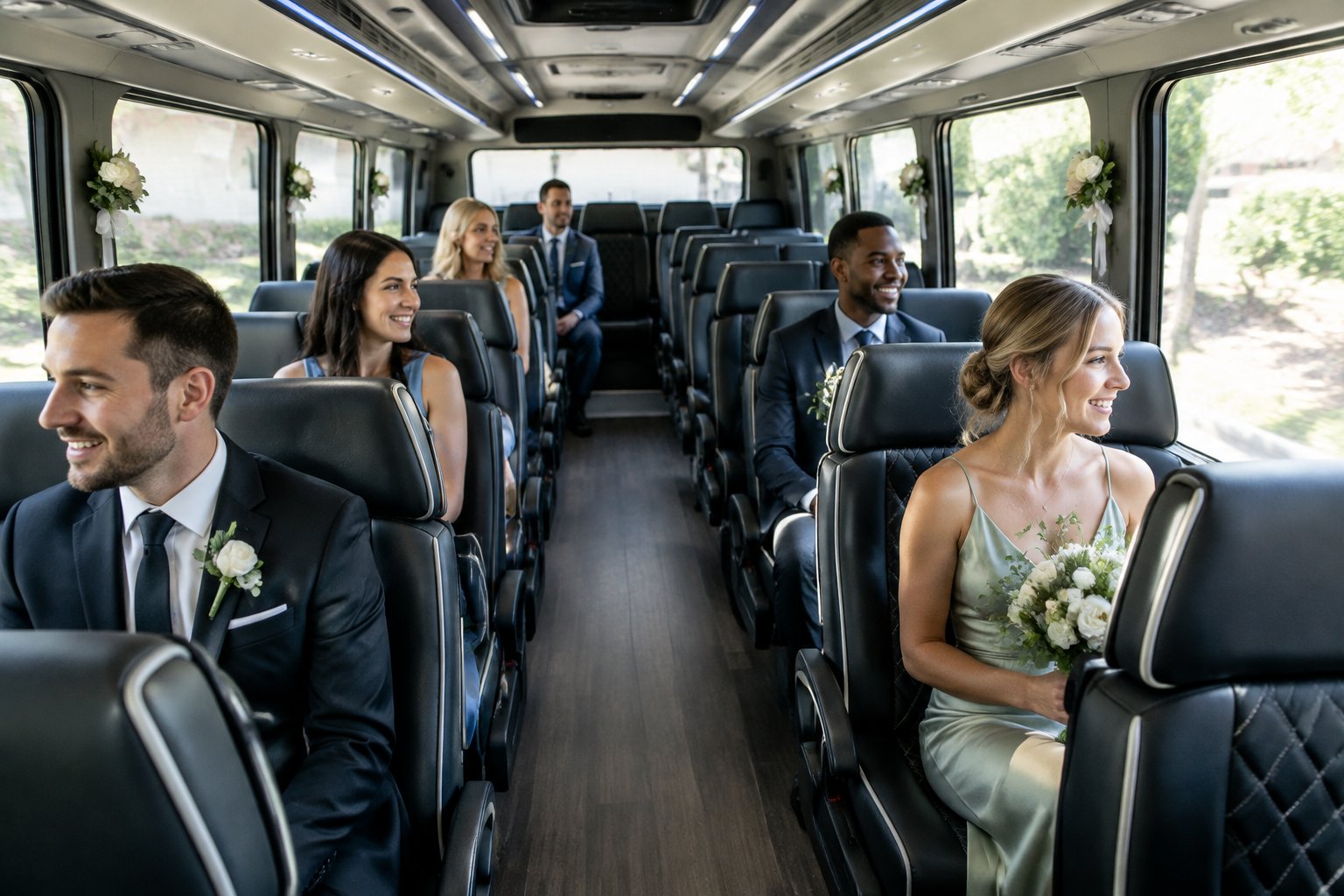
A wedding bus may be a mini bus, mini coach, party bus, or full-size coach, with passenger capacity changing by model and layout. The ranges below are useful for planning, while the provider’s confirmed seat count should guide your reservation.
| Vehicle type | Approximate passenger capacity | Common use |
|---|---|---|
| Mini bus | 20–30 | Guest shuttles and small groups |
| Mini coach | Up to about 31 | Shuttles with extra luggage space |
| Party bus | About 18–40 | Wedding parties and celebrations |
| Full-size coach | About 50–56 | Larger guest groups |
Mini Buses and Mini Coaches
A mini bus commonly seats about 20 to 30 passengers, while a mini coach can seat up to about 31, depending on the model. These vehicles suit hotel-to-venue trips and smaller guest groups.
A mini coach may offer overhead or undercarriage storage, which helps when guests bring bags or garment covers. For a wedding shuttle, think about how many riders need to travel on each trip.
If you plan several shuttle loops, the vehicle does not need to carry your entire guest list at once. Share your headcount and route with the rental provider to confirm the right size.
20- and 24-Passenger Party Buses
A 20 passenger party bus or 24 passenger party bus gives a medium-sized group room to travel together. These sizes can work well for your wedding party, close family, or a group of guests who want a shared ride between locations.
The advertised capacity refers to the vehicle’s passenger limit. Before booking, ask how the seats are arranged and whether the specific bus has space for coats, bouquets, or bags.
30-Passenger Party Buses and Larger Coaches
A 30 passenger party bus suits a larger wedding party or a group that wants to ride together. Larger party bus sizes may seat around 30 to 40 passengers, while a full-size coach can carry about 50 to 56.
A coach can move a larger group in one trip, while a party bus offers a celebration-focused setting for a smaller group. Confirm the vehicle’s exact passenger capacity and the route’s access limits before you choose.
How Much Room Should You Leave Beyond the Headcount?
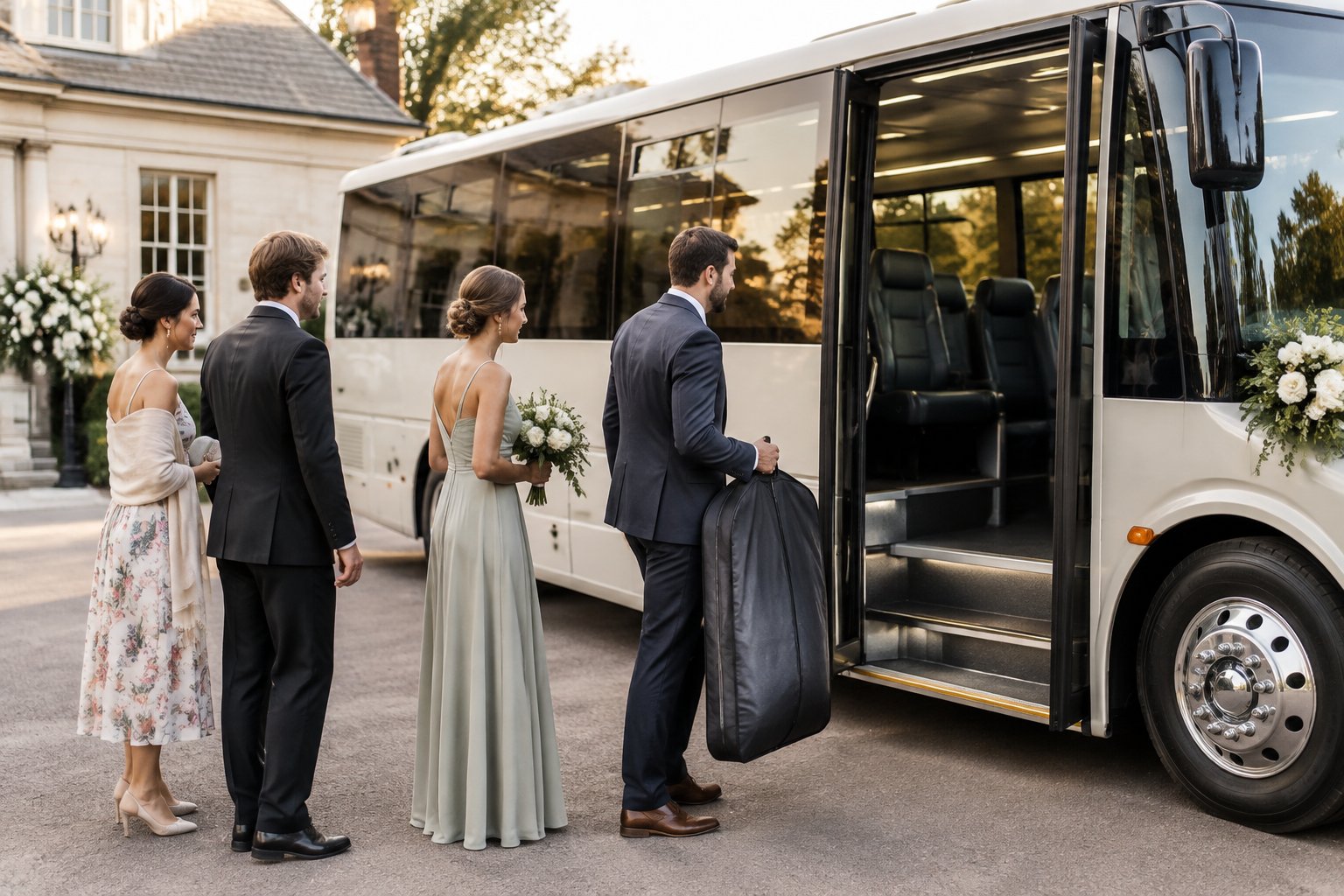
Choose a bus size that meets your rider count while leaving enough room for your group to travel comfortably. A vehicle’s maximum passenger capacity helps you check the limit, while your route, seating layout, and belongings help you judge whether that limit suits your plans.
Maximum Capacity vs. Comfortable Seating
Maximum capacity tells you how many passengers the vehicle is rated to carry. Comfortable seating depends on how much room your guests need during the ride and what they plan to bring aboard.
For a short transfer, you may be comfortable using most of the available seats. Longer trips, formal outfits, or bulky bags can make extra space welcome.
If you expect last-minute RSVP changes, build a little flexibility into your count. You can also plan for unexpected additions with a firm headcount process, including guidance on what happens if extra people show up to a wedding.
When to Choose a Larger Bus
Choose a larger bus when your confirmed rider count is close to the listed capacity, or when passengers need space for personal items. More room also helps when you are transporting people over a longer distance or carrying guests in formalwear.
A larger vehicle can make boarding simpler when your group includes older guests or people who need extra time to get settled. Ask the provider about the vehicle’s entrance, seating arrangement, and storage before you book.
Wedding Party or Guest Shuttle: Which Vehicle Fits?
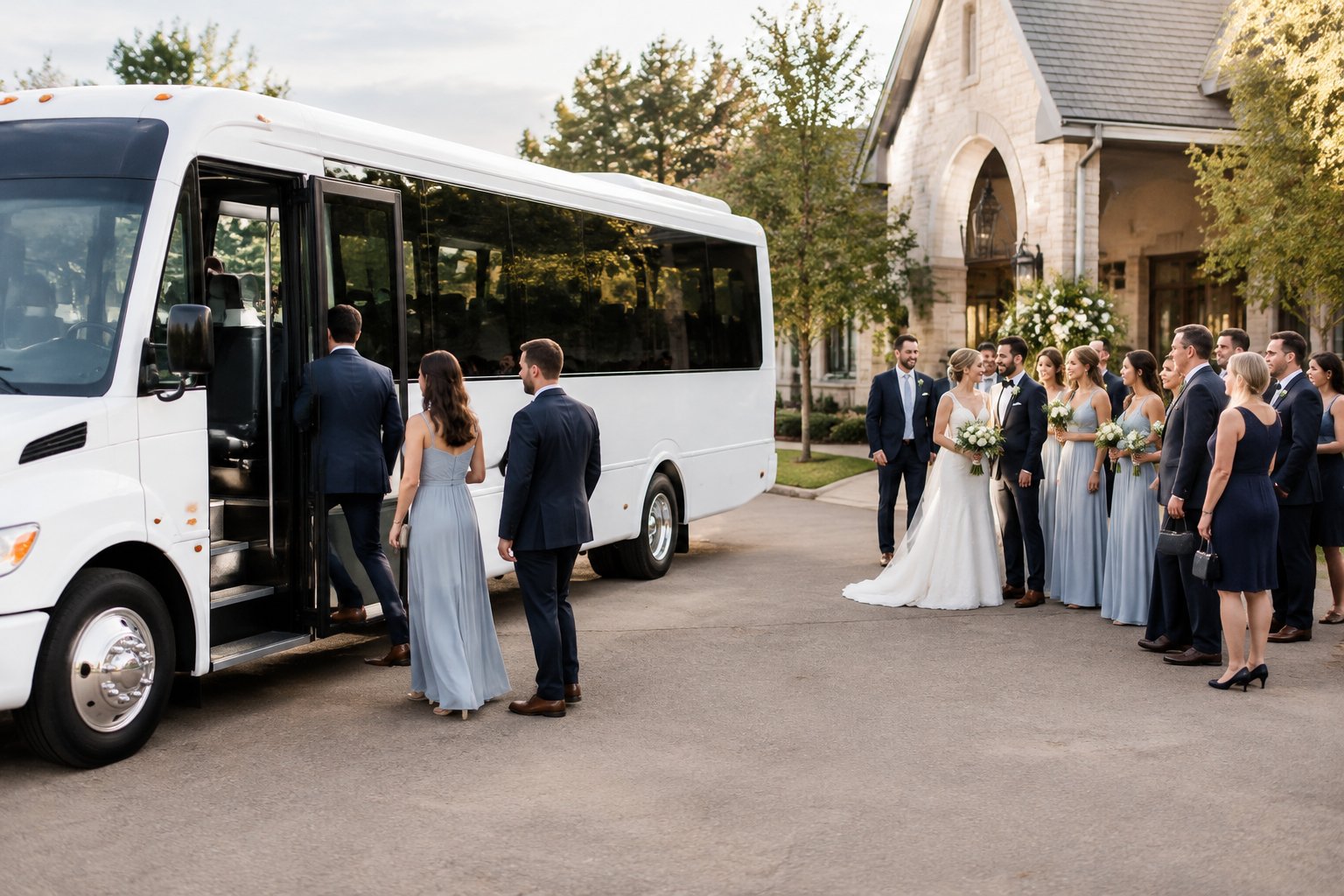
A wedding party bus suits a smaller group traveling together, while a wedding shuttle is designed to move guests between set locations. Your route, passenger count, and timing will help you select the vehicle and schedule that fit.
Choosing a Wedding Party Bus
A wedding party bus can carry the couple, attendants, and close family between getting-ready locations, the ceremony, and the reception. Choose the capacity based on everyone who will ride, including any family members you plan to include.
If you are sorting out who travels with the couple, your wedding car passenger plan can help you separate those riders from the shuttle group. A party bus also gives your group a shared ride between venues.
Confirm whether the vehicle has room for bouquets, garment bags, and other items you need during the day.
Moving Guests Between Hotels and Venues
A wedding shuttle works well when guests are staying at one or more hotels, or when the venue has limited parking. You can use a single bus for repeated trips or schedule multiple vehicles for a large group or tight timeline.
Plan each run around the number of people who need a ride at that time. Guests may arrive in waves, so share pickup details and departure times in advance.
For destination weddings, a clear estimate of the number of attendees helps you plan the shuttle’s trip capacity; start with your destination wedding guest count.
When a Bachelorette Party Bus Makes Sense
A bachelorette party bus can suit a group traveling between several stops or celebrating together on the way. Match the passenger limit to your confirmed group size, then ask about sound, lighting, and any rules for food or drinks.
If the same vehicle will serve more than one event, confirm the schedule and rental period with the provider. That helps you coordinate the ride with the wedding day transportation plan.
Which Amenities Matter on the Ride?

The most useful wedding bus amenities depend on the trip and the passengers riding. A sound system and mood lighting can suit a party bus, while comfortable seats and storage can help guests traveling in formalwear.
Sound Systems and Mood Lighting
A sound system lets your group enjoy music during the ride, and premium sound systems may be available on some vehicles. Mood lighting can add a festive feel for a wedding party or bachelorette party bus.
Ask the provider which features are included on the specific bus you are considering. If music is important to your plans, confirm how you can connect a device and whether the driver sets any volume limits.
Seating and Storage for Formalwear
Look at the seating layout before you book, especially if guests will be wearing gowns, suits, or other formal clothing. A vehicle with space for bags and garment covers can help keep the cabin organized during the trip.
Ask where passengers can store personal items and whether the bus has overhead or undercarriage storage. Your provider can confirm which storage options come with the selected vehicle.
How Do You Plan and Book Wedding Transportation?
Plan wedding transportation around the number of actual riders, their pickup locations, and the schedule for each trip. Once you have those details, ask for written confirmation of the vehicle’s capacity, rental terms, and route plan.
Estimate the Number of Actual Riders
Count the people who will use the bus, not just the total number of wedding guests. Your wedding party, family members, and hotel guests may need different rides at different times.
Use your RSVP figures and travel plans to estimate how many guests will attend, then make a separate rider list for each trip. Keep the headcount current as RSVPs come in.
You can use a clear method to calculate your wedding guest count and identify the people who have confirmed that they need transportation.
Coordinate Routes, Pickup Times, and Return Trips
List each pickup point, destination, and planned departure time. Include travel time and a buffer for traffic and boarding, then give guests clear instructions about where to meet the bus.
Plan return trips as well as arrival transportation. If guests will leave at different times, ask the provider whether the schedule can include more than one departure.
Share the agreed pickup details with guests before the wedding day.
Confirm the Vehicle’s Capacity and Rental Terms
Before you sign, confirm the exact passenger capacity and the vehicle model in writing. Ask how long the rental lasts, which stops are included, and what happens if your schedule changes or the trip runs late.
Check whether the vehicle’s dimensions work for your route and venue access. If you are still setting your planning timeline, use a guide to when to start booking wedding services so transportation stays on your task list. Reserve once your date, route, and expected rider count are clear.