
How Many Photos Do Wedding Photographers Give You? A Guide
If you’re wondering how many photos do wedding photographers give you? A full-day gallery commonly includes about 400 to 800 edited images. Shorter bookings often produce fewer, while longer or more eventful celebrations may yield more.
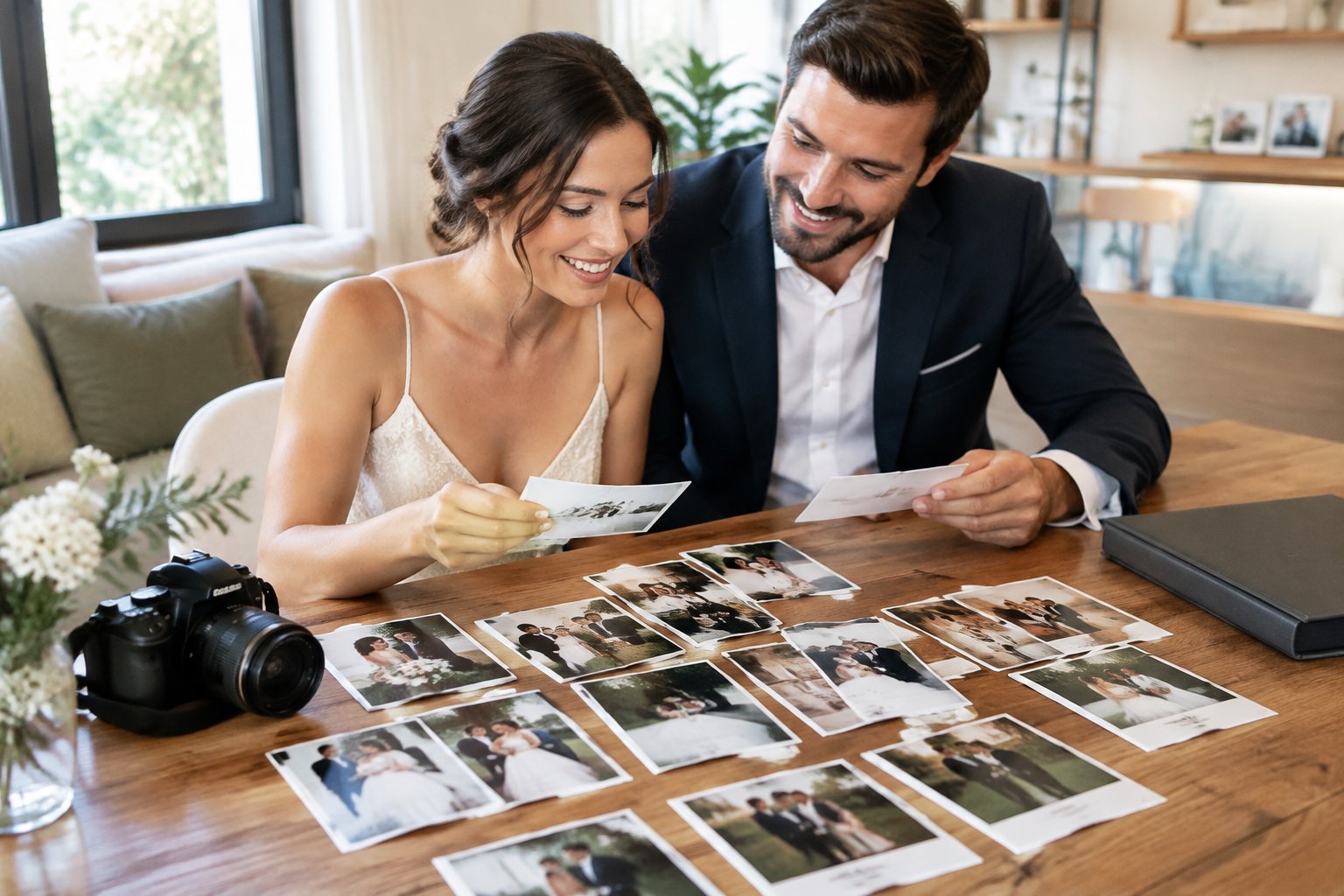
Your final count reflects the coverage you book and the story your photographer captures. Before signing a contract, ask how many edited images they deliver for a wedding with a timeline and guest count like yours, then confirm the details in writing.
What Is a Realistic Gallery Size?
A realistic gallery often ranges from about 150 images for a short event to 800 or more for a full wedding day. Your wedding photographer can give you a more useful estimate based on the hours and events in your plan.
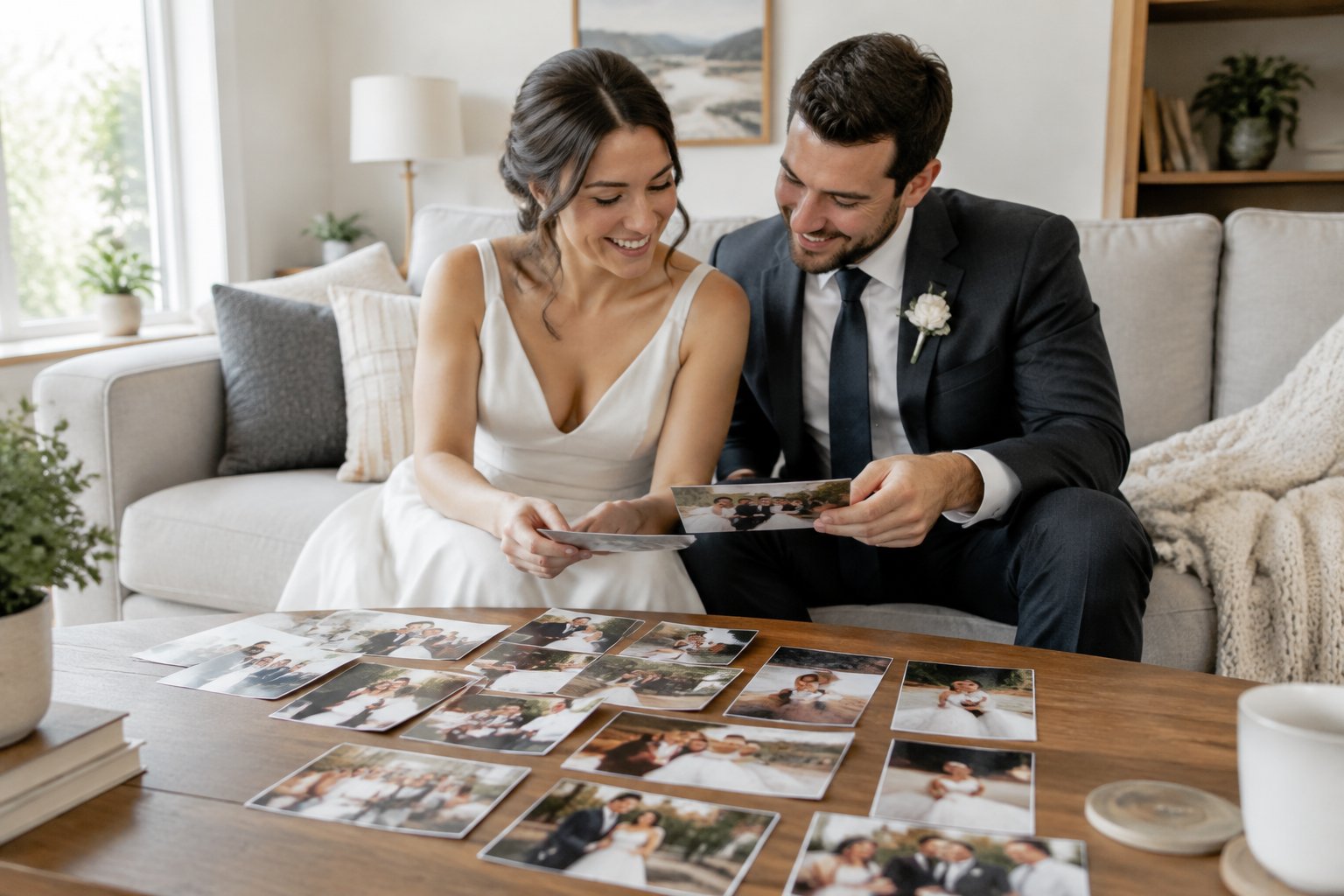
Typical Counts for Short, Half-Day, and Full-Day Coverage
Use these ranges as planning estimates, not fixed industry rules:
- Short coverage, 3 to 4 hours: about 150 to 300 edited images
- Half-day coverage, 5 to 6 hours: about 250 to 500 edited images
- Full-day coverage, 8 to 10 hours: about 400 to 800 edited images
A photographer who works at a measured pace may deliver a smaller gallery with careful selections. A busy timeline, extra events, or a second photographer can raise the count. When you compare packages, check how many hours are included alongside the expected number of wedding photos.
If your plans call for a shorter booking, consider how the hours line up with your ceremony and reception. For example, couples weighing whether five hours is enough for a wedding can use the timeline to decide which moments they want photographed.
Examples for Intimate and Large Weddings
An intimate celebration with 30 guests and a brief ceremony might result in 150 to 300 edited images across four hours. A 150-person wedding with getting-ready coverage, a ceremony, portraits, dinner, and dancing could produce 500 to 800 images over a full day.
Guest count offers a helpful clue, though the way your day is planned also shapes the gallery. A smaller event with several locations and traditions may generate more images than a longer, quiet gathering. If you are still setting your guest list, you can weigh different ideas about what makes a nice wedding size.
What Can Change Your Final Photo Count?
Your final count reflects the hours of coverage, the events on your timeline, the size of the celebration, and how many photographers are working. These details help explain why two galleries from weddings of similar length can look quite different.
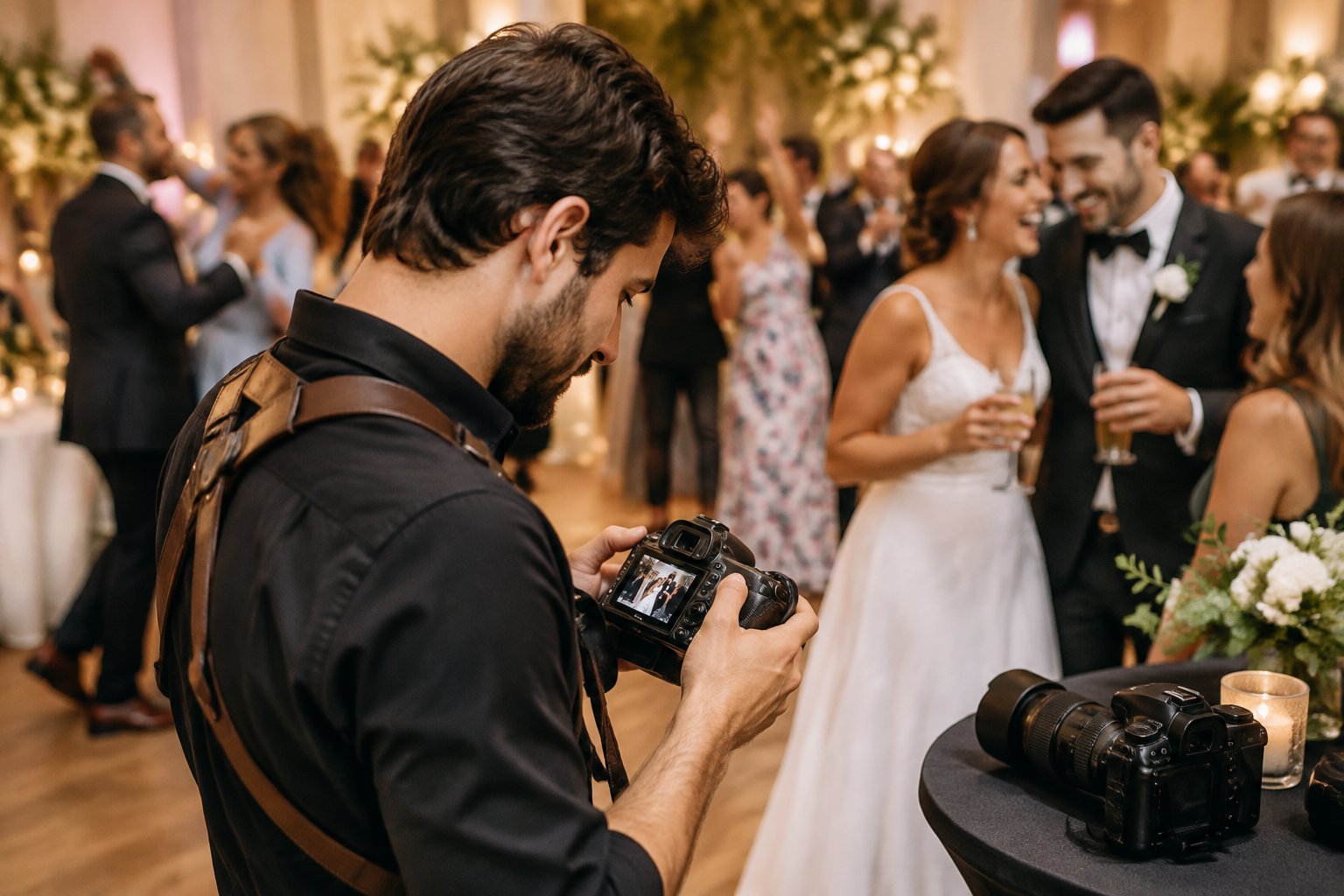
Coverage Hours, Events, and Timeline
More coverage gives your photographer more time to document the day’s story. A booking that starts during preparations and continues through the reception includes more scenes than coverage limited to the ceremony and portraits.
Your schedule also shapes what fits into those hours. Travel between locations, a receiving line, cultural traditions, or a long cocktail hour can add photographic moments. A tight timeline may leave less room for guest candids or relaxed couple portraits. Share your planned events with your photographer so the estimate reflects the schedule you expect.
Wedding Size and Guest Count
A larger wedding brings more people, family groupings, and interactions for your photographer to capture. Your wedding size and guest count also affect how much is happening at once, especially during cocktail hour and the reception.
You can help your photographer prepare by sharing a short list of important family groupings and guests. A wedding photo list that names the people you want included can keep formal portraits organized and help make sure key relatives are included.
Photography Style and a Second Shooter
A documentary-style photographer may capture more passing moments as they unfold, while a portrait-focused approach may spend more time on planned images. Neither approach sets a guaranteed gallery size; each reflects a different way of documenting the day.
A second shooter photographs from another viewpoint and can cover moments happening at the same time. For example, one photographer can focus on the couple during the ceremony while the other photographs guests’ reactions. Ask whether a second shooter is included in your package and how that affects the expected gallery.
How Many Photos Per Hour Is Typical?
A common planning estimate is about 50 to 100 edited photos per hour of coverage. Treat that as a broad guide, since the final count depends on the pace of the event and the photographer’s editing choices.
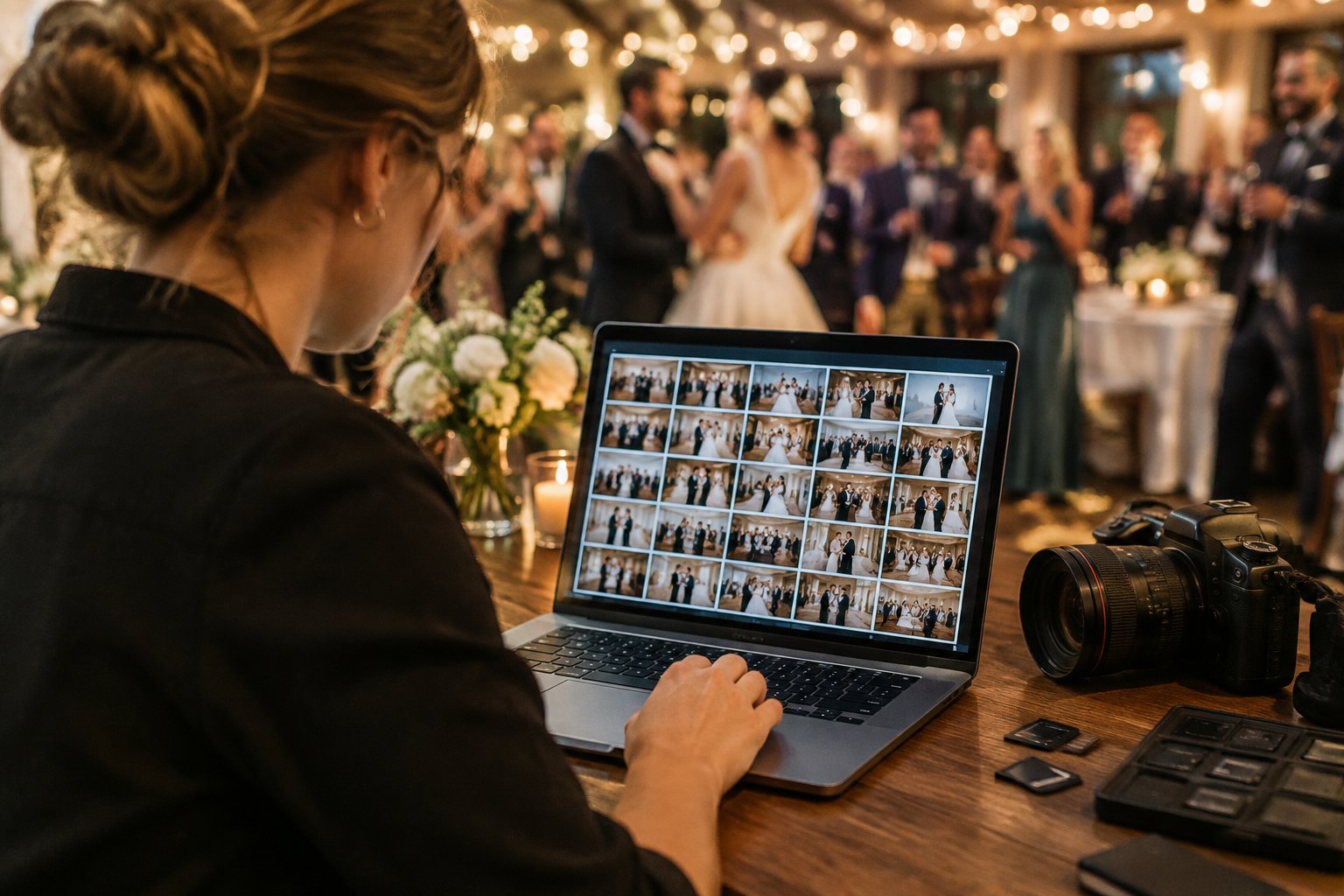
For example, six hours of coverage could produce roughly 300 to 600 edited images using that range. A quiet ceremony with few events may fall toward the lower end, while a full reception with lively dancing may lead to more.
The hourly estimate describes delivered images, not every frame captured on the day. Ask your photographer how they calculate the count, whether it is a minimum or an estimate, and whether the stated number refers to edited photos.
Why Don’t Photographers Deliver Every Image?
Photographers curate your wedding photos so the delivered gallery shows the strongest images from the day. Camera tests, missed focus, duplicate frames, and brief expressions that do not represent the moment stay out of the finished collection.
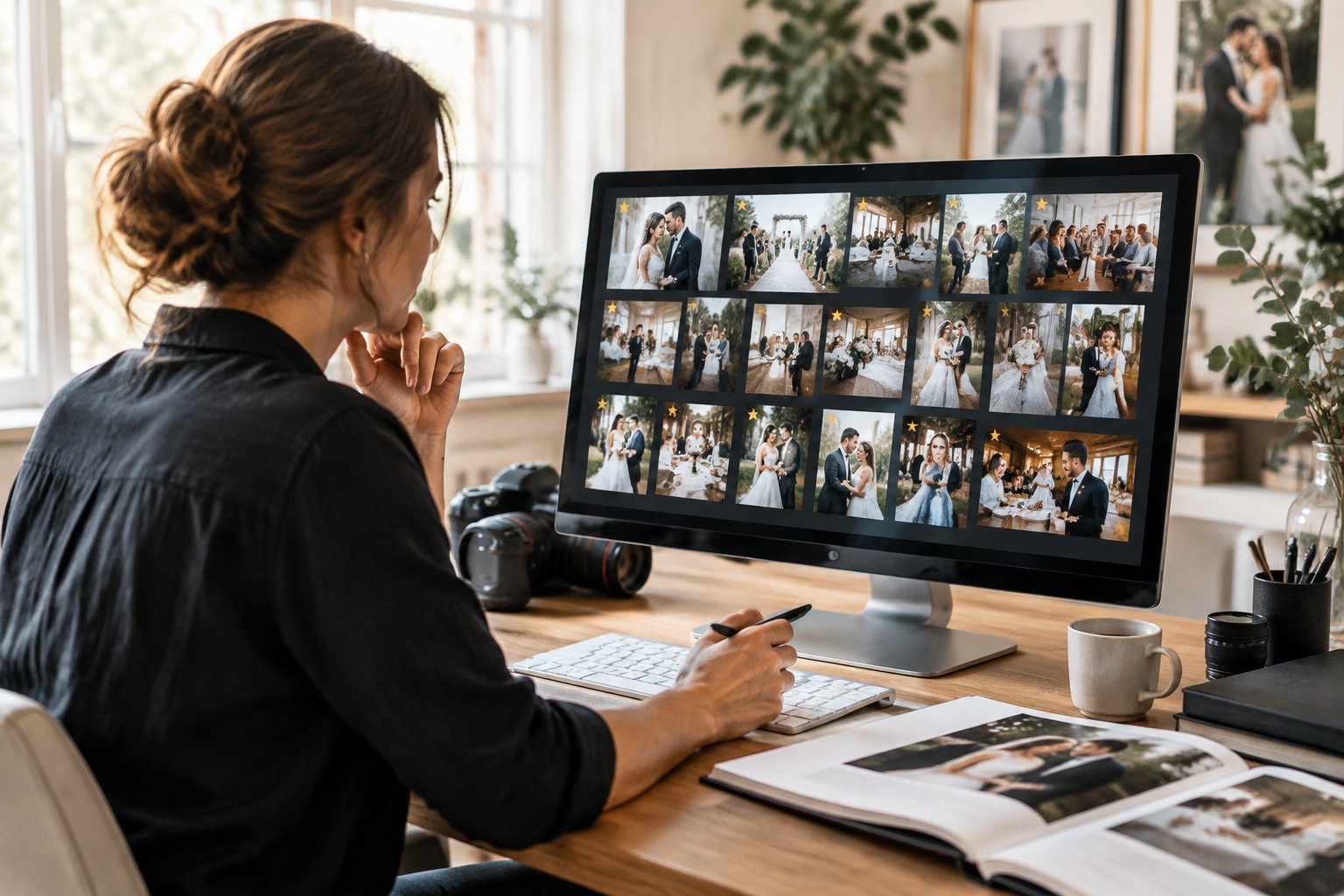
How Culling and Editing Shape the Gallery
Culling is the process of reviewing the images and choosing which ones belong in the final gallery. Your photographer selects frames with clear focus, strong expressions, and useful variety, then edits the chosen images to match their style.
During a hug or a group portrait, a photographer may take several frames to catch the best timing. The finished gallery gives you the strongest version of that moment without filling the collection with nearly identical shots.
Edited Photos vs. Raw Files
Your package usually describes edited images as the final deliverable. Raw files are the original camera files before the photographer adjusts color, exposure, and other details. Many photographers keep those working files as part of their editing process, so ask whether raw files are included if you have a specific reason for requesting them.
If you want to know why the gallery has a smaller count than the number of frames taken, whether wedding photographers give all their photos is a useful point to clarify before booking.
Why Quality Matters More Than Quantity
A well-edited gallery should cover the main parts of your day, from preparations and the ceremony to portraits and reception moments. It should also include details that help bring back the setting and atmosphere, such as decor, candid conversations, or a reaction during a toast.
Look through full wedding galleries when you compare photographers. A highlight reel shows selected favorites, while a complete gallery gives you a better sense of how the images work together across an entire event.
What Should You Confirm Before Booking?
Confirm the expected image count, coverage hours, delivery terms, and download rights in your wedding photography package. Clear details help you know what to expect and make it easier to compare photographers.
Photo Counts and Coverage in the Wedding Photography Package
Ask how many edited images the photographer delivers for a wedding similar to yours. Check whether the number is a minimum, an estimate, or simply a typical range, and make sure the hours of coverage are listed in the contract.
Share your schedule and any key events when requesting an estimate. If you have planned couple portraits, family groupings, or several locations, tell the photographer so they can account for them in their coverage plan.
Gallery Delivery, Sharing, and Download Rights
Ask when your gallery will arrive, how long it will stay online, and whether you can download full-resolution files. Confirm whether the gallery lets you share images with family and friends, and ask about any rules for posting them on social media.
Your contract should also state how the photographer handles image use and privacy. If timing is important to you, ask for the expected turnaround in writing; you can also compare it with guidance on whether four months is too long to wait for wedding photos.
Choosing Images for a Wedding Album
Ask whether album design or printing is part of your package, and whether you choose the photos yourself. A gallery with hundreds of edited images gives you plenty to select from, so check whether the photographer offers help narrowing down the choices.
If you plan to make a book, ask about album size, page count, and how many images fit the design. A rough idea of how many pictures you need for a wedding photobook can help you choose favorites without losing the range of moments you want to remember.