
How Much Do 100 Invites Cost? A Breakdown of Expenses and Options
Planning a wedding can be exciting, but the costs can add up quickly, especially when it comes to wedding invitations. On average, 100 wedding invitations and response cards cost between $300 and $700. This price can vary based on the type of stationery you choose, whether it’s digital or printed, and the design features you select.
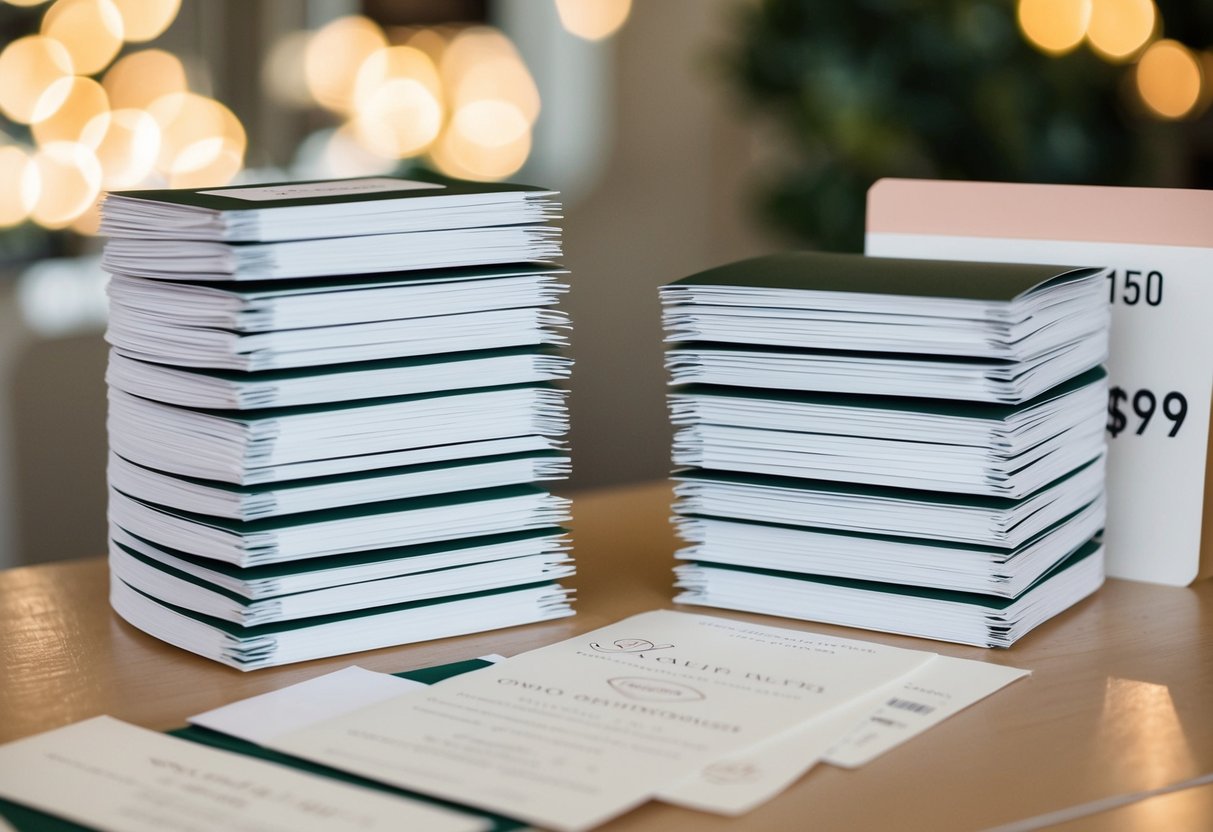
When considering your invitation cost, remember to factor in additional elements like save-the-dates and postage. These extras can make a notable difference in your budget.
Understanding the average cost of wedding invitations will help you make informed decisions as you plan for your big day.
As you explore your options, think about the style and materials that will reflect your personal taste. Finding the right wedding stationery is an important step in setting the tone for your celebration and inviting your loved ones to share in your special moment.
Understanding Invitation Pricing
Wedding invitations can vary in cost due to several factors. Knowing these can help you plan your budget and make informed decisions about what to include in your invites.
Components of Invitation Cost
When considering invitation costs, remember that various components contribute to the final price. These include the main invitation card, envelopes, RSVP cards, and any additional inserts like maps or hotel information.
You might also consider extras like wax seals or ribbons for a touch of elegance. Each of these elements can affect the overall cost, so it’s essential to evaluate what you truly want versus what your budget allows.
It is also helpful to account for printing methods. Digital printing is usually more affordable than letterpress or foil stamping, so think about what style fits your vision.
Average Cost Factors
The average cost of wedding invitations typically ranges from $200 to $1,200 for 100 invites. This wide range depends on several factors, including the design complexity and material choices.
Basic invitations may start as low as $1 per card, while custom designs can quickly rise. Remember that the total price can also be influenced by the choice of printing methods, as some are more labor-intensive than others.
Whenever you get quotes, don’t forget to include the costs of envelopes and any additional features that may add to your overall expense.
Paper Quality and Types
The type of paper you choose plays a significant role in invitation pricing. Basic cardstock is affordable, while specialty papers, like linen or handmade options, can increase your costs.
Several weights of paper are available, and heavier weights often feel more luxurious. Consider sustainability as well; recycled options may be eco-friendly and might come at a lower price point.
Selecting the right paper can also influence the invitation’s overall look and feel. Don’t forget to ask for samples to ensure your choices meet your expectations.
Design and Customization Options
Choosing the right design and customization for your wedding invitations is key to making a memorable first impression. You’ll want to consider various printing techniques, design elements, and any enhancements to ensure your invitations reflect your style and the tone of your wedding.
Printing Techniques
When it comes to printing, you have several options. Digital printing is popular for its affordability and quick turnaround. It allows for colorful designs and can accommodate unique sizes and shapes.
Letterpress offers a classic look with raised text that adds a tactile element, while thermography gives a similar effect with a more modern finish. For a touch of luxury, foil stamping adds metallic shine, making your invitations pop.
If you prefer a more intricate design, engraving creates a beautiful, embossed effect. Embossing and debossing also add depth to the design, which can make simple invitations feel elegant.
Custom Design Considerations
Creating custom wedding invitations can elevate your stationery to new heights. Collaborating with a designer helps you incorporate personal touches that reflect your story as a couple.
You might want to think about colors, fonts, and motifs that mean something special to you. Customization could involve anything from hand-drawn illustrations to unique shapes like a gatefold or pocket.
Ensure the design elements work well together and maintain readability. Don’t shy away from including personal touches, such as a favorite quote or a meaningful symbol.
If you’re looking for a truly unique touch, consider hand calligraphy. It adds a beautiful, personal element and can make each invitation feel like a work of art.
Enhancements and Embellishments
Enhancements can turn regular invitations into spectacular ones. Think about adding ribbons, wax seals, or enclosures to give your invitations extra flair.
Embellishments, such as pressed flowers or intricate patterns, can enhance the aesthetic without overwhelming the design. Consider the overall theme of your wedding when choosing these features.
Adding subtle designs or textures can give depth, transforming a simple layout into something visually captivating. Remember, each detail contributes to the overall feel of your wedding, so choose enhancements that resonate with you and your partner.
Extra Costs and Budgeting Tips

When planning for wedding invitations, it’s important to consider not just the base cost of the invites but also the additional expenses involved. These costs can add up quickly. Here are some tips to help you manage your budget effectively.
Addressing Expenses and Postage
Postage is often an overlooked expense in your wedding invitation budget. The weight and size of each invitation can affect the shipping cost.
- Standard Postage: For lightweight invitations, budget around $0.55 to $1.10 per envelope.
- Heavier Invitations: If your invites include embellishments, postage could rise to $1.50 or more.
For 100 invitations, you might spend an additional $50-$60 on postage alone. Plan accordingly to avoid surprise expenses.
Efficient Budgeting for Wedding Invites
Creating a detailed wedding invitation budget is key. Start by listing all expected costs. This should include:
- Design Costs: Basic invites may cost $1 to $2 each. More elaborate designs can go up to $12 each.
- Additional Elements: If you want items like RSVP cards or wax seals, add those costs too.
Make sure to keep track of each expense. Set a realistic budget you can stick to, while allowing a little wiggle room for unexpected costs.
How to Save on Stationery Costs
Saving money on your stationery doesn’t mean sacrificing quality. Here are some practical ways to cut costs:
- Digital Invites: Consider sending electronic invitations, which can save you on both printing and postage.
- DIY Options: If you’re crafty, creating your own invitations can be more affordable.
- Bulk Orders: Some companies offer significant discounts on larger orders. Group buying can also lead to lower prices.
You can find many affordable wedding invitations online. Research several suppliers to compare prices for the best deals.
Calculating Your Invitation Budget

Setting up an invitation budget is important for your wedding planning. You need to think about your guest list size and whether you should order extra invitations. Understanding these factors will help you manage your costs effectively.
Estimating Based on Guest List Size
Start with the number of guests you plan to invite. The average wedding size is about 100 to 150 guests, but this can vary.
Here’s a quick breakdown of potential costs for 100 invites:
- Basic Invitations: $200 – $400
- Mid-Range Designs: $400 – $800
- Luxury Options: $800 – $1,200
Your costs will depend on whether you choose a minimal invitation suite or a more elaborate design with extras like RSVP cards. Think about how many households are on your guest list, as this will affect the total. If you send one invitation per household, adjust your total count accordingly.
When to Order Extra Invitations
Ordering extra invitations is a smart idea. This helps you avoid running out if you decide to add more guests later or if you make mistakes while addressing them.
A good rule of thumb is to order 10-15% more invitations than your guest list.
For example, if you expect 100 guests, consider ordering 110-115 invitations. This approach ensures you have enough to cover any changes without stressing your budget.
Remember that extra invitations might not significantly increase your overall costs but can provide peace of mind during the planning process.