
How Much Does a Wedding Band Cost? Music Budget Guide
A live wedding band in the U.S. costs about $2,000 to $4,500 on average, while smaller groups may cost less and large or premium bands can exceed $10,000. For your music budget, plan for roughly $2,000 to $4,500 for a live band, then check whether travel, extra playing time, and other services are included.
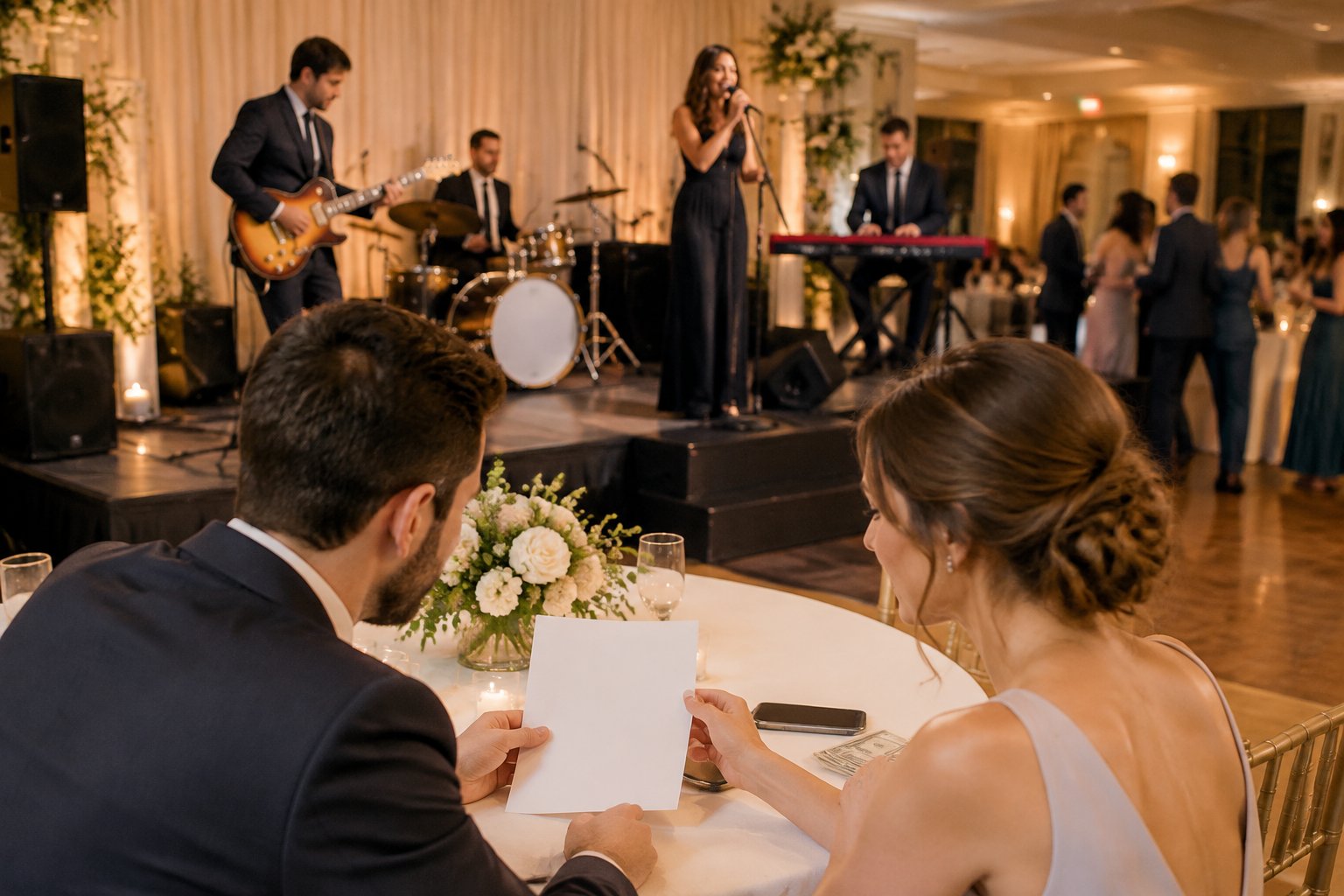
Your final quote depends on your location, event date, band size, and how much of the day you want covered. Set a budget for music early, then request itemized quotes from bands that fit your style and schedule. If you’re mapping out your spending, learn how to allocate a wedding budget.
What Should Your Wedding Music Budget Include?
Your wedding music budget should cover the band’s performance fee plus any extra services, travel, or equipment your plans require. Ask for a written quote that lists the event date, playing times, setup needs, and break coverage.
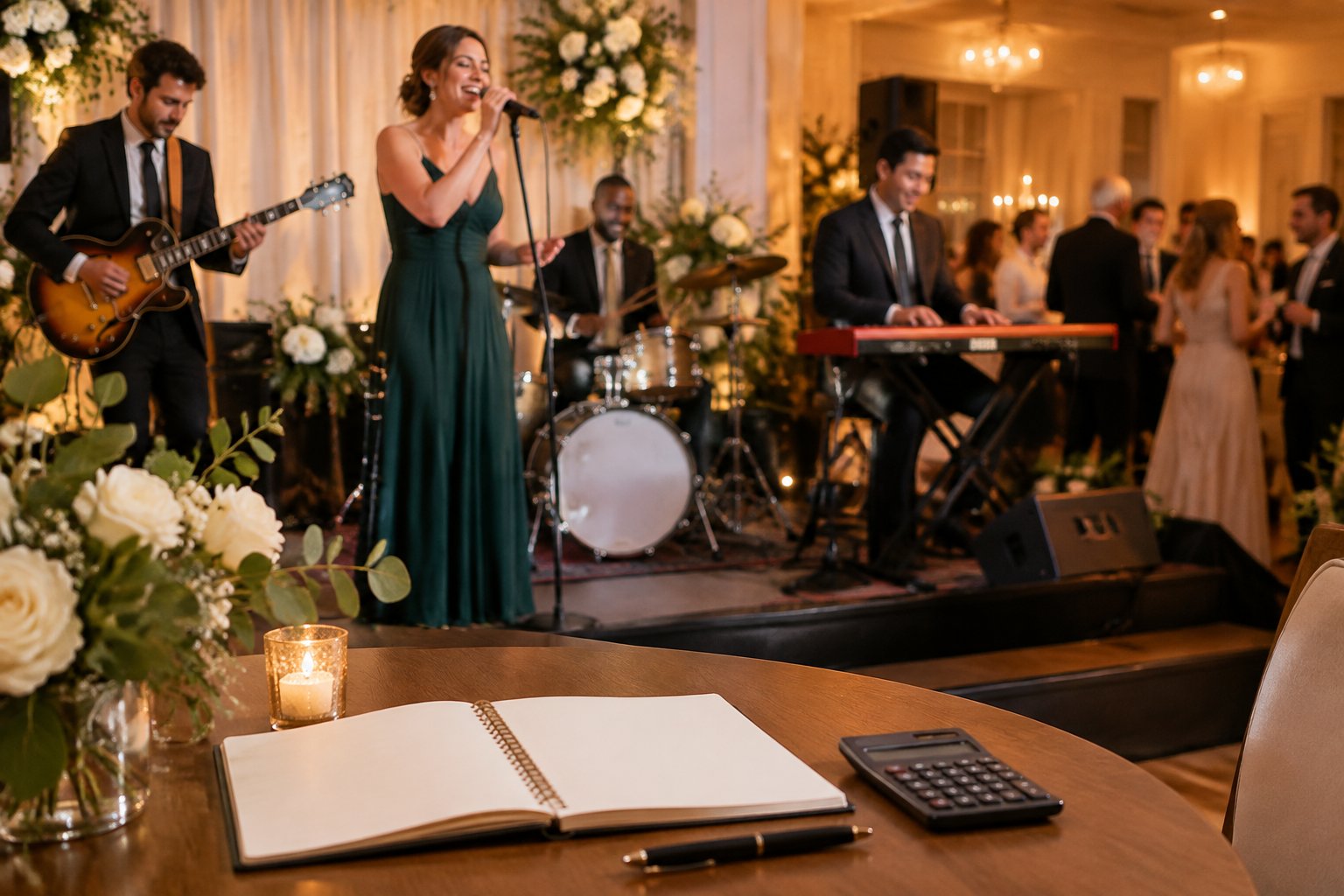
Performance Fees, Setup, and Breaks
A band’s fee reflects more than the minutes you see musicians onstage. Your quote may include planning, travel within a set area, sound equipment, setup, and sound checks. Ask how many live sets are included and how long each one lasts.
Check what happens during breaks. Some bands play recorded music between sets, while others provide live background music or leave that part to you. Your contract should state the number and length of breaks, overtime rates, and whether setup or breakdown has a separate charge.
You can compare quotes more clearly when you list the same needs for each band. Include your performance schedule, guest count, venue address, and any special requests. For a starting point on spending, use this guide to choose a good budget for a wedding band.
Ceremony, Cocktail-Hour, and Reception Coverage
The reception fee may cover only the main dance sets, so price ceremony and cocktail-hour music separately. You could book the same band for multiple parts of the day, hire a smaller acoustic group for the earlier hours, or choose recorded music for one portion.
Tell each band when you need music to begin and end. A longer booking can increase the fee, and a gap between sets may require a plan for background music. If you’re weighing how the day should sound from start to finish, consider what kind of music you need for a wedding.
What Factors Affect a Live Band’s Quote?
Your band’s quote reflects the size and experience of the group, the length of the performance, and the work required to reach and play at your venue. Your event date and location also shape availability and travel costs.
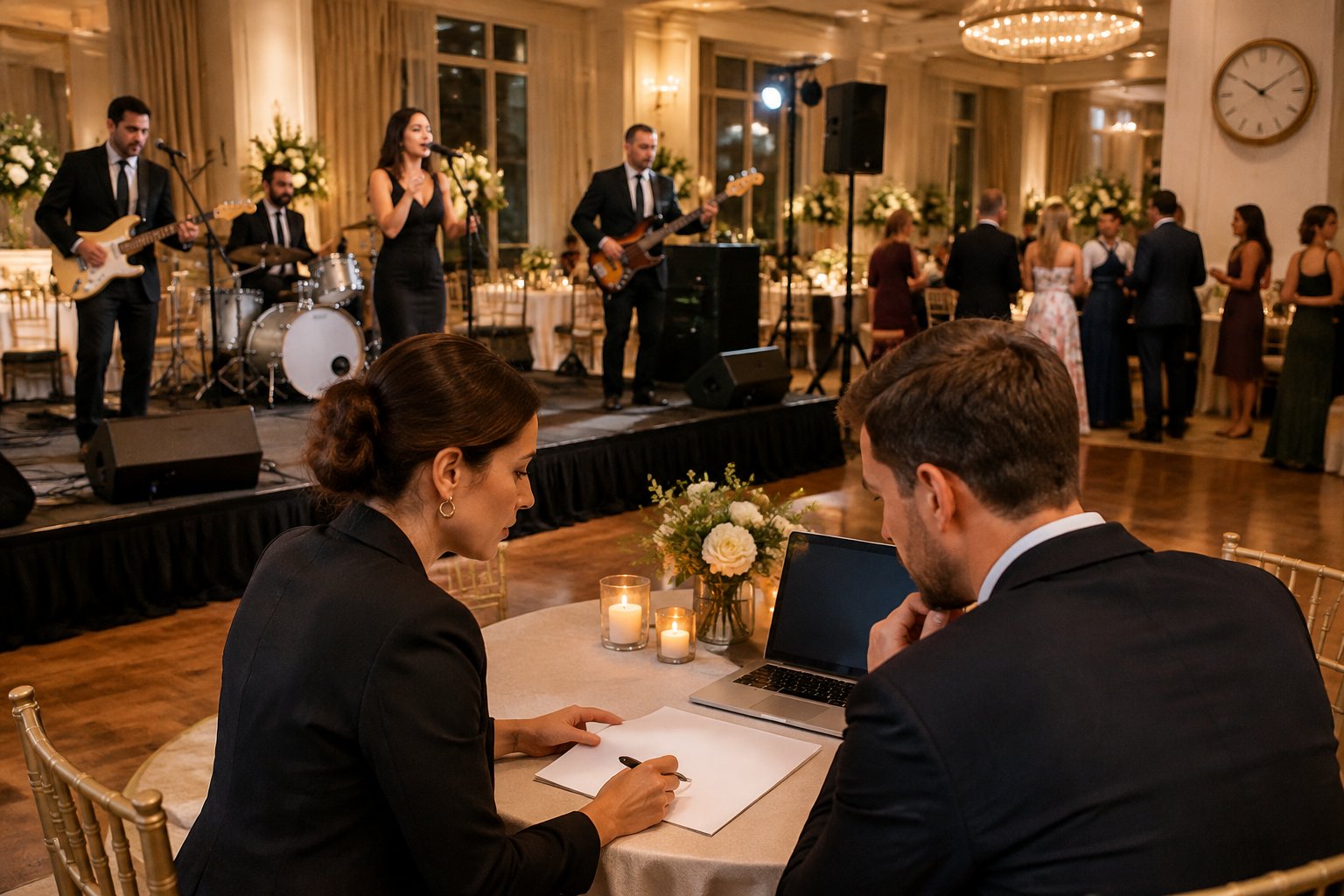
Band Size, Experience, and Performance Length
More musicians usually mean a higher fee because you’re paying for a larger group and its added equipment. A duo or small acoustic group can suit an intimate gathering, while a larger band with horns and extra vocalists creates a fuller stage sound.
Experience and demand affect pricing, too. A band with a strong wedding record may charge more for its planning skills, crowd interaction, and ability to handle changes to the schedule. Ask for videos of live performances and a sample setlist. You can also check what kind of music wedding bands play as you compare styles.
Performance length can add to the quote. Confirm whether the fee covers a set number of live hours or a specific number of sets, then ask how the band prices extra time. If your reception schedule runs late, overtime charges may apply.
Travel, Accommodation, and Venue Logistics
A band that travels a long distance may add mileage, transport, or overnight accommodation to your quote. Request a clear breakdown so you can compare travel costs across local and out-of-town groups.
Your venue can affect the work involved, too. Check stage space, access for loading equipment, power needs, sound limits, and the available setup time. Share those details before you book, especially if your reception is at a remote site or the venue has a tight schedule.
Is a Live Band or Wedding DJ Better for Your Budget?
A wedding DJ usually costs less, while a live band brings musicians and a visible performance to your reception. Compare the full packages against your schedule and music priorities before choosing.
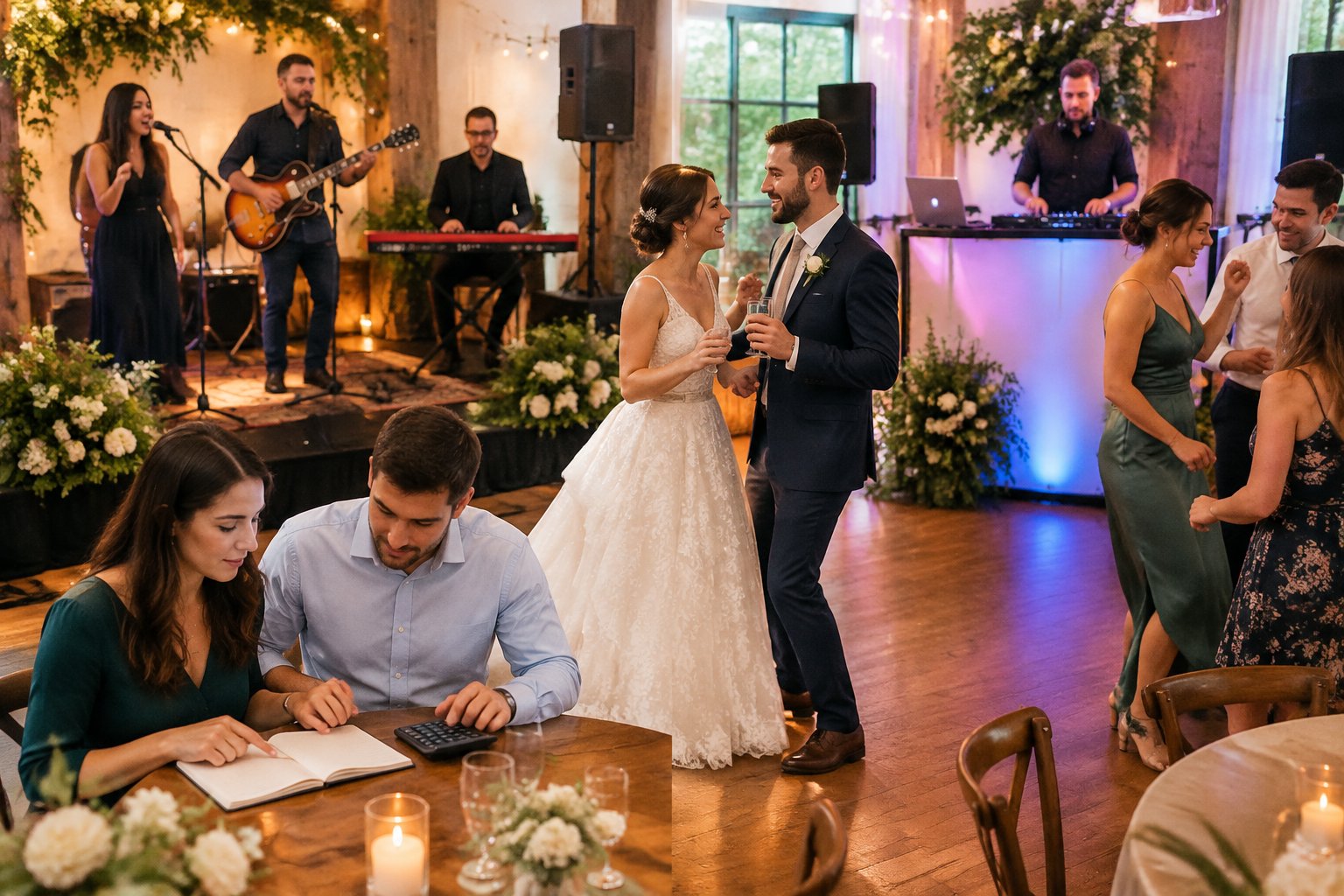
National estimates place live bands at roughly $2,000 to $4,500 on average, with wedding DJs around $1,000 to $1,800. Your local quotes may land outside those ranges, so compare services as well as price.
| What you’re comparing | Live band | Wedding DJ |
|---|---|---|
| Typical U.S. cost | About $2,000–$4,500 | About $1,000–$1,800 |
| Sound | Live musicians | Recorded tracks |
| Music selection | Repertoire and arrangements | Broad song library |
| Breaks | Planned between sets | Continuous playback |
| Stage space | Needed for musicians and gear | Needed for DJ and equipment |
What Wedding DJs Typically Include
A wedding DJ package may include music playback, a sound system, microphones, and announcements as your emcee. Ask whether your quote covers ceremony or cocktail-hour music, lighting, travel, and setup.
Wedding DJs can move between genres quickly and play requested recordings without arranging a live version. If you’re considering that option, think about whether a DJ is worth having at your wedding.
When a DJ-and-Band Combination Makes Sense
A DJ-and-band combination suits you if you want live music for key moments and recorded songs across a wider range of styles. For example, you could book a band for the busiest dance-floor hours and use a DJ for dinner or between sets.
Ask for a combined quote with specific coverage times. Make sure the band and DJ agree on sound levels, set transitions, and who handles announcements so your reception schedule runs smoothly.
Which Entertainment Extras Can Raise the Price?
Extra lighting, microphones, and photo services can add to your entertainment bill, especially when they require separate equipment or staff. Ask which items are included in the base quote before adding upgrades.
Uplighting, Microphones, and Sound Equipment
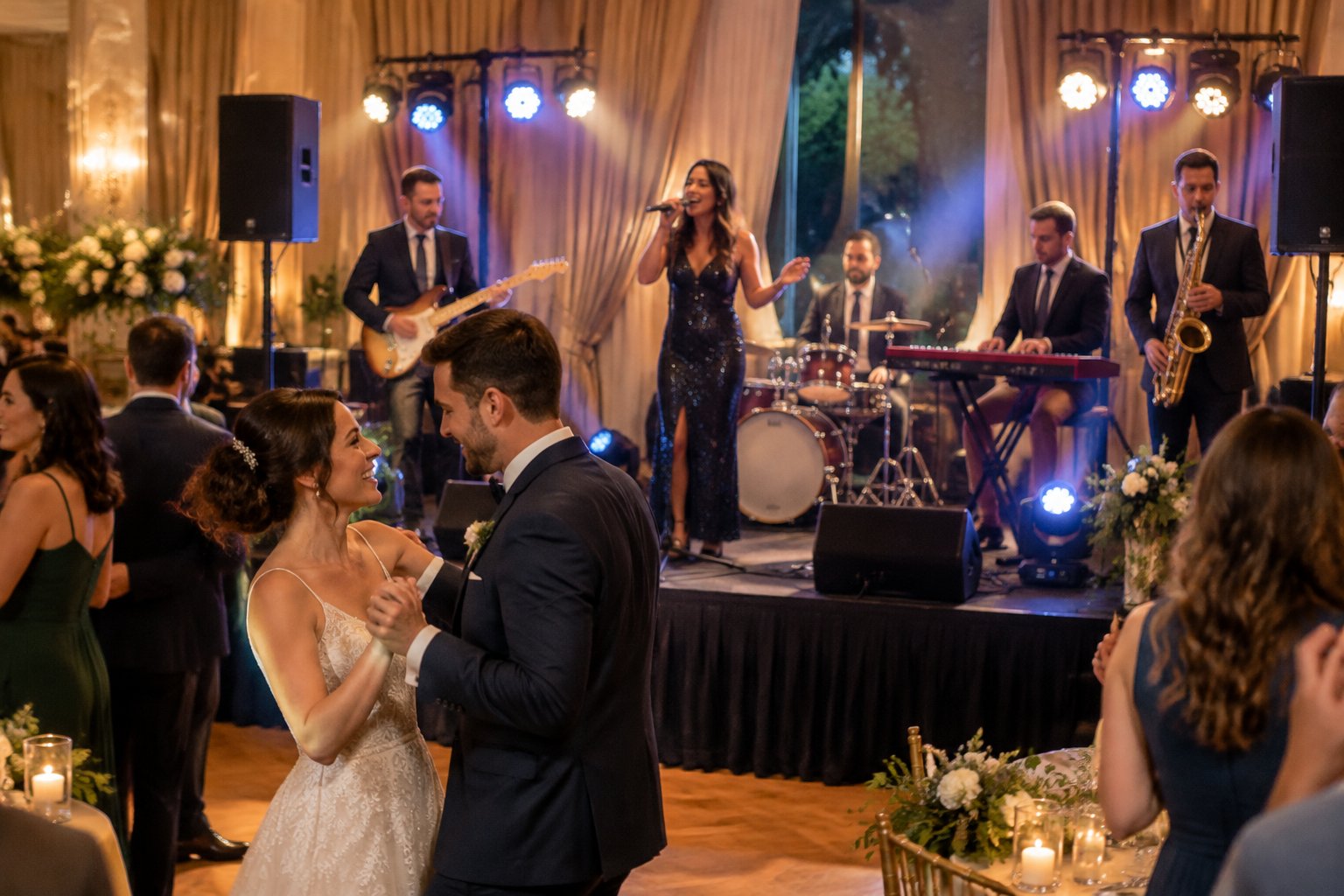
Your band may include speakers, microphones, and basic stage lighting in its fee. Confirm what the package covers, and check whether your venue requires extra sound equipment or has limits on volume and setup.
Uplighting can add color around the room, while extra microphones help with speeches and announcements. Ask whether these are included or rented separately, and confirm who will manage them during the event.
Photobooth and Photo Booth Options
A photobooth or photo booth is a separate entertainment add-on with its own price and space needs. Before booking one, ask what the package includes, such as an attendant, props, prints, or digital copies.
If your entertainment budget is tight, compare the cost of the booth with your other priorities. A shorter booth rental during the busiest part of the reception can help you control the added expense.
How Can You Get the Music You Want Without Overspending?
You can control music costs by choosing the right band size and coverage hours, then sharing clear requests before the contract is signed. Your guest list and musical tastes can guide the setlist without requiring a long list of custom songs.
Share Must-Play Songs and a Do-Not-Play List
Give the band a short list of must-play songs and a clear do-not-play list. Ask whether special requests are included, since learning or arranging a new song can carry an added fee.
Share key songs for important moments, such as your first dance, and let the band know which genres you want to hear. A focused request list gives the band room to plan a set that fits your reception.
Match the Setlist to Your Guests and Musical Tastes
Choose music that reflects your taste and gives different guests a reason to join the dance floor. If hip hop is important to you, ask whether the band performs songs from that genre or can work with a DJ for those tracks.
You can also request a sample setlist and discuss how the band handles guest requests. Before signing, confirm the set length, any song-learning fees, and how the band will manage your must-play songs and do-not-play list.