
How Much Money Do the Groom’s Parents Give? An Insight into Wedding Contributions
When planning a wedding, understanding the financial responsibilities can be tricky, especially for the groom’s parents. Families often wonder how much they should contribute to the overall costs.
Typically, the groom’s parents are expected to pay for about 13% to 24% of the wedding expenses. This can amount to around $4,000 given an average wedding cost of $30,000.

Navigating wedding etiquette is important, and knowing your role can help ease stress. The groom’s parents can feel a mix of excitement and pressure as they consider their contributions.
By staying informed about traditional expectations, you can ensure you honor both your family and the celebratory nature of the event.
In this blog post, you’ll learn more about the typical financial obligations of the groom’s side and how it fits into the larger puzzle of wedding planning. Understanding these details can help you make informed decisions while contributing to a memorable day for everyone involved.
Understanding the Financial Role of the Groom’s Parents

The financial role of the groom’s parents in a wedding can vary based on traditions and current practices. Knowing these responsibilities can help you navigate expectations and contribute positively to your son’s big day.
Traditional Responsibilities
Traditionally, the groom’s parents are expected to cover some specific wedding costs. They often contribute to about 13% to 24% of the overall wedding expenses. This percentage can translate into thousands of dollars, depending on the total budget.
Common contributions may include:
- Engagement Rings: In some families, the groom’s parents assist with costs.
- Ceremony Costs: This could include the venue, officiant fees, or decorations.
- Reception Expenses: Many times, the groom’s family also helps pay for the reception meal and drinks.
These contributions reflect family traditions and the relationship with the couple. It’s essential to discuss expectations with your son and his partner to ensure clarity.
Modern Considerations
Today, the roles of the groom’s parents are evolving. Families now may share the wedding costs more evenly, making discussions about finances even more crucial.
Consider these modern points:
- Open Communication: Have honest talks with your child and the bride’s family about financial roles.
- Budget Planning: Work together to create a realistic budget, considering both families’ contributions.
- Financial Flexibility: Be ready for changes, as costs can fluctuate and financial capabilities may differ.
Your relationship with the couple will play a big role in these decisions. Whether your family has long-standing traditions or you’re creating new ones, aim for a cooperative spirit. This is a joyful occasion, and managing finances together can help strengthen family bonds.
Specific Contributions Typically Made by Groom’s Parents
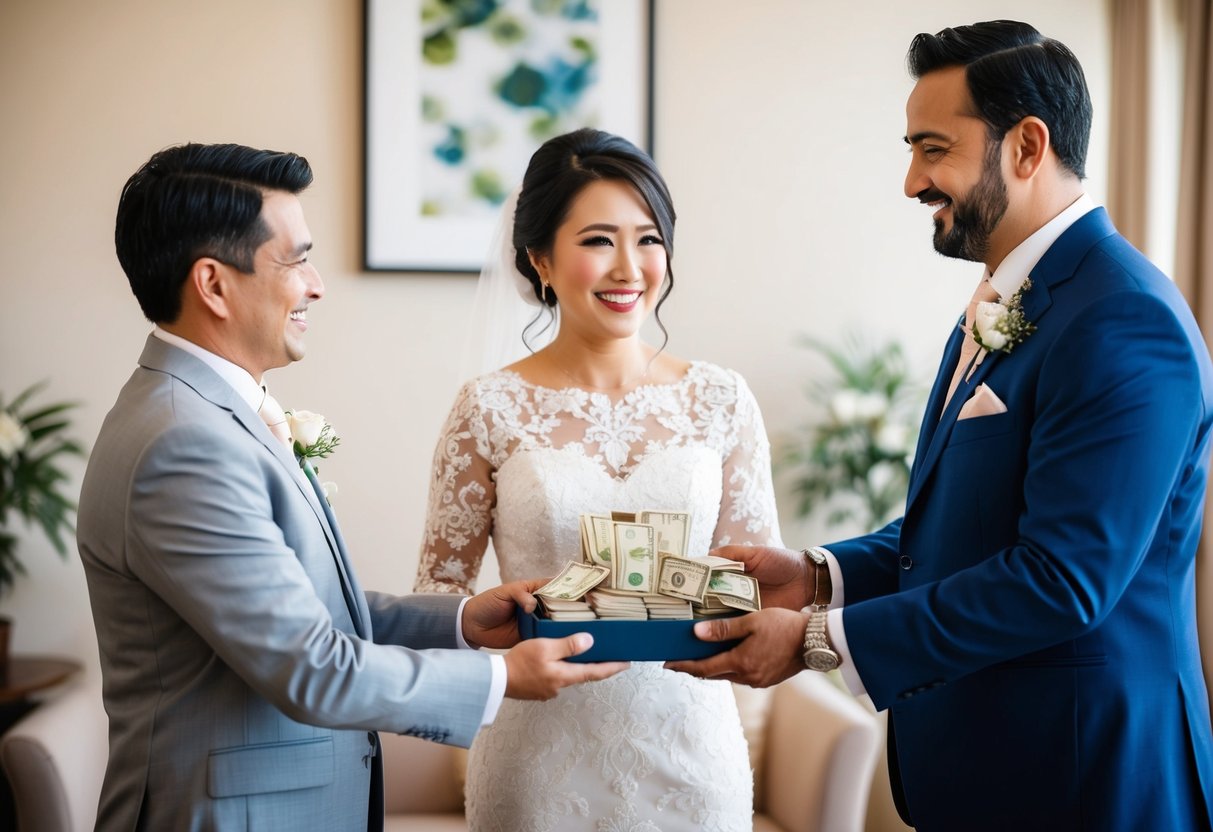
The groom’s parents often have important roles in covering wedding costs. Their contributions can include various expenses related to attire, the rehearsal dinner, and elements of the wedding reception.
Wedding Attire and Personal Flowers
One of the key areas where the groom’s parents contribute is in paying for the groomsmen’s attire. This usually includes suits, ties, and shoes.
In many cases, your parents may also cover the costs of your own tuxedo or suit. It’s typical for them to provide floral arrangements for the groomsmen, like boutonnieres, ensuring everyone looks coordinated.
For the mother of the groom, it’s also common for your parents to assist in costs for her dress and accessories. This helps maintain a cohesive look for both families during the ceremony.
Rehearsal Dinner
The rehearsal dinner is another important event often handled by the groom’s parents. This gathering usually takes place the night before the wedding and serves as a way to thank the wedding party and immediate family.
Costs can include the venue, food, and drinks. Planning this event allows your parents to show appreciation and helps set a celebratory tone for the wedding weekend. You may also consider including invitations and small gifts for attendees in the budget.
Wedding Reception Elements
At the wedding reception, the groom’s parents typically help cover specific costs. They may assist with the officiant’s fee, making sure everything is in place for the ceremony.
Another area could be the music or entertainment for the reception, whether it’s a DJ or a live band. They might also chip in for decorations, which enhance the atmosphere for your special day. Mentioning their contributions here highlights their involvement in creating memorable moments.
Navigating the Wedding Budget

Planning a wedding involves careful negotiation and clear communication. Understanding expenses and contributions is key for the groom’s parents in creating a supportive environment.
Communication With the Couple and Bride’s Parents
Open dialogue is essential. You should discuss how much each party plans to contribute to the wedding budget. Including both the couple and the bride’s parents in these talks helps set clear expectations.
Make a list of who pays for what, including traditional responsibilities. Usually, the bride’s parents take on significant costs, but discussing this upfront can prevent misunderstandings later.
Consider involving a wedding planner to help manage these conversations. A planner can provide neutral guidance and may suggest budget-friendly ideas that work for everyone.
Managing Expenses and Contributions
Managing the wedding budget starts with a clear financial picture. You need to assess your own financial situation first.
Determine how much you can comfortably contribute without strain.
Many groom’s parents typically cover around 13% of the total costs. This can include specific items like the groom’s suit and wedding rings.
Keep track of all expenses in a spreadsheet. This way, you can see where the money is going. It also helps when discussing the guest list and making informed decisions about the venue and catering.
Regular check-ins with everyone involved will help keep everyone on the same page and adjust the budget as needed. Remember, the goal is to celebrate the couple while staying within your means.
Gift-Giving Etiquette and Closing Thoughts

When it comes to gift-giving for a wedding, knowing the right etiquette can make it a pleasant experience. You aim to express love and support for the newlyweds while respecting traditions.
The Gift to the Newlyweds
As the groom’s parents, your gift can vary in type and value. Traditional etiquette suggests that you give a monetary gift or a thoughtful item.
Many parents choose to contribute to the couple’s honeymoon fund, allowing them to create lasting memories together.
If you prefer a physical gift, consider items from their wedding registry. This ensures your gift aligns with what the couple wants.
Remember, the amount isn’t set in stone, but it should reflect your financial comfort and relationship with the couple.
Thank-You Notes and Appreciation
After the wedding, the couple should express gratitude. A thank-you note is a simple yet meaningful way to show appreciation. After gifting, encourage the couple to send you a note, acknowledging your contribution.
These notes should be personal. Include a mention of the gift, how it will be used, or a special memory from the day. A heartfelt message goes a long way in maintaining strong family ties. Ensure that your style reflects your relationship with the couple. This can be more formal or casual.