
How to Keep Wedding Costs Down: Practical Budget Tips
You keep wedding costs down by setting a firm spending cap, keeping your guest count manageable, and putting money toward the parts of the day you value most. A clear wedding budget helps you make those choices before deposits and extra expenses start adding up.

Start with a number you and your partner can pay without taking on debt, then track every quote and payment. Take a few minutes to agree on your top priorities and write down your spending limit before you contact vendors.
Set a Budget You Can Stick To

A wedding budget you can stick to starts with a firm spending cap and a plan to track every expense. Use your guest count and priorities to shape your wedding budget breakdown, and leave room for fees beyond the prices in vendor quotes.
What Is the Average Wedding Cost?
A recent 2026 estimate puts the average U.S. wedding cost at about $34,200. Your own total can land well above or below that figure based on your location, guest count, date, and choices.
Use the average wedding cost as a reference point, not a target. Before you book anything, decide how much you can comfortably spend while keeping your other financial goals in view. If family members plan to contribute, confirm the amount and any expectations before you count that money in your budget.
How Do You Build a Wedding Budget Breakdown?
Build your wedding budget breakdown around your spending limit, then give each expense a clear cap. Include major costs such as your venue and food, plus smaller wedding expenses like postage, tips, alterations, and marriage license fees. A realistic wedding budget accounts for confirmed contributions and leaves a reserve for surprise charges.
Record estimates, quotes, deposits, and final payments in one spreadsheet or budget tool. When a quote changes, update the total and adjust another category before you commit to more spending. This give-and-take approach helps you avoid a string of small overshoots.
Which Wedding Expenses Deserve Priority?
Give priority to the parts of the day you and your partner care about most. You might choose to spend more on a photographer and keep the decor simple, or focus on a comfortable meal and a smaller floral display.
Venue, catering, and drinks can take up a large share of wedding costs, so check their full prices early. Rank your other expenses by importance, then set a limit for each one. That way, a late upgrade in one category prompts a clear choice about where the money will come from.
Can a Wedding Budget Tool Help You Track Spending?
A wedding budget tool can help you see how your spending compares with your plan. A spreadsheet works well if you want to customize categories; a budgeting app may suit you if you prefer entering expenses on your phone.
Choose one place to track all costs, including sales tax, service fees, tips, and vendor overtime. Add the payment deadline beside each deposit so you can see what is due and when. Review the numbers with your partner regularly and update the remaining balances after each payment.
Reduce Costs With Guest Count and Date Choices

A smaller guest list and a less popular date can lower expenses tied to food, seating, rentals, and the venue. Set your guest limit early, then compare date options with the people and vendors you most want involved.
How Does a Smaller Wedding Party Affect Costs?
A smaller guest list reduces the number of meals, place settings, invitations, and favors you need to pay for. It can also make a smaller space practical, which may lower rental and setup costs.
Agree on guest-list rules with your partner before invitations go out. Decide how you will handle plus-ones, children, and distant relatives, then apply those rules consistently. If you need a tactful way to set limits, use clear, warm wording when you politely limit wedding guests.
Your wedding party can affect costs too. If you have a large group, clarify who pays for attire, travel, and beauty services before anyone accepts a role. A smaller wedding party can simplify planning and reduce the number of related purchases.
Can a Weekday Wedding Lower Your Total?
A weekday wedding can lower your total when the venue or vendors offer a lower rate for a less requested date. Ask about Monday through Thursday, as well as Friday or Sunday, and compare the full price with a Saturday quote.
Check whether the date works for the guests you most want to attend. A lower venue rate has less value if key guests cannot make the trip or need extra lodging. Ask vendors for written pricing and confirm the hours included in each package.
When Are Off-Peak Dates More Affordable?
Off-peak dates are often more affordable when venues and vendors have fewer bookings. Ask about quieter months in your area, along with morning or afternoon time slots that may come with different rates.
Compare the date’s full cost, including travel and lodging for your guests. Before paying a deposit, confirm the schedule, cancellation terms, and payment dates in writing. That gives you a clear picture of the commitment before you reserve the day.
Choose a Venue That Fits the Full Budget

The best value comes from a wedding venue whose full cost fits your budget and guest count. Compare rental fees alongside included items, required vendors, and any extra costs for setup or cleanup.
Which Affordable Wedding Venue Options Are Worth Considering?
Community halls, parks, restaurants, and backyards can make an affordable wedding possible. Each option has different needs: a park may require permits, while a backyard celebration might need restrooms, lighting, or a tent.
Look closely at what each space provides, including chairs, tables, parking, staff, and a rain plan. Use a written checklist to compare venues, and ask for a full quote before you decide. If you are discussing the rental price, a respectful request for a wedding venue discount can help you learn whether the date or package has room for savings.
What Costs Should You Check Beyond the Venue Fee?
Check the costs that sit outside the venue fee, including rentals, insurance, permits, staffing, cleaning, and required vendor fees. Ask whether taxes and service charges are included in the quote.
A low rental price can come with extra charges for tables, linens, sound equipment, or a required caterer. Ask the venue for an itemized list of what is included and what you must arrange. Compare the final totals so you can judge each location on the same terms.
Can One Location Save on Rentals and Transportation?
Holding your ceremony and reception at one location can reduce transportation and setup costs. It also gives guests a simpler plan for moving between parts of the day.
Ask whether the space has enough room for both events and whether you can use the same chairs, decor, and sound equipment throughout. Confirm how long you have access to the venue, including setup and cleanup time. A single location saves money when its added hours and services cost less than arranging separate spaces.
Trim Reception, Flowers, and Decor Costs
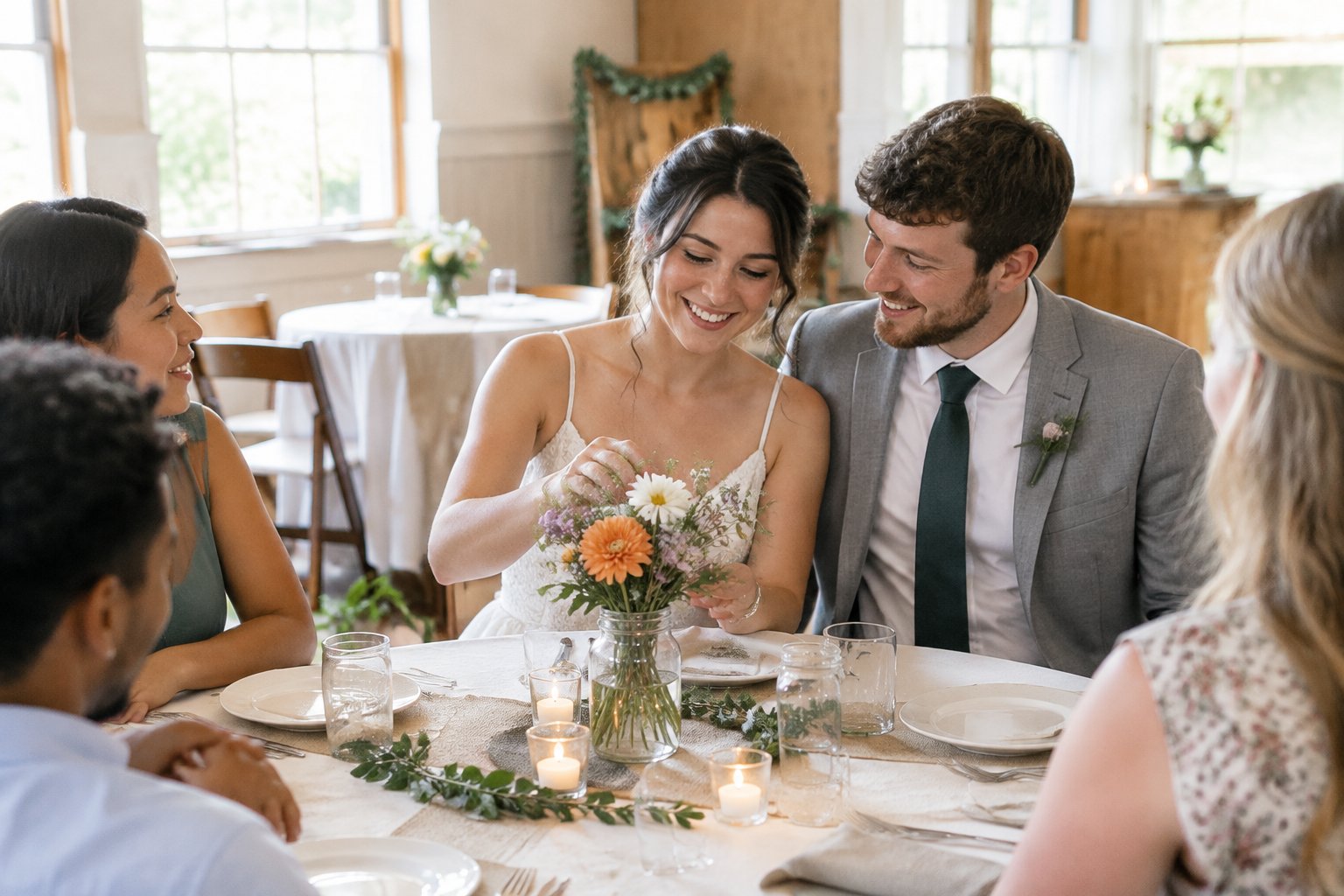
You can trim reception expenses by choosing a simpler menu, setting clear drink limits, and using decor that works with the venue. Ask vendors for complete prices so your savings plan accounts for staffing, rentals, and delivery.
How Can You Save on Catering, Drinks, and the Wedding Cake?
Save on food by asking caterers to price a brunch, lunch, or buffet menu alongside a plated dinner. Check what each quote includes, such as staffing, rentals, and service fees, and compare options against your guest count. For menu ideas that fit a set limit, consider ways to keep food costs down at a wedding.
Set a limit on bar service by offering beer and wine, choosing a short bar window, or serving a signature drink with a nonalcoholic option. Confirm whether the venue allows you to supply alcohol and whether corkage or service fees apply.
A small display cake paired with sheet cake or another dessert can reduce the cake bill. Ask your baker about serving sizes and delivery costs before ordering, and use these wedding cake savings ideas to compare options.
Which Wedding Flowers and Decor Can You Simplify?
Choose seasonal flowers and share your budget with your florist before selecting specific blooms. A few larger arrangements, greenery, or candles can create a finished look with fewer stems. Reuse ceremony flowers at the reception when the layout allows, and ask your florist to explain setup and delivery fees.
Keep wedding decor focused on areas guests will notice, such as the ceremony space and dining tables. A venue with attractive details may need fewer decorations. Set a limit for each decor purchase and keep a record of what you have already bought.
When Does DIY Save Money—and When Does It Cost More?
DIY saves money when the materials, tools, and time cost less than buying or renting a finished item. Small projects such as table numbers or place cards are easier to plan than large builds that need storage, transport, and help with setup.
Price supplies before starting, and include delivery costs and any tools you need to buy. Give yourself a deadline for finishing each project, then compare the total with a vendor quote. If you want to make arrangements yourself, check whether DIY wedding flowers cost less after you count supplies, prep time, and setup.
Save on Attire, Stationery, and Vendors
You can reduce attire and paper costs with flexible shopping choices and digital details, while choosing vendor packages that match the coverage you need. Compare full prices and service terms before you sign or place an order.
How Can You Spend Less on a Wedding Dress?
Set a dress budget that includes alterations, cleaning, accessories, and shipping. Sample sales, rental options, and pre-owned dresses can lower the purchase price, while a simpler style may need fewer alterations.
Ask for an alteration estimate before you buy, especially if the dress needs major changes. Book fittings early and keep the quote with your budget records. You can also look for shoes and accessories you will wear again after the wedding.
Can a Wedding Website Reduce Invitation and Postage Costs?
A wedding website can share event details, travel notes, and schedule updates in one place. Digital save-the-dates and RSVPs reduce printing and postage needs, while a small batch of printed wedding invitations can serve guests who prefer mail.
Keep the website details and invitation wording consistent, including the RSVP deadline and meal choices. If you are sending save-the-dates, compare digital options with ways to save money on save-the-dates before choosing a format.
How Can You Find Value in a Wedding Photographer or Planner?
Find value by choosing a photographer or wedding planner whose package covers the services you need. For a photographer, compare hours of coverage, edited images, delivery timing, travel fees, and overtime rates. You can select coverage for the ceremony and portraits if full-day service exceeds your limit.
For a planner, ask whether the fee covers full planning, month-of coordination, or a single consultation. Match the service to the help you need and confirm any extra charges in writing. A clear package makes it easier to compare vendors and avoid paying for services you will not use.
Which Wedding Favors and Stationery Can You Skip or Simplify?
Wedding favors and extra stationery are optional expenses, so set a per-guest limit before you shop. You can skip favors or choose a small edible item that fits your budget.
Keep printed stationery to the pieces you want guests to receive by mail. Share extra directions and schedule updates on your wedding website, and confirm that every printed item has a clear purpose before placing the order.