
How to Pick a Photographer for Your Wedding: A Practical Guide
To pick a photographer for your wedding, choose someone whose work matches your preferred style, whose full galleries show steady quality, and whose approach and contract fit your plans.

Your wedding photos will preserve moments you experience in a rush, from the ceremony to the last dance. Start by saving photos you love and noting what draws you to them, then use those preferences to guide your search.
If you’re still shaping the look of your day, explore how to define your wedding style and save a few images to discuss with photographers.
Choose a Photography Style That Feels Like You
Your preferred wedding photography style gives you a clear starting point for finding a photographer whose work you’ll enjoy revisiting. Look at how each photographer handles movement, portraits, color, and emotion, then consider how your venue and light will shape those images.

Which Wedding Photography Styles Should You Compare?
Compare documentary, traditional, editorial, and fine-art work to see which approach feels right for you. Documentary photos focus on moments as they unfold, while traditional photography gives you clear, posed portraits. Editorial images use more direction and dramatic composition. Fine-art work often has a soft, bright look.
Many photographers blend styles across the day. You might want candid coverage during the reception alongside guided portraits and family photos. Look through a photographer’s portfolio and ask how they describe their approach.
Then compare it with wedding photography ideas that match the mood you want. Pay attention to the photos you save most. If you like natural expressions and movement, seek galleries with plenty of candid moments.
If you prefer polished portraits, look for photographers who give clear posing direction. Keep your saved examples focused so you can explain your preferences without expecting a photographer to copy another person’s work.
How Will Your Venue and Lighting Shape the Photos?
Your wedding venue affects the backgrounds, available light, and space your photographer will work with. A bright outdoor ceremony calls for different choices than a candlelit ballroom, so ask to see galleries from settings with similar light and layouts.
Consider the season and time of day, too. Direct midday sun creates strong shadows, while a late-afternoon ceremony may offer softer light. Indoor receptions can shift from window light to dim dance-floor lighting in a few hours.
Ask how the photographer handles each setting and whether they bring lighting equipment for darker spaces. If you’re still deciding where to celebrate, choosing a wedding location can help you weigh the setting alongside your photo plans. Share your venue, ceremony time, and any access limits with photographers before you book.
Find and Shortlist Local Photographers
Build a shortlist of local wedding photographers by combining personal referrals with online searches, then check each photographer’s experience, availability, and fit with your plans. A focused list makes it easier to compare real galleries and ask useful questions.

Where Can You Find Photographers in Your Area?
Ask recently married friends or family members which photographers they hired and what the experience felt like. Your venue coordinator and other wedding vendors may also know photographers who have worked at your location. Online directories and local search results give you more names to explore.
Search by your city or region, then check whether each photographer regularly covers weddings near your venue. Travel fees and local knowledge can affect your plans, especially if the ceremony and reception take place in separate locations. If you have a specific style in mind, search for that style along with your area.
Make a shortlist of four to six photographers whose portfolios appeal to you. Record their availability, starting prices, and package details so you can compare them with the same information in front of you.
What Should You Check Before Reaching Out?
Check that each photographer has worked at real weddings and shares complete work from full days. Read recent client reviews for details about communication, timing, and how the photographer helped couples feel at ease. Confirm that the photographer’s style suits your taste before you spend time arranging a consultation.
Send a brief inquiry with your date, venue, estimated guest count, and the parts of the day you want covered. Ask whether the photographer is available and request a pricing guide or package details. You can also note any priorities, such as family portraits or an outdoor ceremony.
Before your call, list the people and group combinations you want photographed. A wedding day photo checklist can help you organize those requests and share them with your photographer.
Review Complete Galleries, Not Just Highlights
A full wedding gallery shows how a professional wedding photographer covers an entire day, including changing light, busy moments, and quieter scenes. Review at least one complete gallery before you decide, and ask for another if you want to see a different venue or lighting setup.
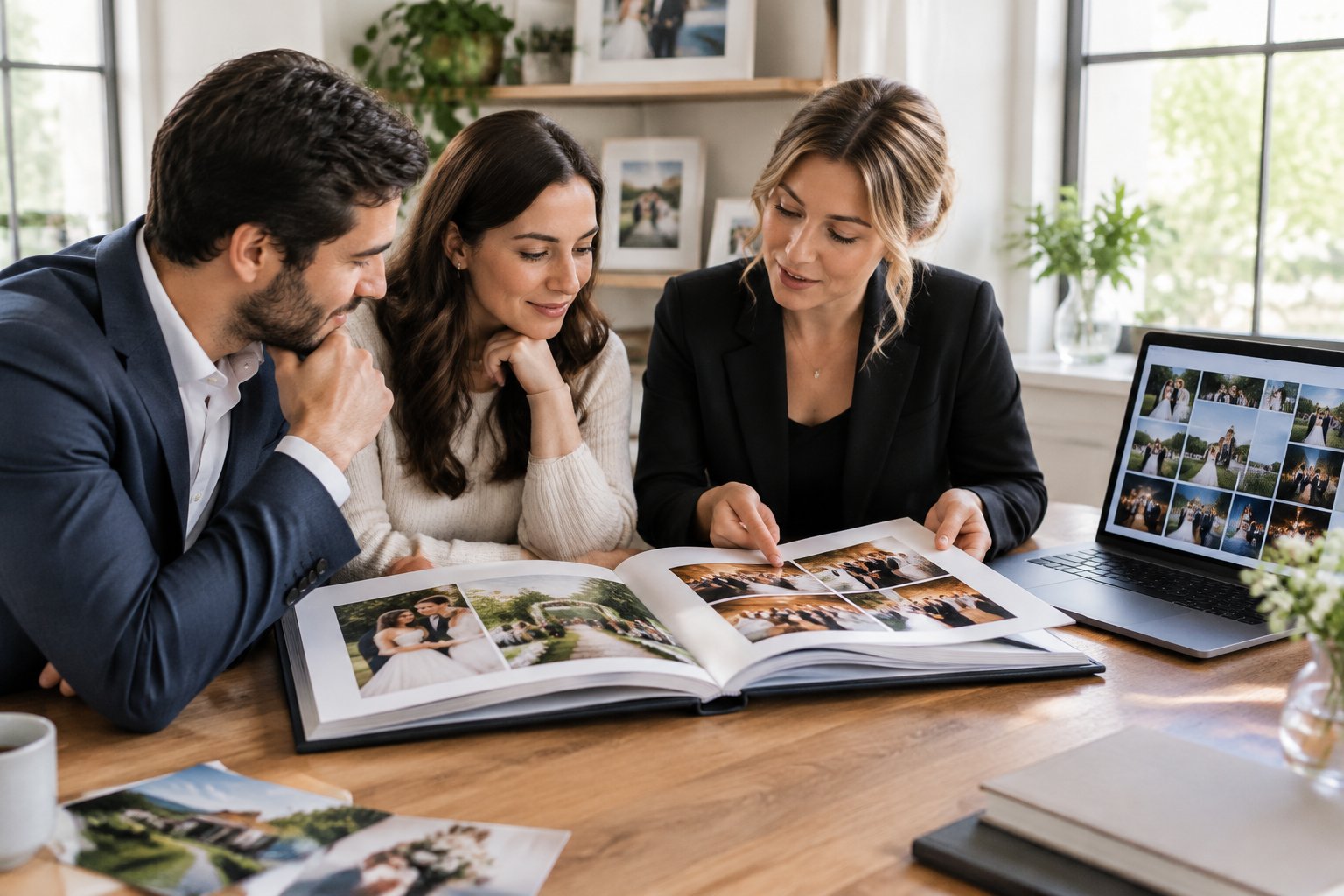
What to Look for in a Full Wedding Gallery
Follow the gallery from the start of the day through the reception. Notice whether the photos tell a clear story, with a mix of wide views, portraits, candid moments, and details. Look for family interactions and small moments that help you remember how the day felt.
Check whether couples and guests look comfortable. A gallery with varied expressions and natural movement can show how the photographer guides people while leaving room for real moments. Consider whether the portraits feel like images you’d want to keep and share.
Ask how many edited images the package includes and whether the photographer selects the final set. Each photographer has a different editing process, so ask whether wedding photographers deliver every image and what “edited” means in their agreement.
How to Assess Consistency in Different Lighting
Compare the photographer’s images from outdoor daylight, indoor spaces, and evening receptions. Look at skin tones, color, focus, and exposure across the gallery. A consistent editing style should feel cohesive while still responding to the light in each setting.
Pay close attention to the ceremony and dance floor, where light can change quickly. Check whether important expressions remain clear and whether details in the background distract from the moment. Ask how the photographer plans for low light at your venue, including any flash or other equipment they use.
A gallery from a venue like yours can help you judge how the photographer handles similar conditions. If they have not worked there, share a floor plan or ask them to review the space before the wedding.
Meet Your Favorites and Check the Personal Fit
Meet your favorite photographers before booking so you can discuss their approach, experience, and the way they’ll work with you on the wedding day. A comfortable working relationship helps you feel more at ease during portraits and candid coverage.

What to Ask About Their Approach and Experience
Ask who will photograph your wedding and how many weddings they have covered. Find out how they’ll guide portraits, coordinate with your planner, and handle a schedule that changes. If your day includes special traditions or family needs, explain them and ask how the photographer will work them into the coverage.
Notice how the conversation feels. You should be able to ask questions and share your priorities without feeling rushed. Ask about communication before the wedding, who you’ll contact with planning updates, and what happens if the lead photographer becomes ill.
Talk through your preferred balance of posed portraits and candid photos. If you have examples, explain what you like about them, such as soft light or relaxed expressions. Your photographer can then describe how they’ll apply that direction to your day.
Do You Need a Second Shooter?
A second shooter gives you coverage from another photographer’s viewpoint. This can help when you and your partner are getting ready in separate places, when the ceremony has a large guest list, or when you want photos of several moments happening at once.
Ask what the second shooter will photograph and whether they work with the lead photographer regularly. Confirm who edits the images and whether both photographers’ work will be included in your final gallery. If your wedding has one getting-ready location and a compact schedule, ask how the lead photographer would cover the day on their own.
Can an Engagement Session Help You Feel Comfortable?
An engagement session lets you practice being photographed before the wedding and learn how your photographer gives direction. You can see how the photographer works with movement and natural expressions, then share what felt easy or awkward.
Ask whether engagement sessions are included in the package, how long the session lasts, and where you can take the photos. If a session interests you, browse pre-wedding photo session ideas and pick a location or activity that feels familiar. You’ll get a chance to see how the photographer communicates before your wedding portraits.
Compare Packages, Costs, and Contract Details
Compare wedding photography packages by coverage hours, photographer count, deliverables, and contract terms. A clear, itemized proposal helps you see what you’re paying for and whether the package covers the parts of the day you care about.
What Do Wedding Photography Packages Include?
Packages may include a set number of coverage hours, one or more photographers, edited digital images, an online gallery, or printed products. Some include an engagement session or an album. Read the package details closely because names such as “full day” can mean different coverage lengths.
Compare the total cost alongside what each package includes. Ask about travel fees, overtime rates, taxes, and optional upgrades. A lower starting price may reflect fewer hours or fewer included products.
For help weighing the expense against your priorities, consider the value of hiring a wedding photographer.
Which Coverage, Deliverables, and Backup Policies Matter?
Choose coverage around your timeline. Decide whether you want getting-ready photos, a first look, family portraits, the ceremony, dinner, and dancing captured. Share the schedule with each photographer and ask how many hours they recommend for the moments you’ve chosen.
Before signing, check the contract for the delivery timeline, image format, gallery access period, print rights, cancellation terms, and overtime fees. Ask how your photos will be backed up during the wedding and after it.
Confirm the plan for a photographer’s emergency absence and whether a replacement would have a similar style. Your agreement should list the date, location, coverage hours, photographer names, payment schedule, and promised deliverables. Ask for any verbal promises to be added in writing, then keep a signed copy with your wedding records.