
How to Pick a Wedding Videographer: A Practical Guide
To pick a wedding videographer, choose someone whose films move you, whose full-length work shows strong storytelling and clear audio, and whose approach fits your wedding day. Your wedding video preserves voices, movement, and moments that still photographs cannot capture, so review the work and the experience you can expect before you book.
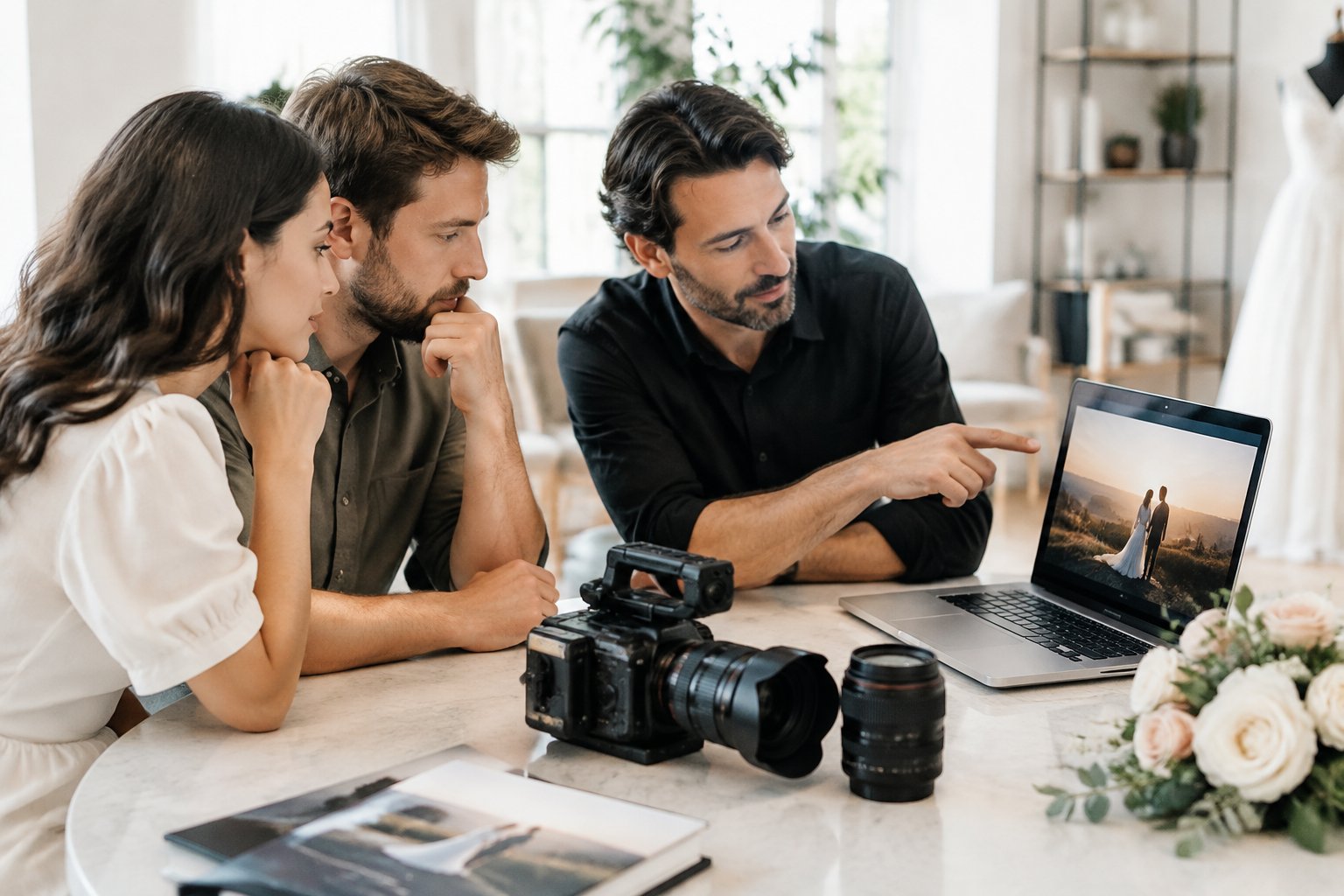
Start with the parts of the day you most want to remember, then use those priorities to guide your search. You can also decide what to prioritize when planning your wedding before comparing packages. Write down your must-have moments and take that list to your first consultation.
Decide What You Want Your Wedding Film to Feel Like
Choose a wedding film style that matches the way you want to remember your day. Your preference will help you assess a cinematic wedding video, documentary coverage, and the moments you want included.

Use your favorite films as a starting point, then consider how much direction you want during the day. A clear picture of your wedding’s mood and priorities makes it easier to compare wedding videography styles.
Which Videography Style Fits You Best?
Documentary wedding videography follows events as they happen, with little posing or staging. A cinematic wedding video may use deliberate framing, music, and editing to shape the story. Some videographers blend both approaches, capturing real moments while giving the finished film a polished feel.
Watch a few examples and notice what holds your attention. Do you enjoy natural conversations and candid reactions? Do you prefer dramatic movement and carefully composed scenes? Your answer can help you work out your wedding style and find a filmmaker whose work feels like a good match.
Ask how much direction to expect during portraits, a first look, or other private moments. A filmmaker who explains their approach clearly gives you a better sense of how comfortable you’ll feel on camera.
Which Moments and Events Matter Most?
List the moments you want your videographer to capture, then use that list to shape your coverage plan. Your priorities might include getting ready, the ceremony, family toasts, or dancing late into the evening.
Think about the sounds you want in your wedding film, too. You may want the complete vows and speeches, brief audio highlights, or a mix of live sound and music. If music plays a central role, consider how you’ll choose a song for your wedding and ask how the videographer handles music licensing.
How Can You Judge a Videographer’s Work?
Judge a videographer’s skill by watching full wedding films and listening closely to their sound. A highlight reel shows selected moments, while a full wedding film reveals the pacing, coverage, and editing you can expect across a complete event.

Ask to see full films from weddings with a similar size, setting, or timeline to yours. Pay attention to the finished story and the videographer’s consistency across different conditions.
Why Watch a Full Wedding Film?
A full film shows how the videographer handles the quieter stretches between major events. You can see whether the story feels coherent from the preparations through the reception, and whether key moments receive enough time.
Ask to watch a full ceremony or a longer film from start to finish. Notice how the filmmaker handles transitions, speeches, and pauses. A polished short reel can be compelling, while the full film gives you a clearer sense of the actual viewing experience.
What Should You Listen and Look For?
Listen for clear vows, speeches, and natural room sound. Watch for steady footage, visible faces in dim settings, and varied framing that helps you follow the action.
Sound deserves special attention because a beautiful image cannot replace a missed vow or muffled toast. Ask how the videographer records audio and what backup methods they use. You can also plan for clear audio at your wedding by coordinating microphones and sound access with your venue or officiant.
How Consistent Is Their Work Across Venues?
Look for work filmed in settings that resemble yours, such as a bright outdoor ceremony, a dim reception hall, or a small indoor venue. Strong examples show that the videographer can adapt to changes in light and space while keeping the film’s style consistent.
Ask how they prepare for your venue and timeline. If they have not filmed there before, ask how they learn about the layout, lighting, and any filming rules before the wedding.
Find Someone You Trust to Work With
Choose a wedding videographer whose work you admire and whose presence feels comfortable. Their judgment, communication, and coordination with your wedding photographer and wedding planner all shape the experience on the day.

Your videographer will be close by during personal and emotional moments, so pay attention to how they listen and respond. A conversation about their process can help you picture what working together will feel like.
What Experience and Approach Should You Look For?
Ask how many weddings they have filmed and what they do to keep the day moving smoothly. Experience can show in their ability to anticipate important moments, adapt when the schedule shifts, and work discreetly around your guests.
Ask who will film your wedding, especially if you are speaking with a studio or team. Confirm whether the person you meet will be there on the day, and ask how the team handles illness or other unexpected changes.
How Do They Collaborate With Your Photographer and Planner?
Ask how the videographer coordinates with your wedding photographer and planner before and during the event. A shared timeline helps the team prepare for key moments and avoid crowding the same space.
Discuss how each vendor works during the ceremony and portraits. You can also consider how wedding photography fits your budget when setting priorities for both photo and video coverage.
When Is a Second Shooter Worth It?
A second shooter can capture another angle or a separate moment at the same time. This is useful during a ceremony, when you may want footage of both partners’ reactions, or when preparations happen in different locations.
Ask whether the second shooter is included in the package and what they will cover. The number of cameras also affects how a team records simultaneous moments, so ask how many cameras they use for your ceremony and how many cameras a wedding video may need.
How Much Do Wedding Videography Packages Cost?
Wedding videography packages vary by location, coverage time, team size, and final deliverables. A 2026 national estimate puts the average at $3,993, with many couples spending between $3,200 and $4,800; local quotes can differ.
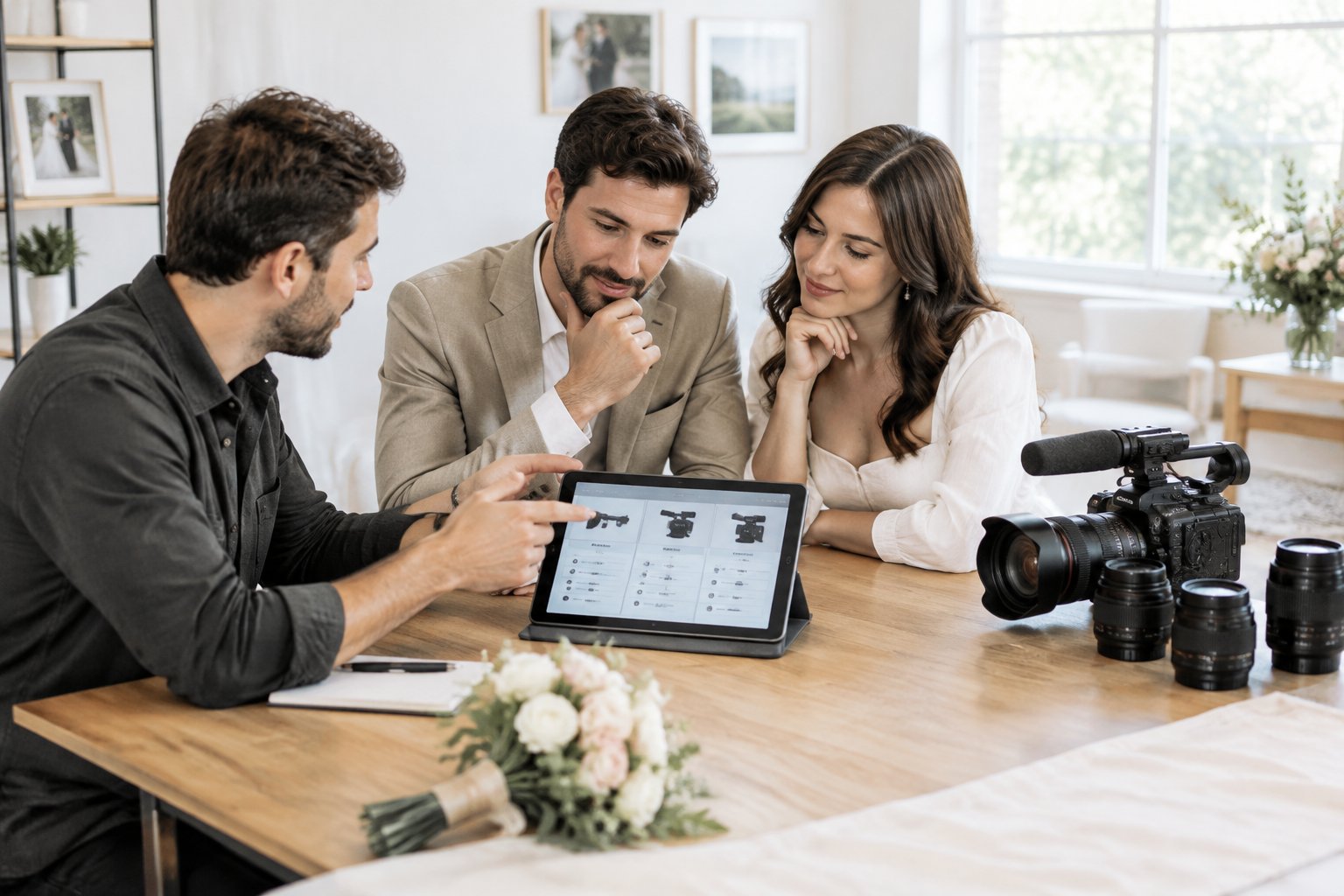
Compare packages by what they include, then weigh those details against your budget and priorities. A shorter package can fit a focused timeline, while longer coverage may suit a day with events spread across several hours.
What Deliverables and Coverage Are Included?
Check the number of coverage hours, the number of videographers, and the finished videos included. Packages may include a short highlight film, a longer wedding film, ceremony footage, speeches, or social-media edits.
Ask whether travel, overtime, raw footage, and extra edits cost more. Confirm how the finished videos will be delivered and whether the package includes digital access or physical media. Clear details make package comparisons easier.
Which Package Fits Your Budget and Priorities?
Choose a package that covers the moments you care about most. If vows and toasts are your top priorities, make sure the coverage plan gives the team time to record them clearly. If you want getting-ready footage and late-night dancing, check that the start and end times include both.
You can manage costs by choosing fewer coverage hours or selecting only the deliverables you expect to watch. Ask for an itemized quote so you can compare the price of any add-ons before deciding.
What Should You Confirm Before Booking?
Confirm the service, price, delivery plan, and backup arrangements in writing before you reserve your date. Clear answers help you know who will film your wedding and what you will receive afterward.
What Questions Should You Ask on a Consultation Call?
Ask questions that clarify the videographer’s approach and your day-of plan:
- Who will film the wedding, and how do you handle a last-minute replacement?
- How do you capture vows, speeches, and other important audio?
- What coverage hours and deliverables are included?
- How do you coordinate with the photographer and planner?
- What happens if the reception runs past the scheduled end time?
Notice whether the answers are specific and easy to follow. Use the call to share your priorities and ask how the filmmaker would approach them.
How Are Footage, Delivery, and Backup Handled?
Ask how footage is recorded and backed up during the event, and how files are stored after filming. Find out whether raw footage is included, how long editing takes, and how you will receive the finished wedding film.
Confirm the delivery window and the process for requesting edits. Ask how long your online gallery or download link will remain available, and whether you can save a personal copy for safekeeping.
What Should the Contract Spell Out?
Review the contract for the wedding date, venue, coverage hours, price, payment schedule, and included deliverables. It should also explain overtime charges, cancellation terms, rescheduling, delivery timing, and what happens if the assigned videographer cannot attend.
Check the terms for music use, personal sharing rights, and any permission to use your film in the videographer’s portfolio. Ask for clarification before signing whenever a term feels unclear.