
How to Transport Guests at a Wedding: A Practical Plan
You can transport wedding guests most reliably by grouping riders around shared pickup points and arranging a timed shuttle for routes with long drives, limited parking, or late-night returns. A clear plan helps your guests arrive on time and gives you fewer travel details to manage on the wedding day.
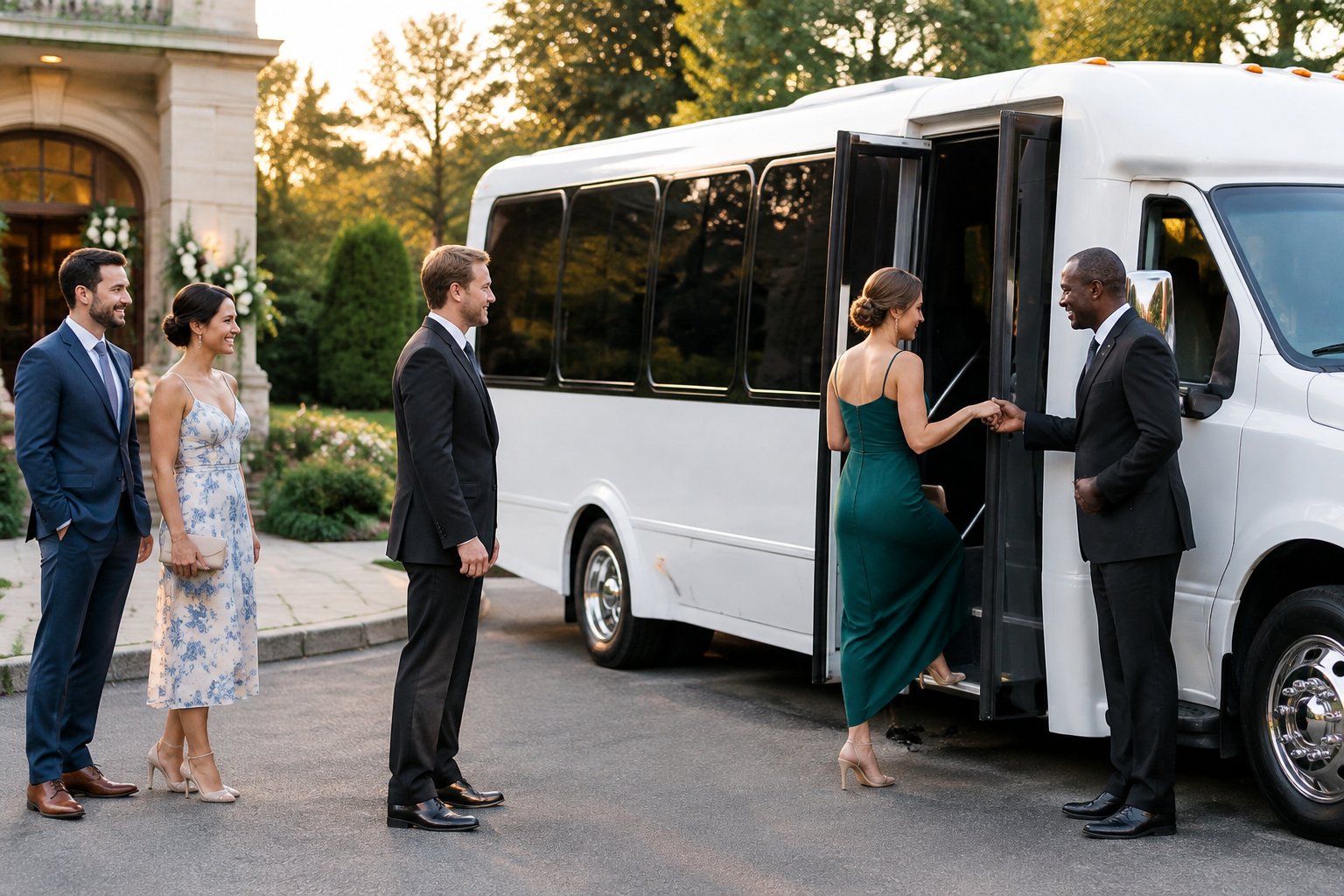
Start by asking where your guests are staying and checking your venue’s access and parking rules. Once you have those details, you can decide whether a shuttle, public transit, or guest-arranged rides will work best.
When Should You Arrange Guest Transportation?
Arrange wedding transportation when travel could make it hard for guests to arrive on time or get home safely. A shuttle is especially useful for remote venues, limited parking, a long trip between ceremony and reception, or a celebration with a late finish. Your wedding guest transport plan can also focus on guests who need extra help getting around.
Who Is Most Likely to Need a Ride?
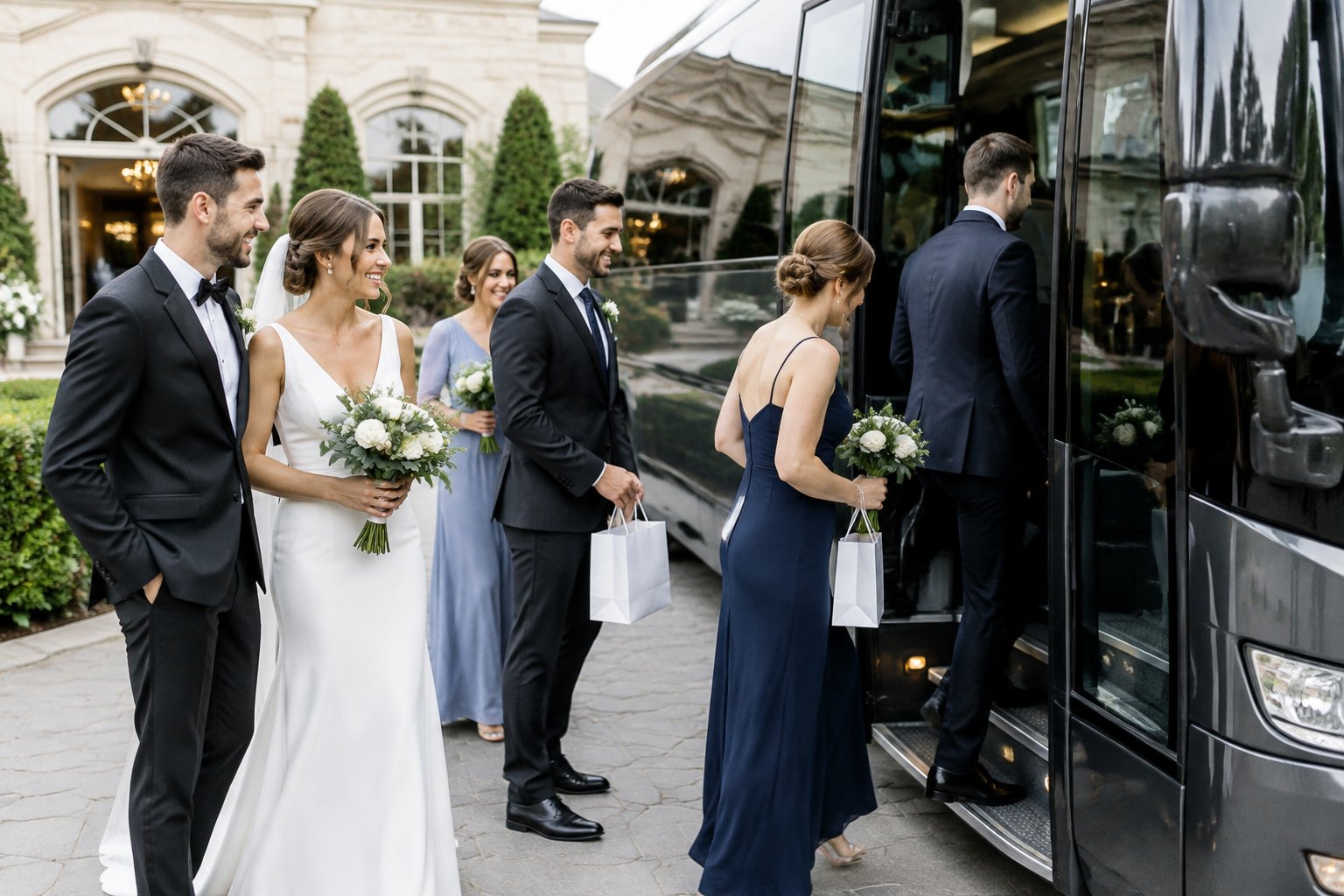
Guests traveling from out of town, older relatives, and guests without a car are good starting points when you assess who needs a ride. You can also consider guests who plan to drink at the reception and people with mobility needs.
Ask about transportation needs on your RSVP form so you can estimate how many seats to reserve. Set a clear RSVP date with guidance on when guests should RSVP for a wedding.
You do not need to cover every guest’s trip from home. Focus your plan on the shared journeys, such as a hotel-to-venue shuttle or a transfer between ceremony and reception sites.
How Do Distance, Location, and Parking Affect the Decision?
A shuttle is a strong choice when your venue is far from guest lodging, sits outside a walkable area, or has little parking. Check the route with your venue and transportation provider, including any limits on bus size, turning space, loading zones, or drop-off points.
If your celebration is a destination event, give guests time to plan their travel and read up on how much notice to give guests for a destination wedding. When venues sit close to hotels and public transit, guests may be able to manage their own travel. Make that choice easier by sharing clear directions and a backup option for the trip home.
Which Transportation Options Work Best?
A shuttle works well for moving many guests on a shared route, while public transit and ride-sharing services suit some locations and schedules. Your venue, guest count, route, and return plans help you choose a mix that fits the day.
When Is a Guest Shuttle the Best Choice?
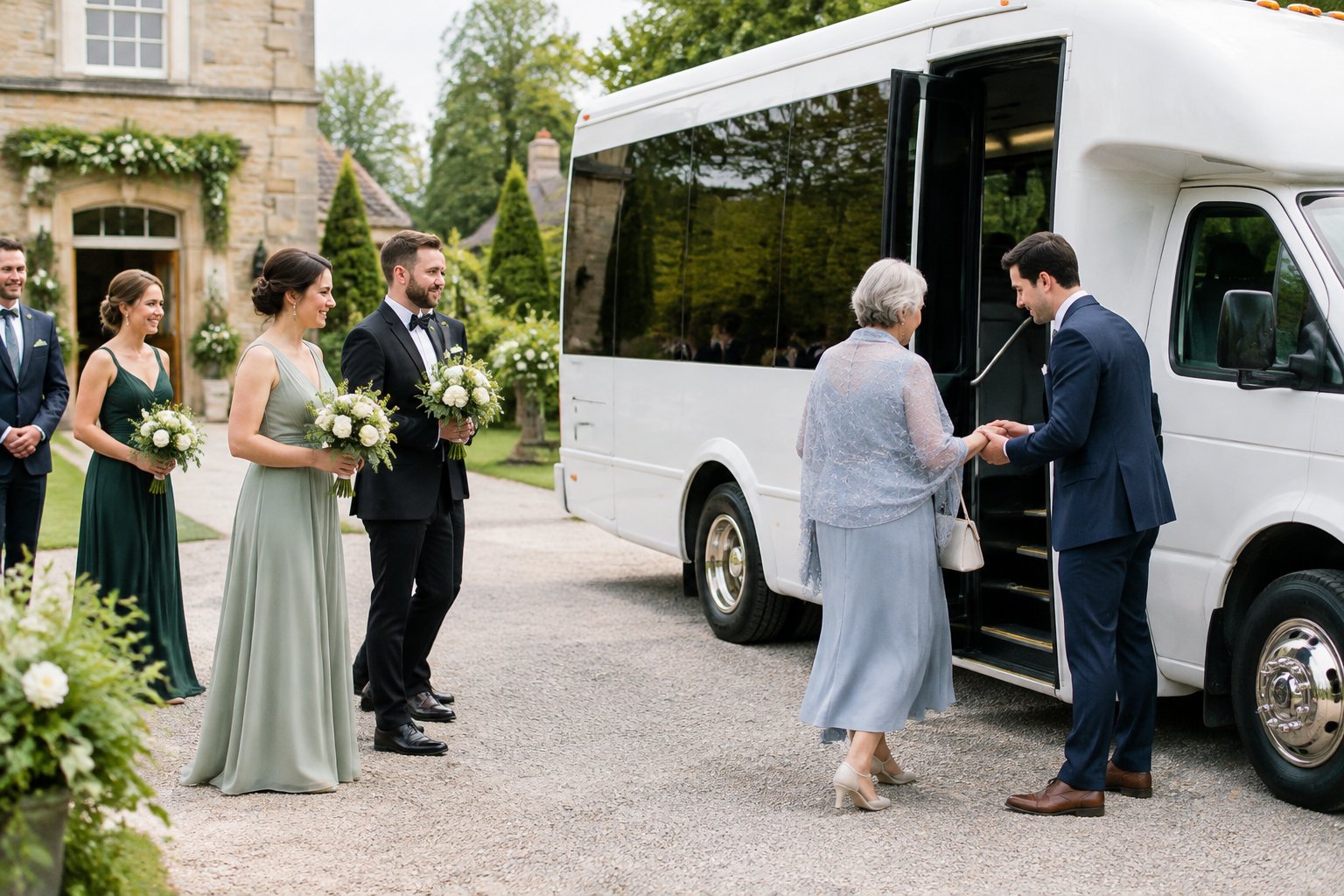
Choose a guest shuttle when many people will travel from the same hotel or when parking is limited. A shuttle keeps riders together and gives you more control over arrival and departure times. For a large group, compare vehicle sizes and ask how many runs the provider needs to complete the route.
A minibus may fit a smaller group or a venue with a tight entrance. A larger coach can carry more riders at once, which can reduce the number of trips. Confirm passenger capacity with the provider, and leave room for guests who need extra space or assistance boarding.
Can Guests Use Public Transportation or Ride-Sharing Services?
Public transportation works well when routes run near your venue and service hours match your event schedule. Share station names, walking directions, fare details, and the last train or bus time.
For ride-sharing services, confirm that drivers can reach the venue and that guests can request rides at the end of the night. In busy areas, guests may have several transportation choices. At a rural venue or during a high-demand weekend, rideshare pickup times and availability can be less predictable.
Give guests a clear backup plan, such as a reserved shuttle or local taxi contact.
When Does a Horse-Drawn Carriage Make Sense?
A horse-drawn carriage suits a short, scenic ride or a memorable entrance for the couple. It is not a practical way to move a large guest group, so pair it with another option if guests also need transportation. Check the route, timing, weather plan, and venue rules with the provider before booking.
For the wedding party, a separate car can make arrival easier to coordinate. If you are choosing a vehicle for that role, consider which car works best for a wedding based on passenger needs and the route.
How Do You Build a Reliable Transportation Plan?
Build your wedding transportation plan around where guests start, when they need to arrive, and where they will go after the reception. Then match pickup points and vehicle capacity to those trips. A written schedule helps your drivers, venue team, and wedding coordinator work from the same details.
How Should You Organize Guest Counts and Pickup Points?
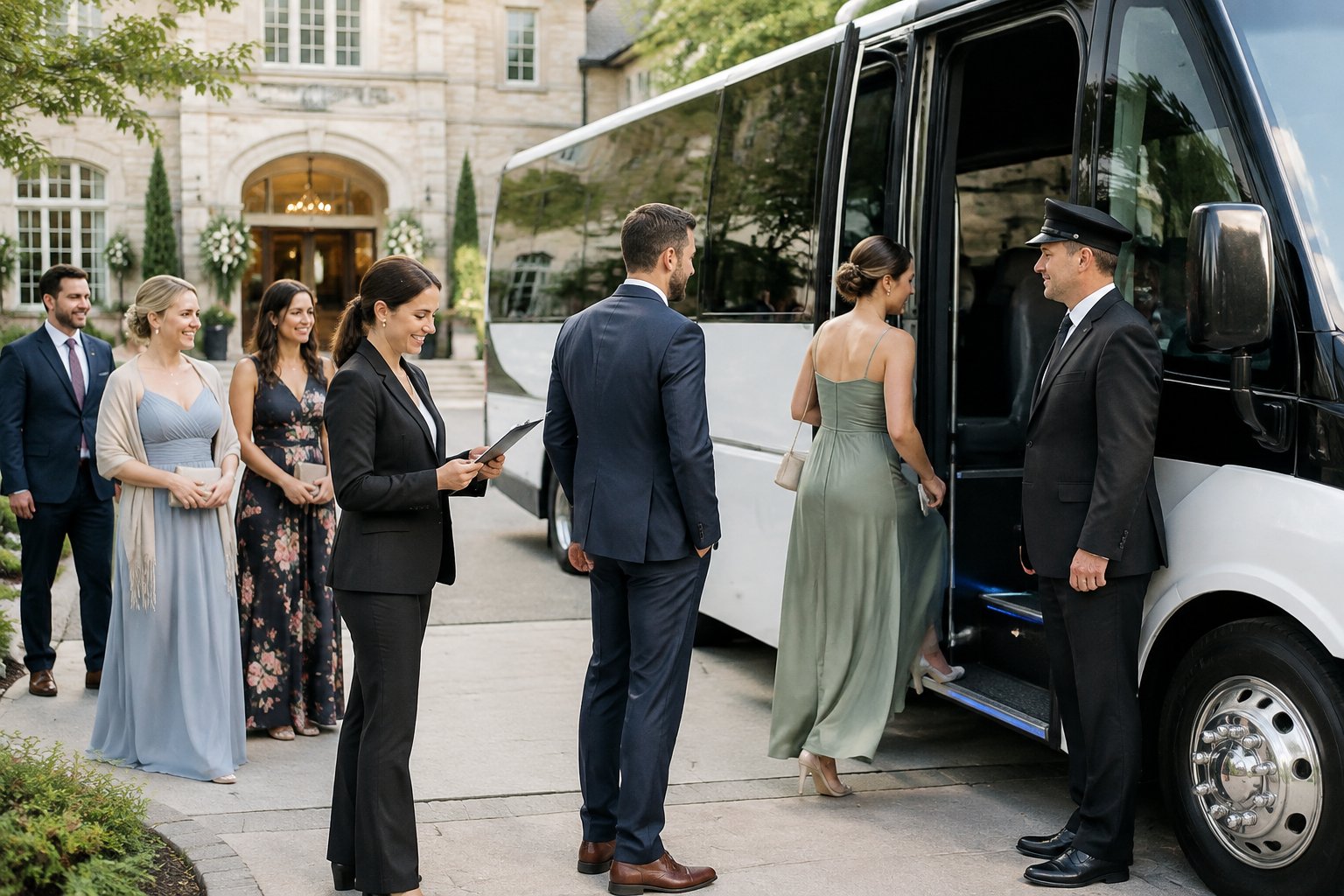
Group guests by hotel or other shared starting point, then estimate how many will ride from each location. Ask guests about lodging and transportation needs as part of your RSVP process, and update your count as responses arrive.
For a destination celebration, use guidance on calculating a destination wedding guest count to help set realistic numbers. Choose pickup points that guests can find easily, such as a hotel entrance or a marked area near the venue. Share the exact location with your transportation provider and assign a coordinator or trusted helper to answer day-of questions.
How Much Travel and Buffer Time Should You Allow?
Work backward from the time guests should be seated, then allow time for loading, traffic, and walking from the drop-off area. Ask your provider for an estimate based on the route and time of day.
Build in a buffer that reflects local traffic and the number of stops, rather than relying on the shortest possible drive time. If guests are arriving at an airport, account for time to collect bags and reach the pickup point. Keep airport transfers separate from the main guest shuttle when arrival times vary.
How Do You Coordinate Rides With the Wedding Day Timeline?
Put each trip on your wedding day timeline, including the first pickup, venue arrival, any transfer between sites, and the return schedule. Confirm that shuttle departures leave enough time for guests to reach their seats before the ceremony. Give the driver a contact for the day and share the schedule with your venue team.
Plan return trips before the reception begins. You can offer an early departure for guests who want to leave sooner, followed by later runs after the event ends. Check the venue’s closing rules and confirm when drivers should arrive.
How Much Should You Budget and When Should You Book?
Set your wedding guest transportation budget after you know the routes, rider count, and service hours. Booking four to six months ahead gives you time to compare vehicles and confirm availability, with earlier planning helpful for popular dates and busy seasons.

What Affects the Cost of Guest Transportation?
The main cost factors include vehicle size, distance, number of stops, rental hours, and how many return trips you need. Ask providers whether the quote includes driver time, mileage, waiting time, gratuity, and any minimum rental period. A written quote makes it easier to compare providers and account for extra charges.
You can keep costs manageable by choosing central pickup points and matching vehicle capacity to the rider count. Include transportation as a line in your wedding budget so the service does not become a last-minute expense.
When Should You Reserve Vehicles?
Start contacting providers once you know your date, venues, and likely routes. Aim to reserve vehicles around four to six months before the wedding, then confirm your final headcount and schedule as the day approaches.
If you are mapping out when to start booking wedding services, include transportation in your early vendor planning. Before you sign, review the vehicle capacity, pickup and drop-off locations, service hours, payment terms, and cancellation policy. Confirm the final details with the provider a few weeks before the event.
How Can You Make Travel Easy for Every Guest?
Give guests one clear set of travel instructions and plan for accessibility and safe returns. Your wedding guest transport details should spell out exactly where to go, when to be there, and whom to contact if plans change.
What Details Should You Share Before the Wedding?
Send transportation details with your wedding website or guest email, then repeat key information close to the date. Include the pickup address, exact meeting point, departure time, route or stop order, and return options. Tell guests whether seats need to be reserved and whether the shuttle serves all guests or only certain hotels.
Use specific times and locations, such as “meet at the hotel’s main entrance by 3:45 p.m.” Give guests a contact name and phone number for day-of questions. If you make a schedule change, send the update to everyone who is affected.
How Can You Plan for Accessibility and Safe Late-Night Returns?
Ask guests about mobility needs early, then confirm that the vehicle has suitable access and seating. Check the loading area for stairs, uneven ground, and long walks.
Share any access details with the driver and venue staff before the wedding day. For late-night returns, plan departures around the event end time and the needs of your guests.
Ride-sharing services can offer another option, but give guests a shuttle or taxi backup if pickup service is uncertain. Ask a trusted coordinator to keep the return list and stay in touch with the driver.