
In What Order Should Wedding Photos Be Taken? Day-Of Timeline
Take wedding photos in chronological order: getting-ready details and moments, the ceremony, family and wedding-party portraits, couple portraits, then reception highlights and the send-off.
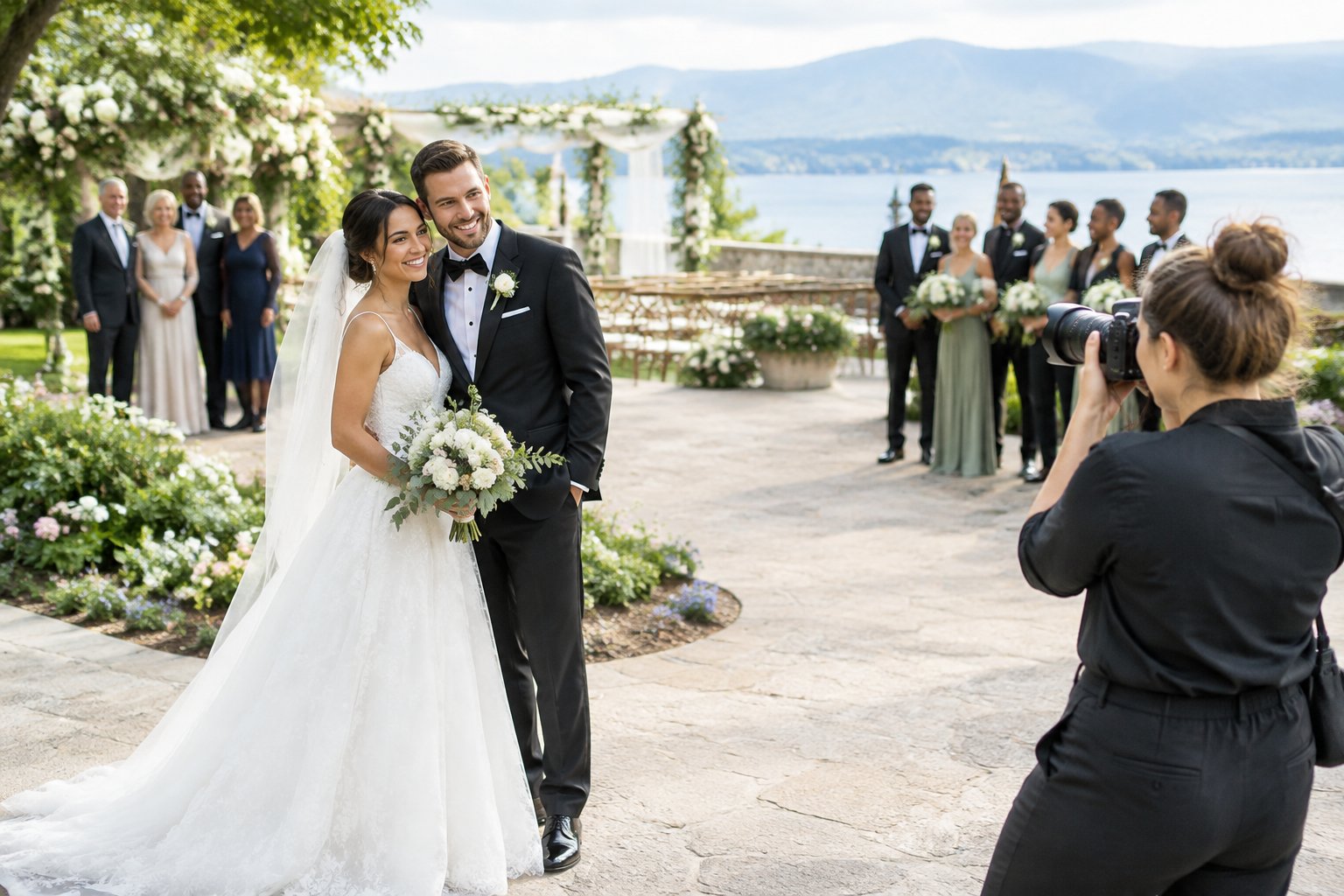
Your schedule can follow the natural flow of the day, with time set aside for formal portraits and room for spontaneous moments. As you plan your wedding-day sequence, share your priorities with your wedding photographer so you can build a timeline that fits your ceremony and celebration.
What Is the Best Order for Wedding Photos?
The best order follows your day from preparation through the final celebration. This gives your photographer a clear plan while keeping the schedule easy for you and your guests to follow.
Start With Getting-Ready Details and Moments
Begin with the details that set the scene, then capture you and your wedding party getting ready. Your photographer can photograph the attire, rings, flowers, invitations, and venue before everyone is dressed and the spaces become busy.
Getting-ready photos also preserve the anticipation of the day. Include natural moments such as a family member helping you with an accessory or your wedding party sharing a laugh. If you’re getting ready in separate locations, coordinate travel time and arrival plans with your photographer.
Move From the Ceremony to Formal Portraits
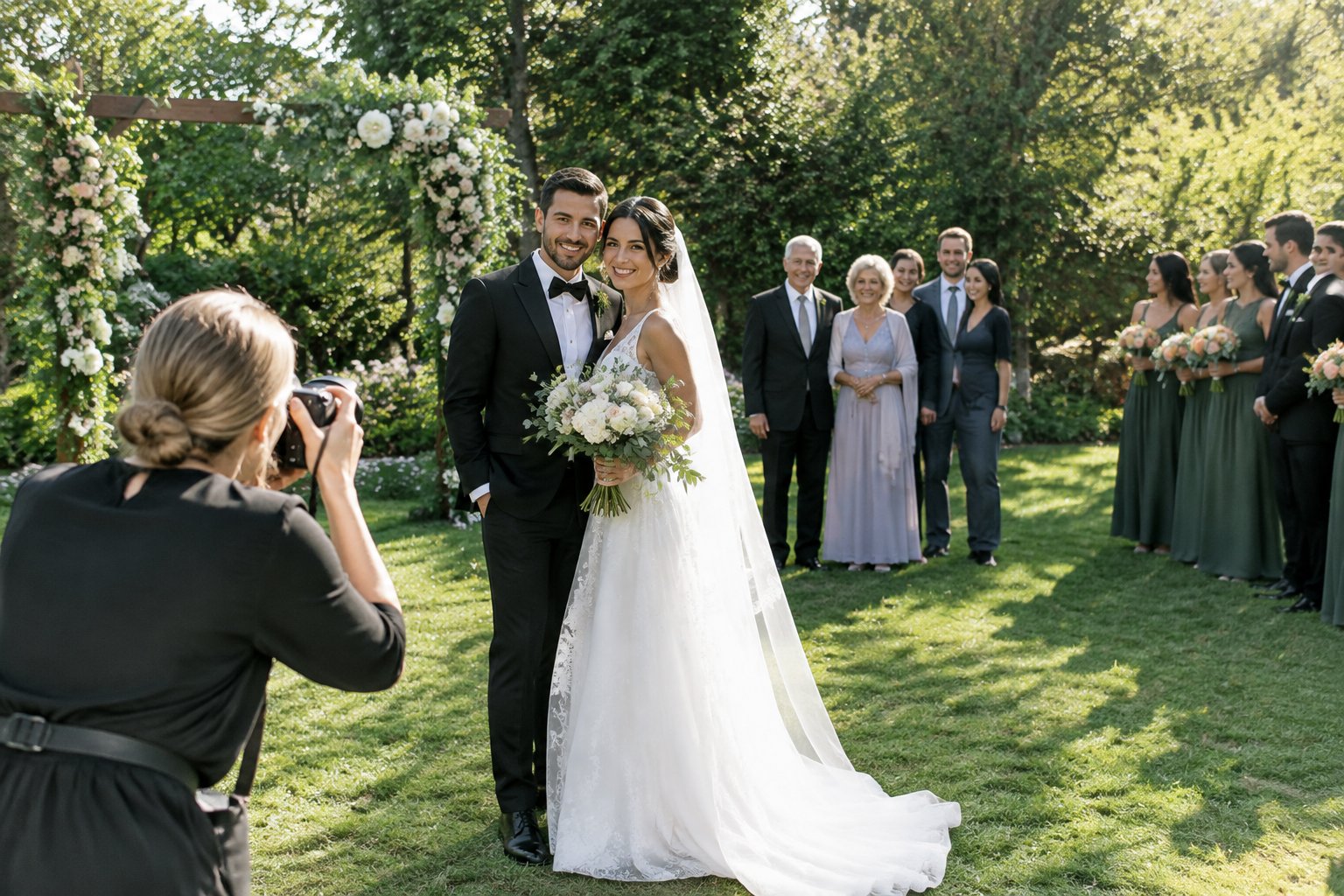
After the ceremony, move into the planned group portraits while the important people are still gathered nearby. You can take family photos first, then wedding-party photos, followed by couple portraits if you did not schedule them before the ceremony.
A first look lets you take some portraits before the ceremony and gives you more options for the post-ceremony schedule. Your wedding timeline should account for travel between locations, gathering each group, and walking to the portrait spot.
Finish With Reception Highlights and the Send-Off
Reception coverage follows the event schedule, with photos of your entrance, dances, speeches, and guests celebrating. Your photographer can also capture details such as the room setup before guests enter.
Plan key moments with your reception venue or coordinator so your photographer knows when they will happen. If you have a planned exit, set aside time near the end of the photographer’s coverage for the send-off.
Which Photos Should Be Taken Before the Ceremony?
Before the ceremony, prioritize detail shots and getting-ready moments, then decide whether a first look and portraits fit your plans. This schedule can ease the post-ceremony rush and preserve time for celebrating with your guests.
Capture Attire, Rings, Flowers, and Venue Details
Set aside your wedding attire, rings, shoes, bouquet, and any personal details you want photographed. These items are easiest to photograph before they are worn or moved. Your photographer can also capture the ceremony space, including the aisle, altar, and decorations, before guests arrive.
Keep the details together in one place so your photographer can find them quickly. If you have printed vows, invitations, or meaningful keepsakes, include those with the items you have gathered.
Photograph Getting-Ready Moments and First Looks
Getting-ready coverage can include hair and makeup, putting on your attire, and the reactions of people helping you prepare. Tell your photographer which people and moments you want included, especially if you have a small window before the ceremony.
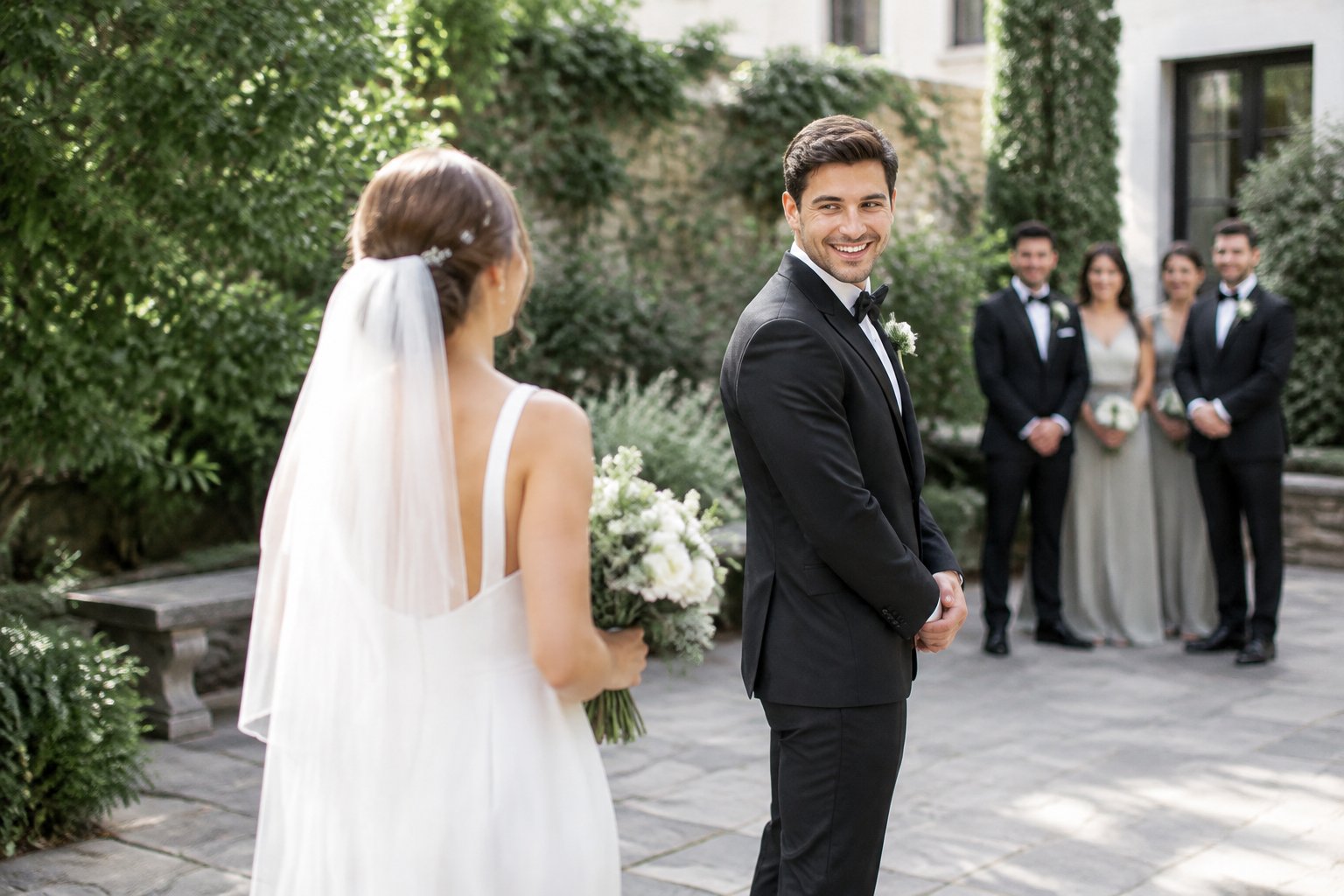
A first look gives you and your partner a private moment together before the ceremony, followed by portraits if you want them. Your choice can shape the rest of the day’s schedule. Use this first-look timing advice to consider how it fits with your ceremony start and portrait plans.
What Should the Photographer Capture During the Ceremony?
During the ceremony, your wedding photographer should document the key events and the people’s reactions as they unfold. Share any venue rules about movement or flash in advance so your wedding photography plan fits the space.
Cover the Processional and Key Reactions
Ask your photographer to capture the ceremony space and guests arriving before the processional begins. As the wedding party enters, photos can show the people walking down the aisle along with your and your partner’s reactions.
Let your photographer know about any special entrances, readings, or cultural traditions. If close family members have important roles, share their names so they can be recognized and photographed during the ceremony.
Photograph Vows, Rings, and the First Kiss
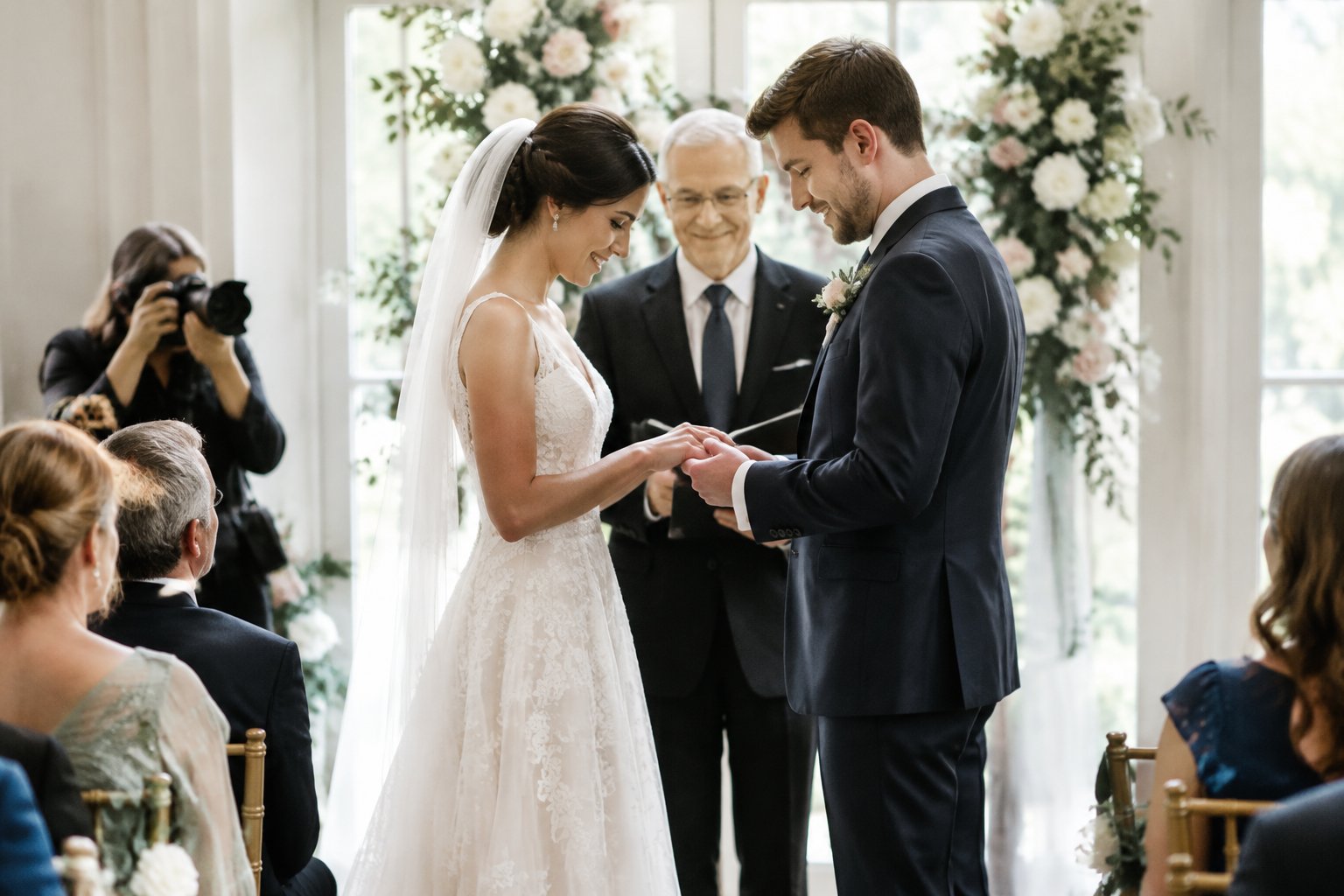
The exchange of vows, rings, and first kiss are central moments to include in your ceremony coverage. Your photographer can capture both the wider scene and close expressions, including your reactions as you speak and listen.
If you have a unity ritual, signing, or other ceremony tradition, add it to your photo notes. A quick conversation with your officiant can help your photographer understand when each moment will happen and where they can stand.
Get the Recessional and Guest Celebrations
After the ceremony, capture you and your partner walking back down the aisle together. Your photographer can also document guests greeting you, offering congratulations, and heading to the next part of the celebration.
If you plan a receiving line or group celebration, tell your photographer where it will happen. That detail helps them stay in position and continue photographing the moment as it moves.
When Should You Take Family Photos and Couple Portraits?
Schedule family formals immediately after the ceremony if your relatives are already gathered, then fit couple portraits around your preferred light and event plans. A clear group list helps you spend less time organizing people and more time celebrating.
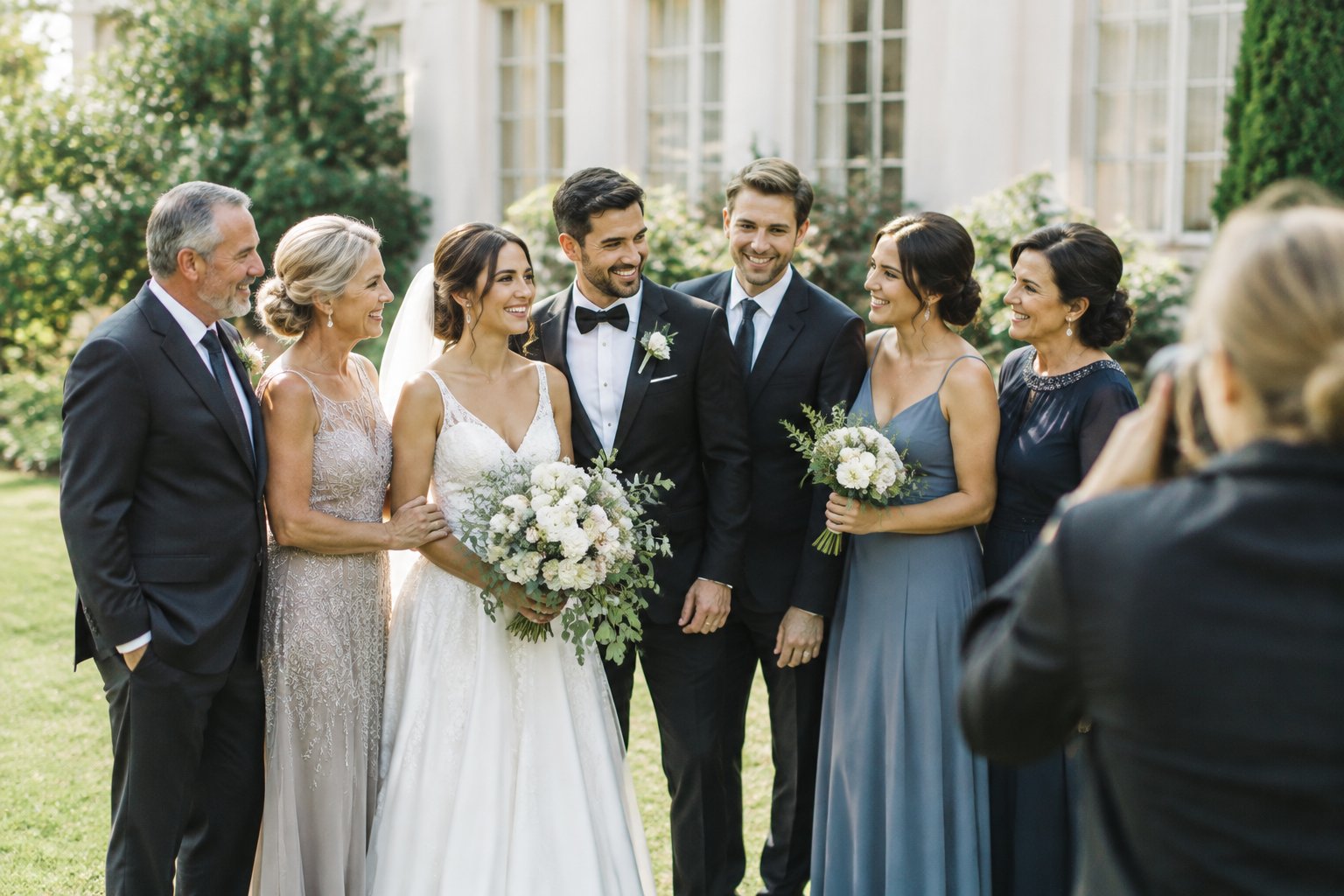
Take Family Formals Right After the Ceremony
Family photos work well after the ceremony because the people you need are close by. Start with larger family groupings, then move to smaller combinations so guests can leave when they are finished.
Write each group in advance and name the people in it. A family member or wedding-party member can help gather relatives and call out the next grouping. If you are deciding who to include, this guide to who should be in your wedding photos can help you shape the list.
Schedule Couple Portraits Around the Best Light
Set aside time for couple portraits when the light and schedule suit your venue. If you want soft evening light, ask your photographer to check the sunset time for your wedding date and plan a brief portrait break around it.
A first look can create time for portraits before the ceremony. You can also schedule a short session during the reception if you want photos in a different setting or evening light.
Include Wedding Party Groups and Important Relationships
Plan a few wedding-party groupings, such as the full group together and each side with you. Add any other relationships that feel meaningful, including a close friend or a relative who played a special role.
Keep the list focused so you have time to relax between formal photos and the next event. You can share the group names and order with your photographer and the person helping gather everyone.
How Can You Plan the Photo List and Timeline?
Build your photo timeline around the day’s fixed events, then share a focused shot list with your wedding photographer. A clear plan identifies your must-have images, the people involved, and enough time for movement between locations.
Prioritize Must-Have Shots Instead of Scripting Every Moment
Choose the moments you most want preserved, such as a family portrait with a grandparent or a detail tied to a family tradition. Leave the small choices to your photographer so candid moments have room to unfold.
A wedding photo checklist can help you organize ideas by part of the day. Use it as a prompt, then mark your personal priorities instead of asking for every possible pose.
Share Names, Family Groups, and Priorities in Advance
Give your photographer a written list of family groupings, names, and any important relationships. Add notes about sensitive family dynamics or people who should not be grouped together.
If you have a planner or coordinator, share the same list with them so everyone knows where to be. Send the details before the wedding day, then confirm the plan with your photographer during a timeline review. This gives them time to flag schedule conflicts and suggest an order for the portraits.
Build in Buffer Time and Leave Room for Candid Photos
Add extra time for travel, gathering guests, and moving between portrait locations. A schedule with a small buffer can absorb delays without pushing every later event back.
Leave open moments between planned photos so your photographer can capture interactions as they happen. Review the full wedding photography timeline with your photographer and coordinator, including the ceremony start, portrait locations, reception events, and coverage end time.