
Indoor Outdoor Wedding Venues: How to Choose the Right Space
The strongest indoor outdoor wedding venues pair an open-air setting with a comfortable indoor space, so you can enjoy the scenery and give your guests a dependable place to gather. You might hold your ceremony in a garden, welcome guests on a terrace, then move indoors for dinner and dancing.
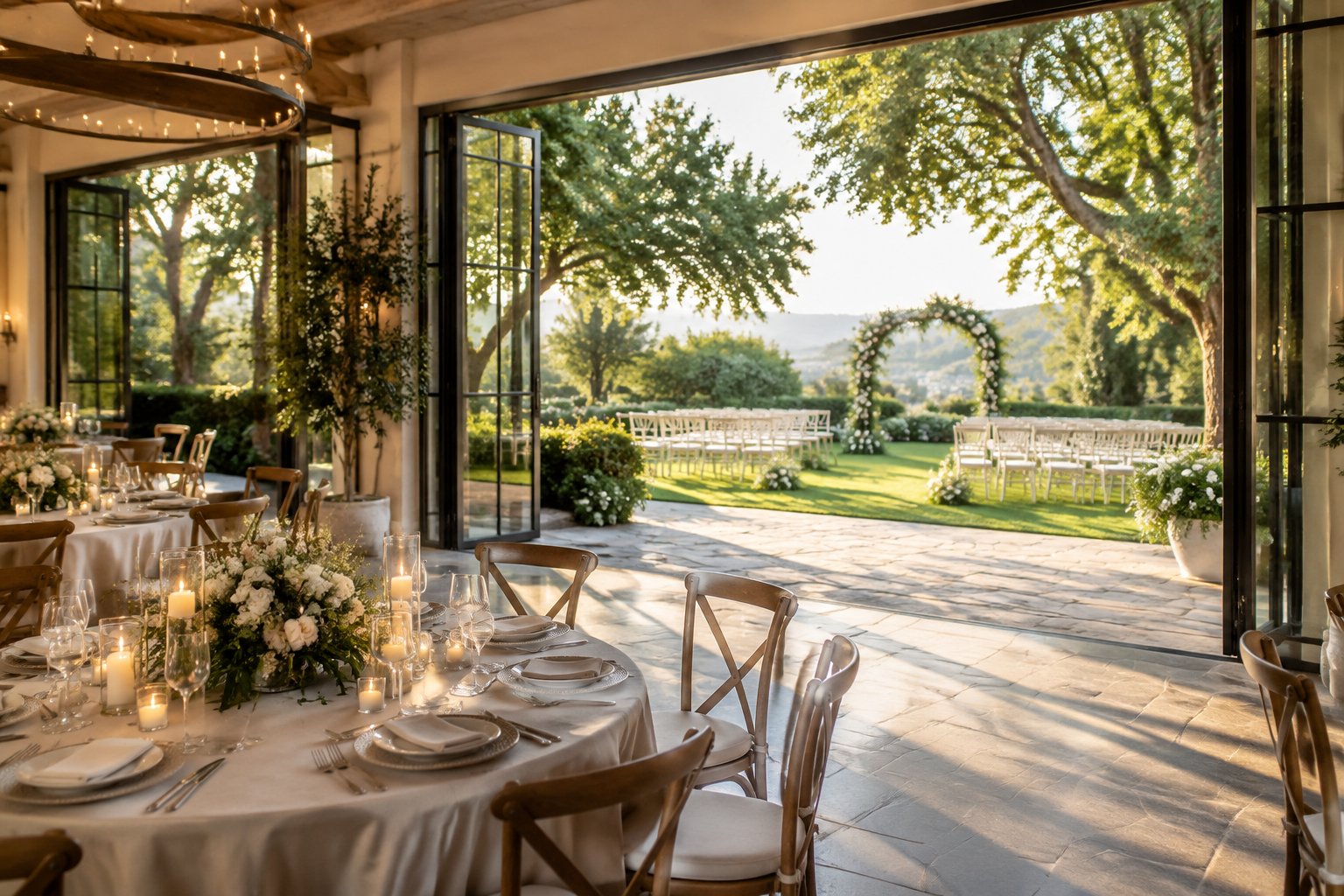
As you compare options, look for spaces that fit your guest count and let the celebration move smoothly between settings. Browse wedding venue ideas for inspiration, then ask venues to show you both their outdoor layout and their indoor plan during a tour.
What Makes a Venue Work Indoors and Out?
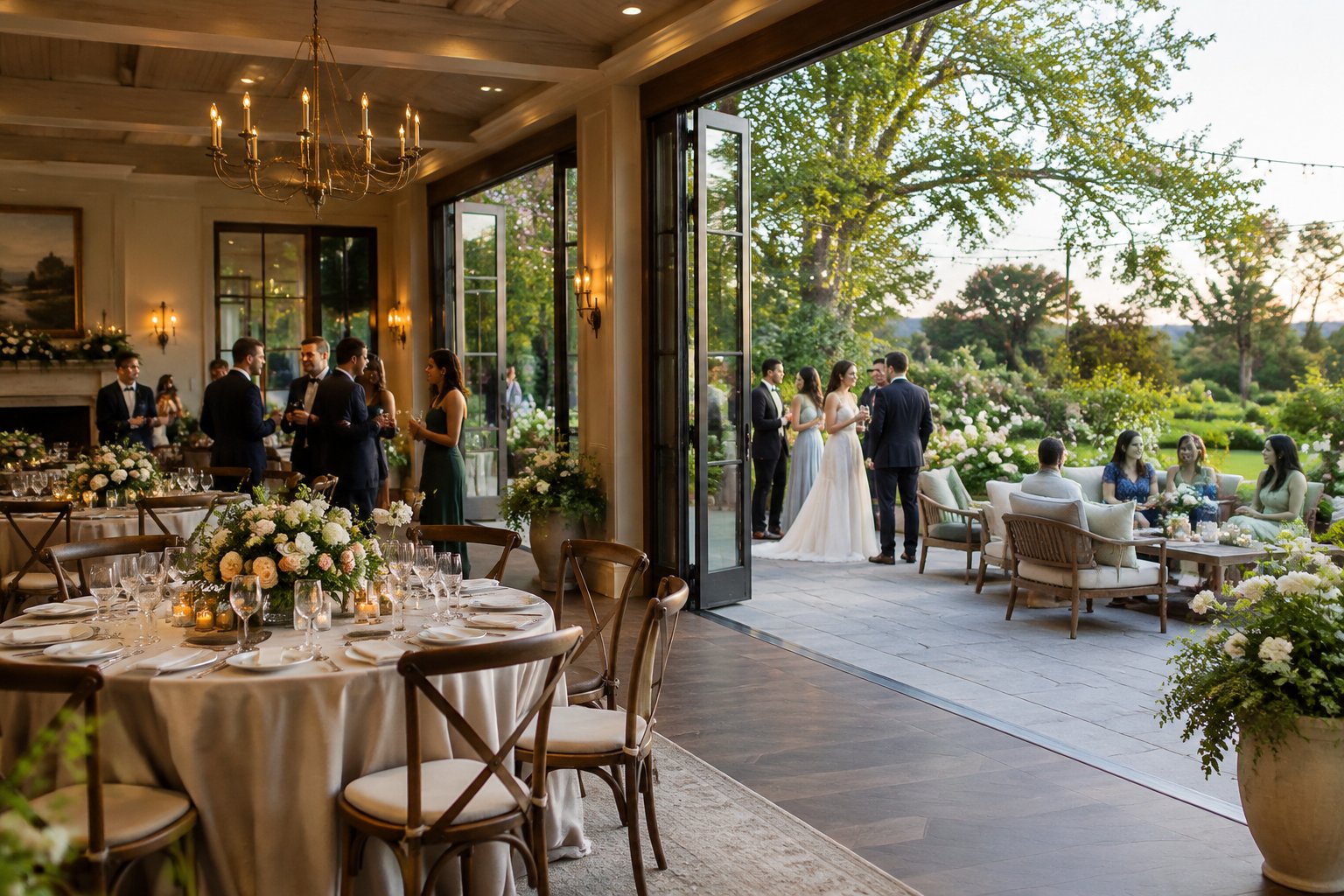
A venue works well indoors and out when both areas feel connected, comfortable, and ready for the parts of your wedding reception you want to host there. Check how guests will move between spaces, and confirm that the indoor option can handle your full event if plans change.
How Do Ceremony, Cocktail Hour, and Reception Spaces Connect?
A clear route between the ceremony, cocktail hour, and reception keeps guests oriented and limits delays. For example, you could exchange vows outside, serve drinks on a terrace, then invite everyone into the event space for dinner and dancing.
During a tour, walk the full route as a guest would. Check for stairs, narrow doors, long distances, and places where a crowd might bunch up. Ask where staff will direct guests while the ceremony area is reset, and whether the reception room is available for early arrivals.
A venue with adjacent indoor and outdoor areas gives you more options for pacing the day. You can build a ceremony around the setting, then use the covered space for dinner or dancing. If you’re planning an outdoor ceremony, consider outdoor wedding ceremony ideas that work with the venue’s layout.
What Should an Indoor-Outdoor Event Space Include?
Your event space should cover the practical needs of guests and vendors in both settings. Look for nearby restrooms, accessible routes, reliable power, seating, and a place for caterers to prepare or serve food.
Ask whether the venue supplies chairs, tables, sound equipment, and lighting for each area. A lawn that looks spacious during a tour might need extra rentals for a seated dinner. Find out whether the ground is firm enough for mobility devices and dress shoes, and whether a covered path connects the spaces.
The spaces should also suit your style as a pair. A garden might provide a natural backdrop with little extra décor, while an indoor room gives you more control over temperature and sound. A wedding ceremony checklist can help you keep the ceremony setup and guest needs organized.
How Do You Choose the Right Venue?
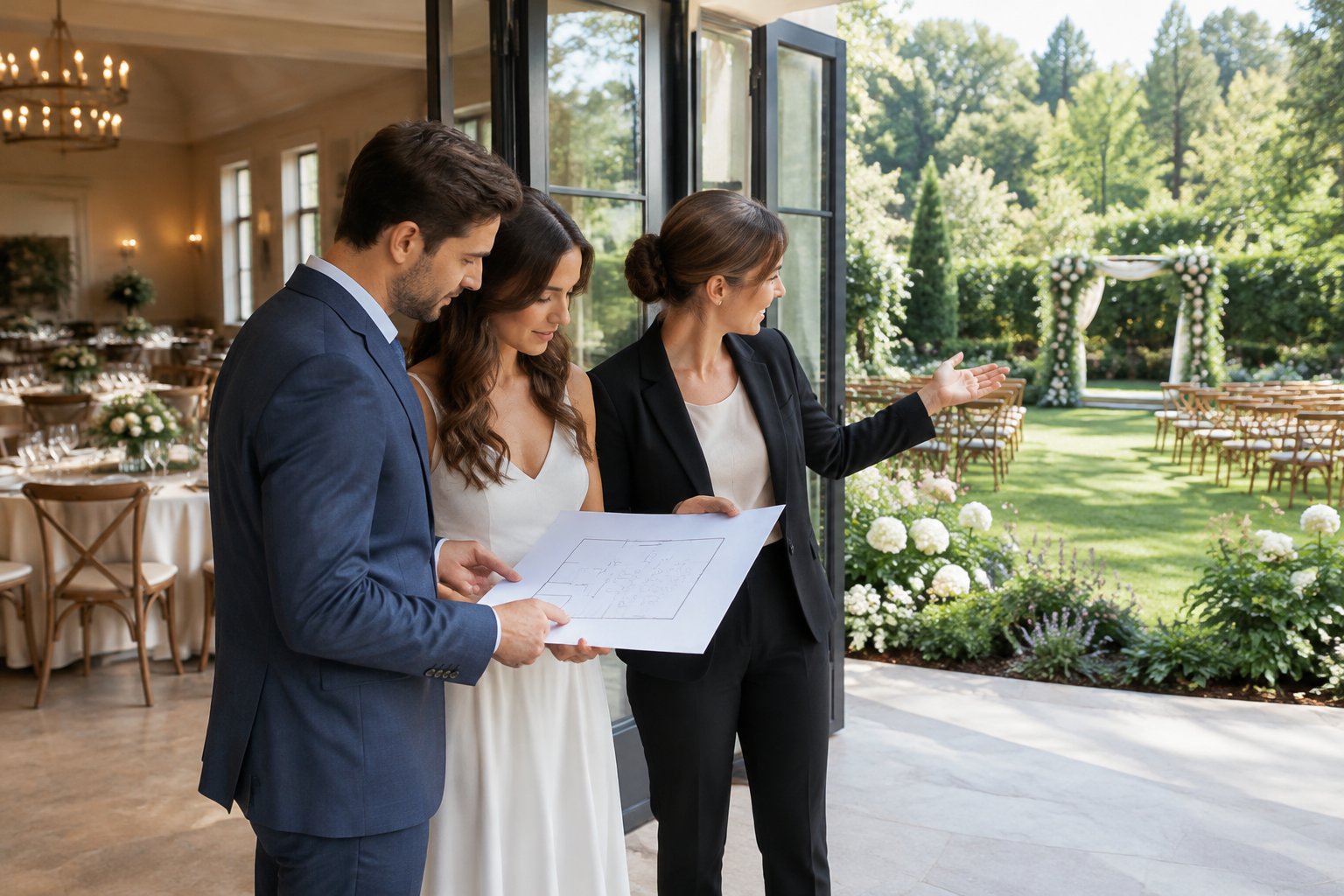
Choose a venue by matching its guest capacity, weather plan, location, and total cost to your priorities. As you compare an outdoor wedding venue with other options, consider the experience you want and the practical needs of the people you’re inviting.
How Many Guests Can Each Space Accommodate?
Ask for the seated capacity of each space with your planned layout, including tables, a dance floor, and room for service staff. A venue’s maximum standing capacity may be far larger than its comfortable dinner capacity.
Confirm that the indoor backup can fit your full guest list with the same key features. Ask whether the ceremony and reception can both move inside, or if the alternate room is reserved for one part of the event. If your guest count is still changing, use a realistic range and check that the venue can handle both ends.
What Weather Backup Should You Expect?
A dependable weather plan names the indoor or covered location, the person who makes the call, and the deadline for making the switch. Ask whether the backup space is included in your fee and whether it can hold your full event setup.
Your plan should account for heat, wind, and cold as well as rain. Ask about air conditioning, fans, heaters, shade, and covered walkways. Find out who moves décor and furniture, and whether vendors can prepare for both layouts. For a rainy-day plan, rainy wedding ideas can help you think through guest comfort and timing.
How Do Location and Guest Access Affect Your Choice?
Choose a location that works for your guests’ travel plans, not only for the views. Consider distance from hotels, parking, rideshare access, public transit, and the route between the ceremony and reception spaces.
A coastal setting can bring striking scenery along with wind, sun, and travel considerations. If guests are driving, ask about parking capacity and accessible drop-off areas. For a remote venue, check whether a shuttle would help guests arrive on time and return safely after the reception. Comparing how to pick a wedding location can help you weigh convenience alongside style.
Which Venues Offer Memorable Indoor-Outdoor Settings?
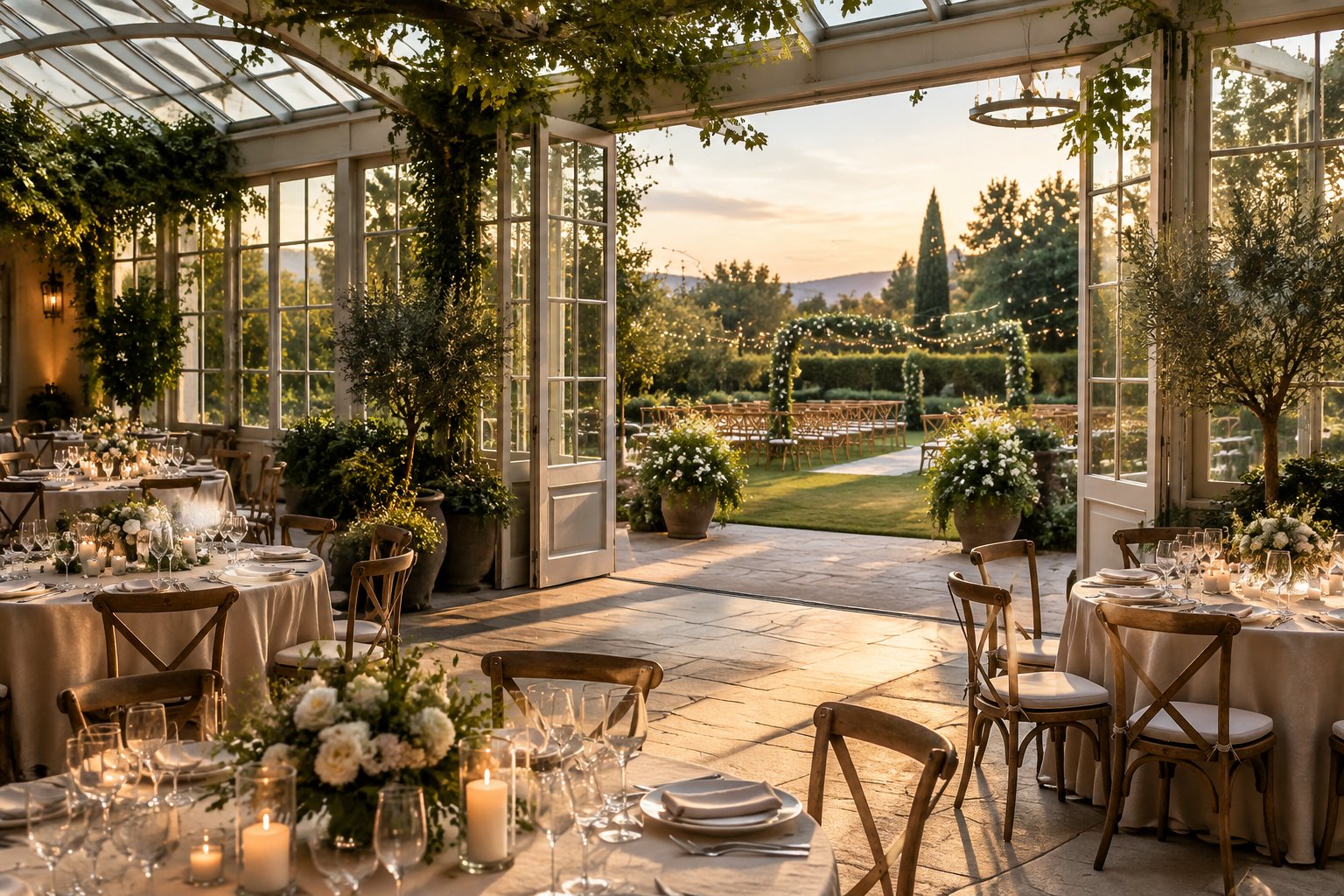
Memorable indoor-outdoor settings range from historic estates and art spaces to hotels, gardens, and waterfront properties. Treat each name as a starting point for your search, then confirm which indoor and outdoor areas are available for your date and event size.
Dallas Picks: The Mason and Arlington Hall
For Dallas wedding venues, compare the style and layout of The Mason Dallas with Arlington Hall. The Mason can suit a couple looking for a modern event setting, while Arlington Hall offers a historic estate atmosphere and garden surroundings.
When considering downtown Dallas wedding venues, check how each property handles guest arrival, parking, and transitions between spaces. Ask for a floor plan that shows the ceremony, cocktail hour, and reception setup. Confirm which areas are included in the rental and whether your preferred outdoor space is private during the event.
Artful and Historic Spaces: Nasher Sculpture Center and Fairmont San Francisco
The Nasher Sculpture Center offers an art-centered setting to explore if you want your celebration to connect with sculpture and landscape. Ask which areas can host each part of your day, and confirm any rules for protecting the art and grounds.
Fairmont San Francisco brings a historic hotel setting to your shortlist. Ask the events team to identify the indoor rooms and outdoor areas available for weddings, along with capacity and weather plans. The details of the layout will show whether the venue fits your vision for a connected celebration.
Hotel and Estate Options: Rosewood Mansion on Turtle Creek and The Adolphus
Rosewood Mansion on Turtle Creek and The Adolphus give you two distinct hotel settings to consider. The Mansion offers a residential, estate-inspired atmosphere, while The Adolphus places you in a landmark downtown hotel.
As you compare Dallas hotel wedding venues, ask about guest rooms, food and beverage packages, service charges, and event spaces. Confirm whether you can host a ceremony or cocktail hour outdoors, and ask what indoor space is reserved if weather shifts. You can also ask whether the venue helps arrange room blocks or transportation.
Garden and Waterfront Settings
Garden weddings bring greenery and seasonal blooms into the setting, while waterfront venues give you open views and a sense of space. Both styles can create a strong backdrop for your ceremony and portraits.
Ask how the venue handles changing light, wind, and noise near the water or gardens. Check whether guests can reach seating on stable, accessible paths, and find out which spaces remain available if the weather changes. Request photos from events held in the same season as your date so you can see how the landscape looks then.
What Should You Ask Before Booking?
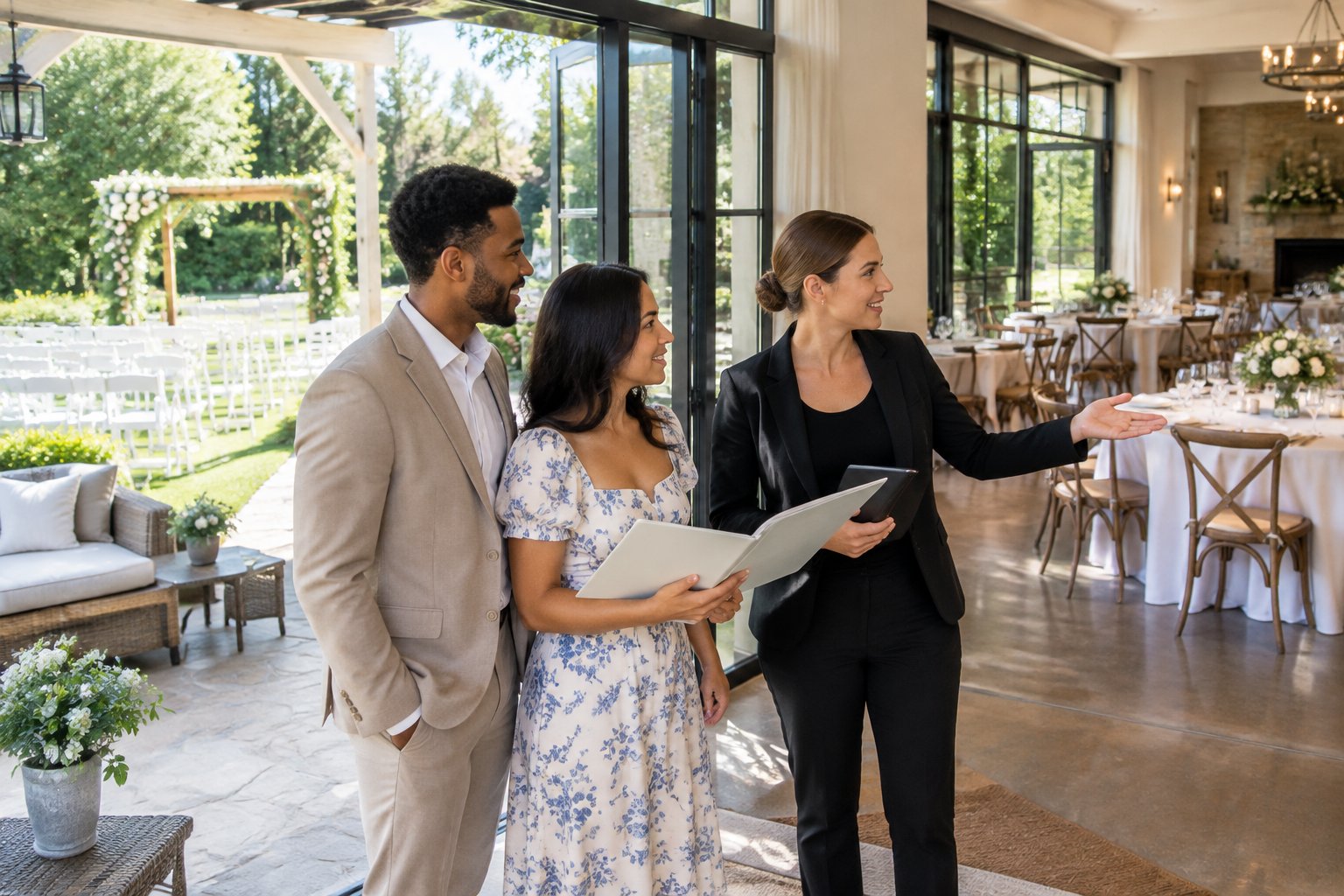
Before you book, get clear answers about included services, total pricing, availability, and contract terms. Bring your guest count and preferred layout to the conversation so each venue can give you useful details.
Which Services, Rentals, and Restrictions Are Included?
Ask for a written list of what the rental includes, such as tables, chairs, linens, setup, cleanup, sound equipment, and lighting. Check whether those items are available in both the indoor and outdoor spaces.
Ask about outside vendors, catering rules, alcohol service, décor limits, and noise restrictions. If you have a specific caterer or florist in mind, confirm that the venue allows them before you sign. For food service, use how to choose the right wedding caterer to help frame questions about menus and service.
How Do Pricing, Availability, and Contracts Work?
Request an itemized estimate based on your guest count and chosen date. Compare the full cost, including service charges, required rentals, staffing, overtime, and any fees for using outside vendors.
Ask how long the rental period lasts and when vendors can enter for setup. Confirm the payment schedule, deposit rules, cancellation terms, and what happens if the venue needs to change your event space. Popular dates can fill early, so review when to start booking wedding services as you build your planning timeline.
How Can You Compare Reviews and Request a Quote?
Compare recent reviews for details about communication, service, food, and how the venue handled changes. Look for comments from couples with a similar guest count or event style, then ask the venue about any concerns you notice.
When you request a quote, provide your date, estimated headcount, and preferred indoor-outdoor layout. The Knot and other wedding directories can help you find wedding venues and compare listings, while a direct quote gives you the venue’s current pricing and terms. Save each estimate and compare the same details across your shortlist.
How Can You Plan a Smooth Indoor-Outdoor Wedding Day?
A smooth indoor-outdoor wedding day depends on a clear timeline, a ready weather plan, and thoughtful guest transitions. Share the layout and responsibilities with your planner and vendors before the event so each person knows where to be.
How Should You Prepare for Weather and Seasonal Conditions?
Create a written plan for rain, strong wind, heat, and cold. Choose the decision time in advance, identify who has authority to move the event, and tell vendors how the alternate layout will work.
Check the seasonal conditions for your date and ask the venue about shade, heaters, fans, and covered areas. Give guests useful clothing or footwear notes on your wedding website. Keep décor suitable for both spaces, and confirm whether vendors need extra time or staff to reset the room.
How Can You Make Transitions Comfortable for Guests?
Make the route between spaces easy to follow, well lit, and accessible. Place signs where guests need direction, and ask staff to guide guests during transitions.
Plan enough time for guests to move from the ceremony to cocktail hour and into the reception. Provide seating in shaded or covered areas, especially for guests who need a rest. For an outdoor ceremony, outdoor wedding seating ideas can help you plan a setup that suits different mobility needs.
What Should You Consider for Lighting, Catering, and Photography?
Plan lighting for the full event, including the walkways and outdoor gathering areas after sunset. Ask which fixtures the venue supplies and where vendors can safely connect equipment.
Use outdoor wedding lighting ideas to explore options that suit the space. Talk with your caterer about serving food outdoors, keeping dishes at safe temperatures, and protecting the cake from heat.
Share the timeline and locations with your photographer, including when you want portraits and how the team can move between settings. Check sunset time for your date and schedule outdoor portraits while you still have natural light.