
Industrial Chic Wedding Venue Ideas and Planning Guide
An industrial chic wedding venue gives you a character-rich setting with exposed brick, high ceilings, and room to shape the celebration around your style. You can create an industrial wedding that feels polished and personal by pairing the building’s raw features with thoughtful lighting, comfortable furnishings, and a clear event layout.
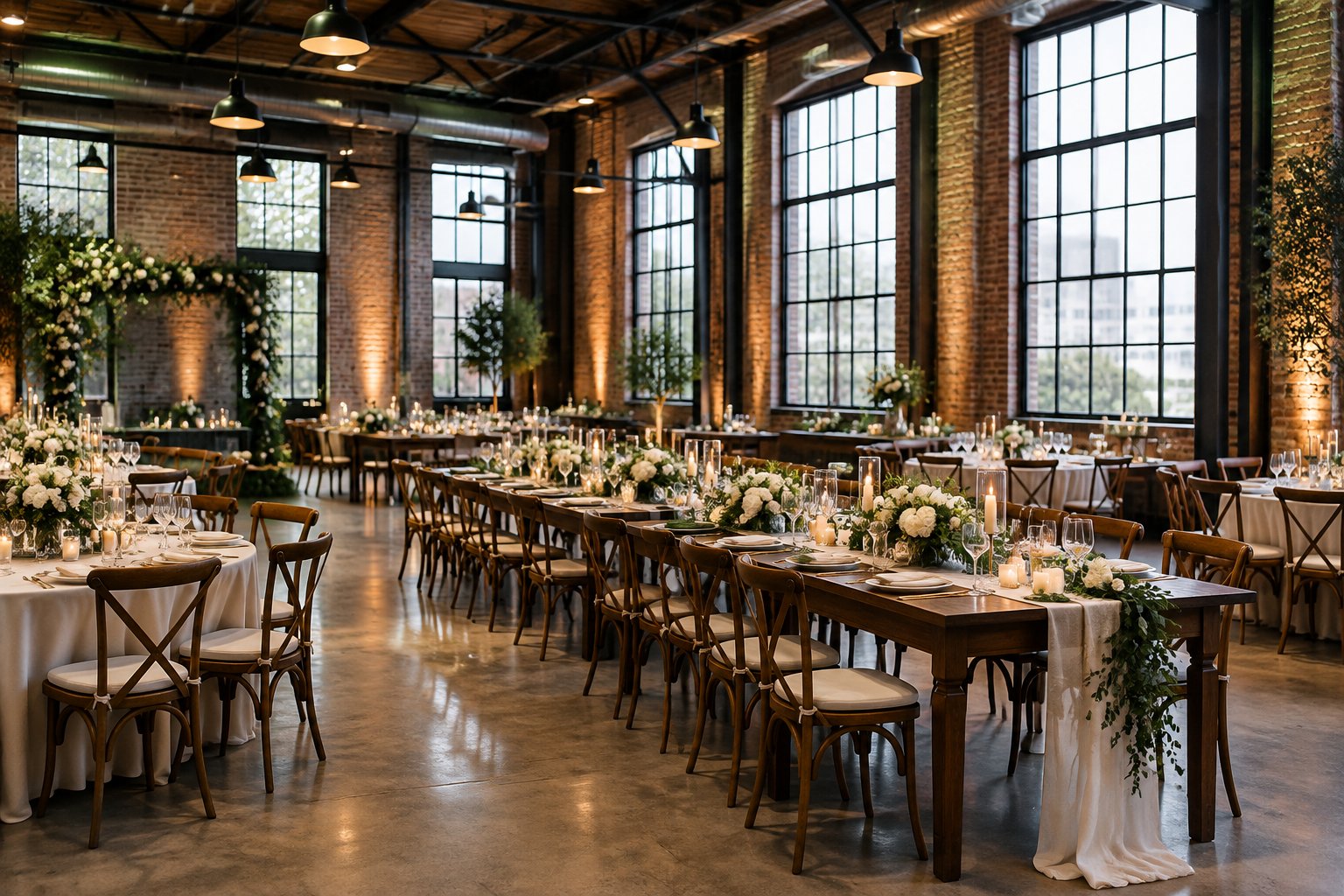
These spaces range from historic factories to modern lofts, so you can find a fit for an intimate gathering or a large reception. As you start your search, save a few spaces that match your guest count and arrange tours to see how they work in person.
What Makes a Venue Feel Industrial Chic?
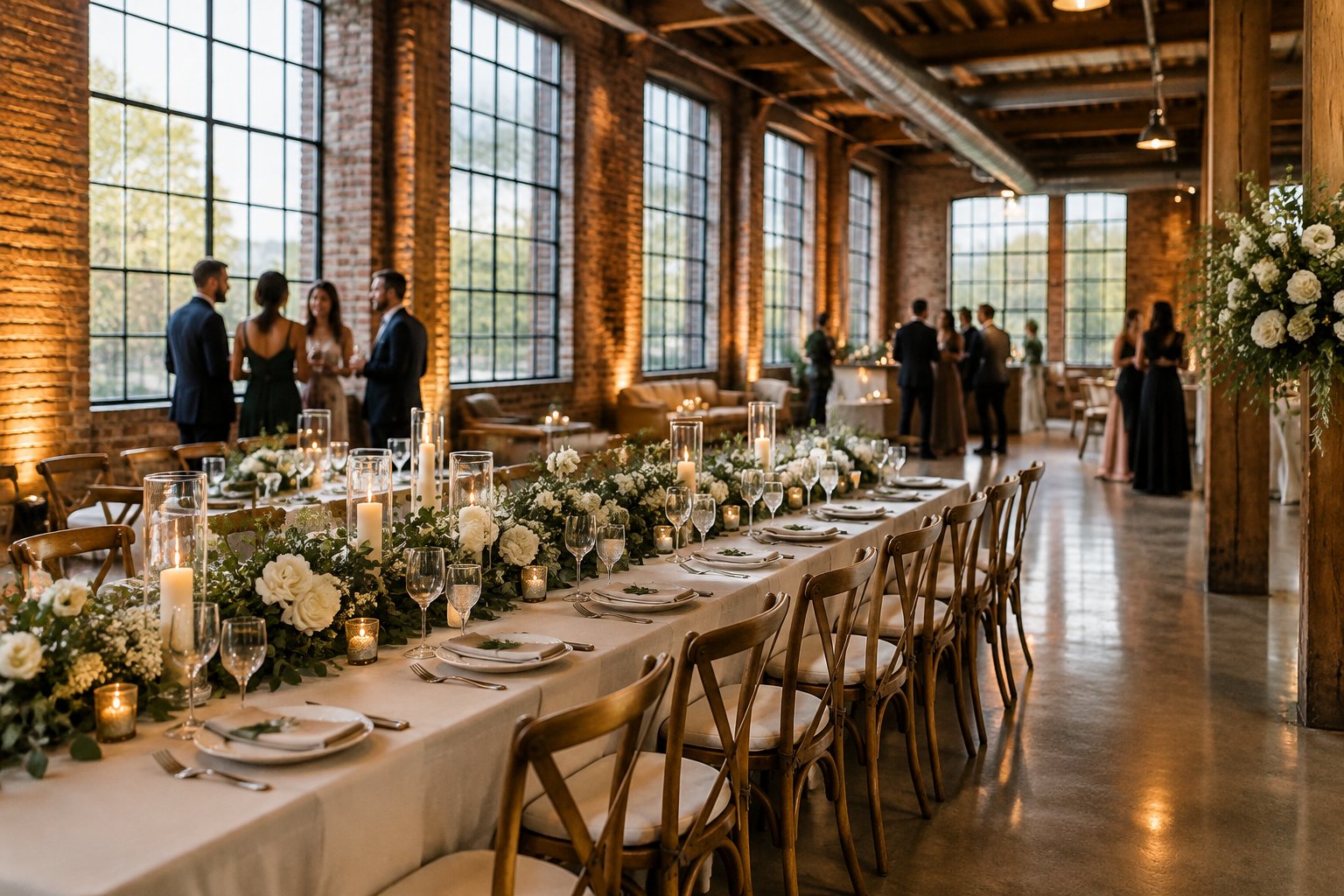
An industrial wedding venue feels industrial chic when its original structure and materials become part of the design. Exposed brick walls, beams, tall windows, and open floor plans give the room texture, while your furnishings and lighting add warmth.
How Do Brick, Beams, and Open Layouts Shape the Look?
Exposed brick walls and beams make a strong visual backdrop, so you can keep some décor simple and let the architecture show. Large windows bring in daylight, while concrete or wood floors add another layer of texture. Warm lighting and soft fabrics help balance the hard surfaces.
Open floor plans give you flexibility to arrange the ceremony, dining area, and dance floor. Before booking, check for columns, fixed bars, or other features that affect sightlines and guest movement. The building’s layout should support the experience you want, from the vows to the last song.
What Types of Buildings Work for This Style?
Converted warehouses, former factories, and loft wedding venues are common choices because they often retain details from their earlier use. A former factory might have tall windows and visible structural beams; a loft wedding venue may offer a more compact, city-centered space.
Use your venue search to compare these options with other wedding venue ideas. Look for genuine architectural features and practical updates, such as accessible restrooms and safe, clear guest routes.
How Do You Choose the Right Space?
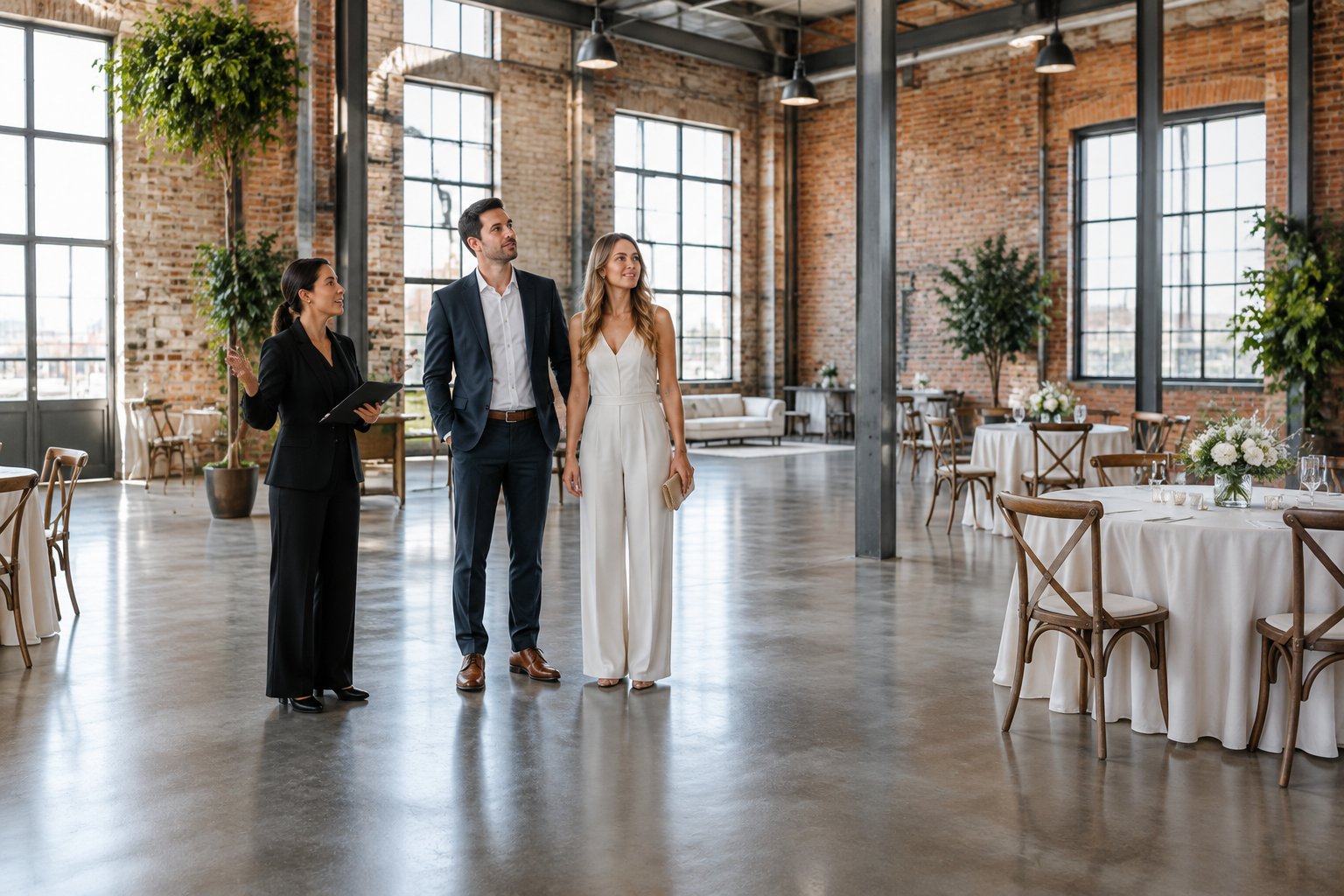
Choose a wedding venue that fits your guest list, event flow, and practical needs as well as your preferred look. The room’s capacity, included services, and rules will shape how much planning and rental coordination you take on.
How Should Guest Count and Layout Guide Your Search?
Start with your likely guest count, then ask how the space feels at that size. A large room can feel open and dramatic with a full guest list, while a smaller group may need lounge seating or defined zones to make the space feel welcoming.
Ask the venue to show you a sample floor plan for a wedding ceremony and reception. Check whether guests can move easily between the ceremony area, dining tables, bar, and dance floor. If you expect guests with mobility needs, confirm accessible entrances, routes, and restrooms. As you compare locations, planning your wedding location can help you weigh guest travel and the setting together.
What Amenities and Venue Rules Should You Check?
Ask what the rental fee includes, such as tables, chairs, getting-ready rooms, sound equipment, and setup time. Confirm the venue’s policies for outside caterers, alcohol service, décor installation, candles, and cleanup. These details affect your vendor choices and the work you’ll need to coordinate.
Also ask about parking, nearby transit, loading access, and the event end time. If your reception includes speeches or a live band, find out what sound limits apply and whether the venue has an in-house sound system.
Industrial-Chic Venues to Know Across the U.S.
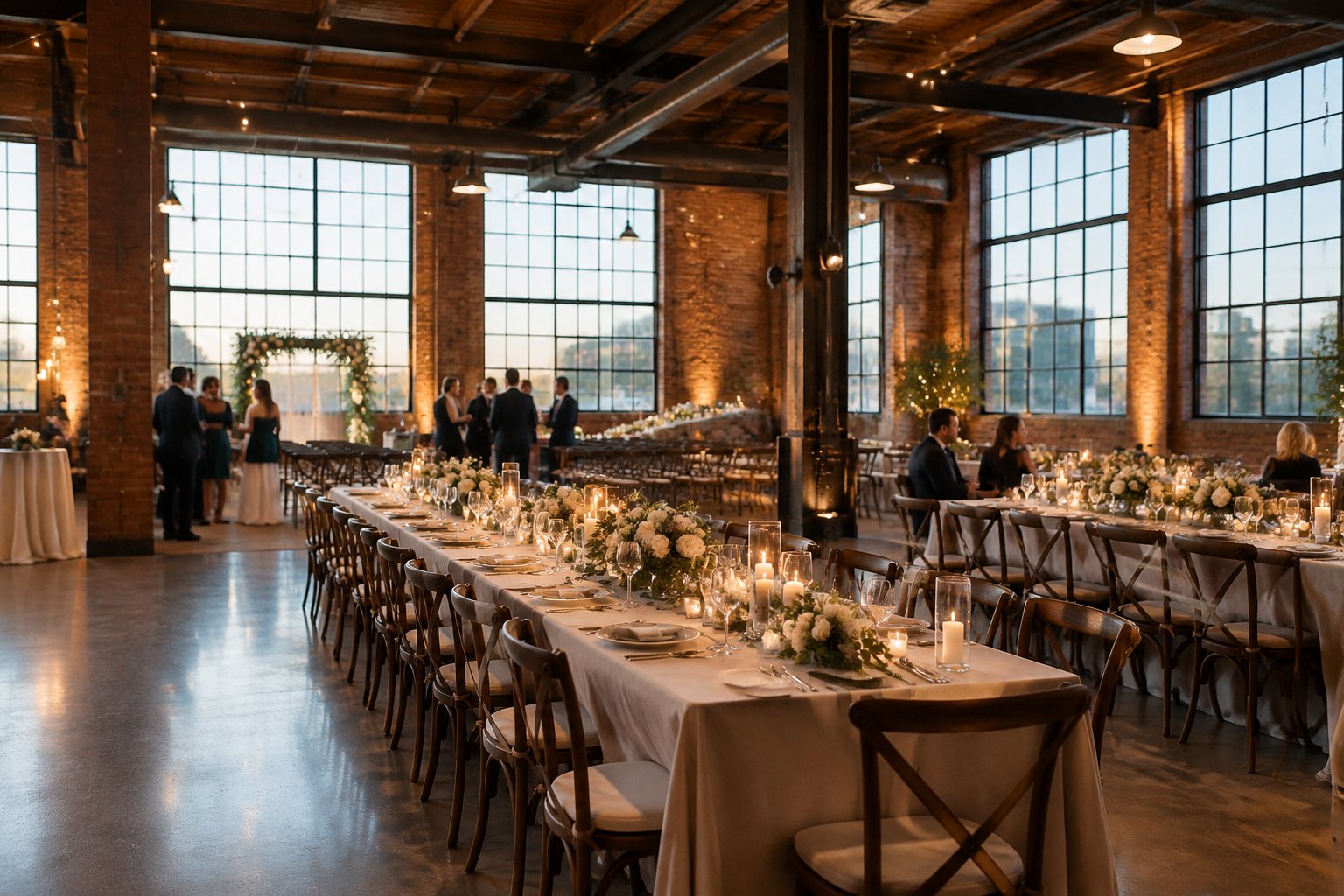
Across the U.S., you can find industrial-style spaces in former factories, city lofts, and historic commercial buildings. Use the examples below as starting points, then confirm current capacity, availability, and services directly with each venue.
Notable Spaces in New York and Brooklyn
The Foundry in Long Island City, New York, is a historic industrial space known for its brickwork and event areas. Its location gives you a city setting with architectural character. When you tour, ask how the available spaces fit your guest count and whether the event plan works for both the ceremony and reception.
Brooklyn also has former industrial buildings and loft spaces that suit this style. Compare the room’s existing features with the amount of décor and rental equipment you would need to bring in.
Standout Picks in Minneapolis and Seattle
In Minneapolis, Minnesota, look for converted commercial spaces that preserve details such as brick walls, timber, or steelwork. Ask whether the venue has climate control suited to your wedding date, especially if you are planning a winter celebration.
In Seattle, Washington, Sodo Park offers a historic industrial setting in the city’s SoDo district. During a tour, check the event layout, included furnishings, and guest access so you can see how the space fits your plans.
California and Other Historic Venue Finds
Moniker Warehouse in San Diego, California, is a warehouse-style event space with a flexible industrial character. Ask about its current event options and included services before building your budget around the rental.
Other historic spaces to explore include The Century in Pittsburgh and the Mt. Washington Mill Dye House in Baltimore. For each venue, review its current policies and confirm which architectural areas are available for your event.
How Can You Style the Space for Your Wedding?
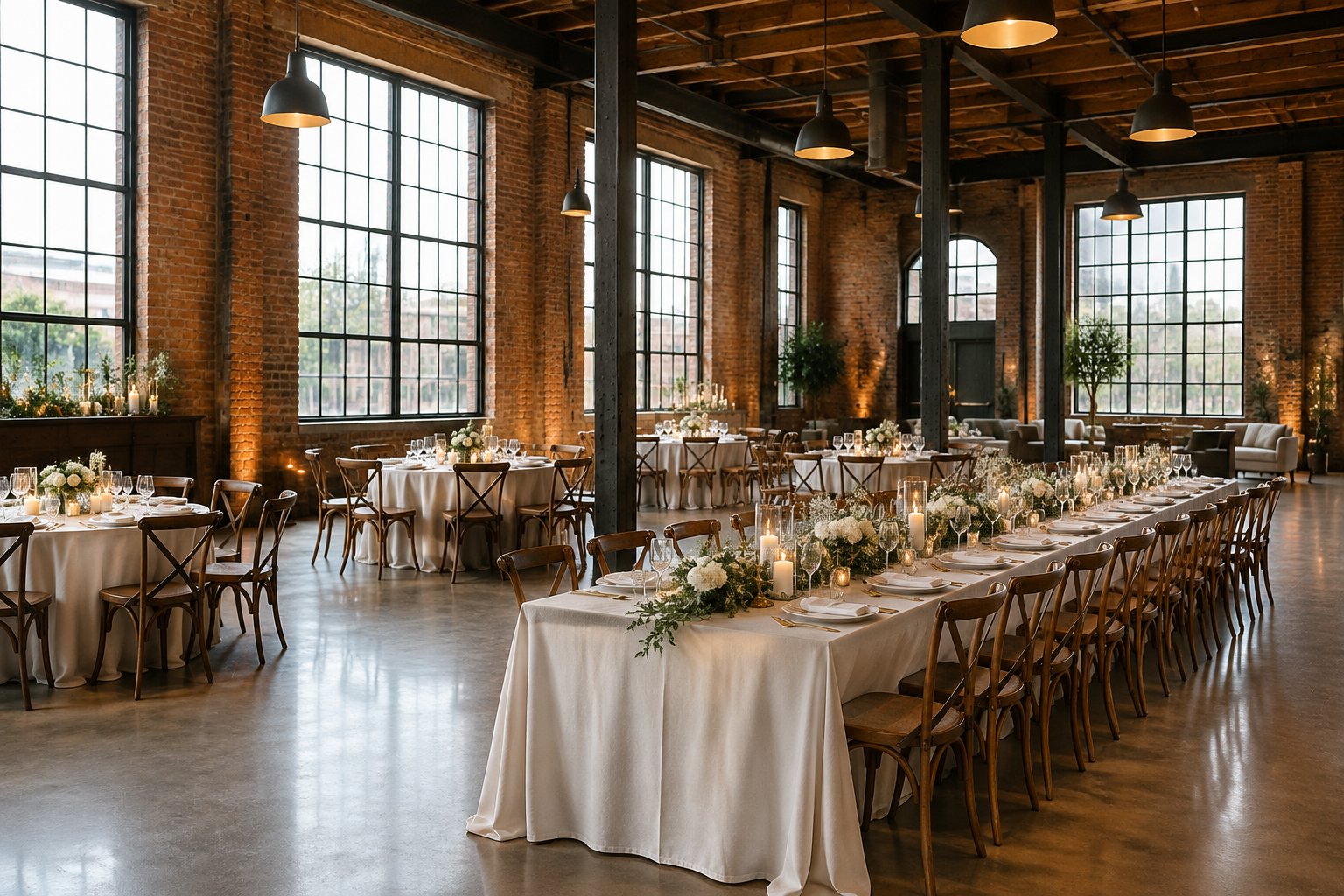
You can style an industrial chic wedding by keeping the building’s character visible and adding details that make the room feel warm and intentional. A focused palette, comfortable seating, and layered lighting help the design feel cohesive without hiding the architecture.
How Can Lighting and Florals Soften Raw Details?
Use warm light to soften brick, steel, and concrete as daylight fades. String lights, table candles, and uplighting can create a comfortable glow; check the venue’s rules before choosing open flames or hanging fixtures. For more options, explore these wedding lighting ideas.
Greenery and flowers bring color and movement to the room. You might place a floral arrangement against a brick wall or use a greenery installation to define the ceremony area. Mix these soft elements with wood, glass, or metal details for contrast. For table settings, industrial wedding table decorations can help you plan a look that suits the room.
How Do You Create a Ceremony and Reception Flow?
Plan the room around the way guests will use it. Set the ceremony area where guests can see and hear the vows, then leave enough space for a smooth transition to cocktails or dinner. A floor plan helps you map the seating, bar, buffet, and dance floor before you book rentals.
Use rugs, draping, or furniture to define areas within a large open room. Keep aisles and walkways clear, and ask your coordinator or venue contact to review the plan for access and service routes. This approach lets you create distinct spaces while keeping the building’s open feel.
What Should You Budget and Plan for?
Industrial wedding venues can require a separate budget for furniture, equipment, and setup, especially when the space is a blank canvas. Request an itemized estimate that includes the venue fee, rentals, labor, and required vendors before signing a contract.
Which Rental and Décor Costs Can Add Up?
Ask which basics come with the space and which you must rent. Tables, chairs, linens, tableware, lighting, and sound equipment can add to the total, along with delivery, setup, and breakdown fees. Add décor costs after you confirm what the venue already provides.
A simple design can help control spending while preserving the room’s character. Focus your budget on pieces guests will notice and use, such as comfortable chairs, clear signage, or a well-lit dining area. Building a realistic wedding budget gives you a way to track these costs alongside catering and other major expenses.
How Can You Prepare for Sound, Climate, and Weather?
Hard floors, brick, and high ceilings can create echoes, so ask how the venue handles sound for ceremonies and speeches. Check whether you can use a sound system, and share the room’s layout with your DJ or band before event day.
Confirm heating and cooling for your wedding date, then ask how the room holds its temperature when full of guests. If any part of the event uses an outdoor area, make a rain plan and confirm when you need to decide whether to move indoors. Review these details with the venue before you finalize your timeline and rental order.