
Industrial Looking Wedding Venues: UK Picks and Planning Tips
If you want a wedding with architectural character and room to make the details your own, industrial-looking wedding venues in the UK include converted mills, warehouses, studios, and riverside spaces. You’ll find the industrial look in venues with features such as exposed brick, visible steelwork, high ceilings, and open layouts.
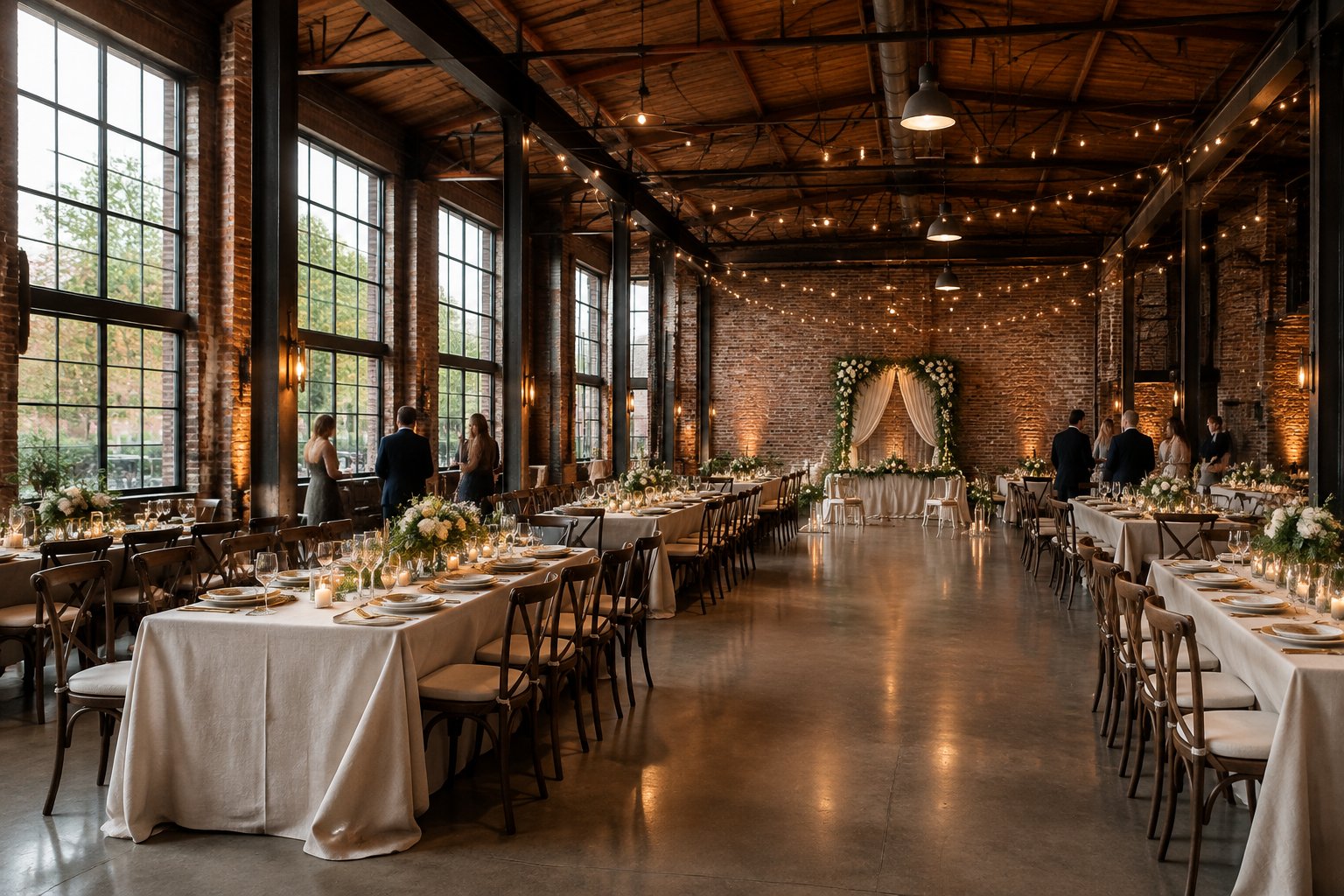
These unusual wedding venues give you a distinctive backdrop, with styles ranging from polished and modern to weathered and historic. Browse options on cocoweddingvenues.co.uk as you start narrowing down spaces that fit your celebration.
What Gives a Venue Its Industrial Character?
An industrial venue gets its character from visible building materials, generous space, and architectural details that remain part of the room. When you tour an industrial-chic wedding venue, look at how those features work with your guest count and plans for the day.
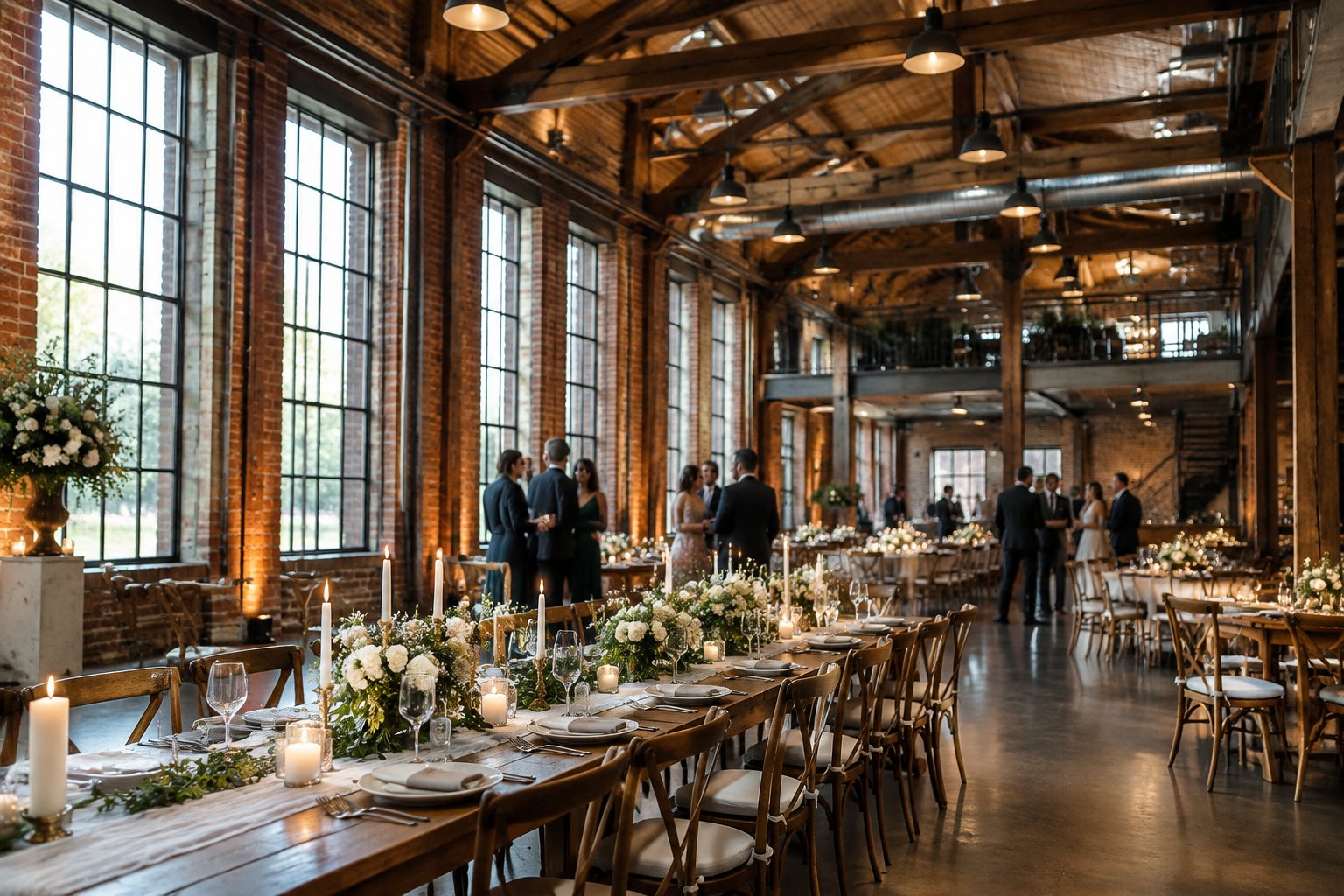
Exposed Brick, Steel Beams, and Concrete Floors
Exposed brick walls bring texture and warm color, while steel beams add strong lines overhead. Concrete floors give the room a clean, grounded feel and create a practical base for tables, chairs, and a dance floor.
You can let those materials set the tone or soften them with fabric, greenery, and warm lighting. When you visit, check the floor condition and ask how the venue handles uneven surfaces or sound from hard floors.
Warehouse Scale, Natural Light, and Flexible Layouts
Many modern industrial wedding venues use tall ceilings and broad, open rooms. That scale gives you space to plan separate ceremony, dining, and dancing areas, though your layout needs to suit the room’s shape and your guest count.
Floor-to-ceiling windows can bring in daylight and add a bright contrast to brick or metal. Ask when the room receives direct sun, and check how the space looks after dark, when your lighting plan will shape the atmosphere. Industrial warehouse wedding venues vary widely, so ask for a floor plan showing your proposed setup.
Which UK Venues Are Worth Shortlisting?
You can start your search with UK venues that offer warehouse, mill, studio, or industrial heritage, then confirm each space suits your event plans. The examples below give you options across London, the Midlands, the North, and other parts of the UK.
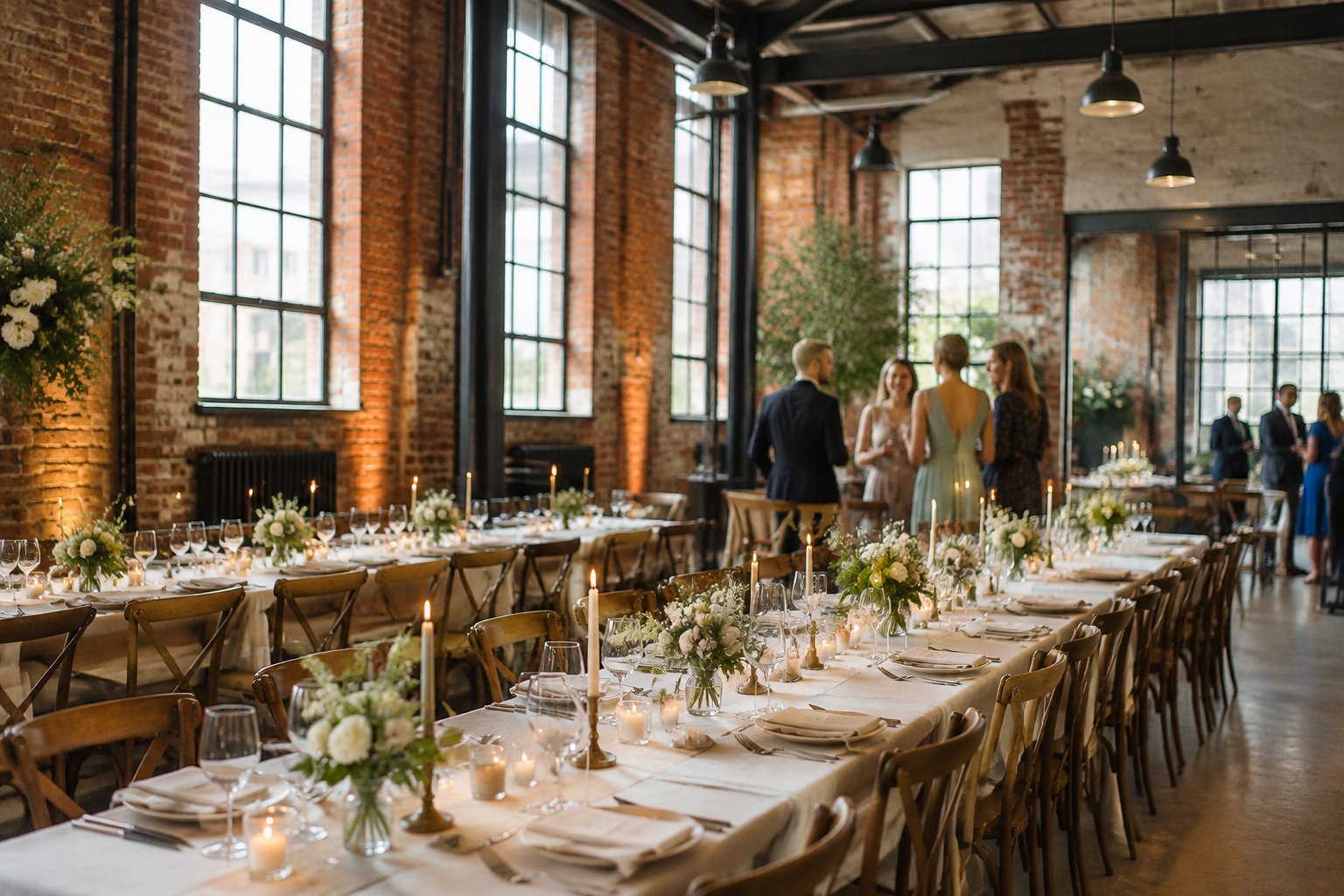
London Spaces for an Urban Celebration
For a city setting, shortlist MC Motors and Shoreditch Studios, both in East London, alongside Trinity Buoy Wharf by the Thames. You can also explore Victoria Warehouse in Manchester if you want a large warehouse setting with an urban feel.
West Reservoir Centre offers a waterside setting in Stoke Newington, while Hackney Church Brew Co combines a brewery backdrop with an event venue atmosphere. The Brunel Museum adds historic engineering character in Rotherhithe, and Woolwich Works brings creative spaces to a former industrial site in Woolwich.
Midlands and Northern Mills, Warehouses, and Studios
The Bond and Fazeley Studios give you Birmingham options with distinct industrial character. The West Mill in Derbyshire offers a converted mill setting, while The Pumping House in Nottinghamshire makes use of a former pumping station.
For Northern settings, consider Bowers Mill in Yorkshire or Holmes Mill in Clitheroe. If you are comparing industrial wedding venues in the UK, ask each venue to confirm its licensed spaces, event format, and current availability.
Creative and Riverside Venues Around the UK
Paintworks in Bristol offers a creative quarter setting, and Camp and Furnace brings a warehouse feel to Liverpool. For a more rural location with an industrial edge, The Shack Revolution in Herefordshire is another name to add to your shortlist.
Each event venue has its own layout and rules, so check whether the room you like is available for both your ceremony and reception. You can widen your search with these wedding venue ideas while keeping your guest list and travel plans in view.
How Do You Choose the Right Space?
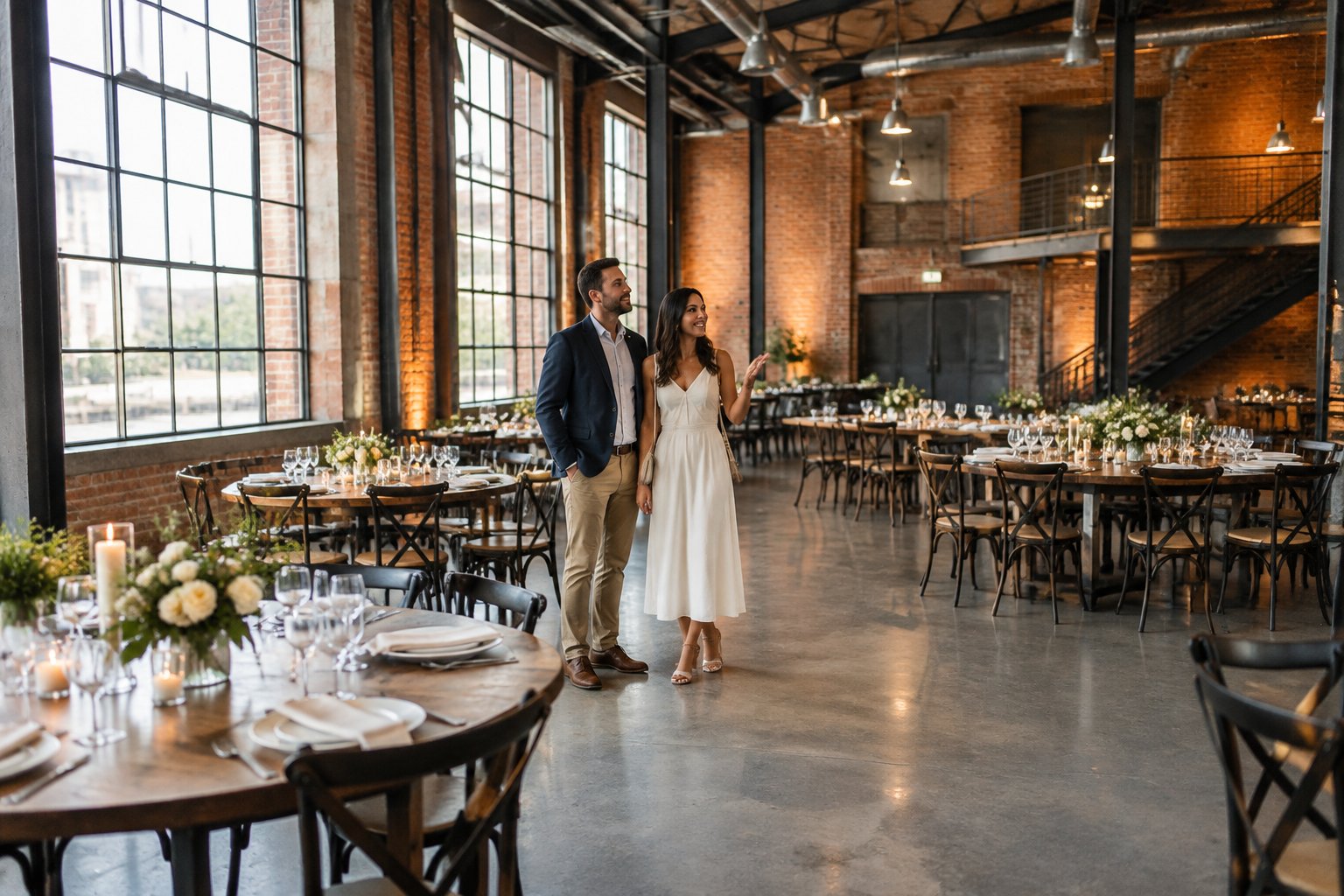
Choose a venue that fits your guest count, event format, and guest travel needs. A warehouse can feel expansive when empty, so use a floor plan to see how dining tables, the dance floor, and service areas will fit together.
Match Guest Numbers to the Room
Ask for the seated capacity for your planned meal, not just the venue’s maximum standing capacity. A dinner layout needs room for chairs and aisles, while a buffet or large dance floor takes up additional space.
If your guest list is small, look for a room that can be divided into comfortable zones. A lounge area or smaller ceremony space can help the celebration feel welcoming without filling every corner with tables.
Check Ceremony, Reception, and Catering Options
Confirm whether you can hold your ceremony, drinks reception, and dinner in the same room or if the venue has separate spaces. Ask what furniture and equipment come with the hire, and whether the venue provides catering or lets you bring in outside suppliers.
You’ll also want to confirm setup and breakdown times. Those hours affect when your florist, caterer, and rental team can work, especially if your plans include a full room transformation.
Consider Access, Transport, and Nearby Accommodation
Check how guests will reach the venue by car and public transport, and ask about parking, step-free access, and drop-off points. If people are traveling from outside the area, look for nearby hotels and ask whether the venue can recommend transport options.
A location that works well on a map still needs clear arrival instructions. Use this advice on how to pick a wedding location to compare travel time, access, and nearby amenities.
How Can You Style an Industrial Setting?
You can make an industrial setting feel personal by pairing its raw materials with soft textures and intentional lighting. Let the brick, beams, or windows provide a visual foundation, then add details that suit the mood you want.
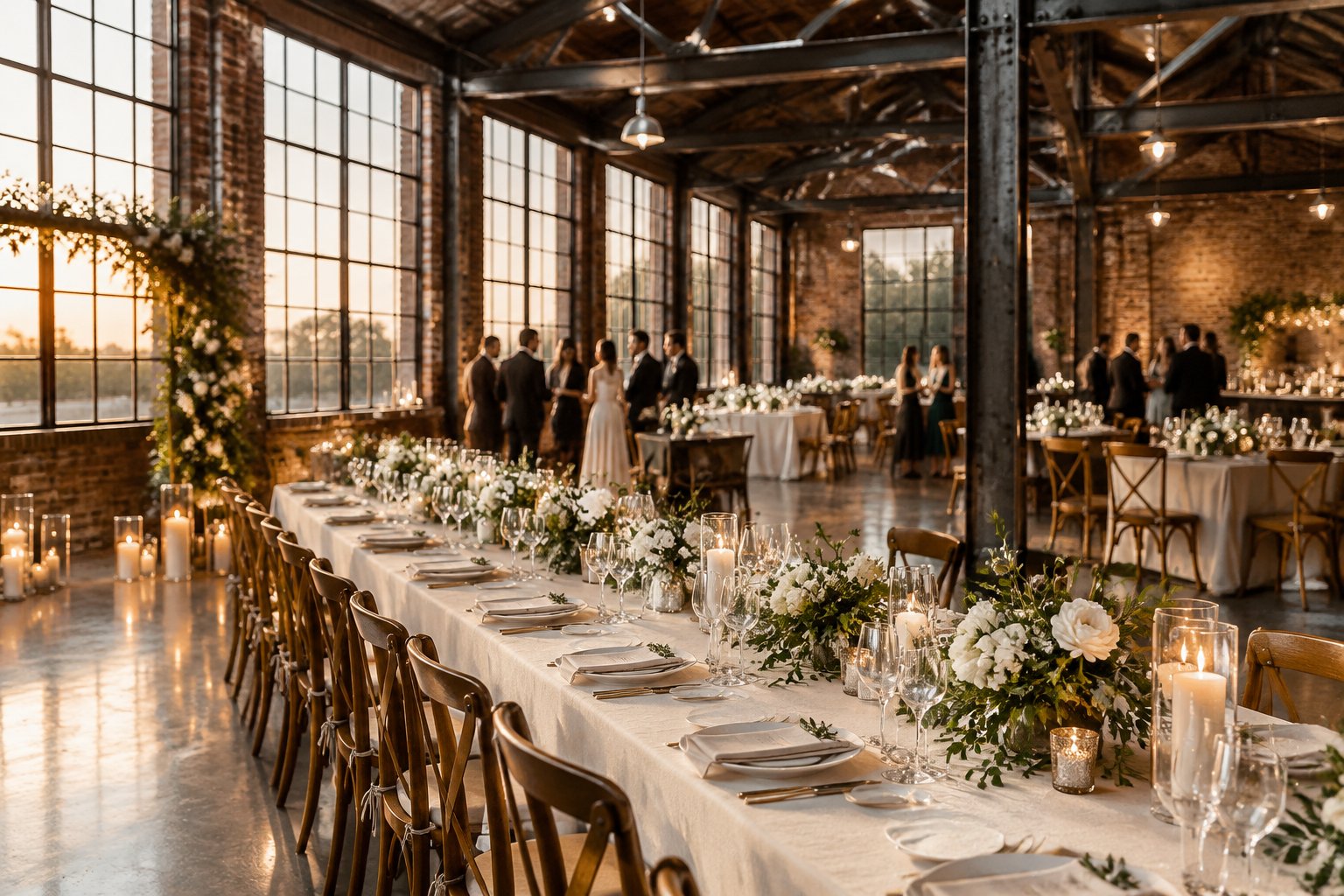
Balance Raw Materials With Soft Details
Use linen, velvet, or gauzy fabric to add softness against exposed brick walls and steel beams. Greenery and floral arrangements bring color and texture, while rugs or cushioned seating can help define a ceremony area or lounge.
Your table design can tie the room together through linens, candles, and place settings. Explore industrial wedding table decoration ideas for details that work with the space’s existing materials.
Use Lighting and Florals to Define the Mood
Lighting helps you shift the room from a bright ceremony to a warm evening reception. Ask which fixtures are already installed, whether you can dim them, and what restrictions apply to hanging lights from the ceiling.
If the venue has floor-to-ceiling windows, use the daylight as part of your ceremony or dinner setup, then plan a separate evening look. For a budget-conscious design, inexpensive industrial table decorations can help you add warmth without crowding the room.
What Should You Check Before Booking?
Before you sign, compare the full hire cost and get the venue’s rules in writing. The base fee alone may not include the equipment, staffing, or setup time your plans require.
Compare Hire Fees, Packages, and Extra Costs
Ask for an itemized estimate based on your date and guest count. Check what the hire fee includes, such as tables, chairs, lighting, cleaning, and staffing, then ask about extra charges for overtime, security, or equipment.
If catering or drinks are part of a package, request the menu and any minimum spend. Comparing UK wedding venue costs can help you set a realistic budget before you commit.
Ask About Venue Rules, Suppliers, and Contingency Plans
Confirm whether you can choose your own caterer, florist, and entertainment, or whether you must use approved suppliers. Ask about restrictions on candles, hanging decorations, amplified music, and the time your event must end.
You should also ask what happens if a planned outdoor part of the day faces poor weather. Before paying a deposit, read the contract for cancellation terms, payment dates, setup access, and the venue’s plan for any disruption.