
Industrial Wedding Venues and Estates: What to Know
Industrial wedding venues and estates give you architectural character, flexible layouts, and a distinctive setting for a celebration that feels personal. You can find that look in a converted factory, an urban loft, or a historic estate with industrial details and landscaped grounds.
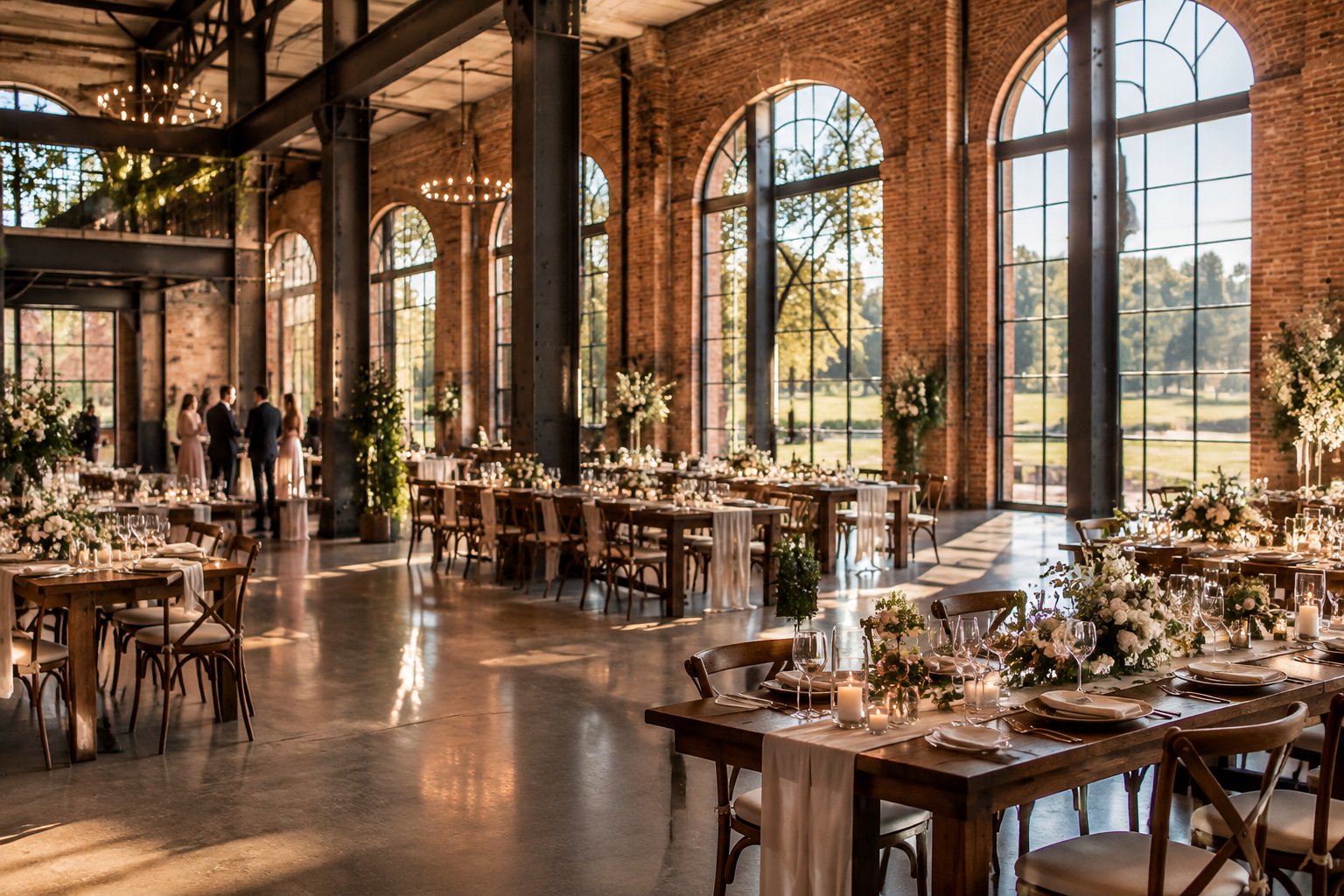
Your choice shapes more than the look of your day: it affects guest comfort, vendor access, and how much you spend on rentals and decor. As you start gathering ideas, explore wedding venue styles that fit the atmosphere you want.
What Makes a Venue Feel Industrial?
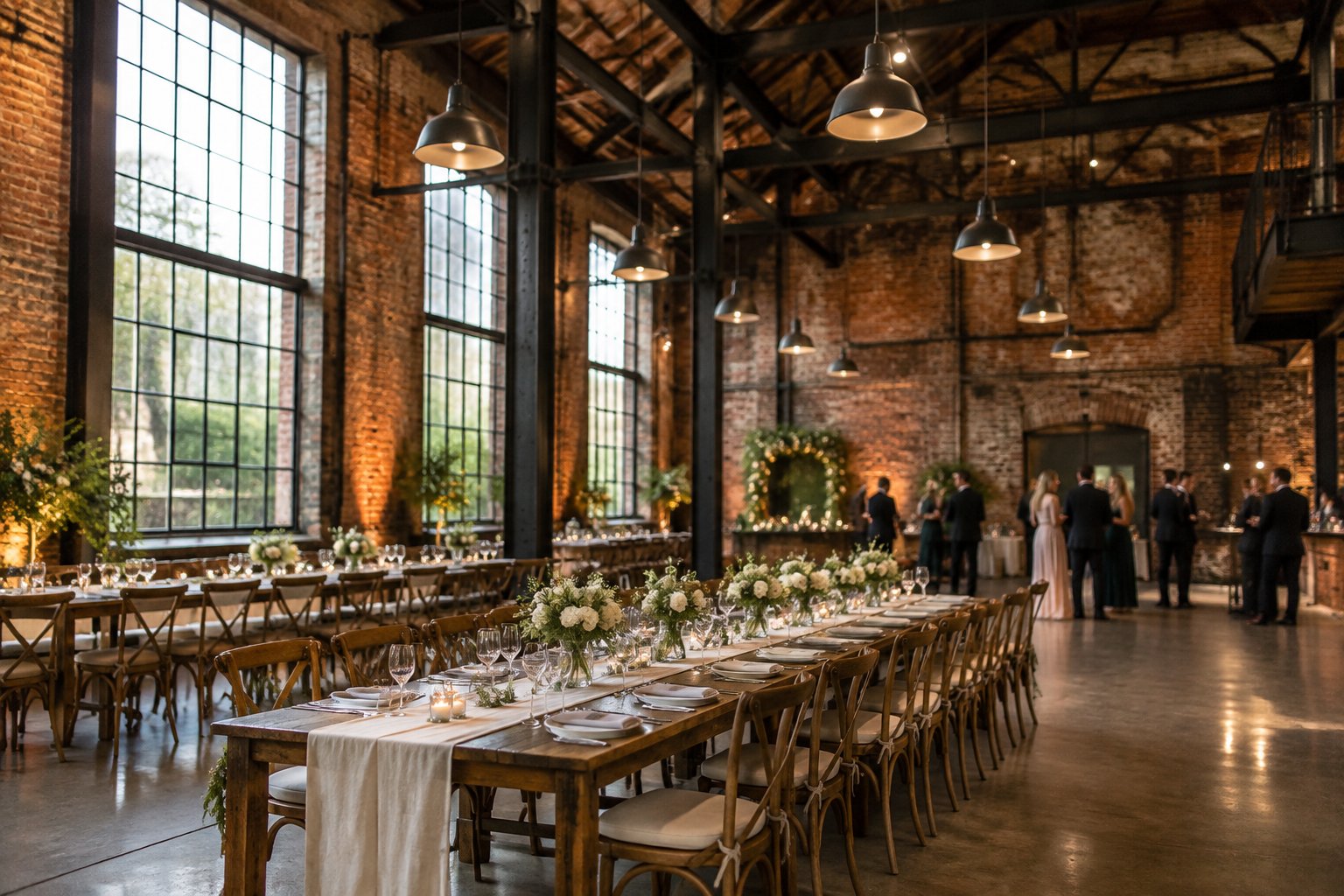
An industrial venue gets its appeal from strong architectural features, such as exposed brick, steel beams, and tall windows. Historic details and thoughtful updates can give you industrial elegance, while a bare room may need more work to feel welcoming.
Architectural Details That Set the Scene
Look for features that give the space depth and texture. Exposed brick, concrete floors, steel beams, and high ceilings create a clear industrial style. Large windows bring in natural light, which can soften darker materials during the day.
At night, your lighting plan sets the mood. Edison bulbs add a warm glow, while candles and soft uplighting can bring warmth to concrete and steel. If you want ideas for the reception tables, industrial wedding table decorations can help you tie the room’s raw surfaces to your color palette.
Industrial Character Versus a Bare Warehouse
A polished industrial-chic space balances its rugged details with guest-ready features. Check for finished restrooms, reliable heating and cooling, safe exits, and suitable power for your vendors.
A blank warehouse may have open floor space and exposed ductwork, yet still need furniture, lighting, and other event essentials. Ask what the venue provides before comparing rental fees. Built-in tables, a bar, or a ready-to-use kitchen can reduce the number of items you need to bring in.
How Historic Buildings and Estates Add Distinction
Historic buildings give you details shaped by the building’s past, such as original brickwork, old windows, or visible structural supports. An estate with a converted mill or workshop can pair those features with landscaped grounds for an indoor-outdoor celebration.
Ask the venue team about the building’s history and any preserved features. If you plan an outdoor ceremony, check how guests will move between the grounds and reception space.
Which Types of Industrial Spaces Suit a Wedding?
Industrial wedding venues range from open warehouse halls to intimate lofts and renovated factory buildings. Your guest count, event plan, and preferred setting will help you choose a space that feels comfortable and works for your celebration.
Warehouse Wedding Venues
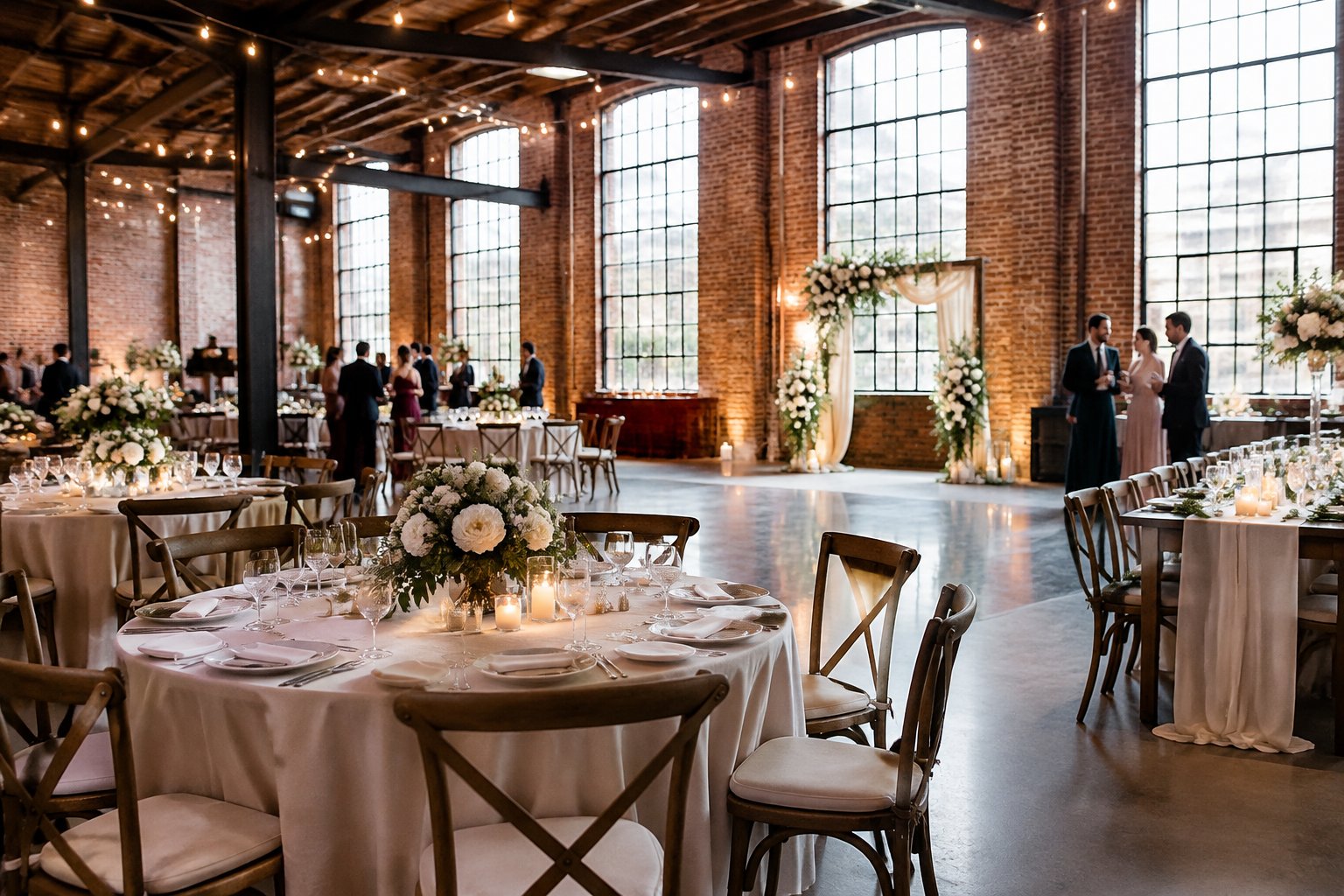
A warehouse wedding venue gives you a broad, open floor plan for dining, dancing, and a ceremony in one location. Before booking, map out where each activity will happen and ask how the room feels at your expected guest count.
A large hall can feel spacious for a big reception, while a smaller gathering may need defined areas or decor to make the room feel intimate. Check the ceiling height, sound system, heating and cooling, and available restrooms. Those details affect comfort and the setup your vendors will need.
Loft Wedding Venues
Loft wedding venues often pair an open layout with large windows, exposed brick, and city views. They can work well for a smaller wedding or a reception with a relaxed flow between dining and mingling.
Review the elevator access, loading route, restrooms, and parking options. If you’re hosting a small celebration, compare the room’s seated and standing capacities with venue options for a small wedding.
Former Factories, Mills, and Estate Properties
Former factories and mills bring a strong sense of history through original masonry, beams, and window frames. Estate properties can add gardens or lawns for a ceremony, portraits, or cocktail hour, alongside an industrial-style indoor space.
Ask whether the outdoor areas are included in your rental and what the backup plan is for rain. You’ll also want to confirm how far guests must walk between ceremony, reception, and restrooms.
Modern Industrial Spaces
Modern industrial wedding venues combine industrial-style details with updated event facilities. You might see steel accents and concrete floors alongside finished restrooms, a dedicated catering area, and current lighting.
If you’re choosing between a modern industrial wedding venue and a historic conversion, compare the features that affect your plans: layout, vendor access, included furnishings, and building character. The best fit is the space that supports your event without adding avoidable setup work.
Where Can You Find Standout Venues?
You can find standout industrial wedding venues in city centers, converted mill districts, and historic campuses across the United States. Named examples can help you begin your search, while a visit gives you a better sense of the space, access, and guest experience.
The Foundry and The Warehouse
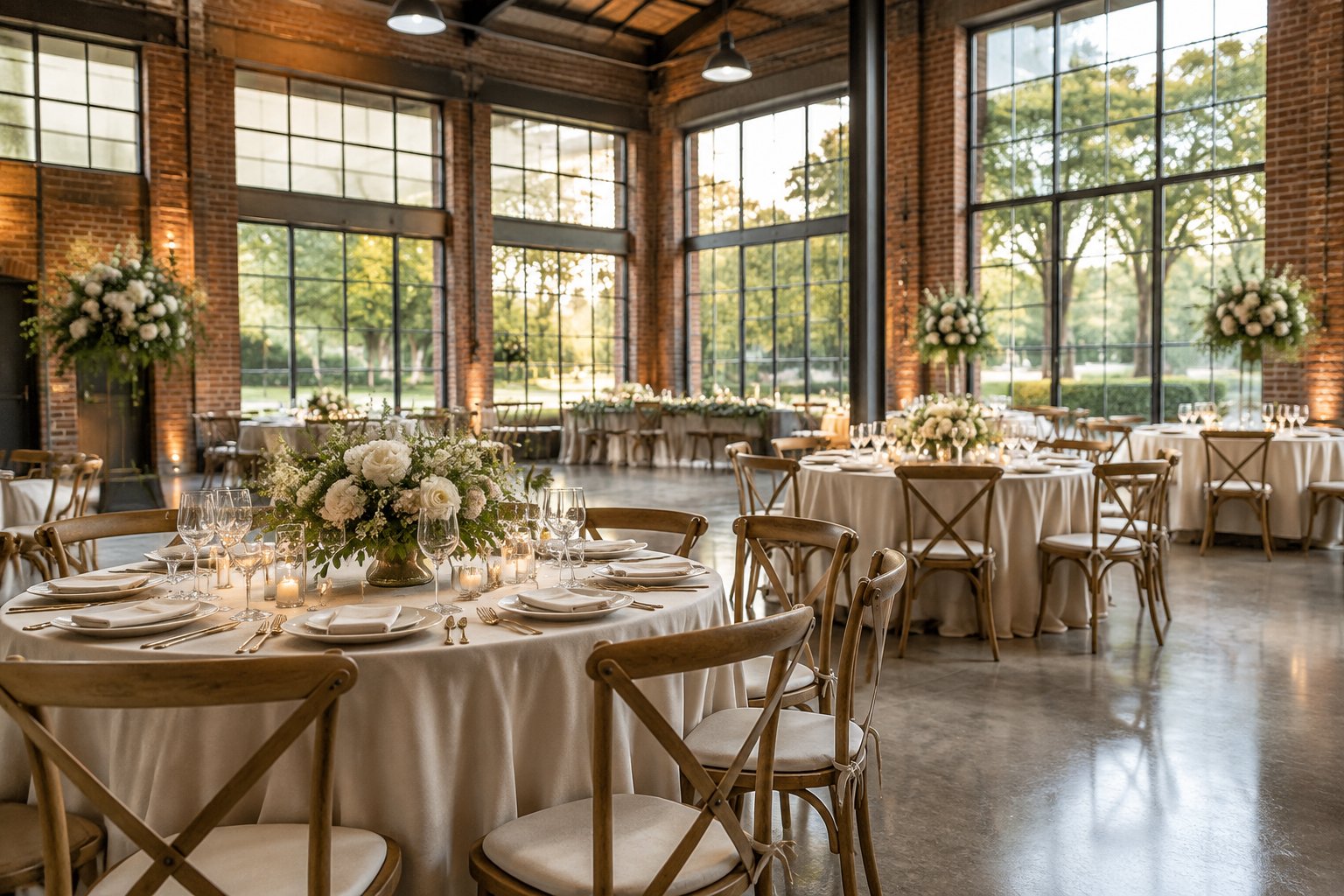
The Foundry and The Warehouse are names used by event spaces in different markets, so include the city in your search and confirm the exact property. Look for venue photos, floor plans, capacity details, and current rental terms before you compare options.
During a tour, ask how the room is arranged for a ceremony and reception. If the venue has multiple spaces, find out which rooms are included in your booking.
Brooklyn, New York, and Other Urban Hubs
Brooklyn, New York, is one of many urban areas where you can search for lofts and renovated industrial buildings. City locations can make public transportation and nearby hotels useful for guests, while parking and loading access deserve a closer look.
As you compare neighborhoods, consider travel time for guests and vendors. These practical details can help you choose a wedding location that suits your guest list and plans.
Sodo Park, Aria, and The Century
Sodo Park in Seattle, Aria in Minneapolis, and The Century in Minneapolis are examples to add to your venue search. Review each property’s current event details directly, including capacity, catering terms, and which spaces are available for your date.
A venue name or style alone won’t show how the space handles your ceremony and reception. Ask for a floor plan that reflects your expected guest count and setup.
Moniker Warehouse and Mt. Washington Mill Dye House
Moniker Warehouse in San Diego and Mt. Washington Mill Dye House in Baltimore offer two more names to research. As with any venue, check the event spaces, access, and rental details for your date.
When you tour, look at the transition from arrival to ceremony to reception. If the venue hosts an open house, use wedding venue open house ideas to prepare questions and note the features you want to inspect.
How Do You Choose the Right Space?
Choose a venue that fits your guest count and event plan, then confirm its comfort, access, and rental terms. A clear layout and complete written quote help you compare spaces on more than appearance.
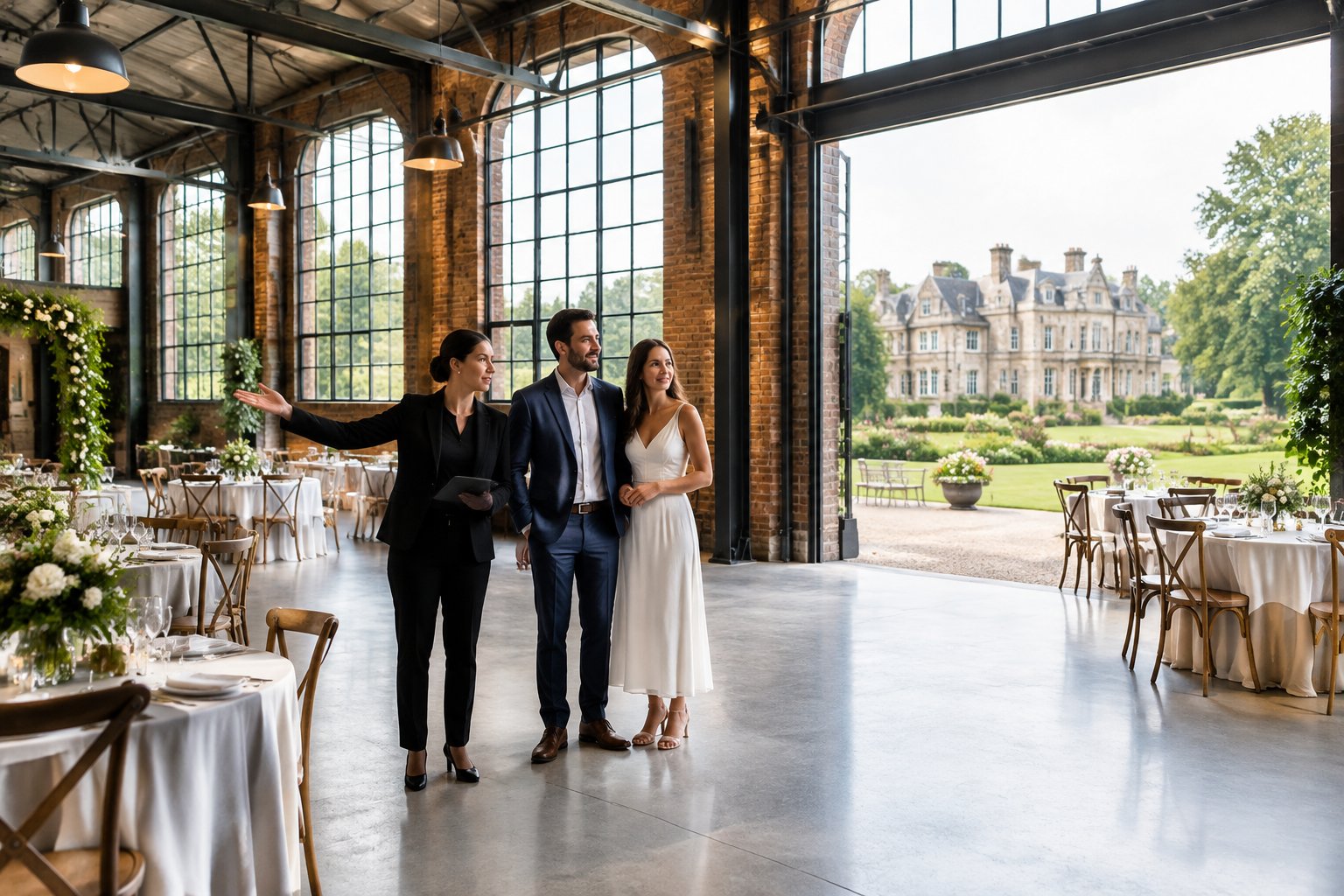
Match Guest Count to Layout and Capacity
Ask for both seated and standing capacities, since those numbers can differ. Your plan should leave room for tables, a dance floor, a bar, catering stations, and clear walking paths.
Consider how guests will use the space throughout the day. If the ceremony and dinner share one room, ask whether staff can reset the layout and how long that change takes.
Check Lighting, Climate, Sound, and Accessibility
Visit at a time that helps you judge the natural light, then ask what lighting is included after sunset. Edison bulbs can add warmth, though you’ll still want enough light for dining and safe movement.
Ask how the venue manages heating and cooling during your season, and whether the room’s acoustics suit speeches and music. Check accessible entrances and restrooms, along with elevator access where needed.
Clarify Rental Inclusions and Vendor Rules
Request an itemized list of what your rental includes, such as tables, chairs, setup time, staffing, and cleanup. Confirm the rental window and ask whether outside caterers, bartenders, or other vendors are allowed.
Get rules and additional fees in writing before you sign. Your contract should spell out access times, insurance requirements, cancellation terms, and any restrictions on decor or sound.
How Much Should You Budget for an Industrial Wedding?
Your industrial wedding budget should account for the full event setup, not only the venue rental fee. Add catering, rentals, lighting, staffing, and any required services before comparing quotes.
Compare the Full Venue and Catering Costs
Ask each venue for a complete estimate based on your guest count and event plan. Check whether food and drink are included, whether the venue has a minimum spend, and whether you can choose your own vendors.
Compare the full quote with your planned wedding budget so the venue cost stays in context with your other expenses. A lower rental price can still lead to a higher total if you need to bring in more equipment or services.
Ask About Setup, Cleanup, and Overtime Fees
Find out when your access begins and ends, including the time needed for vendor setup and cleanup. Ask about extra charges for overtime, security, cleaning, staffing, and required insurance.
If the venue has a fixed schedule, confirm that your vendors can complete their work within the rental window. Add any likely fees to your estimate before you compare venues.
Use Existing Character to Keep Decor Spending in Check
Let the building’s features guide your decor choices. Brick walls, large windows, and steel beams already give the room visual texture, so a focused plan for flowers, linens, and table lighting can complement the space without filling every corner.
Review the room with your planner or decorator and mark the areas that need attention. That approach helps you direct decor spending toward guest tables, the ceremony area, or another part of the room that needs a softer touch.