
Industrial Wedding Venues Area: Local Finds and Tips
For an “industrial wedding venues area” search, add your city or neighborhood and a travel radius to find spaces that fit your celebration. You can find an industrial wedding venue nearby by narrowing your search by location, guest count, and date, then confirming the venue’s policies before you book.
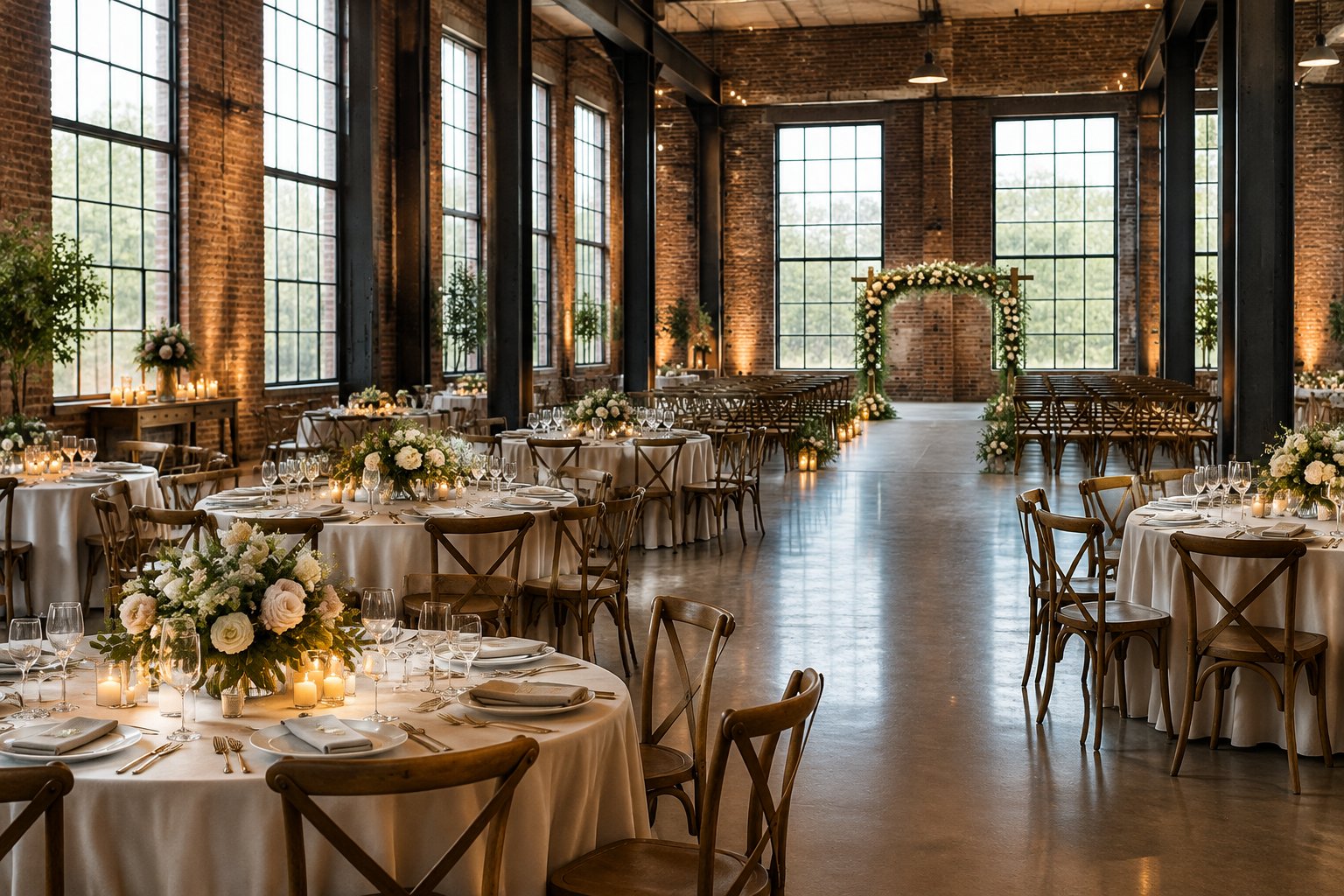
Start with a shortlist of nearby venues, then arrange tours for the spaces that meet your practical needs and style preferences. As you compare options, note what each rental includes so you can plan your budget with confidence.
How Do You Find a Suitable Venue Nearby?
A focused search helps you find an industrial wedding venue that works for your guests, date, and budget. Set your travel range, estimate your headcount, and check availability before you schedule tours.
Search by City, Neighborhood, and Travel Radius
Search by city first, then add neighborhoods where guests can reach the venue by car or public transit. If you’re looking for industrial wedding venues in Atlanta, for example, include nearby areas in your search and check travel times from hotels or transit stops. A broader radius can uncover converted spaces just outside a busy downtown district.
You can also use local venue directories, planner recommendations, and real wedding galleries to build a shortlist. If you’re still weighing location against style or guest convenience, these questions to help you pick a wedding location can sharpen your search.
Match Guest Capacity to Your Plans
Check the seated dinner capacity, not only the maximum number listed for a standing event. Tables, a dance floor, a ceremony layout, and service areas all affect how much room your guests will have. A floor plan for your expected headcount gives you a clearer picture of the space.
For an intimate guest list, focus on venues that feel comfortable at your planned size and ask whether the rental fee changes with attendance. You can also use these tips for choosing a venue for a small wedding to refine your priorities.
Compare Availability and Venue Policies
Confirm your preferred date before investing time in a tour. Ask about alternate dates if your calendar is flexible, and request the rental hours, guest capacity, and outside-vendor rules in writing. A venue’s preferred caterer or required food-and-beverage minimum can affect your plans and total cost.
What Features Define the Industrial Look?
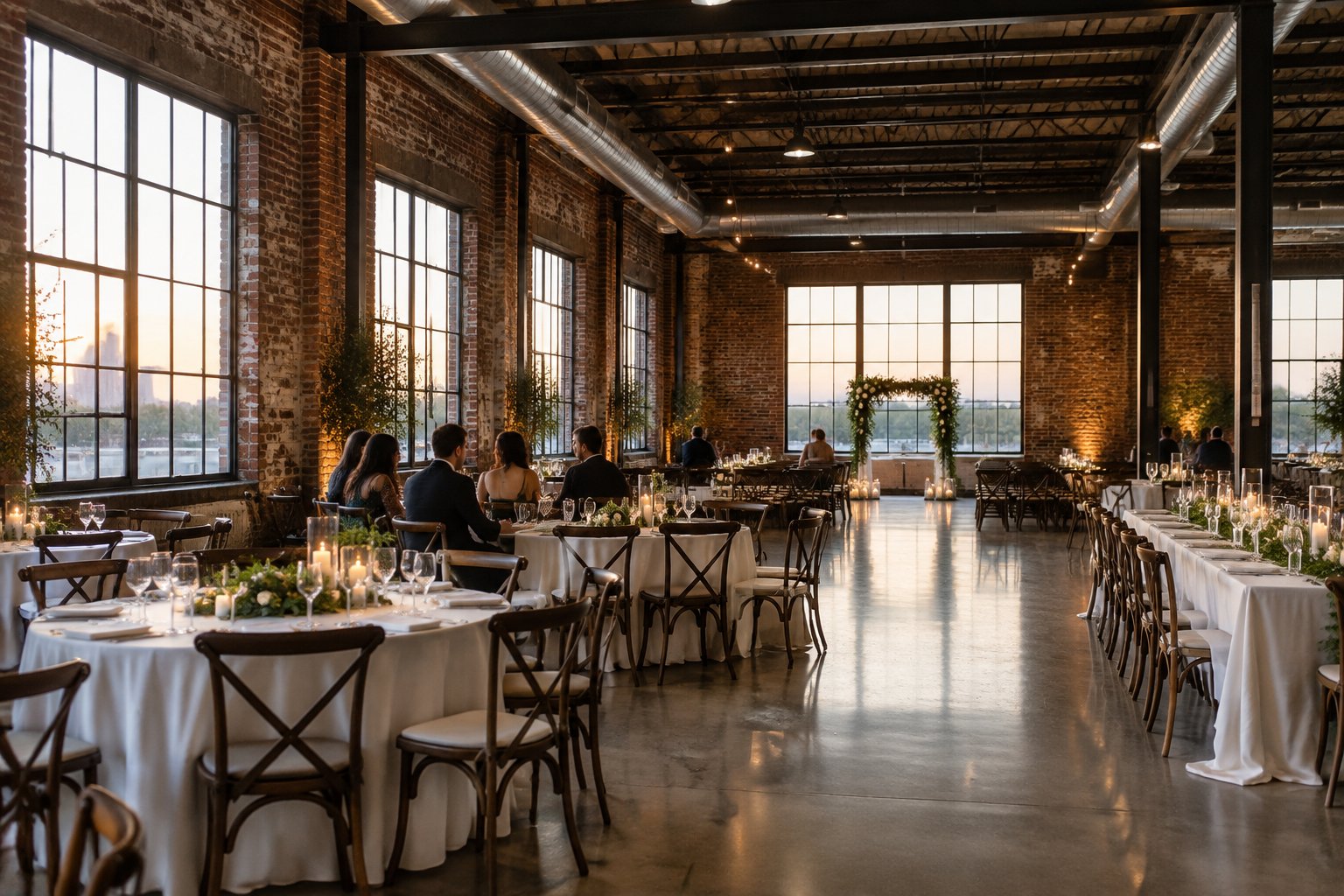
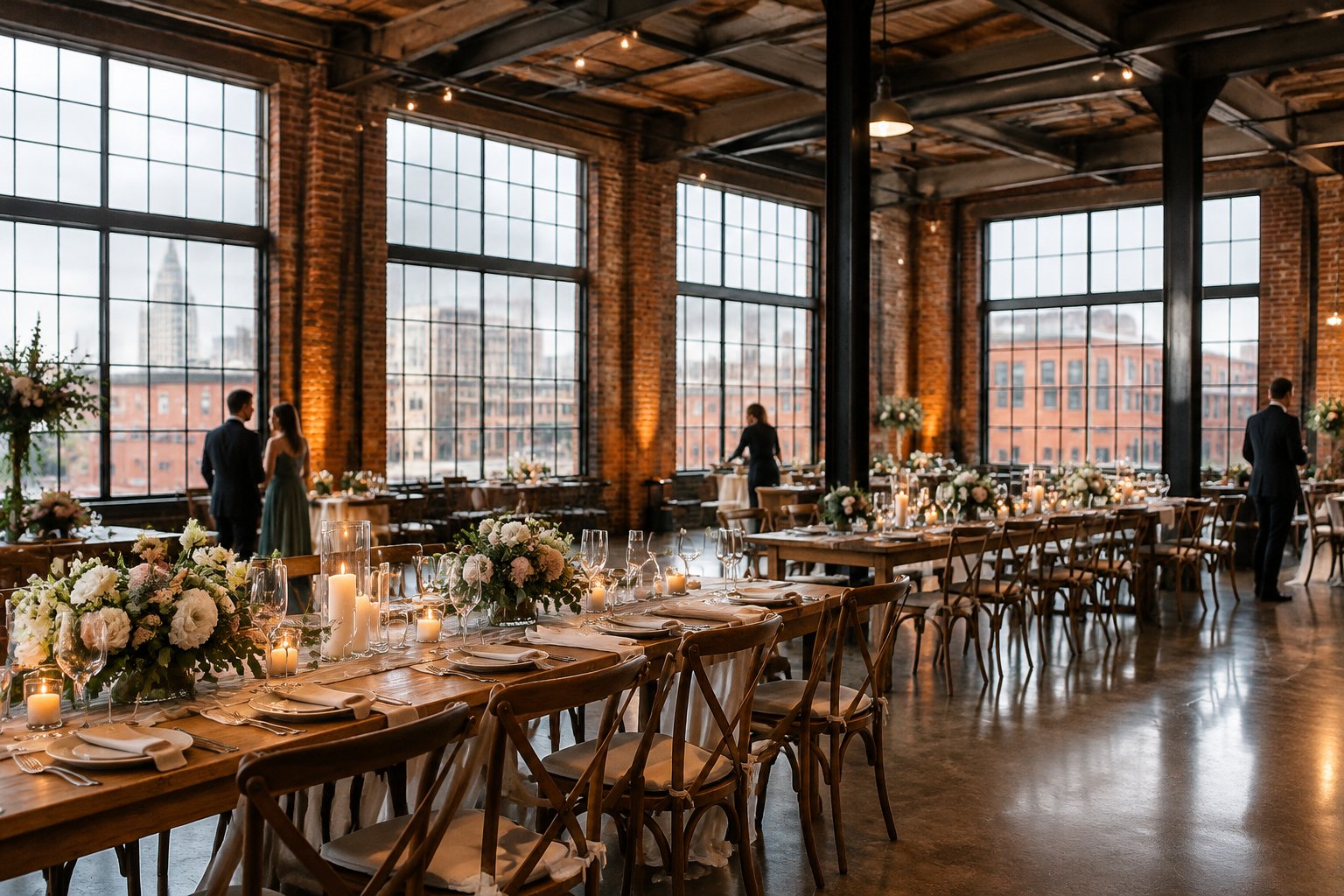
Industrial venues pair visible structural details with open rooms that give you room to shape the event. Exposed brick, concrete floors, steel beams, large windows, and high ceilings create the look, while comfort and lighting help the space work for a full day of celebrating.
Original Brick, Beams, and Concrete
Look closely at the materials that give a venue its character. Exposed brick walls, steel beams, and concrete floors offer texture and a strong visual backdrop for your ceremony and reception. Ask which features are part of the original building and which have been added as décor, especially if historic character is central to your vision.
These details can guide your styling choices. Warm linens, flowers, and soft lighting bring contrast to the hard surfaces, while restrained décor lets the building’s structure show. If you’re planning the tablescape, industrial wedding table decoration ideas can help you connect the room’s materials with your place settings.
Natural Light and Open Floor Plans
Floor-to-ceiling windows and large windows can fill a room with daylight, which makes the venue feel open and gives you flexibility with ceremony placement. Visit at a time close to your planned event to see how the light changes.
During your tour, walk through the room as your guests would and check how the ceremony, dining area, and dance floor fit together. High ceilings add visual scale and create space for hanging lights or floral installations. Ask the venue what you can attach to the walls or ceiling, and whether any décor needs approval.
Historic Character Meets Modern Comfort
A historic industrial venue should also support the practical needs of your guests. Check the condition of the restrooms, the route between event spaces, the heating and cooling system, and the available getting-ready areas. You can use wedding style ideas to decide how much of the room’s original character you want to emphasize.
Which Types of Spaces Can You Choose From?
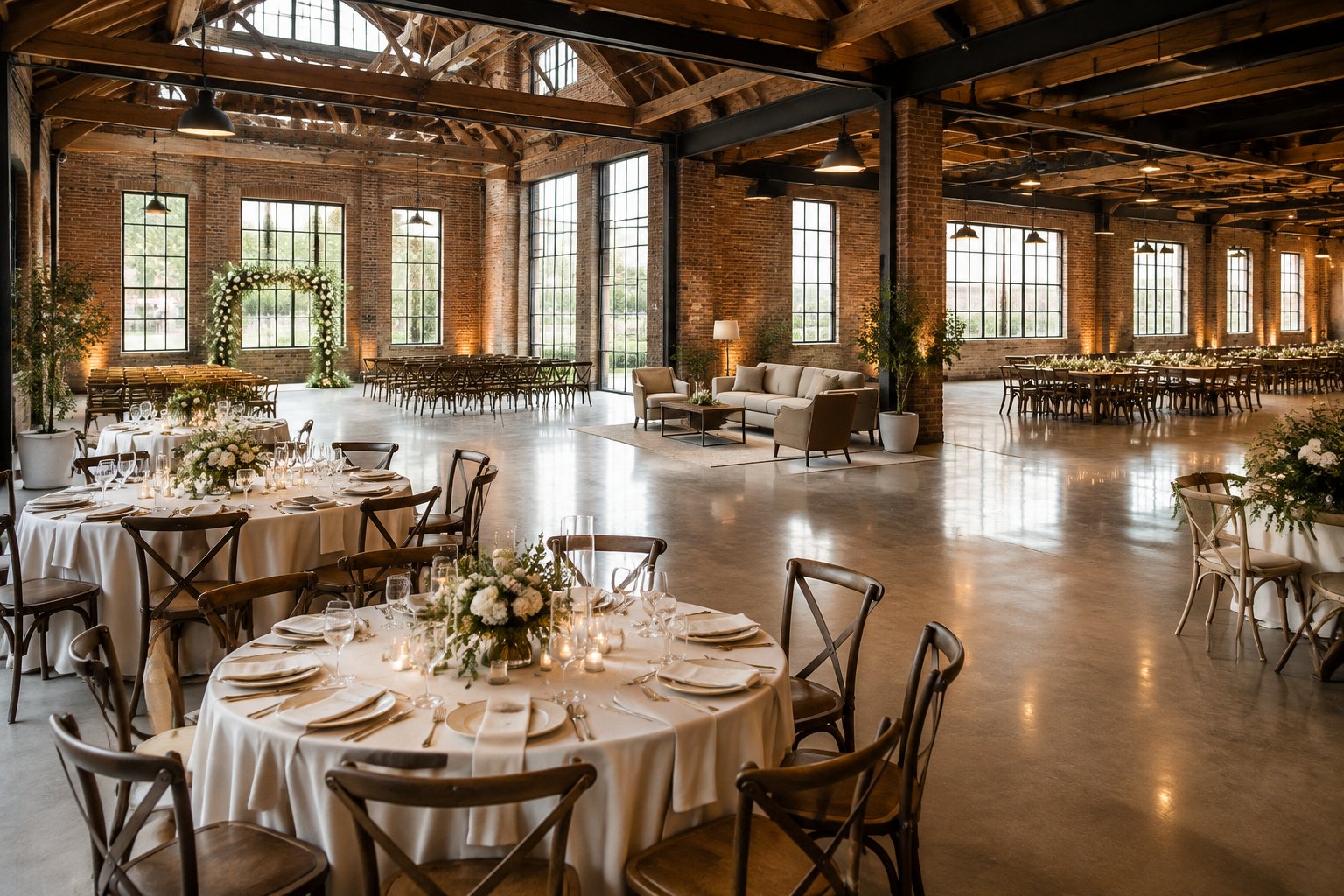
Industrial weddings take place in lofts, warehouses, former factories, and purpose-built event spaces with an urban feel. The best fit gives you enough room for your guest count and the right balance of architectural detail and event support.
Lofts and Studio Spaces
A loft wedding venue often has an open layout, tall windows, and a more intimate scale than a large warehouse. Studios can suit a smaller guest list or a celebration with a focused design plan. Ask whether the rental includes furniture, lighting, or sound equipment, since those details shape what you’ll need to bring in.
Loft wedding venues also vary in how much they provide. Some feel like finished event spaces, while others leave you to arrange rentals and vendors. Compare the included setup time and furnishings before deciding.
Warehouses and Converted Factories
A warehouse or converted warehouse can give you an expansive floor plan, exposed materials, and room for a larger reception. Converted warehouses may include historic details alongside updated event facilities, so ask about the building’s layout and the parts of the space available for your event.
A blank room gives you design freedom, with added planning for tables, chairs, lighting, and other essentials. Review the venue’s inventory and draw a sample floor plan before you estimate those needs.
Modern Industrial Spaces with Flexible Layouts
Modern industrial wedding venues combine industrial details with polished finishes and event-ready features. These spaces can make it easier to plan an industrial-chic wedding with clear zones for the ceremony, cocktails, dinner, and dancing.
Industrial-chic wedding venues also differ in how much décor they need. Compare photos of real events and ask whether you can move furniture or adjust the layout. For a bare room, ideas for decorating an empty room for a wedding can help you plan the design work.
Where Can You Find Notable Examples?
You can use notable industrial venues as starting points for regional searches, then confirm each space’s current location, availability, and event details directly with its team. Venue names and offerings can change, so verify the address and current policies before adding a space to your shortlist.
New York, Chicago, and Minneapolis
In New York, names to look into include The Foundry, FAME, and The Green Building. Chicago searches can include Bridgeport Art Center, while Minneapolis searches can include The Neu Neu. Compare each venue’s layout and capacity with your plans, since industrial style alone won’t tell you how the space works for your event.
Los Angeles, San Diego, and Seattle
For Los Angeles, explore The Century and The Unique Space. San Diego searches can include Moniker Warehouse and The Loft at Studio J, while Seattle searches can include Sodo Park and Metropolist. When you compare wedding venue ideas, look for current event photos and details about included rentals.
Philadelphia, Baltimore, and Atlanta
In Philadelphia, put Power Plant Productions on your list of spaces to research. Baltimore searches can include Mt. Washington Mill Dye House. For Atlanta, look into The Foundry, The Loft, Aria, and Tre Bella, and confirm each venue’s address and industrial features as you narrow your choices.
What Should You Confirm Before Booking?
Before you book, get the full rental terms and event logistics in writing. The fee, included items, vendor rules, access details, and comfort plans all affect how smoothly your day can run.
Rental Fees, Included Items, and Catering Rules
Ask for a full estimate based on your guest count and event hours. Confirm the rental fee, deposit, payment schedule, cleaning charges, overtime fees, and any required insurance. Get a list of included items, such as tables, chairs, lighting, and setup support, so you can price rentals accurately.
Catering policies can shape both your menu and your budget. Ask whether you must use an in-house caterer, whether outside vendors are allowed, and whether the venue charges a kitchen or vendor fee. If there’s a food-and-beverage minimum, ask which expenses count toward it.
Setup Access, Parking, and Accessibility
Confirm when your vendors can arrive and when the event must end. Ask about loading access, setup and breakdown windows, and restrictions on hanging décor or using open flames. If the room needs a full setup, check that the access time gives your vendors enough time to work.
Check where guests can park and whether public transit or hotel shuttles are practical. Walk the route from parking to the event space and restrooms, and confirm that guests with mobility needs can use each area comfortably.
Climate Control, Acoustics, and Backup Plans
Ask how the venue handles heating and cooling, especially if the space has large windows, high ceilings, or limited insulation. During your visit, listen for echoes and outside noise, then ask how the room handles amplified music and speeches.
Confirm the plan for severe weather, power problems, or other disruptions, even if your event is indoors. Ask who makes backup decisions and which spaces remain available if your original layout changes.
Before signing, compare the written contract with the answers you received during your tour, including the final event hours and every added fee.