
Industrial Wedding Venues Long Island: Loft Ideas and Tips
If you want a Long Island industrial wedding, The Loft by Bridgeview in Island Park is a standout option, with exposed brick, reclaimed barn wood, chandeliers, and room for up to 160 guests. Industrial spaces pair distinctive architecture with room to shape your ceremony and reception around your style.
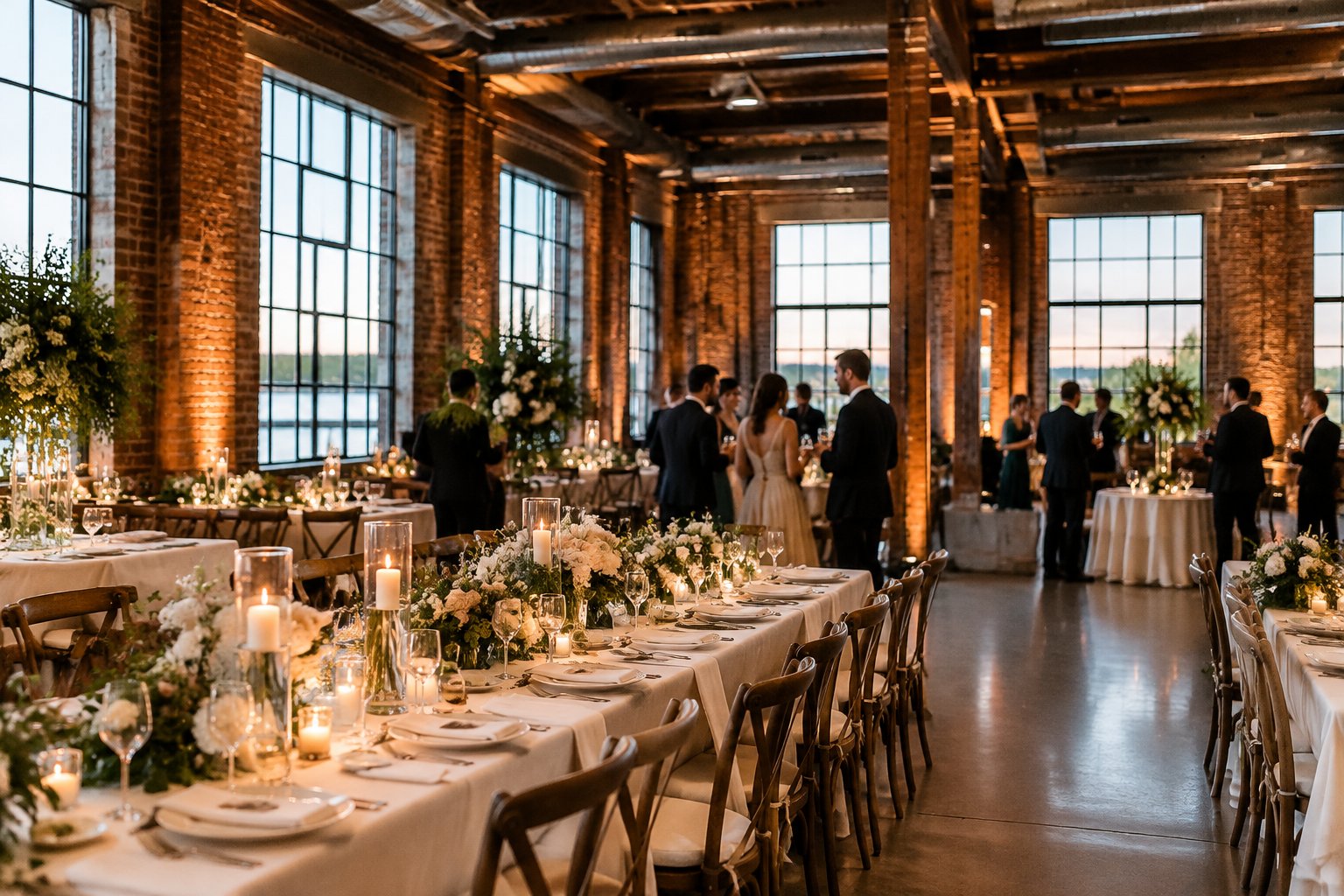
As you narrow your choices, tour the space and ask how it handles your guest count, event setup, and budget. If The Loft by Bridgeview catches your eye, request a visit and confirm its current capacity, packages, and date availability.
What Defines an Industrial Wedding Venue?
Industrial wedding venues showcase architectural features such as exposed brick, steel beams, tall ceilings, and large windows. You can build your décor around those details, whether you prefer a polished loft look or a more relaxed celebration.
Exposed Brick, Beams, and Oversized Windows
Brick walls, visible steel or timber beams, and oversized windows give industrial venues their signature character. Concrete or wood floors, factory-style windows, and original columns can add more texture, while natural light gives you a bright setting for daytime vows and portraits.
During a tour, look closely at the details that make the room feel distinctive. Ask about the building’s history, the ceiling height, and how much daylight reaches the ceremony and reception areas. Those details will help you decide how much lighting and décor to bring in.
Loft Style Versus Converted Warehouse
A loft often has an open floor plan and a refined, urban feel. A converted warehouse may offer a larger footprint, visible structural features, and a more expansive room for dining or dancing. Both styles can suit an industrial wedding; compare the room’s layout with the number of guests and the atmosphere you want.
As you browse wedding venue ideas, pay attention to how each space uses its architecture and how much decorating it needs. A building with original character gives you a clear starting point for your wedding design.
How a Blank Canvas Shapes Your Wedding
A blank-canvas venue gives you control over the floor plan, color palette, and décor. You can set up a ceremony near a brick wall, move guests into a dining area, then open the floor for dancing. Before you book, ask which furniture and equipment the venue provides so you can plan your rentals.
Use the venue’s character to guide your choices. If you’re still settling on a direction, figuring out your wedding style can help you choose details that feel cohesive with the space.
Which Long Island Venues Fit an Industrial Wedding?
The Loft by Bridgeview is a Long Island option with clear loft-style details, while waterfront spaces and nearby urban venues give you more settings to compare. Check each venue’s architecture, layout, and event policies before deciding that it fits your vision.
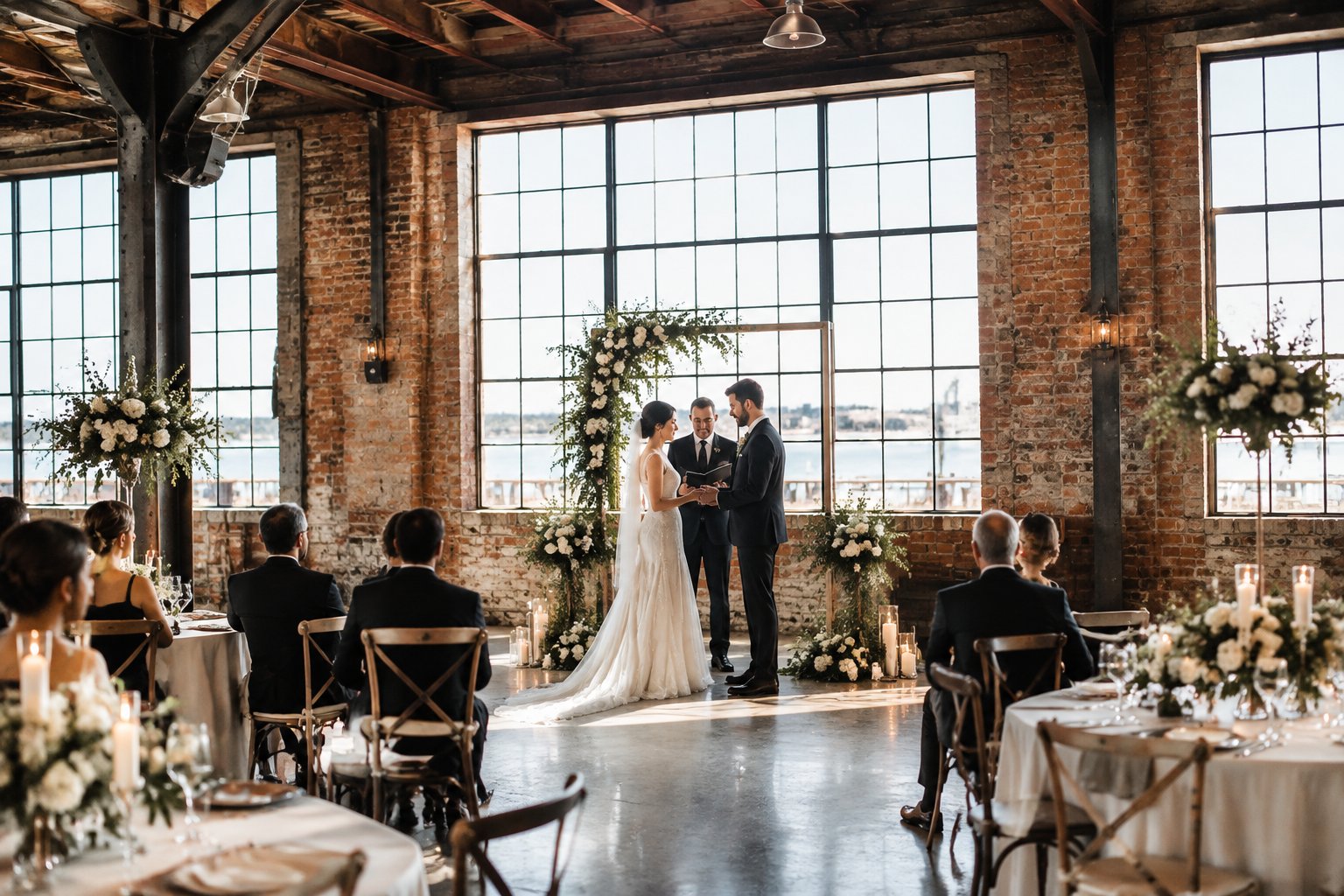
The Loft by Bridgeview in Island Park
The Loft by Bridgeview in Island Park is a strong place to start if you want brick, reclaimed wood, and chandelier lighting in one setting. Its reported capacity is up to 160 guests, making it a potential fit for a small or mid-sized celebration.
Ask how the venue arranges the room for your ceremony, dinner, and dancing. If you’re planning an intimate guest list, use these tips for choosing a venue for a small wedding to assess seating, privacy, and the flow between event spaces.
Waterfront and Industrial-Inspired Alternatives
Long Island’s waterfront venues offer a different backdrop, with bay or harbor views shaping the guest experience. If an industrial look remains important to you, ask whether a waterfront venue has features such as exposed brick, metal details, or large windows that suit your design.
For another point of comparison, The Foundry in Long Island City offers restored industrial architecture and flexible event spaces. Long Island City is in Queens, so consider it a nearby metro-area option when you’re open to venues beyond Long Island.
How to Tell If a Venue Truly Fits the Look
A venue fits the industrial style when its architecture gives you a strong foundation for your décor. Look for original or well-preserved materials, generous ceiling height, and windows that bring in natural light. Ask what the building used to be and which features are original.
Also check the practical details during your tour. Ask about heating and cooling, acoustics, accessibility, and how the room handles your ceremony setup. A beautiful space should support your guests’ comfort through the full event.
How Do You Choose the Right Space?
Choose a venue that can comfortably hold your guests and support your event plans from ceremony through reception. Capacity, vendor rules, and travel logistics all affect how smoothly your day runs.
Guest Capacity and Ceremony Options
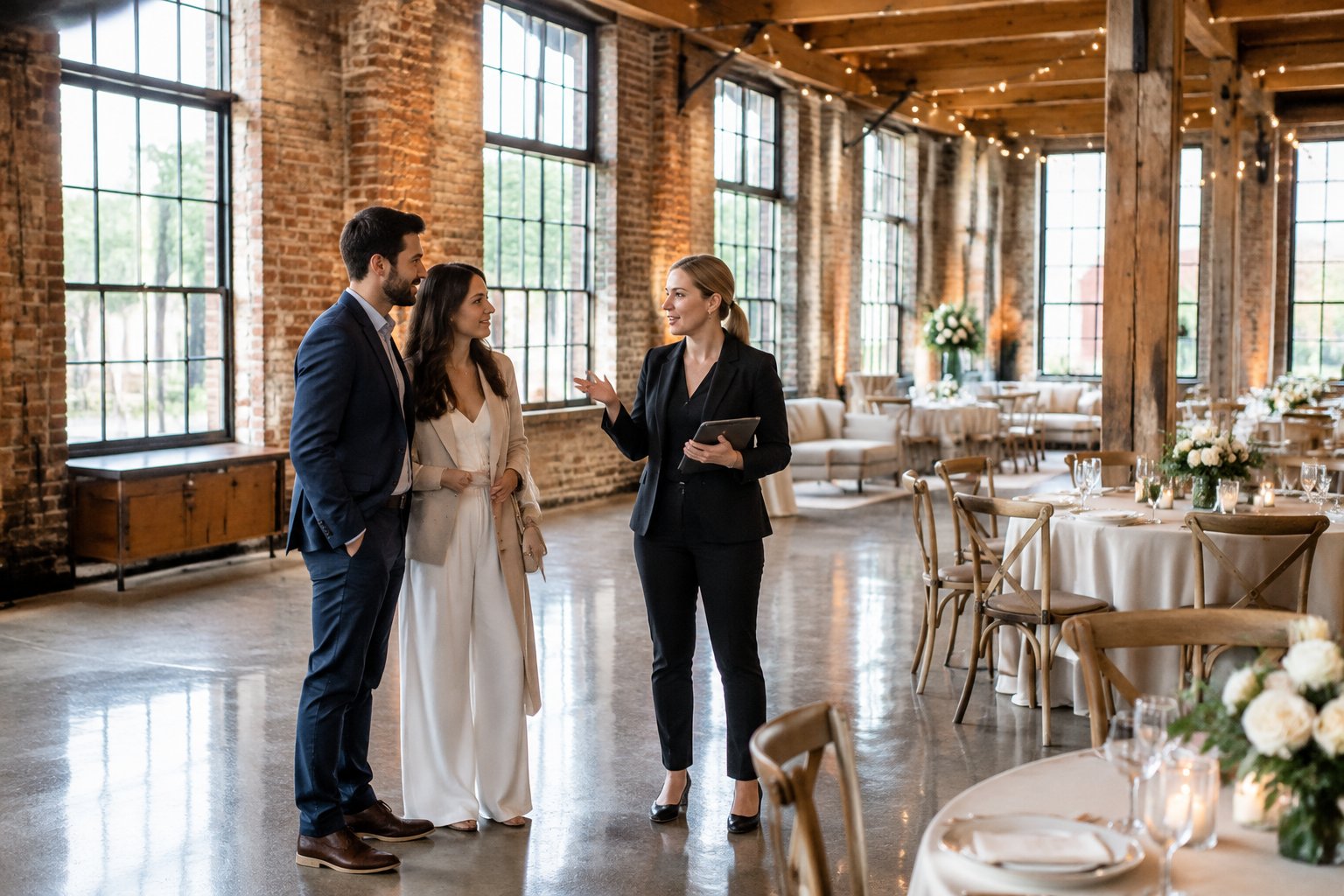
Start with the guest count you expect, then ask the venue how many people it can seat for dinner. A space that fits everyone for a cocktail reception may have a different capacity for a seated meal with a dance floor.
Ask whether you can hold the ceremony and reception in the same room, and how long the transition takes. Find out where guests wait during a room reset and whether the venue has a separate area for cocktail hour. These answers help you map out the event timeline.
Catering, Rentals, and Vendor Policies
Venue policies shape your choices for food, décor, and event services. Ask whether catering is in-house, whether you can hire an outside caterer, and if the venue requires vendors from an approved list. Confirm what comes with the rental, including tables, chairs, linens, sound equipment, and setup support.
Get the open-flame, hanging décor, and load-in rules in writing. Those details affect your centerpiece plans and determine how your florist, lighting team, and rental company can work in the space.
Location and Guest Transportation
Consider how guests will reach the venue from home, hotels, and nearby transit. Check the parking arrangements and ask about shuttle access, rideshare pickup, and the route to the entrance. If guests are traveling from across Nassau or Suffolk County, share clear directions and lodging suggestions with your invitation details.
A venue’s location also affects the feel of your day, from a waterfront setting to a downtown address. Use this guide on how to pick a wedding location to weigh travel time, guest convenience, and the surroundings.
How Much Should You Budget?
Set your budget by comparing the full package cost, not only the venue’s starting fee. Long Island quotes can range from per-person packages to flat rental fees, and the included services vary.

What to Ask About Venue Packages
Some Long Island all-inclusive packages fall around $110 to $165 per guest, while flat site fees can range from several thousand dollars to $12,000 to $25,000 or more. Treat those figures as broad planning estimates and request current pricing for your date, guest count, and package.
Ask for an itemized quote that lists catering, bar service, staffing, ceremony fees, and the length of the rental window. Check for administrative charges, sales tax, security, cleaning, and overtime. To set your spending limits before comparing quotes, use this guide on how to work out a wedding budget.
Extra Costs for Rentals, Lighting, and Décor
A venue rental fee may leave you responsible for tables, chairs, linens, lighting, or sound equipment. Ask for a list of included items and a rental estimate for anything you need to add. Also confirm whether the venue charges for setup time, extra event hours, or outside vendors.
Industrial spaces give you dramatic built-in details, though a large, open room can call for added lighting and décor. Price out key items early, including ceremony seating and reception lighting, then compare the total with any venue package that includes them. For a wider cost reference, see what wedding venues cost.
How Can You Style an Industrial Wedding?
Style an industrial wedding by keeping the venue’s brick, beams, and windows visible while adding soft textures and warm light. A thoughtful mix of materials makes the room feel personal and welcoming.
Balancing Raw Materials With Warm Details
Pair brick, steel, and concrete with materials that add softness, such as linen, gauze, velvet, and greenery. Wood tables can bring warmth to a room with metal details, while neutral fabrics help keep the architecture in view.
Choose a color palette that works with the venue’s existing tones. Ivory, blush, rust, and deep green can sit comfortably beside brick and dark metal. Keep larger décor pieces focused around the ceremony backdrop, dining tables, or sweetheart table.
Lighting, Florals, and Table Settings
Warm lighting softens the room and helps define the ceremony and reception areas. Consider Edison-style bulbs, candles in approved holders, or amber uplighting, and ask the venue which fixtures and open flames it permits. For floral décor, greenery and loose arrangements add a natural counterpoint to the building’s hard surfaces.
Your table design can bring several materials together without overwhelming the room. Use simple place settings, textured runners, and candle holders that suit the venue’s style. Browse industrial wedding table decoration ideas for details that work with exposed brick and metal accents.
Making the Most of Brick and Beam Backdrops
Let the venue’s strongest architectural features frame important moments. Position your ceremony near a brick wall or use an exposed beam as a visual anchor for the reception tables.
Ask your coordinator where natural light falls at your ceremony time so you can plan the setup. Keep large décor installations in proportion to the room.
A floral piece above the dance floor or greenery along a long table can help fill a tall space, while smaller arrangements suit intimate tables. Before hanging anything, confirm the venue’s attachment rules and ceiling access.